Privacy advocates have asked the Federal Trade Commission (FTC) to continue overseeing Elon Musk’s social media platform X, formerly known as Twitter. They warn that ending the FTC’s audits could put Americans’ personal data and privacy at risk because of X’s new data practices and AI developments.
Key Facts
The FTC originally ordered X to undergo audits after Twitter shared users’ contact information wrongly for advertising.
X’s owner, Elon Musk, wants the FTC to stop these audits, saying the platform has changed after rebranding and now follows European privacy rules.
Fifteen privacy groups disagree and say X’s request to end oversight should be denied to protect user data.
Advocates highlight a recent lawsuit involving X’s chatbot Grok related to harmful content, raising privacy concerns.
In 2023, about 2.8 billion records leaked from X, showing risks to user data security.
Musk was reported to have instructed staff to act against the FTC order and gave journalists open access to internal data.
X is collecting user posts for AI training without clear, direct consent from users, which worries privacy experts.
Cambridge Analytica’s former data misuse case is compared to how X uses data for AI and behavioral modeling.
Read the Original
Want the full story? Tap a source to open the original
article.
A 56-year-old woman developed serious symptoms like numbness, memory problems, and heart palpitations after a hip replacement surgery. Doctors discovered that cobalt poisoning from her metal hip implant caused her illness when ceramic parts in the artificial joint broke, exposing metal surfaces that released cobalt into her body.
Key Facts
The woman had a hip replacement 20 years ago after a car accident injury.
The ceramic liner in her hip implant shattered, causing metal parts to rub directly together.
This metal-on-metal contact released cobalt, a toxic metal, into her bloodstream.
Her symptoms included tingling numbness in limbs, memory issues, irritability, and heart palpitations.
Blood tests showed elevated cobalt levels and other abnormal findings.
Her hip implant was replaced about three months before the symptoms worsened.
Cobalt poisoning from failing metal implants is rare but serious.
The case was reported in the New England Journal of Medicine for medical awareness.
Read the Original
Want the full story? Tap a source to open the original
article.
Meta has started charging a monthly fee of $19.99 for users to access the "Conversation Focus" feature on its smart glasses for more than three hours per month. This feature uses the glasses’ microphones to help users hear people they are talking to more clearly, and other AI features remain free to use.
Key Facts
Meta’s "Conversation Focus" helps amplify voices during conversations using smart glasses.
Users get three free hours per month to use this feature before needing to pay $19.99 monthly.
Without a subscription, users must wait for their free hours to reset each calendar month.
The subscription is aimed at "power users" who want extra access and benefits, including premium support.
Other AI features like live translation and voice assistant remain free for all users.
The subscription service is currently not available in the UK.
Meta’s Ray-Ban smart glasses are popular and priced around £269 in the UK and $299 in the US.
The glasses have faced criticism over privacy concerns and accusations of secret filming.
Read the Original
Want the full story? Tap a source to open the original
article.
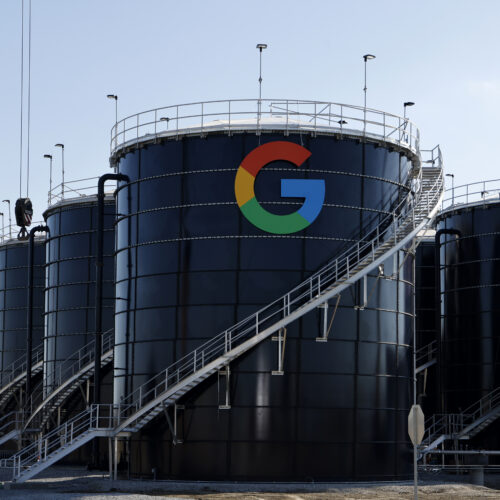
Google’s electricity use rose by 37% in 2025 due to increased AI data center construction and operations. Despite using much more power, the company reduced its operational carbon emissions by 2% by buying large amounts of renewable energy.
Key Facts
Google’s electricity consumption grew by 37% in 2025, the largest increase ever for the company.
Since 2019, Google’s electricity use has increased by over 250%.
Data centers used more than 42 million megawatt-hours in 2025, similar to the power used by countries like New Zealand.
Google has purchased renewable energy equal to 100% of its electricity use for nine years straight.
Operational carbon emissions decreased by 2% in 2025 despite the electricity usage increase.
Supply chain emissions rose 25%, mainly due to suppliers in Asia-Pacific relying on non-clean energy grids.
Google is focusing on matching energy use with clean energy every hour and location, not just annually.
The company invests in various clean energy technologies, including nuclear, fusion, geothermal, energy storage, and natural gas with carbon capture.
Read the Original
Want the full story? Tap a source to open the original
article.
The Office of Management and Budget (OMB) has proposed a new rule that would change how the U.S. government awards scientific research grants. This rule would give political officials more control over funding decisions and could allow grants to be canceled based on political priorities instead of scientific merit. The public has until July 13 to give feedback on the proposal.
Key Facts
The OMB proposal would make political priorities the main factor in deciding which scientific projects get funded.
Scientific experts’ opinions and peer reviews would have less influence under the new rule.
Grants could be canceled at any time based on vague political criteria like “national interest” or alignment with government policies.
The proposal would require political appointees to approve spending for conferences and publishing research.
The OMB says the rule aims to improve transparency and prevent waste of federal funds.
Critics warn the rule could harm long-term scientific projects and U.S. leadership in research.
The American Association for Cancer Research calls the proposal a major threat to the National Institutes of Health.
The public comment period for the proposal ends on Monday, July 13.
Read the Original
Want the full story? Tap a source to open the original
article.
Europe's top court confirmed a €4.1 billion fine against Google for using its Android system to block rival companies. The court dismissed Google's appeal against the fine, which stems from rules that forced manufacturers to pre-install Google apps and blocked alternative Android versions.
Key Facts
The European Commission first fined Google €4.3 billion in 2018 for anti-competitive practices using Android.
The fine was later reduced to €4.1 billion in 2022 before the court upheld it in the recent ruling.
Google required device makers to pre-install Google Search and Chrome to access its Play Store.
Google paid big manufacturers and networks to exclusively pre-install Google Search.
Google prevented makers from selling devices with modified Android versions by threatening to withhold app permissions.
Android users can still download other browsers and search engines if they want.
This is the largest fine ever imposed on Google by the European Commission.
Google has faced several other big fines in Europe for favoring its services unfairly in shopping and ads.
Read the Original
Want the full story? Tap a source to open the original
article.
Rhythm Heaven Groove is the newest game in the Rhythm Heaven series, featuring many short music-based challenges that test players’ timing with simple controls. It includes new mini-games, a multiplayer mode for up to four players, and a rhythm-based light role-playing game mode called Beatspell, but some issues with input delay remain.
Key Facts
Rhythm Heaven Groove (called Rhythm Paradise Groove in some regions) is the latest entry in a rhythm game series last updated in 2015.
The game offers many short mini-games where players follow musical beats using a few buttons.
New challenges are combined with some references to older games in the series.
It supports up to four players playing together in multiplayer mode.
Beatspell is a side mode that mixes rhythm gameplay with simple role-playing game elements.
The game faces input timing problems, especially when played on a TV, with a recommendation to use handheld mode for better accuracy.
The game is developed by Nintendo and shows the company investing in this genre despite being cautious during its current console era.
The gameplay is considered easier than past entries, with fewer difficult stages requiring retries.
Read the Original
Want the full story? Tap a source to open the original
article.
This article gives advice on managing your electronic devices and digital tools before going on a summer trip. It explains when to unplug devices to save energy and how new tech features like adding a digital passport to your iPhone can help with travel.
Key Facts
Many household devices use a small amount of electricity even when turned off, called standby or phantom power.
Standby power can add up to about 10% of a home’s electric bill and contribute to greenhouse gas emissions.
Experts recommend unplugging nonessential devices before leaving home to save energy.
Essential devices like refrigerators, freezers, security systems, and some smart home gear should stay plugged in.
Unplugging most modern gadgets usually saves less money than people expect; energy-efficient devices and settings are more effective.
Apple now lets users add their U.S. passport info to their iPhone’s Apple Wallet for easier airport ID checks at over 250 U.S. airports.
This digital ID cannot be used for international travel or border crossing.
Read the Original
Want the full story? Tap a source to open the original
article.
In South Korea, people are using artificial intelligence (AI) to create video messages featuring digital versions of their deceased loved ones. A tech company called Vaice makes these videos from photos and voice samples, helping families remember and communicate with those who have passed away.
Key Facts
Lee Geon Hui hired Vaice to create an AI video of his late grandfather sending a message to his father.
The AI video showed the grandfather expressing love and apologies to his son.
Vaice serves about 300 customers monthly, mostly people in their 40s and 50s wanting videos of their late parents.
Customers provide photos and short voice recordings of the deceased to create the digital likeness.
A 3-5 minute AI video costs about 600,000 South Korean won (around $390).
Many people use these videos during family memorials or important holidays.
Clients often write the scripts themselves, including messages of love and regrets.
Experts mention the emotional and ethical complexities of using AI to recreate deceased persons.
Read the Original
Want the full story? Tap a source to open the original
article.
New research highlights that about 70% of adults feel they spend too much time on their phones. Experts like Mario Lacovou and Dr. Megan Moreno talk about signs of phone addiction and ways people can reduce their screen use.
Key Facts
Around 70% of adults say they spend excessive time using their phones.
Phone addiction can be addressed through therapy, according to expert Mario Lacovou.
Dr. Megan Moreno explains how to recognize warning signs of phone addiction.
There are recommended methods to cut down on screen time.
Excessive phone use is gaining attention as a public health concern.
Read the Original
Want the full story? Tap a source to open the original
article.
Experts warn that vehicle tracking systems in cars may not effectively help owners recover stolen vehicles. A car owner found that despite having live location data and video proof, tracking services and legal rules limited his ability to locate and retrieve his stolen car.
Key Facts
Experts say connected car tracking features do not always match what consumers expect.
Ian Fogg’s car was stolen, and although Kia could see its live location, he could not recover it.
UK law restricts using live tracking data for stolen cars to protect privacy.
Thieves hacked the car’s entertainment system to disconnect the owner’s phone tracking.
An Apple Airtag helped track the car briefly but was discarded by thieves after it made noise.
Kia requires a form to request vehicle location data, which can take 1-2 days to provide.
Police cannot force companies to share vehicle location data without special government permission.
Kia offers a premium security tracking service in the US, but not in the UK or Europe.
Read the Original
Want the full story? Tap a source to open the original
article.
An investigation found that AI-generated summaries of Tripadvisor hotel reviews often soften or ignore serious complaints like food poisoning and harassment. Tripadvisor said it is working to improve the AI tool and encourages users to read full guest reviews for detailed information.
Key Facts
AI summaries on Tripadvisor sometimes describe hotels with serious problems as having good service and cleanliness.
One hotel in Cape Verde linked to food poisoning was called “spotless” by the AI, despite many guest complaints and a lawsuit.
A Dominican Republic hotel with water shortages and illness reports was praised for “abundant” amenities by the AI.
A Turkish hotel with reported sexual harassment cases was described as having “friendly” service by the AI summary.
Tripadvisor said it suppresses AI summaries when serious safety issues are reported, like deaths or assaults.
The company is reviewing and refining its AI tool to better match user feedback.
Experts warn that AI tends to soften harsh criticisms, missing important warnings from guests.
Users are advised to read detailed guest reviews, especially low-rated ones, to make safe travel choices.
Read the Original
Want the full story? Tap a source to open the original
article.
Prime Video will release many new movies and shows in July 2026. Highlights include the original series "Ride or Die" and the anime revival of "Ghost in the Shell." Fans can also watch popular Hollywood films like "Saving Private Ryan" and "The Martian."
Key Facts
"Ride or Die" is a new Prime Video original series premiering on July 15, 2026.
"Ride or Die" stars Octavia Spencer and Hannah Waddingham.
The "Ghost in the Shell" anime TV series, based on a 1989 manga, also debuts in July.
Many popular movies will be available, including "Saving Private Ryan," "The Martian," "World War Z," and "Gladiator."
Some shows and movies arriving on July 1 include "Everybody Hates Chris," "Gilmore Girls," "Jujutsu Kaisen 0," and "How to Train Your Dragon."
Sports events, such as WNBA and New York Yankees games, will stream on the platform throughout July.
The full list covers a wide range of genres, from comedy to action and animation.
Read the Original
Want the full story? Tap a source to open the original
article.
T-Mobile is suing Broadcom in a New York court to force it to keep supporting VMware software licenses T-Mobile bought. T-Mobile uses tens of thousands of virtual machines with VMware but faces challenges moving to new software since Broadcom stopped selling certain licenses after buying VMware.
Key Facts
T-Mobile has tens of thousands of virtual machines running on VMware software.
The company bought VMware perpetual licenses in 2023 with support for two years and an option for a third.
Anthropic’s Fable 5, a powerful AI tool, is available again after the Trump administration removed export controls that had limited its use. Users can now access Fable 5, though some safety checks remain, and the tool may cost extra outside subscription plans.
Key Facts
Fable 5 is a highly advanced AI model developed by Anthropic.
The Trump administration lifted export controls on Fable 5 on Tuesday night.
Due to safety concerns, some risky queries are redirected to less powerful AI models.
Customers generally pay for the data units (tokens) they use when accessing Fable 5.
Subscribers can use up to half of their included data on Fable 5 until July 7.
Fable 5 uses data faster than other AI models, which could increase costs.
The U.S. government previously blocked access to Fable 5 over safety and security worries.
OpenAI is delaying the full release of its newest AI model, GPT 5.6, after government consultation.
Read the Original
Want the full story? Tap a source to open the original
article.
The U.S. government, under President Trump's administration, removed export restrictions on Anthropic’s advanced AI models named Fable and Mythos after several weeks of talks. These restrictions were initially put in place due to concerns about national security.
Key Facts
The AI models involved are called Fable and Mythos.
The restrictions were export controls, limiting sharing or selling outside the U.S.
The restrictions were lifted following negotiations.
The government cited national security concerns as the reason for the initial limits.
President Donald Trump's administration made the decision to lift the restrictions.
Anthropic is an organization that develops artificial intelligence technology.
The news was discussed on CBS News and CNET.
Read the Original
Want the full story? Tap a source to open the original
article.
Researchers at the University of Texas at San Antonio are creating a non-toxic treatment to reduce Lyme disease by targeting small animals that carry the bacteria. The treatment could be sold as bait pellets in stores for homeowners to place outdoors, helping to stop the spread of the disease before it reaches people or pets.
Key Facts
Lyme disease is caused by bacteria carried by ticks that feed on small animals like squirrels and mice.
The research team focuses on reducing bacteria levels in these animals to prevent ticks from becoming infected.
The treatment uses "pathogen-derived biologics," a type of oral vaccine that triggers an immune response in animals.
Treated bait pellets would be placed in yards to deliver the biologic to wild small mammals.
The U.S. CDC estimates about 476,000 people are diagnosed and treated for Lyme disease annually.
Symptoms of Lyme disease vary and can cause long-lasting health problems like arthritis.
Experts say this treatment adds protection but should not replace usual precautions like using insect repellent and checking for ticks.
The product is still in development but could become widely available at home improvement stores.
Read the Original
Want the full story? Tap a source to open the original
article.
NASA Administrator Jared Isaacman praised Blue Origin for the progress it is making to fix its launch site after a rocket explosion in May. Blue Origin aims to restart launches of its New Glenn rocket by the end of this year, which NASA needs for future Moon missions, but NASA is also considering backup plans using other rockets.
Key Facts
Blue Origin’s New Glenn rocket had a test explosion on May 28 that damaged its only launch pad.
NASA and the US Space Force are involved in the cleanup and recovery efforts.
Blue Origin plans to rebuild Launch Complex 36A but will not reconstruct the transporter-erector due to time concerns.
The company hopes to launch the Mk. 1 lunar lander mission, called Endurance, later this year using New Glenn.
NASA is counting on Blue Origin’s landers and New Glenn rocket for cargo and crew missions to the Moon under the Artemis program.
NASA is also studying other rockets like SpaceX’s Falcon Heavy and United Launch Alliance’s Vulcan as backup options.
Blue Origin’s CEO Dave Limp said the company is analyzing anomaly data and targeting a return-to-flight before the end of this year.
NASA has time until around 2027 before the Artemis III mission would be significantly affected by delays.
Read the Original
Want the full story? Tap a source to open the original
article.
A Pew Research Center survey found that 56% of American adults support banning social media use for people under 16 years old. Around 21% disagreed with this idea, and 23% were unsure.
Key Facts
The survey was published on a Wednesday by the Pew Research Center.
More than half (56%) of Americans support banning social media for youth under 16.
21% of people surveyed do not support a ban on social media for under-16 users.
23% of respondents were uncertain or did not have a clear opinion about the ban.
The survey focuses on how Americans feel about social media access for adolescents.
No details were given about specific social media platforms or enforcement methods.
The survey reflects public concern about youth and social media use.
Read the Original
Want the full story? Tap a source to open the original
article.
US homeowners installed more home batteries than ever in early 2026, mainly because of state programs and rising electricity prices. These batteries help store solar energy and can also support the electric grid and large data centers.
Key Facts
In the first quarter of 2026, US home battery installations reached a record 673 megawatts of storage.
California and Hawaii led in new residential battery setups, with Texas and Arizona also increasing installations.
California offers better prices for electricity sent back to the grid at night, while Hawaii pays $400 per kilowatt for batteries.
The federal solar tax credit for homeowners ended, causing slower growth in new solar panel installations.
Residential electricity costs in the US rose over 7% in April 2026 compared to the previous year.
Home batteries help homeowners save money by storing energy when it’s cheap and using it during peak times.
Virtual power plants, which connect many home batteries to balance electricity demand, grew by 153% in 2025.
Companies like Sunrun, Tesla, and Renew Home plan to combine hundreds of thousands of home batteries to create the largest distributed power plant in the US, providing power to data centers and utilities.
Read the Original
Want the full story? Tap a source to open the original
article.