Valve's Steam Deck handheld gaming device is back in stock after being unavailable due to shortages of memory and storage parts. However, the prices for the Steam Deck models have increased significantly, with the 512GB OLED version now costing $789 and the 1TB version priced at $949.
Key Facts
The Steam Deck was out of stock since mid-February because of shortages in RAM and storage parts.
The 512GB OLED Steam Deck now costs $789, up $240 from the previous $549 price.
The 1TB version of the Steam Deck is priced at $949, which is $300 more than before.
The base model with 256GB storage and an older screen is discontinued.
The hardware inside the Steam Deck has not changed; the price increase reflects higher component costs and industry challenges.
Competing handheld gaming devices from Asus and Lenovo also cost around $1,000 or more.
Valve’s new Steam Machine desktop may face similar high pricing issues when it launches later this year.
Valve’s $99 Steam Controller is the only recent hardware that has shipped, partly because it does not require RAM.
Read the Original
Want the full story? Tap a source to open the original
article.
The US Space Force awarded SpaceX a $2.29 billion contract to build a new space-based communication and targeting network called the Space Data Network (SDN) Backbone. This network will use SpaceX’s satellite technology, originally developed for its Starlink internet system, to provide fast, secure, and global communication for military forces.
Key Facts
SpaceX won a $2.29 billion fixed-price contract from the Space Force’s Space Systems Command.
The contract is to build the Space Data Network Backbone, a space-based sensing and targeting communication system.
The network will be based on technology from SpaceX’s Starlink satellites and the Starshield platform made for military use.
The network aims to connect sensors and shooters globally and continuously with secure communications.
The contract replaces earlier Pentagon plans led by the Space Development Agency (SDA) that faced technical and supply chain issues.
The new network will still involve multiple vendors, with plans to include more companies, possibly including Amazon.
The Pentagon’s approach has shifted toward using a single primary contractor (SpaceX) for building the new network.
Lawmakers have expressed concerns about reduced competition and open architecture due to this shift.
Read the Original
Want the full story? Tap a source to open the original
article.
Universal Pictures released the final trailer for the movie Disclosure Day, directed by Steven Spielberg. The film explores the idea that aliens exist and have been kept secret by the government. It stars Emily Blunt and Josh O’Connor and will open in theaters on June 12, 2026.
Key Facts
Disclosure Day is directed by Steven Spielberg, who also appears in the trailer discussing aliens.
The screenplay was written by David Koepp; music is by John Williams.
Emily Blunt plays a TV meteorologist; Josh O’Connor plays Daniel Kellner, who has stolen government secrets about aliens.
The story involves a government cover-up about aliens and people trying to reveal the truth.
The trailer shows aliens communicating in an unusual language and hints that characters may have been part of alien experiments.
Spielberg says he now believes more strongly than before in intelligent life beyond Earth.
The movie opens in theaters on June 12, 2026.
Early reactions to the movie have been mostly positive.
Read the Original
Want the full story? Tap a source to open the original
article.
YouTube will start automatically adding clear labels to videos that use photorealistic artificial intelligence (AI) to help viewers know when AI tools were used. The site will no longer depend only on creators to say if AI helped make their videos and will use internal systems to detect AI content.
Key Facts
YouTube previously had optional AI labels that were hard to find in video descriptions.
Starting now, AI labels will be more visible below regular videos and as overlays on YouTube Shorts.
Creators must still disclose AI use when uploading videos, but YouTube will also flag content using new detection methods.
The system focuses on videos with significant photorealistic AI effects or AI-generated material.
Some videos with minor or animated AI elements will continue to have AI info only in the description section.
YouTube uses signals like special metadata and watermarks from Google’s AI tools to identify AI videos.
Creators can appeal AI labels unless the content is identified by these strict triggers, in which case the label is permanent.
The goal is to help viewers better understand when videos are real or AI-generated as AI video quality improves.
Read the Original
Want the full story? Tap a source to open the original
article.
SpaceX, OpenAI, and Anthropic are preparing to sell shares to the public, potentially creating a large wave of new tech companies on the stock market. These companies have very high combined values but have not yet made yearly profits, and some experts say their business plans are not clear.
Key Facts
SpaceX, OpenAI, and Anthropic may soon become public companies by selling shares.
Their combined valuation is in the trillions of dollars.
Many people could own parts of these companies indirectly through retirement and investment funds.
These tech firms need a lot of money to build data centers and technical infrastructure.
Going public is a way to get this funding from investors.
None of the companies currently earns a yearly profit.
Analysts say it is unclear how these companies will make money reliably.
This process could be one of the largest events of tech companies going public in history.
Read the Original
Want the full story? Tap a source to open the original
article.
Govee, a company that makes smart lights, apologized after an image on its website showed books with the words “white supremacy” on them. The company said the image came from a third-party source and they removed it quickly after it was reported.
Key Facts
Govee’s website featured a marketing image with books labeled “white supremacy” on a shelf above a child’s bed.
The image appeared on Govee’s US site for bedroom lighting and was reported by The Verge after a reader’s tip.
Govee removed the image after it was brought to their attention and apologized for the offensive content.
The company said the image came from a third-party licensed library and did not have AI-generated image watermarks.
Govee admitted their review process for marketing images did not meet the required standards and promised to improve it.
It is unclear if the books in the image showed a real publication or were created digitally.
The image had been on the Govee website since at least April 11, according to archive records.
Using photos of real spaces instead of stock or AI-generated images may help avoid problems like this in the future.
Read the Original
Want the full story? Tap a source to open the original
article.
A Harvard economics professor, Roland Fryer, says many Americans feel lonelier and more isolated recently. He thinks this is partly because technology makes life too easy and removes everyday challenges, which he calls a "war on friction."
Key Facts
More Americans report feeling lonely and isolated lately.
Roland Fryer is an economics professor at Harvard University.
Fryer connects increased loneliness to technology making life very convenient.
The phrase "war on friction" means removing small difficulties from daily life.
Fryer suggests that less friction in life might reduce social connections.
The discussion took place on CBS News.
Read the Original
Want the full story? Tap a source to open the original
article.
Nvidia is stopping the default installation of its old Control Panel software with its new driver update, replacing it with a newer Nvidia app. The new app includes all previous features and adds advanced options like driver updates and better gaming support.
Key Facts
Nvidia's old Control Panel first appeared in 2006.
Starting with driver version 610.47, the old Control Panel will not be installed by default.
The new Nvidia app now provides all active Control Panel features for GeForce RTX graphics cards.
The Nvidia app runs faster and offers new features, like updated driver downloads and improved game upscaling (DLSS overrides).
The old Control Panel remains available for download from the Microsoft Store but won’t receive new updates.
Professional users of RTX Pro, RTX, and Quadro GPUs will keep the old Control Panel for now, as not all features moved to the new app.
Users with the old Control Panel installed won’t lose it unless they perform a clean driver install.
The old Control Panel design has changed very little over nearly 20 years.
Read the Original
Want the full story? Tap a source to open the original
article.
Millionaire investor Kevin O’Leary said many people have wrong information and false claims about his large AI data center project in Utah. He also claimed that China is helping spread false stories to hurt his Stratos project.
Key Facts
Kevin O’Leary is an investor proposing a big AI data center called Stratos in Utah.
There is growing opposition from local people and groups against the project.
O’Leary called the concerns “ridiculous” and based on wrong or false information.
He said some of the negative views are part of a smear campaign.
O’Leary accused China of helping to spread false information about his project.
The interview where he made these comments was with NewsNation’s “The Beat.”
The data center is intended to support artificial intelligence technology, which requires large amounts of computing power.
Read the Original
Want the full story? Tap a source to open the original
article.
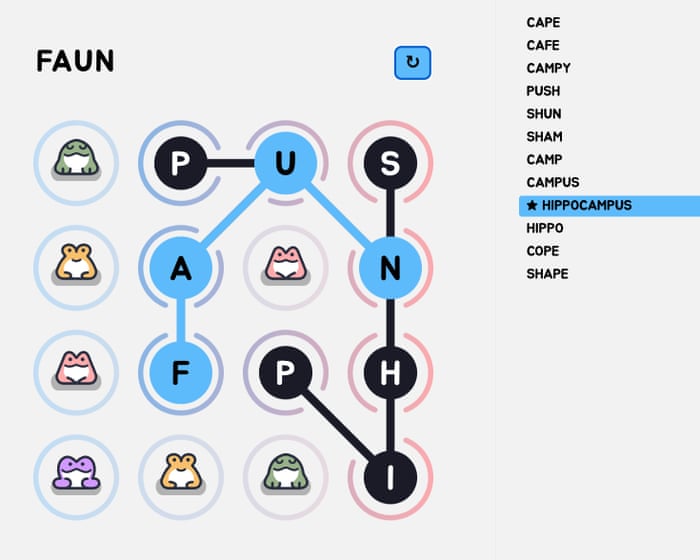
Ribbit is a new word puzzle game on the online platform Puzzmo that challenges players to find hidden words in a letter maze. The game uses a unique visual design where finding words turns letters into singing frogs, creating a fun and engaging experience similar to popular word games like Wordle.
Key Facts
Ribbit launched in early January and is part of Puzzmo’s collection of daily games.
The game involves finding words in a connected maze of letters.
When players find words with specific letters, those letters turn into little frogs that sing as players progress.
Ribbit offers one particularly long word per puzzle, such as "hippocampus."
The game encourages short daily play that feels rewarding and boosts a sense of accomplishment.
Ribbit is described as a good alternative to endless scrolling on phones, promoting intentional and engaging screen time.
Puzzmo also offers other puzzle games like Circuits and Bongo with different gameplay styles.
The game appeals to fans of word games like Spelling Bee and Wordscapes due to its clever design and enjoyable challenge.
Read the Original
Want the full story? Tap a source to open the original
article.
Doctors have been warned about the risks of prescribing research-grade peptides, which are chemicals sold online without regulation. These peptides are not approved for medical use and may be unsafe.
Key Facts
Research-grade peptides are chemicals used mostly for scientific studies, not for treating patients.
These peptides are sold online without regulation or safety checks.
Doctors have been advised not to prescribe these peptides to patients.
The peptides might carry health risks since their quality and effects are not verified.
Dr. Céline Gounder provided information about this warning on CBS News.
Research-grade peptides differ from approved medicines because they lack official approval.
There is concern about people buying and using these peptides without proper medical guidance.
Read the Original
Want the full story? Tap a source to open the original
article.
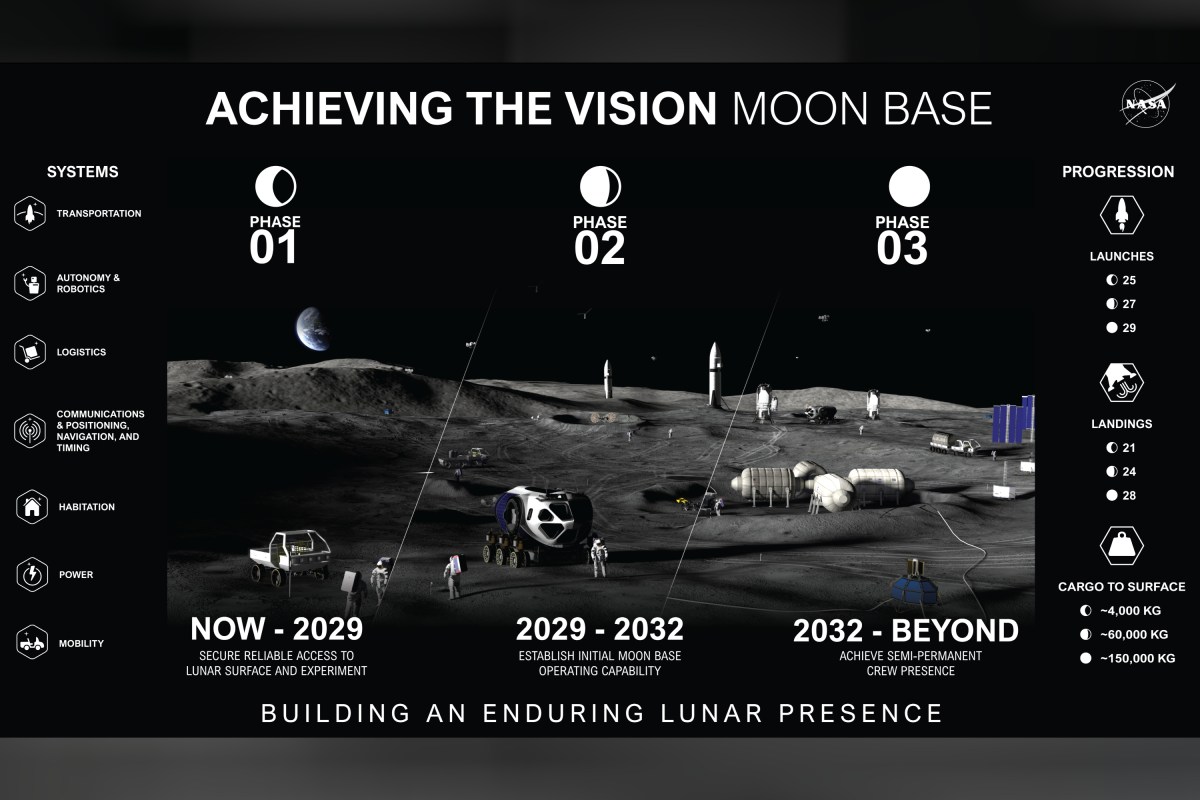
NASA has announced a three-phase plan to build a Moon Base near the lunar South Pole. The plan starts with robotic missions and testing, moves to early habitats and power systems, and ends with a permanent human presence on the Moon.
Key Facts
Phase One (until 2029) involves up to 25 robotic missions, testing rovers, drones, and communication systems.
About four tons of equipment will be delivered during Phase One to prepare the lunar surface.
Phase Two (2029–2032) focuses on building early habitats, larger solar panels, and starting nuclear power systems.
During Phase Two, NASA plans about 24 lunar landings delivering up to 60 tons of cargo.
Phase Three (from 2032 onward) aims for a continuously staffed Moon Base for long-term human missions.
Permanent habitats and advanced power systems will support extended stays on the Moon.
The Moon Base will serve as a launch point for future space exploration beyond the Moon.
NASA is working with international space agencies, companies, and universities on this project.
Read the Original
Want the full story? Tap a source to open the original
article.
Residential electricity prices in the US have risen about 30% since 2020. New lightweight, plug-and-play solar panels designed for balconies let people generate their own energy easily and cut their electric bills without high upfront costs.
Key Facts
US residential energy prices have increased by about 30% since 2020.
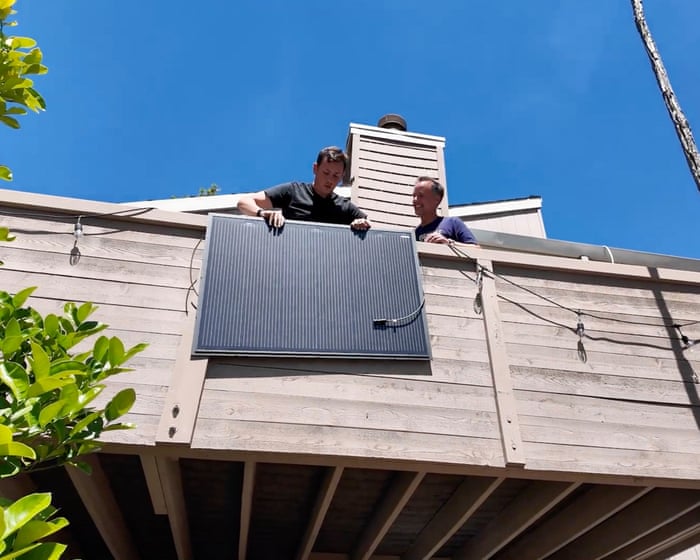
A new $400 solar kit from Bright Saver can be set up on a balcony or backyard and plugs into a normal wall outlet.
The kit weighs around 10 pounds and takes about 15 minutes to install without professional help.
Users can save about 10% to 25% on monthly electricity costs depending on the number of panels used.
Additional savings are possible if the solar panels are combined with batteries that store extra energy.
This balcony solar technology is very popular in Germany, with around 4 million units installed.
US adoption has been slower due to varied regulations and concerns from utilities about grid safety.
As of 2025, 34 US states and Washington DC have introduced laws to permit this type of solar, with some states already approving it.
Read the Original
Want the full story? Tap a source to open the original
article.
Spider-Noir is a new live-action series on Prime Video based on the Marvel comic Spider-Man Noir. It tells the story of a 1930s private investigator, Ben Reilly, played by Nicolas Cage, and offers viewers the choice to watch in either color or black and white to match the film noir style.
Key Facts
Spider-Noir follows Ben Reilly, a private investigator and former vigilante known as The Spider.
The series is set in 1930s New York and inspired by the film noir genre from the 1940s and 1950s.
Viewers can choose to watch the show in color or in black and white.
The black and white option aims to reflect the story’s dark, shadowy atmosphere and mystery elements.
Cast members say the black and white style influences how scenes are filmed and perceived.
Reviews are mostly positive, praising the unique style, though some critics find the dual-format choice frustrating.
Nicolas Cage and others hope the black and white option will attract younger audiences to classic noir storytelling.
Fans and cast note that both versions offer different experiences, with black and white enhancing the show's mood.
Read the Original
Want the full story? Tap a source to open the original
article.
Motorola’s 2026 Razr phones include flip models and a new tablet-style foldable called the Razr Fold. These phones focus on stylish design and unique features like color options and desk clock modes, but their technical performance is average.
Key Facts
Motorola’s 2026 lineup features Razr flip phones and the Razr Fold, a tablet-style foldable phone.
Razr phones have big screens when opened and large external displays for basic use without unfolding.
The phones offer unique design materials like wood, vegan leather, and fabric not common in other brands.
The Razr phones come in bright colors certified by Pantone for accurate shades.
Some special features include mini apps for the outer screen, desk clock displays, and a camcorder camera mode.
Performance and speed specs of the Razrs are average compared to other smartphones.
The Razrs are visually attractive but may not suit users who protect phones heavily with cases and screen protectors.
Motorola allows more use of the external screen than Samsung’s similar flip phones, helping reduce distractions by limiting app use without unfolding.
Read the Original
Want the full story? Tap a source to open the original
article.
Ofcom fined Youngtek Solutions Ltd £600,000 for not having proper age checks on its adult websites to stop children in the UK from accessing porn. The company did not follow UK rules between July and September 2025 but started using age verification after Ofcom’s warning.
Key Facts
Youngtek Solutions Ltd runs four adult websites without proper age checks during July-September 2025.
Ofcom fined the company £500,000 for the age verification failure and £100,000 for not responding to information requests.
UK law requires online porn sites to have strong age checks to prevent access by children, starting July 2025, under the Online Safety Act (OSA).
Ofcom can fine companies up to £18 million or 10% of their revenue and block non-compliant sites in serious cases.
Other porn companies have also received fines recently: £1 million to AVS Group Ltd, £800,000 to Kick Online Entertainment SA, and £1.35 million to 8579 LLC.
By January, 77 of the top 100 UK pornography sites had added age verification.
Ofcom emphasizes its commitment to using full enforcement powers to protect children online.
Read the Original
Want the full story? Tap a source to open the original
article.
NASA announced the first phase of its plan to build a moon base, including landers, rovers, and drones. They awarded contracts to four U.S. companies to supply this equipment, aiming to have it ready before astronauts return to the moon as soon as 2028.
Key Facts
NASA plans to build a moon base with various robots and equipment.
Contracts totaling hundreds of millions of dollars were given to four American companies.
Blue Origin will provide landers to deliver lunar buggies near the moon’s south pole.
Firefly Aerospace will supply drones to help set up the base.
The first Artemis astronauts are expected to land on the moon by 2028.
The second phase (2029-early 2030s) will build permanent infrastructure like power grids.
The third phase will create long-term habitats for astronauts during the 2030s.
NASA aims to support science, a lunar economy, and future Mars missions.
Read the Original
Want the full story? Tap a source to open the original
article.
Microsoft, Google, Amazon, and Meta have joined a nonprofit called Elemental Impact to support new technologies in data centers. The goal is to use data centers to test and develop cleaner energy methods that reduce pollution and address community concerns.
Key Facts
The initiative is led by Elemental Impact, a nonprofit investment firm focused on clean technology.
It targets advanced cooling, energy storage, and low-carbon building materials for data centers.
Data centers use a lot of electricity, which increases fossil fuel use and emissions.
Elemental Impact plans to invest $500,000 to $5 million in up to 10 startups by 2027.
The major tech companies helped fund the initiative and pay membership fees but have not committed more money yet.
The project also has support from philanthropic groups like Breakthrough Energy and Builders Vision Philanthropy.
The initiative aims to help startups connect with data center developers to quickly test new technologies.
Microsoft said this effort fits into its wider plan to address community concerns about energy use and environmental impact.
Read the Original
Want the full story? Tap a source to open the original
article.
Two leading AI companies, OpenAI and Anthropic, offer different views on how AI will affect jobs. Anthropic warns AI could replace many white-collar jobs, while OpenAI sees less job loss and more job creation so far.
Key Facts
Anthropic’s co-founder Chris Olah said AI might displace a large number of human jobs.
OpenAI CEO Sam Altman said earlier fears of job loss have not come true as expected.
Many tech companies, including Meta and Coinbase, have laid off workers partly due to AI-related cost changes.
Some layoffs aim to balance high AI technology expenses.
Research shows job losses have mostly happened in sectors less affected by AI, while new AI-related jobs are increasing.
Job openings for software engineers have grown by more than 18% compared to last year.
Some companies like Microsoft and Uber are reducing AI use because it is expensive and not as productive as hoped.
Experts say AI’s impact on jobs will vary by industry, causing job losses in some areas and job growth in others.
Read the Original
Want the full story? Tap a source to open the original
article.
Simon Rogers, Google's data editor, collected and analyzed Google search queries from the past 20 years to show what people commonly ask online. His book, *What We Ask Google*, reveals patterns in searches that reflect everyday life, parenting, and human curiosity.
Key Facts
The book is based on anonymized search data tracked by Google Trends since 2004.
It covers popular questions about parenting, such as why babies get hiccups or how to tell if a child has ADHD.
The author organizes the data into chapters with lists, graphs, and biographical notes.
Some search patterns are surprising, such as specific health questions common to certain countries or U.S. states.
Search interest in “take care of parents” recently surpassed “take care of kids,” showing changing family care responsibilities.
The book notes trends like spikes in searches about eye pain during the 2024 solar eclipse in certain U.S. areas.
The author works for Google and presents a mostly positive view of how the internet serves people’s questions.
The book does not deeply explore the effects of AI on search or the broader social and political impacts of online searches.
Read the Original
Want the full story? Tap a source to open the original
article.