OpenAI is releasing a special version of its GPT-5.5 AI model called GPT-5.5-Cyber to trusted cyber defenders who protect important infrastructure. This version has fewer safety limits and can help find software bugs, study malware, and simulate cyberattacks, with some tasks still blocked to prevent misuse.
Key Facts
GPT-5.5-Cyber is being given to vetted cyber defenders responsible for critical infrastructure security.
It performs nearly as well as Anthropic’s Mythos Preview in finding and exploiting software bugs.
This version has fewer restrictions than the public model but blocks harmful uses like stealing credentials or creating malware.
Cyber defenders can use it to write bug proofs of concept, study malware, and run security simulations.
OpenAI also offers another GPT-5.5 version with more safeguards for general cybersecurity tasks like reviewing patches.
Advanced AI models like GPT-5.5 and Mythos can complete complex simulated cyberattacks, showing rapid progress in AI capabilities.
OpenAI permits broader access with varied guardrails, while Anthropic restricts Mythos use to about 40 organizations.
The White House is considering new government actions to manage future AI model releases and security risks.
Read the Original
Want the full story? Tap a source to open the original
article.
Many Americans are using artificial intelligence (AI) tools to get basic advice on how much money they need to retire. While AI can help with simple financial questions and run simulations of future scenarios, experts warn that it is not yet reliable for complex retirement planning due to its limited understanding of tax rules, Social Security, and individual risks.
Key Facts
About 20% of Americans say they use AI chatbots for financial advice.
Half of workers who use AI at work also use it for retirement planning.
The typical retirement savings balance is $40,000, but many say they need $1.5 million to retire comfortably.
Social Security benefits could be cut by up to 20% in six years if lawmakers don’t act.
AI can run Monte Carlo simulations, which predict how long retirement savings might last in different financial scenarios.
Experts say AI tools struggle with complex retirement details like taxes, lifespan, and Social Security rules.
Some economists caution that AI often bases advice on traditional financial guidance that may not suit everyone’s needs.
AI sometimes gives incorrect information about Social Security, which has very complicated rules.
Read the Original
Want the full story? Tap a source to open the original
article.
Google announced a new product called the Fitbit Air, a fitness tracker without a screen. It aims to compete with similar screenless devices like the Whoop that continuously monitor health data.
Key Facts
Fitbit Air is a fitness tracker made by Google.
It does not have a screen.
The device is designed to track health data all day and night.
Fitbit Air competes with Whoop, another screenless fitness tracker.
Fitness trackers have moved from simple workout tools to full-time health monitors.
The announcement was shared by a tech journalist on CBS News.
Users can collect health information without needing to check a screen.
Fitbit is focusing on passive health data collection, meaning it works in the background without user effort.
Read the Original
Want the full story? Tap a source to open the original
article.
Former board members of OpenAI, including the mother of Elon Musk’s four children, have testified in a legal trial involving Elon Musk and Sam Altman. The trial, focused on OpenAI’s leadership and direction, is concluding its second week.
Key Facts
The trial involves OpenAI, a company that works on artificial intelligence.
Elon Musk and Sam Altman, two major tech leaders, are involved in the case.
Former OpenAI board members have given testimony in the trial.
One witness is the mother of Elon Musk’s four children.
The trial is in its second week and is nearing conclusion.
The case is considered important for the future leadership of OpenAI.
CBS News and Axios are covering the developments in the trial.
Read the Original
Want the full story? Tap a source to open the original
article.
A new report shows that artificial intelligence (AI) was the main reason for 26% of job cuts in April, the second month in a row it led layoffs. While some companies see fewer jobs due to AI, others benefit financially by investing in AI technologies.
Key Facts
In April, 21,490 jobs were cut because of AI, making up 26% of the total 88,387 layoffs.
Overall job cuts increased by 38% in April compared to March.
The technology sector had the highest number of job cuts, with 33,361 layoffs.
Some companies moved money from paying workers to investing more in AI.
Other reasons for layoffs included company closures, cost-cutting, tariffs announced by President Trump, and the war in Iran.
Data suggests white-collar workers may be more affected by AI-related layoffs than blue-collar workers.
Labor statistics show a rise in layoffs in fields vulnerable to AI, like professional and business services.
Economists believe AI could also create new jobs by increasing demand for roles that did not exist before.
Read the Original
Want the full story? Tap a source to open the original
article.
Mozilla used an AI tool called Mythos to find 271 security weaknesses in Firefox software within two months. They developed a custom program that helped the AI work more accurately, resulting in almost no false reports of problems.
Key Facts
Mozilla found 271 security vulnerabilities in Firefox using the AI model Mythos.
The process took about two months.
Mozilla built a special “harness” that guides the AI through specific tasks, improving accuracy.
The harness lets the AI use the same tools and testing methods as human developers.
Mozilla says the AI-made reports had almost no false positives, meaning the bugs found were real.
The system uses a second AI to check the first AI’s findings to ensure reliability.
Mozilla shared detailed bug reports and test cases for some of the vulnerabilities they found.
This shows progress in using AI to help secure software automatically.
Read the Original
Want the full story? Tap a source to open the original
article.
Moderna started early research in 2024 on an mRNA vaccine targeting hantaviruses, focusing on strains common in Asia and Europe, not the United States. This work is part of a scientific effort to improve vaccines and is not linked to any ongoing U.S. outbreak or government vaccination program.
Key Facts
Moderna is collaborating with Korea University on early-stage, preclinical research for a hantavirus mRNA vaccine.
The research focuses on hantaviruses causing Hemorrhagic Fever with Renal Syndrome (HFRS), mainly found in East Asia and parts of Europe.
South Korea reports 300 to 400 HFRS cases each year, mostly among military personnel and people in rural areas.
Hantavirus is a family of viruses with different strains in various parts of the world; vaccines may not protect against all strains.
Moderna's vaccine aims to provide broader protection against multiple hantavirus strains.
The vaccine development is unrelated to the Sin Nombre virus strain, which causes hantavirus cases in the U.S. and leads to Hantavirus Pulmonary Syndrome (HPS).
There is no approved hantavirus vaccine currently available in the U.S.
Some social media posts falsely claim Moderna’s work is tied to secret or political agendas, but the research is standard scientific progress.
Read the Original
Want the full story? Tap a source to open the original
article.
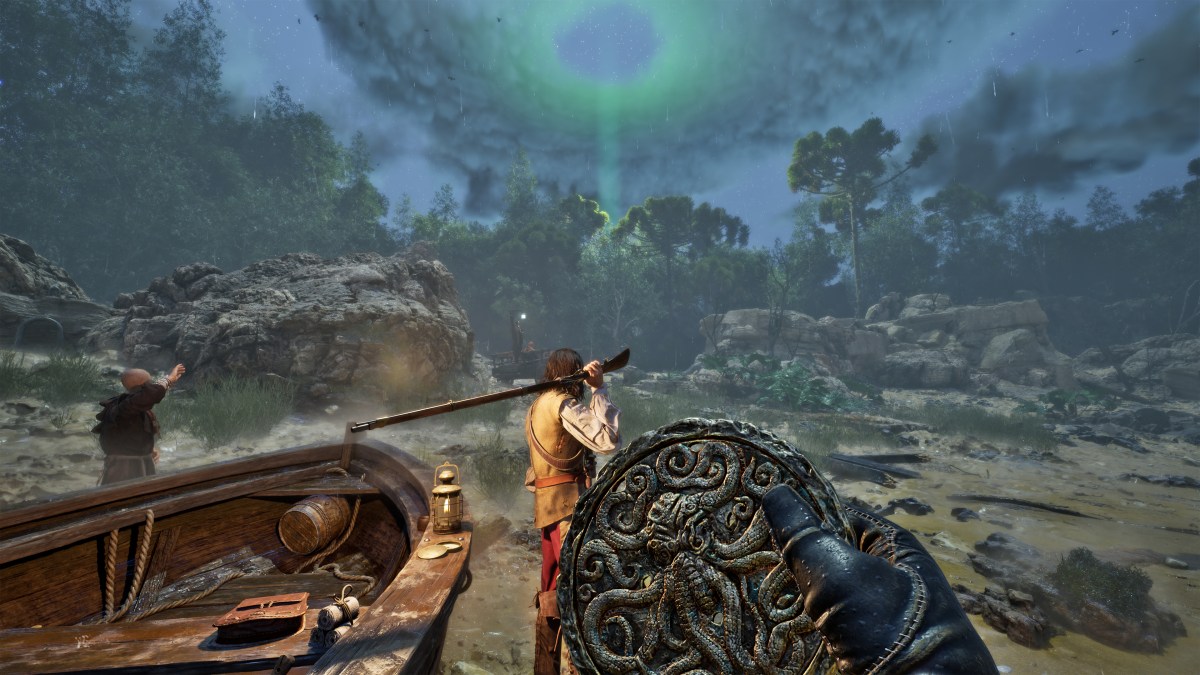
At Nacon Connect 2026, the French video game publisher Nacon showcased several new games, including "Hunter: The Reckoning - Deathwish," "Werewolf: The Apocalypse - Rageborn," and "Dracula: The Disciple," all set for release in 2027. The event also highlighted the cooperative horror game "The Mound: Omen of Cthulhu," which will launch on July 15, 2026.
Key Facts
Nacon is a French company that publishes video games and makes gaming accessories.
"Hunter: The Reckoning - Deathwish" is a first-person adventure game planned for summer 2027, allowing player character customization using the "Hunter: The Reckoning" rulebook.
"Werewolf: The Apocalypse - Rageborn" will be a top-down game where players can switch between human, wolf, and werewolf forms, releasing in 2027.
"Dracula: The Disciple" is a first-person puzzle game about a character seeking help from Dracula, expected in 2027.
"The Mound: Omen of Cthulhu" is a cooperative horror game set in a dangerous jungle and will release on July 15, 2026.
A new quest for "Greedfall: The Dying World" is included in the Black Mass DLC pack for the Deluxe edition.
Other games shown include "Hunting Simulator 3," "Edge of Memories," and "Curse of the Crimson Stag."
The showcased games span different genres, including first-person, puzzle, open-world, and metroidvania styles.
Read the Original
Want the full story? Tap a source to open the original
article.
Emil Michael, a top Pentagon technology official, said the Defense Department will not rely on a single AI company, Anthropic, for its needs. He described the current situation with AI as an important cybersecurity moment and emphasized diversifying AI sources.
Key Facts
Emil Michael is the under secretary of Defense for research and engineering.
He spoke at the AI+ Expo about the Pentagon’s approach to AI companies.
The Pentagon will avoid depending on just one AI model or company.
This statement comes despite the White House being more positive toward Anthropic.
The term “cyber moment” refers to a significant time in technology and security involving AI.
The Pentagon seeks multiple AI solutions for national security needs.
Anthropic is an AI company involved in government discussions about AI technology.
Read the Original
Want the full story? Tap a source to open the original
article.
Meta has filed a legal challenge against the UK regulator Ofcom over how it calculates fees and fines under the Online Safety Act. Meta argues that fines based on global revenue instead of UK-specific revenue are unfair, and the case will be heard in October.
Key Facts
Meta owns Facebook and Instagram.
Ofcom can fine companies up to 10% of their qualifying worldwide revenue or £18 million, whichever is higher.
Meta reported $201 billion in revenue last year, meaning a potential fine could reach $20 billion.
Ofcom bases fees on a company's global revenue (Qualifying Worldwide Revenue or QWR).
Meta wants fees and fines to be based only on revenue from services used in the UK.
The legal hearing for Meta’s challenge is scheduled for October 13-14.
Ofcom says its fee system follows the law and will defend it strongly.
Subscription fees and fines under the Online Safety Act help fund Ofcom’s work, shifting income to tech companies like Meta.
Read the Original
Want the full story? Tap a source to open the original
article.
Bumble’s CEO, Whitney Wolfe Herd, announced the company will remove its swipe feature and replace it with a new AI-driven way to match people. The change will begin in some markets late this year as Bumble tries to attract more users and compete with other dating apps.
Key Facts
Bumble plans to end its swipe feature, a popular way users matched on the app.
The company will shift toward using artificial intelligence (AI) for matchmaking.
Changes will start in select markets in the fourth quarter of 2024.
Bumble will change its "women-make-the-first-move" rule to be more flexible but keep its core idea.
Bumble is the second-largest dating app after Tinder, which still uses swiping.
Hinge, another competitor, never used swiping and requires users to interact with profiles.
Bumble’s stock has lost over 90% of its value since going public in 2021.
Users have become tired of swiping, and Bumble aims to address this fatigue with new features.
Read the Original
Want the full story? Tap a source to open the original
article.
Meta, the company behind Facebook and Instagram, is taking the UK media regulator Ofcom to court over new fees and potential fines introduced by the Online Safety Act. Meta argues the way Ofcom calculates these charges is unfair, while Ofcom says it will defend its position.
Key Facts
The Online Safety Act started in July 2025 to protect users from harmful online content.
Ofcom’s work on online safety is funded by fees from tech companies making more than £250 million a year worldwide.
Meta challenges Ofcom’s fee calculations and penalty rules, calling them disproportionate and unfair.
The dispute involves how worldwide revenue is counted and how penalties are shared between related companies.
Ofcom can fine companies up to 10% of their qualifying worldwide revenue or £18 million, whichever is higher.
Epic Games and an industry trade body may join the court case.
The court will hold a full hearing in October after a preliminary hearing in June.
Meta says penalties should be based only on revenue from services in countries where they operate, including the UK.
Read the Original
Want the full story? Tap a source to open the original
article.
SpaceX, a company led by Elon Musk, has agreed to provide computing power to Anthropic, an artificial intelligence (AI) company. Anthropic will use SpaceX’s large Colossus 1 data center, which contains more than 220,000 Nvidia GPUs, to support its growing AI needs.
Key Facts
SpaceX signed a deal to supply computing power to Anthropic.
Anthropic is an AI company increasing its product demand.
SpaceX’s Colossus 1 data center has over 220,000 Nvidia GPUs. GPUs help process large amounts of data quickly.
The deal helps Anthropic access a large amount of computing capacity.
This partnership supports Anthropic’s AI development work.
The announcement was made on Wednesday.
Elon Musk leads SpaceX.
Read the Original
Want the full story? Tap a source to open the original
article.
"Mixtape" is a video game that tells the story of three teenagers spending their last day together in their hometown. The game uses a large collection of classic rock songs to create scenes and gameplay that show the emotions and experiences of being a teenager.
Key Facts
The game "Mixtape" features a main character named Stacy Rockfort, who plans to visit New York to pursue her dream job.
Stacy and her two friends, Cassandra and Slater, spend their last day in their small town before a planned road trip.
The game includes over 20 musical sequences featuring well-known rock artists like Roxy Music, Iggy Pop, Joy Division, and Devo.
Gameplay varies from fast-paced chases to relaxed, emotional moments and even simple tasks like making a slushie or visiting a video rental store.
The story is set in a vague 1990s time period and captures the feelings and drama of being a teenager.
It mixes interactive storytelling with music, creating an experience similar to watching a music video.
Players interact with friends and objects through a classic "point and click" style dialogue system.
The game aims to show how music connects deeply with emotions and personal experiences.
Read the Original
Want the full story? Tap a source to open the original
article.
Google has introduced the Fitbit Air, a new fitness tracker without a screen that focuses on collecting health data. It pairs with a redesigned app called Google Health, which replaces the Fitbit app and includes a new AI health coach feature.
Key Facts
The Fitbit Air is a small, screenless device that fits into different wristbands and tracks health data like heart rate and skin temperature.
It does not have a display and is worn under fabric or plastic bands.
The device can last about one week on a single charge and can store one day of data without connecting to a phone.
Google offers several band styles and colors, including a special edition with basketball player Steph Curry.
Fitbit Air includes standard sensors such as heart rate monitor, accelerometer, infrared SpO2 (which measures oxygen levels), and skin temperature.
It has a vibration motor for alarms but does not notify phone calls or messages like a smartwatch.
The Fitbit Air costs $99.99 and comes with a three-month subscription to Google Health Premium, an updated version of Fitbit Premium with AI health coaching.
The Fitbit app is being renamed Google Health, featuring a new design and no longer heavily showing the Fitbit brand.
Read the Original
Want the full story? Tap a source to open the original
article.
A researcher from the University of Amsterdam studied how social media creates divided groups, called echo chambers, where users mostly interact with like-minded people. He found that these echo chambers form naturally because of how social media is built, not just because of algorithms or user choices. Surprisingly, small “filter bubbles” that show users some similar opinions can help reduce extreme division.
Key Facts
Social media platforms naturally create echo chambers where users mostly see opinions similar to their own.
This happens due to the basic design of social media, not just because of algorithms or user negativity.
Users tend to leave groups if they find too many people disagree with their opinions, causing polarization.
Small groups of users who share similar views (about 10%) help make communities more tolerant and stable.
Filter bubbles, which show people some content they agree with, can actually reduce extreme division instead of causing it.
The study used AI models to simulate user behavior and confirmed these patterns.
An analysis of a real social media group, the subreddit r/MensRights, showed that members left when their posts were too different from the group’s common views.
Previous attempts to fix social media’s negative effects by changing algorithms have not been successful because the problem is built into the platform’s structure.
Read the Original
Want the full story? Tap a source to open the original
article.
In 2018, Elon Musk tried to hire OpenAI’s founding team to create a new AI unit within Tesla. This move was part of a legal dispute where Musk claims OpenAI’s leaders wrongly changed the company from a nonprofit to a for-profit, while OpenAI says Musk wanted control over the company.
Key Facts
Elon Musk wanted OpenAI founders Sam Altman, Greg Brockman, and Ilya Sutskever to work at Tesla on AI in 2018.
Musk proposed making OpenAI a part of Tesla or having Altman join Tesla’s board.
Musk left OpenAI’s board in early 2018 after disagreements over the company’s future.
OpenAI changed from a nonprofit to a for-profit company with a charitable division.
Musk is suing OpenAI claiming the founders wrongly profited from this change.
OpenAI says Musk wanted to control the company and its AI goals, which the founders did not accept.
Shivon Zilis, a close Musk associate, testified about the discussions and served as a key link between Musk and OpenAI’s founders.
OpenAI is now valued at about $852 billion and may go public soon.
Read the Original
Want the full story? Tap a source to open the original
article.
Mixtape is a video game set in a small town in northern California that follows three teenagers on their last day of high school. The game combines 90s music and animated flashbacks with interactive gameplay that turns songs into playable music videos.
Key Facts
The story centers on Rockford, Slater, and Cassandra during their final high school day.
Rockford creates a mixtape to capture their shared memories triggered by the songs.
The game uses a mix of animation styles, including stop-motion and real-world footage combined with gameplay elements.
Players interact with music tracks by performing actions in rhythm with the songs, like headbanging or controlling animated tongues.
Some scenes turn teen moments into imaginative minigames, such as navigating a passed-out friend in a shopping trolley across a highway.
The soundtrack includes popular 90s bands like Silverchair, Smashing Pumpkins, Portishead, and Devo.
The game’s narration delivers snarky commentary about the songs, similar to films like High Fidelity.
While visually impressive and fun, the game’s story lacks deep emotional impact and a strong concluding moment.
Read the Original
Want the full story? Tap a source to open the original
article.
Porsche’s Manthey Racing team has created an upgrade kit for the electric Taycan Turbo GT that makes it faster and better suited for racing at the Nürburgring track in Germany. The kit improves aerodynamics, increases downforce, and boosts power, helping the car achieve a faster lap time.
Key Facts
Manthey Racing is a Porsche-owned racing team specializing in improving Porsche cars for track performance.
The new Manthey Kit is for the Taycan Turbo GT with the Weissach package, which is a factory weight-saving option.
The Taycan Turbo GT’s 0-60 mph time improves slightly from 2.2 to 2.1 seconds with this setup.
Porsche driver Lars Kern set a Nürburgring lap time of 7:07.5 in the standard Taycan Turbo GT with Weissach.
With the Manthey Kit, the lap time was cut to 6:55.553, saving about 12 seconds.
The kit adds large aerodynamic parts like a rear wing, front wheel arch louvres, underbody diffusers, and special rear wheels.
Downforce is increased from 209 lbs to 638 lbs at 124 mph, helping the car stick to the road better.
The top speed with the kit rises to 192 mph, producing 1,631 lbs of downforce to improve grip.
Read the Original
Want the full story? Tap a source to open the original
article.