NASA and SpaceX have chosen the next group of astronauts who will travel to the International Space Station. This will be the 13th mission where NASA works together with SpaceX through the Commercial Crew Program.
Key Facts
NASA named new astronauts for an upcoming trip to the space station.
SpaceX, led by Elon Musk, will provide the spacecraft.
This flight is the 13th mission in NASA’s Commercial Crew Program.
The Commercial Crew Program is a partnership to send astronauts to space using private companies.
The mission will continue the work of supporting the International Space Station in orbit.
Read the Original
Want the full story? Tap a source to open the original
article.
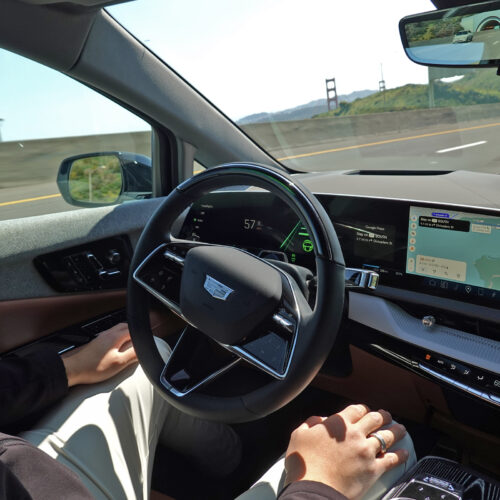
General Motors’ Super Cruise hands-free driving system has reached over a billion miles driven on highways in the US and Canada since its launch in 2017. GM plans to release an upgraded version with more advanced features, including the ability for drivers to take their eyes off the road on highways, expected around 2028.
Key Facts
Super Cruise launched in 2017 on the Cadillac CT6 and works only on certain highways that are mapped and scanned in advance.
The system includes a camera that watches the driver's eyes to ensure they remain focused on the road.
Super Cruise is now used in nearly 750,000 vehicles and has been driven over 1 billion miles.
The mapped highway network for Super Cruise has grown from 160,000 miles to about 700,000 miles.
On average, trips using Super Cruise cover 17 miles and last 24 minutes.
The system's use is doubling every year, with millions of hours and miles recorded in 2025.
GM is developing a more advanced version (still called Super Cruise) that allows drivers to look away from the road on highways, aiming for a 2028 release in the Cadillac Escalade IQ.
This new version will move from a level 2+ (driver assist) to level 3 (partial automation) system.
Read the Original
Want the full story? Tap a source to open the original
article.
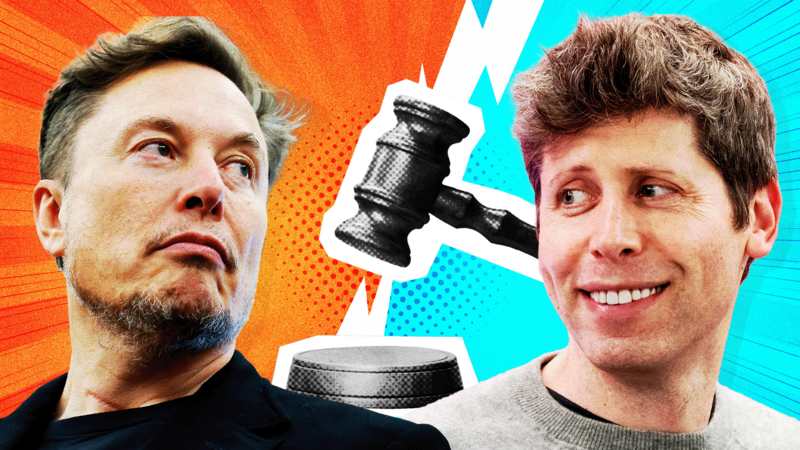
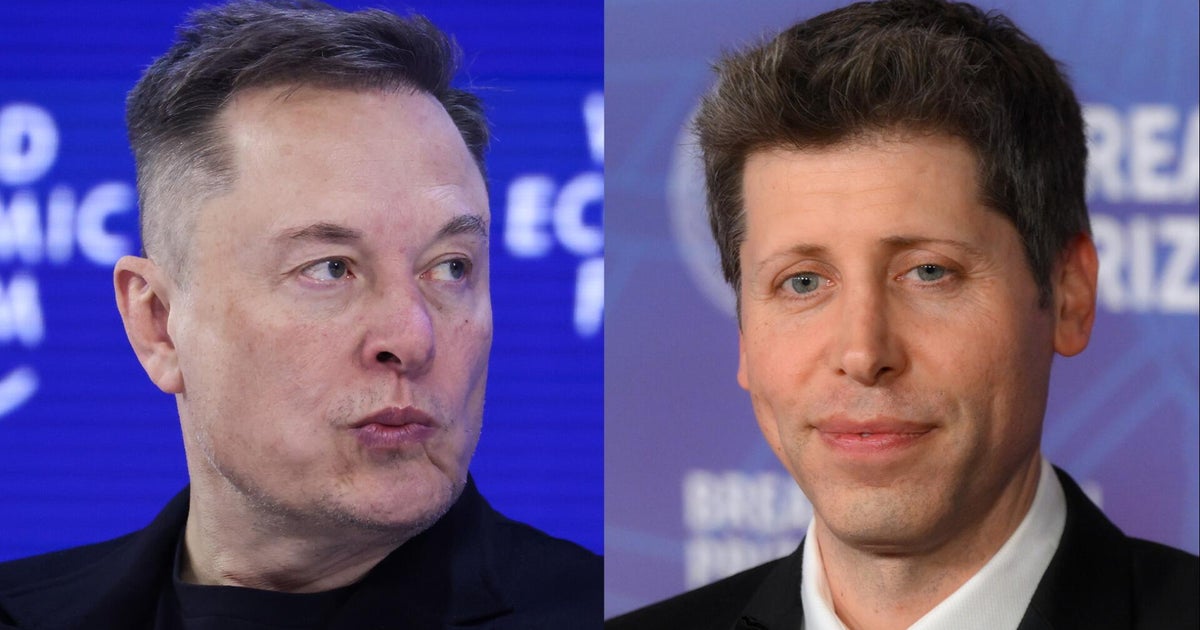
Elon Musk is suing OpenAI and its CEO Sam Altman for breaking their original agreement by turning the company into a for-profit business. The court case involves Musk seeking leadership changes and damages, but it mainly focuses on personal conflicts rather than broader AI safety questions.
Key Facts
Elon Musk and Sam Altman, co-founders of OpenAI, are in a legal dispute with Musk suing OpenAI for breach of contract.
Musk claims OpenAI restructured into a for-profit without his agreement.
Musk left OpenAI in 2018 and now runs a rival AI company called xAI.
Musk wants Altman and OpenAI president Greg Brockman removed and seeks over $134 billion in damages.
The case could have raised important questions about AI’s purpose and safety but instead centers on personal conflicts and money.
Musk’s AI company xAI has been criticized for misuse of its technology and environmental concerns.
Winning for Musk could hurt OpenAI’s funding, while Altman’s side wants to keep the company’s for-profit model.
The trial is expected to reveal personal details and disputes rather than focus on AI’s future or benefits to humanity.
Read the Original
Want the full story? Tap a source to open the original
article.
Joby Aviation has tested a new fully electric aircraft in New York City. This aircraft can take off and land vertically like a helicopter but is quieter, faster, and produces zero emissions, potentially changing how people travel around the city.
Key Facts
The aircraft uses six propellers that tilt to allow both vertical takeoff/landing and forward flight.
It can fly up to speeds of 200 mph and reach midtown Manhattan from JFK airport in about 10 minutes.
The aircraft is much quieter than helicopters, producing about 45 decibels compared to more than 100 decibels from helicopters.
It produces zero carbon emissions, unlike helicopters that emit significant carbon dioxide per hour.
Joby Aviation claims the design is safer due to its six propellers and uses wings as well as blades to fly.
The aircraft’s noise blends into normal city sounds when flying at about 1,000 feet altitude.
New York has groups opposing helicopter noise and nonessential flights, but the electric aircraft may help reduce these issues.
The aircraft’s design looks like a blend between a helicopter and a drone but is classified as a new type of aircraft.
Read the Original
Want the full story? Tap a source to open the original
article.
Zoox, a self-driving car company owned by Amazon, created a special robotaxi designed specifically for ride-hailing services in cities like Las Vegas and San Francisco. Their vehicle has sensors placed high on the corners for better vision and a unique shape that can drive forward or backward equally well, making it very agile in tight city streets.
Key Facts
Zoox was bought by Amazon in 2020.
Their robotaxi uses sensors located on small ledges at the top four corners for wide and clear surroundings view.
The vehicle does not have a traditional front hood, allowing better sensor placement.
It has a symmetrical design that lets it drive in both directions without turning around.
Both the front and rear axles steer, enabling the car to "crab walk" sideways.
Important components like batteries and heating/cooling units are duplicated on both ends for safety.
The robotaxi interior aims for a calm and comfortable experience with features like cup holders and wireless charging pads.
Zoox focuses on making the robotaxi highly maneuverable for dense urban environments.
Read the Original
Want the full story? Tap a source to open the original
article.
The article discusses concerns about online child sexual abuse happening on platforms run by Mark Zuckerberg. It suggests that Zuckerberg has not taken enough action to stop this problem.
Key Facts
Children are experiencing abuse on social media platforms controlled by Mark Zuckerberg.
There are calls for Zuckerberg to change his priorities to better protect children.
The article implies current efforts to prevent abuse are insufficient.
It raises concern about the safety of users, especially children, on these platforms.
The focus is on the responsibility of a major tech leader to prevent harmful content.
Read the Original
Want the full story? Tap a source to open the original
article.
Some US startups are working on editing genes in human embryos to try to prevent diseases or enhance abilities. This idea raises ethical questions about whether it is right to change human embryos genetically.
Key Facts
US companies want to use genome editing on human embryos.
Genome editing means changing DNA to remove or add traits.
These companies think it could improve health by stopping diseases.
The process involves correcting a small number of cells early in development.
There is debate about whether it is ethical to alter embryos this way.
Gene editing in embryos could lead to enhanced humans with better abilities.
The topic causes concern among scientists, ethicists, and the public.
The technology is seen as one of the most important health innovations in the century.
Read the Original
Want the full story? Tap a source to open the original
article.
Elon Musk and Sam Altman, co-founders of the AI company OpenAI, are now in a legal battle in a federal court in California. Musk claims Altman cheated him out of millions and broke promises about OpenAI’s original nonprofit goals, while OpenAI denies these claims and says Musk is acting out of jealousy.
Key Facts
Elon Musk and Sam Altman co-founded OpenAI in 2015 as a nonprofit organization.
OpenAI’s goal is to develop artificial general intelligence (AGI) that benefits humanity.
Musk accuses Altman of illegally turning OpenAI into a for-profit company and cheating him financially.
Musk is suing Altman, OpenAI co-founder Greg Brockman, and Microsoft, which he says helped monetize OpenAI.
The lawsuit demands billions of dollars in damages and wants Altman removed from the company.
OpenAI says Musk left the company and is now trying to harm a competitor.
The court trial will last about one month, with both Musk and Altman expected to testify.
A jury and Judge Yvonne Gonzalez Rogers will decide the case without special treatment for either party.
Read the Original
Want the full story? Tap a source to open the original
article.
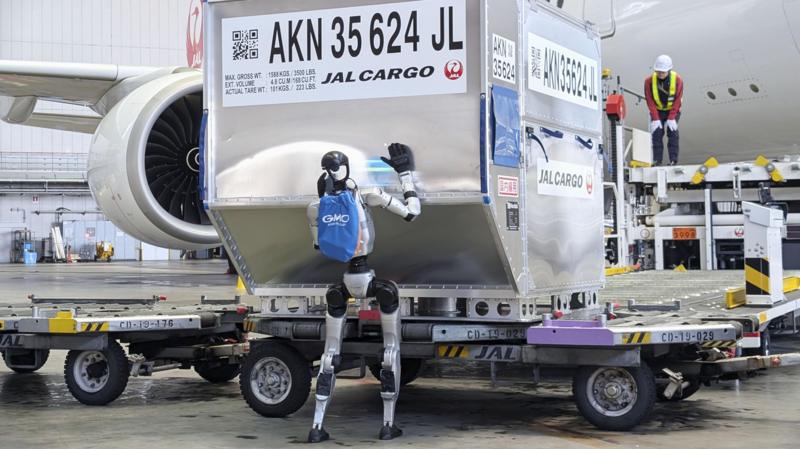
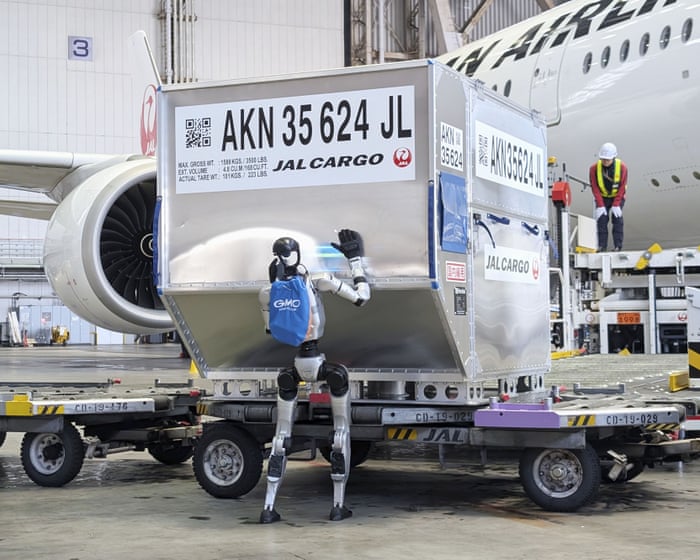
Japan Airlines will start using humanoid robots to help with ground handling tasks at Tokyo's Haneda airport in a two-year trial beginning in May. The robots will initially load and unload cargo containers to reduce workers' physical workload amid labor shortages in the airline industry.
Key Facts
Japan Airlines (JAL) plans to deploy humanoid robots at Haneda airport for ground handling tasks.
The trial will last two years and start in May.
Robots will first be used to load and unload cargo containers.
JAL faces a labor shortage due to increasing tourism and fewer working-age people in Japan.
The airline employs about 4,000 ground handling staff.
Future robot tasks may include cabin cleaning and operating ground support equipment.
Other Japanese airports already use robots for security and retail services.
Some duties, like safety management, still require human workers.
Read the Original
Want the full story? Tap a source to open the original
article.
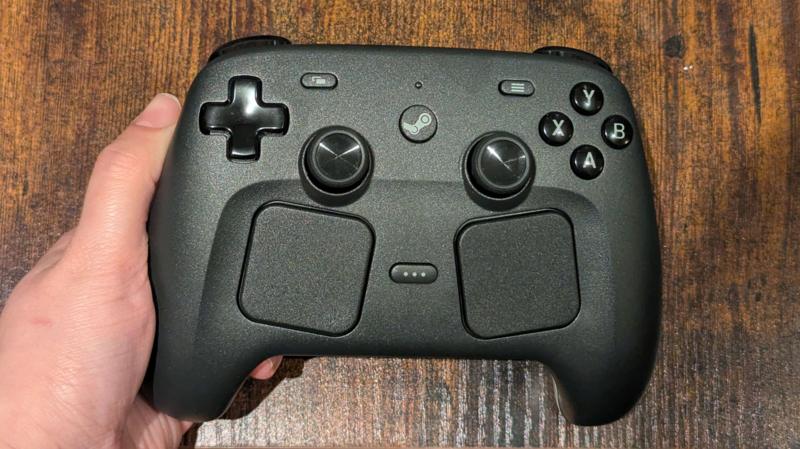
Valve will release its new Steam Controller on 4 May for £85 in the UK and $99 in the US. The wireless controller is designed for PC gaming and Valve's Steam Deck, and its price has caused mixed reactions among gamers.
Key Facts
The Steam Controller is Valve's second generation gamepad.
It works with PCs, the Steam Deck handheld console, and is meant for Valve's Steam gaming platform.
The controller costs £85 in the UK and $99 in the US, about twice the price of the original 2015 version.
It uses haptic trackpads to simulate mouse controls and has a magnetic "puck" for syncing and charging.
The controller does not have swappable parts or customization options.
Some gamers think the price is too high compared to standard controllers from Nintendo, Xbox, and PlayStation.
Others feel the price is reasonable for the advanced technology inside.
The Steam Controller is not compatible with other gaming consoles.
Valve is working on another gaming PC, the Steam Machine, expected to launch in the first half of 2026, but this may cost more due to rising hardware prices.
Read the Original
Want the full story? Tap a source to open the original
article.
Elon Musk has filed a lawsuit against OpenAI that experts say is more about business strategy than ethics or philosophy. The case is important because it happens just as a new company formed from SpaceX and Musk’s AI firm, xAI, plans to go public, which could affect competition with OpenAI.
Key Facts
Elon Musk filed a lawsuit against OpenAI.
The lawsuit is seen as a strategic legal move, not a philosophical or ethical dispute.
Bernard Benhamou, an expert on internet governance, commented on the case.
The lawsuit coincides with an upcoming IPO (initial public offering) of a new company combining SpaceX and xAI.
A legal win for Musk could impact OpenAI, seen as a major competitor.
The case takes place in the emerging and uncertain field of artificial intelligence.
The lawsuit is receiving attention in the tech industry and media.
The article was published by France 24 on April 28, 2026.
Read the Original
Want the full story? Tap a source to open the original
article.
Zines are small, self-published booklets often made by hand and linked to cultural movements. Some creators worry about artificial intelligence (AI) changing the art form, while others use AI tools to help design and create zines more efficiently, especially online.
Key Facts
Zines have a long history in activism and culture, often being handmade and produced in small runs.
Some zine creators fear AI reduces human creativity and critical thinking.
A few artists and writers are using AI technology to help with layout, artwork, and website coding for zines.
Most AI-made zines exist only online rather than in print form.
Some zine makers protest AI by making anti-AI zines to express their concerns.
AI is viewed by some as a tool to help artists lacking technical skills while others see it as threatening traditional handmade work.
Polyester zine now uses AI detectors to prevent publishing AI-generated content.
The community remains divided, balancing AI's convenience with desires to keep zine culture handmade and personal.
Read the Original
Want the full story? Tap a source to open the original
article.
OpenAI has changed its agreement with Microsoft, allowing it to sell its AI models on multiple cloud platforms like Amazon Web Services (AWS) and Google Cloud. This ends Microsoft's exclusive cloud deal and lets OpenAI reach more customers through different cloud providers.
Key Facts
OpenAI's new deal lets it offer AI models on several cloud platforms, not just Microsoft's Azure.
Amazon plans to make OpenAI’s models available on its AWS Bedrock platform soon.
Microsoft’s exclusive rights to OpenAI’s products now become non-exclusive until 2032.
The previous agreement included a clause about artificial general intelligence (AGI), which has now been removed.
Microsoft will receive up to 20% of OpenAI’s revenue until 2030, but with a capped limit.
OpenAI must still release new models on Microsoft Azure first before other clouds.
Google Cloud is considering working with OpenAI under the new terms.
This change may help OpenAI attract investors before its planned public stock offering (IPO) this year.
Read the Original
Want the full story? Tap a source to open the original
article.
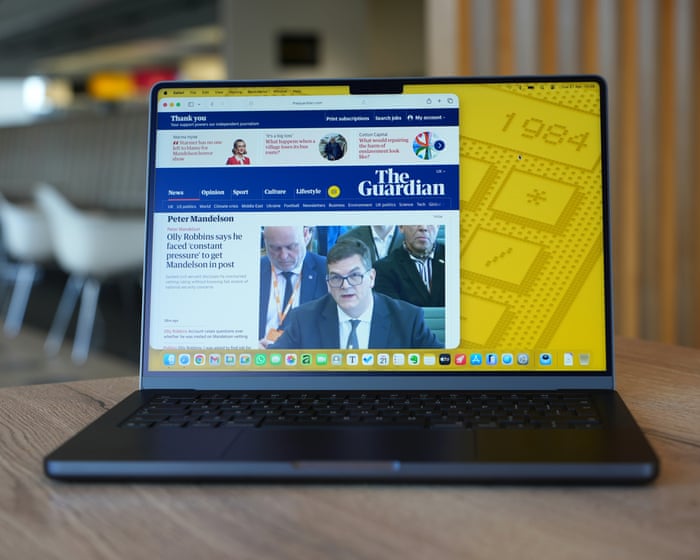
Apple has released the new MacBook Pro with three versions of its latest M5 chip, offering strong performance and long battery life. The laptop keeps the same design as before but includes upgrades like a bright mini LED screen, fast charging, and improved wireless connections in higher-end models.
Key Facts
The new MacBook Pro comes in 14-inch and 16-inch sizes with three chip options: M5, M5 Pro, and M5 Max.
Prices start at £1,699 for the 14-inch M5 model and go higher for M5 Pro and M5 Max versions.
The M5 chip is about 20% faster than the previous M4 chip and faster than the 2021 MacBook Pro M1 Pro.
M5 Pro improves multi-core processing by about 70% and doubles graphics speed compared to M5, while M5 Max doubles GPU cores again.
Only the M5 Pro and M5 Max models support wifi 7, Bluetooth 6, Thread, and faster Thunderbolt 5 ports; the base M5 lacks these features.
The laptop has a bright 14.2-inch mini LED screen with 120Hz refresh rate and optional nano texture glass to reduce glare.
It can fast charge to 60% in 35 minutes and fully charge in about 90 minutes.
The design with aluminium body, quality keyboard, trackpad, and webcam has stayed mostly the same since its 2021 introduction.
Read the Original
Want the full story? Tap a source to open the original
article.
Japan Airlines will test humanoid robots to help handle luggage and cargo at Tokyo’s Haneda airport starting in May. The robots aim to reduce the workload on human staff amid a shortage of workers and rising tourist numbers.
Key Facts
Japan Airlines will start a trial using humanoid robots as baggage handlers in May 2026.
The trial will run until 2028 and takes place at Haneda airport, which serves over 60 million passengers yearly.
The robots are made by Chinese company Unitree and can push luggage and cargo on the tarmac.
Robots need charging breaks every two to three hours but can reduce human physical labor.
Key tasks like safety management will still be done by people.
Japan faces labor shortages due to a shrinking, aging population and increased tourism.
More than 7 million tourists arrived in Japan in early 2026, following a record 42.7 million visitors in 2025.
Japan plans to use robots for other work at airports, like cleaning aircraft cabins.
Read the Original
Want the full story? Tap a source to open the original
article.
Australia has introduced draft laws that would require tech companies Meta, Google, and TikTok to pay local news publishers for their content. If these companies do not agree to pay, they will face a tax of 2.25% on their revenue earned in Australia.
Key Facts
The draft law targets Meta, Google, and TikTok, requiring them to pay local news outlets for sharing news content.
If the companies refuse to pay, they must pay a levy equal to 2.25% of their Australian revenue.
The law aims to help local media companies struggling as more people get news from social media instead of traditional outlets.
Australia’s Prime Minister Anthony Albanese supports the law and said the tech giants will get a chance to make payment deals first.
The law is designed to prevent tech companies from removing news content entirely to avoid payments, a move seen in other countries.
Research shows that more than half of Australians use social media as their main source of news.
The move reflects a global push to get big tech companies to share revenue with news publishers.
Read the Original
Want the full story? Tap a source to open the original
article.
The article explains how anyone can get better results from AI tools like ChatGPT by learning to ask clear and detailed questions, called prompts. It offers practical tips to improve AI use, such as giving context, asking AI questions, using examples, refining answers, and creating reusable prompt templates.
Key Facts
Many people get average AI results because they don’t ask detailed or clear questions.
Giving AI more context, like your job or audience, improves its responses.
Asking AI to suggest questions helps sharpen your own prompts.
Using specific examples in prompts gives better AI answers than broad instructions.
Don’t accept the first AI answer; ask for improvements and changes.
Save successful prompts as templates to use again for consistent quality.
Voice input can help give AI more context faster.
Paying for the latest AI models often provides better results than free versions.
Read the Original
Want the full story? Tap a source to open the original
article.
NASA’s Artemis III mission will launch no earlier than late 2027 and will send astronauts into Earth orbit to test lunar landers before attempting a Moon landing. The mission will involve docking with spacecraft from SpaceX and Blue Origin but will not go to the Moon, allowing NASA to test equipment closer to Earth.
Key Facts
Artemis III will launch astronauts to Earth orbit, not the Moon.
NASA is working with SpaceX’s Starship and Blue Origin’s Blue Moon as lunar landers.
The mission aims to test docking and operations with these landers in orbit.
Launch is now expected in late 2027 or later, later than earlier projected.
The mission will help prepare for future Moon landings planned in 2028.
NASA is considering different orbit altitudes for the mission to save rocket parts or simulate lunar conditions.
A new rocket part, the Centaur V upper stage, will be used in later missions.
NASA plans to fly Artemis missions at least once a year.
Read the Original
Want the full story? Tap a source to open the original
article.
Spotify does not have an official option to filter out AI-generated music from its playlists. A software developer named Cedrik Sixtus created a tool to identify and block AI music on Spotify, but this feature is not built into Spotify itself. Spotify tests limited AI usage disclosures but has not fully committed to labeling or filtering AI music, citing the complexity of the issue.
Key Facts
Cedrik Sixtus developed a Spotify AI Blocker to label and block suspected AI-generated music on Spotify.
The blocker uses community data, AI detection tools, and signs like cover art and high release volume to identify AI music.
Spotify launched an optional feature that allows artists to disclose AI usage in their song credits, but it relies on voluntary reporting.
Spotify avoids officially labeling or filtering AI music because detecting it and deciding how to handle it is difficult.
AI-generated music can sound very close to human-made music; in tests, most listeners cannot tell the difference.
Tens of thousands of AI songs are uploaded daily to music streaming platforms, potentially affecting human artists’ earnings.
Spotify, YouTube Music, and Amazon Music have not implemented clear AI music labels or filters yet but monitor and remove spam or misuse.
Competitor Deezer tags AI-generated content when detected, showing a more proactive approach.
Read the Original
Want the full story? Tap a source to open the original
article.
Jury selection has started in a court case between tech leaders Elon Musk and Sam Altman. The case involves these two well-known figures from the technology industry.
Key Facts
Jury selection for the trial began on Monday.
The legal battle is between Elon Musk and Sam Altman.
Both individuals are leaders in the tech industry.
The case is being covered by CBS News.
Jo Ling Kent, a business and technology correspondent, is reporting on the story.
The details of the case itself have not been specified in this report.
The trial is part of the U.S. legal system proceedings.
Read the Original
Want the full story? Tap a source to open the original
article.