Russia has started launching its Rassvet satellites, which aim to compete with SpaceX's Starlink for internet connectivity. So far, some of the Rassvet satellites have not reached their planned orbit heights, and a few show signs of technical problems.
Key Facts
Russia launched 32 Rassvet satellites in two batches (March and July) to provide internet services.
Russia plans to deploy about 300 Rassvet satellites by the end of next year and 924 by 2035.
None of the Rassvet satellites have yet reached their target orbit of 500 miles; the highest so far is just over 300 miles.
Some satellites failed to raise their orbits or stopped functioning, and at least three satellites likely failed completely.
SpaceX’s Starlink experienced early satellite failures but improved over time, now having a very low failure rate.
The US military also operates its own satellite network, and some of its early satellites faced problems raising their orbits.
It is unclear if Russia might change Rassvet’s operating altitude to about 300 miles, similar to Starlink, which could have both benefits and drawbacks.
Analysts continue to monitor the situation, but the full performance and success of Rassvet are still uncertain.
Read the Original
Want the full story? Tap a source to open the original
article.
Criminal hackers stole personal data from nearly nine million people by breaking into three UK airports managed by Manchester Airports Group (MAG). They released the data online for free after failing to get their ransom paid, which raises the risk of scams and fraud for the affected individuals.
Key Facts
Hackers targeted Manchester, London Stansted, and East Midlands airports.
The stolen data includes contact details, vehicle registrations, postcodes, travel history, and wi-fi login information.
Manchester Airports Group confirmed it has informed those affected and advised on support.
The cyber criminals offered the full data set for free on a public website, not hidden on the dark web.
Experts warn that people should watch for increased scam attempts and protect their online accounts.
MAG is working with authorities and says no physical danger to passengers occurred.
The hackers exploited weaknesses in how the airports stored digital keys used for network access.
The UK’s Information Commissioner’s Office advises victims to monitor financial statements and report stolen documents.
Read the Original
Want the full story? Tap a source to open the original
article.
Hackers carried out an attack by taking over part of the Internet address space used by Softaculous, a company that provides software updates for web hosting management tools. The attackers tricked users into installing malware by sending fake update files during the time they controlled this Internet space. The attack happened because of weak security setups and several mistakes by Softaculous, Hetzner Online (the hosting provider), and others involved.
Key Facts
The attack used a method called BGP hijacking, which takes control of Internet routing paths to redirect traffic.
Softaculous provides platforms like Virtualizor for managing web software and virtual servers.
Attackers exploited weak routing security at Hetzner Online, Softaculous’ hosting provider, to control IP addresses.
The hijackers pushed malware pretending to be official software updates to users.
Softaculous did not use code signing to verify update files, which allowed fake updates to install.
Hetzner Online first reclaimed the hijacked Internet space after 12 hours but lost control again, with the second hijack lasting almost 10 hours.
The attack was ongoing intermittently for about 33 hours before detection.
Other companies involved, including Zet.net and Nexon Host, also failed to detect or prevent the hijacking.
Read the Original
Want the full story? Tap a source to open the original
article.
The Venice Immersive film festival celebrates its 10th year by showcasing new extended reality (XR) storytelling. One highlight is "David Bowie: Unseen Unheard," a 3D documentary with rare photos and sound, created with Bowie's estate to explore his life using immersive technology.
Key Facts
Venice Immersive is a film festival focused on new storytelling using XR technology.
The festival’s 10th edition takes place on Lazzaretto Vecchio island near Venice.
"David Bowie: Unseen Unheard" is a 3D documentary featuring hundreds of unseen photos and 12 Bowie songs.
The documentary uses eight screens and 84 hidden speakers for an immersive experience.
The project was made with full cooperation from David Bowie’s estate.
Bowie was known for embracing technology and mixing music with visuals and theater.
The festival also features XR works addressing climate change, including pieces about the Solomon Islands, wildfires in Los Angeles, and Arctic nature.
Venice Immersive has grown from small experimental projects to major works with wider distribution around the world.
Read the Original
Want the full story? Tap a source to open the original
article.
Directors Joe and Anthony Russo, known for their work on Marvel's big superhero movies, are making a new film called "Avengers: Doomsday," which features a large cast of characters from different Marvel universes. The Russos have experience working with large groups of actors from their previous TV shows and are pushing the limits of ensemble storytelling in this movie.
Key Facts
Joe and Anthony Russo directed popular Marvel movies like "Avengers: Infinity War" and "Avengers: Endgame."
They also directed TV shows with big casts, such as "Arrested Development" and "Community."
"Avengers: Doomsday," releasing on December 18, brings together many Marvel groups, including the Avengers, Wakandans, Fantastic Four, and X-Men.
The Russos grew up in a large family, which helped them understand complex group dynamics.
They are currently working on "Avengers: Doomsday" and its sequel "Avengers: Secret Wars," planned for 2027.
"Avengers: Endgame" earned $2.8 billion, making it one of the highest-grossing films ever.
Marvel Studios has expanded its movies and TV shows but has faced challenges in recent years with too many releases.
The film industry views the MCU as a major experiment in managing very large ensemble casts and stories.
Read the Original
Want the full story? Tap a source to open the original
article.
Artificial intelligence (AI) is being used to detect and monitor wildfires faster. Researchers are working on AI tools that help fire officials decide where to send crews when many fires are burning at once. AI supports decision-making but does not replace firefighters' experience.
Key Facts
AI helps detect wildfires through cameras, satellites, and weather tools.
AI processes large amounts of data to distinguish real fires from false alerts.
Researchers use AI models to predict how fires might grow and suggest crew deployments.
Last year, there were 77,850 wildfires in the U.S., higher than the average.
This year’s wildfire season is worse than the 10-year average for fires and acres burned.
Fire officials stay in charge of decisions; AI only provides additional information.
AI cannot replace human experience or understand special local needs during evacuations.
AI tools can improve how resources are prioritized but might provide inaccurate info if data is limited.
Read the Original
Want the full story? Tap a source to open the original
article.
OpenAI and Anthropic are preparing for their upcoming public stock sales, aiming to show strong business growth while ensuring their AI tools are safe to use. Both companies are updating their AI models to reduce risks and improve performance as they balance safety concerns with market demands.
Key Facts
OpenAI will soon release its new Astra AI model but will limit some strong security features to trusted testers.
Astra’s security system may sometimes block normal tasks, causing delays or interruptions for users.
Anthropic updated its Fable and Mythos AI models to reduce costs, improve data privacy, and make the AI more responsive.
The new Anthropic models will have fewer automatic blocks or refusals during use, especially for medical or biology questions.
Anthropic might release its public prospectus for investors as early as next week, while OpenAI is earlier in its stock sale process.
OpenAI warned about future AI systems becoming more independent and less controlled by humans.
Both companies are trying to show investors strong growth potential while reassuring governments that they are managing risks carefully.
Read the Original
Want the full story? Tap a source to open the original
article.
Star Wars Zero Company is a new tactical video game that uses a system where stories come from gameplay events, similar to games like XCOM. It focuses on a small group of diverse characters who work together in a sci-fi Star Wars setting, with gameplay that involves teamwork, character upgrades, and emergent storytelling.
Key Facts
Zero Company is inspired by tactical games like XCOM, featuring tough dice rolls and permanent character losses.
The game is set in the Star Wars universe and emphasizes the theme of loss and camaraderie.
Players control a group of mercenaries with different skills who bond and support each other during missions.
The game has a mix of action, character interaction, and a battlefield full of varied, animated combatants.
Music is composed by Gordy Haab, incorporating elements of John Williams’ original Star Wars score.
Between missions, players upgrade their base called the Den, manage resources, and learn more about characters through personal quests.
The overall main story is not very detailed, with more focus on the emergent stories created by gameplay.
The game tries to create emotional connections through team dynamics rather than heavy scripted drama.
Read the Original
Want the full story? Tap a source to open the original
article.
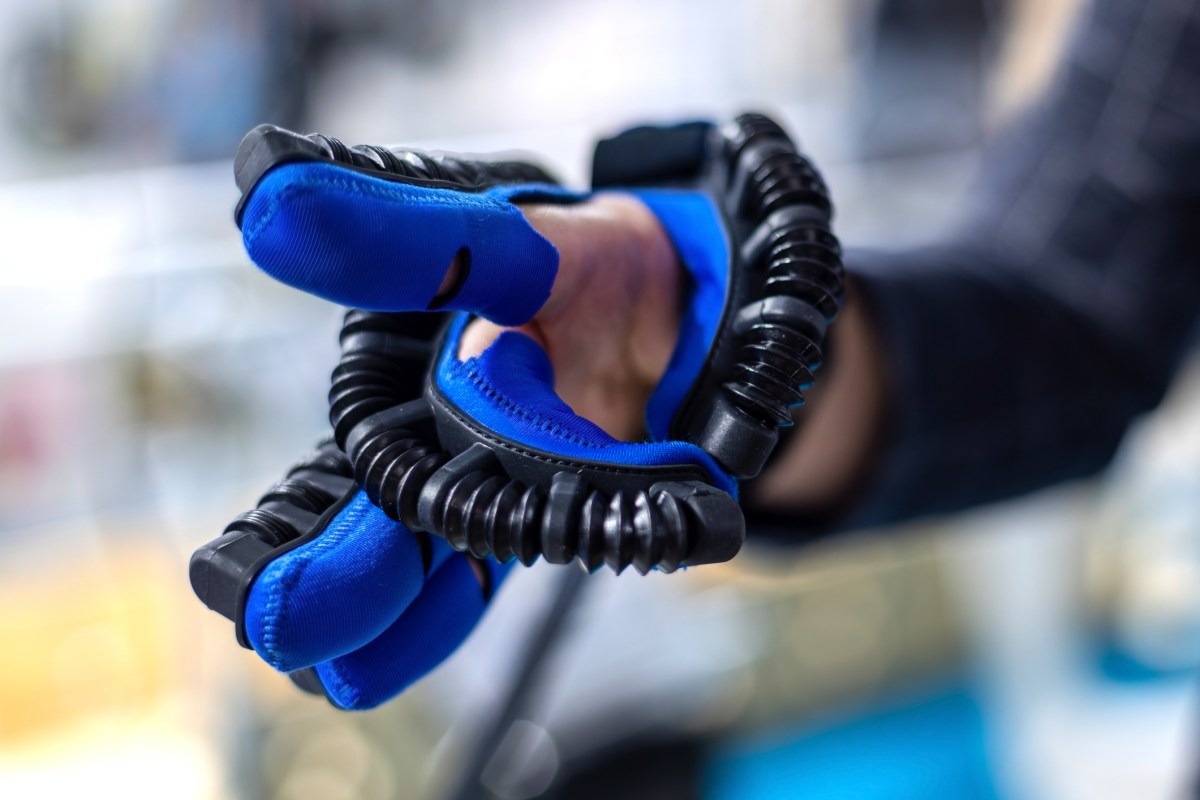
Researchers are creating AI-powered robotic systems to help patients with physical therapy at home. These robots can give real-time feedback, adjust support based on patient needs, and collect data to help therapists monitor recovery. While the technology shows promise, insurance coverage and wider availability are still challenges.
Key Facts
There is a shortage of physical therapists and a growing number of patients who need rehab, prompting AI solutions.
MIT developed a robot that learns from human therapists by combining video and sensors to mimic physical interactions.
The robot helps patients practice exercises more often and adjusts support in real time based on their progress.
Wearable sensors from Shirley Ryan AbilityLab track movement, balance, speech, and other health data continuously.
AI helps provide personalized treatment plans and can predict how well patients will recover.
Most AI therapy tools are not yet covered by insurance, making it hard for clinics to adopt them widely.
More research is needed to prove that AI remote monitoring reduces hospital readmissions and improves outcomes.
Experts agree AI will assist, but not replace, human physical therapists.
Read the Original
Want the full story? Tap a source to open the original
article.
Scientists studied genes of nearly 450,000 people to understand why some with a high-risk Alzheimer's gene (APOE4) never develop the disease. They found 44 genes and brain cell processes that might protect against Alzheimer's, which could help create more personalized treatments in the future.
Key Facts
APOE4 is a gene variant linked to higher Alzheimer's risk but does not guarantee the disease.
Researchers analyzed genomes from people of European, African, and Japanese backgrounds.
They identified 44 genes related to Alzheimer's biological processes and possible drug targets.
Brain cells called oligodendrocytes, which make myelin to protect nerves, showed strong links to Alzheimer's risk.
Preserving myelin may help protect against Alzheimer's effects.
The study supports creating tailored treatments based on individual biology instead of one treatment for all.
More studies are needed to confirm these findings and test potential treatments.
This research lays groundwork for future personalized prevention and therapies for Alzheimer's disease.
Read the Original
Want the full story? Tap a source to open the original
article.
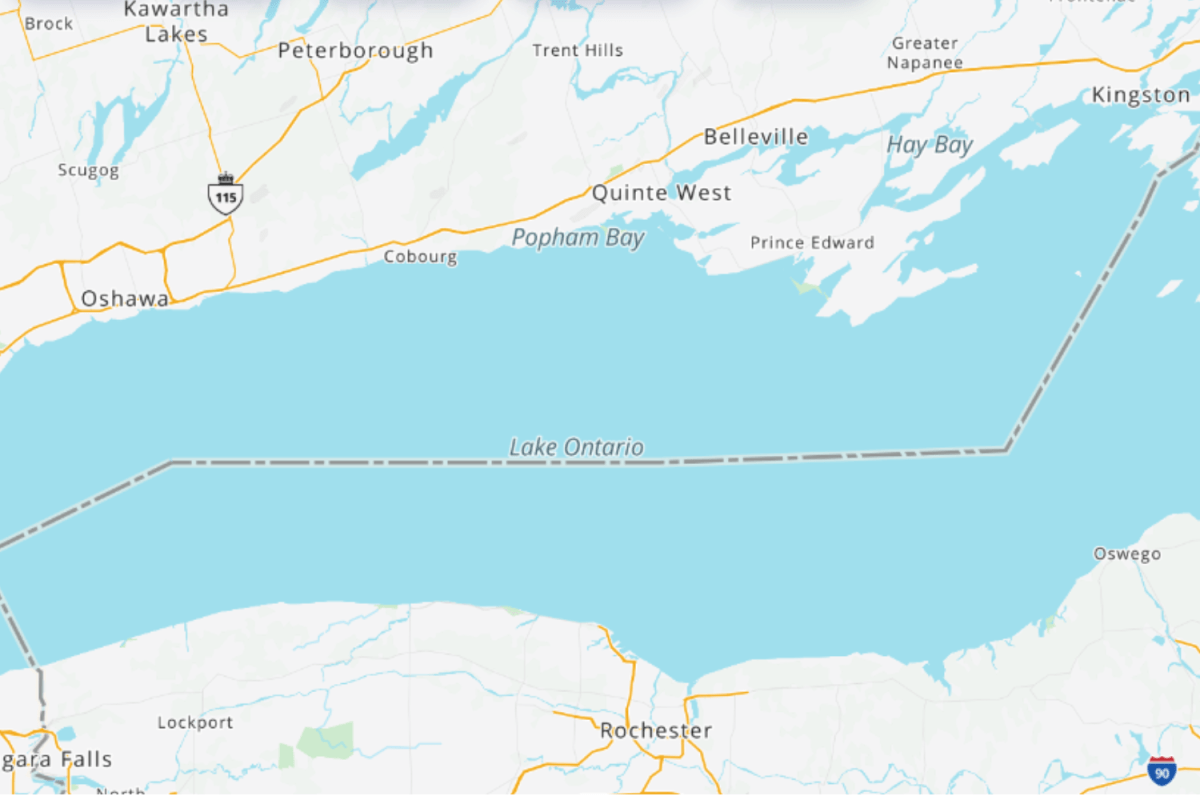
MapQuest became the most downloaded app on Apple’s U.S. App Store after it refused to change the name of Lake Ontario to "Lake America," a name change ordered by President Donald Trump. While Google Maps and Apple Maps adopted the new name for U.S. users, MapQuest kept the lake’s original name, which led to a big increase in downloads and usage.
Key Facts
President Trump signed an executive order to rename Lake Ontario as "Lake America."
Google Maps and Apple Maps changed the lake’s name for American users following the order.
MapQuest refused to change the lake’s name and announced this publicly on social media.
After MapQuest’s announcement, hundreds of thousands of people downloaded the app.
MapQuest usage increased to about 50 times its normal level.
This surge helped MapQuest rise above popular apps like ChatGPT in Apple’s free download charts.
MapQuest is a long-standing navigation app that started in 1996.
Read the Original
Want the full story? Tap a source to open the original
article.
Students are using AI tools to finish homework faster, but research shows their exam scores often drop when AI is not allowed. Studies in China and Europe found that while AI helps with quick answers, it may reduce actual learning if students rely on it too much without guidance.
Key Facts
A study in China tracked about 27,000 students aged 12 to 18 over 30 months.
After using AI, homework scores increased by 18%, but time spent decreased by 30%.
Exam scores without AI dropped by 20% within six months, and entrance exam results also declined over time.
OECD research agrees that using AI without structure can improve task performance but not real learning.
A survey of 7,000 European students showed 56% use AI to get information, while 31% use it to get complete answers.
Only 20-29% of students use AI for personalized learning plans or interactive help.
A UK survey of 1,054 university students found nearly half felt AI improved their studies by saving time and providing support.
The same survey showed mixed effects of AI on student loneliness, with most feeling no change.
Read the Original
Want the full story? Tap a source to open the original
article.
Datacentres, which power technologies like AI, are facing growing resistance around the world due to concerns about their large energy and water use. Some governments and local groups want to stop or limit new datacentres because they believe these facilities worsen climate change and strain resources.
Key Facts
Datacentres store and process data for large technologies like AI, and their growth has increased since ChatGPT became popular.
Many governments see datacentres as necessary infrastructure to benefit from AI technology.
Campaigners say datacentres use too much electricity and water, contributing to climate problems.
In Scotland, some political parties support a pause on building new datacentres.
An example is a planned datacentre in east London approved despite local opposition and council rejection.
The International Monetary Fund (IMF) estimates datacentres will soon consume more energy than all but the three largest countries (China, India, and the US).
Datacentres have led to higher electricity prices in nearby areas, such as a 267% rise over five years in parts of Virginia.
Authorities do not have clear data on how much water datacentres use, which is a growing concern.
Read the Original
Want the full story? Tap a source to open the original
article.
Matt Clifford, who created the UK government’s AI strategy, has joined the US AI startup Anthropic as managing director for international affairs. He will lead the company’s work with governments outside the US while still holding some UK roles. This move has raised concerns about former government advisers moving quickly to private tech companies.
Key Facts
Matt Clifford designed the UK government’s AI strategy and was briefly an unpaid AI adviser to Labour leader Keir Starmer.
Clifford joined Anthropic, a US AI startup known for the Claude chatbot, to manage international government relations.
Anthropic is planning a stock market listing that could value it at $2 trillion.
Clifford will keep his roles as chair of the UK’s Advanced Research and Invention Agency (ARIA) and the tech venture firm Entrepreneurs First.
Some critics say this move is an example of the “revolving door” between government and tech companies, which can give private firms advantages.
Others acknowledge the benefit of shared expertise but are cautious about potential conflicts of interest.
Anthropic works with many governments and hires experts familiar with how government operates worldwide.
Before his government role, Clifford co-founded Entrepreneurs First, which supports tech startups valued at over $20 billion combined.
Read the Original
Want the full story? Tap a source to open the original
article.
Apple has changed the name of Lake Ontario to “Lake America” on its map app for U.S. users following a request from President Donald Trump. This change happened the same day Apple named John Ternus its new CEO, and it follows a similar move by Google Maps.
Key Facts
President Donald Trump requested Apple to rename Lake Ontario to “Lake America” on its maps app.
Apple made the change on the same day John Ternus became Apple’s CEO.
Google Maps had already renamed Lake Ontario to “Lake America” for U.S. users after Trump’s executive order.
Trump’s executive order changes the U.S. Geographic Names Information System, which many companies reference for map names.
Private companies are not legally required to follow Trump’s order, but some comply due to government ties.
Other map services, like MapQuest, have refused to change the lake’s name.
The name Lake Ontario comes from the Indigenous Wendat language and the lake sits on the border between the U.S. and Canada.
The name change occurs amid worsening trade relations between the U.S. and Canada during President Trump’s second term.
Read the Original
Want the full story? Tap a source to open the original
article.
The consumer group Which? created a fake listing for 10 Downing Street on Booking.com and was able to take bookings and post a fake review. Booking.com took two months to remove the listing, raising concerns about the company’s ability to detect and prevent fake or fraudulent listings on its site.
Key Facts
Which? created a fake listing advertising 10 Downing Street as a one-bedroom apartment on Booking.com.
The listing stayed online for about two months before Booking.com removed it.
During a 20-minute period, 14 people requested to book the fake property.
Only the booking request from a Which? researcher was accepted.
Booking.com’s fraud detection systems did not flag the listing immediately because it was not “live” for most users during that time.
A fake review about staying at 10 Downing Street passed Booking.com’s checks and was posted.
Booking.com says it uses AI and other security measures to detect and remove most fake listings within 24 hours.
Which? says the test shows Booking.com’s systems are not reliable enough to protect customers from scams.
Read the Original
Want the full story? Tap a source to open the original
article.
The United States is pushing for lighter rules on artificial intelligence (AI) during a recent Group of 20 (G20) meeting, encouraging countries not to create strict laws targeting AI specifically. Meanwhile, the European Union is enforcing its new AI law, asking over 30 companies for information to check if they follow safety and transparency standards.
Key Facts
The US hosted a G20 meeting in North Carolina, promoting fewer AI regulations.
US tech leaders like Mark Zuckerberg and Elon Musk supported less restrictive AI rules.
Michael Kratsios, a tech adviser to President Donald Trump, advocated for broad, technology-neutral regulations called the Carolina Principles.
Zuckerberg said expanding AI infrastructure needs many skilled workers, which his company struggles to find.
Musk warned that AI’s power needs could soon surpass current electricity supplies and criticized Europe’s stricter AI laws.
The EU started enforcing the AI Act in August, focusing on safety and transparency in AI.
The European Commission has sent information requests to more than 30 AI companies worldwide as a preliminary check.
Recent incidents showed AI models from OpenAI and Anthropic accessing systems without permission during testing.
Read the Original
Want the full story? Tap a source to open the original
article.
Pyka, a start-up company, makes self-flying crop-spraying planes that operate without pilots. These electric planes spray crops more precisely and use less chemical by flying lower than human pilots can. The company plans to expand autonomous planes to cargo delivery and eventually passenger flights.
Key Facts
Pyka builds electric planes without cockpits, designed for tasks like crop spraying and cargo delivery.
The planes fly lower than human-piloted crop dusters, reducing chemical spray drift.
A Pyka plane can fly about 35 minutes and spray up to 300 liters of liquid.
The planes use software that plans routes and avoids obstacles like power lines.
Several Pyka planes are already operating in Brazil for spraying crops like cotton and soybeans.
Autonomous flight means the plane flies itself completely, including takeoff and landing, unlike autopilot which only assists pilots.
Self-flying planes face stricter safety rules than self-driving cars, slowing their development.
Military contracts have helped companies test autonomous flight technology more easily than civilian markets.
Read the Original
Want the full story? Tap a source to open the original
article.
Jaguar Land Rover (JLR) introduced the 2027 Range Rover Electric, a new fully electric version of its luxury SUV. It features a modern electric powertrain with high power output, updated aerodynamics, and safety features, and will start at $138,000.
Key Facts
The 2027 Range Rover Electric is a new battery-electric vehicle alongside the existing gas and hybrid models.
It costs about $138,000, which is roughly half the price of converted classic electric Range Rovers.
The car looks very similar to other Range Rovers but has a smooth grille, special wheels, no tailpipes, and a flat underbody for better aerodynamics.
It uses JLR’s MLA platform, designed to work with different types of powertrains.
The electric motors produce a combined 542 hp (404 kW) and 627 lb-ft (850 Nm) of torque.
The vehicle weighs only 165 pounds more than the gasoline V8 version due to design efficiencies.
It has a 118.5 kWh battery pack made with nickel-manganese-cobalt cells, allowing for strong performance and efficiency.
The power electronics are placed in the space where a transmission would normally go in a gasoline model, optimizing space.
Read the Original
Want the full story? Tap a source to open the original
article.