Apple's new foldable iPhone, called the iPhone Duo, is very popular and pre-orders have quickly sold out, with delivery dates now pushed back to early 2027. The phone features a large foldable screen that allows users to run two apps side by side and starts at $1,999.
Key Facts
Apple started pre-orders for the iPhone Duo on Friday morning.
Demand exceeded supply immediately, causing delivery times to push past the official launch date and into January 2027.
The iPhone Duo can split the screen to run two apps or two web pages at once.
It costs $1,999 for the base model with 256 GB storage.
When folded, the phone is about the size of a passport.
The unfolded screen is Apple's largest phone display, similar in size to an iPad.
Apple expects to sell about 10 million units soon and up to 25 million in 2027.
The iPhone Duo was announced by Apple's CEO John Ternus last month at an Apple event.
Read the Original
Want the full story? Tap a source to open the original
article.
Some Ray-Ban Meta smart glasses recorded people’s conversations without users saying the wake phrase, due to a software bug. Meta says the problem is fixed and users can manage or delete voice recordings, but questions remain about how many devices were affected and what caused the issue.
Key Facts
Ray-Ban Meta smart glasses were recording conversations without users saying “Hey, Meta,” which normally activates the AI assistant.
Users reported the issue on Reddit, even when they had turned off the “Respond without Hey Meta” setting.
Meta confirmed the bug existed and says it has been fixed.
Users can now review, manage, and delete voice recordings in the Meta AI app’s settings.
Meta has not explained what caused the bug or how many devices were affected.
Privacy experts were already concerned about Meta glasses due to their microphone and camera, especially because they look like regular glasses.
Previous reports indicate some footage from the glasses is reviewed by contractors, raising privacy questions.
The bug shows that even with recording lights, smart glasses might record without user knowledge.
Read the Original
Want the full story? Tap a source to open the original
article.
Tesla CEO Elon Musk revealed a new version of the Tesla Roadster, calling it a "flying car" that uses high-pressure air tanks to enable flight. It is planned to start production in 2028, but there is no clear agreement yet on which government agency will regulate its safety and operation.
Key Facts
Tesla’s new Roadster model is described as a "flying car" and includes advanced air pressure technology for flight.
Production of the flying Roadster is scheduled for 2028, about ten years later than originally planned.
The flying model is not approved for use on public roads; a non-flying Roadster version is available for reservation.
The National Highway Traffic Safety Administration (NHTSA) usually oversees vehicle safety but has not commented on the flying Roadster.
The Federal Aviation Administration (FAA) regulates aircraft but says the Tesla flying car does not meet its definition of an aircraft.
A senior Department of Transportation official expressed doubt that the car will actually be able to fly and noted there is no clear regulatory path yet.
Tesla performed a demonstration where the Roadster launched from a curved ramp and flipped in midair before landing on its wheels.
Tesla has not publicly stated which regulatory agencies it is working with regarding this flying vehicle.
Read the Original
Want the full story? Tap a source to open the original
article.
The Australian government is proposing new laws to make social media safer by requiring platforms to let users turn off recommended content. This change aims to reduce exposure to harmful material, such as content that worsens eating disorders or promotes harmful ideologies, by showing only posts from accounts users follow.
Key Facts
Varsha Yajman, who struggled with anorexia, still sees harmful weight loss content on social media despite using safety settings.
Australia’s new rules would require an "algorithm switch" to let users turn off automatic content recommendations.
The laws would also create a legal duty of care for online services to protect users’ wellbeing.
Social media algorithms can create "echo chambers" or "rabbit holes," where users repeatedly see specific types of content.
Flynn Martin describes how algorithm-driven content pushed him toward harmful ideas linked to the "manosphere," affecting his mental health.
Australia hopes these laws will help improve users' mental health and overall wellbeing.
Some critics worry the laws could limit free speech or be difficult to enforce.
The Trump administration has expressed concerns about potential free speech impacts from such reforms.
Read the Original
Want the full story? Tap a source to open the original
article.
The head of the International Monetary Fund (IMF) and technology experts discussed the fast growth of artificial intelligence (AI) at a meeting in Bangkok. They warned that AI needs strong rules and safety measures to avoid risks while highlighting AI’s potential benefits for the economy and jobs.
Key Facts
IMF Managing Director Kristalina Georgieva compared AI to a fast Formula 1 race car that could cause harm if not controlled.
Experts called for urgent regulations to manage AI development safely.
Some technology leaders suggest pausing advanced AI development until safety measures are in place.
An IMF study found AI could transform or create about 10% of jobs but may eliminate repetitive tasks.
The rise of service jobs may help those displaced by AI, but these jobs often pay less.
Bank of Canada Governor Tiff Macklem said technology and trade create winners and losers and society must support those who lose out.
Access to electricity and digital networks is essential for people to benefit from AI.
Cybersecurity is a key concern as AI becomes more widespread and integrated into daily life.
Read the Original
Want the full story? Tap a source to open the original
article.
A conservative AI safety group called Humans First wants the U.S. government to place stricter limits on selling advanced computer chips to China. The group also wants rules to control the creation of very powerful artificial intelligence systems they call “vastly superhuman AI.”
Key Facts
The group Humans First focuses on AI safety and is led by Amy Kremer, a former Tea Party leader.
They ask the U.S. to tighten export controls on advanced chips sent to China.
The goal is to slow down China’s ability to develop cutting-edge AI technology.
Humans First wants a new AI policy framework for America.
They suggest limiting AI systems that could be much more intelligent than humans.
The group’s recommendations aim to make AI development safer and more controlled.
Their approach blends concerns about national security with managing AI risks.
Read the Original
Want the full story? Tap a source to open the original
article.
Zendesk CEO Tom Eggemeier explained that AI personal agents are increasing the number of customer service interactions by handling tasks automatically, like renegotiating bills. While this automation can make service available 24/7 and in many languages, companies must decide which issues AI can manage and when to involve human workers.
Key Facts
Tom Eggemeier, CEO of Zendesk, used an AI agent to contact service providers 37 times over four days, saving $3,150.
Before using AI, he rarely contacted these companies for years.
AI agents can increase customer interactions because they work automatically without needing customers to spend time.
Automated services can operate around the clock and support multiple languages.
Companies need to decide which customer requests AI should handle and which require humans, especially for situations needing empathy.
Customers want the option to switch from AI to a human if their problem is not solved.
Businesses should measure success not just by how many tasks AI completes but also by customer satisfaction and outcomes like sales.
Customer service may shift to third-party AI interfaces like ChatGPT, which could reduce visits to company websites and change how companies manage customer experience.
Read the Original
Want the full story? Tap a source to open the original
article.
The Artemis III mission is planned to launch in 2027. It will travel to low Earth orbit and test the ability of spacecraft to meet up and connect in space.
Key Facts
Artemis III is a NASA space mission scheduled for 2027.
The mission will reach low Earth orbit, which is the area close to our planet.
A key goal is to practice rendezvous, where two spacecraft meet in space.
Docking, or physically connecting spacecraft, will also be tested during this mission.
These capabilities are important for future space exploration and missions to the Moon or beyond.
Read the Original
Want the full story? Tap a source to open the original
article.
Meta will update its commercial terms starting October 30 to require business accounts to let Meta automatically collect and use content from their linked websites for AI training. This change means businesses cannot opt out and may affect news publishers who could lose licensing fee claims for their articles.
Key Facts
Meta’s new terms let it use automated tools like bots to collect content from websites linked to business accounts.
The content collected can be used to improve and train Meta’s AI and other services.
Businesses must agree to these terms or stop using Meta’s services; there is no opt-out option.
News organizations are concerned because they could lose millions in fees from AI companies using their articles without paying.
Meta says it will respect blocking files (robots.txt) that tell crawlers not to access a site, but it is unclear if this will hold legally.
Legal experts say Meta might gain broad rights to scrape content for AI, which could affect publishers’ control over their material.
Meta has also started charging users for posting links, possibly tying these fees to the new content scraping rules.
Read the Original
Want the full story? Tap a source to open the original
article.
Actor Noah Centineo, known from his teen star days, joined the cast of the video game movie adaptation "Street Fighter." He said his love for the game "Minecraft" inspired him to take part in the project.
Key Facts
Noah Centineo is starring in the movie "Street Fighter," which is based on a popular video game.
He talked about his role in an interview with Nate Burleson.
Centineo was a well-known actor during his teenage years.
He said he loved playing the game "Minecraft," which influenced his decision to join the movie.
"Street Fighter" is a film adaptation of a famous fighting video game franchise.
The article included a short video segment featuring Centineo.
The coverage appeared alongside other news segments on CBS Mornings Live.
Read the Original
Want the full story? Tap a source to open the original
article.
The largest U.S. power grid operator, PJM Interconnection, says growing electricity use by data centers is making it harder to keep the grid reliable. Their constant power use and changing weather reduce the time available for necessary maintenance, increasing the risk of power shortages.
Key Facts
PJM Interconnection coordinates electricity in 13 states and the District of Columbia.
Data centers use a large, steady amount of electricity all year, unlike other users whose use changes with the weather.
Traditional low-demand seasons in spring and fall, used for maintenance, are now less available due to steady data center demand and longer hot or cold weather.
This situation shrinks reserve power and leaves little margin for mistakes in the grid.
The Department of Energy issued emergency orders for PJM to reduce blackout risks during high-demand times and maintenance seasons.
PJM is trying to add more power supply and remove state rules that delay new energy projects.
The Federal Energy Regulatory Commission blocked a PJM plan that would let new data centers connect without adding new power plants but agreeing to possible power cuts in emergencies.
PJM wants large users like data centers to help maintain grid reliability by making commitments to support the system.
Read the Original
Want the full story? Tap a source to open the original
article.
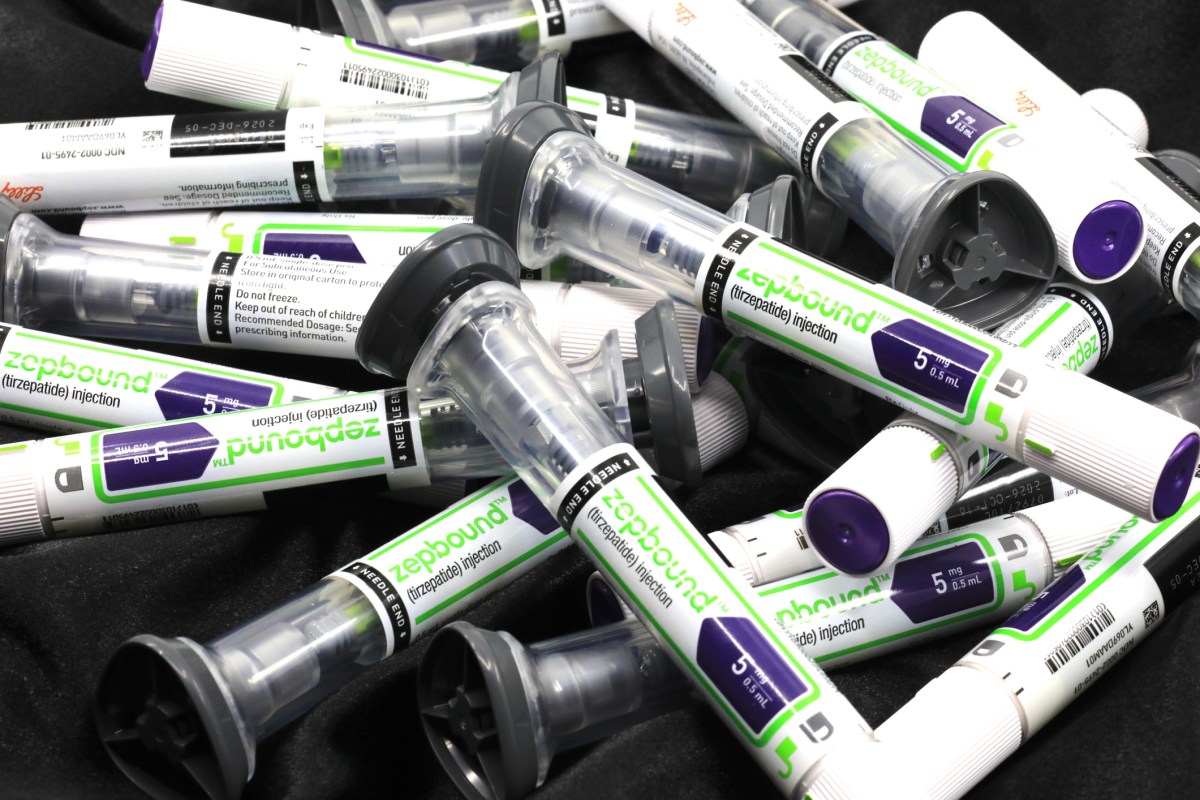
The use of peptides in health treatments is growing quickly, but there is concern about safety and reliability. Many peptide products are not fully tested or approved, and patients may not have clear information about their risks or effectiveness.
Key Facts
The U.S. Food and Drug Administration (FDA) has received numerous adverse-event reports linked to compounded semaglutide and tirzepatide, two peptide-related drugs.
Peptides are molecules involved in various health areas like muscle recovery, weight management, and longevity, but not all have proven medical benefits.
Some peptides are approved medicines, while others remain experimental or lack strong evidence to support their use.
There is a rapid increase in public interest and market growth for peptide treatments, sometimes ahead of proper safety assessments.
Consumers may struggle to judge the quality or safety of peptide products based on labels or online claims.
The FDA warns about risks with unapproved peptides that fall outside official drug approval pathways.
Regulators face challenges balancing public demand for new treatments with the need for proven safety and effectiveness.
Personal experiences, like the author’s hospitalization from a contaminated peptide, highlight potential dangers but are not scientific proof for all products.
Read the Original
Want the full story? Tap a source to open the original
article.
Technology is moving towards allowing people to use their voice to communicate with computers, instead of typing on keyboards or touchscreens. This change is becoming common, with millions using voice-based AI systems that can listen, respond, and perform tasks through natural speech.
Key Facts
For many years, people have used keyboards and touchscreens to interact with computers.
AI technology now enables communication with computers using natural spoken language.
Half of some engineers’ work can now be done through voice commands on mobile devices.
Over 150 million people use ChatGPT weekly through voice and dictation features.
New AI tools can handle interruptions and manage complex tasks in spoken conversations.
Tesla cars have added voice AI to allow hands-free control.
Speaking is much faster than typing: average speech is about 150 words per minute, while typing averages around 30-38 words per minute.
Businesses need to update their systems to include voice technology or risk losing customers.
Read the Original
Want the full story? Tap a source to open the original
article.
Polymarket, a prediction market platform, saw over $600 million in trades on election-related markets after the actual elections had ended. Much of this trading involved repeated buying and selling between the same accounts, a practice known as wash trading, which can create false impressions of market activity.
Key Facts
Polymarket had trading worth more than $600 million on global election markets after elections concluded.
Most trades focused on candidates who did not win or on outdated election events.
Ethiopian Prime Minister Abiy Ahmed’s victory was clear, but very little trading occurred on his win; most volume focused on losing candidates.
About $284 million of the trades were between pairs of accounts repeatedly buying and selling to each other, indicating possible manipulation.
Polymarket identified suspicious activity, stopped the involved accounts, but did not explain how the trades happened before detection.
The Ethiopian election market stayed open for 123 days after the election was decided, leading to unusual ongoing trades.
A Romanian election market also showed signs of wash trading, with nearly all volume flagged as suspicious during certain weeks.
Wash trading is when traders trade between themselves to fake activity and is illegal on regulated financial exchanges.
Read the Original
Want the full story? Tap a source to open the original
article.
Tesla showed a new version of its Roadster sports car that can lift itself off the ground using special thrusters. However, the car is not available for driving yet.
Key Facts
Tesla revealed the second generation of its Roadster sports car.
The new Roadster has cold gas thrusters that can lift the car into the air.
It also has a "multi-mode" suction system to spin the car while flying.
This flying feature allows the car to jump and rotate for short times.
Tesla CEO Elon Musk shared this update on social media.
The car is not expected to be ready for customers to drive soon.
The announcement happened during an event on a Thursday.
The idea suggests the possibility of flying cars in the future.
Read the Original
Want the full story? Tap a source to open the original
article.
Researchers found that an Israeli spyware company used a new kind of cyberattack called "zero-click" malware, which can infect a phone or laptop just by visiting a website or refreshing an app. This malware secretly steals personal data without the user clicking anything and has targeted journalists, including staff from Al Jazeera.
Key Facts
"Zero-click" malware infects devices without any user action like clicking or downloading files.
In June 2025, 45 devices used by Al Jazeera journalists were infected with this malware.
The spyware is linked to an Israeli company called Candiru, known for targeting activists and journalists worldwide.
This malware spreads through malicious ads bought by Discover-Tech, which redirect users to infected servers.
The spyware can collect sensitive information like files, keystrokes, screenshots, microphone and camera data, emails, and messages.
To avoid detection, the malware sends stolen data in small encrypted pieces over time.
The US government blacklisted Candiru in 2021 due to its illegal hacking activities.
Experts say this type of attack is a serious global security threat because it combines multiple vulnerabilities and can bypass security protections in devices.
Read the Original
Want the full story? Tap a source to open the original
article.
Tesla is trying again to launch its new Roadster electric car, using old stunt technology in a recent demonstration. The car aims for very high speeds and uses a special battery, but production is planned for 2028 and Tesla has delayed this model before.
Key Facts
Tesla is reviving the Roadster electric car project after nine years.
The new Roadster uses rear-wheel drive and a special battery made from 4680 cells.
Tesla demonstrated the car using old stunt technology with jets of compressed nitrogen shooting out of the exhaust pipes.
The Roadster is claimed to reach a top speed of 383 mph and accelerate from 0-60 mph in 0.8 seconds.
Other electric vehicles, like the McMurtry Spéirling, already outperform some of Tesla’s claims.
Tesla has a history of delaying the Roadster; it was first announced in 2017 with promised production "now" that never happened.
Tesla plans to start Roadster production by 2028.
Tesla’s main business still faces problems like rising costs and shrinking profits.
Read the Original
Want the full story? Tap a source to open the original
article.
A new documentary called Super Scam Me explores how romance scammers trick people online, especially through social media and dating apps. Investigative journalist Mariana van Zeller pretended to be a target to expose how these scams work and to help find and confront the scammers.
Key Facts
The documentary airs on National Geographic and streams on Disney+ and Hulu.
Romance scams cost Americans nearly $1.5 billion each year, according to the Federal Trade Commission (FTC).
These scams often target older women who seek connections online, such as widows and divorced women.
Scammers are getting more advanced, using artificial intelligence to improve their tactics.
Journalist Mariana van Zeller created a fake online persona named “Mary Zelle” to lure a scammer posing as “Mark Turner,” a fake four-star military general from Ghana.
She used tools like fake bitcoin receipts to bait scammers and give victims closure.
Van Zeller also distributed flyers in the scammer’s neighborhood to track him down.
The documentary stresses the importance of empathy and awareness to help prevent these scams.
Read the Original
Want the full story? Tap a source to open the original
article.
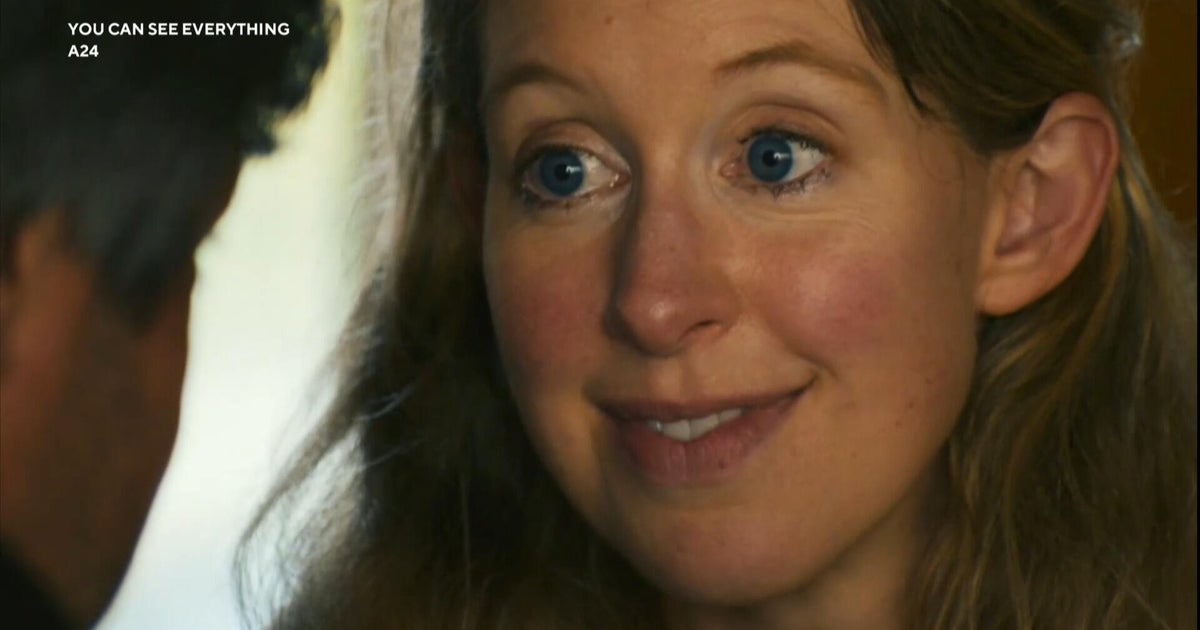
Nathan Fielder’s documentary "You Can See Everything" tells the story of Elizabeth Holmes, the founder of Theranos, before she went to prison. The film has received positive reviews from critics.
Key Facts
The documentary is called "You Can See Everything."
It focuses on Elizabeth Holmes, who started the blood-testing company Theranos.
Elizabeth Holmes was later convicted and went to prison.
Nathan Fielder directed and created the documentary.
Critics have praised the documentary and given it good reviews.
The film shows behind-the-scenes details about Holmes’s life and the Theranos scandal.
The story is based on real events relating to one of the biggest business scandals in recent years.
Read the Original
Want the full story? Tap a source to open the original
article.
Clairity Breast is a new AI tool approved by the FDA that assesses a woman’s risk of breast cancer over five years. It costs $249 and uses artificial intelligence to analyze mammogram images. Dr. Céline Gounder shared her opinion on the tool in a CBS News segment.
Key Facts
Clairity Breast is an AI (artificial intelligence) tool designed for breast cancer risk assessment.
The tool provides a five-year risk estimate for breast cancer.
It has been approved by the FDA (Food and Drug Administration).
The cost for using Clairity Breast is $249.
The tool analyzes mammogram images to make its risk prediction.
Dr. Céline Gounder gave her expert reaction to the tool in a CBS News report.
This tool aims to help doctors and patients better understand breast cancer risk.
It represents a new use of AI technology in medical imaging and cancer prevention.
Read the Original
Want the full story? Tap a source to open the original
article.