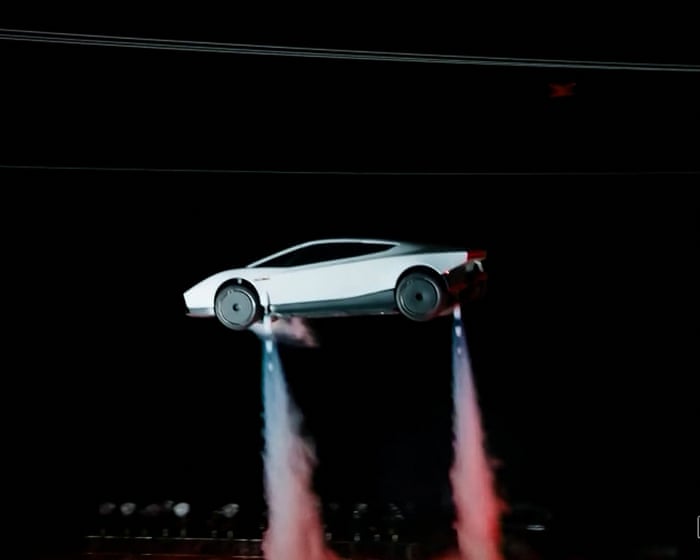
Tesla showed a new version of its Roadster sports car that uses thrusters to hover and turn in the air. The car was demonstrated by driving up a ramp, spinning mid-air, and landing with the help of air jets, but experts say flying cars are still not ready for everyday use.
Key Facts
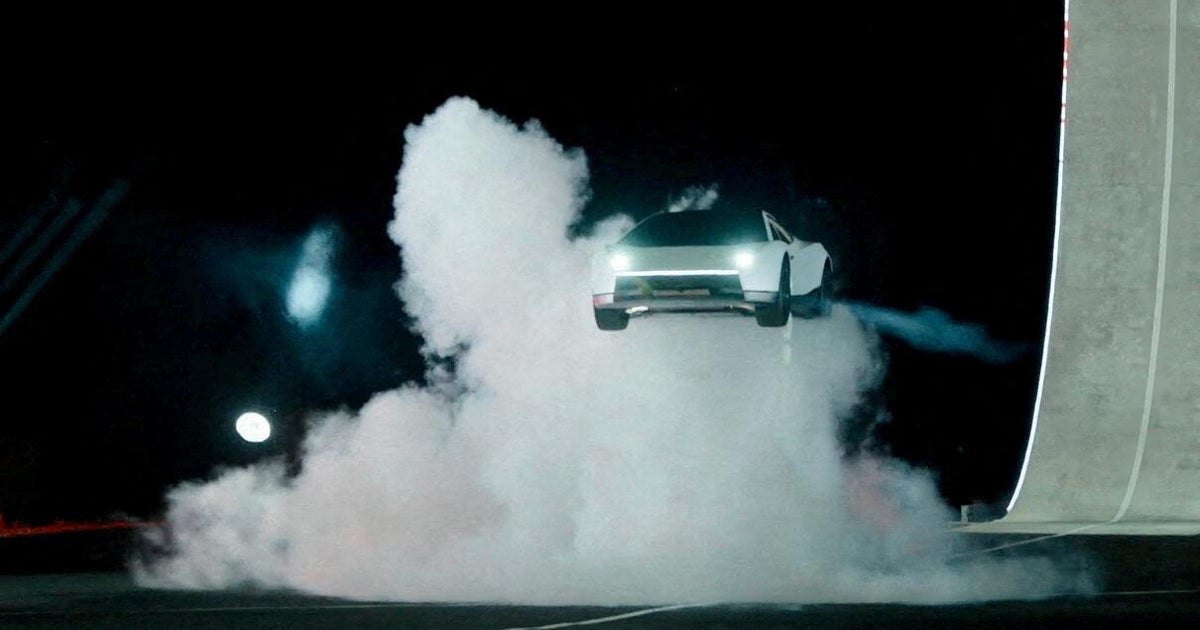
Tesla unveiled a new Roadster electric sports car with thrusters that allow it to hover and spin in the air.
Elon Musk, Tesla’s CEO, presented the vehicle at a SpaceX facility in Texas.
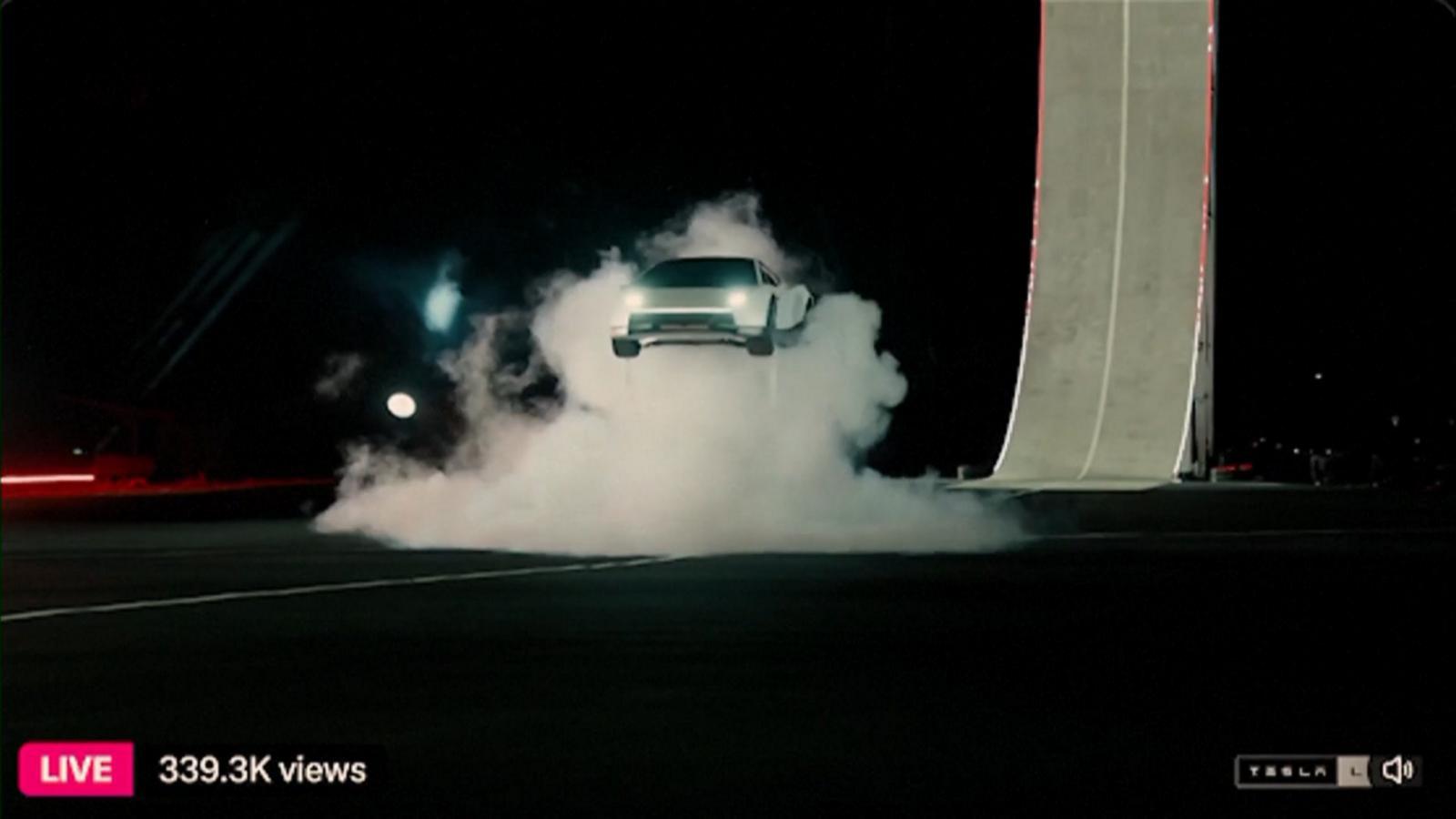
The car demonstrated driving up a steep ramp, spinning in mid-air, and landing using air jets.
Elon Musk said the demonstration was needed to show the car "is not AI," meaning it is controlled by a human.
The technology used is a collaboration between Tesla and SpaceX.
Experts say the flying car concept is unlikely to be on roads soon due to technical and practical challenges.
The event was focused on showcasing new car technology and innovation.
This demonstration received attention because it combines electric car tech with aerospace-style thrusters.
Read the Original
Want the full story? Tap a source to open the original
article.
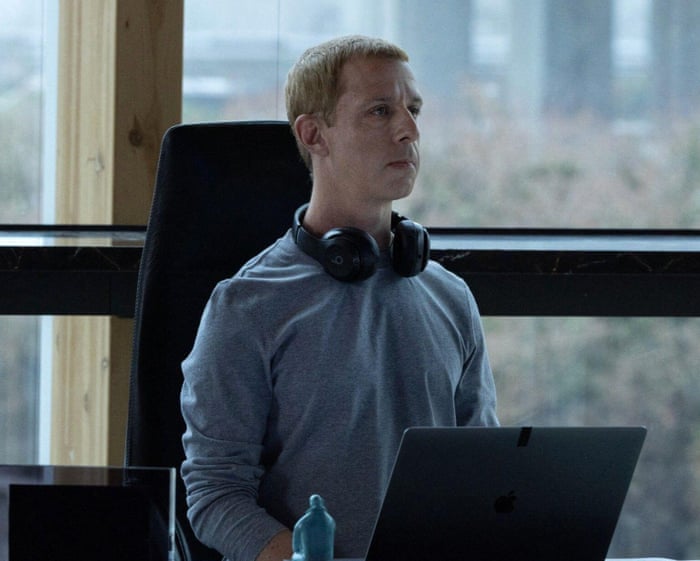
The article discusses the costume design in the movie The Social Reckoning, which shows Mark Zuckerberg’s style change from casual hoodies to smart, expensive clothes. The costume designer and actor Jeremy Strong worked closely to accurately represent Zuckerberg’s outfits, emphasizing specific brands and details to reflect his personality and status.
Key Facts
The Social Reckoning is a movie about Mark Zuckerberg covering the years 2019 to 2021.
Zuckerberg’s style moved from hoodies and T-shirts to suits and high-end shirts.
Costume designer Susan Lyall and actor Jeremy Strong collaborated closely on Zuckerberg’s look.
They chose specific items like 2018 Nike Flyknit trainers and clothes from Brunello Cucinelli, an expensive Italian brand.
Brunello Cucinelli clothes are very costly, with cardigans costing up to $16,500.
Zuckerberg’s newer style aims to show success while still seeming relatable.
Tech billionaires like Elon Musk and Jeff Bezos also wear similar high-end brands.
The costume choices reflect a change in how tech leaders use fashion to show their success and personality.
Read the Original
Want the full story? Tap a source to open the original
article.
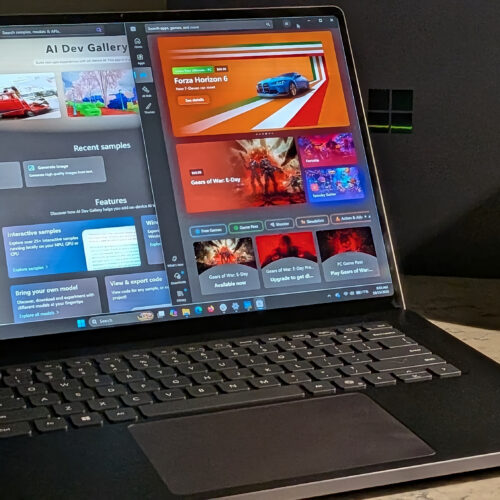
Microsoft has released the Surface Laptop Ultra, a high-performance laptop designed to handle both gaming and work tasks using new Nvidia RTX Spark technology. The laptop offers powerful hardware options, including up to 64GB of memory and a high-resolution touchscreen, but comes at a premium price starting at $2,599.
Key Facts
The Surface Laptop Ultra uses the Nvidia RTX Spark N1X chip, which combines a strong GPU and CPU for high performance.
It has a 15-inch mini-LED touchscreen with a resolution of 3270×2180 pixels and a refresh rate up to 120 Hz.
Memory options include 24GB or 64GB of unified LPDDR5x RAM, with the larger memory option paired with Windows 11 Pro.
Storage choices range from 512GB to 1TB solid-state drives (SSD).
The laptop supports Wi-Fi 7 and Bluetooth 5.4 for fast wireless connections.
It includes multiple ports: three USB-C/USB4 ports (one with magnetic charging) and one USB-A 3.1 port.
Microsoft targets this laptop at users who want one machine for both gaming and professional work.
The starting price is $2,599 and can go up to $5,899 depending on hardware options.
Read the Original
Want the full story? Tap a source to open the original
article.
Elon Musk showed a new Tesla sports car that can fly using rocket technology from his company SpaceX. The car, called the Roadster 2, can go very fast and perform flying stunts, but it is not yet approved for use on public roads.
Key Facts
Elon Musk revealed the Tesla Roadster 2 at a SpaceX facility in Texas.
The Roadster 2 can accelerate from 0 to 60 mph in less than one second.
It uses thrusters and rocket-like technology to fly and do acrobatic moves.
A video showed the car driving upside down, flipping in the air, and flying over other Tesla cars.
Musk said flying cars “are real” but noted this prototype is not fully safe or legal everywhere yet.
The Roadster 2 will be produced starting in 2028 and priced above $200,000.
A “performance” model requires a £50,000 deposit and a “thrust” model a $250,000 deposit.
A one-seat “rocket” version with full flight capability is only available by invitation.
Tesla says flying the car on public roads is not allowed.
Read the Original
Want the full story? Tap a source to open the original
article.
Japan is preparing to launch its Martian Moons Exploration (MMX) mission soon, aiming to study Mars’ moons and bring samples back to Earth by 2031. Meanwhile, several private space companies are working on new rocket launches, including Indian startup Skyroot Aerospace selling launches to US company Reflect Orbital, and US startup LEAP developing smallsat rockets for 2028. Rocket Lab delayed its Neutron rocket launch to 2027 due to manufacturing issues.
Key Facts
Japan’s MMX mission will visit Mars’ moons Phobos and Deimos, sending a rover and returning samples to Earth by 2031.
Reflect Orbital, a California startup, bought two rocket launches from India’s Skyroot Aerospace to fly its sunlight-reflecting satellites.
Skyroot’s Vikram-1 rocket became India’s first private rocket to reach orbit in July.
Reflect Orbital plans to launch a small satellite on a SpaceX Falcon 9 rideshare next year as part of a large mirror constellation in space.
LEAP, a Colorado startup, is developing the Bighorn rocket for small satellite launches, with first flight planned for 2028.
LEAP’s Bighorn rocket factory aims to produce six rockets per year initially, with potential to increase to two per month.
Rocket Lab postponed the first flight of its Neutron rocket to 2027 due to problems found during manufacturing of carbon composite parts.
Rocket Lab’s Neutron rocket is designed for larger, reusable launches, but delays have shifted its timeline.
Read the Original
Want the full story? Tap a source to open the original
article.
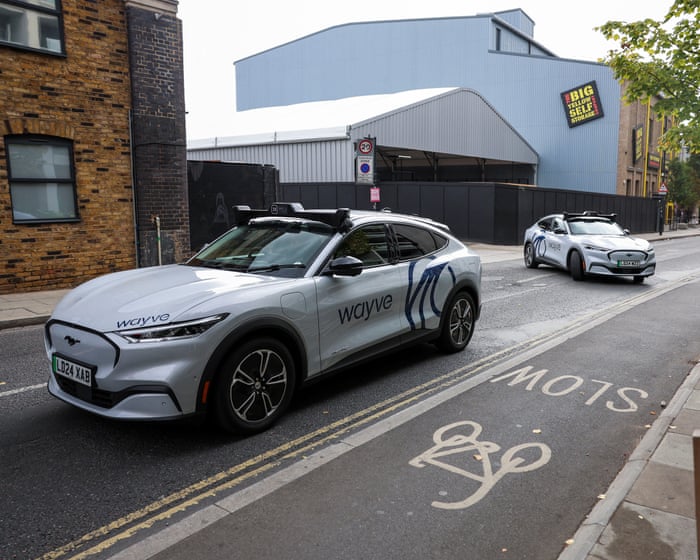
London has started limited robotaxi services with human safety drivers, led by Uber and Wayve. Some drivers and politicians are worried about job losses and safety, and they want Transport for London (TfL) to have more control over these services.
Key Facts
Over 100,000 people in London are on a waiting list to try robotaxis.
Uber and Wayve offer the first autonomous taxi services in the UK, with a safety driver present.
Drivers fear losing jobs and plan protests outside Wayve’s London base.
London’s transport committee wants the government to give TfL full power to regulate or stop robotaxis.
The robotaxi services have recently expanded to Manchester as well.
Uber plans to deploy 100,000 Nvidia-powered robotaxis worldwide starting next year.
London’s city layout is more challenging for autonomous cars than many US cities.
TfL is concerned robotaxis could worsen traffic congestion, public transportation use, and affect disabled passengers' safety.
Read the Original
Want the full story? Tap a source to open the original
article.
Elon Musk has shown off Tesla's new Roadster, a sports car that can fly using technology from his SpaceX rockets. The car climbed a curved ramp and then landed carefully after flying.
Key Facts
Elon Musk unveiled Tesla’s latest Roadster model.
The new Roadster can fly, using SpaceX rocket technology.
It climbed a curved ramp before taking off.
The car made a controlled landing after flying.
This is a new feature that combines car and rocket technology.
The launch event happened recently and was covered by ABC News.
Elon Musk is involved in both Tesla (cars) and SpaceX (rockets).
Read the Original
Want the full story? Tap a source to open the original
article.
Blue Origin plans to greatly expand its rocket launch facilities in Florida to eventually fly 150 rockets each year. The company will add new launch pads, build a large manufacturing plant for rocket parts, and increase its fleet of landing ships for rocket recovery, aiming to support frequent rocket launches by the end of the decade.
Key Facts
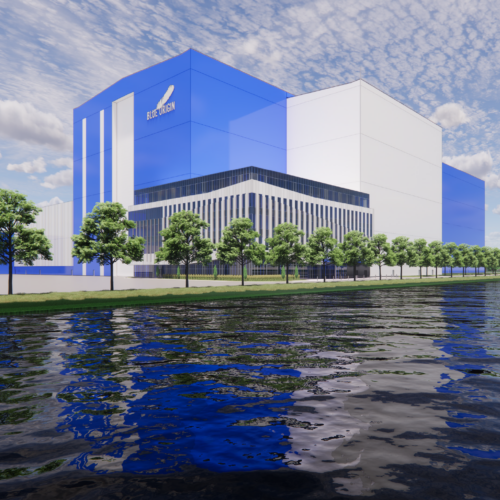
Blue Origin will add two more launch pads for its New Glenn rocket, joining two already being built at Cape Canaveral.
The company is constructing a new manufacturing facility to produce up to 150 rocket upper stages annually.
Blue Origin plans to buy two additional ships to catch and recover rocket first stages, currently having one named Jacklyn.
A new customer integration facility will be built with the US Space Force to handle multiple payloads simultaneously.
Blue Origin has invested about $3 billion in Florida space facilities so far, employing over 5,000 people in the state.
The company is rebuilding Launch Complex 36A after a rocket loss in May and aims to resume launches by early 2027.
The expanded launch pads will support a larger New Glenn rocket variant with nine first-stage engines compared to the smaller version’s seven engines.
Blue Origin’s expansion comes as other space companies like SpaceX reduce commercial launches, creating new market opportunities.
Read the Original
Want the full story? Tap a source to open the original
article.
Google has introduced new laptops called Googlebooks that run on a version of Android designed for phones. These laptops have premium features and support Android apps but still feel similar to using a large phone or Chromebook rather than a traditional high-end laptop.
Key Facts
Googlebooks are Android-powered laptops aimed to compete with Windows and macOS.
They feature premium hardware like touchscreen displays, metal bodies, and biometric unlocking (fingerprint or face).
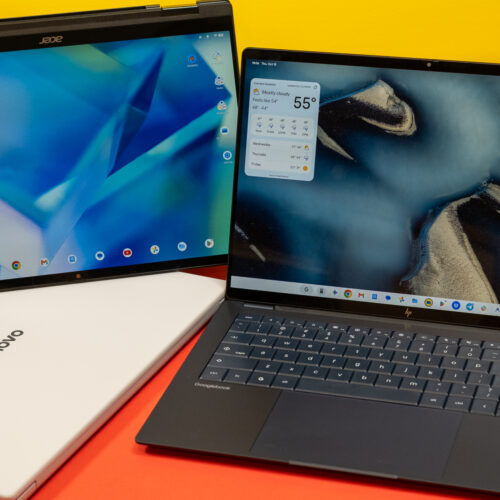
Googlebooks include different models from brands like Acer, Asus, HP, Lenovo, with prices mostly above $899.
The Acer Googlebook 14 starts at $899 with an OLED screen and metal chassis, but uses a traditional clicky trackpad.
Higher-end models, such as the HP Googlebook 14, cost around $1,300 and have advanced chips and better keyboards.
The Lenovo Googlebook 15 is larger and includes extra ports like HDMI and USB-A.
Googlebooks try to attract Android phone users but still feel like a mix between a Chromebook and a big phone.
The Glowbar is a new feature that lights up in Google colors for certain actions but is not a major selling point.
Read the Original
Want the full story? Tap a source to open the original
article.
Tesla CEO Elon Musk showed a new version of the Tesla Roadster sports car with thrusters that help it fly short distances. The car uses high-pressure air tanks to launch into the air and is planned to enter production in 2028.
Key Facts
Elon Musk unveiled the Tesla Roadster with thrusters at a SpaceX facility in Texas.
The car can fly a short distance using ultra high-pressure air tanks as boosters.
The demo involved the car launching from a ramp, flipping mid-air, and landing on its wheels.
Musk said flying cars face technical and regulatory challenges but believes this design will likely work.
The Roadster will begin production in 2028.
Flying car ideas have existed for over 100 years but only recent tech advances make them more feasible.
Musk highlighted the partnership between Tesla (car company) and SpaceX (rocket company) in this innovation.
SpaceX also works on Starlink Mobile, aiming to provide full cellular phone coverage in the U.S.
Read the Original
Want the full story? Tap a source to open the original
article.
Millions of physical books are being scanned and then destroyed to create digital data that helps train artificial intelligence (AI) models. This process raises concerns because many rare second-hand books might be lost forever.
Key Facts
Physical books are being digitized to provide information for AI training.
After scanning, some of these books are destroyed.
The practice is controversial due to the potential loss of rare and valuable books.
The investigation was reported by France 2 and covered by France 24.
AI models use huge amounts of digital data to learn and improve.
The destruction mainly affects second-hand books that are harder to replace.
This method helps AI understand language by learning from real human writing.
Authors and experts have expressed concerns about the impact on literature and culture.
Read the Original
Want the full story? Tap a source to open the original
article.
Penguin Colony is a video game where you play as penguins exploring Antarctica. The game mixes real history about Nazi explorers with strange, Lovecraftian horror elements and unique gameplay that involves collecting words instead of typical items.
Key Facts
Penguin Colony is made by Origame Digital and based on H.P. Lovecraft’s story At the Mountains of Madness.
Players control different kinds of penguins, each with unique abilities like high jumps or fitting through small spaces.
The game features a semi-open world with icy landscapes, human ruins, giant stone structures, and alien-looking objects.
A narrator tells the story of a racist scientist, linked to Nazi explorers also shown in the game.
The art style uses low-poly graphics reminiscent of older PlayStation 2 games.
Gameplay includes exploring, platforming, and switching between penguin characters.
The game’s story challenges Lovecraft’s racism and criticizes Nazi beliefs.
Some technical issues like audio glitches and control bugs are reported but do not ruin the experience.
Read the Original
Want the full story? Tap a source to open the original
article.
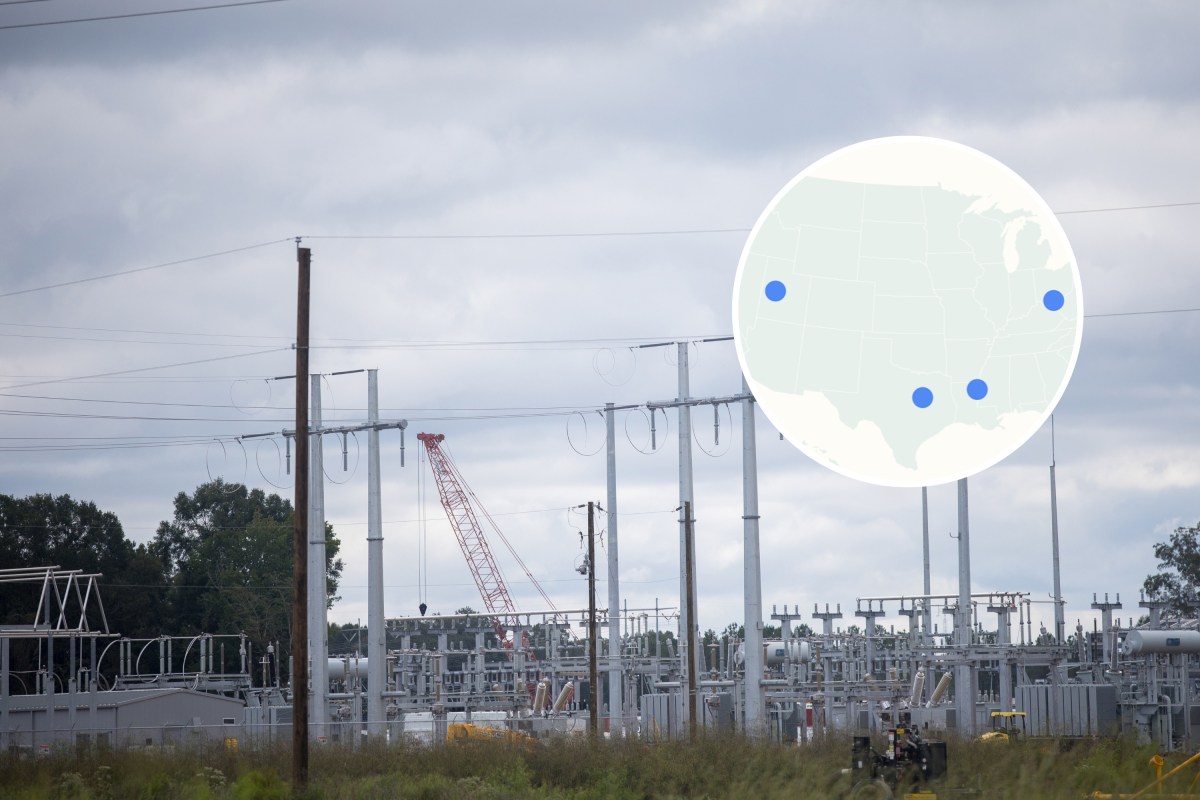
A map shows that very large data centers are being built in Ohio, Texas, Louisiana, and Utah, with capacities much bigger than those from a few years ago. These projects, some powered by natural gas and focused on AI development, are expected to be completed by 2027 or 2028, raising public concerns about environmental impacts.
Key Facts
The biggest data center under construction is SoftBank’s 8-gigawatt PORTS-Pike Technology Campus in Ohio, expected to finish in 2028.
Nexus Data Centers is building a 7.7-gigawatt facility in Texas, due by October 2027.
Meta is developing a $50 billion, 5-gigawatt AI-focused data center in Louisiana called the Hyperion project, set for 2028.
Creekstone Energy’s Delta Gigasite in Utah has about 3 gigawatts now and plans to grow to 10 gigawatts by 2027.
These data centers use much more electricity than past large centers, which were around 0.1 gigawatts.
Creekstone Energy says it has technology to capture water from gas power generation and create usable water, potentially making the site a net water producer.
Public concerns include the centers’ heavy use of electricity and water, and their effects on the environment.
President Donald Trump supports these data center projects, seeing them as important for economic growth and competing with China.
Read the Original
Want the full story? Tap a source to open the original
article.
Tesla revealed a new electric sports car that can drive upside down and jump using rocket-like thrusters. The car can speed up to 97 km/h in less than a second and is expected to be available by 2028.
Key Facts
Tesla developed the car with Elon Musk’s SpaceX.
The car can drive upside down.
It uses thrusters to jump and turn in the air.
It can accelerate to 97 km/h in under one second.
Tesla first promised this car in 2017.
The car is planned to be released in 2028.
Read the Original
Want the full story? Tap a source to open the original
article.
Vibe coding is a way to create software using AI without writing code manually. Free AI-made versions of popular programs like Premiere Pro and Excel are appearing, raising worries about security and hidden expenses.
Key Facts
Vibe coding uses artificial intelligence to create software without traditional coding.
Free AI-generated alternatives to well-known software programs are now available.
Examples include replacements for Adobe Premiere Pro (video editing) and Microsoft Excel (spreadsheets).
These free versions may have hidden costs that users do not see upfront.
Security risks come with using AI-created software, which may not be fully tested or safe.
The rise of these tools changes how software can be made and used by people with no programming skills.
Experts warn users to be cautious about privacy and data safety when using these AI tools.
Read the Original
Want the full story? Tap a source to open the original
article.
Smart glasses with cameras help people with sight loss to navigate and live independently. However, some people wrongly call these glasses "pervert glasses" because they worry about secret filming, causing difficulties for users who rely on them.
Key Facts
Fraser Fleming, who is blind, uses AI-powered Meta smart glasses to help him get around and read signs.
Some people have used similar glasses to secretly film others, leading to negative nicknames like "pervert glasses."
This reputation makes users like Fraser remove their glasses in public to avoid confrontations.
Tracey Rogerson, another user, says the glasses are important for her independence.
Meta has sold about two million pairs of these glasses since 2022 and includes a light to show when the camera is recording.
Some events, like ComicCon Scotland, have banned Meta glasses to prevent secret filming.
Gordon Brown, who is severely sight-impaired, will not attend ComicCon this year due to the ban on smart glasses.
Event organizers have banned wearable recording devices to protect privacy but have been criticized for not considering disabled users’ needs.
Read the Original
Want the full story? Tap a source to open the original
article.
Elon Musk showed a new Tesla Roadster that can hover above the ground using thrusters developed with SpaceX. The demonstration took place in Texas, and Musk said production of this advanced car will start in 2028.
Key Facts
The Tesla Roadster can lift off and hover using cold-gas thrusters inspired by rocket technology.
The demonstration occurred at a SpaceX test facility in McGregor, Texas.
Musk said the Roadster can accelerate from zero to 60 mph in less than one second.
Production of the next-generation Roadster is expected to begin in 2028.
Tesla originally priced the Roadster starting at $200,000, with a more expensive "Founders Series" at $250,000.
Experts say flying cars like this may face strict rules from the Federal Aviation Administration (FAA).
FAA rules often treat vehicles that fly as aircraft, requiring special regulations.
Musk has talked about a hovering Roadster with SpaceX thruster technology since 2017.
Read the Original
Want the full story? Tap a source to open the original
article.
Instagram and its parent company Meta restricted ads and content related to women's health topics, including posts mentioning "pregnancy" and other medical terms. These restrictions affected businesses and health organizations, leading to financial losses and reduced reach for important health information. Meta said it limits certain content to prevent negative user experiences, but many creators report unfair treatment and difficulty appealing decisions.
Key Facts
In January 2025, Instagram removed ads for pregnancy pillows because of the word "pregnancy."
Business owner Irene Breen had to remove the word "pregnancy" from her website and product names for 10 months.
Many women’s health creators and charities report content being removed, blurred with sensitivity filters, or shadowbanned.
The campaign group CensHERship found 96% of nearly 200 women’s health content creators experienced some restrictions.
Sensitivity filters blur images and require extra clicks to view, usually for nudity or violence, but are also used on health posts.
Automated systems and AI often mistakenly flag health content, causing delays and blocking appeals.
Some important health hashtags like #vaginalcancer do not appear properly on Instagram.
Meta is consulting with women’s health groups to improve how it handles health-related content but declined to comment on specific cases.
Read the Original
Want the full story? Tap a source to open the original
article.
A new same-day test called metagenomic testing can detect hidden and drug-resistant infections in very sick children. This test looks at all the genetic material in a sample to find bacteria, viruses, and fungi, helping doctors choose the right treatment faster and more accurately.
Key Facts
Metagenomic testing was used on over 100 critically ill children at Great Ormond Street Hospital (GOSH) in London.
The test finds all types of germs in one sample, unlike older methods that look for specific infections.
It helped doctors identify unseen drug-resistant infections, leading to better treatment decisions.
In one case, the test saved 10-year-old Willow Crowther’s life by detecting a resistant infection early.
Around 90% of bacteria and viruses and 100% of fungi in samples were identified by metagenomics.
The test influenced doctors’ decisions in 25% of cases, including antibiotic choices.
It found 50 germs not found by standard tests, which may help track new or pandemic threats.
Metagenomic testing is being expanded to about 30 intensive care units across the UK.
Read the Original
Want the full story? Tap a source to open the original
article.
Meta launched a new open-weight AI model called Muse Spark Open, which it says matches or beats similar AI models from Chinese developers. This open model can be downloaded and modified by developers, and it is designed for complex tasks like coding and multi-step problem solving.
Key Facts
Muse Spark Open is an open-weight AI model, meaning developers can access and change the model’s core settings.
Meta claims it is the most capable open-weight AI model made in the US so far.
Chinese companies like Alibaba and Moonshot AI have led the open-weight AI model market before this.
The model is good at tasks like software engineering and long, multi-step reasoning.
Meta built in strong safety measures to control how the AI is used.
Muse Spark Open is optimized to run on Apple’s M5 Ultra computer chips.
Users can run the model on two Mac Studio computers with M5 Ultra chips to create a powerful computing setup.
Meta recently also released a new closed AI model that competes with OpenAI’s ChatGPT and Anthropic’s Claude.
Read the Original
Want the full story? Tap a source to open the original
article.