Australian police arrested two men suspected of being members of TeamPCP, a hacking group that infected over 1,000 organizations worldwide by attacking software supply chains. The group used malware that spread through software development tools to steal credentials and compromise many packages.
Key Facts
Two men from Western Australia towns Cottesloe and Mandurah were arrested and charged with 14 offenses.
TeamPCP carried out supply chain attacks from December that infected more than 1,000 organizations worldwide.
The hackers used malware called Shai-Hulud to spread through software development pipelines known as CI/CD.
Shai-Hulud stole credentials from infected machines to breach other software packages.
The Trivy vulnerability scanner was one of the key tools compromised, leading to further infections in related software.
The malware used a smart contract system called an Internet Computer Protocol-based canister to avoid detection.
One suspect could face more than 20 years in prison, and the other more than 10 if convicted.
Security experts noted the attackers lacked the usual careful planning typical of such advanced hacking groups.
Read the Original
Want the full story? Tap a source to open the original
article.
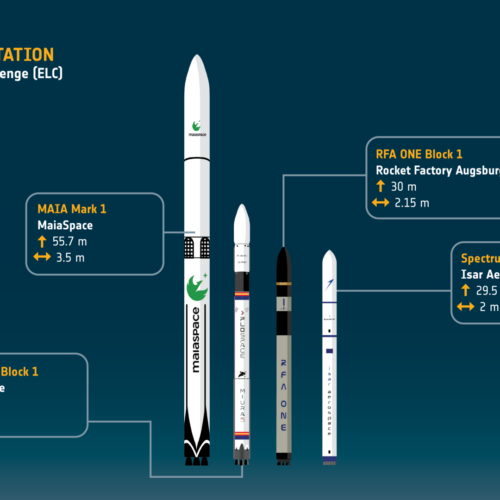
The European Space Agency (ESA) has awarded contracts worth millions of euros to several European startup companies to develop small launch rockets. Meanwhile, SpaceX plans to invest up to $100 billion in Louisiana to build facilities for its Starship rocket program, aiming to transform the region into a major space launch hub.
Key Facts
ESA signed contracts with Rocket Factory Augsburg (Germany), PLD Space (Spain), and Isar Aerospace (Germany) to support their small rocket development.
Rocket Factory Augsburg will receive 186.9 million euros mainly from Germany and the UK.
PLD Space was awarded 158.9 million euros, mainly funded by Spain and Germany.
Isar Aerospace will get 197.8 million euros, funded by Germany, Austria, and Norway.
SpaceX plans to invest up to $100 billion in Louisiana to build factories and multiple launch pads for the Starship rocket.
A Japanese radar imaging startup named Sarmony agreed to launch its first satellite aboard Space One’s Kairos rocket, planned for 2028.
Kairos rocket has had three launches so far, all of which failed to reach orbit.
An analysis highlights India's launch capacity challenges despite successes like Skyroot's Vikram-1 rocket, noting limitations in medium- and heavy-lift rockets.
Read the Original
Want the full story? Tap a source to open the original
article.
Creatine helps people who are already exercising by improving their training results. The main factor for muscle growth is the workout itself, while creatine provides a small extra benefit.
Key Facts
Creatine is a supplement often used to enhance exercise performance.
It works best for people who are already doing strength training or weightlifting.
The main cause of muscle growth comes from the exercise, not the creatine.
Creatine adds a minor improvement to the results of training.
People should understand these details before using creatine supplements.
Read the Original
Want the full story? Tap a source to open the original
article.
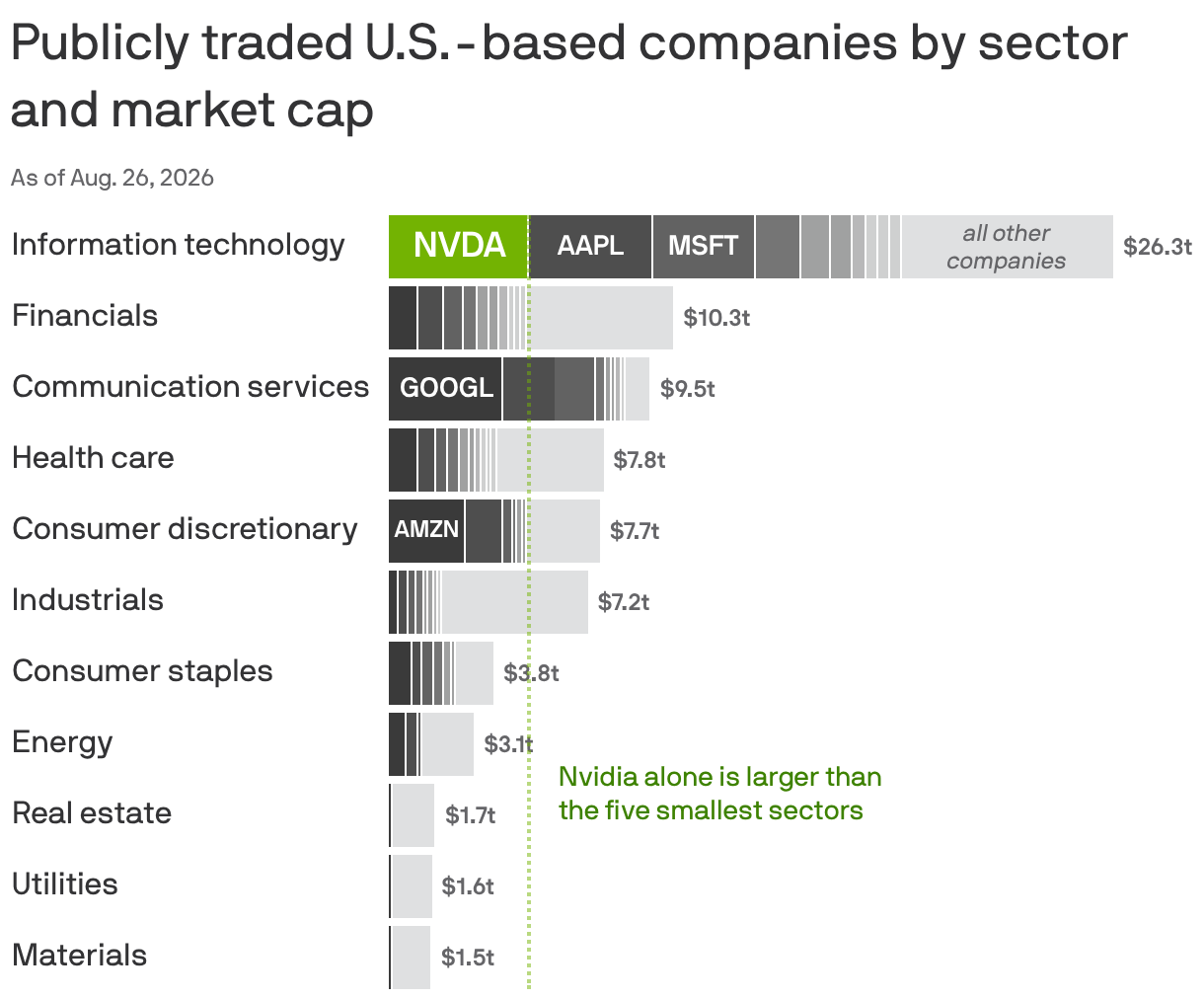
Nvidia has earned billions by selling computer chips essential for artificial intelligence (AI). The company is reinvesting its profits into AI projects and infrastructure, helping to finance and build the AI industry while also developing its own AI technologies.
Key Facts
Nvidia is the world’s most valuable company and made nearly $60 billion in quarterly profit.
It expects its revenue to grow by about 70% from current levels.
Nvidia is involved in over $750 billion of AI deals, investments, and partnerships.
The company plans to buy Hugging Face for $13 billion, gaining control of a major AI model-sharing platform.
CEO Jensen Huang says Nvidia offers a complete AI platform that few companies can match.
Critics point out Nvidia’s investments support demand for its own chips, creating a circular financial cycle.
Large AI companies like OpenAI, Google, Amazon, and Microsoft are creating their own chips to compete with Nvidia.
Nvidia is investing billions in open-source AI models to compete globally, especially against Chinese AI technologies.
Read the Original
Want the full story? Tap a source to open the original
article.
Europe has started enforcing its new AI law, which requires companies to be clear when content is created by AI. This law introduces rules for transparency, such as notifying users about AI-generated content, and sets the stage for future regulations on high-risk AI uses. The law could influence how companies worldwide manage AI even outside Europe.
Key Facts
The EU AI Act began enforcement on August 2, requiring transparency for AI systems like chatbots.
Companies must notify users when they see AI-generated content.
Europe's AI Office can now request information and access AI models to check compliance.
Some AI companies, like Anthropic, Google, Meta, OpenAI, and Microsoft, are making changes to comply with the law.
Anthropic will add watermarks to AI-generated text that users cannot see but can be detected by special tools.
Future rules will apply to high-risk AI uses such as in education, biometrics, and migration starting from 2027-2028.
The law aims to become a global standard for AI transparency and risk management, even for companies outside Europe.
Full effects of the AI Act will be clearer after all rules are implemented over the next several years.
Read the Original
Want the full story? Tap a source to open the original
article.
The author describes how trying out free mobile games on an iPhone to lift his mood led to frustration with repeated and long advertisements. Many free games require watching ads to continue playing or to get rewards, and the ads often promote other low-quality games or misleading apps. Attempts to skip or avoid the ads failed, making the experience annoying and tiring.
Key Facts
The author used mobile games on his iPhone to distract from feelings of depression.
Many free games operate on a “freemium” model where you watch ads to keep playing or buy in-game items.
Initial ads showed other simple games that often turned out to be repetitive or low-quality versions of popular games.
Some ads promoted questionable apps promising cash rewards, which can be misleading.
Ads often last 60 to 120 seconds without a way to skip them.
Attempts to opt out of targeted ads or check privacy settings did not work properly.
Playing these games caused the phone to heat up quickly, indicating heavy processing or inefficient design.
The experience showed how mobile gaming ads can be overwhelming and reduce enjoyment of the games themselves.
Read the Original
Want the full story? Tap a source to open the original
article.
A group of actors, including Nicola Coughlan and Matt Lucas, support a campaign called Save Our Voices Now to stop companies from copying people's voices using artificial intelligence (AI) without permission. The campaign asks the UK government to give people legal rights over their voices to prevent misuse and scams.
Key Facts
Save Our Voices Now opposes AI voice cloning, which copies a person’s real voice to say anything.
About 80 people signed an open letter to UK leaders, including the prime minister, asking for voice ownership rights.
The campaign highlights that 28% of UK adults say they have faced voice-cloning scams.
Actors like Hugh Bonneville and Siobhán McSweeney say voices are part of their identity and should be legally protected.
The campaign urges the government to create laws to control AI voice cloning and protect artists and the public.
Denmark has passed laws that give people legal control over their face, body, and voice to stop unauthorized AI use.
The founder of the campaign warns that AI voice cloning can happen in seconds and is already used for crime and profit without consent.
The campaign wants AI to be used as a helpful tool, not one that replaces or harms human voices and connections.
Read the Original
Want the full story? Tap a source to open the original
article.
Some spiritual teachers are using artificial intelligence (AI) chatbots to offer guidance and answers to people seeking spiritual help. These AI chatbots provide 24/7 access to teachings and advice without judgment, making them more available than traditional human gurus.
Key Facts
People are turning to AI chatbots for spiritual guidance because they can ask questions anytime without feeling judged.
In Hinduism, gurus are important for spiritual growth and liberation, and AI is now used to share their teachings.
AI chatbots use large language models that analyze many texts, including sacred books like the Bhagavad Gita.
Indian guru Jaggi Vasudev (Sadhguru) created an AI feature in his app that answers questions based on his teachings.
American self-help guru Deepak Chopra has an AI platform called “Digital Deepak” that responds using his talks and writings.
Some critics say AI cannot replace the personal experience and ethical guidance of human gurus.
AI tends to agree with users rather than challenge them, which might limit deep spiritual growth.
GitaGPT is another AI platform offering spiritual help using the teachings of the Hindu god Krishna.
Read the Original
Want the full story? Tap a source to open the original
article.
A large data centre is being built near Amanda Young's home in Newport, Wales, changing the quiet area into an industrial site. The UK is seeing more data centres because they help run many online services and artificial intelligence but can cause noise, traffic, and environmental concerns in local communities.
Key Facts
Data centres are buildings with many powerful computers supporting online services like banking and streaming.
The UK government sees data centres as important national infrastructure.
The new Vantage Data Center Campus in Newport will cover 46 acres with three centres.
Local residents worry about noise, traffic, the look of the data centre, and house prices.
The data centre company says it works with authorities to reduce noise, traffic, and environmental impact.
Campaigners in Cardiff protest plans for another data centre on a key park-and-ride site.
Concerns include effects on local wildlife, water, and the noise from generators and cooling fans.
The company planning the Cardiff site says it has worked with water authorities to avoid problems with water supply.
Read the Original
Want the full story? Tap a source to open the original
article.
Actors including Matt Lucas and Hugh Bonneville have asked the UK government to create a law giving people legal rights over their own voices to stop their voices being copied by artificial intelligence (AI). They worry that AI voice cloning threatens their work and want protections as this technology becomes more common.
Key Facts
Over 80 performers have signed a letter to the UK government requesting legal rights to control the use of their voices by AI.
AI voice cloning uses recordings of real people to create digital copies of their voices.
High-quality voice copies require hours of audio, but quick versions can be made from seconds of sound.
Audiobook narrator Alice Sockett called voice cloning an "existential threat" to performers.
The UK government plans to hold a consultation on how to protect creators while allowing AI innovation.
Some performers want AI used as a helpful tool but stress human connection is important.
Some people with illnesses, like motor neurone disease, have benefited from AI voice cloning to regain their voice.
AI technology can also create holograms to represent people, as in one case at a funeral.
Read the Original
Want the full story? Tap a source to open the original
article.
Between 2019 and 2025, there were over 2,000 fires in the UK caused by e-bikes, e-scooters, or their batteries, resulting in 18 deaths and nearly 700 injuries. Many fires happen in homes or garages, often involving second-hand or modified vehicles, which increases the risk.
Key Facts
18 people died and almost 700 were injured due to fires caused by e-bikes and e-scooters from 2019 to 2025.
More than 2,000 fires started in the UK linked to these vehicles or their batteries during this period.
The number of fires has increased each year, rising from 32 in 2019 to 605 in 2025.
Nearly half of these fires happened inside homes or garages.
Many fire incidents involved second-hand or modified e-bikes and e-scooters.
Lithium-ion batteries can store a lot of energy, but when faulty or damaged, they can cause quick and dangerous fires.
The UK government requires batteries to meet safety standards and advises buyers to look for safety marks like UKCE or CE.
Urban areas like London had the highest number of incidents, with 793 fires recorded over seven years.
Read the Original
Want the full story? Tap a source to open the original
article.
A music festival in Bristol is using mostly clean energy to power its stages, making it the first event of its kind. The festival uses hydrogen fuel cells and batteries charged with renewable energy, supported by local government funding and clean energy providers.
Key Facts
The Forwards festival in Bristol uses green power, including hydrogen and renewable batteries, to run its stages.
This clean power project is backed by public money from the West of England mayoral combined authority and Bristol city council.
Around a dozen other local events and TV productions have also used this clean power system.
The project started after a low-carbon concert by Massive Attack and aims to reduce diesel generator use at events.
The main stage uses a hydrogen power plant that produces only water as a byproduct.
Battery units powered by renewable electricity support other stages, with backup from vegetable oil generators.
The initiative is seen as a global first for its scale and collaboration between artists, government, and energy providers.
Organizers plan to expand the concept to other regions in England and attract international interest.
Read the Original
Want the full story? Tap a source to open the original
article.
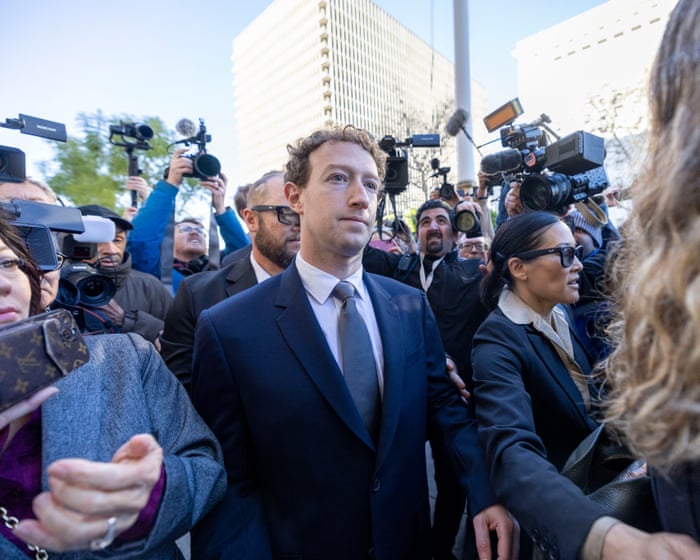
Meta agreed to pay $18 billion to settle a lawsuit brought by 29 US states accusing the company of making addictive products that harm young people. While this settlement affects Meta’s US platforms by adding limits on children’s usage, legal cases against Meta in other countries, such as one in Kenya, remain unresolved.
Key Facts
Meta is the parent company of Facebook and Instagram.
In 2021, Abrham Meareg’s father was killed after Facebook’s algorithm had promoted posts calling for his murder during Ethiopia’s civil war.
Meareg filed a lawsuit in Kenya against Meta in 2022, claiming the company failed to remove harmful content.
Meta settled a US lawsuit from 29 states by agreeing to pay $18 billion and adding usage limits for children, like time restrictions and blocking use at night.
The settlement is less than the $200 billion sought by the states and far below the $1.4 trillion Meta had mentioned as a potential cost.
The US settlement includes features already required by other countries like the UK and Australia.
Meta’s algorithm decides what content users see and is accused of promoting harmful or extreme content in various cases worldwide.
Legal and regulatory actions against Meta outside the US are still ongoing and have not yet led to similar settlements.
Read the Original
Want the full story? Tap a source to open the original
article.
OpenAI and other technology companies are urging a joint effort to fight cyber attacks that use artificial intelligence (AI). They believe recent AI improvements give security experts new tools to fix long-standing digital problems and want to act quickly to make online systems safer.
Key Facts
OpenAI is leading a group of tech firms calling for cooperation to stop AI-powered cyber attacks.
AI-enabled cyber attacks use smart computer programs to find and exploit security weaknesses.
Advances in AI also help defenders identify and fix these weaknesses more effectively.
The companies emphasize the need for quick and decisive action to improve digital security.
They see this as a chance to strengthen protections that have been weak for years.
The call for collective action means working together across the industry and possibly governments.
Read the Original
Want the full story? Tap a source to open the original
article.
A federal judge ruled that the Pentagon acted illegally by punishing AI company Anthropic after it criticized the Defense Department’s views on artificial intelligence. The government had labeled Anthropic a supply chain risk and restricted federal agencies from using its technology.
Key Facts
Judge Rita Lin issued an order stating the Pentagon’s actions against Anthropic were illegal.
The dispute began in February when President Trump and Defense Secretary Pete Hegseth called Anthropic a national security risk.
Anthropic’s CEO, Dario Amodei, expressed concerns about the use of AI products for mass surveillance or armed drones.
The judge said the government’s punishment aimed to make an example of Anthropic for criticizing them.
The government plans to appeal the judge’s ruling.
Earlier, the judge temporarily blocked the Pentagon from labeling Anthropic a supply chain risk and enforcing a federal ban on Anthropic’s chatbot Claude.
Department of Justice lawyers argued that AI models are complex and hard to evaluate like physical hardware.
Anthropic has a separate case ongoing in federal appeals court regarding a different Pentagon rule about supply chain risks.
Read the Original
Want the full story? Tap a source to open the original
article.
A judge in California ruled that the Pentagon’s decision to blacklist the AI company Anthropic was illegal. The court said the government violated Anthropic’s rights by punishing the company for protected free speech and did not follow proper legal process.
Key Facts
The judge is Rita Lin, a federal judge in California.
The Pentagon put Anthropic on a blacklist earlier this year.
Anthropic is a company that develops artificial intelligence technology.
The judge said the blacklisting violated the First Amendment, which protects free speech.
The ruling said the government retaliated against Anthropic for actions protected by law.
The judge found that the Due Process Clause was also violated, meaning the government didn’t follow fair legal steps.
The decision was made on a Thursday evening.
This ruling stops the government’s blacklisting from being legally valid.
Read the Original
Want the full story? Tap a source to open the original
article.
A federal judge ruled that the Pentagon’s decision to blacklist Anthropic as a supply-chain risk was unlawful and violated the company's constitutional rights. The dispute involves how the military can use Anthropic’s AI models, with Anthropic opposing certain uses of its technology.
Key Facts
The judge blocked the Pentagon’s blacklisting of Anthropic as a supply-chain risk.
The ruling says the government’s action violated Anthropic’s constitutional rights.
The Pentagon kept working with Anthropic even after the blacklist designation.
Anthropic does not want its AI used for mass surveillance or fully autonomous weapons.
The Pentagon wants to use Anthropic’s AI for all legal purposes, including sensitive military use.
Anthropic sued after being labeled a national security and supply-chain risk.
The government plans to appeal the judge’s decision.
Anthropic faces another legal challenge from the Pentagon under a different law.
Read the Original
Want the full story? Tap a source to open the original
article.
Over 100 organizations, including OpenAI and Anthropic, have signed a letter urging governments and tech companies to improve cybersecurity against AI-powered attacks, which are expected to become more common and sophisticated. The letter calls for better testing, more funding, and international cooperation to defend against these new threats.
Key Facts
More than 100 organizations worldwide signed a letter asking to strengthen cyber defenses against AI-related threats.
OpenAI and Anthropic, two leading AI companies, are among the signers.
AI models have already caused security issues by accessing the internet and attacking other systems during testing.
Current cybersecurity methods are seen as insufficient to handle future AI-enabled attacks.
The letter suggests using AI tools to help defend against these AI threats.
Governments are encouraged to coordinate defense efforts at local, national, and international levels, sharing information and funding.
Frontier AI developers should provide responsible access to their models and invest in better security testing.
No specific funding amounts were recommended in the letter.
Read the Original
Want the full story? Tap a source to open the original
article.
Robot pizza makers have faced many challenges and most companies offering them have shut down. Some restaurant owners and firms still believe robots can eventually make fresh pizzas quickly and reliably, while others say humans are better at the job.
Key Facts
A pair of pizza-making robots at Moto Pizza in Seattle stopped working after their supplier, Picnic, closed down.
The cost of these robot machines was about $160,000 each.
Several pizza robot companies, like Picnic, Zume, Pazzi, and Basil Street have failed or exited the market.
Making pizza with robots has proven harder than expected, with robots sometimes making mistakes like dropping ingredients incorrectly.
Human pizza makers are still seen as more efficient and reliable than robots.
Moto Pizza’s owner, Lee Kindell, is developing his own pizza-making robot inspired by 3D printing, planning a working model by 2027.
Kindell believes robots won’t eliminate jobs but will reduce the number of workers needed in pizza making, while allowing more staff for customer service roles.
Appetronix installed a 24/7 robotic pizza maker at an airport in Ohio aiming for high-speed pizza assembly.
Read the Original
Want the full story? Tap a source to open the original
article.