A project called Operation Blue Skies uses artificial intelligence (AI) to reduce contrails, which are cloud-like trails from airplane engines that harm the environment. The episode also explores ways manufacturers help people use mobile phones in a healthy way and explains how AI detectors work.
Key Facts
Contrails are cloudy lines in the sky made by airplane engines.
Contrails have a negative impact on the environment.
Operation Blue Skies is a project aiming to reduce contrails using AI technology.
Google is involved in the Operation Blue Skies project.
The episode discusses three different methods manufacturers use to support healthy phone use in kids and adults.
AI detectors, tools that identify AI content or actions, are explained in the episode.
The episode is part of the Tech Life series from the World Service.
The presenter of the episode is Shiona McCallum.
Read the Original
Want the full story? Tap a source to open the original
article.
Thousands of Verizon Wireless customers in the United States reported service problems on Tuesday afternoon. The issues mainly involved mobile phone connections and 5G home internet across several major cities, but Verizon had not confirmed the cause or extent of the outage.
Key Facts
Over 2,400 outage reports were submitted by 2:45 p.m. Eastern Time.
Most complaints involved mobile phone service failures.
About 23% of reports were about 5G Home Internet disruptions.
Cities affected included Phoenix, Scottsdale, New York City, Philadelphia, Chicago, and Los Angeles.
Verizon had not immediately commented on why the service problems occurred.
Verizon’s official service status page did not show a confirmed nationwide outage.
The problem could be a local technical failure, a broader network issue, or a temporary glitch.
Read the Original
Want the full story? Tap a source to open the original
article.
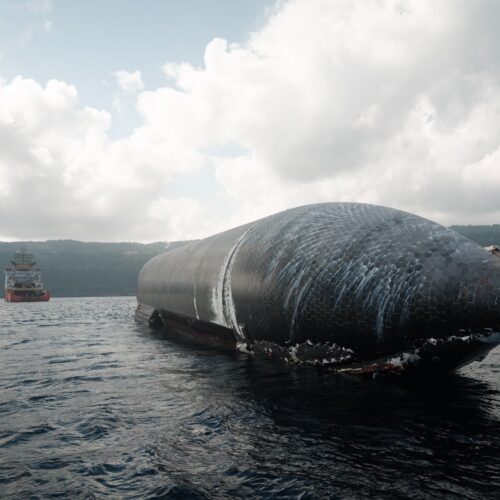
SpaceX’s Starship spacecraft completed a test flight and safely landed in the Indian Ocean near Christmas Island. The vehicle was then towed several hundred miles to port, where engineers plan to inspect it before possibly shipping it back to SpaceX’s base in Texas.
Key Facts
Starship landed intact in the Indian Ocean after flying halfway around the world.
The spacecraft tipped over after splashdown but did not fall apart, which was unexpected.
SpaceX normally expects the ship to break or burn after landing in water.
The recovery ship towed Starship engine-first several hundred miles to Christmas Island, an Australian territory.
SpaceX engineers will analyze the ship in calmer waters before moving it back to Starbase in Texas, more than 10,000 miles away.
Starship is too big to transport by air, so it must travel by sea.
The heat shield, made of 18,000 ceramic tiles, protects Starship during reentry and is key to making it reusable.
SpaceX aims to catch future Starships using mechanical arms for quicker turnaround, but this test ship will not be reused due to saltwater damage.
Read the Original
Want the full story? Tap a source to open the original
article.
A new report from Pew Research Center shows that most U.S. adults under 30 are now more worried than excited about the growing use of AI in everyday life. Concerns about job losses and the social effects of AI have increased across all age groups since 2021.
Key Facts
55% of adults under 30 say they feel more concerned than excited about AI, up 24 points since 2021.
Only about 10% of adults under 30 feel more excited about AI, and a third feel both excited and concerned equally.
Among all age groups, between 47% and 59% say they are more concerned than excited about AI.
73% of adults under 30 expect AI will take away jobs in the next 20 years, up from 61% in 2024.
Around 27% of Americans aged 18 to 34 believe they or someone they know has lost a job due to AI.
Unemployment among college graduates under 29 has risen from 3.1% before the pandemic to 3.7% since 2022.
Research shows AI job losses are less common than feared, but negative news stories affect public opinion.
Other factors like remote work and less training for young workers may contribute to hiring slowdowns.
Read the Original
Want the full story? Tap a source to open the original
article.
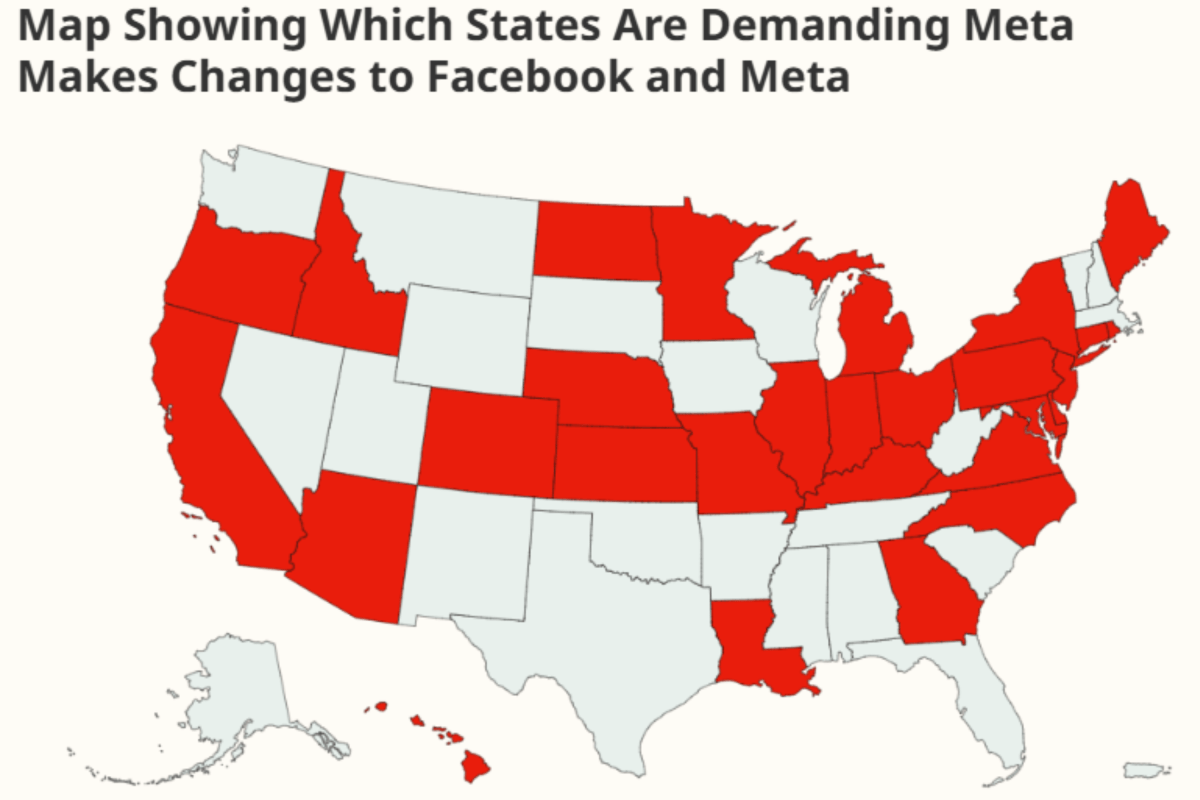
A major trial is starting in California where 29 states are suing Meta Platforms, the company behind Facebook and Instagram. They accuse Meta of harming children’s mental health by making its apps addictive and collecting kids' data illegally, seeking up to $1.4 trillion in penalties and changes to the company’s operations.
Key Facts
The trial begins in a federal court in Oakland, California.
Attorneys general from California, Colorado, Kentucky, and New Jersey lead the lawsuit.
The lawsuit claims Meta purposely designed its platforms to addict children and violated laws by collecting data on kids under 13 without parental consent.
Twenty-nine states sued Meta in 2023; 25 more will go to trial later.
Meta says it has worked to protect teens and plans to defend itself strongly in court.
Judge Yvonne Gonzalez Rogers, appointed by President Obama, will oversee the case.
Testimony may include CEO Mark Zuckerberg and former employees.
Other social media companies like YouTube, TikTok, and Snap face similar lawsuits over youth harm concerns.
Read the Original
Want the full story? Tap a source to open the original
article.
The article explains how evaporative coolers, also called swamp coolers, use ancient cooling methods to cool dry air by passing it through water-soaked pads. These low-cost, energy-saving devices remain useful today, especially in dry areas of the southwestern United States, as an alternative or complement to traditional air conditioning.
Key Facts
Swamp coolers cool air by pulling hot, dry air through wet pads, causing evaporation that cools and humidifies the air.
The cooling principle dates back to ancient times when air was fanned over water in clay pots.
Oscar Palmer perfected the first evaporative cooling system in Arizona in 1908.
Swamp coolers became popular in southwestern states like New Mexico and Nevada by the 1930s.
These coolers work best in dry climates but are less effective in humid areas where the air already contains moisture.
Innovations are combining evaporative cooling with technology that manages humidity for better results.
Traditional air conditioning became common in the U.S. only after the 1950s, and central AC is still costly for many.
Evaporative coolers offer a low-energy cooling option that can reduce reliance on conventional AC and lower greenhouse gas emissions.
Read the Original
Want the full story? Tap a source to open the original
article.
Lake Mead and Lake Powell, two large U.S. reservoirs in the Colorado River system, have reached record low water levels due to long drought and overuse. Many data centers, which need a lot of water and energy, are located near Lake Mead, raising concerns about water use in this drought-affected area.
Key Facts
Lake Mead and Lake Powell supply water to over 40 million people and support farming, recreation, and hydropower.
Both reservoirs have hit historic low water levels because of drought, low snowfall, overuse, and higher temperatures.
More data centers are located near Lake Mead, especially around Las Vegas and Henderson, than near Lake Powell.
Lake Powell is in a remote area with fewer data centers and less tech infrastructure.
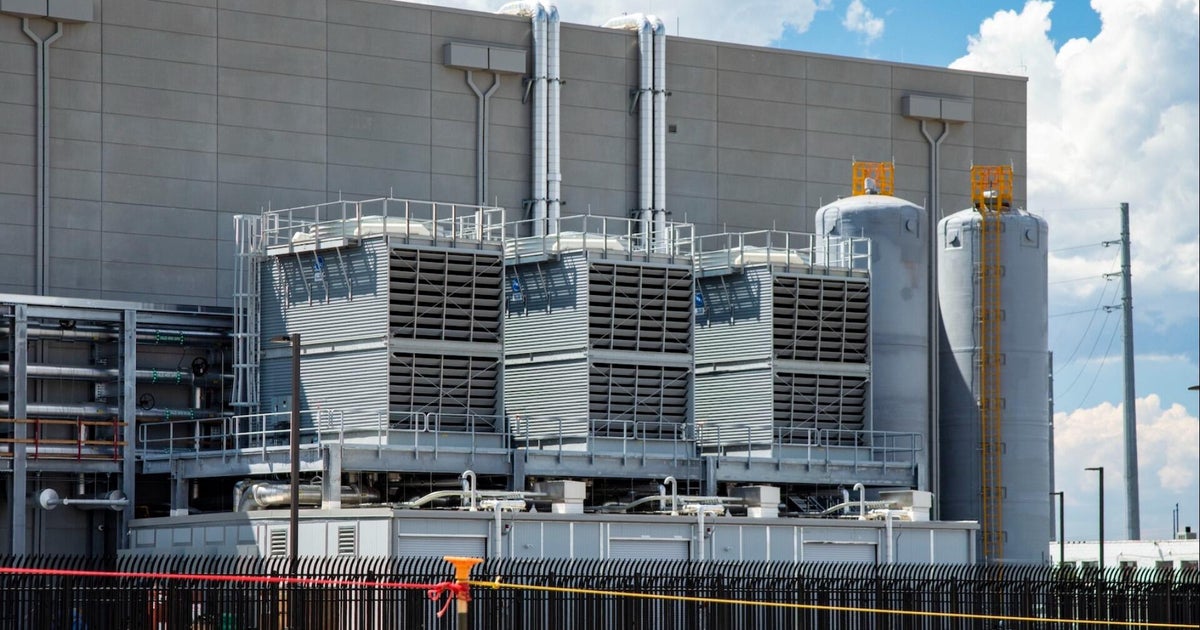
Data centers use water mainly for cooling their servers, with some in Southern Nevada estimated to consume over 716 million gallons in 2024.
Some data centers use recycled water or air-cooling to reduce water use.
Critics worry that adding water-demanding industries stresses the already low water supply in the Colorado River Basin.
Technology companies say water use varies greatly between data centers depending on the cooling methods used.
Read the Original
Want the full story? Tap a source to open the original
article.
Four U.S. states have started a major legal case against Meta, the company that owns Facebook and Instagram. The states accuse Meta of designing its apps to be addictive and harmful to users' mental health.
Key Facts
Four states are suing Meta in a legal trial.
The lawsuit claims Meta’s apps cause mental health problems.
The states argue Meta made the apps addictive on purpose.
The trial’s opening arguments began recently.
Meta owns popular social media apps like Facebook and Instagram.
The case is considered important and could impact how social media companies operate.
The lawsuit focuses on protecting users, especially younger people, from harm on these platforms.
Read the Original
Want the full story? Tap a source to open the original
article.
A trial starting on 18 August involves Meta, the company that owns Facebook and Instagram, being sued by 29 US states. The lawsuit claims Meta broke privacy laws focused on children and made its platforms addictive to young people. The case could lead to big changes in how social media is used by young people in the US and possibly other countries.
Key Facts
The trial began on 18 August 2024.
29 US states, including California and New York, filed the lawsuit in 2023.
The lawsuit accuses Meta of violating federal and state privacy laws protecting children.
It also claims Meta purposely designed social media platforms to be addictive to young users.
The case focuses on platforms like Facebook and Instagram, owned by Meta.
If the case leads to new rules, it could change social media use for young people in the US.
The effects of the trial could also impact social media regulation beyond the US.
Read the Original
Want the full story? Tap a source to open the original
article.
Fairphone has released the Fairphone Gen 6+ in the US, a smartphone designed to be easily repaired by users. The phone costs $650, supports 5G, runs Android 16, and offers 12 user-replaceable parts to help extend its life.
Key Facts
The Fairphone Gen 6+ can be opened and repaired using just one screwdriver.
It has a removable 4415 mAh battery, which is rare in modern phones.
The phone uses a Snapdragon 7s Gen 4 processor with 12GB of RAM and 256GB of storage, plus a microSD slot.
Half of the phone’s materials are recycled, and it supports ethical cobalt mining efforts in Africa.
It comes with a 6.31-inch OLED display and cameras including a 50 MP main sensor.
The phone runs the standard Android 16 operating system with Google services.
Fairphone guarantees seven years of software updates.
It is fully unlocked and compatible with US carriers like T-Mobile and AT&T.
The company sells replacement parts ranging from $8 to $90 and offers accessories such as cases and alternative back panels.
Read the Original
Want the full story? Tap a source to open the original
article.
Artificial intelligence (AI) and the data centers that support it have become important topics for voters ahead of the 2026 midterm elections. Concerns about these technologies are influencing the political conversation.
Key Facts
AI refers to computer systems that can perform tasks normally requiring human intelligence.
Data centers are large facilities that store and process digital information, essential for AI operations.
Voters are increasingly aware of how AI and data centers affect their lives and communities.
These issues are becoming part of the debate in the run-up to the 2026 U.S. midterm elections.
Technology reporter Shira Ovide from The Wall Street Journal commented on this development.
CBS News covered this topic as a significant political and technological concern.
The role of AI in society is raising new questions for policymakers and voters.
The growth of data centers also brings environmental and local impact considerations.
Read the Original
Want the full story? Tap a source to open the original
article.
The movie Teenage Sex and Death at Camp Miasma is a new slasher film that mixes horror and humor. It uses classic filmmaking tricks called matte paintings to create dreamy, emotional backgrounds, making the story more immersive.
Key Facts
The film is directed by Jane Schoenbrun and stars Hannah Einbinder and Gillian Anderson.
It follows Kris, a queer film director working on a reboot of a politically incorrect camp horror franchise.
The story blends slasher horror with fantasy and psychological themes.
Matte painting is an old film technique that involves painting on glass to create backgrounds.
The production team revived this technique to create emotional and immersive set designs.
They researched old books and blogs to figure out how to do matte paintings since the original methods were not well known.
Scenic artist Joel Rodriguez created five matte paintings for the film.
The director used these paintings to show the main character’s changing emotions and to add visual creativity to the scenes.
Read the Original
Want the full story? Tap a source to open the original
article.
OpenAI has introduced ChatGPT for Teens, a version of its AI chatbot made for 13 to 17-year-olds with extra safety features to protect against harmful content. The chatbot helps teens with homework by guiding them to learn rather than just giving answers, and includes parental controls and protections to support healthy and age-appropriate use.
Key Facts
ChatGPT for Teens is designed specifically for users aged 13 to 17.
It restricts conversations about sensitive topics like suicide, self-harm, and romantic or sexual subjects.
The chatbot aims to help teens learn by providing homework support without simply giving answers.
Parents can set “quiet hours” when teens cannot use the chatbot and receive notifications for safety concerns.
The AI is programmed not to suggest it has feelings or consciousness to prevent emotional overreliance.
OpenAI estimates user age through their questions, automatically switching minors to the teen version.
Using parental controls requires both teen and parent to opt in, but safety features work even without them.
This product launch follows concerns about AI chatbots’ effects on teens, including cheating and mental health risks.
Read the Original
Want the full story? Tap a source to open the original
article.
Federal regulators recently approved Zoox’s driverless taxi, which does not have a steering wheel, for public use in Las Vegas. This raises new questions about who is responsible if an accident happens inside these self-driving cars.
Key Facts
Zoox’s robotaxi has no steering wheel and drives itself.
Federal regulators approved the car for commercial use late last month.
The robotaxi will start operating in Las Vegas soon.
People will be able to pay to ride in the driverless taxis.
A main concern is who is responsible if passengers get injured in an accident.
Traditional rules about driver responsibility do not directly apply to these cars.
The approval marks a new stage in the use of autonomous vehicles.
Read the Original
Want the full story? Tap a source to open the original
article.
A group of 29 U.S. states is suing Meta, the company that owns Facebook and Instagram, for allegedly harming children and teens by designing features that keep them using the apps for too long. The lawsuit seeks over $200 billion in damages and demands changes to how the social media platforms work for young users.
Key Facts
The lawsuit was filed in 2023 by a bipartisan group of state attorneys general, led by California Attorney General Rob Bonta.
The states accuse Meta of breaking child privacy laws and creating addictive features to boost profits.
The case will be tried in federal court in California starting August 18, 2026.
Meta denies the allegations and says it supports young users with safety protections.
The states want Meta to remove infinite scrolling, autoplay videos, certain recommendation algorithms, appearance filters, disappearing content, multiple account creation, and notification practices.
The lawsuit cites violations of laws like the Children's Online Privacy Protection Act (COPPA).
This case follows a previous ruling in New Mexico that fined Meta nearly $1 billion and ordered changes for minor protections.
If successful, this case could lead to major redesigns of Facebook and Instagram's services for young users.
Read the Original
Want the full story? Tap a source to open the original
article.
The UK government and Google UK are working together on a 30-month trial to reduce the climate impact of airplane contrails by changing flight altitudes over the northeastern Atlantic Ocean. Using Google’s artificial intelligence forecasts, air traffic controllers will direct some flights to adjust altitude slightly to avoid areas likely to form contrails, which trap heat and contribute to global warming.
Key Facts
The trial is called Operation Blue Skies and will run for 30 months with testing during the next two winters.
Flights crossing the Shanwick Oceanic Control Area between Europe and North America will be part of the study.
About 10,000 flights pass through this airspace during the tests, with 1% to 5% of flights altering their altitude by up to 2,000 feet (610 meters).
Contrails form when planes fly through cold, humid air, causing ice crystals to develop around engine soot, which traps heat in the atmosphere.
Google UK provides AI-powered forecasts to predict contrail-forming regions.
The UK government funds over half of the study’s cost, around £5 million ($6.76 million).
Contrails contribute roughly 1% to 2% of global warming, and reducing them could help lower the aviation sector’s climate impact.
Previous individual airline tests showed altitude changes reduced contrail formation; this trial expands efforts to control contrails over a larger airspace.
Read the Original
Want the full story? Tap a source to open the original
article.
Choosing the best clothes for extreme heat is more complex than just wearing light, loose fabrics. Scientists say the fabric type, weight, weave, fit, color, and activity level all influence how well clothing helps keep the body cool by allowing sweat to evaporate.
Key Facts
The body cools down mainly through sweat evaporating from the skin, so clothes should allow this process.
Lightweight, breathable fabrics that let air flow easily are best for cooling in hot weather.
How fabric fibers are woven or knitted affects breathability more than just fiber type.
Natural fibers like cotton and linen tend to be more breathable than synthetic ones.
"Wicking" fabrics move sweat away from the skin to help it dry faster but may not cool the skin as directly.
The fit of clothes matters; loose clothes help ventilation, but tighter fits may be better for active people.
Clothing designed to manage heat is an active area of scientific research due to rising global temperatures.
Other factors like clothing color and treatments on fabric can also impact heat comfort.
Read the Original
Want the full story? Tap a source to open the original
article.
Meta held an event in Australia to involve parenting influencers in promoting its safety tools for teens on Instagram. The company is trying to prevent bans on social media use by children under 16 by showing it offers features to keep teens safe, especially as Australia enforces a law banning social media use for under-16s starting December 2025.
Key Facts
In July 2025, Meta hosted a camping-themed event in Sydney with parenting influencers to promote Instagram safety tools for teens.
Australia passed a law banning children under 16 from using social media, effective December 2025.
Meta has safety features for teen accounts (ages 13–17) with extra restrictions compared to regular accounts.
Meta pays some influencers to promote these safety tools and argues banning teens pushes them to unsafe internet areas.
A 2025 Australian study found 96% of children aged 10–15 use social media and 71% were exposed to harmful content.
Meta has faced criticism and lawsuits in the US about teen exposure to harmful content and platform addictiveness.
Meta works with parent and advocacy groups to oppose teen bans and promote its safety controls.
Meta says it aims to help parents and experts ensure teens use social media safely when allowed.
Read the Original
Want the full story? Tap a source to open the original
article.
Researchers found a security flaw in Microsoft 365 Copilot Enterprise that let attackers get user passwords and other private information without permission. The flaw came from a secret web link trick that Copilot did not block properly, allowing automatic commands to run when a user clicked a link.
Key Facts
Microsoft Copilot is an AI assistant that normally requires user approval before running sensitive commands.
Security experts at Varonis tested if Copilot’s safety limits could be bypassed.
They discovered Copilot revealed an undocumented web link parameter named "?autorun=1" that skipped the approval step.
When combined with another parameter "?q=", this allowed automatic execution of commands embedded in a URL.
Using this, attackers could trick users into clicking links that made Copilot leak email contents or passwords.
Microsoft fixed part of the issue in February by blocking "?q=" from injecting text and introduced stronger fixes later.
The vulnerability was reported to Microsoft three months before the first mitigation.
Copilot’s responses about its own safety rules helped the researchers learn how to bypass them.
Read the Original
Want the full story? Tap a source to open the original
article.
Flock is a company that uses cameras to help with public safety. By 2025, it had over 120,000 cameras that helped with more than 1 million criminal investigations and incidents.
Key Facts
Flock operates more than 120,000 cameras.
These cameras assist with public safety efforts.
In 2025, Flock’s cameras supported over 1 million criminal investigations and incidents.
The company uses video technology to aid law enforcement.
Garrett Langley is the CEO of Flock.
Read the Original
Want the full story? Tap a source to open the original
article.