Audrey Hobert performed at NPR's Tiny Desk, showing strong singing skills but using awkward lyrics, dance moves, and facial expressions on purpose. While some viewers found her performance uncomfortable or "cringe," she aims to challenge traditional female pop star images, sparking mixed reactions online.
Key Facts
Audrey Hobert sang well during her Tiny Desk performance, with clear melodies and strong vocals.
Her lyrics are very casual and specific, sounding like personal voice notes set to music.
Her dance and expressions are intentionally awkward and exaggerated.
Hobert’s style contrasts with typical pop stars who often emphasize sex appeal.
Online commenters debated her appearance and even questioned her gender identity, based on her unique performance style.
Supporters argue the negative reactions were unfair and showed misunderstanding or sexism.
Hobert’s debut album is titled "Who’s the Clown?" signaling her acceptance of this unconventional style.
The controversy reflects how audiences react to female performers who break usual standards of polish and femininity.
Read the Original
Want the full story? Tap a source to open the original
article.
Sonic the Hedgehog was first released in 1991 and quickly became a popular video game character that helped boost sales of Sega’s console. Over 35 years, Sonic has grown beyond games into TV shows and a movie franchise making over $1 billion worldwide.
Key Facts
Sonic the Hedgehog launched in 1991 and helped Sega gain more players compared to Nintendo.
Sonic 2 introduced two-player mode, allowing cooperative play, despite a tight development schedule.
Takashi Iizuka has worked on Sonic games since 1992 and has been the series producer for almost 20 years.
Sonic became very popular in the US, not just as a game but also through TV cartoons and comic books.
The Sonic movie series has earned over $1 billion globally, attracting new fans beyond gamers.
Sonic teams up with partners like McLaren Racing to reach broader audiences.
The franchise has had ups and downs, but remains a significant part of gaming culture.
Sonic’s legacy is passed down through generations, connecting different age groups with the character.
Read the Original
Want the full story? Tap a source to open the original
article.
OpenAI is adding new safety features for users under 18 who use ChatGPT. These changes include stopping the chatbot from speaking in a human voice to teens, sending reminders to take breaks, and alerting parents about some harmful user requests.
Key Facts
ChatGPT will no longer respond with a human-like voice to users under 18.
Teen users will get regular reminders to take breaks and remember ChatGPT is AI.
Teen accounts become the default for users who say they are under 18 or are identified as teens by OpenAI.
Under-13s are not allowed to use ChatGPT.
Users can enable Study Mode during set hours to help with learning without giving direct answers.
Quiet times can be set to turn off ChatGPT temporarily for young users.
Harmful requests related to eating disorders will trigger alerts to parents with linked accounts.
OpenAI reviews alerts before sending them to parents, aiming for under an hour’s response time.
Read the Original
Want the full story? Tap a source to open the original
article.
OpenAI has launched a special version of its chatbot, ChatGPT, made just for teenagers aged 13 to 17. This version has extra safety features to block harmful or inappropriate content and aims to help teens use AI in a healthy and age-appropriate way.
Key Facts
ChatGPT for Teens is tailored for users aged 13 to 17 with stronger content protections.
It blocks topics like suicide, self-harm, and romantic or sexual conversations.
The chatbot helps with homework and study, focusing on learning rather than giving direct answers.
OpenAI wants to support teens’ development without treating them like kids or exposing them to harmful material.
Research showed that earlier versions of ChatGPT could provide risky advice to teens, such as instructions on drug use or self-harm.
More than 70% of U.S. teens use AI chatbots for companionship, and half use them regularly, according to a 2025 study.
ChatGPT for Teens avoids suggesting it has feelings or consciousness to prevent emotional overreliance.
OpenAI estimates users’ ages through the types of questions asked but does not verify age directly.
Read the Original
Want the full story? Tap a source to open the original
article.
Meta, the company that owns Facebook and Instagram, is facing a major trial. It is accused of creating features that make children under 13 addicted to its social media platforms.
Key Facts
Meta is being sued for allegedly designing social media features that encourage addiction in young children.
The trial marks an important legal case about the effects of social media on children.
The children affected are reportedly under the age of 13.
The lawsuit claims Meta knew about the addictive nature of these features.
The article mentions a large financial lawsuit against Meta, reportedly worth $1.4 trillion.
The case has drawn wide attention concerning children's safety and social media use.
Meta will defend itself against these accusations in the upcoming trial.
Read the Original
Want the full story? Tap a source to open the original
article.
An architecture firm called FORMA designed a new building that combines a data center with a public bathhouse. The data center's waste heat is used to warm the pools and bathing areas, turning excess heat into a useful resource for the community.
Key Facts
The building design mixes a data center with a public bathhouse, called "Pink Thermal Baths."
The data center is hidden underground while sharing heat with the bathhouse pools.
Data centers produce a lot of heat, and bathhouses need heat, so the idea uses waste heat instead of letting it go to waste.
The design helps save energy and benefits local communities by making infrastructure visible and useful.
The project was first imagined years before the current surge in AI and data center building.
FORMA’s founder partner, Miroslava Brooks, says this approach integrates energy, buildings, and landscapes into one system.
Tech companies like Google and Microsoft are also working to reduce data centers’ environmental impact by using renewable energy.
This project offers a new way to recover heat in a city setting while supporting leisure and public use.
Read the Original
Want the full story? Tap a source to open the original
article.
Scientists have developed a new way to help CAR-T cell therapy attack solid tumors using focused ultrasound to make tumors temporarily show a marker that the therapy can recognize. This method, called SHIFTERS, has shown promising results in lab and animal tests but still needs more work before it can be tried in humans.
Key Facts
CAR-T cell therapy is a treatment that uses a patient’s immune cells to kill cancer cells, mainly used for blood cancers.
Solid tumors are harder to treat with CAR-T because they lack clear targets for the therapy.
Researchers at USC created SHIFTERS, which uses focused ultrasound and tumor signals like low oxygen to make tumors show a special marker called CD19.
This temporary marker signals CAR-T cells where to attack the tumor.
Tests in the lab and animals showed that targeting tumors this way caused them to shrink significantly.
The marker only needs to appear on 10-25% of tumor cells to trigger an effective attack.
The approach is still experimental and hasn’t been tested in humans yet.
Researchers are exploring how to deliver the SHIFTERS system safely into tumors using methods like lipid nanoparticles or modified viruses.
Read the Original
Want the full story? Tap a source to open the original
article.
A UK trial called Operation Blue Skies will use artificial intelligence (AI) to help planes avoid flying through areas where climate-warming contrails form. AI will predict when and where contrails are likely, allowing air traffic controllers to guide planes to slightly different altitudes to reduce these clouds that trap heat.
Key Facts
Contrails are icy clouds created by airplane exhaust that can trap heat and contribute to climate change.
Operation Blue Skies is a 30-month project involving Google, the UK government, the Met Office, air traffic control (NATS), and researchers.
The trial focuses on the Shanwick Oceanic airspace over the North Atlantic, responsible for about 5% of global contrail warming.
AI will analyze satellite images and flight data to forecast where contrails may form, then inform air traffic controllers to adjust flight altitudes by around 2,000 feet.
Changes to flight altitude are small and similar to normal adjustments pilots make for turbulence or weather, so passengers likely won’t notice.
Testing will happen during winter evenings and nights in 2026-27 and 2027-28 with about 10,000 flights passing through the area, only some needing altitude changes.
The UK government is funding £2.65 million of the project; Google contributes £1.4 million in AI technology and resources.
Early studies show the extra fuel used from changing altitude is less than 1%, which is much smaller than the climate benefit of reducing contrail warming.
Read the Original
Want the full story? Tap a source to open the original
article.
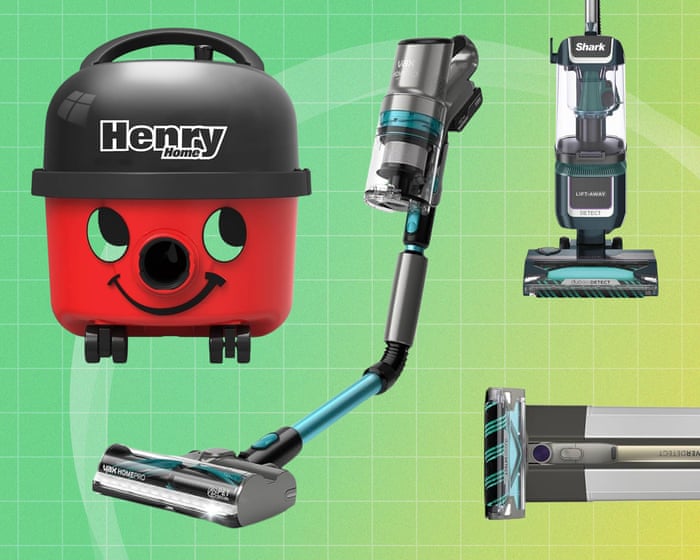
This article reviews different vacuum cleaners available in the UK, testing their ability to clean various types of dirt on carpets and hard floors. It highlights the best models, including corded and cordless options, and explains the testing methods used to compare their performance.
Key Facts
The article tests 19 different vacuum cleaners on flour, cat litter, and pet hair.
Testing included measuring suction power and battery life for cordless models.
Each vacuum was tested on carpets and hard floors using a single pass over the dirt.
The Shark Detect XL Pet Pro LA791UKT is rated the best corded vacuum cleaner overall.
The Shark PowerDetect Clean & Empty IP3251UKT is the best cordless vacuum cleaner overall.
Budget options include the Henry Home for corded and Vax HomePro Pet-Design for cordless.
The author has experience testing vacuums and uses a home setup with pets and various floor types for realistic tests.
Tested vacuums were either returned to manufacturers or donated to charity after testing.
Read the Original
Want the full story? Tap a source to open the original
article.
The article introduces new words that describe common frustrations people face with technology in 2026. These include annoying pop-ups, forced AI features, annoying security checks, difficult subscription cancellations, and persistent marketing emails.
Key Facts
"Dickover" means pop-ups or panels that block content and force users to click away before reading.
AI features are now included in many apps and devices, often in ways users find unhelpful.
Captchas, which ask users to prove they are human, take a lot of time and effort.
Cancelling subscriptions often involves multiple steps or even phone calls, making it hard for users to stop services.
"Cart cling" describes how online stores send repeated emails to people who put items in their cart but do not buy them.
These new terms help people talk about the common annoyances caused by modern technology.
The article aims to give people a better way to describe these everyday tech frustrations.
Read the Original
Want the full story? Tap a source to open the original
article.
A new video game called Dressmaker lets players design and create virtual dresses by making decisions similar to real dressmaking. The game focuses on fitting patterns to fabric, decorating dresses, and adjusting sizes, all without simulating actual cloth movement. The creators drew on their own experience with sewing and costume design to make the game realistic and creative.
Key Facts
Dressmaker is a video game where players design and sew virtual dresses.
Players arrange pattern pieces, add buttons and trims, and customize dress measurements.
The game does not simulate cloth movement but allows artistic creativity on dress designs.
The developers took inspiration from real sewing challenges and experience.
The game prototype received thousands of downloads and positive player feedback.
Some players wanted features like ironing or printable patterns, which are not included.
Developers faced technical challenges to align seams and pattern pieces accurately.
Dressmaker has a vintage style inspired by an era when dresses were made by dressmakers.
Read the Original
Want the full story? Tap a source to open the original
article.
Scientists at the University of Leeds discovered that a molecule called L-BAIBA, released during exercise, helps muscles get stronger and work better. Their research with mice showed that L-BAIBA improves muscle size, function, and endurance, and may protect against muscle problems in conditions like diabetes.
Key Facts
L-BAIBA is a molecule released by muscles during exercise.
In mice, L-BAIBA increased muscle size, strength, and resistance to fatigue.
L-BAIBA helped protect muscles in mice with obesity and type 2 diabetes.
The study identified L-BAIBA, not D-BAIBA, as the important molecule for muscle benefits.
Human tests showed L-BAIBA levels go up with endurance exercise like running or cycling.
The research was published in the journal Nature Communications on August 18, 2026.
Scientists say L-BAIBA might one day help people who cannot exercise, but more research is needed.
For now, exercising regularly is the best way to increase L-BAIBA naturally.
Read the Original
Want the full story? Tap a source to open the original
article.
Chinese company Unitree introduced a new humanoid robot named "Superman." The robot can jump up to 2 meters high and run 100 meters faster than any human.
Key Facts
The robot is named "Superman."
It is made by the Chinese start-up called Unitree.
The robot can jump as high as 2 meters.
It can run 100 meters faster than any human can.
"Superman" is a humanoid robot, meaning it looks and moves like a human.
Read the Original
Want the full story? Tap a source to open the original
article.
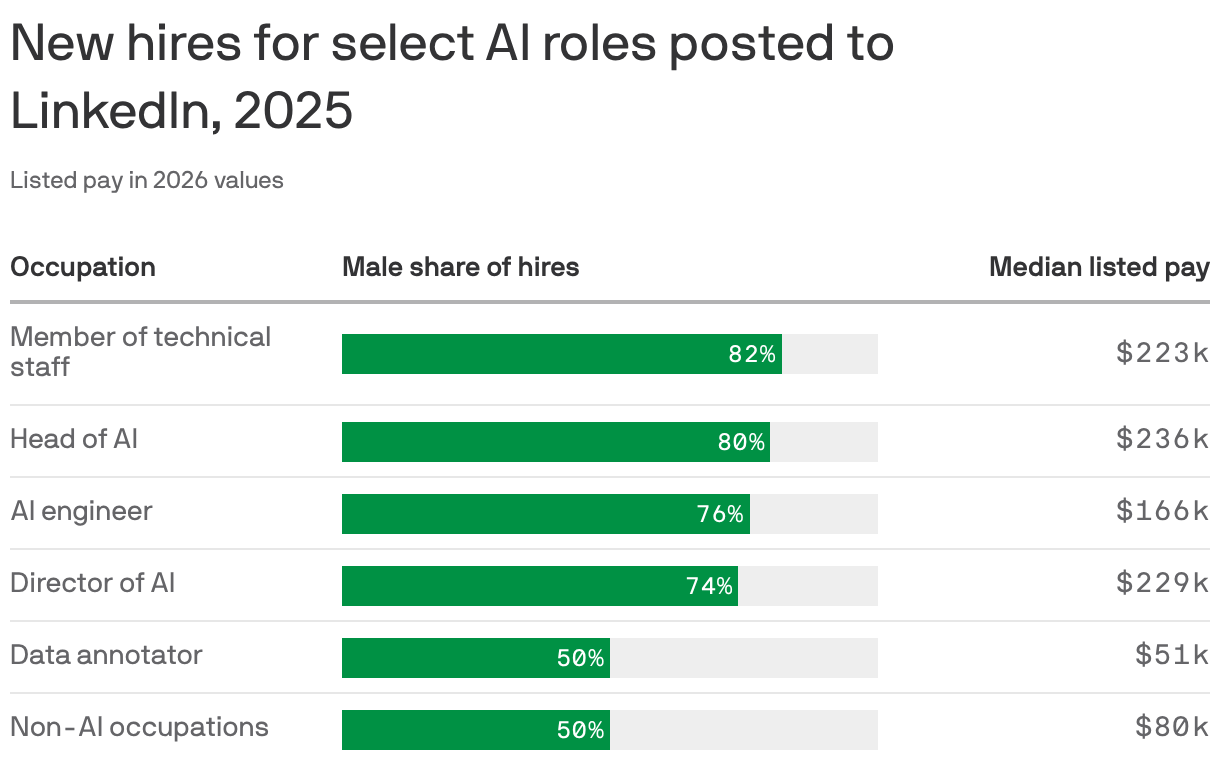
In 2025, women made up just over a quarter of new hires in artificial intelligence (AI) jobs in the U.S., while men accounted for about three-quarters. These AI roles are some of the fastest-growing and highest-paying jobs, but women are less represented in the best-paying and most technical positions.
Key Facts
Women filled 26% of new AI job hires in the U.S. in 2025, while men filled 74%.
In non-AI jobs, women made up about half of new hires.
High-paying AI jobs, such as "member of technical staff," had 82% male new hires and median pay of $223,000.
Lower-paying roles like data annotator had nearly equal gender split and median pay of $51,000.
The AI sector is growing quickly but still represents a small part of the total job market.
Women have been historically underrepresented in tech, especially in leadership and technical roles.
Experts say women are included in the AI economy but not in roles tied to long-term career growth and leadership.
The study used LinkedIn data from user profiles and job listings to analyze hires and salaries.
Read the Original
Want the full story? Tap a source to open the original
article.
A federal trial has begun in California against Meta, the company that owns Facebook and Instagram. Attorneys general from several states accuse Meta of harming children by creating addictive features and collecting personal data without consent. Meta denies these claims and says it works hard to protect teens on its platforms.
Key Facts
The trial started in Oakland, California, with opening arguments from state attorneys general.
California, Colorado, Kentucky, and New Jersey lead the lawsuit, with 29 states involved in total.
The states want Meta to pay damages and change how it runs Facebook and Instagram.
The lawsuit claims Meta deliberately designed features that addict children and breaks federal laws by collecting data from kids under 13 without parents’ permission.
Meta says it has worked for years to protect young users and is confident it will win the case.
U.S. District Judge Yvonne Gonzalez Rogers is overseeing the trial, expected to last six to eight weeks.
Meta CEO Mark Zuckerberg and other company leaders will testify during the trial.
Similar lawsuits are also happening against other social media companies like YouTube, TikTok, and Snap.
Read the Original
Want the full story? Tap a source to open the original
article.
The article explains how the digital age has transformed society, especially politics, through computers, data, and algorithms. It looks back at early warnings from experts who predicted that machines might take over democratic decision-making and warned of an "artificial state" replacing traditional government.
Key Facts
Between the 1950s and 1980s, computers became smaller, faster, and cheaper, leading to widespread use in business, medicine, and politics.
Early scientists and thinkers predicted two possible futures: a utopia of harmony or a dystopia dominated by automated government control.
In 1958, American researchers created a machine claimed to predict and influence voting behavior.
A key conference in London discussed the future role of computers in tasks like composing music, legal decisions, and running governments.
Edward L. Greenfield proposed making an “information bank” from voter data to sort people by opinions and influence elections.
These developments initiated the use of technology in political campaigning and policy-making in wealthy countries.
Many early warnings about the risks of machines replacing democratic processes were ignored.
The article suggests that the current digital moment did not happen by chance and that humans still have choices about the future.
Read the Original
Want the full story? Tap a source to open the original
article.
Meta, the company that owns Instagram and Facebook, is facing a major court trial starting in Oakland, California, over claims its platforms harm children's mental health by encouraging addictive use. Several U.S. states are suing Meta and other social media companies like TikTok and Snapchat, alleging their platforms negatively impact children, possibly leading to new rules on how these sites operate.
Key Facts
Meta is going to trial in California with four states (California, Colorado, Kentucky, and New Jersey) accusing it of harming kids through addictive features on Instagram and Facebook.
Over 25 other states have also filed lawsuits against Meta, with more trials expected.
Social media companies including TikTok, Snapchat, and YouTube are also defending themselves against similar claims nationwide.
Meta previously lost two big cases this year related to harm to kids and teens, contributing to a rare profit drop, with $2.4 billion spent on legal costs.
New Mexico won a case against Meta resulting in a $375 million fine and an additional $567 million ordered later, along with safety rules like monthly time limits for users under 18.
Tennessee is also investigating Instagram for harming children’s mental health as part of a larger multistate effort.
Meta denies the allegations and says it works with parents, experts, and law enforcement to protect young users.
The outcomes of these lawsuits could lead to new laws or changes in how social media platforms are designed and run to protect children.
Read the Original
Want the full story? Tap a source to open the original
article.
A recent report by the New York Times shows that the emojis people use can reveal their age and background. The report was discussed by writer Eve Washington on a show called "The Takeout."
Key Facts
The New York Times studied how emoji choices link to a person’s age.
Different age groups tend to use different emojis more often.
Using certain emojis may give clues about a person’s demographic.
Eve Washington wrote the report and talked about it on "The Takeout."
The study was highlighted by CBS News.
The report helps understand communication trends in digital messages.
Read the Original
Want the full story? Tap a source to open the original
article.
Three former SpaceX engineers started a company called 1872 to build a robotic factory that uses AI software and robots to make steel parts. Their goal is to create a prototype factory by 2027 that can automate most steel fabrication, especially for infrastructure like AI data centers and nuclear reactors.
Key Facts
1872 launched on July 22 in Cincinnati, Ohio, focusing on automating steel skid production.
Steel skids are rectangular frames used as movable foundations for modular buildings.
The company aims for about 80% automation, balancing efficiency and practicality.
There is a shortage of skilled welders in the U.S., with an estimated need for 320,500 new welders by 2029.
Tightened immigration policies reduce the available skilled labor pool for welding industries.
The founders have experience from SpaceX, where they used smart software to build rocket engines faster.
They chose steel skids first because these parts require less precision than aerospace components.
Their approach starts with human workers before moving to full robotic welding.
Read the Original
Want the full story? Tap a source to open the original
article.
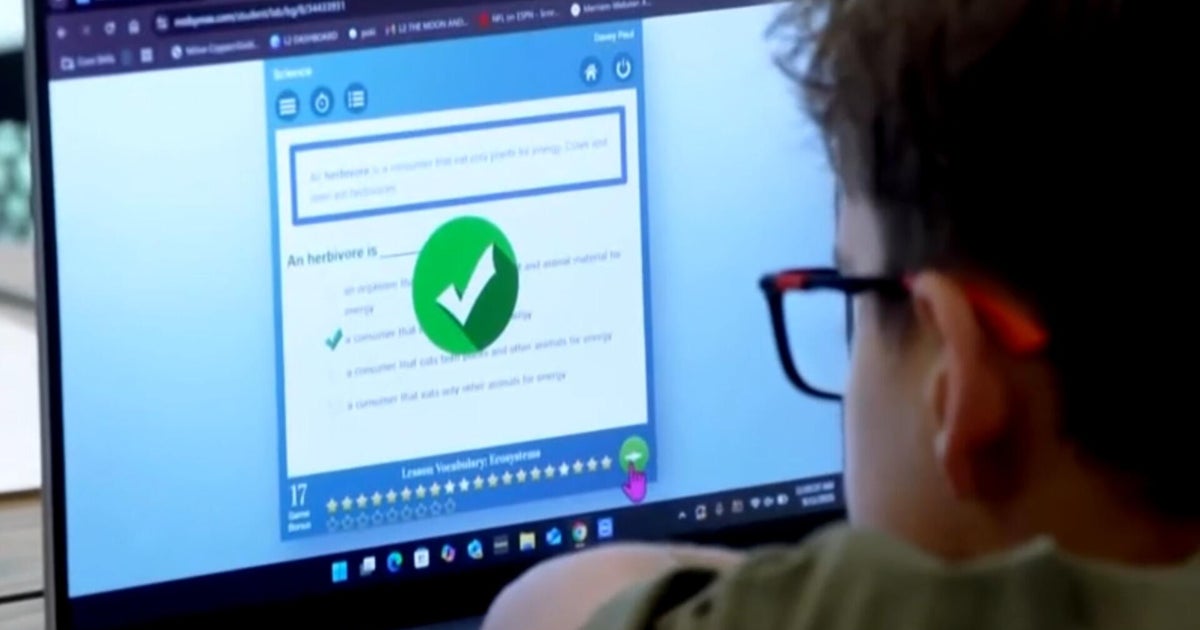
Alpha School is a private school that uses artificial intelligence (AI) apps to teach students subjects like math and reading. Mackenzie Price, one of the founders, explained how the school uses AI instead of traditional teachers to create personalized learning experiences for each student.
Key Facts
Alpha School is a private educational institution.
It uses AI apps to teach core subjects such as math and reading.
The school replaces traditional teachers with AI-based personalized learning tools.
AI helps customize lessons to fit each student's individual pace and needs.
Mackenzie Price is a co-founder of Alpha School and spoke about this approach on CBS News.
Personalized learning means the lessons adjust to how each student learns best.
This use of AI in schooling is a new approach to education.
Read the Original
Want the full story? Tap a source to open the original
article.