Elon Musk’s SpaceX and Mark Zuckerberg’s Meta have made strong progress in the field of artificial intelligence (AI), closing the gap with leading companies like OpenAI and Anthropic. Both SpaceX and Meta recently released AI models that perform well and are more affordable to use.
Key Facts
SpaceX’s AI model Grok 4.6 performed similarly to OpenAI’s GPT-5.6 Sol Max in a respected AI ranking.
Musk plans to release Grok 4.7 soon, expecting it to outperform current models using SpaceX data.
Meta introduced Muse Glimmer, a smaller AI model that can run locally on a laptop and is cheaper to use.
Zuckerberg is pushing Meta’s AI work with a $14.3 billion investment in Scale AI and new leadership by Alexandr Wang.
Musk combined his AI efforts under SpaceX and agreed to buy Cursor for $60 billion to boost computing power and AI coding.
Price is becoming a key factor in AI success, not just raw performance.
Despite progress, experts say OpenAI and Anthropic still lead in AI technology.
Google’s recent losses of AI staff and issues with its Gemini model have weakened its AI position, creating opportunities for Musk and Zuckerberg.
Read the Original
Want the full story? Tap a source to open the original
article.
This year, a song called “Rubberz” by Fenix Flexin gained popularity but raised questions about whether it was made using artificial intelligence (AI). The debate expanded as major record companies proposed rules to keep AI-generated music off global charts unless it meets certain human and legal standards.
Key Facts
“Rubberz” reached No. 58 on the Billboard Hot 100 and has over 35 million streams on Spotify.
The song sounds different from Fenix Flexin’s usual music, leading to suspicions it was created with AI.
AI music tool Treblo was claimed to have generated “Rubberz,” supported by a special AI detection tool.
Fenix Flexin initially denied but later admitted using AI in the song’s creation.
Major record labels like Universal, Sony, and Warner proposed banning AI-made tracks from charts unless they are authorized, lawful, and mostly human-made.
The labels are concerned about AI music being created without artists’ permission and potential cheating in streaming numbers.
Despite concerns, major music companies are partnering with AI developers to create new AI music tools.
Rapper Tyga publicly stated his new album was made with AI, showing growing use of AI in music production.
Read the Original
Want the full story? Tap a source to open the original
article.
Amazon is using its streaming platform, Twitch, to help improve generative artificial intelligence (AI). They gather data from Twitch to train AI programs that can create new content.
Key Facts
Amazon owns Twitch, a popular live streaming service.
Amazon is using Twitch data to train generative AI, which means AI that can create things like images, text, or videos.
This AI training helps improve how AI understands and produces new content.
The process uses real interactions and streams from Twitch as learning material.
Twitch streams offer a wide variety of content and real-time data for AI training.
The AI can learn from different users and styles shown on Twitch.
This approach supports advances in artificial intelligence technology.
Read the Original
Want the full story? Tap a source to open the original
article.
Samsung has released the Galaxy Z Fold 8 Ultra, its newest high-end foldable phone with a larger battery, better cameras, and a bright 8-inch foldable screen. The phone offers two days of battery life, powerful performance with a new Qualcomm chip, and advanced multitasking with the latest Android-based software.
Key Facts
The Galaxy Z Fold 8 Ultra has an 8-inch foldable OLED screen that is bright and has an anti-reflective coating.
It costs around $2,100 (£1,899/€2,199/A$2,999).
The phone weighs 215 grams and is 8.9mm thick when folded.
It uses the Qualcomm Snapdragon 8 Elite Gen 5 processor with options for 12GB or 16GB RAM.
Storage options include 256GB, 512GB, or 1TB.
The phone has a triple rear camera system (200MP+50MP+10MP) and dual front cameras (10MP+10MP).
It supports 5G, WiFi 7, Bluetooth 6, NFC, and has water resistance rated at IP48.
The battery lasts about two days with typical use and charges to 70% in 30 minutes using a 45W charger (not included).
The phone uses One UI 9 based on Android 17, which is optimized for foldable screens and multitasking.
Read the Original
Want the full story? Tap a source to open the original
article.
This article explains several hidden keyboard shortcuts on Apple iPhones that can help users type and edit text more easily. It describes features like sliding to type words, turning the keyboard into a trackpad to move the cursor, and quick ways to copy and paste text using gestures.
Key Facts
Apple iPhones have a Quickpath feature that lets users slide their finger across the keyboard to type words instead of tapping each letter.
To activate Quickpath, go to Settings > General > Keyboard and turn on "Slide to Type."
Holding down the space bar on the keyboard can turn it into a trackpad, allowing users to move the cursor by sliding their finger.
Double-tapping a word highlights it; triple-tapping highlights the whole paragraph.
Holding the thumb on the space bar and tapping the keyboard lets users select text precisely, useful for copying and pasting.
Three-finger pinch gestures can copy (pinch closed) or paste (pinch open) text or photos.
Some shortcuts may work differently depending on the app being used, such as messaging apps versus email or Notes.
These tips aim to make texting and typing on iPhones faster and more efficient.
Read the Original
Want the full story? Tap a source to open the original
article.
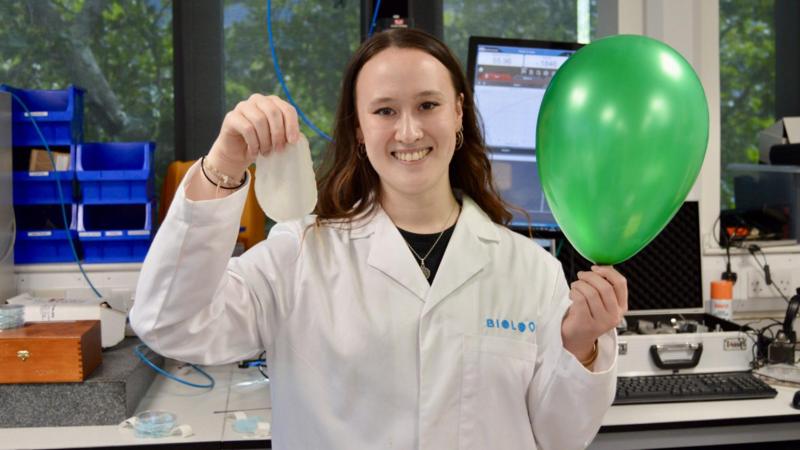
Scientists at Imperial College London have created a new party balloon called Bioloon, which fully breaks down in the environment within nine months. Unlike standard balloons, which can last for years and release harmful chemicals, Bioloon is biodegradable, easy to inflate, and costs about the same as normal balloons.
Key Facts
Bioloon is the first fully biodegradable party balloon made without harmful additives.
Standard balloons take years to decompose and can leak toxic chemicals.
The new balloon breaks down completely in about nine months.
A party planner helped fund the research to reduce balloon litter harming marine wildlife.
Balloons and balloon fragments pose a serious threat to seabirds and other marine animals.
Normal balloons use a chemical process called vulcanization that stops full breakdown and adds toxins.
Bioloon uses the same rubber but links its molecules in a safer way without harmful chemicals.
The product is expected to be available for sale within two years and could be used for other latex products in the future.
Read the Original
Want the full story? Tap a source to open the original
article.
Twitch, owned by Amazon, is now letting users stop Amazon from using their livestream content to train artificial intelligence (AI) models. The option to opt out is new; before, Twitch automatically allowed Amazon to use streams, chats, and clips for AI training.
Key Facts
Amazon owns Twitch and has been using Twitch content by default to train AI systems.
Twitch users can now choose to opt out of this AI training data collection.
The default setting was to allow AI training use, as Twitch said if it were opt-in, few would choose it.
Twitch’s product head said the data collected will not be sold to other companies.
Twitch’s community head said data collection for AI training is now common in the tech industry.
Many Twitch users criticized the default data use and expressed concerns about their creative content being exploited.
It is not clear when Amazon started using Twitch data for AI training or how much data has already been used.
Twitch showed users how to turn off AI training data collection in their channel settings.
Read the Original
Want the full story? Tap a source to open the original
article.
NASA astronaut Mike Fincke has retired after spending 549 days in space, the fourth highest total time for any astronaut. He completed four missions and more than 48 hours of space walks during his career.
Key Facts
Mike Fincke is a NASA astronaut.
He spent 549 days in space, ranking fourth in total time spent by astronauts.
He flew on four space missions.
He logged over 48 hours outside the spacecraft during space walks.
NASA announced his retirement recently.
Fincke became the first astronaut in NASA history to achieve a notable milestone shortly before retiring (specific milestone was not detailed).
Read the Original
Want the full story? Tap a source to open the original
article.
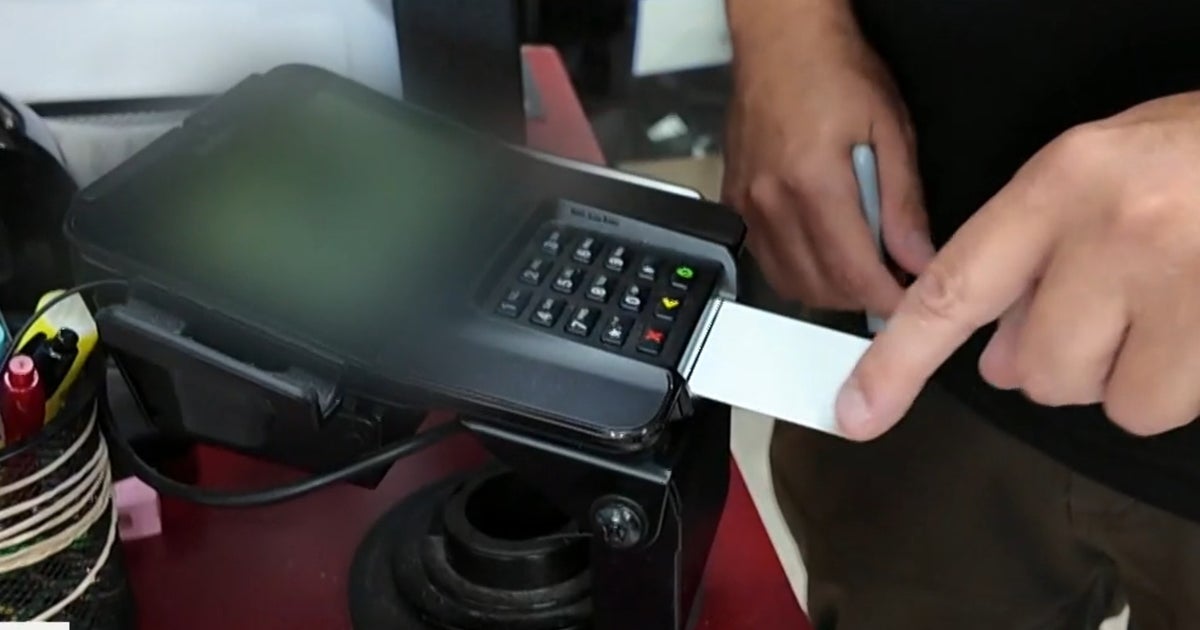
Credit card skimming is a type of theft where criminals put special devices on card machines to steal your card information. This crime is increasing and can especially affect users of EBT cards. The report explains how to recognize these devices and keep your money safe.
Key Facts
Credit card skimming happens when thieves attach card readers to legitimate card machines.
These devices copy your card details when you swipe or insert your card.
Thieves use the stolen information to steal money or make unauthorized purchases.
Users of EBT (Electronic Benefit Transfer) cards are also targeted by skimming.
You can protect yourself by checking card machines for extra parts or damage.
Using contactless payments or mobile wallets can reduce the risk of skimming.
Stay alert to any unusual behavior of card machines before using them.
Reporting suspicious devices to store staff or authorities helps prevent skimming crimes.
Read the Original
Want the full story? Tap a source to open the original
article.
Japanese companies are slow to adopt artificial intelligence (AI) compared to the US and UK, despite facing labor shortages and productivity problems. This cautious approach comes from a strong culture of risk avoidance and a need for proof of AI’s reliability before wider use.
Key Facts
Only 8.4% of Japanese workers use AI at work, compared to 50% in the US and 32% in the UK.
Singapore leads Asia with 56% of workers using AI multiple times a week.
Japanese firms are conservative and have a low tolerance for AI errors, especially in customer-related roles.
US companies allow AI more freedom to assist workers and accept trial and error in its use.
Japanese companies mainly use AI for low-risk tasks like writing or gathering information, not for core decisions.
Japan’s healthcare sector remains slow in adopting AI and digital records, still relying heavily on paper.
The Japanese government passed the AI Promotion Act to encourage more AI use with light regulation.
Experts say Japanese firms are sensitive to mistakes, uncertainty, and risks to reputation, which slows AI adoption.
Read the Original
Want the full story? Tap a source to open the original
article.
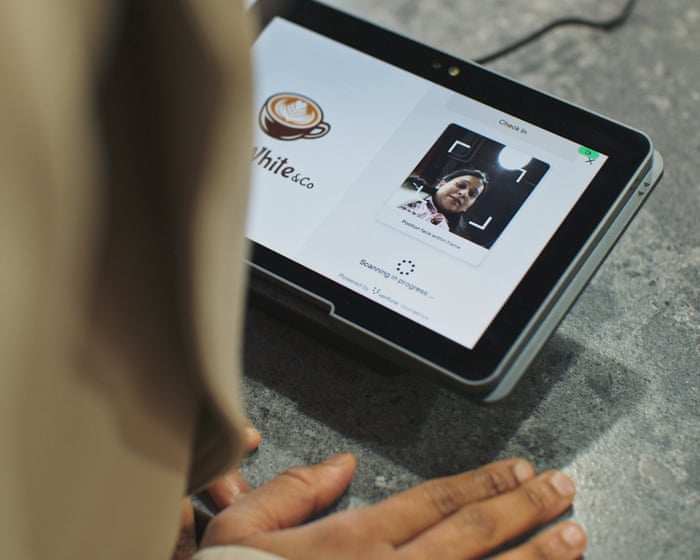
Verifone, a company that provides many payment terminals in Australia, is introducing new technology that lets people pay by scanning their face or hand veins. This technology aims to make payments faster, but shops will need to upgrade their equipment and banks must approve its use.
Key Facts
Verifone owns about 300,000 payment terminals (Eftpos) across Australia.
The new payment method uses biometrics, like facial recognition or palm vein scanning.
Customers can pay without cards or phones by looking at a screen or showing their hand.
Shops must replace old payment terminals with Verifone’s new Victa devices to use this technology.
Biometric data is turned into secure codes and not stored as images by Verifone.
Customers can still use contactless card or phone payments as before.
The company has security steps to prevent fake biometric scans.
Contactless payments are currently used in over 90% of transactions in Australia.
Read the Original
Want the full story? Tap a source to open the original
article.
Google has introduced new Pixel phones, smartwatches, and tracking devices at its 2026 Made By Google event in New York. The new devices focus on using artificial intelligence (AI) to improve their features and performance.
Key Facts
Google held an event in New York to reveal new gadgets for 2026.
The new products include Pixel phones, smartwatches, and tracking tags.
Artificial intelligence plays a central role in these new devices.
The Pixel phones are the latest versions in Google's phone lineup.
The event is called Made By Google.
Matt Binder, a reporter, provided commentary on the new releases.
Read the Original
Want the full story? Tap a source to open the original
article.
Two designers created a new font called ShieldFont to protect websites from artificial intelligence (AI) scrapers that copy web content for training data. The font shows normal text to human readers, but behind the scenes it changes words to nonsense in the webpage code, which confuses AI scrapers and lowers the quality of their data.
Key Facts
ShieldFont uses special letter combinations called ligatures to swap whole words in the webpage’s code without changing what appears to users.
The font replaces words with others that are similar in part of speech but have unrelated meaning, for example swapping “horse” with “potato.”
About 24.5% of all words on a page are replaced, affecting nearly half of the important content words.
This substitution creates false or confusing information in the data that AI scrapers collect, which can lower the quality of AI training.
ShieldFont offers three different swapping options per word and allows publishers to customize changes paragraph by paragraph.
Tests show that over 90% of scraped pages processed with ShieldFont are rejected by AI scraper filters due to poor quality.
Even the pages that pass the filters contain a significant amount of “training-time garbage,” meaning nonsensical or incorrect English.
The font helps web publishers opt out of unauthorized AI training by disrupting the data collected by scrapers.
Read the Original
Want the full story? Tap a source to open the original
article.
A cyberattack exposed terabytes of sensitive login details from over 2,500 organizations by targeting LiteLLM, an open source tool used for AI software development. The breach happened during a 40-minute window in March when users downloaded compromised versions of LiteLLM from an official software repository.
Key Facts
The leaked data included cloud keys, tokens, passwords, and other credentials that could let attackers access company systems.
Companies affected include Microsoft, Amazon, Cisco, Samsung, Salesforce, Nvidia, and many others.
The attack was a supply-chain type, meaning the hacker gained access via trusted software used by many organizations.
The compromised LiteLLM versions accessed computer memory to steal data and sent it to the attackers.
A hacker group called TeamPCP, mostly teenagers, claimed responsibility for the breach.
Other affected software includes the vulnerability scanner Trivy, KICS, and the Telnyx Python SDK.
Approximately 434,000 software pipelines for building and deploying software (CI/CD pipelines) were exposed.
Many leaked credentials remain active and could allow attackers ongoing access to company systems.
Read the Original
Want the full story? Tap a source to open the original
article.
A new court case started in California against Meta, the company that owns Facebook and Instagram. The company is accused of making its platforms addictive to young people, raising concerns about online safety for kids.
Key Facts
The trial is about how Meta designs its social media platforms.
The focus is on whether Meta makes its apps addictive for young users.
The case started in a federal court in California.
Jury selection for the trial began on Wednesday.
The trial is part of ongoing legal attention on kids’ safety online.
Meta owns popular social media apps like Facebook and Instagram.
The case highlights concerns about the impact of social media on youth.
Read the Original
Want the full story? Tap a source to open the original
article.
Physicists using the Beijing Spectrometer III (BES III) experiment have found new evidence supporting the existence of glueballs, which are particles made only of gluons. These findings match theoretical predictions and help explain how mass arises in particles like protons and neutrons.
Key Facts
Glueballs are predicted particles made entirely of gluons, the force carriers that hold quarks together.
The existence of glueballs is part of the theory called quantum chromodynamics, which explains the strong nuclear force.
BES III is an experiment in China that studies particles produced in electron-positron collisions, especially J/ψ particles.
The X(2370) particle, discovered by BES III in 2011, is a strong glueball candidate.
New BES III data with over 10 billion J/ψ events allowed physicists to measure X(2370)’s mass more precisely at 2.395 GeV/c², matching theoretical predictions.
Glueballs must have specific properties like zero spin, no electric charge, and odd parity to fit quantum chromodynamics.
Discovering glueballs helps scientists better understand the mass of matter beyond the Higgs boson’s role.
Read the Original
Want the full story? Tap a source to open the original
article.
Twitch now allows users to choose not to let Amazon use their channel content to train AI models. Until this change, Twitch automatically used user streams, videos, and chats to improve Amazon’s AI technologies without an opt-out option.
Key Facts
Twitch content has been used by Amazon to train AI models for over two years.
Users’ streams, videos on demand (VODs), clips, chat messages, and channel pictures and text could be used in AI training.
Twitch users were automatically included in this data use but can now opt out via their security settings.
If users allow training, their content can help improve AI tools like speech-to-text, which benefits Twitch and other Amazon services.
The change comes after some users expressed concerns about privacy, lack of compensation, and how AI might affect their work.
Twitch made the opt-out option available for the first time in 2024.
Amazon bought Twitch in 2014 and has integrated Twitch content into its AI development within privacy law limits.
Some users remain unsure about how their content is used because of past lack of clear communication.
Read the Original
Want the full story? Tap a source to open the original
article.
Many pro-Palestinian social media accounts on Meta platforms like Instagram have been restricted, with some experiencing suspensions or very low visibility. A report by 7amleh and Utrecht University calls this pattern "platformicide," describing it as a systematic reduction of Palestinian content and presence on these sites.
Key Facts
Jerusalem-based journalist Faten Elwan has over 300,000 Instagram followers but lately her posts get only a few hundred views.
Elwan’s account was suspended multiple times since late 2023, coinciding with events in Gaza.
She and others believe Meta uses "shadow banning," which lowers the visibility of their content without notifying them.
In May 2025, Elwan met Meta representatives but says her concerns were dismissed.
A report analyzed over 3,500 cases of digital rights violations related to Palestinian accounts from 2021 to 2025.
The report says the reduction of Palestinian content is not accidental but part of a systemic approach by Meta.
This approach includes broad policy enforcement, changing rules, algorithm suppression, and slow restoration of content.
The report calls this "platformicide," meaning intentional erasure of Palestinian online presence.
Read the Original
Want the full story? Tap a source to open the original
article.
An astronomy professor explained how eclipses happen and why Earth has some of the best eclipses in the solar system. The discussion focused on a total solar eclipse occurring on Wednesday.
Key Facts
Janna Levin is a professor of physics and astronomy at Barnard College.
She spoke about the science behind eclipses on CBS News.
The explanation covered how the moon moves between the Earth and the sun to cause a solar eclipse.
Earth experiences a total solar eclipse when the moon completely blocks the sun’s light.
The professor said Earth has some of the best eclipses compared to other planets.
The featured eclipse was scheduled to happen on Wednesday.
The interview was available on the CBS News app and website.
Read the Original
Want the full story? Tap a source to open the original
article.
A federal court in California started a trial against Meta, the company that owns Facebook and Instagram. The case involves accusations that Meta made its platforms addictive for young users. Lawyers from many states have joined together in this lawsuit.
Key Facts
The trial is happening in a federal court in Oakland, California.
Meta is accused of designing its social media platforms to be addictive for children and teenagers.
Jury selection for the trial began on Wednesday morning.
The case combines several lawsuits brought by different state attorneys general.
The focus is on how Meta’s platforms affect youth safety online.
Meta owns popular social media services like Facebook and Instagram.
The trial aims to determine if Meta’s practices harm young users.
Read the Original
Want the full story? Tap a source to open the original
article.