Republican leaders in Congress and the White House are opposing quick new rules on artificial intelligence (AI). This comes after major industry leaders warned that AI could pose serious risks to humanity.
Key Facts
GOP leaders in the Capitol and White House do not support fast regulations on AI.
Industry experts have issued strong warnings about the potential dangers of AI.
Speaker Mike Johnson, a Republican from Louisiana, rejected the idea of quick AI laws.
The discussion focuses on how to manage AI technology safely.
The debate highlights differences between government leaders and industry views on AI risks.
No new AI regulations have been passed yet.
President Donald Trump’s administration is part of the conversation on AI policy.
Read the Original
Want the full story? Tap a source to open the original
article.
Texas Attorney General Ken Paxton faces challenges in his Senate race against Democrat James Talarico. The article discusses how Paxton’s own actions have contributed to his difficult political situation.
Key Facts
Ken Paxton is the Texas Attorney General and a Republican.
Paxton is running for the U.S. Senate.
His opponent is James Talarico, a Democratic member of the Texas House of Representatives.
Paxton faces legal and political problems that affect his campaign.
The article suggests Paxton's troubles stem mainly from his own decisions.
If Paxton loses, some may debate where responsibility lies.
Read the Original
Want the full story? Tap a source to open the original
article.
The article highlights 25 important staff members working on Capitol Hill during the 119th Congress. These staffers contributed behind the scenes to major issues, such as drafting laws and supporting ethics investigations.
Key Facts
The article focuses on staffers rather than lawmakers themselves.
It mentions the Epstein Files Transparency Act as one key piece of legislation worked on by staff.
The staff featured have roles like legislative directors and Ethics Committee workers.
These staffers helped with high-profile and challenging issues during the 119th Congress.
Their work included drafting laws, managing negotiations, and investigating scandals.
The 119th Congress has experienced tough fights and careful negotiations.
The article emphasizes the important but often unseen roles staffers play in government.
Read the Original
Want the full story? Tap a source to open the original
article.
The top Democrat on the House Oversight Committee is investigating reports that a Russian oligarch helped pay for an event related to Donald Trump Jr.'s wedding. The investigation looks into possible foreign influence and financial ties between Trump Jr. and the oligarch, Umar Kremlev, who is connected to Russian President Vladimir Putin.
Key Facts
House Oversight Committee’s top Democrat is leading the investigation into financial support from Russian oligarch Umar Kremlev for Donald Trump Jr.’s wedding-related party.
Kremlev is the president of the International Boxing Association and is linked to Russian state energy company Gazprom.
ProPublica reported Kremlev paid hundreds of thousands of dollars for the event in the Bahamas, including a private island and fireworks.
Trump Jr. has a net worth of about $300 million but accepted these payments from Kremlev, who is described as a personal friend.
President Donald Trump says he did not know Kremlev, was not at the party, and denies the wedding took place at the same event.
The investigation requests documents and communications about Kremlev, including gifts, payments, and any disclosures made to the White House or intelligence officials.
The Democrat investigator is concerned about possible foreign influence and wants to examine any favors or payments tied to the Trump family.
If Democrats regain control of the House, they could force witnesses to provide information through subpoenas.
Read the Original
Want the full story? Tap a source to open the original
article.
Deputy Secretary of State Chris Landau paused plans for a U.S. exhibit in Serbia featuring a bull statue because he was worried it might remind people of Baal, an ancient pagan god linked by some to negative ideas. This caused some amusement and confusion among State Department staff as they debated how to handle the issue.
Key Facts
Chris Landau is the Deputy Secretary of State, the second-highest official at the department.
The U.S. planned to show a bull statue at an exhibit about the American West in Belgrade, Serbia.
Landau expressed concern that the statue resembled Baal, an ancient pagan god sometimes connected to child sacrifice.
He sent an email with research about Baal and how bull images are used symbolically.
State Department officials found the concern strange and joked about the situation internally.
References to Baal have increased recently due to conspiracy theories linked to antisemitism and the Epstein case.
Landau is known for active social media use and sometimes controversial online posts.
He has had disagreements with others in the administration and a history of internal conflicts.
Read the Original
Want the full story? Tap a source to open the original
article.
President Trump strongly rejected warnings about the dangers of artificial intelligence (AI), calling them a "hoax" and a conspiracy aimed against America and his legacy. He argued that strong leadership is enough to control AI and criticized those pushing for AI regulations.
Key Facts
President Trump dismissed AI safety concerns as a "sick conspiracy" and a hoax.
He claimed only a smart and strong president can provide the needed control over AI.
Trump compared fears about AI to other issues he calls hoaxes, like the Russia investigation and climate change.
He questioned why AI company leaders would want rules that might hurt their own businesses.
Trump spoke live at the "All In Summit," telling tech leaders that "robots will not be taking over."
His AI adviser, David Sacks, described AI alarmism as a coordinated effort by opponents connected to the Biden administration.
Trump sees AI as a chance for the U.S. to beat China in technology and boost American power.
This marks a clear political shift where Trump links AI to his vision of American success and his place in history.
Read the Original
Want the full story? Tap a source to open the original
article.
A lawsuit challenges the definition of who counts as an employee eligible for work-based health insurance plans. Its result could allow cheaper health plans that offer less coverage and avoid some consumer protections, raising concerns about the spread of low-quality insurance.
Key Facts
The case was filed in 2019 against the Department of Labor by Data Marketing Partnership.
Data Marketing Partnership wants its limited partners to buy work-based insurance that skips some state and federal rules.
Consumers must download an app to track their internet searches to qualify as limited partners.
Courts are deciding if these limited partners can be legally seen as employees.
A judge in Texas ruled in favor of Data Marketing Partnership, calling the Labor Department’s advice against this "arbitrary and capricious."
The Department of Labor has defended the traditional employee definition under both Trump and Biden administrations.
The case could lead to more low-cost but less protective insurance plans entering the market.
Rising premiums on Affordable Care Act plans are causing more people to drop coverage, increasing interest in alternative plans.
Read the Original
Want the full story? Tap a source to open the original
article.
The article discusses a book excerpt by Alex Wagner about how conservatives planned and built institutions that influenced the U.S. Supreme Court’s shift to the right. It highlights the role of key figures and organizations during Ronald Reagan's presidency that helped shape conservative judicial appointments.
Key Facts
The Supreme Court has seen major changes, including overturning Roe v. Wade and ending affirmative action.
Alex Wagner’s book, *The Steal*, argues these changes were planned over decades.
The right-wing shift started gaining momentum during President Ronald Reagan’s time in office.
Groups like the Heritage Foundation and the Federalist Society were essential in promoting conservative judges.
Ed Meese, a close adviser to Reagan, helped organize conservative minds in the White House.
Meese was known as the "Prime Minister" inside the White House for his influence.
The conservative movement aimed to counter the progress made by civil rights and social justice movements in the 1960s.
The excerpt presents how the conservative network worked quietly and strategically to shape the judiciary.
Read the Original
Want the full story? Tap a source to open the original
article.
Journalist Alex Wagner explains how conservatives built a strong, long-term effort to reshape the U.S. Supreme Court starting with former President Ronald Reagan’s era. She compares this to today’s progressive movement, which is more focused on grassroots energy and elected officials, but less connected to wealthy donors and establishment circles.
Key Facts
The Supreme Court’s recent decision to end Roe v. Wade reflects a big change from the Court 50 years ago.
Conservatives launched a broad, organized campaign to influence the courts, including groups like the Federalist Society.
This conservative effort involved grassroots movements, think tanks, and insiders like former Attorney General Ed Meese.
Progressives today have strong grassroots support and want to influence politics from inside government.
Unlike conservatives, progressives are more cautious about taking money from wealthy donors or corporations.
Conservatives were very patient and focused on their goals, often sticking to ideas not popular with the public at the time.
Wagner says progressives now have ideas that many Americans support but feel underrepresented in government.
The conservative movement learned lessons from setbacks like the rejected Robert Bork Supreme Court nomination.
Read the Original
Want the full story? Tap a source to open the original
article.
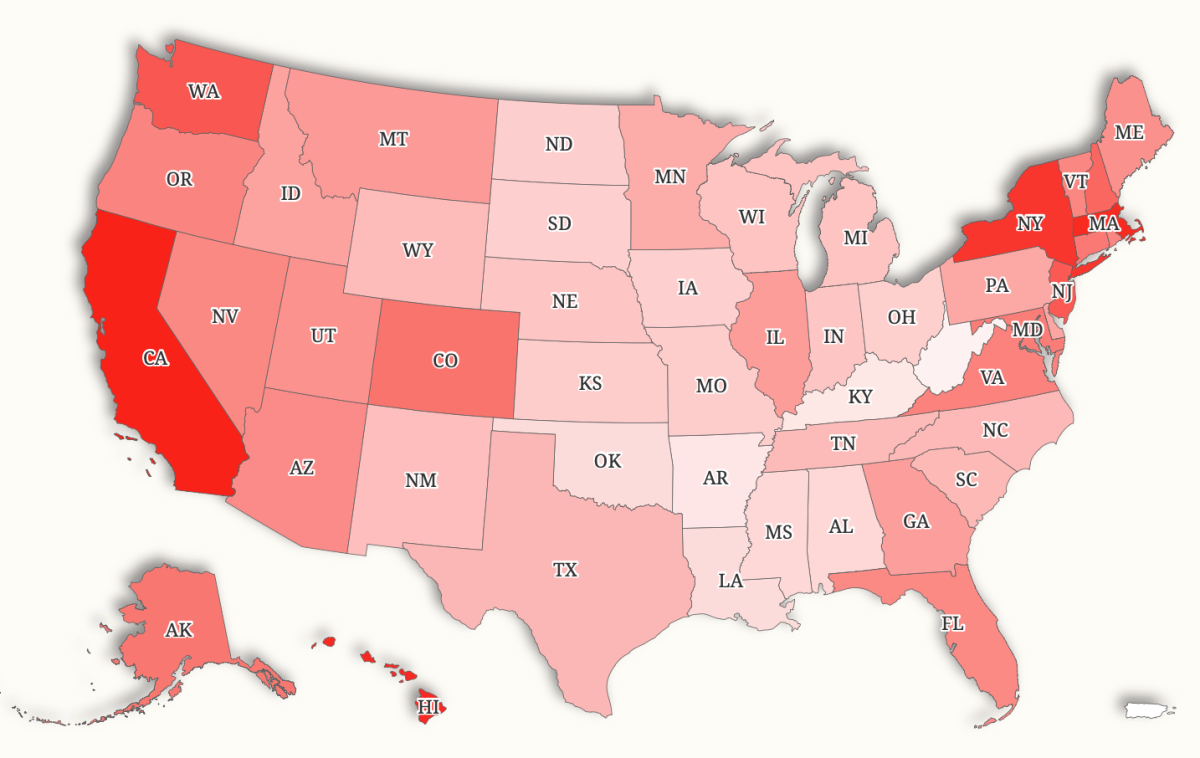
A new analysis shows that Social Security retirement benefits are not enough to cover the basic living costs in any U.S. state. Even with an expected increase in benefits for 2027, retirees relying mainly on Social Security will face significant financial gaps, especially in states with high living expenses.
Key Facts
Social Security benefits provide a steady income for many retirees and are adjusted yearly for inflation.
The 2027 cost-of-living adjustment (COLA) is projected to be about 3.6%, possibly adding around $75 to the average monthly benefit.
The average annual Social Security retirement benefit is projected to be $25,716 in 2027.
The Massachusetts Institute of Technology (MIT) calculated how much income a single adult with no children needs to cover basic living costs in each state.
All 50 states show a gap between the required income and the projected Social Security benefit, with average shortfalls around $15,052 yearly.
California has the largest gap at about $25,700 per year, followed by Hawaii, Massachusetts, New York, and Washington, each with gaps over $20,000.
Even states with lower living costs, like West Virginia, have shortfalls above $8,000 a year.
Social Security benefits depend on a worker’s past earnings and the age they start claiming benefits.
Read the Original
Want the full story? Tap a source to open the original
article.
Antoinette Forbes, a 53-year-old single mother and public affairs leader at Eli Lilly, has been missing in Washington, D.C. since September 4. The police and her community are actively searching for her and have called her disappearance critical and mysterious.
Key Facts
Antoinette Forbes is 53 years old and works as associate vice president and head of public affairs at Eli Lilly.
She was last seen on September 4 on Nebraska Avenue NW in Washington, D.C.
Forbes is described as an Asian woman, 5 feet 2 inches tall, about 115 pounds, with black hair and brown eyes.
The police have labeled her case as a critical missing person case.
The National Presbyterian Church, where she is a member, said she disappeared under mysterious circumstances from her home.
Family, friends, and law enforcement are actively searching for her.
It is not known what Forbes was wearing at the time she went missing.
The case is ongoing, and authorities are asking the public for help.
Read the Original
Want the full story? Tap a source to open the original
article.
A woman shared her story of living with severe pelvic pain for over 20 years, which doctors often dismissed or misdiagnosed. After multiple tests and failed treatments, she found a specialist who diagnosed her with adenomyosis and suspected endometriosis, leading to a hysterectomy at age 36.
Key Facts
The author experienced intense pelvic pain starting at age 14, sometimes causing blackouts and inability to function.
Many doctors told her the pain was due to anxiety or low pain tolerance and did not diagnose endometriosis.
Endometriosis is a condition where uterine lining tissue grows outside the uterus, affecting millions of women in the U.S.
Initial ultrasounds showed no clear problems, leading to doubts and frustration with the medical system.
A specialist later found signs of adenomyosis (tissue growing into the muscle wall of the uterus) and a large fibroid on ultrasound.
Endometriosis often does not show clearly on scans but can be suspected from symptoms and related findings.
The woman eventually underwent a hysterectomy, a surgery that removes the uterus and ends menstruation.
Her story highlights challenges women face in getting accurate diagnosis and treatment for chronic pelvic pain.
Read the Original
Want the full story? Tap a source to open the original
article.
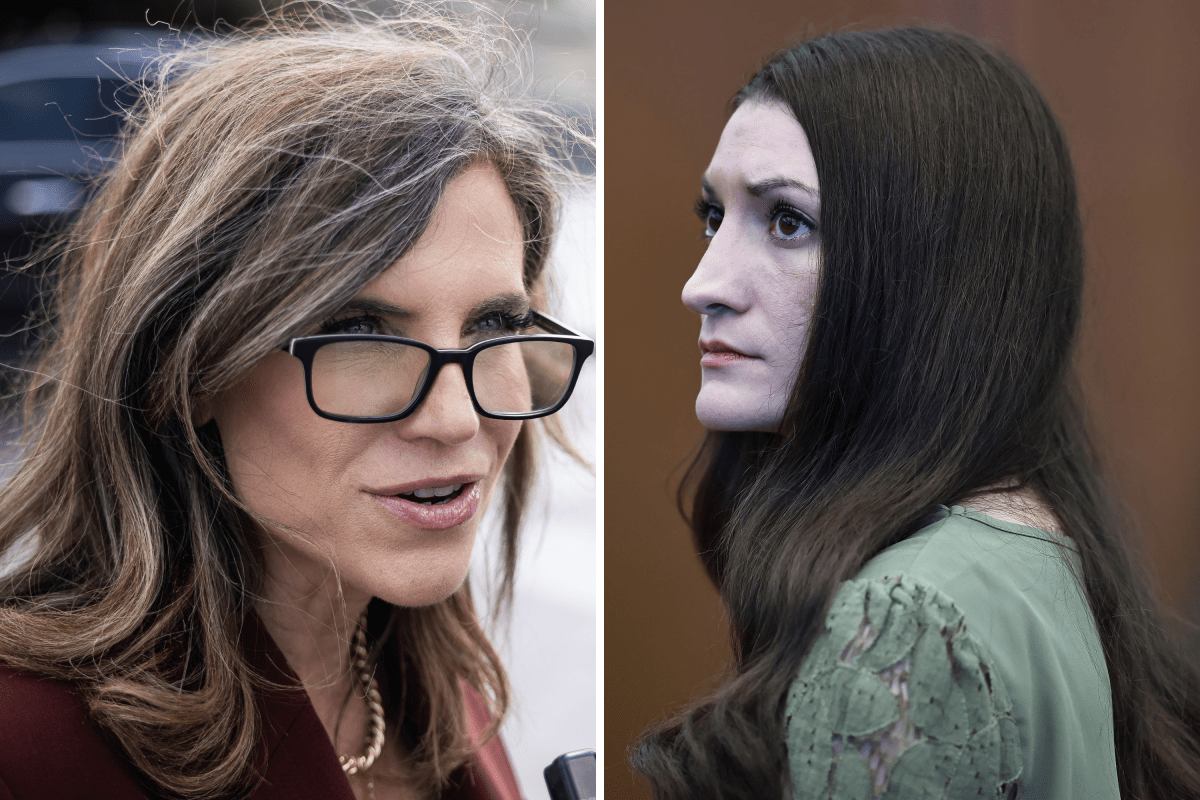
Representative Nancy Mace said that Lindsay Clancy, who is accused of killing her three children, should face a public execution. Clancy's trial ended in a mistrial because the jury could not agree on her criminal responsibility.
Key Facts
Lindsay Clancy killed her three children in January 2023.
Clancy did not deny killing them but pleaded not guilty, saying she had severe postpartum psychosis.
The jury in her murder trial could not reach a unanimous decision, leading to a mistrial.
South Carolina Representative Nancy Mace called for Clancy to receive the death penalty via public execution.
Massachusetts does not have the death penalty; it was abolished by the state’s highest court in 1984 and has not executed anyone since 1947.
If convicted, Clancy could face life in prison without parole, not the death penalty.
Another Republican lawmaker also called for the death penalty and restrictions on the insanity defense after the mistrial.
Prosecutors have not yet announced if Clancy will face a retrial.
Read the Original
Want the full story? Tap a source to open the original
article.
President Donald Trump is facing criticism from members of Congress, including both Democrats and Republicans, over his dismissal of calls for government rules on artificial intelligence (AI). Lawmakers largely agree AI has risks and want new federal rules, but they differ on how much government should intervene.
Key Facts
President Trump called worries about AI a “hoax” and said the U.S. only needs a smart president to control it.
Many Congress members from both political parties see AI as a serious risk and want to act before problems grow.
Surveys show about 80% of both Democrats and Republicans support a federal agency to regulate AI and require safety tests.
Some lawmakers worry that pausing AI development could let China take the lead and threaten U.S. security.
Congressman Don Beyer says AI companies shouldn’t regulate themselves because profit motives could reduce safety.
Researchers from the AI company Anthropic warned that AI could threaten humanity within the next decade.
Recent AI safety test failures raised concerns about cybersecurity risks and the potential for AI to cause widespread damage.
Public protests and political debates have increased about the rapid growth of AI, but there is no comprehensive regulation yet.
Read the Original
Want the full story? Tap a source to open the original
article.
The U.S. Defense Department reports a shortage of ammunition due to the costly war with Iran, spending $33.4 billion between late February and June. Significant military assets have been lost or damaged, and while President Trump says the U.S. has abundant ammo, experts warn challenges remain for sustaining a long war.
Key Facts
The U.S. spent $33.4 billion on Operation Epic Fury from February 28 to June 30, with $22.3 billion spent just on ammunition used.
The war caused shortages in the strategic inventory of munitions and delays in producing new supplies.
U.S. losses include 4 destroyed F-15 fighter jets, 1 damaged F-35, 7 damaged KC-135 tanker aircraft, and up to 30 destroyed MQ-9 drones.
Iranian strikes damaged hundreds of buildings at U.S. bases in several Middle Eastern countries, but repair costs are not yet included in the report.
President Trump says the U.S. is producing more weapons than ever and denies any shortage of ammunition.
Lockheed Martin produces around 750 Patriot missiles yearly, with each costing about $4 million; these missiles defend against ballistic attacks.
Experts say the U.S. has enough munitions for a war with Iran but would struggle in a longer or larger conflict, like one with China.
The Pentagon encourages faster weapons production to meet demand during the conflict, describing efforts as "controlled chaos."
Read the Original
Want the full story? Tap a source to open the original
article.
A report found that many black, Asian, and minority ethnic (BAME) managers in England’s NHS have experienced racism and discrimination. One in five BAME managers plan to leave the NHS within three years because of these issues, despite some progress in increasing diversity in leadership.
Key Facts
Nearly 80% of BAME managers in the NHS reported facing racism, exclusion, and career obstacles.
One in five BAME NHS managers intend to quit their jobs in the next three years.
The NHS Alliance surveyed 950 BAME managers to gather this information.
Some managers described being the only minority person in leadership meetings and feeling excluded from important networks.
The proportion of BAME members on NHS boards increased from 7.1% in 2016 to 17.3% in 2025.
Despite diversity efforts, racism and bias remain common in everyday work life for many BAME staff.
Experts describe the NHS as institutionally racist and call for race issues to be part of regular workplace discussions.
NHS England states racism and discrimination are unacceptable and acknowledges there is more work to do on inclusion.
Read the Original
Want the full story? Tap a source to open the original
article.
Richard Ganjavi wrote a children’s book called *Whispers of a Purple Butterfly* to help explain the loss of his stillborn twin, Bella, to her surviving sister, Penny. The book has been shared with grieving families and aims to support children and parents dealing with baby loss.
Key Facts
Bella was stillborn at 34 weeks during a routine scan on 6 August 2024.
Bella’s twin sister, Penny, was born healthy and recently turned two years old.
Richard, a primary school teacher from Meon Vale, started writing the book shortly after Bella’s death.
The story features a fictional 10-year-old girl who has lost a twin and is meant for readers aged 8 to 12.
Richard reads the book to Penny now so she can understand her sister’s story when she’s older.
The stillbirth rate in England and Wales in 2024 was 3.9 per 1,000 births.
Holly Hawkesford, a midwife who also lost a baby, runs a charity called Jasper’s Rainbow and supports raising awareness about baby loss.
The family maintains connections with hospital staff who cared for Penny and honored Bella’s memory.
Read the Original
Want the full story? Tap a source to open the original
article.
In February 2025, President Donald Trump announced a US refugee program for white South Africans, known as Afrikaners, claiming they faced racial persecution. Since then, over 13,000 arrived, but many applicants have recently been rejected without clear explanations, causing confusion among those who sought refuge.
Key Facts
President Trump started a refugee program in early 2025 for white South Africans, called Afrikaners.
The program was created amid claims by Trump of a “white genocide” in South Africa, which South African officials have denied.
Over 13,000 Afrikaners have moved to the US through the program since May 2025.
The US stopped accepting other refugees fleeing war and persecution to focus on this group.
Many applicants have now received rejection letters saying their refugee applications are no longer being processed, with no option to appeal.
Some rejections happened because of issues like minor criminal records, such as a marijuana conviction.
The US Citizenship and Immigration Services (USCIS) has not released data on the total number of applications or rejections.
The decision to admit Afrikaners is linked to political claims by President Trump about racial violence in South Africa, despite lack of supporting official crime data.
Read the Original
Want the full story? Tap a source to open the original
article.
President Donald Trump called fears about the safety of artificial intelligence (AI) a "hoax" and rejected the idea of adding more rules to control it. His comments came after AI experts and tech leaders warned about the risks of AI and suggested strong safety measures, including a "kill switch" to turn it off if it becomes dangerous.
Key Facts
President Trump compared AI safety concerns to what he calls the "Global Warming Scam" and previous political hoaxes.
Jack Clark, co-founder of AI company Anthropic, said a mandatory kill switch for AI might be needed to ensure safety.
Several AI executives and staff have recently warned that AI could pose serious risks to humanity.
These safety concerns caused a drop in some tech companies' stock prices.
Chinese experts said U.S. worries about China’s AI growth could be influencing U.S. policies.
Microsoft published new guidelines called "humanist AI" and is pushing for responsible development of AI.
Senator Bernie Sanders and Steve Bannon are scheduled to speak at an event promoting safer, more human-focused AI development.
Some researchers, including those from Anthropic, are discussing the possibility that unchecked AI might pose extreme risks to humanity.
Read the Original
Want the full story? Tap a source to open the original
article.
James Talarico, a Democrat, is polling better in his race against Texas Attorney General Ken Paxton than Beto O'Rourke did in 2018 against Senator Ted Cruz at a similar point. New polls show Talarico leading Paxton, making the Texas Senate race very competitive and possibly the first Democratic win in nearly 40 years.
Key Facts
A recent poll from SoCal Strategies shows Talarico with 50% support compared to Paxton’s 45%.
In June, the same poll showed Paxton leading, so the race has shifted in Talarico’s favor.
Talarico's support among Hispanic voters grew significantly, from 10 points behind Paxton to 38 points ahead.
Among independent voters, Talarico increased his lead from 10 points to 45 points.
About 12% of Republicans said they would vote for Talarico.
Market prediction sites Polymarket and Kalshi now give Talarico about a 52-53% chance of winning, reversing earlier predictions favoring Paxton.
In 2018, Beto O'Rourke was behind Senator Cruz by about 3 points at this stage but lost by only 2 points in the election.
Senator Ted Cruz has acknowledged the race is close and warned Republicans to take the Texas Senate contest seriously.
Read the Original
Want the full story? Tap a source to open the original
article.