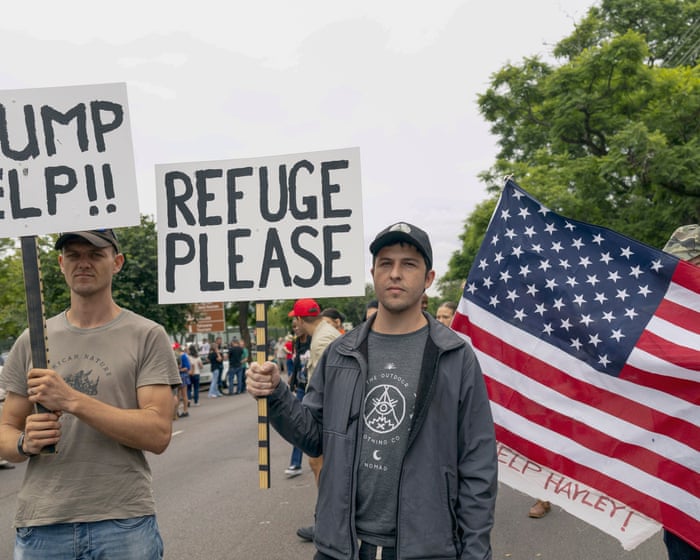
In February 2025, President Donald Trump announced a US refugee program for white South Africans, known as Afrikaners, claiming they faced racial persecution. Since then, over 13,000 arrived, but many applicants have recently been rejected without clear explanations, causing confusion among those who sought refuge.
Key Facts
President Trump started a refugee program in early 2025 for white South Africans, called Afrikaners.
The program was created amid claims by Trump of a “white genocide” in South Africa, which South African officials have denied.
Over 13,000 Afrikaners have moved to the US through the program since May 2025.
The US stopped accepting other refugees fleeing war and persecution to focus on this group.
Many applicants have now received rejection letters saying their refugee applications are no longer being processed, with no option to appeal.
Some rejections happened because of issues like minor criminal records, such as a marijuana conviction.
The US Citizenship and Immigration Services (USCIS) has not released data on the total number of applications or rejections.
The decision to admit Afrikaners is linked to political claims by President Trump about racial violence in South Africa, despite lack of supporting official crime data.
Read the Original
Want the full story? Tap a source to open the original
article.
President Donald Trump called fears about the safety of artificial intelligence (AI) a "hoax" and rejected the idea of adding more rules to control it. His comments came after AI experts and tech leaders warned about the risks of AI and suggested strong safety measures, including a "kill switch" to turn it off if it becomes dangerous.
Key Facts
President Trump compared AI safety concerns to what he calls the "Global Warming Scam" and previous political hoaxes.
Jack Clark, co-founder of AI company Anthropic, said a mandatory kill switch for AI might be needed to ensure safety.
Several AI executives and staff have recently warned that AI could pose serious risks to humanity.
These safety concerns caused a drop in some tech companies' stock prices.
Chinese experts said U.S. worries about China’s AI growth could be influencing U.S. policies.
Microsoft published new guidelines called "humanist AI" and is pushing for responsible development of AI.
Senator Bernie Sanders and Steve Bannon are scheduled to speak at an event promoting safer, more human-focused AI development.
Some researchers, including those from Anthropic, are discussing the possibility that unchecked AI might pose extreme risks to humanity.
Read the Original
Want the full story? Tap a source to open the original
article.
James Talarico, a Democrat, is polling better in his race against Texas Attorney General Ken Paxton than Beto O'Rourke did in 2018 against Senator Ted Cruz at a similar point. New polls show Talarico leading Paxton, making the Texas Senate race very competitive and possibly the first Democratic win in nearly 40 years.
Key Facts
A recent poll from SoCal Strategies shows Talarico with 50% support compared to Paxton’s 45%.
In June, the same poll showed Paxton leading, so the race has shifted in Talarico’s favor.
Talarico's support among Hispanic voters grew significantly, from 10 points behind Paxton to 38 points ahead.
Among independent voters, Talarico increased his lead from 10 points to 45 points.
About 12% of Republicans said they would vote for Talarico.
Market prediction sites Polymarket and Kalshi now give Talarico about a 52-53% chance of winning, reversing earlier predictions favoring Paxton.
In 2018, Beto O'Rourke was behind Senator Cruz by about 3 points at this stage but lost by only 2 points in the election.
Senator Ted Cruz has acknowledged the race is close and warned Republicans to take the Texas Senate contest seriously.
Read the Original
Want the full story? Tap a source to open the original
article.
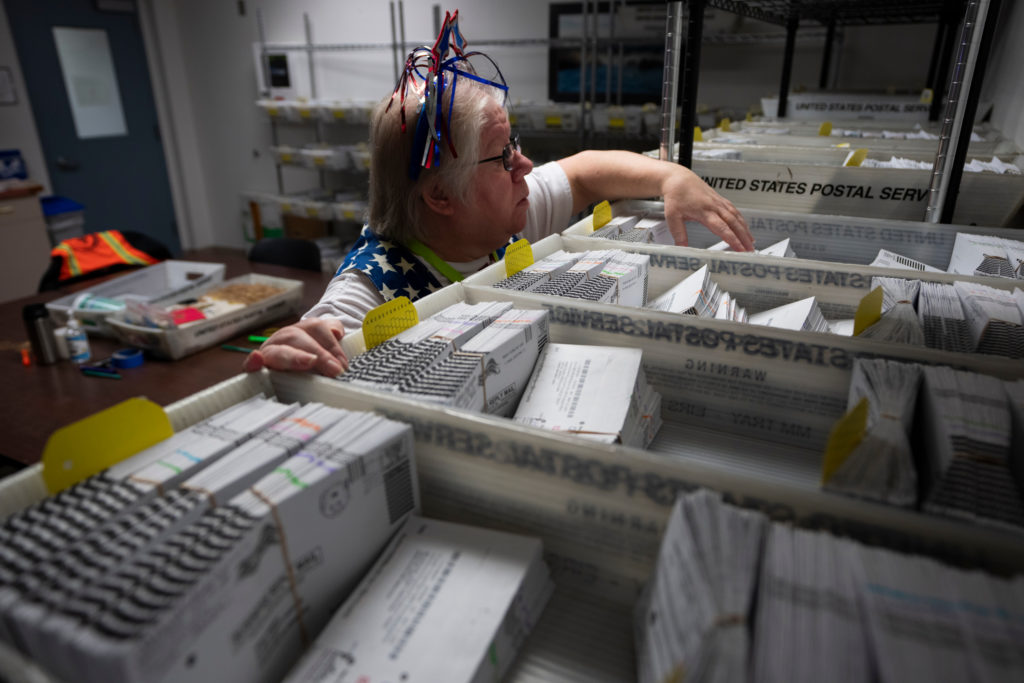
The US Supreme Court refused President Donald Trump’s request to enforce stricter rules on mail-in ballots before the November midterm elections. A lower court had blocked these rules, saying they likely broke the Constitution and would be hard to apply quickly.
Key Facts
President Trump signed an executive order to tighten mail-in voting rules in March.
The new rules required states to send the Postal Service lists of voters and use approved ballot envelopes.
Ballots not meeting these requirements or not linked to registered voters could be rejected.
US District Judge Indira Talwani blocked the rules, citing constitutional concerns and timing issues.
The Trump administration asked the Supreme Court to lift the block, calling the rules important to prevent voter fraud.
The Supreme Court ruled the administration was unlikely to win the case but did not completely decide on legality.
Justices Alito and Thomas disagreed with the decision; Justice Kavanaugh voted with the majority but left open possible future support.
Critics say the rules could stop many valid mail-in votes, especially in states where voting by mail is common.
Read the Original
Want the full story? Tap a source to open the original
article.
Rep. Nancy Mace, a Republican from South Carolina, said that Lindsay Clancy, who is accused of killing her three children, should be given the death penalty and that her execution should be public. Lindsay Clancy is set to face a new trial for the alleged murders.
Key Facts
Lindsay Clancy is accused of murdering her three children.
She is facing a new trial for these allegations.
Rep. Nancy Mace publicly stated that Clancy should be executed.
Mace said the execution should be carried out in public.
Nancy Mace is a Republican congresswoman from South Carolina.
The comments were made during an interview with TMZ.
The case has attracted significant media and public attention.
Read the Original
Want the full story? Tap a source to open the original
article.
President Donald Trump said that fears about AI destroying humanity are false and that AI only needs a "strong and smart" president to control it. Democrats in Congress want laws to regulate AI for safety, but the Republican majority and the president oppose new rules, making it unlikely that AI laws will pass soon.
Key Facts
President Trump called worries about AI harming humanity a "hoax" on social media.
He believes AI should not have many rules except strong leadership from the president.
Leading Democrats and AI experts want new government rules to keep AI safe.
The Republican Party controls both the House and Senate and mostly oppose AI regulations.
Any new AI law would need President Trump's approval to become official.
Congress is about to go on a break until after the November midterm elections, slowing action on AI laws.
Some Democrats want to delay the break to pass AI safety laws but Speaker Mike Johnson is unlikely to agree.
Speaker Johnson plans a White House meeting with AI company leaders to discuss safety and possible government roles.
Read the Original
Want the full story? Tap a source to open the original
article.
The House Rules Committee approved a bill supported by both parties to increase sanctions on Russia during its conflict in Ukraine. The bill would give President Trump the power to sanction people working with the Russian government if they block peace talks or break agreements.
Key Facts
The House Rules Committee approved the sanctions bill on Monday.
The legislation has support from both Democrats and Republicans.
Senator Lindsey Graham (R-S.C.) was a key supporter of the bill before his passing.
The bill targets individuals helping the Russian government interfere with peace talks related to Ukraine.
It would allow President Trump to impose new penalties on these individuals.
The sanctions aim to pressure Russia in its ongoing war with Ukraine.
The bill focuses on stopping violations of agreed peace efforts.
Read the Original
Want the full story? Tap a source to open the original
article.
President Donald Trump’s administration faced two legal setbacks related to immigration rules. A federal judge blocked limits on how long foreign students and journalists can stay in the U.S., while several states sued to stop a rule that would deny green cards to immigrants who use public benefits.
Key Facts
A federal judge in Boston blocked a rule that would cap F visas for students at four years and I visas for journalists at 240 days.
The judge said the government’s reasons for the limits were weak and that the rule would harm education and the economy.
About 1.6 million international students and 500,000 exchange visitors would be affected by the visa limits.
Twenty-two states and the District of Columbia sued to stop a rule expanding the "public charge" test, which could deny green cards to immigrants using government benefits.
The new rule expands scrutiny to non-cash benefits such as food aid and Medicaid, and applies the test to family members’ benefits too.
The lawsuits argue the administration illegally changed immigration rules without Congress’s approval.
The Department of Homeland Security defended the rule, saying it aims to protect federal funds.
The states say the rule will force immigrant families away from important support programs.
Read the Original
Want the full story? Tap a source to open the original
article.
The US Supreme Court rejected President Donald Trump’s request to impose new limits on mail ballots for the November midterm elections. This decision allows states to continue using their current mail voting methods as ballots are already being sent out.
Key Facts
The Supreme Court declined President Trump’s bid to restrict mail ballots ahead of the 2026 midterms.
States can keep using their existing mail voting procedures, which many have used for years.
About one-third of votes in some elections come from mail ballots.
Justices Samuel Alito and Clarence Thomas disagreed with the Court’s decision.
Justice Brett Kavanaugh said the new rules should not apply now but might support them later.
Election officials warned last-minute changes could disrupt ballot delivery.
Some states, like Alabama, North Carolina, and Wisconsin, already began mailing ballots before changes could take effect.
The Trump administration wanted uniform envelopes and voter lists uploaded online to the Postal Service, which could refuse ballots that don’t meet these rules.
Read the Original
Want the full story? Tap a source to open the original
article.
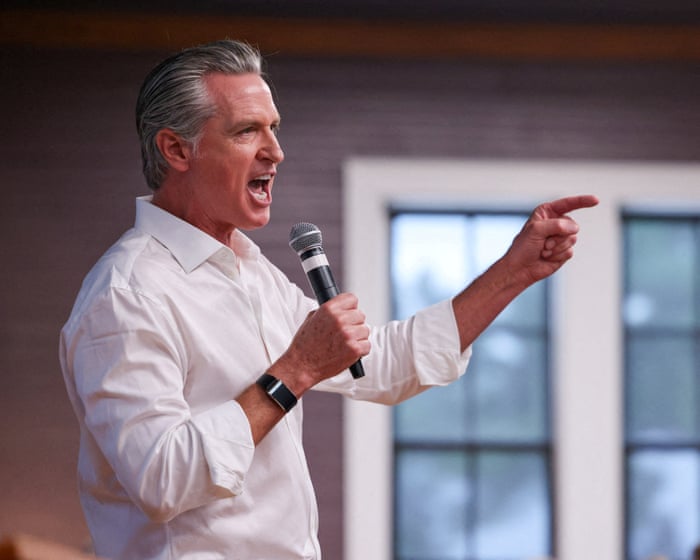
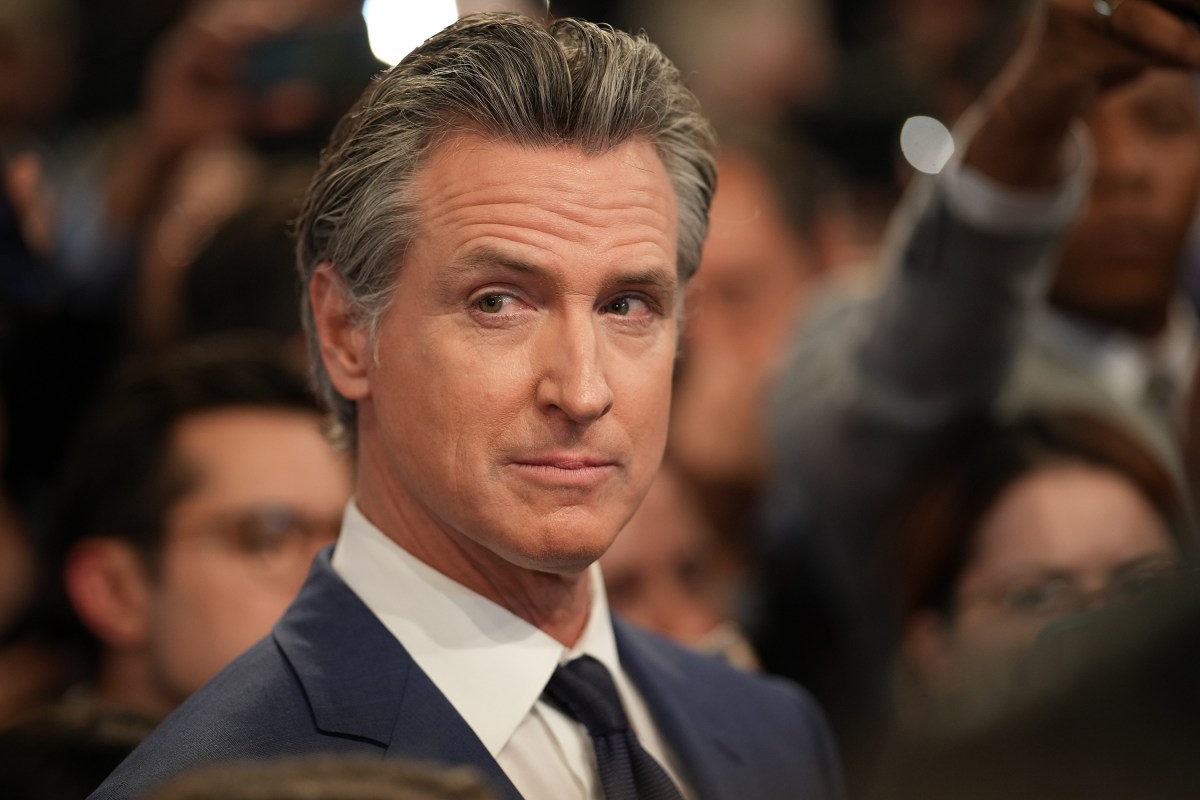
California Governor Gavin Newsom said he will not run for president in 2028 if Vice President Kamala Harris decides to run. Newsom believes running against Harris would waste voters’ time and help their political opponents.
Key Facts
Gavin Newsom is the California governor and is finishing his term this year.
Kamala Harris is the current Vice President and also from California.
Both Newsom and Harris are seen as top candidates for the 2028 Democratic presidential primary.
Newsom considered running in 2024 but decided he wasn’t ready.
Newsom said challenging Harris would be a “waste of time” for voters and would help their opponents.
Newsom has been more vocal in criticizing President Trump on social media.
Harris lost the 2024 presidential race to President Donald Trump.
Harris has not decided yet if she will run again for president in 2028.
Read the Original
Want the full story? Tap a source to open the original
article.
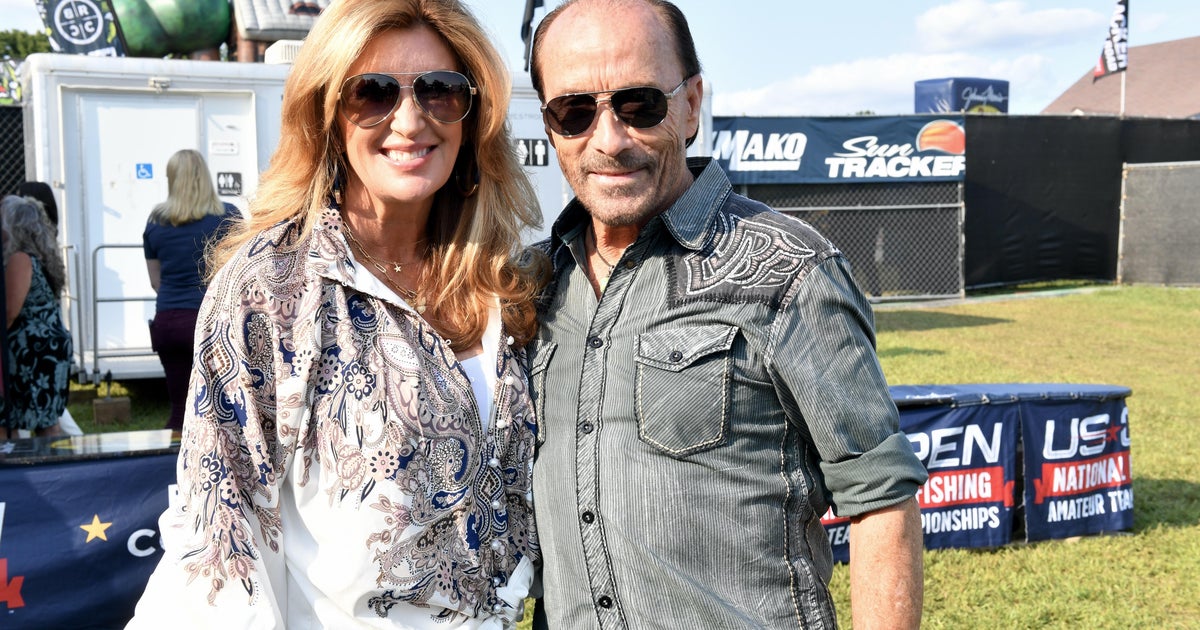
President Donald Trump has nominated Kimberly Greenwood, wife of singer Lee Greenwood, to be the U.S. ambassador to Barbados and six other Caribbean countries. If confirmed by the Senate, she will represent the United States in these nations, many of which share one ambassador due to their small size.
Key Facts
Kimberly Greenwood was nominated by President Trump to be ambassador to Barbados, Saint Kitts and Nevis, Saint Lucia, Antigua and Barbuda, Dominica, Grenada, and Saint Vincent and the Grenadines.
She will serve as ambassador to all these countries without extra pay beyond her ambassador role.
It is common for one ambassador to cover multiple small Caribbean nations.
Kimberly Greenwood thanked President Trump on Instagram and promised to work hard if confirmed.
Her husband, Lee Greenwood, is known for the song "God Bless the USA" and has performed at Trump’s events.
Kimberly previously worked with President Trump for 18 years through the Miss Universe Organization and has directed several state beauty pageants.
President Trump has recently nominated other political allies, not career diplomats, for ambassador posts in the Caribbean.
This nomination continues a pattern of appointing political supporters as ambassadors rather than longtime Foreign Service officers.
Read the Original
Want the full story? Tap a source to open the original
article.
Attorney General Todd Blanche defended new rules meant to tighten mail-in voting before the midterm elections, saying the Justice Department is looking into election practices in many states. Courts have blocked these rules for now, and the Justice Department is also investigating cases of illegal voting by non-citizens.
Key Facts
The Trump administration introduced new mail voting rules requiring states to provide voter lists to the Postal Service and use special ballot envelopes with barcodes.
These rules are currently blocked by court orders after federal judges and the Supreme Court kept them from being enforced in upcoming elections.
Attorney General Blanche said mail voting carries a higher risk of fraud than in-person voting with ID but did not provide specific evidence, calling it "common sense."
Studies show mail ballot fraud is very rare, with one study finding only 14 suspicious ballots out of 4.5 million votes in Washington state.
The Justice Department is investigating election practices in many states and has told 29 states and D.C. to save their 2024 election records.
The department is seeking voter registration data that includes sensitive personal information and may share some of this data with the Department of Homeland Security for citizenship verification.
Blanche said there are hundreds of open investigations into people allegedly voting illegally who are in the U.S. without permission, with some people charged so far.
The collected voter information will be used by federal agencies to detect illegal voting but not stored in a single known database.
Read the Original
Want the full story? Tap a source to open the original
article.
The US Supreme Court blocked President Donald Trump's plan to limit voting by mail before the November midterm elections. The court upheld a lower judge’s order that stopped the US Postal Service from enforcing new rules on mail ballots, but the case might continue.
Key Facts
President Trump signed an order to add barcodes to mail-in ballots and require voter information to be shared online.
The plan aimed to reduce election fraud by limiting mail ballots to registered voters on official lists.
A federal judge blocked the order, saying it could wrongly stop people from voting close to the election.
The Supreme Court’s conservative Justice Brett Kavanaugh agreed with the block but said the rules might be allowed later.
Justices Alito and Thomas disagreed and wanted the plan to proceed.
23 states and Washington DC sued to stop the order, saying it violated their rights to run elections.
About 30% of voters use mail ballots, mostly Democrats.
The Supreme Court recently allowed late-arriving mail ballots to be counted in previous rulings.
Read the Original
Want the full story? Tap a source to open the original
article.
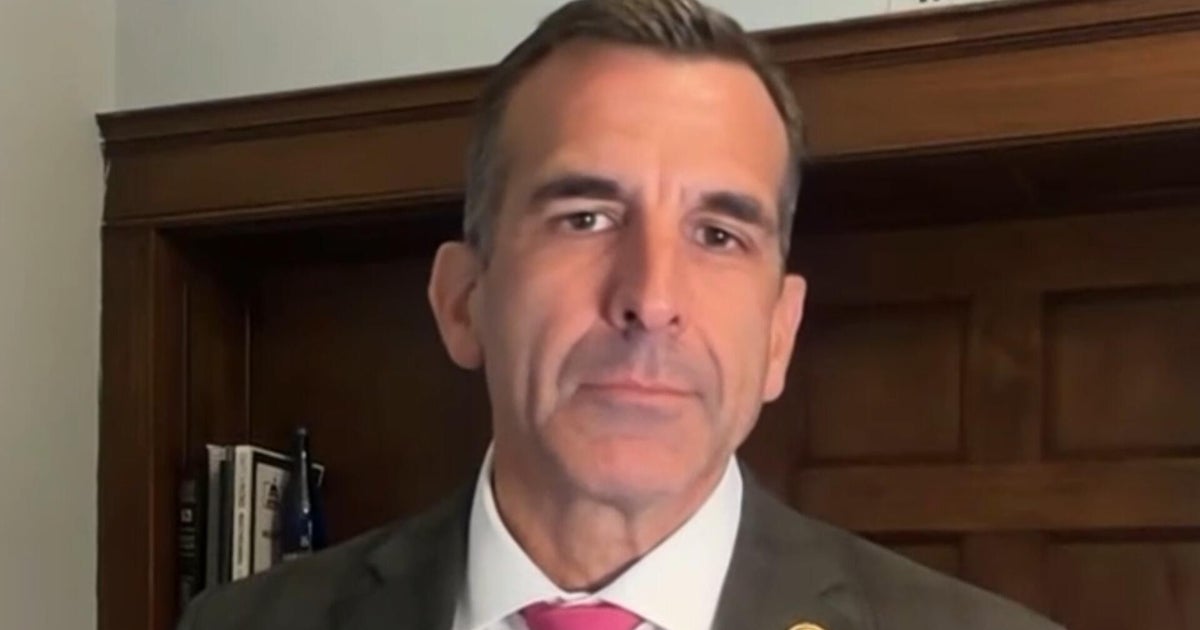
Rep. Sam Liccardo of California is calling on lawmakers to take action on artificial intelligence (AI). He criticizes Congress for not addressing AI regulation while leaders in the AI field want to slow development for safety reasons.
Key Facts
Rep. Sam Liccardo is urging Congress to act on AI issues.
AI leaders want to slow down AI development to address safety concerns.
Lawmakers are divided on how the government should regulate AI.
There is a debate on balancing safety with the goal of competing with China in AI.
Liccardo criticizes Congress for focusing on vacations instead of AI action.
The discussion highlights tensions between innovation speed and regulation needs.
The issue received attention on CBS News through an interview with Liccardo.
Read the Original
Want the full story? Tap a source to open the original
article.
California Governor Gavin Newsom said he will not run for president in 2028 if former Vice President Kamala Harris decides to run. Early polls show close matchups between Harris, Newsom, and Vice President JD Vance in possible 2028 presidential elections, but none of them have officially announced campaigns yet.
Key Facts
Governor Gavin Newsom said he would step aside if Kamala Harris runs for president in 2028.
Newsom believes a primary fight between him and Harris would harm the Democratic Party's chances.
Neither Newsom nor Harris has officially announced a 2028 presidential run.
Vice President JD Vance is also viewed as a potential Republican candidate for 2028 but has not declared a campaign.
Recent polling shows Harris leading Vance by 49% to 45% and Newsom leading Vance by 49% to 44% in hypothetical matchups.
Newsom said he was not ready to run in 2024 and did not challenge President Biden.
The polls mentioned were conducted by Emerson College, Yahoo News, and Zogby Analytics with varying results.
Newsom emphasized the importance of having a strong reason ("a big why") before running for president.
Read the Original
Want the full story? Tap a source to open the original
article.
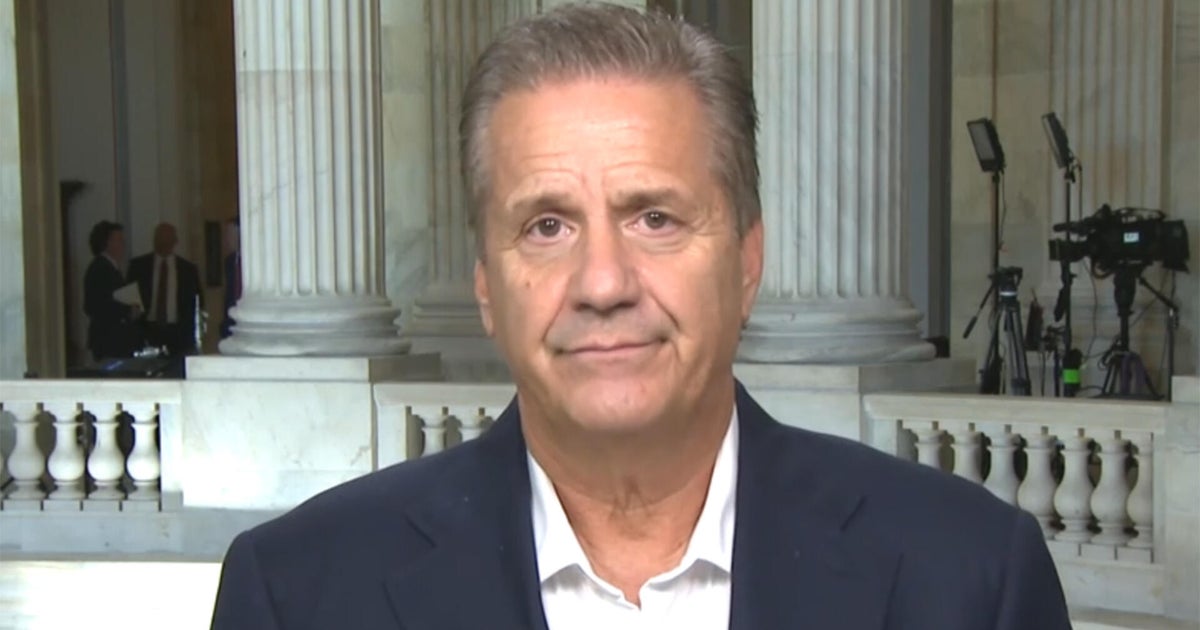
President Donald Trump is encouraging Congress to approve the Protect College Sports Act. Arkansas head coach John Calipari supports the bill, which aims to set new rules for payments to college athletes for their name, image, and likeness, and to regulate player transfers and team spending.
Key Facts
President Donald Trump is pushing for the Protect College Sports Act to pass in Congress.
The bill focuses on controlling payments athletes receive for using their name, image, and likeness (NIL).
It would create rules on the transfer portal, which is the system that allows players to move between schools.
The act would also set limits on how much college teams can spend on their rosters.
John Calipari, head coach at the University of Arkansas, publicly supports the bill.
The goal is to bring more order and fairness to college sports funding and player movement.
Read the Original
Want the full story? Tap a source to open the original
article.
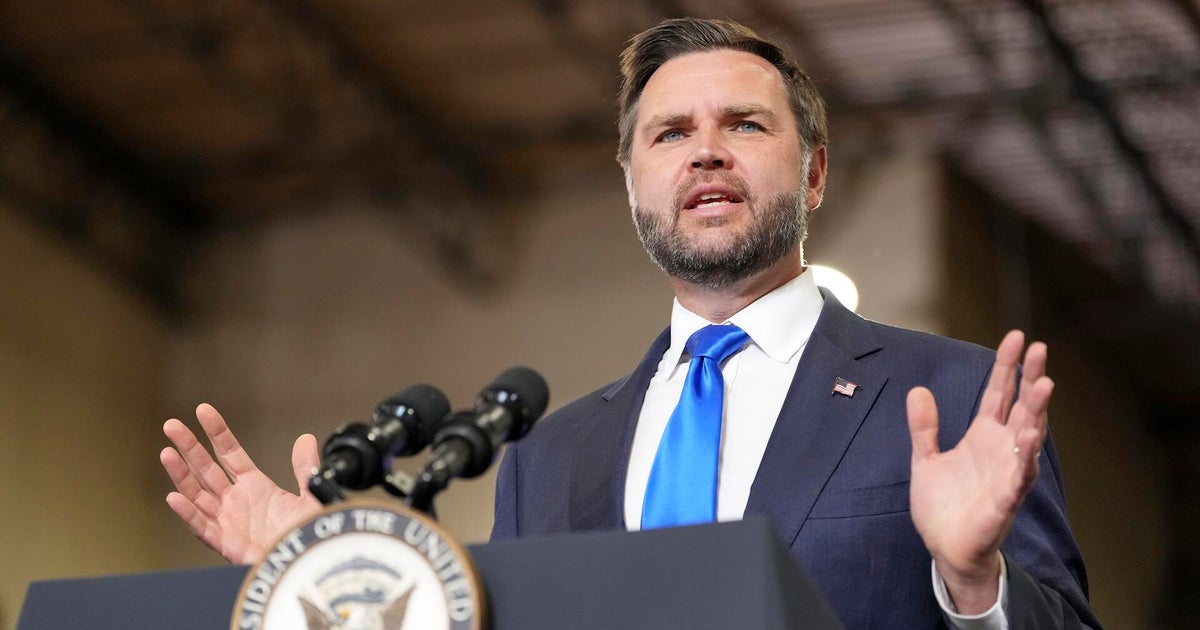
Vice President JD Vance announced that people suspected of cheating on COVID-era government programs will not be allowed to get future federal loans. This action aims to stop fraud and protect government money.
Key Facts
Vice President JD Vance made the announcement on Monday.
People suspected of fraud related to COVID-era programs will be blocked from future federal loans.
The measures target those who may have cheated on financial support during the COVID-19 pandemic.
The goal is to prevent fraud and misuse of government funds.
This policy affects loans given by the federal government.
The announcement was reported by CBS News.
No details were given about how suspicion will be determined or enforced.
Read the Original
Want the full story? Tap a source to open the original
article.
The Supreme Court rejected President Donald Trump's request to limit mail-in ballots for the upcoming midterm elections. This ruling means states can keep using their usual mail ballot procedures, which many voters rely on.
Key Facts
The Supreme Court made the decision on a Monday before the midterm elections.
President Donald Trump wanted to limit or restrict mail-in voting.
The court denied this request, allowing current mail ballot rules to stay in place.
Mail ballots have been used for many years without major changes.
About one-third of votes in recent elections have come from mail ballots.
Voting by mail is already happening as the decision was made.
The ruling removes last-minute legal uncertainty before the elections.
Read the Original
Want the full story? Tap a source to open the original
article.
Nottingham city centre has started a new rule banning face coverings like balaclavas if police believe they are used to hide identities for crimes or anti-social acts. People refusing to remove such items can face fines or court charges, but the ban does not apply to coverings worn for religious, health, cultural, or work reasons.
Key Facts
The new ban lets police and community officers ask people to remove face coverings if they think the coverings hide criminal activity.
Those who refuse removal risk a £70 fine or possible prosecution with fines up to £1,000.
The ban excludes face coverings worn for religious, cultural, health, weather, work, or safety reasons.
Nottingham City Council leader Neghat Khan said the ban aims to reduce fear and intimidation in the city centre.
Public consultation indicated face coverings contributed to feelings of fear when worn by groups involved in troublemaking or anti-social behavior.
Some local people and students expressed support for the ban, saying it would make them feel safer.
Similar bans on balaclavas or face coverings are being considered or introduced in other UK areas, like Stafford and the West Midlands.
Failure to comply with the ban may lead to arrest and court action, as stated by council representatives.
Read the Original
Want the full story? Tap a source to open the original
article.
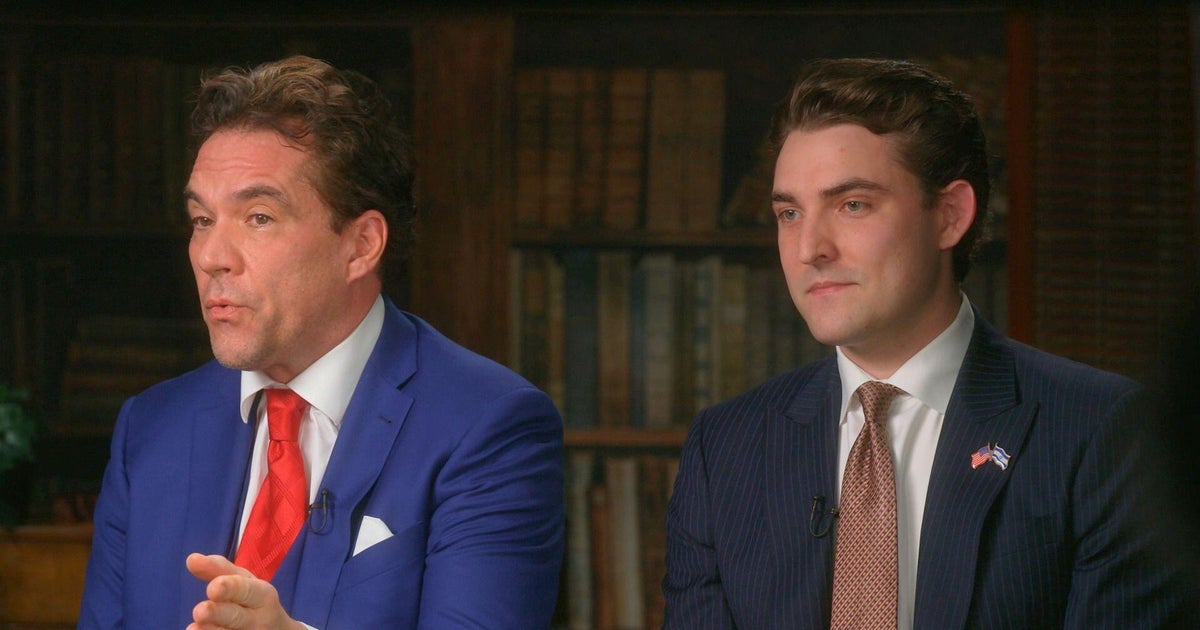
Democratic lawmakers have promised to investigate a growing market where lobbyists charge fees to help people get pardons from President Donald Trump. A CBS News report showed how some brokers offer to pressure the president outside the normal Justice Department process for large sums of money.
Key Facts
Democrats say pardon power has turned into a business where lobbyists charge felons to seek pardons.
A CBS News hidden-camera investigation exposed lobbyists promising to pressure President Trump for $300,000 or more.
Traditional Justice Department clemency review, which checks for remorse and rehabilitation, has often been bypassed under President Trump.
About 70% of clemency actions in Trump’s second term did not follow the traditional Justice Department process.
Some brokers submit pardon petitions directly to the White House, telling clients the usual process is unlikely to succeed.
Democrats plan to make this pardon system corruption a priority if they win control of the House in the 2026 midterm elections.
The White House and some officials deny any illegal pay-for-pardon dealings, stating a strict review process is in place.
At least one Republican, former Rep. Marjorie Taylor Greene, publicly criticized the current pardon system linked to President Trump.
Read the Original
Want the full story? Tap a source to open the original
article.