Hundreds of thousands of children in 23 states and Washington D.C. are waiting for government-funded childcare help because there is not enough money to support all eligible families. The shortage of childcare assistance began after pandemic aid money ended in 2024, leaving many low-income parents struggling to pay for childcare while trying to work or study.
Key Facts
Childcare assistance is meant to help low-income, homeless, or foster parents afford childcare.
In spring 2026, many states had long waitlists for childcare assistance or turned away applicants.
The number of states with waitlists grew from 8 in 2023 to 23 in 2026.
The shortfall started after $28 billion in pandemic aid expired in fall 2024.
Congress, controlled by Republicans, chose not to continue the extra funding.
Rising costs for food and gas have increased families’ need for childcare help.
Parents on waitlists make difficult financial choices like skipping bills or groceries.
Some parents bring children to work or school because they cannot find childcare.
Read the Original
Want the full story? Tap a source to open the original
article.
The jury in the trial of Lindsay Clancy, a Massachusetts mother accused of killing her three children, has not reached a decision after five days of discussion. The judge has asked the jury to keep trying to agree on whether Clancy is criminally responsible or not, but there is a risk the trial could end without a verdict, called a mistrial.
Key Facts
Lindsay Clancy is accused of killing her three young children in 2023.
Clancy admits to strangling her children but says postpartum psychosis affected her actions.
Prosecutors argue she knew what she was doing.
The jury has twice said they cannot agree on her criminal responsibility.
The judge urged jurors to consider opposing views but not abandon their honest beliefs.
If the jury cannot decide, the judge may declare a mistrial, and prosecutors could retry her, drop charges, or offer a plea deal.
Experts disagreed on her mental state at the time of the killings.
The trial has drawn a lot of public and media attention in Massachusetts.
Read the Original
Want the full story? Tap a source to open the original
article.
Democrats are trying to win in Republican-leaning House districts during the upcoming midterm elections, hoping to gain seats if a political wave develops. One example is Nebraska’s 1st District, where Democrat Chris Backemeyer is challenging Republican Rep. Mike Flood, who has held the seat since 2022.
Key Facts
Democrats are targeting “reach” districts where Republicans usually win but races might get closer in November.
Midterm elections often cause losses for the party in power, and Democrats hope this year’s conditions will help them gain seats.
Democratic Congressional Campaign Committee chair Rep. Suzan DelBene said they are expanding efforts into traditional Republican areas.
The Nebraska 1st Congressional District has not elected a Democrat since 1964.
Chris Backemeyer, a Democrat and former State Department official, moved back to Nebraska to run for this seat.
Republican Rep. Mike Flood won the seat in 2022 by over 20 points and holds regular town halls with constituents.
Concerns such as the war in Iran and inflation are influencing voter attitudes this election cycle.
National Republican spokesperson criticized Democrats' efforts as unrealistic.
Read the Original
Want the full story? Tap a source to open the original
article.
A federal panel will review President Donald Trump’s proposal to build a permanent fence around Lafayette Park near the White House and an underground security screening center for visitors. The goal is to improve security after past attacks and temporary barriers, but the fence plan may face opposition as it would change the park’s historic appearance.
Key Facts
The National Capital Planning Commission will discuss the plans but is not expected to vote.
The commission has previously approved other Trump projects like the White House ballroom and visitors’ center.
The U.S. Commission of Fine Arts, mostly Trump appointees, already approved the underground visitors’ center.
The fence would fully enclose the 8-acre Lafayette Park and have larger gates at its north and south entrances.
The park last had permanent fencing in the late 1800s.
The administration wants the security facility ready by July 2028 to replace temporary screening tents.
Security concerns increased after multiple assassination attempts on President Trump and a shooting near the White House.
The planning commission has members mostly aligned with the Republican president but some differ.
Read the Original
Want the full story? Tap a source to open the original
article.
President Donald Trump plans to campaign in about 35 key races to help Republicans keep control of Congress in the 2026 midterm elections. Meanwhile, Elon Musk’s super PAC, America PAC, has started spending significant money to support Republican candidates in important House and Senate contests.
Key Facts
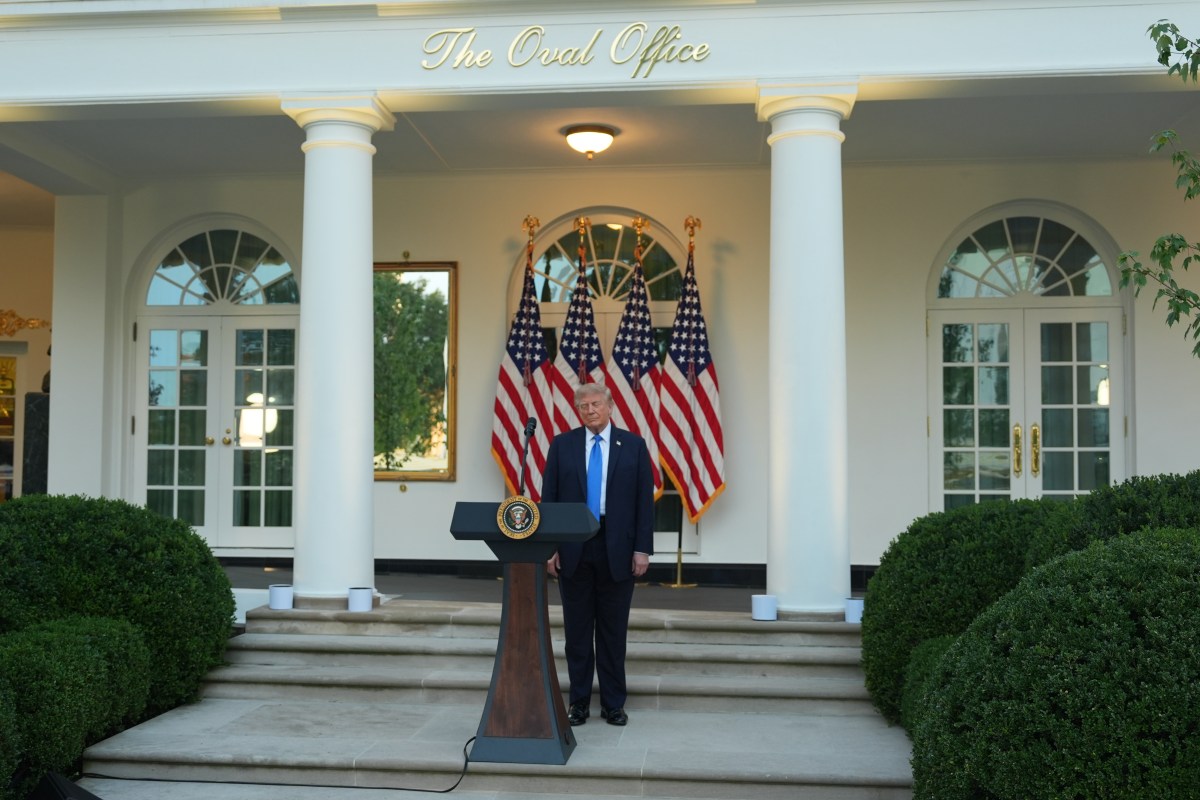
President Trump spoke at a White House event and said he will campaign in around 35 races to support Republican candidates.
Trump has already campaigned in states like Texas and South Carolina and plans to visit Alaska to support Senator Dan Sullivan.
Several Senate races are very competitive, including Alaska, Iowa, Maine, Michigan, Ohio, and Texas.
The Cook Political Report lists these six Senate races as Toss Ups, meaning they could go to either party.
Musk’s America PAC has reported spending about $800,000 on independent expenditures to help Republicans in Senate and House races.
America PAC has raised about $50 million this election cycle to support Republican candidates.
Specific races getting PAC support include Texas Senate (Ken Paxton), Alaska Senate, Iowa Senate, and Florida’s House District 25.
Republicans currently hold a narrow majority in both the House (218–212) and the Senate (53–45, excluding independents who caucus with Democrats).
Read the Original
Want the full story? Tap a source to open the original
article.
Elon Musk’s super PAC, America PAC, spent over $800,000 in August to support Republican candidates in key Senate and House races, mainly in Texas and Maine. Musk has authorized his PAC to spend over $100 million ahead of the November midterm elections to back Republicans.
Key Facts
America PAC spent $800,000 in August supporting Republican Senate and House candidates.
Most spending targeted competitive Senate races in Texas, Maine, Ohio, New Hampshire, Iowa, Michigan, and Alaska.
House candidates in Virginia, New York, Pennsylvania, Florida, and Wisconsin also received support.
All disclosed August spending was for printed mail advertisements.
Separate spending on digital ads totaled over $207,000 in several states, including voter reminders.
America PAC has spent over $239 million supporting Republican candidates in 2024 so far.
Elon Musk, CEO of Tesla and SpaceX, is the largest donor in the 2024 election cycle for any party.
Mike Johnson, House Speaker, confirmed meeting Musk during a Texas campaign trip but gave no details about discussions.
Read the Original
Want the full story? Tap a source to open the original
article.
The number of secondary school students in England who are removed from class and placed in “internal exclusion” has nearly tripled over three years, rising from 5% in 2022/23 to 13% in 2025/26. This disciplinary method affects disadvantaged children and those with special educational needs disproportionately and involves keeping students in school but separated from their normal lessons.
Key Facts
Internal exclusion means students stay on school grounds but are separated from their regular classes, unlike suspensions that send students home.
The percentage of secondary students placed in internal exclusion rose from 5% to 13% in three years (2022/23 to 2025/26).
More than 22% of disadvantaged students experienced internal exclusion in 2025/26, up from 8% three years prior.
About 18% of students with special educational needs and disabilities and an education, health and care plan were internally excluded at least once.
Internal exclusions are lower in primary schools, affecting fewer than 1% of students annually.
Data comes from Arbor, a system used by 13,000 schools in England; official government data does not track internal exclusions.
Some experts see internal exclusion as a way to manage behavior and keep students in school, while others raise concerns about its impact on mental health and learning loss.
Formal suspensions and exclusions have decreased, but internal exclusions have increased, highlighting a need for better data and understanding.
Read the Original
Want the full story? Tap a source to open the original
article.
An American journalist, Thomas Weir Pauken II, was sentenced to two years in federal prison for working as an agent for the Chinese government in the United States. He pleaded guilty and will also face three years of supervised release with travel restrictions.
Key Facts
Pauken, 51, was sentenced for acting on behalf of the Chinese government without telling U.S. authorities.
He worked for Chinese state media, including Xinhua and CCTV, after moving to China in 2010.
Pauken received at least $100,000 and helped recruit people to gather sensitive information for China.
He was arrested in February 2026 after returning to the U.S. and cooperating with investigators.
Pauken admitted guilt but did not share classified U.S. information with China, according to his lawyer.
He used the fake name Tom McGregor for some work to protect his family’s privacy.
The case is part of broader U.S. efforts to stop undisclosed work by agents for foreign governments, especially China.
Pauken’s father was a Texas Republican Party leader and political candidate in the 1990s.
Read the Original
Want the full story? Tap a source to open the original
article.
A six-year-old boy named Connor Dean died from scurvy, a disease caused by lack of vitamin C, at a hospital in Queensland in 2024. Despite long-term concerns about his poor diet and low vitamin intake, his severe vitamin C deficiency was not detected or treated in time.
Key Facts
Connor Dean, aged six, had Down syndrome and a repaired heart defect.
He died after cardiac arrest while under general anesthesia at Queensland children’s hospital.
A coroner found his death was most likely due to brain damage caused by scurvy (vitamin C deficiency).
Connor had very low vitamin C levels, plus low vitamins A, E, and possibly K and D.
His diet included no fruit or vegetables, and he had poor weight and growth for his age.
The multivitamin he took did not contain vitamin C, which was a concern raised by his doctors.
The multivitamin company denied their product contributed to his death.
The coroner said there was not enough proof the multivitamin caused or helped cause the death, focusing instead on the failure to diagnose the vitamin C deficiency earlier.
Read the Original
Want the full story? Tap a source to open the original
article.
The Pentagon told military personnel in August 2026 to stop calling U.S. operations against Iran "Operation Epic Fury" because that operation officially ended on May 5, 2026. Since then, U.S. forces have carried out other activities under different names, and the Pentagon now uses broader terms to describe ongoing military actions in the region.
Key Facts
Operation Epic Fury officially ended on May 5, 2026.
Secretary of State Marco Rubio said the operation was over and that a new phase called "Project Freedom" had begun.
President Donald Trump told Congress four days before May 5 that hostilities had ended.
The Pentagon delayed publicly confirming the end date for months.
An Air Force email from August instructed leaders not to use the name "Operation Epic Fury" and instead use general terms for the conflict.
The guidance came from the Pentagon’s public affairs office and applied across the Defense Department.
After Operation Epic Fury ended, U.S. military actions included defending shipping lanes and striking threats from Iran’s Islamic Revolutionary Guard Corps (IRGC).
The Pentagon usually announces clear start and end dates for military operations to help track U.S. involvement and determine awards for service members.
Read the Original
Want the full story? Tap a source to open the original
article.
US forces boarded and sank a boat in the eastern Pacific Ocean. They said the boat was used by drug traffickers to refuel other boats. Men on the boat are suspected members of an Ecuadorian gang called Los Choneros.
Key Facts
US forces intercepted a boat in the eastern Pacific Ocean.
The boat was described as a floating refueling station for drug traffickers.
The men on board are linked to Los Choneros, a gang from Ecuador.
The US military recorded the operation.
The boat was destroyed after being boarded.
This action is part of ongoing efforts to stop illegal drug trade in the region.
Read the Original
Want the full story? Tap a source to open the original
article.
President Trump signed a temporary government funding bill to prevent a shutdown. This law keeps federal agencies funded until at least December 11, covering the period beyond the November midterm elections.
Key Facts
President Trump signed the "Continuing Appropriations and Extensions Act, 2027" into law.
The bill provides temporary funding for the federal government.
It prevents a government shutdown for now.
The funding extends through November and into December 11.
Congress passed the bill through both the Senate and House.
The bill is a stopgap measure, meaning it only provides short-term funding.
The funding covers federal agencies' operations during the midterm elections.
Read the Original
Want the full story? Tap a source to open the original
article.
President Donald Trump's approval rating among white voters has dropped by about 7 to 8 percentage points over the summer of 2024. Various polls show that fewer white voters now approve of his job performance, which could affect support for Republican candidates in upcoming elections.
Key Facts
In June 2024, 47% of white voters approved of President Trump, but by July and August, approval fell to around 39-40%.
Disapproval among white voters increased from 49% in June to 54% in July and August.
White voters made up about 71% of the 2024 electorate and traditionally have supported Trump strongly, with 55% backing him in the 2024 election.
National approval ratings for Trump have also declined, with recent polls showing around 36% approval and 60% disapproval among all Americans.
Concerns about the economy and U.S. military actions, such as the war in Iran, are cited as reasons for voter dissatisfaction.
Trump’s approval is especially lower among white voters without a college degree, a group that previously gave him strong support.
Political experts suggest that falling approval among these voters could hurt Republican candidates in the midterm elections.
Trump’s loss of support is noted in places and groups where he usually maintained strong backing, including rural areas.
Read the Original
Want the full story? Tap a source to open the original
article.
A gunman opened fire at a downtown Minneapolis apartment building, killing two people and injuring several others, including three police officers. The suspect also died, but police have not confirmed how. Authorities are still investigating the motive and condition of the injured.
Key Facts
The shooting happened in a high-rise apartment building in downtown Minneapolis around 4:30 p.m. local time.
Two victims died—one at the scene and one later at the hospital.
Three police officers were shot and taken to the hospital, where they are in stable condition.
Police do not yet know how the gunman died.
Minnesota Governor Tim Walz expressed thanks to emergency responders and is helping local law enforcement.
The motive behind the shooting and the condition of the other injured victims remain unknown.
The shooting occurred on the same day as a separate shooting at an elementary school in Virginia.
Recent shootings in Chicago and New Jersey also left people dead and wounded earlier that week.
Read the Original
Want the full story? Tap a source to open the original
article.
The City of London has warned Prime Minister Andy Burnham that markets could become unstable if he continues to increase government borrowing. Conservative leader Kemi Badenoch has promised to raise defense spending by cutting welfare, while French President Emmanuel Macron has offered extra police support to help with the UK's small boats crisis.
Key Facts
The City of London cautioned Prime Minister Burnham against excessive borrowing to avoid market chaos.
Burnham did not rule out more borrowing during his first Prime Minister's Questions session.
Conservative leader Kemi Badenoch pledged to increase defense spending to 3% of GDP by 2030 by cutting welfare benefits.
French President Emmanuel Macron offered 45 additional police officers to help the UK manage migrant small boats.
Defense select committee chair Tan Dhesi urged the prime minister to commit more funds to national defense.
The British royal family's computer systems are at risk from cyberattacks due to outdated technology.
Chancellor John Healey is facing reduced spending power after government bonds were heavily sold off.
Burnham expressed concern about the EU's "Made in Europe" procurement plan affecting British steel and farming.
Read the Original
Want the full story? Tap a source to open the original
article.
Molly Ticehurst was murdered by her abusive ex-boyfriend, Daniel Billings, in New South Wales in 2024. Her family spoke to Billings in court, expressing their pain and hopes for justice, as Billings pleaded guilty to murder and awaits sentencing.
Key Facts
Molly Ticehurst was killed by Daniel Billings in her home in April 2024.
Billings stabbed Molly 15 times in a short, violent attack.
Billings had a history of threats, sexual assault charges, and domestic violence but was out on bail before the murder.
Victim impact statements were given by Molly’s parents during the court hearing.
After 18 months of legal talks, Billings pleaded guilty to murder; sexual assault charges were dropped.
Molly’s murder led to new laws in New South Wales aiming to tighten bail rules for domestic violence cases.
The court showed videos made by Billings before the crime, which hinted at the attack.
Sentencing by Justice Natalie Adams is expected in September 2025.
Read the Original
Want the full story? Tap a source to open the original
article.
A federal judge blocked President Donald Trump’s new executive order that aimed to limit birthright citizenship. The judge said current law and Supreme Court rulings guarantee citizenship to children born in the U.S., and the order will be paused until a lawsuit by immigrant families and groups is resolved.
Key Facts
Judge Deborah L. Boardman, appointed by President Biden, issued a preliminary injunction against Trump’s executive order.
The order targeted “birth tourism,” where people visit the U.S. to have children and gain citizenship for them.
Birthright citizenship is protected by the 14th Amendment from 1868, granting citizenship to almost all born on U.S. soil.
President Trump had tried similar executive orders before, but the Supreme Court blocked the earlier attempt in June 2026.
The new order tried to deny citizenship to children born to parents connected to foreign embassies, organizations, or labeled as “alien enemies.”
Families suing fear the order could deny citizenship unfairly, sometimes based on relatives’ backgrounds or vague definitions.
The administration argued the injunction was premature and said agencies would enforce the order carefully, but the judge disagreed.
The case is ongoing and the order will not take effect until the lawsuit is settled.
Read the Original
Want the full story? Tap a source to open the original
article.
President Donald Trump encouraged Republican lawmakers to focus on his past achievements in the White House during their midterm election campaigns. He promised to actively campaign in about 35 key races, which will largely decide control of Congress, despite challenges like voter concerns about the economy and the war in Iran.
Key Facts
President Trump spoke to Republican lawmakers at a dinner in the White House Rose Garden on September 2, 2026.
He urged them to run on his administration’s record, saying it would help them win elections.
Trump promised to campaign in all about 35 important House and Senate races before the midterm elections.
Voters have negative views on the economy and the war in Iran, creating difficulties for Republicans.
Trump highlighted achievements like economic investment, lower drug prices, and reduced border crossings.
He named specific Senate races in Alaska and Texas as key battlegrounds.
Trump supported Texas Attorney General Ken Paxton, despite Paxton’s controversial past, praising his performance.
The Republican Party will hold an unusual midterm convention in Dallas soon.
Read the Original
Want the full story? Tap a source to open the original
article.
The US House of Representatives voted on a proposal to permanently limit the Supreme Court to nine justices but did not pass it because it needed a two-thirds majority. The vote was mostly along party lines, with Republicans supporting the limit and most Democrats opposing it.
Key Facts
The House voted 212 in favor and 206 against the amendment to cap the Supreme Court at nine justices.
A constitutional amendment needs two-thirds of the House to pass, which this vote did not achieve.
Only one Democrat, Representative Don Davis, supported the amendment, while most Democrats opposed it.
The proposal comes amid discussions about possibly expanding the Supreme Court to change its political balance.
The US Constitution does not fix the size of the Supreme Court; Congress sets the number of justices.
The current nine-justice number was set in 1869 and has remained unchanged since then.
Supporters of court expansion want to add more justices to balance the court’s conservative majority.
This vote happened shortly before the November midterm elections that will decide control of Congress.
Read the Original
Want the full story? Tap a source to open the original
article.
The Lucas Museum of Narrative Art, created by filmmaker George Lucas and his wife, will open later this month in Los Angeles. The museum will display more than 1,200 works, including Star Wars items as well as other historic and modern art pieces.
Key Facts
The museum was founded by George Lucas, the creator of Star Wars, and his wife.
It is called the Lucas Museum of Narrative Art.
The museum is located in Los Angeles, California.
It opens later this month.
The collection includes over 1,200 pieces of narrative art.
Exhibits will include Star Wars-themed memorabilia.
The museum also features historic and modern art beyond Star Wars.
A BBC reporter gave a preview of some exhibits before the opening.
Read the Original
Want the full story? Tap a source to open the original
article.