President Trump greeted Chinese leader Xi Jinping on the tarmac at Joint Base Andrews during Xi’s state visit to Washington, D.C. This type of airport welcome is unusual for U.S. presidents, who usually meet visiting leaders at the White House.
Key Facts
President Trump welcomed Xi Jinping at the airport instead of the White House.
Joint Base Andrews is a military base near Washington, D.C., about 13 miles from the White House.
It is more common for U.S. presidents to greet foreign leaders at the White House itself.
Previous presidents have sometimes met popes at airports, but this practice is rare for other leaders.
President John F. Kennedy welcomed some foreign leaders at airports in the 1960s.
President George W. Bush and President Obama greeted Popes Benedict XVI and Francis at airports.
White House spokesperson said this gesture shows President Trump’s willingness to work with leaders to advance U.S. interests.
The visit follows a historic summit hosted by President Xi in China earlier that year.
Read the Original
Want the full story? Tap a source to open the original
article.
A Navy official revealed that eight suicide attempts happened among the USS Abraham Lincoln's crew during a long deployment in the Middle East. President Donald Trump dismissed concerns about the crew’s mental health and conditions during this deployment.
Key Facts
Eight suicide attempts were recorded on the USS Abraham Lincoln during its deployment.
The deployment lasted over 260 days and was initially for the Indo-Pacific but shifted to the Middle East.
The Navy provided mental health support, including chaplains, a psychologist, social worker, and other counselors.
Acting Navy Secretary Hung Cao wrote to Senator Kirsten Gillibrand explaining the situation and available resources.
President Trump said the deployment had not lasted long enough to cause serious problems.
Senator Gillibrand criticized President Trump and Defense Secretary Pete Hegseth for dismissing the crew's struggles.
Reports mentioned poor food quality and worsening maintenance on the ship during the deployment.
The USS Abraham Lincoln was involved in U.S. military operations around the time of increased conflict with Iran.
Read the Original
Want the full story? Tap a source to open the original
article.
Republicans are spending more money on ads than Democrats in important Senate races. This is happening even though many polls show Democrats are gaining support before the election.
Key Facts
Republicans are buying more advertising time and space in key Senate contests.
Democrats appear to be gaining momentum according to most polls.
The spending gap favors Republicans despite the polling trends.
This ad spending is focused on Senate races, which decide control of the U.S. Senate.
The information comes from Politico data and was discussed on CBS News.
Increased ad spending by one party can influence voter awareness and decisions.
Read the Original
Want the full story? Tap a source to open the original
article.
Lauren Evans, from Swansea, has suffered from chronic migraines since she was seven years old, experiencing daily pain and severe symptoms by age 24. Despite her struggles and suicidal feelings, her initial doctor dismissed her condition as dramatic; she later received some support but still faces challenges accessing proper neurological care.
Key Facts
Lauren started having migraines at age seven and by 24, was suffering from them every day.
Migraines affect more than just the head, including body temperature, digestion, speech, vision, mood, and movement.
Lauren struggled with symptoms that impacted her education and work, including sensitivity to light and sound.
Some colleagues did not believe her migraines were real, but her manager was supportive.
She adjusted her work hours to manage symptoms but still faced constant pain and isolation.
Lauren disclosed feeling suicidal because of the pain, but her doctor initially called her reaction dramatic.
She was eventually referred to a neurologist but has waited four years without being seen.
After a mental health crisis and time off work, Lauren left her biomedical scientist career for a new job and takes part in hobbies and charity running.
Read the Original
Want the full story? Tap a source to open the original
article.
Many schools in the U.S. are pausing the use of generative AI tools in classrooms due to worries from parents and advocates about privacy and how AI might affect learning. The largest school districts have decided to stop using this technology for one year while they figure out how to use it safely.
Key Facts
Schools are facing challenges in managing the fast-changing field of AI technology.
Parents and education advocates are concerned about privacy issues related to AI in schools.
They also worry about how AI might impact students’ learning and development.
The two biggest school districts in the U.S. have put a one-year pause (moratorium) on using generative AI in classrooms.
The pause is meant to give schools time to understand the risks and create clear rules for safe use.
Generative AI refers to software that can create content, like writing or images, based on prompts.
The move reflects a growing hesitation about how to properly integrate AI in education.
Read the Original
Want the full story? Tap a source to open the original
article.
A federal judge appointed by President Donald Trump is reviewing a ban that prevented CNN, Politico, and MS NOW journalists from accessing the White House. The media outlets say the ban violates their First Amendment rights, while the government says White House access is a privilege and justified by concerns over professionalism and national security.
Key Facts
President Trump banned CNN, Politico, and MS NOW from the White House last week.
The ban was announced via a post on President Trump's Truth Social account.
The White House says press access is a privilege, not a constitutional right.
The government claims the banned outlets published sensitive national security info and did not meet professionalism standards.
The media outlets argue the ban was a form of punishment and lacked proper legal process.
Judge Timothy Kelly has expressed doubt about the administration's arguments but has not yet ruled on a temporary order.
A group of diverse media organizations supports the banned outlets, saying the ban is unconstitutional.
The White House has compared these actions to past criticisms of media by Democratic presidents.
Read the Original
Want the full story? Tap a source to open the original
article.
The Pentagon announced that 19 U.S. service members have died in the Middle East since the Iran war began. The latest death was Captain Bianca C. Wilkerson from Virginia, who died on September 18 due to a non-combat incident.
Key Facts
The total number of U.S. military deaths in the Middle East since the Iran war started is now 19.
Captain Bianca C. Wilkerson, age 37, from Norfolk, Virginia, is the most recent service member to die.
Her death happened on September 18.
The cause of death was not related to combat or fighting.
The Pentagon officially reported and confirmed this update.
The deaths include both combat and non-combat related incidents.
This count reflects the known and disclosed number of fatalities among U.S. forces since the conflict began.
Read the Original
Want the full story? Tap a source to open the original
article.
Former Maine Governor Paul LePage said that his son’s father-in-law is being deported by U.S. Immigration and Customs Enforcement (ICE). LePage expressed concern about the situation while campaigning for a congressional seat in Maine.
Key Facts
Paul LePage is a former governor of Maine and is now running for Congress.
He is seeking to represent Maine’s 2nd Congressional District.
The current representative for that district, Jared Golden, is a Democrat who is leaving his seat.
LePage said his son’s father-in-law is being deported by ICE.
He described the deportation as “not right.”
The deportation is because the relative came from a country not named in the article.
LePage made these comments during a news conference.
Read the Original
Want the full story? Tap a source to open the original
article.
A Senate panel held a hearing to investigate AI-powered surveillance cameras made by companies like Flock Safety. The meeting focused on whether these cameras violate people’s privacy.
Key Facts
The hearing was the first time Congress looked closely at AI-powered surveillance cameras.
It was called “Always Watching: Flock’s Nationwide AI Surveillance Network.”
Senator Josh Hawley from Missouri led the hearing.
The main topic was whether the cameras invade the privacy of the public.
Flock Safety is a company that makes AI-based surveillance cameras used across the nation.
Lawmakers want to understand how this technology works and its effects on citizens.
The hearing signals growing government interest in regulating AI surveillance tools.
Read the Original
Want the full story? Tap a source to open the original
article.
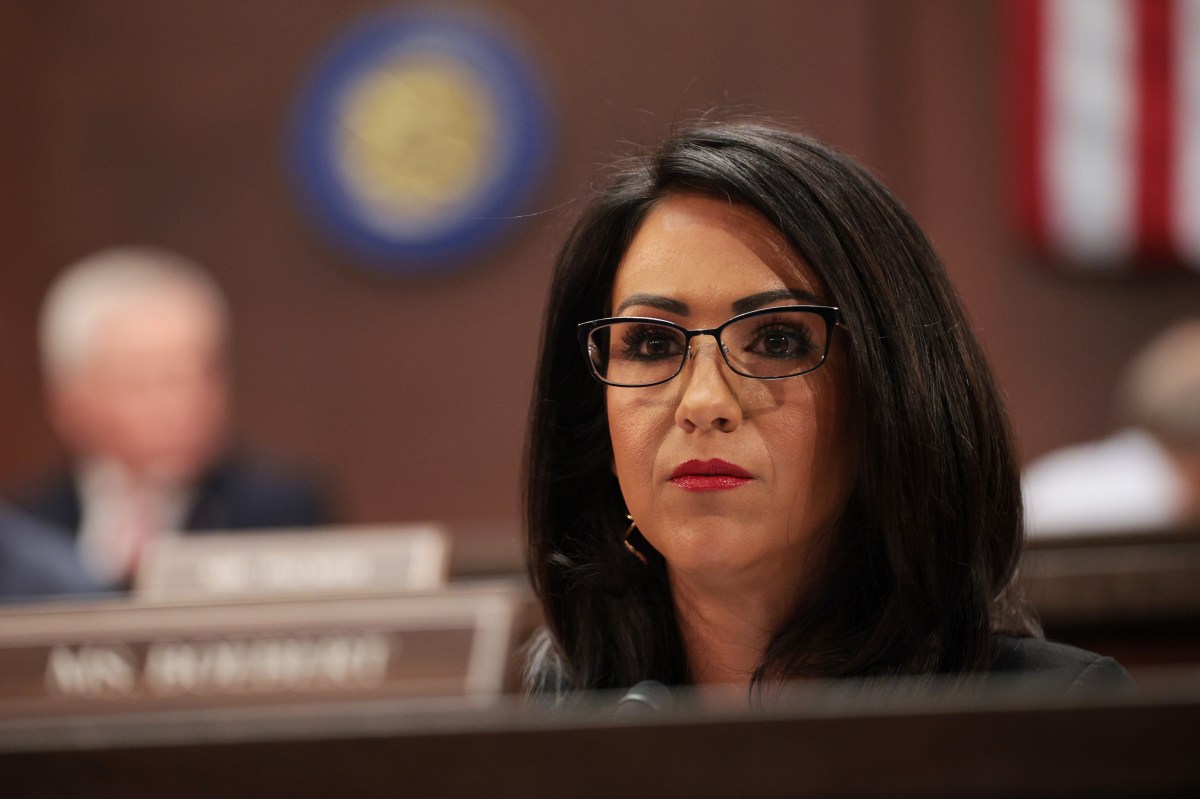
Representative Lauren Boebert wants to change mortgage rules to help more Americans buy homes. She suggests lowering down payment requirements and using renters’ payment history and alternative income sources to decide who can get a mortgage.
Key Facts
Boebert sent a letter to Trump administration officials asking for mortgage rule reforms.
She says current rules require large down payments and rely too much on traditional credit scores.
Her plan would make lenders consider on-time rent payments and nontraditional income, like seasonal or commission work.
A major change would cut down payments from around 20% of the home’s price to as low as 5%.
This could make home buying easier for renters, farmers, small business owners, and self-employed people.
Boebert argues that high down payments delay homeownership and keep people renting longer.
She plans to work with members of both parties to create new legislation.
Housing affordability is a big challenge due to high home prices and mortgage rates, and lending rules also limit access.
Read the Original
Want the full story? Tap a source to open the original
article.
Four young women who worked as online escorts were found murdered near Gilgo Beach on Long Island, New York. The cases began after Shannan Gilbert disappeared in 2010, leading investigators to uncover the bodies known as the Gilgo Four.
Key Facts
Shannan Gilbert, 23, called 911 in May 2010 saying someone was chasing her before disappearing near Gilgo Beach.
In December 2010, investigators found human remains near Gilgo Beach but they were not Shannan’s.
Four women were later identified: Maureen Brainard-Barnes, Melissa Barthelemy, Megan Waterman, and Amber Costello.
All four women were in their 20s, worked as online escorts, and three were wrapped in burlap fabric.
Maureen Brainard-Barnes disappeared in July 2007 after traveling to New York City for escort work.
Melissa Barthelemy went missing in July 2009 from midtown Manhattan.
After Melissa’s disappearance, her sister received threatening calls from Melissa’s cell phone.
The case has affected families deeply and remains a focus of law enforcement investigations.
Read the Original
Want the full story? Tap a source to open the original
article.
The FBI is investigating claims by a hacking group, ShinyHunters, that it stole sensitive data from thousands of FBI agents and job applicants and broke into the bureau’s jobs website. The FBIJobs.gov site remains offline while the bureau works with outside providers to reduce risks and find how the breach happened.
Key Facts
The FBI is looking into claims of a hack on FBIJobs.gov, a site for FBI job applicants.
The hacking group ShinyHunters says it has sensitive personal data on almost all FBI agents and job applicants.
The FBI has not confirmed if the claims are true and continues to investigate.
The jobs website is still offline to protect information and fix the issue.
ShinyHunters asked the FBI to remove a public notice that called them cyber criminals and said the hacking was not about money.
The FBI has been targeted before by hackers, including in March this year with other system breaches.
The FBI said past breaches involved older, non-government information and did not affect sensitive current data.
Read the Original
Want the full story? Tap a source to open the original
article.
Several Republican candidates running for office are asking President Donald Trump to stop the war in Iran. They hope to distance themselves from Trump’s low poll numbers and the impact of the war on rising inflation before the midterm elections.
Key Facts
More Republican candidates in tough races are speaking out against President Trump’s approach to the war in Iran.
These candidates want President Trump to end the conflict.
The war has contributed to higher inflation, which worries voters.
Candidates believe breaking with Trump may improve their chances in the midterm elections.
This shift shows some Republicans are trying to separate their views from the president’s policies.
The conflict in Iran remains a significant issue in U.S. politics.
Poll numbers for President Trump are low as the midterms near.
Inflation is an important concern for many American voters right now.
Read the Original
Want the full story? Tap a source to open the original
article.
The Conservative Party in the UK has proposed cutting universal credit payments by a third for people who have not paid enough national insurance contributions. The plan would also pay reduced benefits via a special debit card that blocks purchases of alcohol, tobacco, and gambling.
Key Facts
Universal credit payments would be full for six months, then reduced based on national insurance payment history.
People with less work history would receive 70% of the standard benefit.
Reduced payments would be loaded onto a "back to work card" that restricts spending on certain items.
The plan excludes people already working and those with disabilities or health conditions that limit work.
Housing and child-related payments under universal credit would not be affected.
The Conservatives estimate 350,000 people in England, Scotland, and Wales would be affected, saving £538 million annually.
Critics say cutting benefits will increase poverty and make it harder for people to find and keep jobs.
Similar systems exist in Germany and the Netherlands, but those countries provide higher benefit amounts and additional support.
Read the Original
Want the full story? Tap a source to open the original
article.
The government in England plans to offer new vocational GCSE courses starting in 2029. These courses will let students study practical subjects like construction and media alongside traditional subjects like English and math.
Key Facts
New vocational GCSEs will begin in 2029, lasting two years during school years 10 and 11.
The courses will cover subjects like construction, creative media, and child development.
These vocational GCSEs will be regulated to the same standards as academic GCSEs.
The changes aim to give students practical skills and better prepare them for future jobs.
The education secretary wants to introduce these courses sooner if possible.
The move is part of efforts to reduce the number of young people who are not working or in education or training.
Critics worry the changes might increase inequality between rich and poor students.
Supporters say the system should value both academic and technical skills equally.
Read the Original
Want the full story? Tap a source to open the original
article.
A judge showed doubt about the Trump administration’s reasons for banning CNN, MS NOW, and Politico from the White House press pool but did not immediately order the ban lifted. The judge plans to rule soon, while many news organizations support the banned outlets and have paused video and photo sharing in protest.
Key Facts
The White House banned CNN, MS NOW, and Politico from press access without prior notice.
The banned outlets filed a lawsuit claiming the ban violated their First and Fifth Amendment rights.
U.S. District Judge Timothy Kelly, appointed by President Trump, expressed skepticism of the government’s arguments.
The judge has not yet issued a temporary restraining order to restore the banned outlets’ access.
The Justice Department says press access is a privilege, not a constitutional right, and cited national security reasons.
Other news outlets have shown solidarity by suspending video and photo coverage until the ban ends.
A 2018 case involving CNN set a precedent that the White House must give notice before revoking press credentials.
A 1977 federal appeals court ruled that the White House cannot remove press access based on viewpoint or coverage.
Read the Original
Want the full story? Tap a source to open the original
article.
Speaker Mike Johnson, a Republican from Louisiana, called for an end to the war involving Iran. His statement shows that some Republicans in Congress want to stop the conflict, especially with elections coming soon.
Key Facts
Speaker Mike Johnson made a public statement about the Iran war.
He urged for “a resolution,” meaning a peaceful or political end to the conflict.
This is the strongest sign yet that Republicans in Congress are concerned about the war.
The war has lasted for many years, affecting U.S. policies toward Iran.
Johnson mentioned that past U.S. administrations have aimed to manage relations with Iran for about 50 years.
The timing is important because midterm elections are approaching.
Republicans may want to shift focus away from the long conflict in light of political challenges.
Read the Original
Want the full story? Tap a source to open the original
article.
The U.S. Department of Agriculture is recalling over 167,000 pounds of beef, pork, and goat meat. The meat was produced without the required federal inspection, leading to the nationwide recall.
Key Facts
More than 167,000 pounds of meat are being recalled.
The meat includes beef, pork, and goat.
The recall is happening across the entire country.
The meat was produced without federal inspection, which is required by law.
The recall was announced by the U.S. Department of Agriculture's Food Safety and Inspection Service.
This is an ongoing story with more updates expected.
Read the Original
Want the full story? Tap a source to open the original
article.
The FBI is investigating a hacking attack on its jobs website, where a group called ShinyHunters claims to have stolen sensitive information about thousands of FBI employees. The hackers are demanding the FBI remove a negative statement about them and are trying to prevent the stolen data from spreading widely.
Key Facts
The FBI jobs website, fbijobs.gov, was breached by the hacking group ShinyHunters.
ShinyHunters claims to have taken between two and three terabytes of data including detailed job information of many FBI employees.
The stolen data reportedly includes sensitive details about FBI work on spying and investigations involving countries like China and Russia.
The hackers are holding the data hostage, asking the FBI to remove an earlier negative statement about them from May.
The FBI described ShinyHunters as threat actors who often make false claims to scare victims into paying money.
The FBI is working with third-party providers to find out how the breach happened and to reduce risks.
The FBI jobs website remained offline following the breach.
The FBI has experienced other hacking attempts recently, including an attack on the FBI Director’s personal info by a pro-Iranian group.
Read the Original
Want the full story? Tap a source to open the original
article.
Democrats in Maine accused Republican Senator Susan Collins of corruption after a report revealed the FBI considered investigating her for allegedly taking bribes tied to government contracts. The investigation was reportedly stopped after President Donald Trump removed the agents involved. Collins denies the allegations.
Key Facts
The FBI was reportedly about to investigate Susan Collins for alleged political bribery involving government contracts.
The case involved Navatek, a contracting firm that gave $150,000 to a Super PAC linked to Collins in exchange for promises of federal contracts.
President Trump ordered a removal of the FBI agents handling the investigation after returning to office in 2024.
The investigation was also affected by cuts to a Justice Department office that oversees political investigations.
Susan Collins denies the accusations and says the report is false; the key accuser, Navatek’s CEO, is in prison for unrelated fraud.
Maine Democrats see Collins’ alleged misconduct as a major issue in her 2024 re-election campaign.
Collins has been a senator from Maine since 1997 and narrowly won her last election in 2020.
Democrats consider this seat important in their effort to regain control of the Senate.
Read the Original
Want the full story? Tap a source to open the original
article.