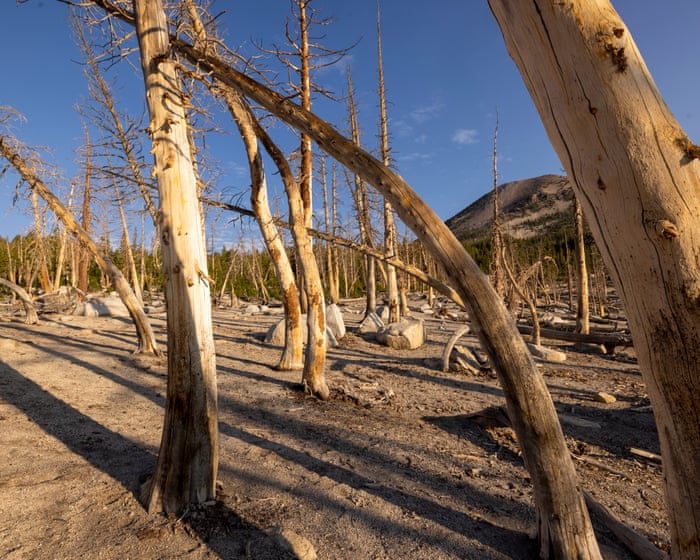
A new study shows that when large amounts of carbon dioxide were released 56 million years ago, the Earth’s forests mostly died instead of growing more. This research suggests that today’s rapid carbon emissions from fossil fuels will harm forests rather than help them grow.
Key Facts
The study looked at fossilized leaf cells from the Paleocene-Eocene Thermal Maximum (PETM), about 56 million years ago.
During the PETM, carbon was released over 130,000 years, causing global temperatures to rise by up to 8°C (14°F).
This warming caused forests to shrink dramatically, losing about 60% of their plant biomass.
The speed of today’s carbon emissions is even faster than during the PETM.
High carbon dioxide levels initially helped some plants but eventually led to forest decline from heat, pests, and wildfires.
Some officials in President Trump’s administration have claimed that more CO2 is good for plants, but experts say this is misleading.
The study was published in the journal Science and warns that forests need more than just CO2 to survive; they also need suitable temperatures and nutrients.
Increased heat also raises risks of pest outbreaks and wildfires, which damage forests further.
Read the Original
Want the full story? Tap a source to open the original
article.
Artists in Gaza created a mural to honor Arianna Hamilton, a former Burger King worker. She was reportedly fired after saying "Free Palestine" to an Israeli-American customer at a drive-through in Pennsylvania.
Key Facts
Arianna Hamilton worked at a Burger King in Breinigsville, Pennsylvania.
She said "Free Palestine" to a customer who was Israeli-American.
After this incident, she was reportedly fired from her job.
Artists in Gaza painted a mural to honor Arianna Hamilton.
The mural celebrates her support for Palestine.
The event connects a local U.S. situation to international attention in Gaza.
Read the Original
Want the full story? Tap a source to open the original
article.
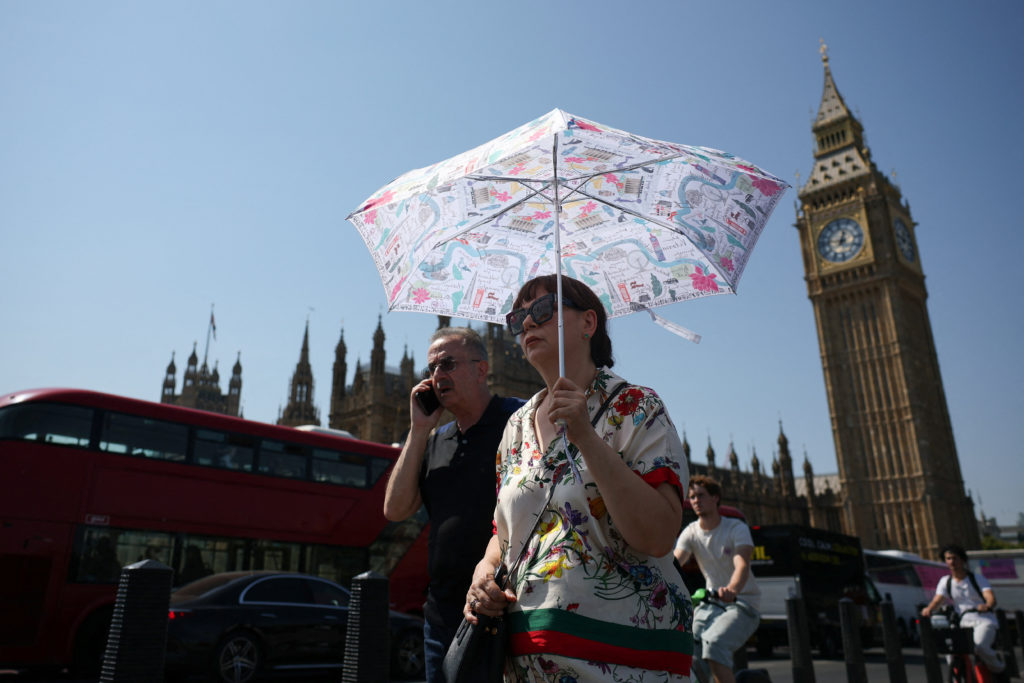
The U.K. recorded its hottest day of the year at 38.1°C (100.6°F) in west London, continuing a heat wave affecting much of Western Europe. France also experienced high temperatures nearing 41°C (106°F), widespread drought, and increased wildfire danger, while authorities prepared emergency measures to handle water shortages and fire risks.
Key Facts
The hottest temperature in the U.K. this year reached 38.1°C (100.6°F), breaking the previous high of 38°C (100.4°F) set in June.
This year, the U.K. has seen five heat waves, with four days reaching at least 36°C (96.8°F).
France recorded temperatures close to 41°C (106°F) in several regions.
Both countries lack widespread air conditioning, leading to health problems like heat exhaustion among hospital staff.
Britain and France face drought conditions affecting crops, rivers, and water supplies.
Southern Water in England has requested a drought order to limit non-essential water use.
Authorities remain on alert for wildfires, with evacuations occurring in northern Greece due to fires.
Many people are seeking ways to cool down outdoors, such as visiting beaches and fountains.
Read the Original
Want the full story? Tap a source to open the original
article.
Vote counting started Thursday evening in Zambia after the presidential election ended. The election tests if President Hakainde Hichilema’s economic changes have helped reduce people’s frustration over the high cost of living.
Key Facts
Zambia held a presidential election on a single day.
Around 8 million people were registered to vote out of a population of 22 million.
There were over 13,500 polling stations across the country.
Besides the president, voters also chose members of Parliament and local council leaders.
The election is seen as a test of President Hichilema’s economic reforms.
The Electoral Commission of Zambia said they expect to announce results on Monday.
The election took place in the southern part of Africa.
The main issue was whether economic reforms helped with the country’s cost of living problems.
Read the Original
Want the full story? Tap a source to open the original
article.
The remains of an ancient Roman bridge called Nero’s Bridge have appeared in the Tiber River in Rome due to a severe drought causing very low water levels. The bridge, likely built around 39 AD and connected to the Roman emperor Nero’s time, was uncovered near St. Peter’s Basilica as the river’s flow dropped to about half its usual level for July.
Key Facts
Nero’s Bridge is an ancient bridge that appeared in the Tiber River because of low water levels caused by drought.
The bridge once connected the city center of Rome with the right side of the Tiber River.
Although named after Emperor Nero, archaeologists believe the bridge was built earlier by Emperor Caligula around 39 AD.
The area near the bridge is historically significant because Apostle Peter was martyred in Nero’s circus, now the site of the Vatican.
The Tiber River’s flow has dropped to about 80 cubic meters per second, half the normal amount for July.
Rome is experiencing a major water crisis with long dry periods despite having some good rainfall earlier in the year.
The drought has revealed parts of the riverbed and ancient ruins not usually visible.
Read the Original
Want the full story? Tap a source to open the original
article.
The Ebola outbreak in the Democratic Republic of Congo has spread to a sixth province, Bas-Uele, with a confirmed death. This outbreak started in February, has killed over 2,100 people, and is spreading faster than any previous Ebola outbreak.
Key Facts
The Ebola outbreak began in Ituri province and has now spread to Bas-Uele, North Kivu, South Kivu, Haut-Uele, and Tshopo provinces.
A man who traveled from Haut-Uele to Bas-Uele died from Ebola in Bas-Uele's capital, Buta.
Over 4,500 cases and more than 2,100 deaths have been recorded in this outbreak.
The virus strain causing this outbreak is called Bundibugyo, and there are currently no approved vaccines or treatments for it.
Clinical trials of two new treatments have started in Ituri province.
Two new vaccines for the Bundibugyo strain are being tested in humans for the first time.
The World Health Organization (WHO) warns the outbreak could last more than a year and may become the deadliest Ebola outbreak on record.
Ebola spreads through contact with bodily fluids and contaminated objects, and it causes a severe and often fatal disease.
Read the Original
Want the full story? Tap a source to open the original
article.
Ukraine has proposed a deal with Russia to stop attacks on civilian ships in the Black Sea. This move aims to reopen an important route used to export grain and other food, which is vital for global supplies. Russia has not responded to the proposal yet.
Key Facts
Ukraine made the peace offer through a third party to halt attacks on civilian ships in the Black Sea.
The Black Sea is a key route for exporting grain and food from both Ukraine and Russia.
Since July, Ukraine has stopped commercial Russian ships from using this route and attacked nearly 220 vessels, including oil tankers and grain ships.
Russia increased attacks on Ukraine’s southern ports, harming the country’s agricultural exports.
About 90% of Ukraine’s grain and sunflower exports leave through Odesa and nearby ports.
Ukraine’s president Volodymyr Zelenskyy continues to attack Russian naval forces in the Black Sea port of Novorossiysk.
The last grain export deal, supported by Turkey and the UN, ended in July 2023 after Russia refused to renew it.
The new Ukrainian proposal comes as harvest season starts and shipping from Ukraine’s ports is almost stopped.
Read the Original
Want the full story? Tap a source to open the original
article.
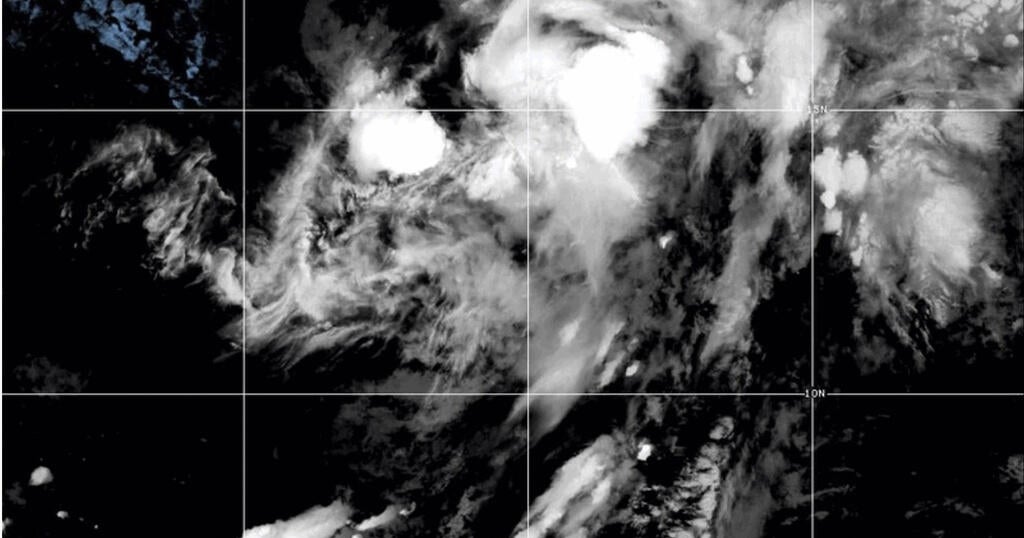
Tropical Storm Lala formed in the Pacific Ocean and is moving toward the Big Island of Hawaii. Officials issued a hurricane watch for the Big Island as Lala may bring heavy rain, strong winds, and flooding starting late Friday.
Key Facts
Tropical Storm Lala is about 700 miles east-southeast of Hawaii.
Lala has maximum sustained winds of 40 mph and is moving west.
Forecasters expect Lala to strengthen and approach near-hurricane strength near the Big Island.
A hurricane watch has been issued for the Big Island of Hawaii.
Lala could bring 5 to 10 inches of rain, with up to 20 inches possible, leading to flooding and mudslides.
Winds on the windward side of hills and mountains may be up to 30% stronger than at ground level.
The storm is forecast to be near or just south of the Big Island by Saturday.
Tropical Storm Hernan formed farther west in the Pacific and is not expected to threaten land.
Read the Original
Want the full story? Tap a source to open the original
article.
During the recent major partial solar eclipse in the UK, streams of Bonnie Tyler’s song "Total Eclipse of the Heart" nearly doubled, rising 94% in the UK and 14% worldwide. The song became a tribute as people in the village of Mumbles, where Tyler once lived, played and sang it while witnessing the eclipse shortly after her death at age 75.
Key Facts
Bonnie Tyler, a Welsh singer, passed away in July at age 75 after emergency surgery in Portugal.
"Total Eclipse of the Heart" saw a 94% increase in UK streams and a 14% increase globally on August 12, the day of the eclipse.
The song is a famous power ballad from the 1980s and has over 1.2 billion views on YouTube.
People in Mumbles, Swansea, where Tyler once lived, played the song during the solar eclipse event.
A tribute concert and procession are planned in Mumbles ahead of Tyler’s funeral on 17 August.
The solar eclipse was a partial eclipse visible in the UK, while some parts of Spain and Portugal saw a total eclipse.
Tyler’s music catalogue has earned over $1.4 million in streaming payouts, according to Spotify.
Other “celestial” themed songs also saw increased streaming during the eclipse in the UK.
Read the Original
Want the full story? Tap a source to open the original
article.
The Edinburgh International Film Festival is recovering well after a difficult period and is preparing for a strong 2026 edition. The festival highlights Scottish films alongside global cinema, supported by increased funding and development from Screen Scotland, which has helped filmmakers improve their work and gain international recognition.
Key Facts
The Edinburgh International Film Festival recently faced collapse but has rebounded and looks forward to 2026.
The festival showcases top world cinema and focuses on promoting Scottish filmmakers.
The 2026 opening film is The Incomer, a Scottish comedy that won an award at Sundance.
Other Scottish films featured include stories about Jorge Luis Borges, cancer recovery, and historical figures.
Scottish artist Douglas Gordon and Scottish Ballet are also highlighted in the festival lineup.
Screen Scotland, a funding agency started in 2018, supports Scottish film development and production.
Isabel Davis, former executive director of Screen Scotland, will join the British Film Institute leading a £20 million filmmaking fund.
Seven Scottish films were selected for the Sundance Film Festival this year, showing the growth of Scottish cinema.
Read the Original
Want the full story? Tap a source to open the original
article.
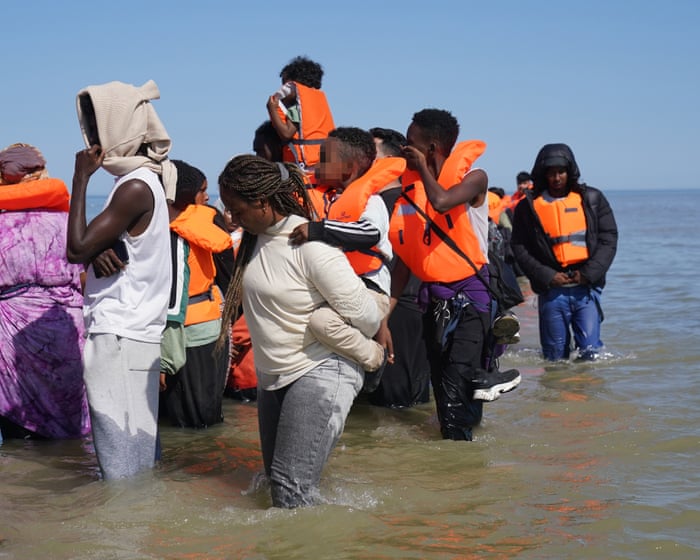
Nearly 100 children were wrongly held as adults under a UK-France migration deal that sends some people arriving by small boats back to France. The deal aims to return equal numbers between the two countries, but many children were detained longer than allowed and faced poor treatment, including health care problems and separation from family.
Key Facts
Out of 304 people whose ages were disputed, 94 (31%) were actually minors but were held as adults.
The "one in, one out" migration deal started in August 2025 to return some small boat arrivals to France while accepting the same number from France.
Children should not be detained under the scheme, and unaccompanied children’s detention is usually limited to 24 hours.
Some detainees waited over six months for deportation, though the policy allows only up to 28 days in exceptional cases.
People with serious health issues like tuberculosis were still being prepared for removal to France.
Several detained individuals were separated from family members, which caused harm.
Age assessments took a long time, sometimes over 40 days after arrival at detention centers.
From August 2025 to June 2026, 1,087 people were returned to France, while nearly 28,000 arrived in the UK by small boats.
Read the Original
Want the full story? Tap a source to open the original
article.
Over 30 countries jointly spoke out against Iran's frequent use of the death penalty. They criticized Iran for carrying out many executions, expressing concern about human rights.
Key Facts
More than 30 nations signed a statement condemning Iran's use of the death penalty.
The statement called attention to the high number of executions in Iran.
The countries involved want Iran to stop using the death penalty excessively.
Iranian political dissident Masih Alinejad, who lives outside Iran, shared her views on the issue.
The joint statement highlights global concern about human rights in Iran.
Read the Original
Want the full story? Tap a source to open the original
article.
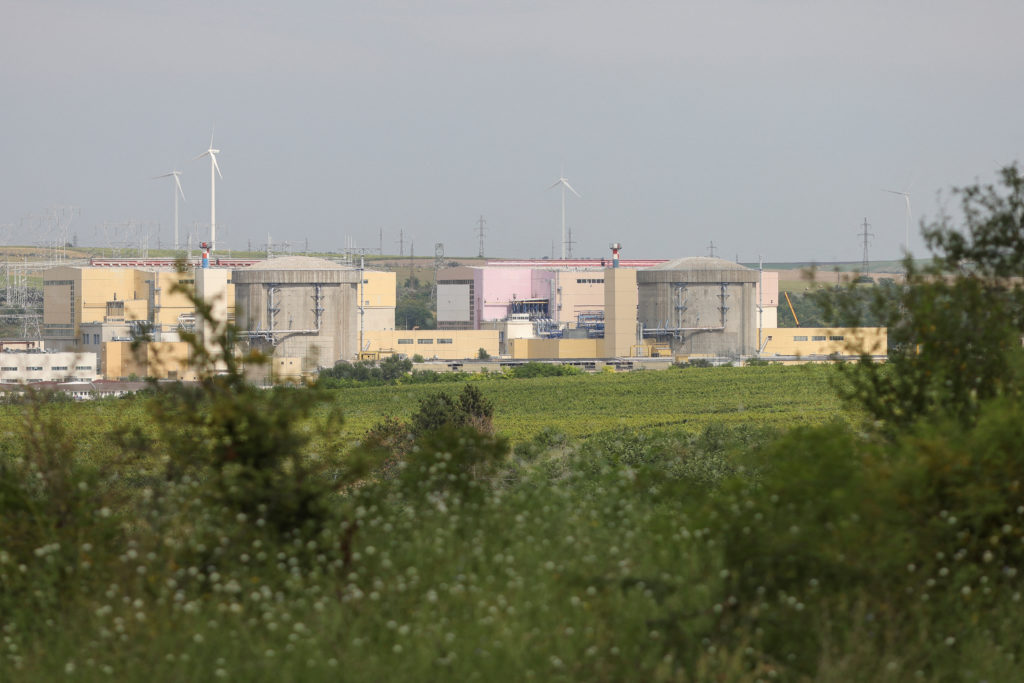
Romania has started shutting down the second reactor at its Cernavoda nuclear power plant because the Danube River’s water level has dropped too low due to drought. The plant uses river water to keep its reactors cool, and the first reactor was already shut down in July for the same reason. Officials say electricity needs will be met through other sources while the plant is offline.
Key Facts
The Cernavoda plant provides about 20% of Romania’s electricity when both reactors are running.
Both reactors need river water from the Danube to cool down and operate safely.
The first reactor was shut down in late July because of low river water levels caused by drought.
The second reactor began a controlled shutdown on August 3, 2026, due to continuing low water levels.
Romania tried to raise water levels by sinking barges and using explosions to redirect water flow without success.
The shutdowns do not pose any nuclear safety risks to people or the environment.
Hungary is also taking steps to raise the Danube’s water level to keep its Paks nuclear plant running.
Romania’s Ministry of Energy says alternative electricity sources and imports will cover the country’s power needs during the shutdown.
Read the Original
Want the full story? Tap a source to open the original
article.
On August 13, 2026, parts of Africa experienced a partial solar eclipse. In Tunisia, the Sun was covered about 59% by the Moon, while in Senegal, the coverage reached around 37%.
Key Facts
The solar eclipse occurred on August 13, 2026.
It was visible as a partial eclipse in several African countries.
In Tabarka, Tunisia, 59.06% of the Sun was covered by the Moon.
In Dakar and other parts of Senegal, the eclipse obscured up to 37% of the Sun.
People used special glasses to safely watch the eclipse.
The event attracted attention across Africa as a notable celestial phenomenon.
The eclipse did not completely cover the Sun in these locations, so it was not a total eclipse.
Read the Original
Want the full story? Tap a source to open the original
article.
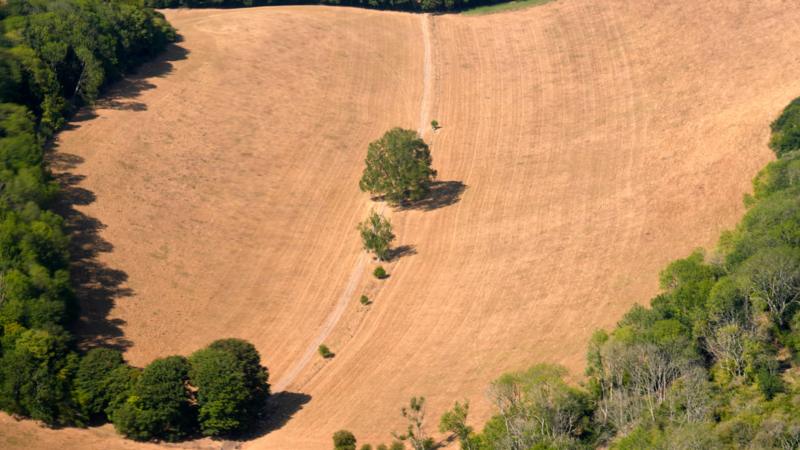
The UK has recorded its hottest day of 2026 with a temperature of 38.1°C at Kew Gardens, London, making it the fifth hottest day ever. The heatwave has caused droughts, water shortages, health risks, and wildfires across much of England and Wales.
Key Facts
The highest temperature this year in the UK was 38.1°C at Kew Gardens, London.
This is the UK’s fifth hottest day on record and part of the fifth heatwave of 2026.
An amber heat health alert is active across England until 9 pm on Friday due to risks to health and social care.
Around 45 million people in England live in drought conditions, with over 27 million facing water use restrictions like hosepipe bans.
Thousands of homes in east London and Essex have water supply problems after pipe bursts caused outages.
England’s emergency departments experienced their busiest summer ever, with over 2,800 heat-related deaths in May and June.
More than 1,000 wildfires have been reported in England and Wales this year, matching last year’s record.
A large wildfire in Hampshire involved about 130 firefighters tackling an area the size of 230 football pitches.
Read the Original
Want the full story? Tap a source to open the original
article.
Russia and Ukraine have attacked each other's grain shipment locations, causing damage and fires. These attacks raise worries that the prices of food around the world could increase.
Key Facts
Russia attacked Ukraine’s largest grain port on the Danube River overnight.
The attack caused damage and started a fire at the port.
A day earlier, Ukraine struck Novorossiysk, a major Russian grain hub on the Black Sea.
Both sides are targeting important places where grain is stored and shipped.
These attacks may disrupt grain exports and affect global food prices.
Grain is a key food product used worldwide, so damage to ports can have wide impacts.
The conflict between Russia and Ukraine continues affecting various sectors, including food supply.
Read the Original
Want the full story? Tap a source to open the original
article.
A ferry capsized on Lake Kariba in Zimbabwe on August 11, 2026, killing at least 46 people. Many families gathered for a memorial service as rescue efforts continue, with dozens still missing after the ferry, which was overloaded, sank.
Key Facts
The ferry accident happened on Lake Kariba, Zimbabwe, on August 11, 2026.
At least 46 people have died, and many others are still missing.
The ferry was overloaded, carrying possibly up to 153 passengers while its capacity is 90.
About 77 people were rescued after the ferry sank.
The ferry was traveling from Kariba town to rural and fishing villages that rely on it for transport.
Some families lost several members, including a man who lost his wife and three children.
Survivors said they asked the ferry captain to turn back due to strong waves, but the request was ignored.
Zimbabwe’s president said the tragedy showed serious problems with the country’s maritime safety.
Read the Original
Want the full story? Tap a source to open the original
article.
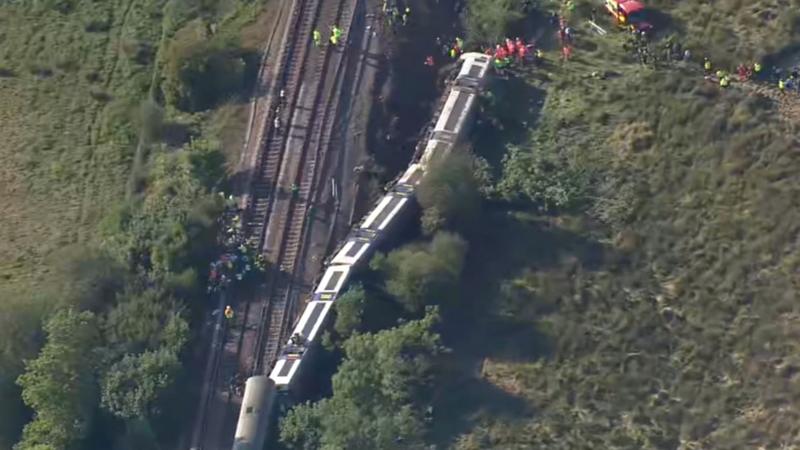
A passenger train in southern England derailed and flipped onto its side near Lewes train station. Emergency workers, including paramedics and fire crews, arrived at the scene, and there were no reports of injuries so far.
Key Facts
The train derailed and at least two cars ended up on their sides.
The incident happened near Lewes train station in southern England.
Fire and rescue services and other emergency responders were called to the scene.
Photos shared on social media showed emergency workers on top of the flipped train.
Transport Secretary Heidi Alexander expressed concern and thanked emergency responders.
No injuries have been reported immediately after the accident.
Read the Original
Want the full story? Tap a source to open the original
article.
Poland stopped a Russian plan to kill a Ukrainian-American citizen in Warsaw, according to Polish Prime Minister Donald Tusk. This is the first time in decades that a Western leader has publicly said Russia tried to kill a U.S. citizen in another NATO country.
Key Facts
The suspect, allegedly recruited by Russian secret services, was arrested on August 7 in Poland.
The targeted person was a U.S. citizen of Ukrainian origin, considered a problem by the Putin regime.
This incident marks the first public claim of Russia plotting to kill an American citizen in a NATO country.
The operation to stop the plot involved cooperation between Polish and U.S. intelligence services.
Russia has been accused of targeting opponents abroad, including activists and supporters of Ukraine.
Russian actions include previous attacks such as the killing of Alexander Litvinenko in London (2006) and the poisoning of Sergei Skripal in Salisbury (2018).
Western officials believe these attacks are part of Russia's efforts to weaken countries that support Ukraine.
Other recent plots against critics of Putin have been disrupted in countries like France, Lithuania, and Germany.
Read the Original
Want the full story? Tap a source to open the original
article.