NASA has denied rumors that Earth will temporarily lose gravity on August 12, 2026. The claims link to a supposed secret project called "Project Anchor," but NASA explains gravity depends on Earth's mass and cannot simply switch off.
Key Facts
Social media spread a theory that Earth will lose gravity briefly on August 12, 2026.
The theory mentions a secret NASA project called "Project Anchor" with a large budget and claims of mass casualties.
NASA senior scientist Karen Fox said this conspiracy theory recurs every year and is false.
Earth's gravity depends on its mass, and losing gravity would require losing mass, which is impossible.
Fact-checkers like Snopes found no credible evidence of any leaked NASA project predicting such an event.
The date coincides with a total solar eclipse visible in parts of the Northern Hemisphere.
NASA confirmed that a solar eclipse does not affect Earth’s gravity, only tidal forces influenced by the Sun and Moon.
The social media posts included false details about deaths, secret bunkers, and withheld information from the public.
Read the Original
Want the full story? Tap a source to open the original
article.
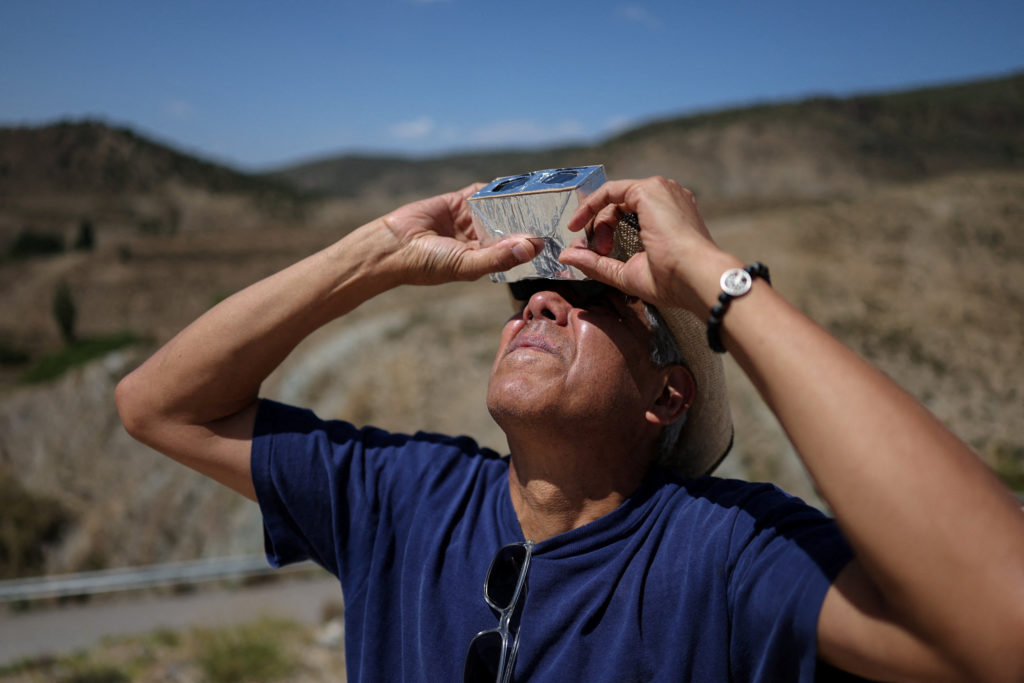
A rare total solar eclipse occurred over parts of Spain, Iceland, and Greenland, briefly darkening the skies as the moon completely covered the sun. Millions of people in northern and central Spain watched the event, which lasted about one to two and a half minutes depending on the location.
Key Facts
The eclipse was a total solar eclipse, meaning the moon fully blocked the sun’s light for a short time.
The event was visible across northern and central Spain, parts of Iceland, Greenland, and a small area of Portugal.
Total darkness (totality) lasted up to 2.5 minutes near Iceland’s west coast.
In Spain and Portugal, totality lasted about one minute.
The eclipse began near sunset, as the sun, moon, and Earth aligned.
People in Spain bought special glasses to safely view the eclipse.
Authorities warned visitors to rural areas to be careful to avoid starting wildfires during the event.
NASA provided live coverage of the eclipse starting at 1:15 p.m. EDT.
Read the Original
Want the full story? Tap a source to open the original
article.
Aung San Suu Kyi, Myanmar's former leader, has been in military detention since a 2021 coup. Recently, she was seen in photos for the first time since then during a meeting with the International Committee of the Red Cross, and her son, Kim Aris, shared his reaction in an interview.
Key Facts
Aung San Suu Kyi was detained after a military coup in Myanmar in 2021.
She had not been seen publicly since her arrest until recently.
Photos showed her meeting with a group from the International Committee of the Red Cross.
The Red Cross is an organization that provides humanitarian help in conflicts and disasters.
Kim Aris is the son of Aung San Suu Kyi.
He spoke to CBS News about seeing his mother in the photos.
The meeting with the Red Cross was one of the first signs of her wellbeing since the coup.
Read the Original
Want the full story? Tap a source to open the original
article.
Actress Lucy Davis announced she has incurable breast cancer that has spread to her bones. She shared advice on how women can check their breasts at home for signs of cancer beyond just a lump.
Key Facts
Lucy Davis, known for The Office UK, revealed her breast cancer is incurable and has spread to her bones.
The lump she first felt was actually a small, hard spot, not a typical lump.
The NHS recommends checking your breasts about once a month to notice any changes.
Signs to look for include lumps or swelling, skin changes like dimpling or redness, changes in breast size or shape, nipple changes, unusual discharge, and sores.
To check, look at your breasts in the mirror with arms at your sides and raised, then feel in circles around your breast, up to the collarbone and under the armpits, using light and firmer pressure.
See a doctor if you find lumps, unusual changes, or persistent breast or armpit pain.
Breast cancer symptoms can vary and may not always involve a clear lump.
Read the Original
Want the full story? Tap a source to open the original
article.
Robert Gilman, a U.S. Marine veteran, was released from a Russian prison after being held for over four years. He was reported to have poor health during his imprisonment.
Key Facts
Robert Gilman is a veteran of the U.S. Marine Corps.
He was imprisoned in Russia for more than four years.
Reports indicated that his health declined while in prison.
He has recently been freed and is no longer in Russian custody.
The news was reported by CBS News journalist Leigh Kiniry.
Read the Original
Want the full story? Tap a source to open the original
article.
North Korea launched a ballistic missile into the sea near its east coast just before the United States and South Korea began their joint military exercises called Ulchi Freedom Shield. The missile flew about 700 km and landed in waters between the Korean Peninsula and Japan. North Korea has not explained the launch but often fires missiles before these annual drills, which it calls provocative.
Key Facts
North Korea fired a ballistic missile from Wonsan area on its east coast early Wednesday.
The missile traveled over 700 kilometers and landed outside Japan’s exclusive economic zone.
This was the second missile test by North Korea in less than a week.
The US-South Korea joint military drills, called Ulchi Freedom Shield, run from August 17 to 27.
About 18,000 South Korean troops and 28,500 US troops participate in these exercises.
North Korea regularly opposes these drills, seeing them as preparations for invasion.
The US and South Korea say the drills are defensive, focusing on countering North Korea’s nuclear and missile threats.
North Korea’s growing military ties with Russia are a concern mentioned in relation to these drills.
Read the Original
Want the full story? Tap a source to open the original
article.
A man named Anthony “Tony” Jones died after a violent fight between rival motorcycle gangs called the Vikings and the Hells Angels in south Wales. Police arrested ten men and are still investigating the incident, which involved weapons and left several injured.
Key Facts
Anthony “Tony” Jones, 56, died in hospital after a fight in Pontnewynydd, south Wales.
The fight involved knives and hammers and at least twelve men took part.
Police used firearms officers, a helicopter, and ambulances at the scene.
Ten men aged 31 to 73 were arrested, seven remain in custody.
Police are seeking a man named Anthony Paul Jones and a blue van with the plate MA23 FLC.
The incident links to rival motorcycle gangs, the Vikings and the Hells Angels.
A police cordon is still in place at the British Legion Club in Pontnewynydd for forensic work.
Both gangs have origins in the US but have UK chapters, with some members involved in criminal activities.
Read the Original
Want the full story? Tap a source to open the original
article.
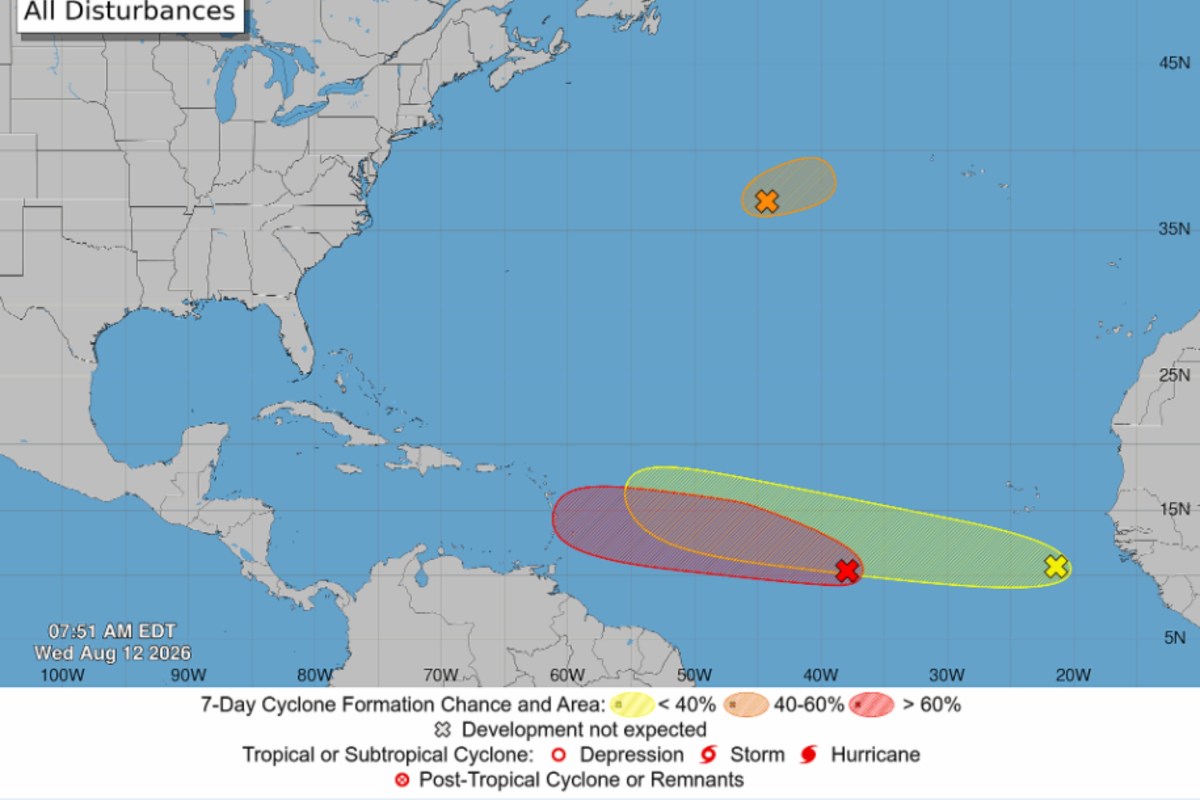
The National Hurricane Center (NHC) is tracking several weather disturbances in the Atlantic Ocean, including one with a high chance of becoming Tropical Storm Cristobal soon. Although the 2026 hurricane season is expected to be quieter than usual, forecasters remain watchful for possible storms forming during the season.
Key Facts
A tropical wave about 900 miles southwest of the Cabo Verde Islands may develop into a tropical depression or tropical storm named Cristobal.
The NHC gives this system an 80% chance to form a cyclone within the next 48 hours.
If Cristobal forms, it would be the third named storm of the season, following Arthur and Bertha.
Another low-pressure system east-northeast of Bermuda could briefly become a tropical storm but will likely weaken over cooler waters.
A tropical wave near West Africa is also being monitored but currently has a low chance to develop.
NOAA expects the 2026 Atlantic hurricane season to be less active than normal, with 7 to 13 named storms.
El Niño conditions and average ocean temperatures are factors that may reduce hurricane activity this season.
The hurricane season runs from June 1 to November 30.
Read the Original
Want the full story? Tap a source to open the original
article.
Colombia declared three days of mourning after a 7.4 magnitude earthquake killed over 200 people and destroyed many buildings. Rescue teams worked hard to find survivors, while the government and international community provided aid and support.
Key Facts
The earthquake struck western Colombia with a magnitude of 7.4, the strongest in the country this century.
More than 200 people have died, with at least 216 confirmed victims.
The government ordered flags to fly at half-staff and declared three days of national mourning.
Rescuers used cranes, dogs, and heavy machinery to search for survivors in cities like Pereira and Cali.
A woman named Daniela Largo was rescued alive after being trapped 35 hours in rubble.
Parts of Cali, including a hospital, were severely damaged, forcing makeshift medical treatments outdoors.
Thousands of Colombians donated supplies and blood to help earthquake victims.
The newly sworn-in president declared a state of emergency and promised rent aid for affected families.
The United States pledged $15.5 million in emergency help, and other countries offered support.
Read the Original
Want the full story? Tap a source to open the original
article.
Vietnam is facing a rapid decline in its birthrate and an ageing population. After more than 40 years of a two-child policy, the government lifted the restriction in 2025 and is now encouraging families to have more children to address future labor shortages.
Key Facts
Vietnam has a population of over 100 million people.
The current fertility rate is 1.9 children per woman, which is considered low.
For over 40 years, Vietnam had a two-child policy to control population growth.
The two-child policy was officially removed in June 2025.
The government is now working to increase birthrates because of an ageing population.
The ageing population may lead to shortages in the workforce in the future.
Efforts are being made to persuade citizens to have more children to support the economy.
Read the Original
Want the full story? Tap a source to open the original
article.
Richard Tice, deputy leader of Reform UK, has sent legal threats to the Guardian newspaper over its reporting on his financial transactions, which were referred to the National Crime Agency (NCA). Labour’s Bridget Phillipson and other critics say this move is an attempt to silence journalists and threaten press freedom.
Key Facts
Richard Tice’s lawyers sent legal letters to the Guardian targeting a reporter who wrote about his financial dealings.
These financial transactions were reported to the National Crime Agency for investigation.
Tice is suing the NCA, claiming information was leaked from inside the agency.
Labour chair Bridget Phillipson said Tice is trying to stop journalism instead of answering serious questions.
The Liberal Democrats and press freedom groups also criticized Tice’s legal threats as bullying tactics.
Investigations revealed secret donations to Reform UK and Nigel Farage, raising questions about possible money laundering.
The Guardian’s reports cited financial industry sources and noted that suspicious activity reports are not proof of crimes but requests for investigation.
Both Tice and Farage deny any wrongdoing related to these financial matters.
Read the Original
Want the full story? Tap a source to open the original
article.
The commander of Iran’s Quds Force, Esmail Qaani, visited Baghdad in secret to discuss Iraq’s plan to disarm armed groups and put weapons under government control. Iran opposes the immediate handover of weapons and urges political solutions to avoid conflict, amid tensions between the Iraqi government and some powerful armed factions.
Key Facts
Esmail Qaani, head of Iran’s Quds Force, made an unannounced visit to Baghdad to meet Iraqi leaders.
The visit focused on Iraq’s plan to disarm armed groups and centralize weapons under state control.
Iran sent a message against handing over weapons now, fearing a new war might start.
Iraqi Prime Minister Ali al-Zaidi wants to enforce the disarmament by a September 30 deadline.
Some armed groups, like Kataib Hezbollah and Harakat al-Nujaba, refuse to give up their weapons.
Iraqi political parties generally oppose using force to disarm the factions.
Iraq aims to end the U.S.-led coalition’s combat mission by the end of September 2024.
Iraqi leaders, including Ammar al-Hakim, are trying to reduce tensions and seek compromise.
Read the Original
Want the full story? Tap a source to open the original
article.
Scientists studied fossils and ancient ocean chemistry to find that the ability of early animals to produce feces may have helped life evolve rapidly about 540 million years ago. Poop pellets likely moved nutrients to deeper ocean areas, supporting bigger animals and more diverse ecosystems during the Cambrian Explosion.
Key Facts
The Cambrian Explosion happened around 540 million years ago, when many complex animals appeared.
Early animals evolved the ability to poop, creating fecal pellets that sank into the ocean depths.
Poop helped spread important nutrients like carbon, iron, nitrogen, and phosphorus to deeper waters.
This nutrient recycling boosted marine life by making deep ocean areas more habitable.
Scientists analyzed fossilized poop (coprolites) and digestive systems from the Cambrian period.
The study compared ancient nutrient cycles to those in today’s oceans, focusing on a system called the biological pump.
Fossilized poop containing shell fragments from animals like trilobites was found in places including Australia, Greenland, and China.
The research suggests feces played an important role in supporting the evolution and growth of early animal life.
Read the Original
Want the full story? Tap a source to open the original
article.
A total solar eclipse will happen soon, passing over the Arctic, Greenland, Iceland, and parts of Spain. During this event, the Moon will fully cover the Sun, creating a rare and impressive natural sight for many people.
Key Facts
The solar eclipse will be total, meaning the Moon will completely block the Sun.
The path of the eclipse crosses the Arctic region, Greenland, Iceland, and some areas in Spain.
Millions of people will have the chance to see this rare event.
A solar eclipse occurs when the Moon moves between the Earth and the Sun.
Total solar eclipses are uncommon and often attract attention from scientists and sky watchers.
Read the Original
Want the full story? Tap a source to open the original
article.
British actor and comedian Jasper Carrott expressed pride and gratitude after his daughter, actress Lucy Davis, announced she has incurable stage four breast cancer that has spread to her bones. Davis shared her diagnosis publicly and urged people to check any unusual changes in their bodies.
Key Facts
Lucy Davis, known for her role in the BBC sitcom The Office, revealed she has incurable stage four breast cancer.
The cancer has spread to her spine, right hip, and ribs.
Davis initially found a small hard spot but almost ignored it, highlighting the importance of early checks.
Jasper Carrott, her father, thanked the public for their support and asked for privacy as they cope.
Davis said she is trying to live life as fully as possible and is at peace with her condition.
Many of Davis’s co-stars and other celebrities publicly showed their support.
Stage four breast cancer means the cancer started in the breast and spread to other parts of the body, making it incurable, but it can be managed for some time with treatment.
Common breast cancer symptoms include lumps or swelling, skin changes, nipple changes, and discharge.
Read the Original
Want the full story? Tap a source to open the original
article.
Brazil will hold important elections soon, which will test the effectiveness of President Trump’s new approach to Latin America. This approach is often compared to a modern version of the Monroe Doctrine, a U.S. policy aimed at influencing countries in the Americas.
Key Facts
Brazil’s election is scheduled to take place in less than two months.
President Trump has introduced a new strategy for dealing with Latin American countries.
This strategy is being called the “new Monroe Doctrine,” referencing a historical U.S. policy from the 19th century.
The upcoming election is seen as a major test for how well this new policy will work.
The Monroe Doctrine originally aimed to limit European influence in the Americas but is now used metaphorically for U.S. influence in the region.
Brazil is the largest country in Latin America, making its political decisions very important for the region and U.S. relations.
Read the Original
Want the full story? Tap a source to open the original
article.
Lebanese parliament passed a general amnesty law to reduce prison overcrowding by shortening sentences and releasing some inmates, including those detained for over 12 years without charges. The law was approved one day after Lebanon abolished the death penalty, making it the first Middle Eastern country to do so.
Key Facts
Lebanon’s parliament approved a broad amnesty law aimed at reducing overcrowding in prisons.
The law shortens sentences, especially for those sentenced to death or life imprisonment, lowering them to 17 prison years (equivalent to about 13 actual years).
Prisoners held for more than 12 years without charges will be released as their trials continue.
Lebanon abolished the death penalty the day before passing this amnesty law, a first in the Middle East.
Prisons in Lebanon are reported to be overcrowded at 300% capacity, with over 6,200 inmates as of March 2026.
The amnesty includes Islamist prisoners connected to the Syrian civil war, as well as individuals linked to Hezbollah and other political groups.
Different political groups pushed for the law to benefit their communities, including families of people involved in drug offenses and those who fled to Israel after 2000.
Lebanon’s last major amnesty law was passed after its civil war (1975-1990) to help former fighters enter politics.
Read the Original
Want the full story? Tap a source to open the original
article.
Germany’s government plans to expand the powers of its intelligence services to better defend against threats like hacking, sabotage, and espionage from foreign countries and extremists. The proposed law aims to allow agencies to take more active steps, such as disabling dangerous technology and accessing digital devices, to protect the country.
Key Facts
Germany is expanding powers for its Federal Intelligence Service (BND) and domestic intelligence service (BfV).
The new powers would allow actions like disabling sabotage attempts and hacking operations.
The legislation was approved by the German Cabinet but still needs the parliament’s approval.
Germany has relied heavily on intelligence information from its allies, which the government sees as too one-sided.
Germany’s cautious approach to intelligence comes from historic concerns about government surveillance.
The intelligence services could intervene by swapping dangerous components, accessing IT systems of factories, or shutting down servers related to foreign attacks.
Officials mentioned the possibility of replacing explosives with harmless substances to prevent attacks.
Germany faces ongoing cyberattacks, espionage, and efforts to destabilize its political and social systems by foreign powers.
Read the Original
Want the full story? Tap a source to open the original
article.
A ferry carrying too many passengers capsized on Lake Kariba, which lies between Zimbabwe and Zambia, leaving 44 people dead. The ferry was overloaded, with more passengers than its 90-person limit, and rescue efforts have saved 77 people so far.
Key Facts
The ferry was carrying at least 114 adults and 5 crew members, exceeding its 90-person capacity.
Lake Kariba forms part of the border between Zimbabwe and Zambia.
The death toll has reached 44 people after the ferry capsized.
Rescue teams have saved 77 people from the accident.
The exact number of passengers is unclear because children without tickets may have been on board.
Some of the deceased were children, but officials have not given full details.
The ferry operates between rural areas around Lake Kariba and the town of Kariba on the lake’s shore.
Lake Kariba is the world’s largest man-made lake by volume, created by damming the Zambezi River in the 1950s and 1960s.
Read the Original
Want the full story? Tap a source to open the original
article.