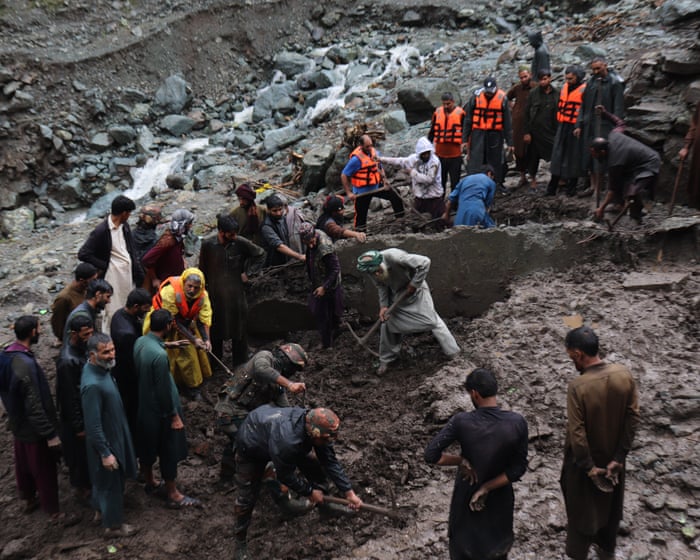
Heavy rain caused sudden cloudbursts in the Pir Panjal mountains of Indian-administered Kashmir on July 19, triggering deadly floods and landslides. These disasters destroyed homes, killed at least 28 people, and left many missing in remote mountain villages like Murrah.
Key Facts
A cloudburst caused mud, rocks, and water to flood the village of Murrah, trapping eight family members inside one house.
The village lost electricity, roads, and mobile phone connections after the floodwaters damaged infrastructure.
Rescue teams, soldiers, and volunteers searched by hand because heavy machinery could not safely reach the unstable area.
Murrah is a remote village in the Pir Panjal range and is home mostly to the Gujjar community, who rely on farming and livestock.
At least 28 people died in floods and landslides across Jammu and Kashmir caused by several cloudbursts this month.
Scientists link increased heavy rainfall in the western Himalayas to rising temperatures from climate change.
Nearby areas, including Rajouri town and Gurez Valley, also suffered damage from floods and landslides.
The disasters have caused widespread displacement, loss of homes, and destruction of transportation routes.
Read the Original
Want the full story? Tap a source to open the original
article.
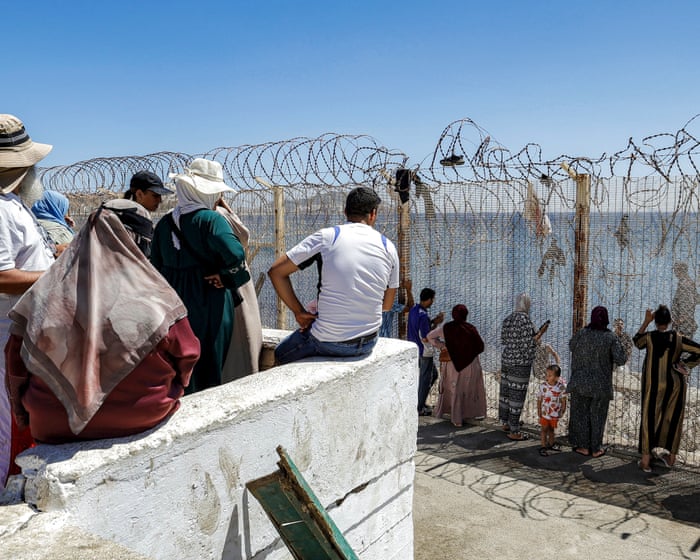
Hundreds of people have gathered in Fnideq, Morocco, near the Spanish border town of Ceuta, looking for missing family members after a large group crossed into Ceuta last week. At least 99 people have died during the crossing, and many others are missing or still in Ceuta, including hundreds of unaccompanied children.
Key Facts
Around 72,000 people crossed from Morocco into Ceuta last week.
At least 88 people died in Ceuta and 11 died in Morocco during the crossing.
Most people who crossed into Ceuta have been returned to Morocco within 48 hours through cooperation between Spain and Morocco.
Some returnees say they came back voluntarily due to hunger and lack of jobs, while others say they were forced by police.
NGOs have raised concerns that some eligible for asylum were sent back without chance to request protection.
About 2,000 people remain in Ceuta, including 862 registered unaccompanied children.
Families in Morocco wait anxiously, showing photos of missing loved ones trying to find them.
Spanish police set up an office in Ceuta to collect reports of missing people.
Read the Original
Want the full story? Tap a source to open the original
article.
Bolivia has sent over 200 police and military officers to patrol its border with Brazil. This action comes after fighting between Brazilian criminal gangs, which has caused at least nine people to die.
Key Facts
Bolivia deployed more than 200 police and military personnel to the border with Brazil.
The deployment is a response to violence between Brazilian criminal gangs.
These gangs are fighting to control drug trafficking routes.
At least nine people have died due to this gang violence.
The border area has become unsafe because of these clashes.
Bolivia aims to stop the violence from spreading into its territory.
The situation highlights ongoing problems with drug-related crime in the region.
Read the Original
Want the full story? Tap a source to open the original
article.
Kim Yo Jong, sister of North Korean leader Kim Jong Un, warned that North Korea will consider new military actions after Japan test-fired a U.S.-made Tomahawk missile. She accused Japan of shifting from defense to becoming a military power and blamed the U.S. for supporting Japan’s increased military activities.
Key Facts
Japan recently test-fired a U.S.-made Tomahawk cruise missile from the destroyer Chokai in the Pacific Ocean.
North Korea’s Kim Yo Jong said Japan is moving away from defense toward preemptive attack capabilities.
Kim accused the United States of helping Japan’s military growth by supplying missiles and supporting tests.
North Korea warns it will take "additional military options" in response to Japan’s actions.
The statement reflects ongoing criticism by North Korea of security ties between the U.S., South Korea, and Japan.
North Korea sees Japan’s military activities as a direct threat to its security and a reason to develop its own weapons.
Analysts suggest North Korea might use this message to justify future military demonstrations or missile tests.
Read the Original
Want the full story? Tap a source to open the original
article.
Taiwan has started its largest annual military exercise, called "Han Kuang," to prepare for a possible attack from China. The drills involve soldiers, reservists, and civilians practicing responses to invasions, including air raid drills and slowing mobile internet. China claims Taiwan as its territory and has increased military pressure on the island.
Key Facts
Taiwan’s "Han Kuang" military exercise runs from August 5 to 14 and is its biggest yearly drill.
The exercises include combat simulations for troops and reservists and civilian emergency drills like air raid practices.
China claims Taiwan as part of its territory and has increased military activities around the island.
The Chinese military frequently sends fighter jets and warships near Taiwan and conducts large-scale exercises.
Taiwan has focused on developing smaller, agile weapons like drones to defend itself with asymmetric warfare strategies.
Taiwan plans to raise its defense budget to 5% of its GDP by 2030 amid political disagreements over spending.
Command decentralization and drone coordination are key features of this year’s exercise to improve battlefield decisions.
Officials aim to build "whole-of-society" defense, including civilian readiness and urban resilience for war or disasters.
Read the Original
Want the full story? Tap a source to open the original
article.
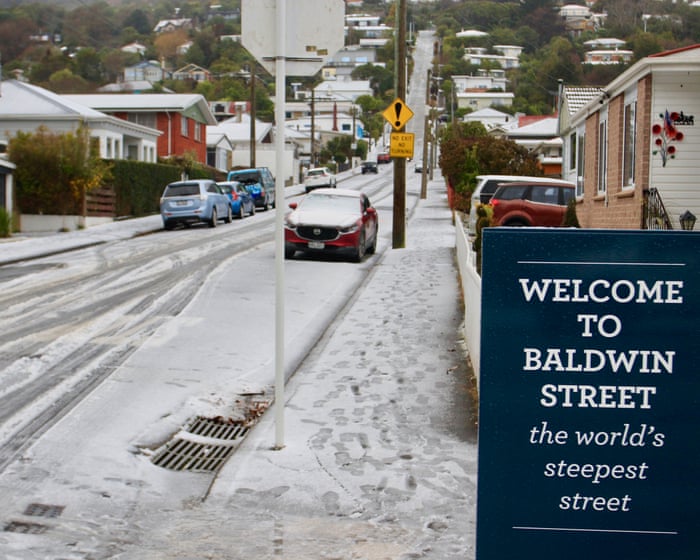
New Zealand experienced an Antarctic cold snap causing rare snowfall in Wellington, the capital, for the first time in 11 years and heavy snow in southern cities. The cold weather led to icy roads, some highway closures, and unusual activities like skiing down steep streets in Dunedin.
Key Facts
A cold front brought freezing temperatures, snow, hail, and strong winds across New Zealand starting Tuesday.
Wellington saw snow and sleet at sea level for the first time in 11 years, surprising many residents.
Dunedin, a southern city, was covered in snow, causing schools to close and inspiring people to snowboard and ski down streets.
Baldwin Street in Dunedin is known as the world’s steepest street, where a skier was seen going down during the snowfall.
Christchurch experienced snow dusting on the beach and a plane had to abort landing due to bad weather.
Police warned people to avoid travel because of icy roads and several cars slid off roads.
Temperatures were expected to rise on Wednesday but then drop again by Thursday morning, potentially the coldest of the year.
New Zealand’s electricity use reached a record high during Wednesday’s morning peak, raising concerns about energy shortages on Friday.
Read the Original
Want the full story? Tap a source to open the original
article.
Israel has approved 113 million shekels ($37 million) to take control of over 70 historical sites in the occupied West Bank. This funding adds to previous investments aimed at expanding Israeli control over archaeological and heritage sites in the area.
Key Facts
The Israeli government approved 113 million shekels to control more than 70 sites in the West Bank.
This is part of a larger plan, including a 250 million shekel ($83 million) program from May.
The Settlements Ministry is receiving 157 million shekels ($52 million) in direct funding plus another 142 million ($47 million) in commitments.
The Knesset Finance Committee separately approved nearly 300 million shekels ($99 million) for settlement-related funding.
Israel labels these sites as Jewish heritage to strengthen state control over Palestinian land.
Palestinian media report the plan includes taking over Solomon’s Pools near Bethlehem.
Since 2022, there have been about 104 settlements and 160 outposts approved in the West Bank.
Israeli settlements in the West Bank are considered illegal under international law.
Read the Original
Want the full story? Tap a source to open the original
article.
UK Prime Minister Andy Burnham is considering holding a public inquiry into the UK activities of Jeffrey Epstein, a convicted sex offender. The government will also review allegations against Mohamed Al Fayed, former owner of Harrods, and possibly others, as part of a wider investigation into abuse by powerful men.
Key Facts
Victims minister Alex Davies-Jones said Burnham is "looking into" a public inquiry about Epstein’s UK activities.
Burnham agreed to meet with Epstein’s victims to hear their concerns directly.
Alleged behavior of Mohamed Al Fayed, the former Harrods owner, is also under review for possible inclusion in the inquiry.
Davies-Jones resigned from the previous Labour government over its handling of Epstein survivors but was reappointed when Burnham took office.
Labour campaigners asked for a full inquiry into Epstein, Al Fayed, and West Ham co-owner David Sullivan, who denies allegations against him.
The inquiry would explore how Epstein used UK military bases and borders to travel with trafficked women.
Survivors emphasize that they want meaningful action, not just promises or publicity.
Former Prime Minister Gordon Brown previously raised concerns about Epstein’s unusual access to UK military facilities.
Read the Original
Want the full story? Tap a source to open the original
article.
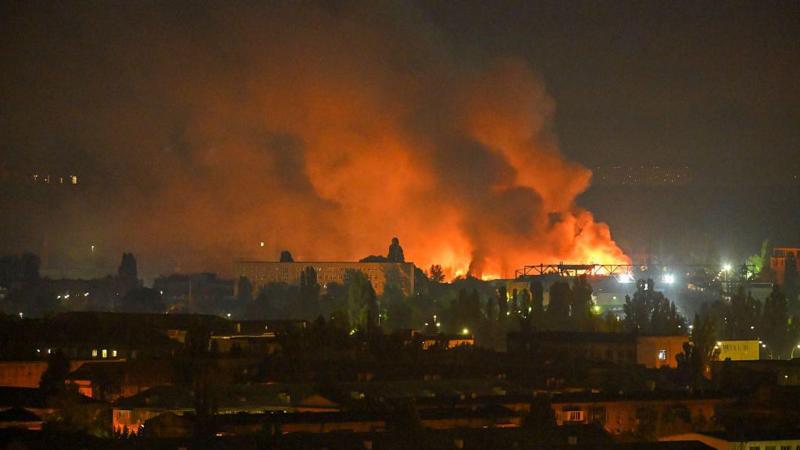
Russian missile and drone attacks struck Kyiv and nearby areas, killing at least 17 people and injuring dozens more. Ukrainian forces shot down most drones but none of the ballistic missiles, highlighting a need for better air defense systems.
Key Facts
At least 17 people died and more than 40 were wounded in missile and drone strikes on Kyiv overnight.
Ukrainian air forces intercepted 98 out of 115 drones but failed to stop any ballistic missiles.
The attacks targeted warehouses, infrastructure, and a railway station near Kyiv.
Eight people died in a strike on a train station on the eastern edge of Kyiv.
A logistics center for the Epicentr chain was destroyed, killing one employee.
Three workers at a postal sorting center also died in the strikes.
Moscow claimed it hit sites involved in storing and distributing weapons and military equipment.
Ukraine is requesting more US-made Patriot missile defense systems to counter the missile attacks.
Read the Original
Want the full story? Tap a source to open the original
article.
The U.S., Iran, and Oman are close to making a temporary agreement to reopen the Strait of Hormuz for safe ship passage. This deal would last 60 days, aiming to reduce conflict and restart talks on a nuclear agreement, with an announcement expected soon.
Key Facts
The deal involves a 60-day temporary plan for managing ship traffic in the Strait of Hormuz.
Inbound ships would use a northern lane in Iranian waters; outbound ships would use a southern lane in Omani waters.
No fees or tolls would be charged for ship passage during this period.
Both countries will work to clear naval mines from the middle lane of the strait within 30 days.
After clearing mines, the middle lane would be used for ship traffic under a permanent arrangement to be negotiated later.
The U.S. delayed military strikes to allow diplomacy more time to work.
The White House and multiple regional countries, including Qatar, Pakistan, and Saudi Arabia, helped mediate the talks.
Iran’s Supreme Leader and top security council approved the agreement recently.
Read the Original
Want the full story? Tap a source to open the original
article.
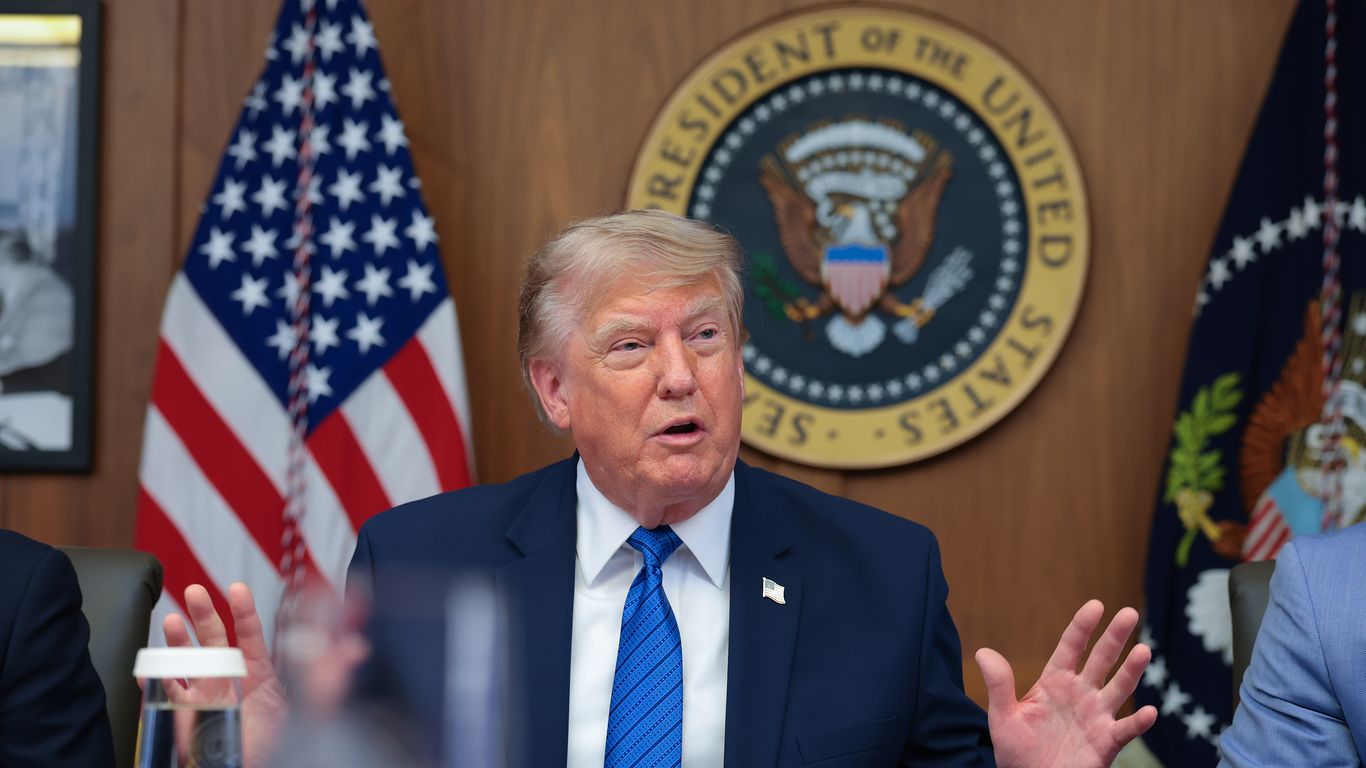
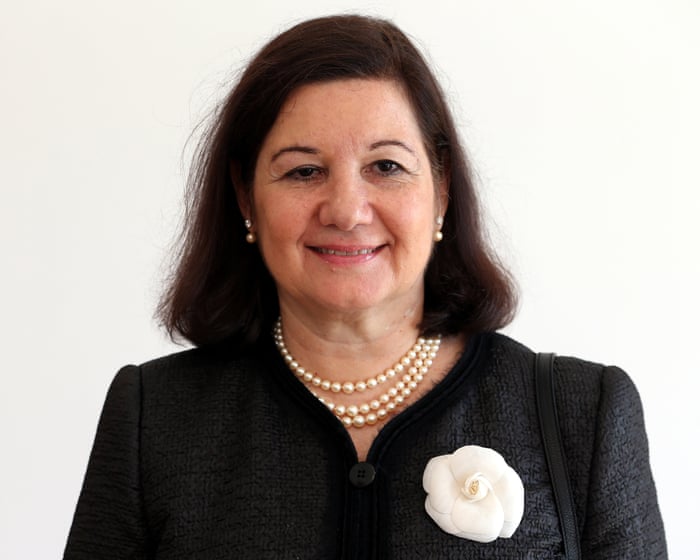
The US government under President Trump canceled the visa of Brazil’s ambassador to the US, Maria Luiza Ribeiro Viotti, as a response to Brazil rejecting Trump’s nominee for US ambassador in Brasília and denying visas to two US diplomats. The US says the visa may be restored if Brazil approves the US ambassador appointment, while Brazil sees this as an attempt to interfere in its upcoming election.
Key Facts
The US canceled the visa of Brazil’s ambassador, Maria Luiza Ribeiro Viotti, amid a diplomatic dispute.
Brazil refused to approve Daniel Perez, Trump’s chosen US ambassador to Brazil.
Brazil also denied visas to two US diplomats planning to visit before Brazil’s October election.
The US warns it may take further diplomatic actions if Brazil continues blocking the ambassador approval.
Brazil says these US actions are politically motivated and intended to influence their election.
Brazil argues it did not allow a decision about the US ambassador until after the first election round on October 4.
The US claims the president has the right to pick ambassadors without foreign interference.
The dispute relates to broader political tensions between President Trump and Brazil’s President Lula.
Read the Original
Want the full story? Tap a source to open the original
article.
Nearly 400 Australian bird and mammal species face a high risk from the deadly H5N1 bird flu virus, according to a government study. This virus threatens animals like penguins, dolphins, seals, and the Tasmanian devil, potentially causing severe population declines or even extinction.
Key Facts
A federal government assessment found almost 400 native Australian species at high or worse risk from H5N1 bird flu.
Some species at extreme risk are unlikely to survive if the virus reaches them.
Species affected include penguins, fur seals, quolls, dolphins, Tasmanian devils, and over 300 bird species.
More than 80 endangered species face a high risk of infection, pushing them closer to extinction.
The study involved over 2,000 native species and was done with Charles Darwin University and BirdLife Australia.
Australian sea lions have declined by 60% in 40 years and are at very high risk of the virus.
Experts warn the disease will have major negative impacts on Australia’s wildlife diversity.
Conservation groups urge the government to invest $200 million to protect wildlife and control invasive species.
Read the Original
Want the full story? Tap a source to open the original
article.
Russia launched ballistic missiles and drones at Kyiv and nearby areas, killing one person and injuring at least 12. The attacks hit homes, warehouses, and caused fears that people might be trapped under rubble.
Key Facts
Russia struck Kyiv with ballistic missiles and drones, hitting residential buildings and warehouses.
One woman was killed, and at least 12 others were injured in these attacks.
Kyiv's military officials warned people to take air raid warnings seriously for safety.
The attacks affected several districts around Kyiv, including Bucha, Brovary, and Fastiv.
Russia has increased missile attacks on Kyiv in recent weeks.
Ukraine has also ramped up attacks on Russian civilian targets, such as power facilities and warehouses.
Five people died in missile strikes on warehouses in the Moscow region recently.
Ukraine asked allies for more US-made Patriot missile systems to help defend against Russian attacks.
Read the Original
Want the full story? Tap a source to open the original
article.
Brazil has reduced its diplomatic presence in Argentina after Argentine President Javier Milei insulted Brazilian President Luiz Inácio Lula da Silva several times. Brazil recalled its ambassador to Buenos Aires and will keep a lower-level diplomat there as long as Milei continues his attacks.
Key Facts
Argentina’s President Milei called Brazil’s President Lula “a thief” multiple times since late July 2026.
Milei made offensive remarks about Brazil’s Supreme Court Justice Alexandre de Moraes.
Brazil recalled its ambassador to Argentina, Julio Bitelli, after Milei’s comments.
Since then, Brazil is represented in Argentina by a chargé d’affaires, a lower diplomatic rank.
Bitelli will not return to Argentina if Milei continues hostile language toward Lula.
Brazil and Argentina have had tense relations since Milei took office in December 2023.
Milei is a close ally of U.S. President Donald Trump, whose administration opposes Lula.
The U.S. recently revoked Brazil’s ambassador’s visa to Washington in a related diplomatic dispute.
Read the Original
Want the full story? Tap a source to open the original
article.
China has introduced a new "ethnic unity" law requiring Mandarin to be the main language in schools and government across the country. In Tibet, despite these rules, some people, like a 73-year-old retired nurse, continue to learn and use their native Tibetan language to keep their culture alive. The law also bans actions considered to cause division among China's ethnic groups and promotes patriotism and unity.
Key Facts
The new ethnic unity law took effect on July 1, 2026.
Mandarin is mandated as the primary language for education and government.
The law prohibits acts that might create division among China's 56 recognized ethnic groups.
Tibetan culture and language face pressure under this law, especially in the Tibet Autonomous Region.
Kalsang Lhamo, a 73-year-old retired nurse, started learning to write Tibetan later in life.
The Chinese government says the law promotes national unity and rejects criticism as biased.
Human rights groups and Tibetan activists say the law forces cultural assimilation and limits minority rights.
Foreign journalists were allowed to visit Tibet under government supervision but could not move freely or report independently.
Read the Original
Want the full story? Tap a source to open the original
article.
Thousands of migrants recently crossed into the Spanish city of Ceuta from Morocco, drawing attention to the unique border between Europe and Africa. Ceuta and Melilla are Spanish cities on the African continent, making them the European Union’s only land border with Africa and frequent sites of migration and political tension between Spain and Morocco.
Key Facts
Ceuta and Melilla are Spanish cities located on the northern coast of Africa, surrounded by Moroccan territory.
These cities form the EU’s only land border with Africa, making them important points for migrants trying to enter Europe.
Thousands of migrants crossed into Ceuta on July 31, renewing focus on border security and migration challenges.
Spain’s Supreme Court ruled that the “hot return” procedure, which allows immediate returns of migrants crossing land borders, does not apply to those intercepted at sea.
This ruling influenced migrant behavior and may have contributed to the recent surge in crossings.
Spain relies on migration cooperation with Morocco, but political tensions, such as over Western Sahara, complicate their relationship.
Morocco denies responsibility for acting as Europe’s border guard, despite pressure from Spain and the EU for migration control.
The disputed status of Western Sahara and Spain’s humanitarian decisions have previously triggered migration crises and diplomatic strains between Spain and Morocco.
Read the Original
Want the full story? Tap a source to open the original
article.
A Ukrainian man named Yurii, who sells vegetables in Kherson, shared his experience of being chased by a suspected Russian drone before it exploded. A video of the incident has gained attention worldwide.
Key Facts
The incident took place in Kherson, Ukraine.
Yurii is a vegetable seller.
A suspected Russian drone followed him closely.
The drone exploded after chasing him.
The attack was caught on video.
The video has been seen by many people around the world.
The event highlights ongoing conflict involving drones in Ukraine.
Read the Original
Want the full story? Tap a source to open the original
article.
The United States has canceled the visa of Brazil’s ambassador in a growing diplomatic disagreement. The US said it will restore the visa if Brazil approves President Donald Trump’s nominee for the US ambassador to Brazil, Daniel Perez.
Key Facts
The US Department of State revoked the visa of Brazil’s ambassador Maria Luiza Ribeiro Viotti.
The visa cancellation is related to Brazil’s delay in approving Daniel Perez, Trump’s nominee for US ambassador to Brazil.
Daniel Perez is a Republican from Florida nominated in June but still requires Brazilian approval and US Senate confirmation.
Brazil’s government condemned the US action, calling it a hostile move based on political disagreements.
Brazil recently refused visas to two US officials who wanted to meet election authorities, citing possible political misuse.
The dispute is occurring months before Brazil’s presidential election in October, featuring President Luiz Inacio Lula da Silva and challenger Flavio Bolsonaro.
Both sides have accused each other of interfering in their internal political matters.
The situation follows recent contentious claims about election security made by Bolsonaro supporters and connections to US claims of election fraud.
Read the Original
Want the full story? Tap a source to open the original
article.
Jeff Bezos and actor Leonardo DiCaprio have created a $200 million fund to help protect animals that are very close to disappearing forever. This fund aims to save species that are at high risk of extinction.
Key Facts
Jeff Bezos is the founder of Amazon.
Leonardo DiCaprio is a Hollywood actor.
They announced a new fund with $200 million in resources.
The purpose of the fund is to protect species near extinction.
The fund is meant to support wildlife conservation efforts.
The announcement was reported by CBS News.
The fund targets species facing immediate threats to their survival.
Read the Original
Want the full story? Tap a source to open the original
article.