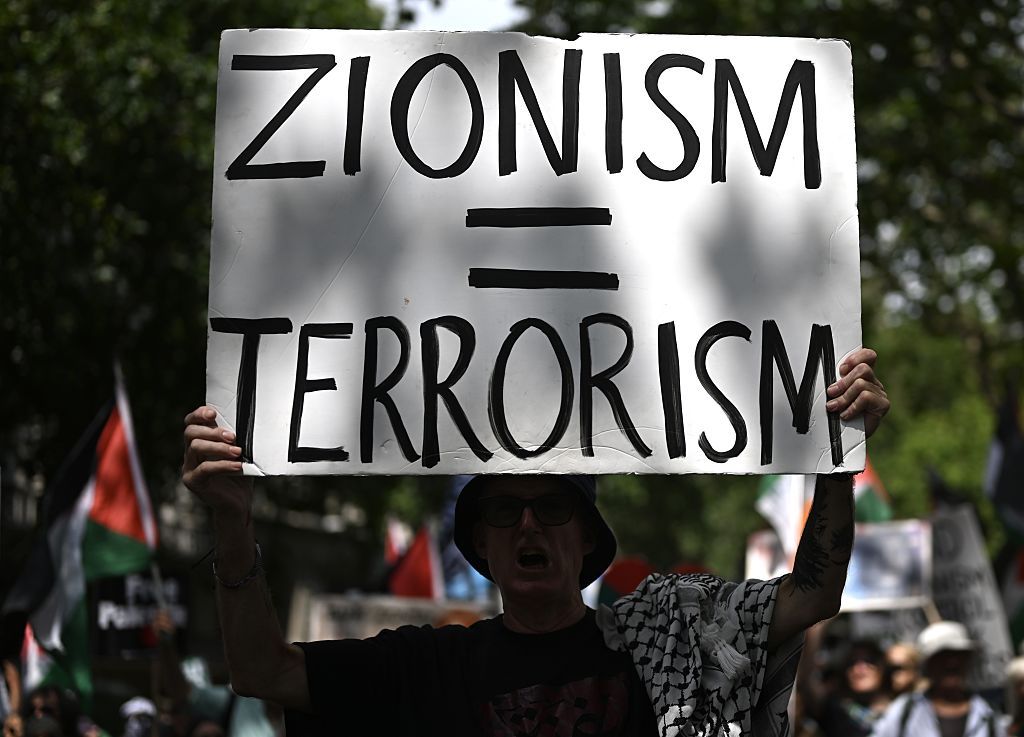
Some Jewish leaders and activists are discussing whether to stop using the word "Zionism" because it has become confusing and politically charged. They argue that the term means different things to different people, and dropping it could lead to clearer conversations about Israel and related issues.
Key Facts
"Zionism" originally referred to the Jewish movement for national self-determination.
The term has become politically loaded and is often misunderstood or used differently by many people.
Some experts and advocates suggest retiring the word to improve clarity in discussions.
They believe people should state their specific views instead of using "Zionism" as a shortcut.
For example, instead of saying "I am a Zionist," people could say "I support Israeli sovereignty" or "I oppose settlements."
The term now covers various meanings, including support for Israel’s government, opposition to Palestinian nationalism, or views on settlements.
Eliminating the word could reduce confusion and force more precise communication about the conflict.
This debate reflects ongoing tensions in how people talk about Israel and Jewish identity.
Read the Original
Want the full story? Tap a source to open the original
article.
The relationship between President Donald Trump and Canadian Prime Minister Mark Carney remains tense, especially after Carney’s recent visit to the European Union. The U.S. and Canada continue to apply tariffs on each other’s goods, adding to the strain before the upcoming United Nations General Assembly.
Key Facts
President Donald Trump and Canadian Prime Minister Mark Carney have a tense relationship.
Carney recently visited the European Union, which affected U.S.-Canada relations.
Both countries are using tariffs, which are taxes on imported goods, against each other.
Tariffs target American and Canadian products, impacting trade.
European Commission President Ursula Von der Leyen’s actions have also influenced the situation.
These developments come ahead of the UN General Assembly meeting.
The tensions affect diplomatic and trade discussions between the U.S. and Canada.
Read the Original
Want the full story? Tap a source to open the original
article.
At least three Palestinians, including a child and the son of a Gaza Health Ministry official, were killed in Israeli attacks across the Gaza Strip. Several others were injured, with multiple air and gunfire strikes hitting different neighborhoods and refugee camps.
Key Facts
Three Palestinians died in recent Israeli attacks in Gaza, including a child and Basir al-Bursh, son of a Health Ministry official.
The attacks hit areas such as Shujayea, Nuseirat, Maghazi, Jabalia, and az-Zahra neighborhoods.
A girl died from injuries caused by Israeli gunfire near the Nuseirat refugee camp.
A woman was seriously injured east of the Maghazi refugee camp.
Gaza’s Ministry of Health expressed condolences to the family of Basir al-Bursh.
Since an October 2025 ceasefire, over 1,300 people have been killed in Israeli attacks on Gaza.
According to UNICEF, one child dies daily in Gaza because of the conflict.
Many Palestinian families now live in a small part of Gaza, surrounded by destruction and waste.
Read the Original
Want the full story? Tap a source to open the original
article.
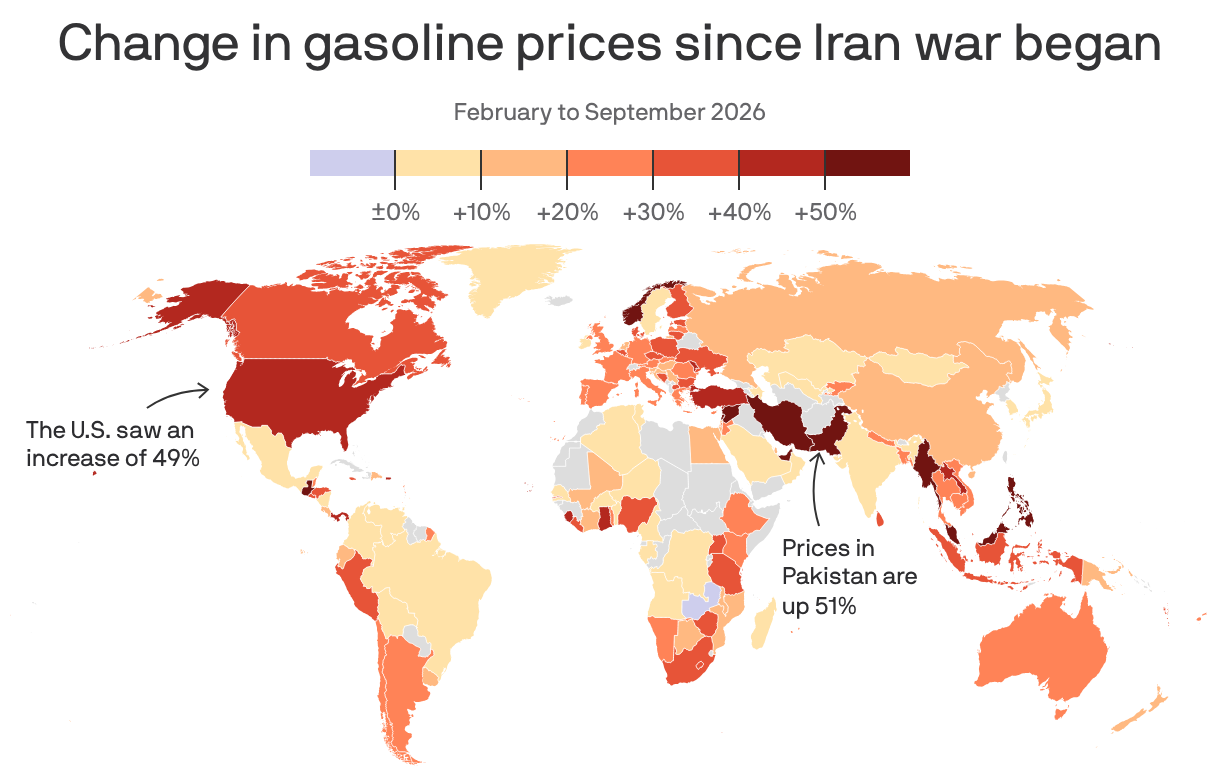
The war involving Iran is causing fuel prices to rise around the world, affecting many countries' economies and causing protests. These higher fuel costs hurt consumers and governments, especially in poorer nations, and add to other energy price challenges.
Key Facts
Fuel prices are going up globally due to the Iran conflict.
Many countries, including those not involved in the war, face economic difficulties from higher fuel costs.
Countries like Pakistan and Myanmar, which import most of their fuel, have seen the biggest price increases.
The U.S., a leading oil producer, also has rising fuel prices because crude oil prices are set worldwide.
Ukrainian strikes on Russian refineries are driving up diesel and motor fuel prices.
Governments struggle to choose between supporting fuel prices with subsidies or letting prices rise, risking political protests.
Many nations have limited fuel taxes or subsidies to ease the burden on consumers.
The International Monetary Fund warns that prolonged subsidies can hurt government budgets.
Kenya has experienced protests linked to rising fuel and fertilizer costs connected to the war.
Read the Original
Want the full story? Tap a source to open the original
article.
Bella Kay is a singer and songwriter from Texas known for songs about feelings like loneliness and heartache. Her popular song "The Sick" has been streamed over 220 million times, and she recently released her first album called "My Reckless Abandon."
Key Facts
Bella Kay is from Texas.
She writes songs about alienation, heartache, and survival.
Her song "The Sick" has been streamed more than 220 million times.
Rolling Stone magazine recognized her as an important new artist.
Her debut album is titled "My Reckless Abandon."
CBS News featured her performing the song "iloveitiloveitiloveit."
Read the Original
Want the full story? Tap a source to open the original
article.
A large fire broke out near Riyadh’s King Khalid International Airport, causing smoke and flames to be seen and major flight delays and cancellations. The incident happened amid rising violence between Saudi Arabia and Yemen’s Iran-backed Houthi rebels, who have recently escalated attacks on the Saudi capital.
Key Facts
Smoke and fire were seen near Riyadh’s main international airport on September 19, 2026.
An Aramco fuel tank near the airport caught fire, with firefighters working to put it out.
FlightRadar24 showed major flight disruptions at Riyadh airport, with long delays and many cancellations.
Saudi authorities issued an alert warning of potential danger in Riyadh for the first time since the recent conflict escalation.
Residents reported hearing loud explosions and described the situation as scary.
The violence is linked to an ongoing conflict between Saudi Arabia and Yemen’s Houthi rebels, who are backed by Iran.
The Houthis have recently seized large parts of Yemen and have been targeted by Saudi air strikes.
Riyadh recently accused the Houthis of attacking Mecca, which the Houthis denied.
Read the Original
Want the full story? Tap a source to open the original
article.
Israeli media recently reported that the Israeli military may be running low on some equipment and troops due to damage from ongoing conflict and budget issues. Experts say these reports may be exaggerated to encourage faster arms deliveries from the US and other allies.
Key Facts
Israeli media say the army lost a planned purchase of 12 Apache attack helicopters from Boeing.
Reports claim shortages in tanks, armored vehicles, and ammunition production due to wear and damage from war.
The military may suspend soldiers’ leave if funding does not increase soon.
Prime Minister Netanyahu tried but failed to get opposition support for increasing the military budget.
Experts say Israel keeps very large stockpiles and often exaggerates shortages to speed arms deliveries.
Israel may want to accelerate weapons deals amid concerns US support could change.
Israel has about 169,500 active military personnel and 465,000 reservists.
Military service is mandatory for most Jewish, Druze, and Circassian Israelis starting at age 18.
Read the Original
Want the full story? Tap a source to open the original
article.
Bella Kay, a singer and songwriter from Texas, performed her song "The Sick" on CBS News Saturday Sessions. Her music talks about feelings like loneliness and hard times, and her song "The Sick" has been streamed over 220 million times.
Key Facts
Bella Kay is a singer and songwriter from Texas.
She performed the song "The Sick" on CBS News Saturday Sessions.
Rolling Stone called her an artist people should know.
Her music covers themes like alienation, heartache, and survival.
The song "The Sick" has been streamed more than 220 million times.
Bella Kay’s first album is called "My Reckless Abandon."
Her debut album is currently available to listen to.
Read the Original
Want the full story? Tap a source to open the original
article.
A mother named Nessa Lovelyn was worried about her autistic son Jaxton starting preschool because she feared he might be treated differently and struggle to make friends. On his first day, she saw him playing alone at recess, which upset her, but Jaxton tried again the next day and was able to make a friend.
Key Facts
Jaxton is a young child with autism starting preschool.
His mother was nervous he would be rejected or treated differently because of his autism.
Studies show many autistic children face challenges making friends and are often rejected by peers.
On Jaxton’s first day, he played alone on the playground and did not make any friends.
Jaxton told his mother he loved his teacher but felt sad about not making friends.
His mother encouraged him, helped him practice ways to make friends, and reassured him he didn’t need to change who he is.
On his second day of preschool, Jaxton used his new skills and made a friend.
Jaxton’s mother shared videos online to seek advice and support from other parents.
Read the Original
Want the full story? Tap a source to open the original
article.
A documentary film called "NAZA" has caused controversy in Israel. The film, which won an award at the Venice Film Festival, includes anonymous Israeli sources who say the military purposely killed civilians in Gaza. Israeli Prime Minister Benjamin Netanyahu responded by saying he wants to take away citizenship from people who criticize the Israeli army.
Key Facts
The documentary "NAZA" was co-directed by Yuval Abraham and Rachel Szor.
The film won an award at the Venice Film Festival.
It features anonymous Israeli sources accusing the military of intentionally killing civilians in Gaza.
Israeli Prime Minister Benjamin Netanyahu said he plans to revoke citizenship from those who "defame" the Israeli army.
The controversy occurred amid ongoing conflict in the Gaza Strip.
The issue has sparked a political debate within Israel.
The film’s accusations challenge the official Israeli military narrative.
"NAZA" has gained international attention because of the award and the sensitive subject.
Read the Original
Want the full story? Tap a source to open the original
article.
The United States has ended sanctions against Eritrea that were in place since 2021. The decision aims to support U.S. interests in the Red Sea region, an important area for shipping and regional security.
Key Facts
The sanctions on Eritrea began in 2021 and targeted its military and ruling party.
Eritrean forces were accused of human rights abuses in the conflict in Ethiopia’s Tigray region.
The war in Tigray ended in late 2022 with a peace agreement between the Ethiopian government and Tigray rebels.
The sanctions had been renewed yearly under a national emergency declared by previous U.S. administrations.
The current U.S. administration officially announced the sanctions had expired and lifted them.
Eritrea said the sanctions caused significant harm and welcomed their removal.
The Red Sea is a vital route for oil shipments, especially since the nearby Strait of Hormuz is blocked.
The U.S. said it wants to work with Eritrea and Ethiopia to protect American interests in the region.
Read the Original
Want the full story? Tap a source to open the original
article.
Funerals are taking place in Kohat, Pakistan, after a deadly attack at a mosque. A suicide bomber drove a car filled with explosives into the mosque while seven gunmen attempted to enter a nearby police compound, resulting in at least 31 deaths.
Key Facts
The attack happened in Kohat, a city in Pakistan.
A suicide attacker used a car packed with explosives to hit a mosque.
Seven gunmen tried to enter a police compound during the attack.
At least 31 people were killed in the attack.
Funerals are being held for the victims in Kohat.
The mosque was the main target of the explosion.
The attack involved both a bombing and armed gunmen.
Read the Original
Want the full story? Tap a source to open the original
article.
Saudi Arabia held a meeting with multiple countries to form a naval coalition. The goal is to protect shipping lanes in the Red Sea, the Gulf of Aden, and the Bab al-Mandeb Strait from attacks by Houthi fighters supported by Iran.
Key Facts
Saudi Arabia hosted the naval coalition meeting.
The coalition includes several countries working together.
They want to secure shipping routes in the Red Sea, Gulf of Aden, and Bab al-Mandeb Strait.
These waterways are important for global oil transportation.
Houthi fighters, backed by Iran, have been attacking ships in this region.
The coalition aims to stop these attacks and keep shipping safe.
Read the Original
Want the full story? Tap a source to open the original
article.
In Gaza, actor Abu Qasai Qaddoura and others are performing a play called "50 Minutes in Gaza," which is based on real stories from the ongoing war. Despite losing their homes and living in difficult conditions, they use theatre to share their experiences and keep their culture alive amid destruction.
Key Facts
Abu Qasai Qaddoura is a new actor who lost his home in Gaza to Israeli airstrikes and now lives with his family in a small rooftop room.
He acts in a play about a doctor forced to amputate his own child without anesthetic, based on a real father's experience.
The rehearsal space is a makeshift tent in the parking lot of Gaza City’s Rashad al-Shawa Cultural Centre.
Director Ali Abu Yasin has worked for 37 years as an actor and playwright in Gaza and continues to train performers despite the hardships.
Many cultural sites in Gaza have been damaged or destroyed since October 7, 2023; UNESCO confirmed damage to 164 sites by March 2026.
The Rashad al-Shawa Cultural Centre itself was damaged in Israeli attacks in 2023, challenging where theatre can be produced.
The play "50 Minutes in Gaza" began in April 2026 with the goal of turning real war experiences into theatrical performances.
The actors face physical and emotional challenges during rehearsals due to trauma and harsh living conditions.
Read the Original
Want the full story? Tap a source to open the original
article.
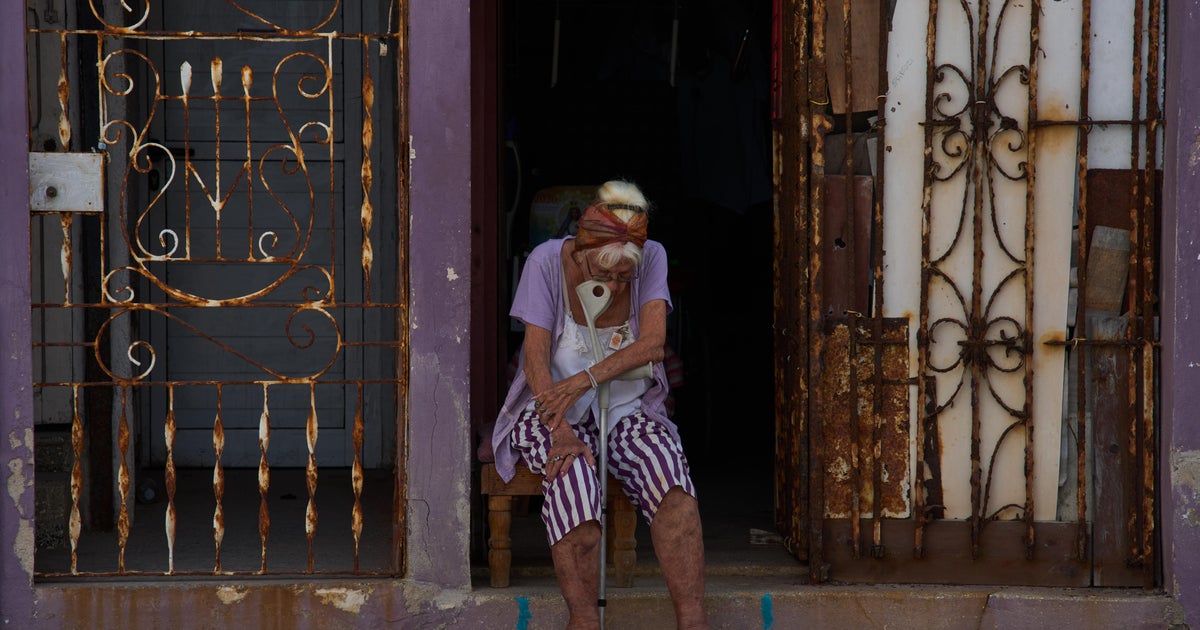
Cuba experienced another major power outage on Friday, knocking out electricity for millions of people. The country has faced frequent blackouts recently due to economic problems and restrictions on fuel imports after President Trump imposed a U.S. energy embargo.
Key Facts
Cuba's power grid collapsed again on a Friday, causing wide electricity outages.
This is at least the sixth major blackout since January 2026.
The Cuban Ministry of Energy and Mines announced the outage and started repair efforts.
A failure in transmission lines in western Cuba led to the grid collapse reaching several provinces.
Weather problems made fixing the grid harder.
Only about 5% of power was restored in Havana by evening; some hospitals are getting electricity back.
The embargo by the U.S. restricts Cuba’s access to fuel and parts needed for power plants and grid repairs.
The blackouts affect daily life, including water supply, cooking, internet, transport, and health services.
Read the Original
Want the full story? Tap a source to open the original
article.
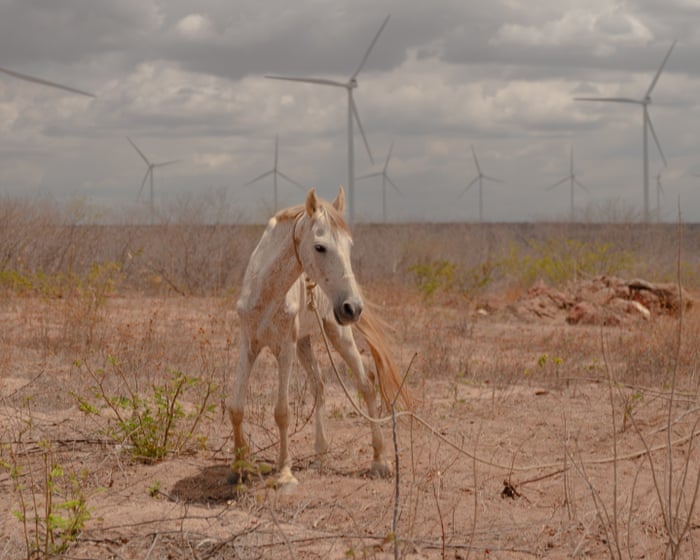
Brazil has developed large wind energy farms, especially in the northeast region, which has strong winds and poor social conditions. While wind power generates clean energy and income, local farmers like Antonio de Souza face restrictions on using their land and have not received the full promised benefits. Some communities are now suing a renewable energy company, Voltalia, seeking better payment and rights.
Key Facts
Brazil has about 35 gigawatts (GW) of wind power capacity, ranking fifth in the world.
Most wind turbines in Brazil are in the northeast, an area with strong wind and social challenges.
Local farmers signed contracts for monthly payments in exchange for leasing their land to wind companies like Voltalia.
Restrictions near power lines limit farming activities and cattle grazing, damaging livelihoods.
Some farmers argue the land affected is larger than stated in their contracts.
Electricity from these wind farms is sold mostly to distant large consumers at low prices.
Local people pay higher prices for electricity and have few visible benefits like paved streets or running water.
A public lawsuit was filed in 2025 by rural workers against Voltalia for better compensation and land use rights.
Read the Original
Want the full story? Tap a source to open the original
article.
Lisa Fasone had persistent postpartum symptoms like headaches and night sweats that did not go away after childbirth. Doctors found a small benign tumor on her pituitary gland causing high hormone levels, which affected her health and fertility. After medication failed, she had surgery to remove the tumor, and soon after, she unexpectedly discovered she was pregnant again.
Key Facts
Lisa Fasone gave birth in February 2022 and experienced long-lasting postpartum symptoms.
Tests showed high prolactin levels, a hormone linked to milk production and fertility.
A tiny benign tumor (prolactinoma) was found on her pituitary gland producing excess hormones.
Medication is the usual treatment for prolactinomas, but in Lisa’s case, the tumor grew despite the drugs.
The medication caused side effects and prevented safe pregnancy.
Surgery was performed through the nose to remove the tumor in April 2025.
After surgery, prolactin levels initially returned to normal, and her menstrual cycle restarted.
A later test found rising prolactin again, but it was due to an unexpected new pregnancy.
Read the Original
Want the full story? Tap a source to open the original
article.
Women in South Africa protested after nine women were found murdered near Johannesburg since July. People held tributes and called on the government to protect women, while police formed a team to investigate and advised caution.
Key Facts
Nine women were found murdered in the Kempton Park area near Johannesburg since July.
One victim, Elizabeth Moselakgomo, known as "Tsontso," went missing during a run.
Runners in Centurion organized an event to honor her and defend women's right to run safely.
A vigil was held in Cape Town to remember the victims and demand government action.
Police created a special task team to investigate the murders.
Women in the area are advised not to walk or run alone, especially in isolated places.
The protests and calls for action highlight concerns about violence against women in South Africa.
Read the Original
Want the full story? Tap a source to open the original
article.
East Asia is experiencing rapid aging in countries like Japan, South Korea, and Taiwan, leading to less space for burials. New technologies, such as AI avatars and DNA-based keepsakes, are being used to remember and digitally "bring back" loved ones, changing how people grieve and say goodbye.
Key Facts
Japan, South Korea, and Taiwan are aging quickly, meaning more elderly people and fewer young ones.
Burial space is becoming very limited in these countries.
A new market is growing around using technology to commemorate the dead.
AI avatars are digital versions of people created to look and act like them.
DNA gems are small objects made using a person's genetic material as a way to keep a part of them.
These tech tools aim to help people remember loved ones but also raise questions about their effect on grief.
The situation reflects changes in how society handles death and remembrance with modern technology.
Read the Original
Want the full story? Tap a source to open the original
article.
Thirty-seven people died while held in a detention facility in Niger state, Nigeria. Authorities say the deaths may have been caused by a disease outbreak, while other reports suggest overcrowding and poor ventilation played a role.
Key Facts
The deaths occurred in north-central Nigeria, specifically in Niger state.
The detainees were held for illegal mining activities.
Nigerian Security and Civil Defence Corps mentioned a possible disease outbreak as a cause.
Some reports claim overcrowding and poor air circulation contributed to the deaths.
Nigerian authorities have launched an investigation into the incident.
The exact cause of death is still unclear and disputed by different sources.
This event adds to concerns about detention conditions in Nigeria.
Read the Original
Want the full story? Tap a source to open the original
article.