Lisa Fasone had persistent postpartum symptoms like headaches and night sweats that did not go away after childbirth. Doctors found a small benign tumor on her pituitary gland causing high hormone levels, which affected her health and fertility. After medication failed, she had surgery to remove the tumor, and soon after, she unexpectedly discovered she was pregnant again.
Key Facts
Lisa Fasone gave birth in February 2022 and experienced long-lasting postpartum symptoms.
Tests showed high prolactin levels, a hormone linked to milk production and fertility.
A tiny benign tumor (prolactinoma) was found on her pituitary gland producing excess hormones.
Medication is the usual treatment for prolactinomas, but in Lisa’s case, the tumor grew despite the drugs.
The medication caused side effects and prevented safe pregnancy.
Surgery was performed through the nose to remove the tumor in April 2025.
After surgery, prolactin levels initially returned to normal, and her menstrual cycle restarted.
A later test found rising prolactin again, but it was due to an unexpected new pregnancy.
Read the Original
Want the full story? Tap a source to open the original
article.
Women in South Africa protested after nine women were found murdered near Johannesburg since July. People held tributes and called on the government to protect women, while police formed a team to investigate and advised caution.
Key Facts
Nine women were found murdered in the Kempton Park area near Johannesburg since July.
One victim, Elizabeth Moselakgomo, known as "Tsontso," went missing during a run.
Runners in Centurion organized an event to honor her and defend women's right to run safely.
A vigil was held in Cape Town to remember the victims and demand government action.
Police created a special task team to investigate the murders.
Women in the area are advised not to walk or run alone, especially in isolated places.
The protests and calls for action highlight concerns about violence against women in South Africa.
Read the Original
Want the full story? Tap a source to open the original
article.
East Asia is experiencing rapid aging in countries like Japan, South Korea, and Taiwan, leading to less space for burials. New technologies, such as AI avatars and DNA-based keepsakes, are being used to remember and digitally "bring back" loved ones, changing how people grieve and say goodbye.
Key Facts
Japan, South Korea, and Taiwan are aging quickly, meaning more elderly people and fewer young ones.
Burial space is becoming very limited in these countries.
A new market is growing around using technology to commemorate the dead.
AI avatars are digital versions of people created to look and act like them.
DNA gems are small objects made using a person's genetic material as a way to keep a part of them.
These tech tools aim to help people remember loved ones but also raise questions about their effect on grief.
The situation reflects changes in how society handles death and remembrance with modern technology.
Read the Original
Want the full story? Tap a source to open the original
article.
Thirty-seven people died while held in a detention facility in Niger state, Nigeria. Authorities say the deaths may have been caused by a disease outbreak, while other reports suggest overcrowding and poor ventilation played a role.
Key Facts
The deaths occurred in north-central Nigeria, specifically in Niger state.
The detainees were held for illegal mining activities.
Nigerian Security and Civil Defence Corps mentioned a possible disease outbreak as a cause.
Some reports claim overcrowding and poor air circulation contributed to the deaths.
Nigerian authorities have launched an investigation into the incident.
The exact cause of death is still unclear and disputed by different sources.
This event adds to concerns about detention conditions in Nigeria.
Read the Original
Want the full story? Tap a source to open the original
article.
Ed Sheeran’s concert in Philadelphia has been delayed from 5:30 p.m. to 8 p.m. because the opening acts canceled. Meanwhile, a pro-Palestinian protest is planned outside the stadium before the concert starts, and ticket resale prices for the show have dropped significantly.
Key Facts
The Philadelphia concert will now start at 8 p.m. instead of 5:30 p.m.
The change happened because the opening acts withdrew from the tour.
The concert will continue without any supporting acts.
A pro-Palestinian group, Shutdown DZ Philly, plans to protest outside the stadium at 4:30 p.m.
The protest time will not change despite the concert delay.
Philadelphia police are adjusting their staff to manage the protest and concert safely.
Some fans, including those with disabilities, are deciding not to attend due to safety and uncertainty concerns.
Resale ticket prices have fallen from $75 to around $53-$56 recently, which is lower than usual for this tour.
Read the Original
Want the full story? Tap a source to open the original
article.
Ukrainian children are learning old warrior skills from the 17th-century Cossacks, who were known for their fighting and horse-riding abilities. This training helps the children connect with their history and provides them a way to cope with growing up during the ongoing war.
Key Facts
The children study ancient skills used by Cossack warriors from the 1600s.
Cossacks are important figures in Ukraine’s history known for military skill and horsemanship.
The training is more than historical education; it offers the children an escape from the difficulties of living in a war zone.
The program takes place amid the modern conflict involving Ukraine.
The story was reported by Charlotte Lam and includes video coverage.
The article was published on September 19, 2026.
The conflict context involves Ukraine and Russia.
The story highlights cultural heritage as a way to support children during crisis.
Read the Original
Want the full story? Tap a source to open the original
article.
At least 49 people have died and around 100 others are sick in Ondo State, Nigeria, after drinking alcohol suspected to have methanol, a toxic substance. Authorities suspect the local drink "Monkey Shoulder" is involved, and 15 people have been arrested as investigations continue.
Key Facts
The deaths and injuries happened in Ondo State, Nigeria.
Suspected cause is alcohol containing methanol, which is poisonous.
The drink involved is called "Monkey Shoulder," a local high-alcohol herbal drink.
At least 49 people died and about 100 others were injured.
15 people have been arrested in connection with this incident.
Investigations by local authorities are still ongoing.
Methanol is a harmful chemical sometimes found in fake or contaminated alcohol.
This is a public health incident affecting a community in Nigeria.
Read the Original
Want the full story? Tap a source to open the original
article.
Satellite images show that Lake Powell, a large reservoir on the Colorado River, has dropped to its lowest water level in nine years due to ongoing drought. The lake's water level fell below its previous record low in 2023, raising concerns about water supply and hydropower production for the seven states and Mexico that depend on the river.
Key Facts
Lake Powell is the second-largest reservoir in the U.S. and sits on the Colorado River.
The Colorado River supports seven U.S. states (Arizona, California, Colorado, Nevada, New Mexico, Utah, Wyoming) and Mexico.
Satellite images compare water levels from 2017 and 2026, showing a significant drop in Lake Powell's water.
The lake's water level was 3,517.24 feet in September 2026, below the previous low set in April 2023.
Lake Mead, the largest reservoir in the U.S., also reached record-low levels around the same time.
A 2025-2026 winter with very low snow caused reduced water flow into these reservoirs.
Federal water managers have taken steps such as releasing water from upstream reservoirs to support Lake Powell.
Projections suggest Lake Powell's water level might rise about 40 feet by 2028, but Lake Mead's level may fall by a similar amount.
Read the Original
Want the full story? Tap a source to open the original
article.
President Donald Trump announced a deal for the United States to develop a large military presence in Greenland after months of trying to buy the island. Danish Prime Minister Mette Frederiksen called the agreement positive. Trump also claimed the deal gave the U.S. "permanent control" over Greenland.
Key Facts
President Trump sought to buy Greenland, citing concerns about Russia and China.
After negotiations, the U.S. and Denmark agreed on a deal for a significant U.S. military presence in Greenland.
Danish Prime Minister Mette Frederiksen said the agreement was good.
Trump used the term "permanent control" to describe the U.S. position in Greenland.
Greenland is part of the Kingdom of Denmark but has its own local government.
The deal was announced publicly in September 2026.
The military presence is motivated in part by strategic concerns in the Arctic region.
Greenland's location is important for monitoring and defense in the North Atlantic.
Read the Original
Want the full story? Tap a source to open the original
article.
In the UK, some people who believe in conspiracy theories are damaging traffic scanners installed on traffic lights. These scanners help monitor traffic flow by detecting vehicles and pedestrians, but the activists claim they are harmful surveillance tools with dangerous effects. Authorities have arrested some involved and say the scanners do not record personal information.
Key Facts
People known as “Blade Runners” have been cutting wires on traffic scanners in several UK towns.
They believe the scanners are harmful electronic weapons that cause health problems and spy on the public.
The scanners are actually sensors that count cars and pedestrians to improve traffic movement at busy junctions.
Police have arrested older adults on suspicion of criminal damage and endangering road users.
The technology behind these scanners has been used since the 1970s.
Local councils and experts say the scanners improve road safety and do not record personal details.
Similar attacks have happened on pollution cameras and 5G towers due to conspiracy fears.
Road safety groups support the sensors because they help protect pedestrians and reduce traffic issues.
Read the Original
Want the full story? Tap a source to open the original
article.
The village of Piddington in Oxfordshire voted to become independent from the UK, partly to oppose the government’s plan to house 1,250 asylum seekers nearby. The village named the newt as its national animal and is facing tension after an anti-migrant group leader arrived offering support to block the asylum seeker centre.
Key Facts
Piddington villagers voted 285 to 26 to leave the UK and form an independent principality.
The village chose the newt as its national animal, hoping this endangered species might stop asylum seeker housing plans.
Residents are considering a new flag and debating whether cricket or football should be the national sport.
Daniel Thomas, known as Danny Tommo, leads an anti-migrant group called Patriot Platform and offered to protect the village if the asylum centre opens.
Chef Rachel Marsh, a local resident for 20 years, faced online racist threats after expressing concern about fear being used to rally locals.
The UK government plans to house 1,250 asylum seekers in a former military base near Piddington.
Some villagers oppose the housing plan due to environmental concerns and attitudes toward immigration.
Journalists from several countries came to Piddington to report on the unusual independence move.
Read the Original
Want the full story? Tap a source to open the original
article.
Michael Marra has been chosen as the new leader of the Scottish Labour Party. He won the leadership contest with over 4,200 votes, taking over after Anas Sarwar stepped down to join the House of Lords.
Key Facts
Michael Marra received 4,266 votes; his main opponent Joe Fagan got 2,485 votes.
Nearly 50% of Scottish Labour members voted in the leadership election.
Marra thanked his opponents and emphasized goals like social justice, reducing poverty, and improving public services.
The Scottish Labour Party currently has only 17 Members of the Scottish Parliament (MSPs), tying them as the second-largest party alongside Reform UK.
Anas Sarwar stepped down after a poor election result and accepted a seat in the House of Lords to join the government in England.
The party faces challenges including low public awareness and a need to become more relevant to Scottish voters.
Experts suggest Marra should develop a good relationship with the UK Prime Minister and create clear, appealing policies.
Labour might learn from the Scottish Greens by promoting policies that influence the ruling SNP government.
Read the Original
Want the full story? Tap a source to open the original
article.
Hundreds of thousands of people marched in Tehran during a mobilisation event in Iran. The event showed armed women, anti-aircraft guns, and Shaheed drones as part of the country’s display of military strength.
Key Facts
The event took place in Tehran, the capital of Iran.
Hundreds of thousands of people participated in the march.
Armed women were part of the demonstration.
Anti-aircraft guns were displayed publicly.
Shaheed drones, a type of military drone, were shown during the event.
The march was part of a mobilisation campaign, which means preparing people for military readiness.
Read the Original
Want the full story? Tap a source to open the original
article.
Russian forces launched a large attack on Ukraine using missiles, drones, and artillery, causing deaths and damage to towns and infrastructure. Russia said it hit two commercial ships in the Black Sea, while Ukraine's air defenses stopped most incoming attacks. Poland responded by increasing its air defenses due to nearby Russian drone activity.
Key Facts
Russian attacks targeted many parts of Ukraine, including Kharkiv, Kherson, and Dnipropetrovsk regions.
Eight people were killed, and many others injured during these attacks across multiple communities.
Ukraine’s Air Force reported intercepting or jamming 141 incoming drones and missiles.
Russia fired two Zircon antiship missiles and used Geran-4 loitering drones to strike two commercial vessels near Odesa.
The damaged vessels were reportedly carrying military supplies according to Russia’s Defence Ministry.
Poland increased its air defense readiness and briefly scrambled jets due to heavy Russian drone activity near its border.
Russia claims to have gained over 5,300 square kilometers this year in its offensive, including recent advances near Zaporizhzhia.
The most intense fighting is reported near the Kramatorsk-Slovyansk area in eastern Ukraine.
Read the Original
Want the full story? Tap a source to open the original
article.
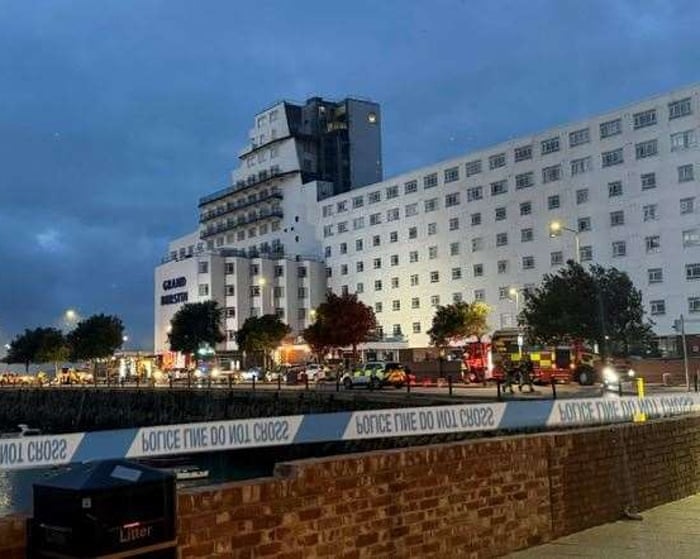
A large fire broke out early Saturday morning at the Grand Burstin hotel in Folkestone, Kent, leading to the evacuation of about 280 people. Emergency services worked through the night to control the fire, and no injuries have been reported so far.
Key Facts
The fire started just after 1 a.m. in the basement of the Grand Burstin hotel.
Around 280 people were evacuated safely from the hotel.
Emergency teams sent 26 fire engines to fight the fire initially; 10 remained on site later to finish the job.
A welfare center was set up by the local council at Three Hills Sports Park to support those affected.
The cause of the fire is still unknown.
No injuries related to the fire have been reported.
Residents nearby were advised to keep windows and doors closed and avoid the area.
Police and fire services managed traffic and safety during the emergency response.
Read the Original
Want the full story? Tap a source to open the original
article.
Nigerian security forces shot at protesters who were upset about the deaths of 37 miners. The miners died while in detention after a raid on an illegal mining site by a paramilitary group.
Key Facts
37 miners died while held in detention in Nigeria.
These deaths followed a raid on a suspected illegal mine.
The raid was conducted by a Nigerian paramilitary agency.
Protests erupted as people were angry about the miners' deaths.
Nigerian security forces responded by firing at the protesters.
The incident took place within Nigeria.
The protest was specifically about the treatment and deaths of detained miners.
Read the Original
Want the full story? Tap a source to open the original
article.
A pregnant woman named Vani Garcia learned during her 20-week ultrasound scan that her unborn son might be born without hands. After further tests, doctors found that an amniotic band had stopped the development of his left hand, but her son William is now thriving at age 2 despite his limb difference.
Key Facts
The 20-week anatomy scan checks a baby’s major organs and development.
During Garcia’s scan, a doctor said her son might be born without hands.
A second ultrasound showed William had a right hand, confirmed by hospital tests.
Amniocentesis, a procedure taking fluid from the womb, showed no genetic cause.
An amniotic band wrapped around William’s left hand area during development, stopping blood flow and growth.
The CDC estimates limb differences occur in about one in every 1,852 babies in the U.S.
William has some wrist bone and partial hand digits without bones.
He is learning to use his left hand and doing regular kid activities like puzzles and playing.
Read the Original
Want the full story? Tap a source to open the original
article.
Millions of people in Cuba lost electricity due to a major blackout caused by a transmission fault and bad weather. This is the sixth big blackout this year, made worse by old power systems, fuel shortages, and U.S. sanctions blocking oil imports to Cuba.
Key Facts
Cuba’s entire electricity grid shut down on Friday, causing a nationwide power outage.
Some essential places like hospitals and water stations in Havana had power back by late evening.
The blackout happened around 2 p.m. local time because of a problem in the power lines and bad weather.
Cuba has had at least six big blackouts this year due to weak infrastructure and fuel problems.
U.S. sanctions including an oil blockade have made fuel shortages worse for Cuba.
Power restoration has started but may take several days for full recovery.
The blackouts are leading to protests in Cuba, where protests are usually banned.
Cuba blames U.S. sanctions under President Trump for its energy crisis, while the U.S. says Cuba mismanages its resources.
Read the Original
Want the full story? Tap a source to open the original
article.
Michael Marra has been chosen as the new leader of the Scottish Labour Party. He takes over from Anas Sarwar, who left the Scottish Parliament to work in Andy Burnham’s government.
Key Facts
Michael Marra is now the leader of Scottish Labour.
He replaces Anas Sarwar as party leader.
Anas Sarwar left his Scottish Parliament position.
Sarwar joined Andy Burnham’s government.
The Scottish Labour Party is part of the UK’s Labour political party system.
Andy Burnham holds a government role, related to England’s political leadership.
Read the Original
Want the full story? Tap a source to open the original
article.
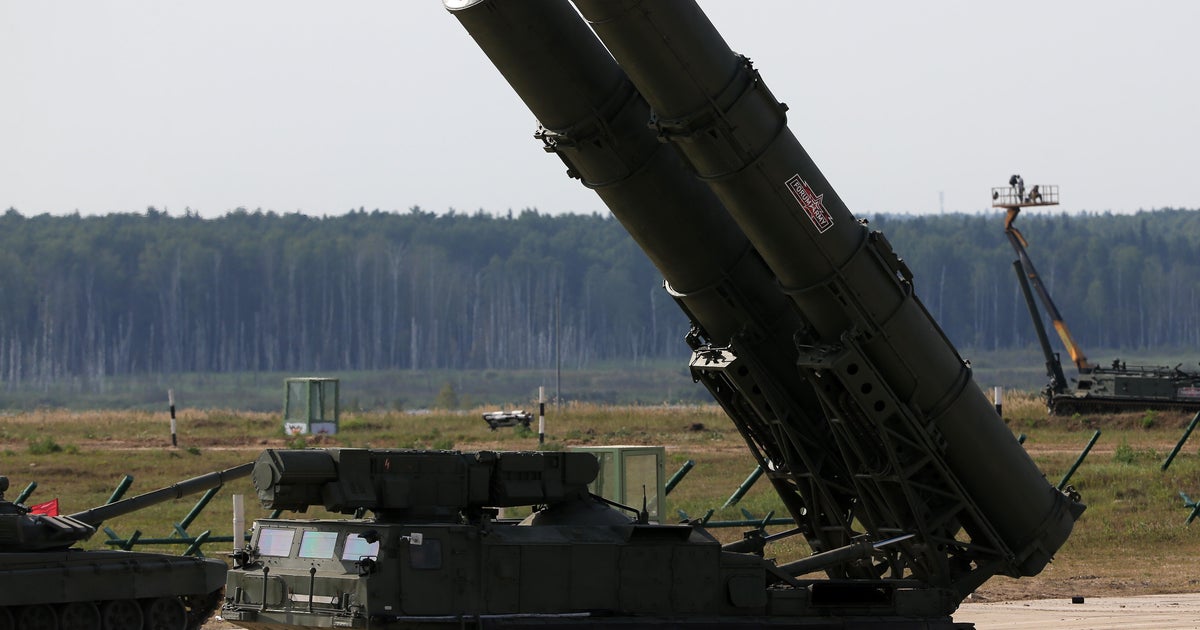
The U.S. State Department approved a potential $2.7 billion sale of air defense equipment to Ukraine, including missiles, radars, and launchers. The purchase needs congressional approval and would be funded partly by European contributions and U.S. military aid.
Key Facts
The sale is for air defense upgrades and related equipment for Ukraine.
Ukraine requested items like S-300 Clone missiles, GAM-67 missiles, and counter-drone radars.
The total value of the sale is approximately $2.68 billion.
Funding would come from European contributions and U.S. Foreign Military Financing.
Congress must review and approve the sale before it is finalized.
Ukraine’s capital, Kyiv, is facing increased Russian attacks and shortages in ammunition.
President Trump signed a sanctions bill targeting Russia’s energy and defense sectors.
Russia warned of "military deterrence" in response to new sanctions against it.
Read the Original
Want the full story? Tap a source to open the original
article.