Young people in India recently protested strongly against the government, focusing their anger mainly on Prime Minister Narendra Modi rather than any individual minister. Their protests challenged the image Modi’s government has built and expressed deep frustration with the government’s power and a sense of humiliation, sparked by a controversial remark from India’s chief justice about unemployed youth.
Key Facts
Indian youth led a large protest that forced Education Minister Dharmendra Pradhan to resign.
The main target of the protest was Prime Minister Narendra Modi, not the minister.
Protesters used simple, handmade signs showing individual voices rather than organized slogans.
The protests challenged Modi’s long-standing public image and authority.
The movement was fueled by outrage over a remark by the chief justice comparing unemployed youth to "cockroaches."
A scandal involving the NEET exams became a focus for demanding government accountability.
The government appeared unaware of the growing unrest beneath society’s surface.
Mainstream media and political elites were focused on praising India’s progress and global role during this time.
Read the Original
Want the full story? Tap a source to open the original
article.
Russia’s main security agency, the FSB, has charged Pavel Durov, the founder of the Telegram app, with helping terrorism and placed him on an international wanted list. The agency claims Telegram did not remove channels used by groups they label as terrorists and extremists in Russia, while Durov says the charges are false and aimed at limiting free speech.
Key Facts
Pavel Durov is the founder of the messaging app Telegram.
Russia’s Federal Security Service (FSB) accused Durov of aiding terrorism.
The FSB says Telegram hosts channels used by Ukrainian intelligence and extremist groups for sabotage and crimes.
Durov was put on an international wanted list by Russia.
Telegram is one of the most popular messaging apps in Russia.
Durov stated that Russian authorities opened a criminal investigation against him.
He claims the investigation is based on made-up reasons to limit privacy and free speech.
Russia continues to restrict access to Telegram as part of its actions.
Read the Original
Want the full story? Tap a source to open the original
article.
Israeli Prime Minister Benjamin Netanyahu made a quiet visit to the White House, which shows his more complex relationship with U.S. President Donald Trump. Diplomats Jeffrey Feltman and Michael Ratney discussed this on Al Jazeera’s program ‘This is America.’
Key Facts
Benjamin Netanyahu visited the White House in a low-profile way.
His visit reflects a more complicated relationship with President Trump.
Jeffrey Feltman and Michael Ratney are diplomats commenting on this situation.
The discussion appeared on Al Jazeera’s show called ‘This is America.’
The article suggests Netanyahu avoided a public or dramatic moment like Ukrainian President Zelenskyy had with Trump.
Netanyahu’s approach may indicate caution or a change in diplomatic relations.
The information is based on diplomatic observations, not official statements.
Read the Original
Want the full story? Tap a source to open the original
article.
A large wildfire in southwestern France has burned about 42,000 hectares but is currently under control after a calm night. Authorities warn that hot and dry weather could still create fire risks, and about 2,750 firefighters are working to manage the situation.
Key Facts
The wildfire is in the Gironde region of southwest France and has burned roughly 42,000 hectares.
After a quiet second night, the fire remains stable with no increase in the area burned.
Around 2,750 firefighters are involved in fighting the wildfire.
Authorities evacuated 4,000 people from tourist areas along the Atlantic coast as a safety measure.
A heatwave alert (orange level) was issued for 16 departments in the region.
The European Union says wildfire responses must improve due to accelerating climate change, focusing on prevention and better forest management.
About 90% of wildfires are caused by human activities like campfires or discarded cigarettes.
Weather conditions including rising temperatures and dry winds remain unfavorable for containing the fire fully.
Read the Original
Want the full story? Tap a source to open the original
article.
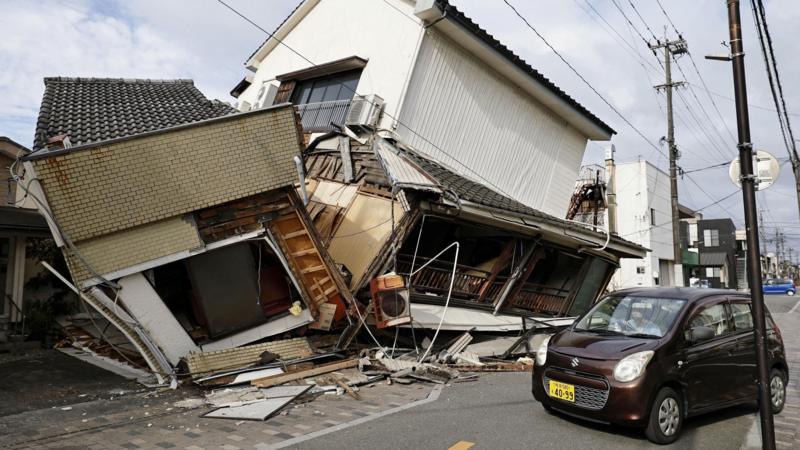
A powerful 6.8 magnitude earthquake hit Japan's Kyushu island on Tuesday, killing at least 13 people. Rescue teams are working quickly to find others trapped under rubble as thousands of people have had to leave their homes.
Key Facts
The earthquake measured 6.8 in magnitude.
It occurred on Kyushu island in Japan.
At least 13 people died because of the quake.
Many people are still missing after the disaster.
Thousands of residents have been forced to evacuate their homes.
Rescue workers are trying to save those trapped under debris.
Officials expect the death toll to rise.
The event happened recently, with ongoing rescue efforts.
Read the Original
Want the full story? Tap a source to open the original
article.
A strong earthquake with a magnitude of 6.8 struck Kumamoto prefecture in Japan, causing at least 13 deaths and damage to buildings, including a shopping mall and historic sites. Rescue teams are working to find people trapped and restore services, while aftershocks continue to worry residents.
Key Facts
The earthquake hit Kumamoto, a region with previous quakes, but this one was stronger than recent ones.
At least 13 people have died, including three in a large shopping mall where some are still trapped.
Authorities deployed 4,600 personnel to help with rescue and recovery efforts.
Tens of thousands of people lost power and water after the earthquake.
Historic sites such as Kumamoto Castle and Yatsushiro Shrine were damaged or destroyed.
Many residents reported heavy property damage and fear of more aftershocks.
Emergency teams are urgently working through the night to monitor and respond to the damage.
Officials warned the public to stay alert for possible additional earthquakes following this event.
Read the Original
Want the full story? Tap a source to open the original
article.
Ukrainian President Volodymyr Zelenskyy continues to secure strong international support, including meetings with UK and US leaders and military aid. However, he faces domestic challenges in Ukraine, including ongoing protests after the dismissal of popular defense minister Mykhailo Fedorov, who was known for modernizing the military.
Key Facts
Zelenskyy met UK’s Andy Burnham, who confirmed the UK’s continuing support for Ukraine.
Zelenskyy had a positive meeting with President Donald Trump in Washington, D.C., after attending Senator Lindsey Graham’s funeral.
The US Senate advanced a broad bill imposing sanctions on Russia.
Zelenskyy has successfully secured hundreds of billions in military, financial, and humanitarian aid from multiple countries.
Ukraine faces daily protests following the dismissal of Defense Minister Mykhailo Fedorov.
Fedorov, 35, was known for modernizing Ukraine’s military, increasing troop pay, reforming contracts, and fighting corruption.
Fedorov used data-driven technology and coordinated with Elon Musk to disrupt Russian communications on the battlefield.
Fedorov’s approach contrasts with the older, more traditional military leadership style in Ukraine.
Read the Original
Want the full story? Tap a source to open the original
article.
Iran’s military fired multiple ballistic missiles at U.S. bases in the Middle East, but all were intercepted by U.S. forces. The attacks happened as President Donald Trump met with Israeli Prime Minister Benjamin Netanyahu at the White House.
Key Facts
Iran’s Islamic Revolutionary Guard Corps launched several ballistic missiles targeting U.S. forces in the Middle East.
All missiles were intercepted, and U.S. forces remain alert and prepared.
The attacks included missile interceptions over Jordan, where a U.S. airbase and command center were targeted.
Iran stated the attacks are a response to continued threats and actions by the U.S. against its interests.
The missile strikes occurred while President Trump met Israeli Prime Minister Netanyahu, who supports strong actions against Iran.
Iran’s attack is seen as a message to be included in talks about regional issues, such as alleged Iranian nuclear facility construction.
Oil prices rose sharply after the announcement of the missile attacks.
The Strait of Hormuz remains a point of tension, with Iran controlling shipping routes and rejecting joint management proposals from Oman.
Read the Original
Want the full story? Tap a source to open the original
article.
A small group of Israeli settlers has been crossing into southern Syria to try to claim land for new Jewish settlements. These settlers, called the Pioneers of Bashan, want to establish homes in Syrian territory near the Golan Heights, a region Israel has controlled since 1967. The Israeli military is trying to stop these incursions while the group claims historical and security reasons for their actions.
Key Facts
The Israeli military found Jewish settlers crossing into southern Syria and stopped before attacking because they were not militants.
The settlers belong to a group called the Pioneers of Bashan, named after a biblical region that includes parts of modern Syria.
The group aims to set up Jewish settlements in southwestern Syria, around Quneitra, Daraa, and Sweida provinces.
Southern Syria includes a "buffer zone" that Israel declared in December 2024 after conflict in Syria.
The Golan Heights were captured by Israel from Syria in the 1967 war and later annexed, though most of the world does not recognize this.
The settlers argue their presence could help protect the Golan Heights and support the Druze minority after violent clashes in the area last year.
The Israeli military regularly tries to stop these settlers from entering Syria.
The broader Israeli settlement movement has strong support from Israel’s far-right government.
Read the Original
Want the full story? Tap a source to open the original
article.
A small number of families have returned to a village in southern Lebanon called Zawtar al-Gharbieh after an agreement between Israel and Lebanon. This deal involves Israel pulling back from some areas in exchange for the disarmament of Hezbollah, a militant group backed by Iran. Many homes in the village are damaged or destroyed, and Hezbollah opposes the agreement and ongoing talks between Israel and Lebanon.
Key Facts
Mahasen Faqih and her husband recently returned to their damaged home in Zawtar al-Gharbieh, southern Lebanon.
The village is part of a U.S.-brokered “pilot zones” deal where Israel agreed to withdraw in exchange for Hezbollah’s disarmament.
About 15 families have returned so far, out of roughly 500 homes in the village.
Nearly half the homes in the village have been destroyed, with many others damaged.
Hezbollah strongly opposes the deal and the talks between Israel and Lebanon.
The latest Israel-Hezbollah war started on March 2, 2026, after Hezbollah fired rockets into Israel.
Israel invaded southern Lebanon and occupied several villages along the border during the conflict.
Israeli forces are supposed to withdraw from certain areas, but some zones had little or no Israeli troops present before the agreement.
Read the Original
Want the full story? Tap a source to open the original
article.
Jordan’s military said it intercepted and destroyed five missiles launched from Iran early on Wednesday. The U.S. military reported it also shot down Iranian missiles targeting American forces and coordinated with Saudi Arabia to attack militia sites in Iraq linked to Iran.
Key Facts
Jordan’s air defenses intercepted five missiles launched from Iran.
The Jordanian military did not report any casualties from the missile attack.
The U.S. military knocked down a missile barrage launched by Iran targeting American forces.
The U.S. Central Command said all Iranian missiles against U.S. forces were intercepted.
The U.S. worked with Saudi Arabia to strike sites in Iraq used by Tehran-backed militias.
These attacks ended a brief pause in fighting in the region.
The missiles were connected to ongoing tensions involving Iran and its allied groups in Iraq.
Read the Original
Want the full story? Tap a source to open the original
article.
China’s coastguard and civilian ships have increased patrols east of Taiwan, an area they have not frequently entered before. This move appears to be part of China's efforts to surround Taiwan and assert control over waters it claims, raising concerns about a possible strategy to isolate Taiwan from trade and outside help.
Key Facts
China’s Maritime Safety Administration and coastguard conducted several patrols and law enforcement operations east of Taiwan in June and July.
These patrols mark the first time China has frequently operated east of Taiwan rather than just in the Taiwan Strait.
Taiwan’s government reported that Chinese patrols included asking commercial ships about their origins and destinations.
There was an increase in Chinese maritime activity around Taiwan and nearby islands, from 30 sightings in May to 55 in June.
China claims Taiwan as part of its territory and extends this claim to Taiwan’s exclusive economic zone (EEZ), which reaches 200 nautical miles from its coast.
China’s actions respond partly to Japan and the Philippines discussing maritime boundaries, which China views as infringing on its claims.
Experts describe these moves as part of a "grey zone" strategy designed to pressure Taiwan without open conflict.
China says its patrols are legal actions to protect its territorial sovereignty and maintain regional maritime order.
Read the Original
Want the full story? Tap a source to open the original
article.
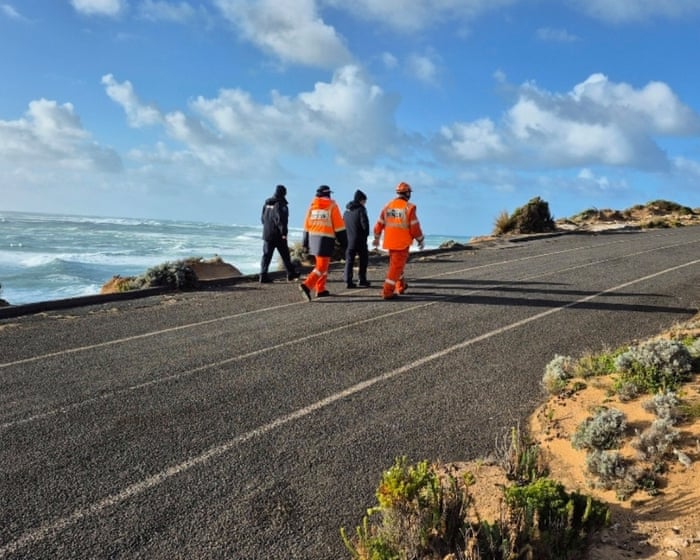
South Australian police are investigating the deaths of a mother and her toddler daughter as a murder-suicide after their bodies were found in the ocean near Port Macdonnell. A three-month-old baby boy, also missing, has not been found despite ongoing search efforts, and police have lost hope of finding him alive.
Key Facts
The bodies of Helena Wright, 36, and her 23-month-old daughter were found in the ocean west of Port Macdonnell.
Their vehicle was found abandoned with the engine running on Monday morning.
Helena Wright and her children had been missing since Monday.
Police are investigating the case as a murder-suicide based on current evidence.
Land and sea searches near Cape Northumberland have not located the missing three-month-old boy.
Search conditions were difficult due to weather, limiting water-based operations.
The South Australian premier expressed sorrow, highlighting the impact on the community.
The case is now with the coroner to determine cause and details of the deaths.
Read the Original
Want the full story? Tap a source to open the original
article.
A 7.1-magnitude earthquake hit Japan’s Kyushu island, causing significant damage. The death toll has risen to 13, and rescuers are still working to save people trapped by the destruction.
Key Facts
The earthquake measured 7.1 on the magnitude scale.
It struck Kyushu, an island in Japan.
At least 13 people have died from the earthquake so far.
Rescue teams are still searching for survivors.
The quake caused major damage to buildings and infrastructure.
Japan’s Prime Minister has acknowledged ongoing rescue efforts.
Read the Original
Want the full story? Tap a source to open the original
article.
Beavers have been born in the wild at Glen Affric in the Scottish Highlands for the first time in over 400 years. These new baby beavers, called kits, appeared after several adult beavers were released in the area as part of a conservation project.
Key Facts
At least two beaver kits were born at Loch Beinn a Mheadhoin in Glen Affric.
Seven beavers were released in October and a family of four in February.
Beavers disappeared from Scotland over 400 years ago.
Beavers were first reintroduced to Scotland in 2009.
The project involves Trees for Life and Forestry and Land Scotland, managing Glen Affric.
The released beavers were moved under license from farmland in Tayside.
The beaver kits likely hatched in May or June and recently emerged from their lodge.
This reintroduction follows the Scottish government's National Beaver Strategy aimed at restoring beavers responsibly.
Read the Original
Want the full story? Tap a source to open the original
article.
A community group in Cambridge is collecting unpicked blackberries to provide free food to low-income families. They plan to give out recipe boxes with measured ingredients and instructions to help people use the blackberries.
Key Facts
The group is called Cambridge Sustainable Food.
They want to send blackberry recipe boxes to 50 households in Cambridge.
The recipe boxes include recipe cards and pre-measured ingredients.
The goal is to prevent blackberries from going to waste.
The boxes will be distributed through the Cambridge Food Hub.
Alex Vardill is a representative of the organization.
The project aims to help families who have less money to buy food.
Read the Original
Want the full story? Tap a source to open the original
article.
Activists protested at a hotel in Washington, DC, while Israeli Prime Minister Benjamin Netanyahu was having dinner. They shouted slogans accusing him of committing genocide.
Key Facts
The protest took place inside or near a hotel in Washington, DC.
Israeli Prime Minister Benjamin Netanyahu was dining at the hotel during the protest.
Protesters shouted slogans including "Bibi, Bibi, you can’t hide! You’re committing genocide!"
The protest was directed specifically at Netanyahu, sometimes called "Bibi," his nickname.
The demonstration expressed anger and opposition to Netanyahu’s actions or policies.
The event happened in the U.S. capital, a place where international leaders often meet.
The protest was focused on Israel and its government’s conduct.
Read the Original
Want the full story? Tap a source to open the original
article.
Amelia Dimoldenberg, creator of the popular YouTube show Chicken Shop Date, says she would not invite Prime Minister Andy Burnham onto her show but would like to have a conversation with him about youth unemployment. She highlights the importance of training and apprenticeships for young people and is actively involved in running a free summer course to help young people gain experience in creative industries.
Key Facts
Amelia Dimoldenberg is known for her YouTube series Chicken Shop Date, featuring deadpan humor and awkward flirting.
She would not invite Prime Minister Andy Burnham on her show but is open to talking with him about tackling youth unemployment.
Burnham plans to work with content creators to spread his message.
Dimoldenberg runs the Dimz Inc. Academy, a free summer course offering paid work placements and mentoring for people aged 18-24.
The course is expanding from one week to four weeks this year.
She created Chicken Shop Date after starting in a youth club and wants to help young people get work experience in media.
Dimoldenberg sees youth not in employment, education, or training (NEETs) as a serious problem.
She also hosts other media projects, including Passenger Princess and red carpet interviews.
Read the Original
Want the full story? Tap a source to open the original
article.
Thousands of people seeking safety in the Sudanese city of el-Obeid face new dangers as paramilitary Rapid Support Forces (RSF) prepare to attack the army-held city amid ongoing civil war. The city is overcrowded with displaced people, food and water shortages are growing, and aid deliveries have been disrupted by continued fighting and drone strikes.
Key Facts
El-Obeid is controlled by the Sudanese army but is threatened by advancing RSF paramilitary fighters.
The city has become a refuge for over 83,000 civilians fleeing violence in other parts of North Kordofan state.
The main displacement camp in el-Obeid has expanded significantly since March, with about 80 to 100 new households arriving daily.
RSF has launched frequent drone strikes on el-Obeid, damaging critical infrastructure like fuel stations, power stations, and supply warehouses.
Food and water shortages affect nearly 400,000 people around el-Obeid due to blocked supply routes and attacks on aid convoys.
The UN and G7 have warned of possible RSF attacks similar to a deadly massacre that occurred in el-Fasher last October.
Aid agencies report that some relief flights and convoys are no longer able to reach el-Obeid because of the conflict.
Although drone strikes have recently slowed, the situation remains unstable, with ongoing fuel shortages and unpredictability for residents and aid workers.
Read the Original
Want the full story? Tap a source to open the original
article.
Israeli settlers regularly attack Palestinian homes in the West Bank village of al-Mughayyir, causing fear and tension among residents. Israeli soldiers are often present during these events but do not always stop the settlers, leading to accusations of support for the attacks. These clashes are part of a larger conflict over land control in the occupied West Bank.
Key Facts
Israeli settlers attack Palestinian homes in al-Mughayyir on a weekly basis.
The Abu Alia family’s home was attacked by settlers using clubs against their gate.
Both Israelis and Palestinians exchange insults during these confrontations.
Israeli soldiers and border police are present but often do not intervene to stop settlers.
Residents of the village try to protect themselves by blocking roads and calling for help.
Since 1967, Israel has built over 100 settlements in the West Bank, housing more than half a million Jews.
These settlements and unauthorized outposts are considered illegal under international law.
Israeli Prime Minister Benjamin Netanyahu described settler attackers as a few troubled youths, while Palestinians believe soldiers support the settlers.
Read the Original
Want the full story? Tap a source to open the original
article.