Thousands of people seeking safety in the Sudanese city of el-Obeid face new dangers as paramilitary Rapid Support Forces (RSF) prepare to attack the army-held city amid ongoing civil war. The city is overcrowded with displaced people, food and water shortages are growing, and aid deliveries have been disrupted by continued fighting and drone strikes.
Key Facts
El-Obeid is controlled by the Sudanese army but is threatened by advancing RSF paramilitary fighters.
The city has become a refuge for over 83,000 civilians fleeing violence in other parts of North Kordofan state.
The main displacement camp in el-Obeid has expanded significantly since March, with about 80 to 100 new households arriving daily.
RSF has launched frequent drone strikes on el-Obeid, damaging critical infrastructure like fuel stations, power stations, and supply warehouses.
Food and water shortages affect nearly 400,000 people around el-Obeid due to blocked supply routes and attacks on aid convoys.
The UN and G7 have warned of possible RSF attacks similar to a deadly massacre that occurred in el-Fasher last October.
Aid agencies report that some relief flights and convoys are no longer able to reach el-Obeid because of the conflict.
Although drone strikes have recently slowed, the situation remains unstable, with ongoing fuel shortages and unpredictability for residents and aid workers.
Read the Original
Want the full story? Tap a source to open the original
article.
Israeli settlers regularly attack Palestinian homes in the West Bank village of al-Mughayyir, causing fear and tension among residents. Israeli soldiers are often present during these events but do not always stop the settlers, leading to accusations of support for the attacks. These clashes are part of a larger conflict over land control in the occupied West Bank.
Key Facts
Israeli settlers attack Palestinian homes in al-Mughayyir on a weekly basis.
The Abu Alia family’s home was attacked by settlers using clubs against their gate.
Both Israelis and Palestinians exchange insults during these confrontations.
Israeli soldiers and border police are present but often do not intervene to stop settlers.
Residents of the village try to protect themselves by blocking roads and calling for help.
Since 1967, Israel has built over 100 settlements in the West Bank, housing more than half a million Jews.
These settlements and unauthorized outposts are considered illegal under international law.
Israeli Prime Minister Benjamin Netanyahu described settler attackers as a few troubled youths, while Palestinians believe soldiers support the settlers.
Read the Original
Want the full story? Tap a source to open the original
article.
Four women have accused actor and musician Jared Leto of sexual misconduct when they were teenagers. The allegations include sexual assault, statutory rape, grooming, and inappropriate behavior, with the incidents said to have happened between 2002 and 2016.
Key Facts
Four women allege criminal sexual conduct by Jared Leto occurring when they were between 14 and 19 years old.
One woman says she was sexually assaulted in a motel bathroom at age 17.
Another woman says Leto threatened her with sexual assault at age 19 when left alone with him in a hotel.
One accuser claims to have had underage sex with Leto at age 17, which would be statutory rape in California.
A fourth woman reports being groomed through explicit phone calls starting at age 16 and was sent a non-disclosure agreement which she refused to sign.
In total, 10 women spoke to the BBC, with nine sharing their stories publicly for the first time.
Several accounts have been supported by friends, family, photos, and messages.
Two men who worked with Leto said staff felt uncomfortable about his interactions with teenage girls.
Jared Leto has not responded to the allegations.
Leto is a well-known actor and the frontman of the band Thirty Seconds to Mars, which is touring Europe and the UK next spring.
Allegations about Leto’s behavior have circulated online for many years, with more than 120 claims noted by the BBC.
Read the Original
Want the full story? Tap a source to open the original
article.
A new BBC documentary features multiple women who say that Hollywood actor Jared Leto behaved in a sexually inappropriate way toward them when they were teenagers. The documentary includes serious and upsetting content and aims to inform viewers about these allegations.
Key Facts
The documentary is called *Jared Leto: Hollywood's Dark Secret*.
It was first shown on July 29, 2026.
Several women told the BBC they experienced sexual misconduct by Jared Leto.
All the reported incidents involved the women when they were teenagers.
The program contains strong language and upsetting scenes.
The BBC provides information and support resources related to the issues covered.
The documentary is available to watch for over a year on the BBC iPlayer.
The documentary includes audio description and sign language options.
Read the Original
Want the full story? Tap a source to open the original
article.
A massive wildfire in southwest France’s Gironde region has forced over 220,000 people to evacuate their homes. The fire covers an area much larger than Paris and continues to spread despite efforts from multiple countries to control it.
Key Facts
The wildfire is one of Europe’s largest evacuations since World War II.
More than 220,000 people were ordered to leave their homes in the Gironde region.
The fire area is about four times the size of Paris.
Evacuees include families, pets, and people from several towns and villages.
Authorities use urgent mobile phone alerts to warn residents to evacuate.
The fire has turned into a self-feeding firestorm, creating lightning that starts new fires.
Evacuations paused briefly but restarted as the fire flared again.
Tens of thousands have also evacuated from wildfires in nearby Spain.
Read the Original
Want the full story? Tap a source to open the original
article.
President Donald Trump and Israeli Prime Minister Benjamin Netanyahu met at the White House. This was their first meeting since the war involving Iran began. While they appeared united publicly, there may be differences in their plans for Iran, Gaza, and the surrounding region.
Key Facts
President Trump and Prime Minister Netanyahu met at the White House.
It was their first meeting since the start of the war involving Iran.
Both leaders showed a public display of unity during the meeting.
There are indications they might not agree on future actions regarding Iran.
They may also differ on how to handle the situation in Gaza.
The meeting involved discussions about the wider Middle East region.
Netanyahu was making his seventh visit to the White House with President Trump.
Read the Original
Want the full story? Tap a source to open the original
article.
The United States and Saudi Arabia launched precise airstrikes in eastern Iraq targeting groups backed by Iran’s Islamic Revolutionary Guard Corps (IRGC) following attacks on U.S. and Saudi targets. These actions occurred shortly after President Donald Trump met with Israeli Prime Minister Benjamin Netanyahu to discuss concerns over Iran’s regional activities and nuclear ambitions.
Key Facts
The U.S. and Saudi Arabia conducted strikes on Iran-aligned militant sites in Iraq directed by the IRGC.
CENTCOM reported over 600 attempted attacks by IRGC-backed forces against U.S. personnel and facilities in Iraq from February to April.
Iran’s IRGC fired multiple ballistic missiles at U.S. bases in the Middle East; all missiles were intercepted.
The strikes followed failed IRGC-directed drone attacks on U.S. and Saudi infrastructure within 72 hours.
CENTCOM warned Iran to stop attacks or face more military action.
President Trump hosted Israeli Prime Minister Netanyahu to discuss Iran, including its nuclear program and regional threats.
Netanyahu expressed a shared commitment with Trump to prevent Iran from acquiring nuclear weapons.
The military actions highlight ongoing tensions despite broader diplomatic efforts involving Iran.
Read the Original
Want the full story? Tap a source to open the original
article.
Wildfires have become more severe in Europe and North America, burning larger areas and causing more damage. However, the total amount of global fire activity and related emissions have decreased, mainly because Africa and Asia are managing fires better and using different farming methods.
Key Facts
Europe and North America are experiencing bigger and more intense wildfires than before.
Spain recorded its largest wildfire ever, covering over 193 square miles (500 square kilometers).
Wildfire damage in the US and Canada this summer is about 25% higher than the average of the last 10 years.
Smoke from wildfires has caused unhealthy air quality across large parts of North America.
Global fire emissions are at a record low, measured by satellites over the past 25 years.
Africa and Asia have reduced fire activity significantly through better fire control and changes in agriculture.
Around 75% of emissions from burning plant material worldwide come from Africa and Asia.
Changes in population and land use have helped lower the number of fires in Africa and Asia.
Read the Original
Want the full story? Tap a source to open the original
article.
A man died in a landslide at a gold mine on Guadalcanal island in the Solomon Islands. Rescue teams found his body and are still searching to see if others are trapped after the land collapsed near the mine’s access road.
Key Facts
The landslide happened at an open pit gold mine owned by Gold Ridge Mining Limited.
The site is on Guadalcanal, the largest island in the Solomon Islands.
The man recovered was named Ashley Olo; it is unclear if he worked at the mine.
Police are continuing to search in case others are buried under the landslide.
The slip covered 100 meters on the road leading to the mine pit.
Officials do not yet know what caused the landslide.
The mine is majority owned by the Chinese company Wanguo Gold Group since 2019.
There have been conflicts in the past between local landowners, illegal miners, and police at the site.
Read the Original
Want the full story? Tap a source to open the original
article.
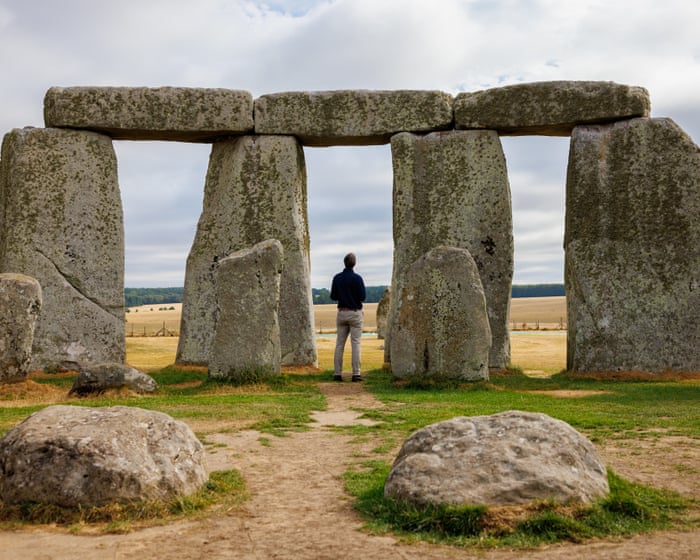
English Heritage is offering a special chance for visitors to Stonehenge to spend 20 minutes alone inside the stone circle during August. Usually, visitors can only view the stones from behind ropes, but one person each day will be selected by a lottery to enter the monument alone.
Key Facts
Stonehenge is normally crowded with many visitors and is surrounded by ropes to keep people from entering the circle.
In August, people who buy tickets are entered into a draw to win 20 minutes alone inside the stones.
This is the first time since admission charges started 125 years ago that such solitude is offered.
Visitors in the circle must not touch or lean on the stones.
The area is quiet with natural sounds like birds and sheep, but nearby traffic can be heard softly.
Staff members appreciate quiet moments inside the circle after busy days or during night shifts.
At solstice events, many people enter the circle together for free, but it is noisy and crowded.
The only other way to get alone time is by paying a high price for a private “explorer tour.”
Read the Original
Want the full story? Tap a source to open the original
article.
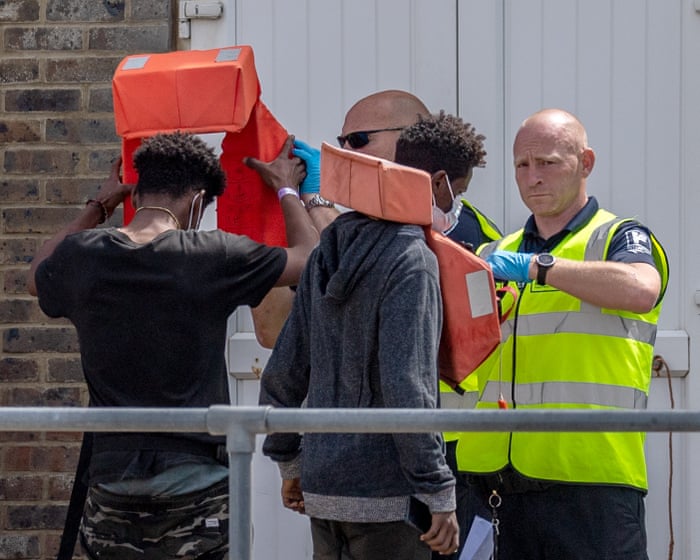
Rights groups and children’s charities warn that the UK government’s plan to use AI facial age-detection technology for migrants may wrongly classify children as adults. This could expose vulnerable children, especially those from African countries, to adult detention and unsafe living conditions.
Key Facts
The UK government plans to use facial age-estimation AI to check the ages of arriving migrants.
Rights groups say the technology is flawed and can incorrectly identify children as adults.
Black children from conflict zones like Sudan and Somalia are particularly at risk.
The Home Office admits the AI system could have an error margin of up to 30 months.
Over 755 children were mistakenly treated as adults on arrival in 2025, according to official data.
The AI system was developed by Cognitec, a German facial recognition company.
Investigations found the system tends to overestimate the ages of minors from sub-Saharan Africa.
Experts warn trauma and harsh journeys can make children look older, affecting AI accuracy.
Read the Original
Want the full story? Tap a source to open the original
article.
A new report shows that antisemitic incidents increased the most in the UK last year compared to other countries with large Jewish communities outside Israel. The year 2025 was also the deadliest for Jews living outside Israel in over 30 years, with several violent attacks reported in different countries.
Key Facts
The UK had the biggest rise in reported antisemitic incidents in 2025 among seven countries with large Jewish populations outside Israel.
Antisemitic incidents increased by 136% across these seven countries since 2022, and violent attacks rose by 97%.
The seven countries studied are Argentina, Australia, Canada, France, Germany, the UK, and the US, home to over 90% of Jews outside Israel.
In 2025, 20 people were killed in antisemitic attacks, the highest number since 1994.
Major attacks included shootings in Manchester (UK), Bondi Beach in Sydney (Australia), and Washington DC (USA).
The report highlights concerns about social media and artificial intelligence helping spread antisemitic hate and radicalizing individuals.
Governments have different approaches to fighting antisemitism, ranging from tougher laws to better education.
UK and international officials emphasize the need for calm and clear action to reduce antisemitic hatred.
Read the Original
Want the full story? Tap a source to open the original
article.
The U.S. military intercepted missiles launched by Iran targeting American troops in Jordan. This missile attack happened during Israeli Prime Minister Netanyahu’s visit to the White House and after a five-day break in ongoing conflict.
Key Facts
Iran fired multiple missiles toward U.S. forces stationed in Jordan.
The U.S. military successfully intercepted these missiles.
The attack occurred during Israeli Prime Minister Benjamin Netanyahu’s visit to Washington, D.C.
There had been a five-day pause in fighting before the missile strike.
The incident is part of a larger ongoing conflict involving Iran, the U.S., and regional players.
The location of the attack was Jordan, a country neighboring Israel and Syria.
The U.S. military continues to protect its personnel in the region from missile threats.
Al Jazeera reported on the event with coverage from Tehran.
Read the Original
Want the full story? Tap a source to open the original
article.
The United States and Saudi Arabia launched air strikes in Iraq targeting Iran-backed militant groups accused of recent drone attacks. In response, Iran's Revolutionary Guards said they stopped three oil tankers in the Strait of Hormuz, while tensions in the region increased, causing oil prices to rise.
Key Facts
US and Saudi warplanes hit Iran-backed militants in Iraq after multiple drone attacks.
The strikes targeted groups linked to Iran's Islamic Revolutionary Guard Corps (IRGC).
Iraq’s Popular Mobilisation Forces reported several killed and wounded in the attacks.
Iran’s Revolutionary Guards stopped three oil tankers in the Strait of Hormuz for violating warnings.
The US military intercepted missiles launched from Iran during this period of heightened tension.
Iran is set to receive Chinese shoulder-launched air defense missiles soon to strengthen its defenses.
Oil prices rose by over 3% in early trading after these military events in the Middle East.
Saudi Arabia confirmed its involvement, targeting militias connected to attacks on Saudi oil facilities.
Read the Original
Want the full story? Tap a source to open the original
article.
Israel carried out air strikes in Gaza, killing at least one Palestinian and injuring more than 12 people. The strikes destroyed a mosque and tents sheltering displaced Palestinians. Meanwhile, violence and land seizures by Israeli settlers have increased in the West Bank.
Key Facts
Israeli jets attacked Gaza, hitting the Al-Muttaqin Mosque and nearby areas.
One Palestinian was killed and at least 20 wounded in a separate strike at a busy market in the Nuseirat refugee camp.
Hundreds of displaced Palestinians had their tents destroyed in the attacks.
Israel’s security cabinet approved allowing some members of an International Stabilization Force into Gaza as part of a US-brokered ceasefire.
In the West Bank, Israeli settlers set fire to a Palestinian home near Bethlehem, causing eight people to flee.
Settlers also damaged a car and painted graffiti before setting the building on fire.
Israeli authorities have issued military orders to seize about 49 acres of land in the Jenin area for new military roads and settlements.
The seized land is intended for expanding roads serving new Israeli government-approved outposts.
Read the Original
Want the full story? Tap a source to open the original
article.
The U.S. and Saudi Arabia carried out airstrikes on groups in Iraq that are supported by Iran, targeting weapons and supply sites. These attacks came after several unsuccessful drone and missile attacks against U.S. and Saudi forces, amid ongoing tensions between the U.S. and Iran.
Key Facts
The U.S. Central Command said the strikes targeted "terrorist logistics and weapons sites" in eastern Iraq.
Saudi Arabia confirmed it conducted precise strikes, citing self-defense.
Over the past three days, more than 30 drone attacks were attempted on U.S. and Saudi targets, all unsuccessful.
The attacks are believed to be directed by Iran’s Islamic Revolutionary Guard Corps (IRGC).
Iran-backed Shiite militias in Iraq, such as Kata'ib Hezbollah, have been linked to previous attacks on U.S. forces.
The U.S. intercepted an attempted missile attack by Iran’s Revolutionary Guards earlier.
President Donald Trump mentioned ongoing talks with Iran but warned the U.S. would act militarily if no agreement is reached.
Iran is currently not seeking direct talks with the U.S., with disagreements over uranium enrichment and control of the Strait of Hormuz.
Read the Original
Want the full story? Tap a source to open the original
article.
A strong 7.1 magnitude earthquake struck the Kumamoto area on Japan's southern island of Kyushu, causing at least 13 deaths and damaging buildings, including a famous castle and a shopping mall. Rescue teams, including Japan’s Self Defense Forces, are searching for missing people and providing supplies to affected areas.
Key Facts
The earthquake happened late Tuesday afternoon in southwestern Japan.
13 people have died, and rescue operations are ongoing for missing individuals.
The second floor of the Aeon Mall in Kashima Town collapsed, trapping people.
A chimney fell at a paper factory, also trapping workers under debris.
Kumamoto Castle, a historic site, suffered damage including collapsed stone walls.
About 90 kilometers southwest of Tokyo, the earthquake caused injuries and damage to infrastructure.
Nearby nuclear power plants reported no safety problems.
Hospitals in Yatsushiro and Kumamoto cities are treating dozens of injured people.
Rail and airport operations were disrupted, including a train derailment and temporary airport closure.
Read the Original
Want the full story? Tap a source to open the original
article.
Saudi Arabia and the United States carried out airstrikes on Iran-backed armed groups in Iraq after drone attacks targeted Saudi oil facilities. Iraq has said it will investigate the attacks and stop its land from being used to launch attacks against other countries.
Key Facts
Saudi Arabia launched strikes on Iran-backed armed groups in Iraq with help from US Central Command.
The strikes responded to recent drone attacks on Saudi petroleum facilities in the Eastern Province and Riyadh.
Saudi air defenses intercepted and destroyed several drones that came from Iraqi territory.
Saudi Arabia said it does not want to escalate conflict but will defend itself against attacks.
Iraqi Prime Minister Ali al-Zaidi plans to visit Saudi Arabia after ordering investigations into the drone attacks.
Iraqi military stated it is committed to stopping attacks launched from Iraq against friendly nations.
The Islamic Resistance in Iraq, a group linked to Iran, denied involvement and warned Saudi Arabia against further actions.
Read the Original
Want the full story? Tap a source to open the original
article.
More than 938,000 Sudanese refugees have fled to eastern Chad since fighting began in Sudan in April 2023. Refugees living in camps face severe water shortages, making survival difficult as aid resources struggle to meet growing needs.
Key Facts
Around 50,000 Sudanese refugees live in Goudrane camp in eastern Chad.
Water tanks there had no water for four days until a truck brought 6,000 liters, which lasted only 10 minutes.
Refugees often survive on less than half the minimum daily water recommended by the UN refugee agency.
Violence by the Rapid Support Forces (RSF), a Sudanese paramilitary group, has forced many to flee.
Refugees report brutal attacks, including families being harmed and water supplies destroyed during the conflict.
Humanitarian groups like Solidarites International say current funding is not enough to provide safe water to all refugees.
Overcrowding and lack of sanitation facilities worsen the crisis in refugee camps in eastern Chad.
Medical staff warn that infections are hard to treat without access to clean water.
Read the Original
Want the full story? Tap a source to open the original
article.
New Delhi, India’s capital, has started a strong plan to switch most new vehicles to electric by 2027 to reduce air pollution. The city offers money incentives to buy electric vehicles (EVs) and scrap gas-powered ones, while also working to build more charging stations.
Key Facts
New Delhi wants most new vehicles registered from 2027 to be electric, focusing first on three-wheeled vehicles and small trucks, then two-wheelers.
About 5% of the city’s 8.7 million vehicles are currently electric, but EV registrations rose to over 100,000 last year.
The government plans to spend around $1.5 billion (150 billion rupees) on this effort.
Buyers can get up to 50,000 rupees ($522) for purchasing an EV and up to 100,000 rupees ($1,044) for scrapping old gas vehicles.
Delhi is one of the most polluted cities, and this policy aims to improve air quality.
Drivers say more charging stations are needed, especially for longer trips, since current battery ranges are limited.
The policy includes subsidies, tax waivers, and development of battery-swapping and charging stations.
The focus is on two- and three-wheelers which make up almost 70% of vehicles in the city.
Read the Original
Want the full story? Tap a source to open the original
article.