Greenpeace and McKenzie Intelligence Services found that Russia is intentionally damaging power lines supplying the Zaporizhzhia nuclear plant in Ukraine. They say Russia is blaming Ukraine for these attacks to hide the dangers caused by its occupation and war in the area.
Key Facts
Greenpeace warns Russia is sabotaging the Zaporizhzhia nuclear power plant’s electricity supply.
Russia blames Ukraine for the damage, but satellite evidence shows no Ukrainian attacks caused it.
Analysis by McKenzie Intelligence Services found damage inconsistent with artillery or drone strikes.
Satellite images showed damage already existed before the claimed Ukrainian drone strike on June 4.
The power line damaged, called Ferosplavna-1, is the plant’s only external electricity source.
The International Atomic Energy Agency (IAEA) stresses that stable power is needed to keep the plant safe.
Greenpeace says electricity is essential to operate safety systems like pumps that cool the nuclear fuel.
The damage and power loss create serious safety risks at the plant amid ongoing conflict.
Read the Original
Want the full story? Tap a source to open the original
article.
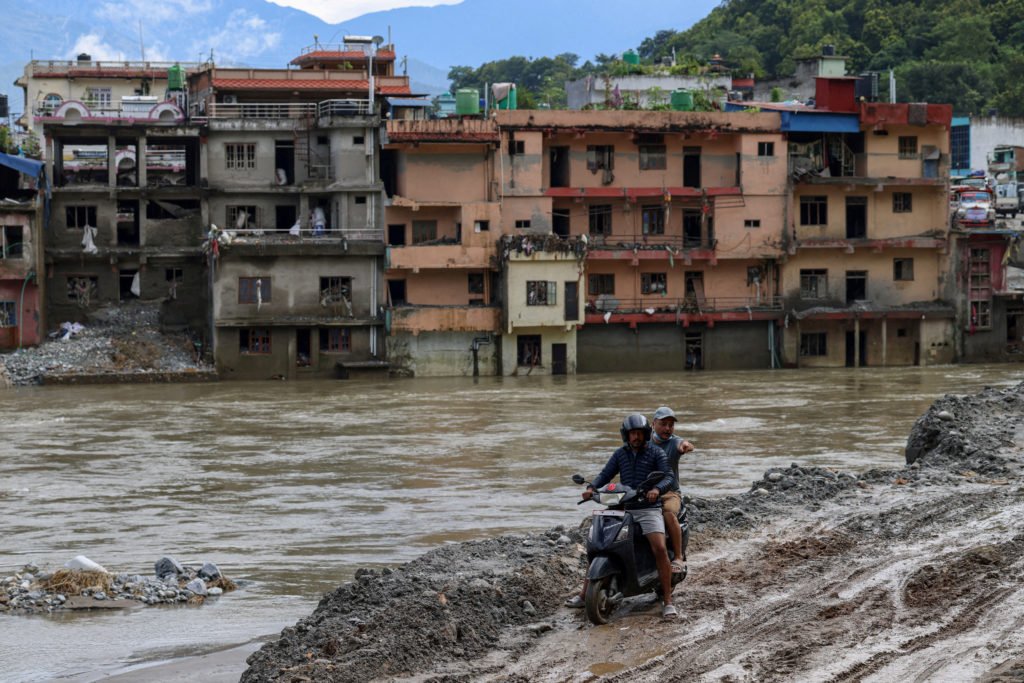
A large section of rock and glacier collapsed in Nepal last month, causing deadly flooding. A new report says climate change made this disaster more likely by warming the Himalayas, which thinned glaciers and thawed frozen ground, making the mountain slopes less stable.
Key Facts
The collapse happened on August 26 near Nepal’s border with China.
Over 1,300 people died and more than 5,000 are still missing.
Climate change warmed the Himalayas, causing glaciers to thin and thawing permafrost (permanently frozen ground).
Thawing permafrost weakens mountain slopes by creating cracks in ice and rock.
Glaciers in the area have been losing more than half a meter (about 1.6 feet) of thickness each year.
The Langtang Lirung glacier, near the disaster site, has retreated about 0.3 miles since the 1990s.
The 2015 Nepal earthquake may also have weakened the rock before the collapse.
The Himalayas hold the largest amount of snow and ice outside the polar regions and impact water supplies for billions of people.
Read the Original
Want the full story? Tap a source to open the original
article.
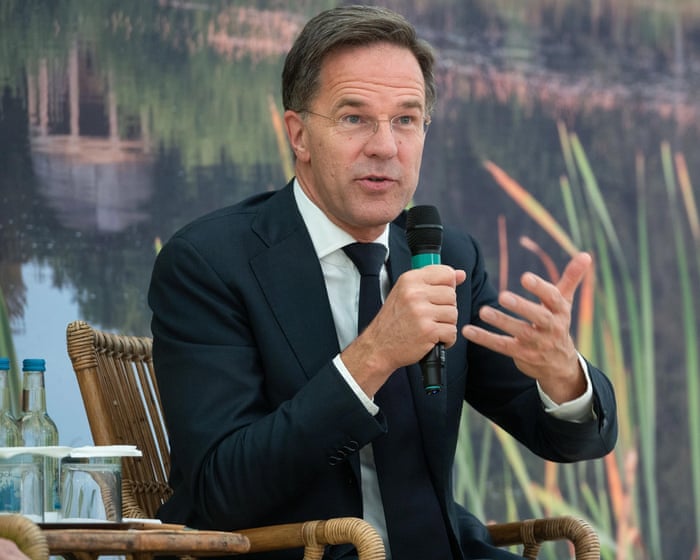
Nato’s secretary general, Mark Rutte, urged Britain to plan steady yearly increases in its defence budget to meet Nato’s target of spending 3.5% of GDP on the military by 2035. He highlighted the importance of a clear and credible plan for increasing defence spending gradually rather than waiting until the deadline.
Key Facts
Britain has agreed to increase its defence spending to 3.5% of GDP by around 2035 as part of Nato’s goals.
Currently, UK plans show defence spending plateauing at 2.7% of GDP until 2028/9, which is below the Nato target.
Mark Rutte stressed that the UK needs a clear and credible yearly plan to raise defence budgets, not just a last-minute increase.
Rutte met with UK defence and foreign ministers to discuss the defence spending goal.
The UK Labour leader, Keir Starmer, supports the 3.5% target, but there is uncertainty on how the UK will achieve it financially.
Former UK defence minister John Healey resigned partly because of disagreements over defence spending targets.
Nato faces complex security challenges, including the war in Ukraine and tensions in the Middle East.
Nato wants Europe, including the UK, to increase defence spending as the US reduces its military role in the alliance.
Read the Original
Want the full story? Tap a source to open the original
article.
A very strong El Niño event is expected this winter, which could influence U.S. weather patterns. The polar vortex, a large area of cold air around the poles, might cause short cold spells, but El Niño and other climate patterns will have a bigger impact on the overall winter weather.
Key Facts
El Niño is a warm phase of a climate pattern in the Pacific Ocean that affects weather worldwide.
The National Oceanic and Atmospheric Administration (NOAA) predicts a very strong El Niño this fall and winter, with a high chance it could be stronger than past events since 1950.
The polar vortex is a large area of cold air around the poles that strengthens in winter and can send cold air south to the U.S.
A strong polar vortex usually brings warmer conditions in the Northern Hemisphere but can still cause short cold spells.
The polar vortex forms in late summer and usually breaks down by mid-May.
The effects of the polar vortex on U.S. winter are less significant than those of El Niño and another Pacific pattern called the Pacific Decadal Oscillation.
If the polar vortex weakens in late winter, it might cause a short period of colder weather in the northern U.S.
Overall, the polar vortex does not usually set the long-term weather pattern during a strong El Niño winter.
Read the Original
Want the full story? Tap a source to open the original
article.
President Donald Trump said that the United States is making important progress in setting up an Army base in Poland. He added that the base location will be announced soon and described this move as an important step in the relationship between the U.S. and Poland.
Key Facts
President Trump announced progress on a U.S. Army base being established in Poland.
The exact location of the base will be revealed soon.
This base is part of the U.S.-Poland military alliance.
The announcement was made on President Trump’s social media platform, Truth Social.
President Trump called the leadership on this effort “bold.”
The base would be a new military presence for the U.S. in Poland.
Establishing the base is seen as a significant development in U.S.-Poland relations.
Read the Original
Want the full story? Tap a source to open the original
article.
Three people have died from malaria in a rare outbreak linked to Frankfurt Airport in Germany. The infections occurred in people who had not traveled to areas where malaria is common, likely from mosquitoes that arrived on planes or in luggage.
Key Facts
Three people died from malaria near Frankfurt Airport in Germany.
The infected individuals had not traveled to places where malaria usually occurs.
The malaria parasite is spread by mosquitoes, not directly from person to person.
Officials believe mosquitoes carrying malaria came on airplanes or in luggage.
Six airport workers caught malaria in July, with two dying.
Frankfurt Airport set traps to catch mosquitoes and sent them for testing in Belgium.
Health authorities advised local doctors to check for malaria in patients with fever.
Residents and airport workers are urged to seek medical help if they have symptoms like fever, chills, or breathing problems.
Read the Original
Want the full story? Tap a source to open the original
article.
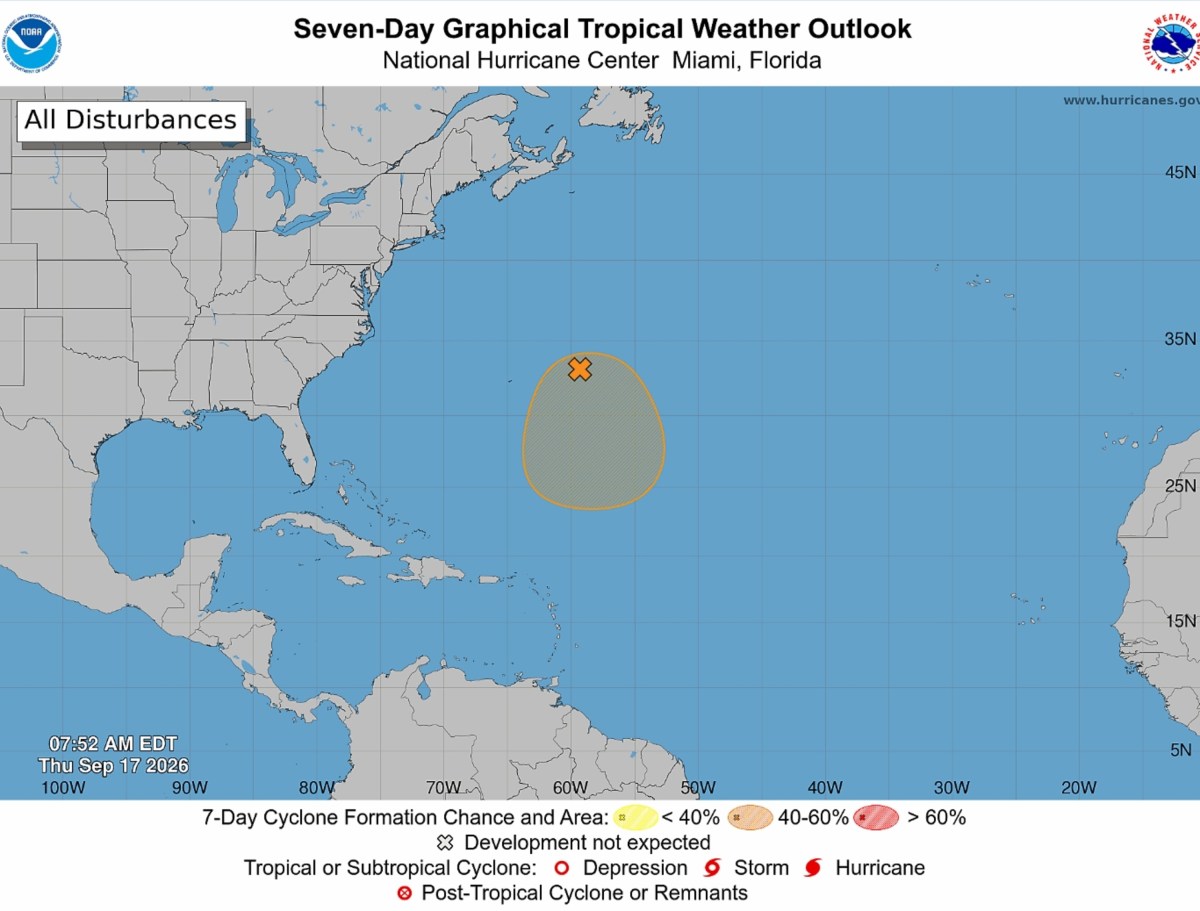
Weather experts warn that the first hurricane of the 2026 Atlantic season might form near Bermuda soon, ending the longest hurricane-free period since 1966. The El Niño climate pattern has helped keep the Atlantic season quiet so far by increasing wind shear, which prevents storms from growing.
Key Facts
The 2026 Atlantic hurricane season has gone the longest without a hurricane since satellite records began in 1966.
The Atlantic hurricane season runs from June 1 to November 30, with September usually being the most active month.
El Niño is a climate pattern causing warmer Pacific Ocean waters and weaker winds there, which can reduce hurricane activity in the Atlantic.
El Niño is expected to get stronger through the end of 2026, with a very high chance of becoming "very strong" in fall and winter.
A disturbance about 350 miles east of Bermuda could develop into the season’s first hurricane, possibly named Fay.
The National Hurricane Center estimates a 40% chance of this system forming into a tropical storm or hurricane within 2 to 7 days.
Bermuda residents are advised to monitor the situation, but the expected impact on the U.S. is low.
El Niño typically reduces the number of hurricane days in the Atlantic by about 60%.
Read the Original
Want the full story? Tap a source to open the original
article.
Earl Spencer, Princess Diana’s brother, claims King Charles sounded very happy when he called after Diana died in 1997, which Buckingham Palace denies. Earl Spencer’s new book makes several personal claims about Diana’s marriage and struggles, sparking a response from the palace and silence from Prince Harry’s representatives.
Key Facts
Earl Spencer says King Charles called him after Diana’s death sounding "like a lottery winner."
Buckingham Palace rejects the claim and says grief can affect how people remember events.
The book suggests Charles told his sons William and Harry about Diana’s death first thing that morning.
Diana and Charles divorced in August 1996, about a year before her death.
Earl Spencer says Diana’s marriage was troubled from early on, with Charles not being in love with her at the wedding.
The memoir claims Diana may have had ADHD and suffered from emotional pain when rejected or criticized.
Diana reportedly thought about suicide but was stopped by her love for her sons.
Prince Harry’s team has declined to comment on the book.
Read the Original
Want the full story? Tap a source to open the original
article.
Serbia has opened a new factory to put together advanced drones made in Israel. This factory will supply drones to Serbia’s military and other countries’ armed forces, with plans for more factories in Serbia in cooperation with Israeli companies.
Key Facts
Serbian President Aleksandar Vucic officially opened the drone assembly factory on Thursday.
The factory will employ about 100 workers and produce drones for Serbia and other countries.
The Israeli company involved is not officially named, but reports suggest it is Elbit Systems.
Serbia is not a NATO member but is building up its military to stay neutral and strong.
Arms exports from Serbia to Israel increased sharply from 1.4 million euros in 2023 to 42.3 million euros in 2024.
Journalists were not allowed to attend the opening due to the secret nature of the work.
United Nations officials have noted Serbia’s strong support for Israel despite global calls to limit weapons during the Gaza conflict.
Serbia plans to open at least three more factories with Israeli partners to produce drones.
Read the Original
Want the full story? Tap a source to open the original
article.
A small village in England called Piddington held a symbolic vote where most residents chose to leave the United Kingdom. The vote protested plans to house about 1,250 male asylum seekers at a nearby military site.
Key Facts
Piddington is a small English village with about 350 people.
The village held a symbolic referendum to "leave" the UK.
285 people voted to leave, and 26 voted to stay.
The voter turnout was very high, at 92%.
The vote has no legal power or official effect.
The protest is against plans to house 1,250 male asylum seekers less than one mile away from the village.
The asylum seekers are planned to be housed in a military site close to Piddington.
Read the Original
Want the full story? Tap a source to open the original
article.
This week, people who work with artificial intelligence shared worries about how fast AI technology is growing. Also, a statue of Lord Byron was placed back in London's Hyde Park, and a magazine borrowed from a US library was returned 132 years late.
Key Facts
AI experts expressed concern over the rapid development of artificial intelligence.
Lord Byron’s statue was reinstalled in Hyde Park, London.
A magazine taken from a US library was returned after 132 years.
The news covers various world events from the past seven days.
The article included a quiz on recent global happenings.
The quiz was created by Grace Dean and Ben Fell.
Related topics mentioned are film, television, women, and advertising.
Read the Original
Want the full story? Tap a source to open the original
article.
India has warned the U.S. that new tariffs on Russian oil could harm their relationship. The U.S. House of Representatives recently passed a bill to increase sanctions and tariffs targeting buyers of Russian oil to pressure Russia over its invasion of Ukraine.
Key Facts
The U.S. introduced new tariffs against countries buying Russian oil.
The sanctions aim to increase economic pressure on Russia for its invasion of Ukraine.
India expressed concern these tariffs might hurt India-U.S. relations.
The Indian government emphasized its need to protect energy security.
The U.S. House of Representatives approved this sanctions and tariff bill.
The tensions arise amid ongoing global disputes related to energy supplies and geopolitics.
Oil shipments through strategic locations like the Strait of Hormuz remain important for India.
India continues to import Russian oil despite the new U.S. measures.
Read the Original
Want the full story? Tap a source to open the original
article.
US officials recently met with Yemen's Houthi representatives in Oman after the Houthis took control of part of the Red Sea coast in a major attack. President Donald Trump has refused to give Saudi Arabia military help against the Houthis despite Saudi requests.
Key Facts
US officials met with Iran-backed Houthi representatives in Oman over the weekend.
The meeting came after the Houthis captured a strategic area along the Red Sea coast in Yemen.
The Houthi offensive defeated Saudi-backed Yemeni forces in that region.
The Houthis are a militia group supported by Iran.
Saudi Arabia asked the US for military support to fight the Houthis.
President Trump declined to support Saudi Arabia with military aid so far.
The conflict impacts key locations near the Strait of Hormuz, important for global oil and gas trade.
Read the Original
Want the full story? Tap a source to open the original
article.
The brother of Princess Diana, Earl Spencer, published a memoir claiming King Charles sounded very happy after Diana’s death and that Buckingham Palace wanted Diana’s sons to walk behind her coffin instead of Charles. The palace strongly denied these claims and said grief can affect memory.
Key Facts
Earl Spencer says King Charles sounded “giddily elated” in a phone call after Diana’s death.
Spencer believes the palace wanted William, Harry, and himself to walk behind Diana’s coffin to avoid public insults aimed at Charles.
The memoir alleges Charles once said they would “forget” Diana soon after her death.
Buckingham Palace denied the claims and called into question the accuracy due to grief.
Spencer suggests some palace members were pleased about Diana’s death and thought Charles would quickly marry Camilla.
Diana allegedly tried to end her engagement after finding a bracelet for Camilla.
Spencer writes that Charles’s behavior may have contributed to Diana’s eating disorder.
The book claims Diana planned to divorce Charles and said he was in love with his valet.
Read the Original
Want the full story? Tap a source to open the original
article.
Hezbollah says it needs to keep its weapons because of Israel’s occupation and attacks. Experts argue that simply giving more weapons to Lebanon’s army will not solve the problem without a political agreement that makes disarmament fair and lasting.
Key Facts
Hezbollah justifies keeping its weapons due to threats from Israel.
The Lebanese state’s military power alone cannot force Hezbollah to disarm.
There is no political agreement in Lebanon that would make disarmament acceptable to all sides.
Additional weapons and funding for the Lebanese Armed Forces might strengthen the army.
Political solutions are necessary for a lasting peace and disarmament to work.
Talks involving Lebanon and international figures are ongoing but face challenges.
The situation remains a stalemate, with no clear resolution soon.
Read the Original
Want the full story? Tap a source to open the original
article.
Dozens of Israelis protested outside the home of the filmmaker behind the film "NAZA," chanting strong slogans against them. At the same time, Palestinians living in the occupied West Bank are experiencing violent attacks by Israeli settlers and military operations.
Key Facts
The film "NAZA" has caused strong reactions in Israel.
Around dozens of Israelis gathered outside the filmmaker’s family home to protest.
Protesters chanted phrases including “death to traitors.”
Palestinians live in the West Bank area, which is occupied by Israel.
Palestinian communities are facing violent attacks called pogroms, carried out by Israeli settlers.
The Israeli military is also conducting raids in Palestinian areas of the West Bank.
Al Jazeera reporter Marah Rayan is covering these events.
Read the Original
Want the full story? Tap a source to open the original
article.
A ninth woman was found dead in the Ekurhuleni area near Johannesburg, South Africa, during a series of killings. The country’s gender equality commissioner said the violence against women is very severe and described it as if women are being actively targeted.
Key Facts
Nine women have recently been killed in Ekurhuleni, a region near Johannesburg, South Africa.
The killings are part of a larger wave of violence against women in the area.
Princess Eurika Mogane is the gender equality commissioner in South Africa.
She described the situation as feeling like a “war” on women.
She said women seem to be “hunted,” indicating targeted attacks.
This issue highlights a serious problem of femicide, which means the killing of women because of their gender.
Authorities and communities are concerned about the rising violence toward women.
Read the Original
Want the full story? Tap a source to open the original
article.
Tens of thousands of mostly Moroccan migrants crossed into Spain's North African city of Ceuta in July 2026, causing clashes and political tensions in Europe. This event has led European leaders to discuss stronger border controls and sparked debates about migration policies and political responses across the continent.
Key Facts
Over two days in July 2026, tens of thousands of migrants from Morocco entered Ceuta, a Spanish city in North Africa.
The situation led to clashes between migrants and police.
European leaders, including EU Commission President Ursula von der Leyen, proposed new measures to improve border management.
The incident caused diplomatic tensions, especially between Spain’s Socialist government and Italy’s far-right leader Giorgia Meloni.
Some European countries, like Germany, reinstated border checks following the event.
The far-right parties in Europe used the migration issue to gain support ahead of regional elections.
Some public figures, including Real Madrid football players, refused to participate in solidarity events over fears of sending an anti-migrant message.
The debate raises questions about European citizens’ attitudes toward migration and the needs of an aging population.
Read the Original
Want the full story? Tap a source to open the original
article.
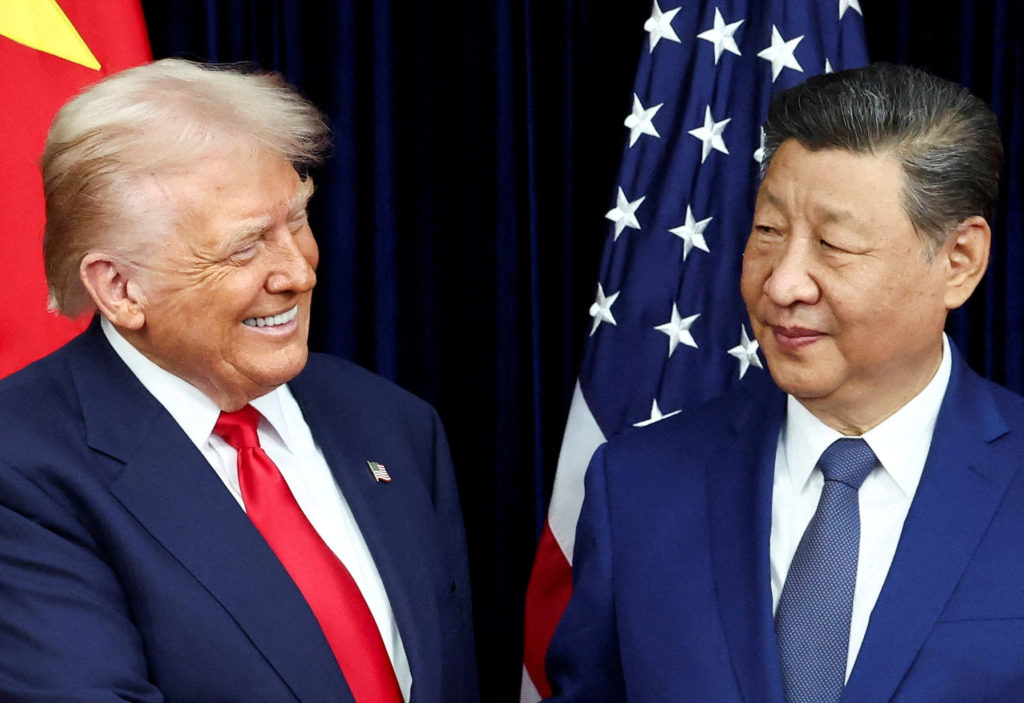
The United States and China are seen as key players in managing the risks of artificial intelligence (AI). However, both countries are cautious and wary of each other’s AI plans as they prepare to discuss AI safety in an upcoming meeting between President Donald Trump and Chinese leader Xi Jinping.
Key Facts
AI safety is a growing concern worldwide.
The U.S. and China are the leading countries influencing AI development.
Cooperation between the U.S. and China is considered important to properly manage AI risks.
President Donald Trump and Chinese leader Xi Jinping are scheduled to meet in Washington soon.
The meeting will include discussions about AI governance (rules and controls).
President Trump warned that regulating AI might benefit China more.
American tech leaders believe working with China is needed to avoid bad AI outcomes.
Any agreement from the meeting may be limited but could lead to more talks later.
Read the Original
Want the full story? Tap a source to open the original
article.
Brazil’s President Luiz Inacio Lula da Silva announced a 15% increase in welfare payments before the presidential election in October. The increase will raise the Bolsa Familia program’s minimum monthly benefit from 600 reais ($116) to 691 reais ($134) next month to help families deal with rising inflation.
Key Facts
Lula’s government announced a 15% rise in Bolsa Familia welfare payments starting next month.
The minimum monthly benefit will increase from 600 reais ($116) to 691 reais ($134).
The welfare program helps low-income families with monthly incomes under 218 reais ($42).
The increase aims to offset inflation, which rose 15.04% since March 2023.
The cost of the increase is expected to be 5.8 billion reais ($1.13 billion) in 2026 and 22 billion reais ($4.27 billion) in 2027.
Lula faces a tight election race against Flavio Bolsonaro, son of former President Jair Bolsonaro.
Brazil’s finance minister said the current budget can cover the increase without extra expenses.
The government is also considering a debt relief plan to help borrowers restart financially.
Read the Original
Want the full story? Tap a source to open the original
article.