US officials recently met with Yemen's Houthi representatives in Oman after the Houthis took control of part of the Red Sea coast in a major attack. President Donald Trump has refused to give Saudi Arabia military help against the Houthis despite Saudi requests.
Key Facts
US officials met with Iran-backed Houthi representatives in Oman over the weekend.
The meeting came after the Houthis captured a strategic area along the Red Sea coast in Yemen.
The Houthi offensive defeated Saudi-backed Yemeni forces in that region.
The Houthis are a militia group supported by Iran.
Saudi Arabia asked the US for military support to fight the Houthis.
President Trump declined to support Saudi Arabia with military aid so far.
The conflict impacts key locations near the Strait of Hormuz, important for global oil and gas trade.
Read the Original
Want the full story? Tap a source to open the original
article.
The brother of Princess Diana, Earl Spencer, published a memoir claiming King Charles sounded very happy after Diana’s death and that Buckingham Palace wanted Diana’s sons to walk behind her coffin instead of Charles. The palace strongly denied these claims and said grief can affect memory.
Key Facts
Earl Spencer says King Charles sounded “giddily elated” in a phone call after Diana’s death.
Spencer believes the palace wanted William, Harry, and himself to walk behind Diana’s coffin to avoid public insults aimed at Charles.
The memoir alleges Charles once said they would “forget” Diana soon after her death.
Buckingham Palace denied the claims and called into question the accuracy due to grief.
Spencer suggests some palace members were pleased about Diana’s death and thought Charles would quickly marry Camilla.
Diana allegedly tried to end her engagement after finding a bracelet for Camilla.
Spencer writes that Charles’s behavior may have contributed to Diana’s eating disorder.
The book claims Diana planned to divorce Charles and said he was in love with his valet.
Read the Original
Want the full story? Tap a source to open the original
article.
Hezbollah says it needs to keep its weapons because of Israel’s occupation and attacks. Experts argue that simply giving more weapons to Lebanon’s army will not solve the problem without a political agreement that makes disarmament fair and lasting.
Key Facts
Hezbollah justifies keeping its weapons due to threats from Israel.
The Lebanese state’s military power alone cannot force Hezbollah to disarm.
There is no political agreement in Lebanon that would make disarmament acceptable to all sides.
Additional weapons and funding for the Lebanese Armed Forces might strengthen the army.
Political solutions are necessary for a lasting peace and disarmament to work.
Talks involving Lebanon and international figures are ongoing but face challenges.
The situation remains a stalemate, with no clear resolution soon.
Read the Original
Want the full story? Tap a source to open the original
article.
Dozens of Israelis protested outside the home of the filmmaker behind the film "NAZA," chanting strong slogans against them. At the same time, Palestinians living in the occupied West Bank are experiencing violent attacks by Israeli settlers and military operations.
Key Facts
The film "NAZA" has caused strong reactions in Israel.
Around dozens of Israelis gathered outside the filmmaker’s family home to protest.
Protesters chanted phrases including “death to traitors.”
Palestinians live in the West Bank area, which is occupied by Israel.
Palestinian communities are facing violent attacks called pogroms, carried out by Israeli settlers.
The Israeli military is also conducting raids in Palestinian areas of the West Bank.
Al Jazeera reporter Marah Rayan is covering these events.
Read the Original
Want the full story? Tap a source to open the original
article.
A ninth woman was found dead in the Ekurhuleni area near Johannesburg, South Africa, during a series of killings. The country’s gender equality commissioner said the violence against women is very severe and described it as if women are being actively targeted.
Key Facts
Nine women have recently been killed in Ekurhuleni, a region near Johannesburg, South Africa.
The killings are part of a larger wave of violence against women in the area.
Princess Eurika Mogane is the gender equality commissioner in South Africa.
She described the situation as feeling like a “war” on women.
She said women seem to be “hunted,” indicating targeted attacks.
This issue highlights a serious problem of femicide, which means the killing of women because of their gender.
Authorities and communities are concerned about the rising violence toward women.
Read the Original
Want the full story? Tap a source to open the original
article.
Tens of thousands of mostly Moroccan migrants crossed into Spain's North African city of Ceuta in July 2026, causing clashes and political tensions in Europe. This event has led European leaders to discuss stronger border controls and sparked debates about migration policies and political responses across the continent.
Key Facts
Over two days in July 2026, tens of thousands of migrants from Morocco entered Ceuta, a Spanish city in North Africa.
The situation led to clashes between migrants and police.
European leaders, including EU Commission President Ursula von der Leyen, proposed new measures to improve border management.
The incident caused diplomatic tensions, especially between Spain’s Socialist government and Italy’s far-right leader Giorgia Meloni.
Some European countries, like Germany, reinstated border checks following the event.
The far-right parties in Europe used the migration issue to gain support ahead of regional elections.
Some public figures, including Real Madrid football players, refused to participate in solidarity events over fears of sending an anti-migrant message.
The debate raises questions about European citizens’ attitudes toward migration and the needs of an aging population.
Read the Original
Want the full story? Tap a source to open the original
article.
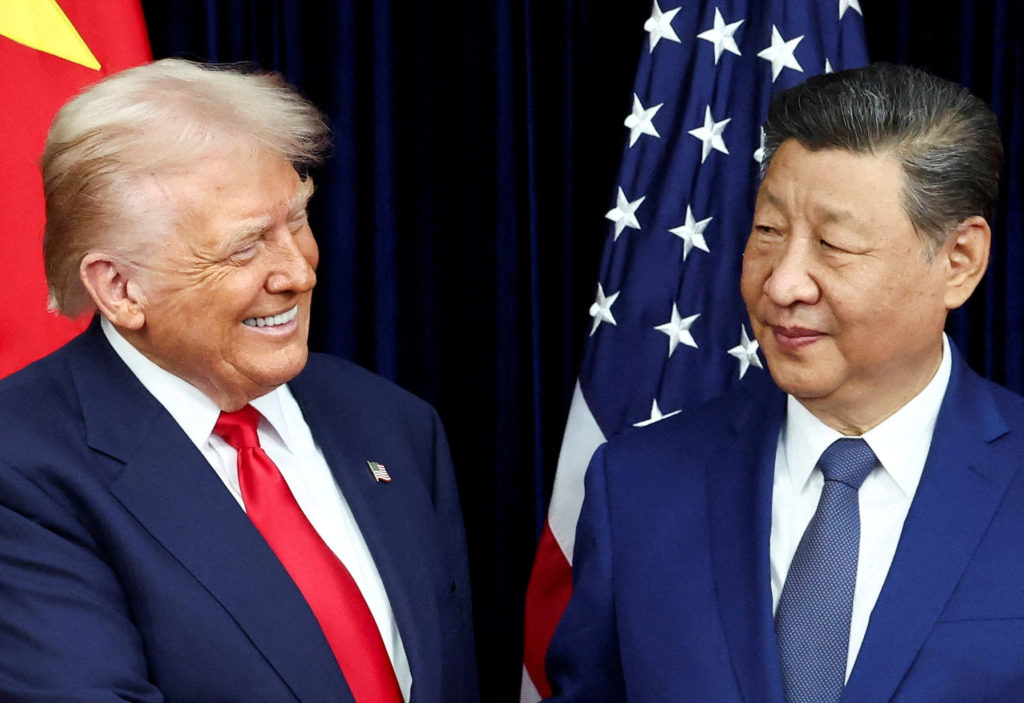
The United States and China are seen as key players in managing the risks of artificial intelligence (AI). However, both countries are cautious and wary of each other’s AI plans as they prepare to discuss AI safety in an upcoming meeting between President Donald Trump and Chinese leader Xi Jinping.
Key Facts
AI safety is a growing concern worldwide.
The U.S. and China are the leading countries influencing AI development.
Cooperation between the U.S. and China is considered important to properly manage AI risks.
President Donald Trump and Chinese leader Xi Jinping are scheduled to meet in Washington soon.
The meeting will include discussions about AI governance (rules and controls).
President Trump warned that regulating AI might benefit China more.
American tech leaders believe working with China is needed to avoid bad AI outcomes.
Any agreement from the meeting may be limited but could lead to more talks later.
Read the Original
Want the full story? Tap a source to open the original
article.
Brazil’s President Luiz Inacio Lula da Silva announced a 15% increase in welfare payments before the presidential election in October. The increase will raise the Bolsa Familia program’s minimum monthly benefit from 600 reais ($116) to 691 reais ($134) next month to help families deal with rising inflation.
Key Facts
Lula’s government announced a 15% rise in Bolsa Familia welfare payments starting next month.
The minimum monthly benefit will increase from 600 reais ($116) to 691 reais ($134).
The welfare program helps low-income families with monthly incomes under 218 reais ($42).
The increase aims to offset inflation, which rose 15.04% since March 2023.
The cost of the increase is expected to be 5.8 billion reais ($1.13 billion) in 2026 and 22 billion reais ($4.27 billion) in 2027.
Lula faces a tight election race against Flavio Bolsonaro, son of former President Jair Bolsonaro.
Brazil’s finance minister said the current budget can cover the increase without extra expenses.
The government is also considering a debt relief plan to help borrowers restart financially.
Read the Original
Want the full story? Tap a source to open the original
article.
Leaders from France, Lebanon, and Jordan met in Paris to seek international support for Lebanon’s army and discuss ending Israeli attacks. They also talked about creating a new peacekeeping force to replace the United Nations mission in southern Lebanon.
Key Facts
French President Emmanuel Macron hosted Lebanese President Joseph Aoun and Jordan’s King Abdullah II in Paris for talks.
The meeting aimed to support Lebanon’s military and strengthen the country’s control over its territory.
A June agreement between Israel and Lebanon, mediated by the US, did not stop Israeli attacks or force Israel to withdraw from southern Lebanon.
The talks included plans for a new international peacekeeping force to replace the UN’s Interim Force in Lebanon (UNIFIL) after its mission ends in 2026.
Lebanon’s President Aoun emphasized that only the Lebanese state should have weapons and highlighted the army’s role in maintaining stability.
The current Lebanese army is under-equipped and has struggled to disarm Hezbollah in southern Lebanon.
The meeting was joined by defense leaders from France, Lebanon, Jordan, the UK, Italy, the US, and Saudi Arabia.
France and Italy want to form a multinational group to succeed UNIFIL, which currently has about 7,500 peacekeepers from 46 countries.
Read the Original
Want the full story? Tap a source to open the original
article.
A 29-year-old man named Sultani Bakatash was sentenced to 14 years in jail for raping two 14-year-old girls in Bolton, Greater Manchester. He invited the girls to his flat, encouraged them to drink alcohol until they were very drunk, and then sexually assaulted them.
Key Facts
Sultani Bakatash met one of the girls on Snapchat before inviting both to his flat on December 6.
The girls drank vodka and Coke and became very intoxicated, passing in and out of consciousness.
Bakatash was found guilty of two counts of rape, one count of sexual assault, and one count of assault by penetration.
One girl escaped and alerted a neighbor during the assault.
Bakatash encouraged the girls to keep drinking while drinking only a small amount himself.
After the crimes, Bakatash fled but was arrested two days later at his brother’s house.
He has lived in the UK for two years with indefinite leave to remain and has family also living there.
The judge said Bakatash might not be deported because he worked with the British Army in Afghanistan before coming to the UK.
Read the Original
Want the full story? Tap a source to open the original
article.
NOAA (National Oceanic and Atmospheric Administration) has issued weather forecasts for the rest of 2026. These predictions aim to help people prepare for future weather conditions.
Key Facts
NOAA is a U.S. government agency that studies weather and climate.
The forecasts cover the whole year 2026.
Weather predictions include temperature, rainfall, and storms.
Such forecasts help farmers, businesses, and emergency services plan ahead.
The country shows different reactions to these weather predictions.
Accurate long-term weather forecasts are challenging but important for safety.
Read the Original
Want the full story? Tap a source to open the original
article.
New government forecasts show that the water level in Lake Mead could drop about 40 feet over the next two years, while Lake Powell’s water level may rise by a similar amount. This change happens as water is released from Lake Powell to supply Lake Mead and manage the Colorado River system that supports several U.S. states and parts of Mexico.
Key Facts
The Bureau of Reclamation’s study projects Lake Mead’s water level to fall to around 1,007 feet by July 2027, then fluctuate through 2028.
Lake Powell’s water level is projected to rise to about 3,542 feet in June 2027, with changes continuing into 2028.
Both lakes hit record low levels in August due to a very low snowpack in the Colorado River Basin during winter 2025-2026.
The Colorado River provides water for seven U.S. states and parts of Mexico, supporting cities, farms, wildlife, and hydropower.
In April 2026, the Bureau of Reclamation took actions to protect Lake Powell and Glen Canyon Dam to avoid operational problems and power generation issues.
Measures included releasing water from Flaming Gorge Reservoir and reducing the water released from Lake Powell to Lake Mead.
Water release from Lake Powell to Lake Mead is planned to be reduced from 7.48 million acre-feet to 6 million acre-feet through September 2026.
Lake Mead’s and Lake Powell’s water levels have been falling over the past 25 years, and one good snow year will not be enough for long-term recovery.
Read the Original
Want the full story? Tap a source to open the original
article.
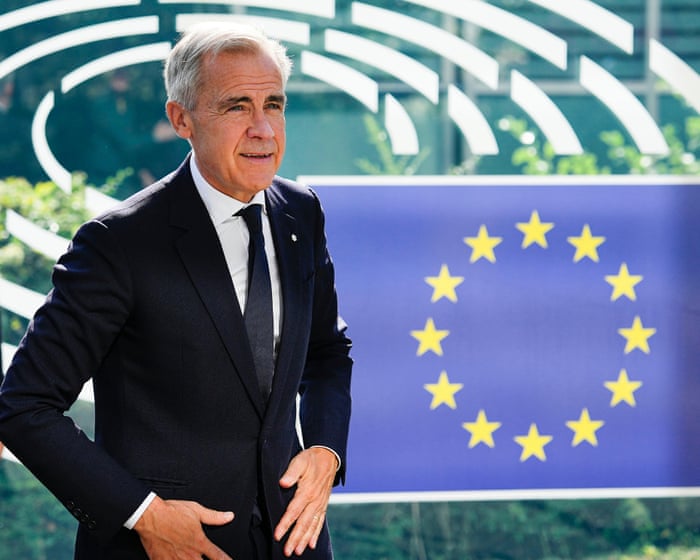
The European Union and Canada are exploring a close partnership just short of full EU membership, focusing on trade, defense, science, and shared values. Leaders from both sides see this as a way to strengthen cooperation amid challenges from global rivalries and changing international relations.
Key Facts
The EU president, Ursula von der Leyen, proposed Canada become the first country with a new status of close strategic partnership with the EU.
Canadian Prime Minister Mark Carney supports deep cooperation between Canada and the EU in many areas like trade, defense, space, and artificial intelligence.
This proposed partnership is not yet formalized in any treaty or agreement and would be complex to negotiate.
Negotiations are made difficult by the need to balance the interests of all 27 EU member countries.
The UK has struggled to define its post-Brexit relationship with the EU due to lack of trust and political challenges.
President Trump’s policies have strained relations with both Canada and the UK, including trade conflicts and rhetoric.
Canada aims to play a stronger global role through cooperation with the EU and other democracies, focusing on international law and alliances.
The proposed Canada-EU partnership reflects a shift to new global alignments amid US-China rivalry and changing world order.
Read the Original
Want the full story? Tap a source to open the original
article.
Millie Bobby Brown and her husband Jake Bongiovi have adopted a second child, expanding their family to four within a year of their first adoption. Brown has shared that adoption was always a part of her plan for motherhood, and the couple keeps their children's identities private to protect their privacy.
Key Facts
Millie Bobby Brown and Jake Bongiovi adopted their second child less than a year after their first adoption.
The couple has now built a family of four, two years after getting married.
They keep their children's names and faces private to shield them from public attention.
Brown has said that adoption was never a backup plan but a chosen way to become a mother.
Brown expressed that she imagined adoption from childhood and even “adopted” dolls as a child.
Studying social work influenced Brown’s interest in adoption because she learned about social workers helping children.
Brown also plans to have biological children in the future and sees adoption and biological parenthood as equally important.
The family was recently seen on vacation in Italy, where the newest adopted child appeared in a video.
Read the Original
Want the full story? Tap a source to open the original
article.
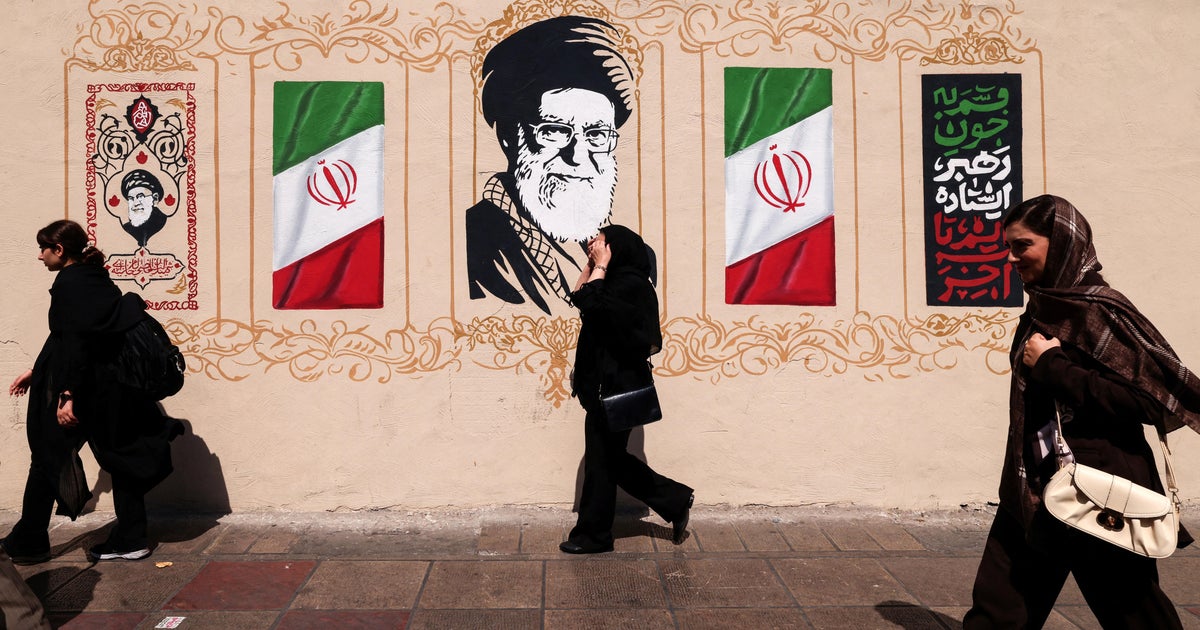
The United Nations fact-finding mission on Iran said there is reasonable evidence that the U.S. military committed war crimes during two airstrikes inside Iran. The mission also accused the Iranian government of committing crimes against humanity by harshly suppressing anti-government protests earlier in the year.
Key Facts
The UN fact-finding mission investigated two U.S. airstrikes inside Iran.
The mission found reasonable grounds to believe these strikes involved war crimes by the U.S. military.
The mission also studied Iran’s response to protests within the country.
Iran’s government was accused of crimes against humanity during its crackdown on protesters.
Crimes against humanity means serious attacks on people, like violence or repression, on a large scale.
The mission’s goal is to establish facts about violations of international law.
This report highlights concerns about actions by both the U.S. and Iran regarding human rights and international rules.
Read the Original
Want the full story? Tap a source to open the original
article.
King Charles of the United Kingdom met with leaders from major AI companies to discuss the risks of artificial intelligence if it is misused. He warned that AI could cause serious harm and urged the industry to focus on safety before the technology gets out of control.
Key Facts
King Charles hosted AI company leaders, including Nvidia, Google DeepMind, OpenAI, and Anthropic, at a summit in Scotland.
The king warned about the "existential dangers" of AI if it falls into the wrong hands.
He stressed the importance of keeping AI development safe and serving humanity.
Some experts, like Anthropic’s CEO, want to slow down AI development to avoid risks.
Pope Leo XIV also expressed concerns, saying AI should not reduce human value and should be "disarmed."
President Donald Trump has dismissed worries about AI as a "hoax."
The summit was meant to raise awareness but was not expected to result in binding rules.
There is a global debate over whether AI should regulate itself or be controlled by governments.
Read the Original
Want the full story? Tap a source to open the original
article.
A Ukrainian man, Illia Bilyk, admitted to spraying hateful graffiti on mosques in east London. This vandalism was connected to a Russian network involved in attacks against UK politician Sir Keir Starmer and aimed to spread hate and fear.
Key Facts
Illia Bilyk, 21, pleaded guilty at Thames Magistrates' Court to five charges of racially and religiously aggravated criminal damage.
The graffiti targeted mosques and Islamic centers in east London in January 2025.
Bilyk said he was recruited and directed by a Russian speaker through the messaging app Telegram and was paid for the attacks.
Earlier in 2025, two Ukrainians were jailed for arson attacks linked to the same Russian network targeting Sir Keir Starmer.
A Russian operative called EL organized these actions remotely via social media, including running a fake far-right group called Direct Action UK.
Images of Bilyk’s graffiti were shared in a Telegram group tied to that fake group.
A Russian diplomat, Evgeny Lyukshin, was identified as a key figure in the operation but did not respond to inquiries.
The incident caused distress among Muslim communities in London, and police have promised to tackle hate crimes firmly.
Read the Original
Want the full story? Tap a source to open the original
article.
Earl Spencer has made public claims against King Charles III. These claims have attracted attention in the UK and relate to matters involving the royal family.
Key Facts
Earl Spencer is the brother of the late Princess Diana.
He has made allegations concerning King Charles III.
The claims have been discussed publicly in the UK media.
The topic is connected to the UK royal family.
The controversy has appeared in news updates recently.
Earl Spencer has spoken out as a member of the royal family’s extended circle.
King Charles III is currently the monarch of the United Kingdom.
Read the Original
Want the full story? Tap a source to open the original
article.
Nato chief Mark Rutte said he believes the UK government understands the need to steadily increase defence spending to meet Nato’s target of 3.5% of GDP by 2035. He said the UK will take yearly steps towards the goal, but the exact plan will be decided after next year’s spending review.
Key Facts
Nato’s target is for member countries to spend 3.5% of their economy (GDP) on defence by 2035.
The UK government has committed to this target and plans to increase spending gradually every year.
The detailed plan on how to meet the target will be made next year during the spending review.
Former Dutch Prime Minister Mark Rutte, now Nato chief, encouraged members not to delay increasing defence funding.
British leaders have debated whether defence funding should come from cuts to social welfare programs.
Rutte said defence spending and welfare budgeting are separate issues and stressed the importance of economic growth to fund both.
Some UK politicians have pushed for an interim target of 3% of GDP on defence by 2030.
Rutte acknowledged the UK government faces tough choices but expressed confidence in their commitment.
Read the Original
Want the full story? Tap a source to open the original
article.
Iranian forces have reportedly shot down at least two American MQ-1 drones in recent days, according to U.S. officials. These drones are used for surveillance and sometimes for carrying missiles, but the exact details about where and which type were lost are not clear.
Key Facts
Iranian forces took down at least two U.S. MQ-1 unmanned aircraft recently.
It is unknown where these drones were shot down or which MQ-1 variant was involved.
The two main MQ-1 types are Predator (retired by the Air Force in 2018) and Gray Eagle (still used by the Army).
These drones mainly do surveillance but can also carry Hellfire missiles for strikes.
Drones operating near the Strait of Hormuz help monitor threats to U.S. forces and shipping.
Older MQ-1 Predators cost about $4 million each; newer Gray Eagles are more expensive.
Since the U.S. started its conflict with Iran, at least 24 MQ-9 drones and one MQ-4C Triton have been lost, costing hundreds of millions of dollars.
U.S. Central Command declined to comment on the drone losses.
Read the Original
Want the full story? Tap a source to open the original
article.