Ukrainian President Volodymyr Zelensky's plane was delayed from leaving Moldova due to a Russian drone entering Moldovan airspace. After confirming the drone had crashed far from the airport, Zelensky safely flew to Norway for King Harald V’s funeral and later visited Iceland and Canada.
Key Facts
Zelensky and his wife were on a plane in Chisinau, Moldova, preparing to fly to Oslo when a Russian drone entered Moldova’s airspace.
Moldovan authorities closed their airspace, delaying Zelensky's plane for about an hour.
The drone was confirmed to have crashed 160 km away in a village called Mihăăilenii Vechi.
Zelensky arrived safely in Oslo and met with Norwegian leaders about military aid.
Russian drones have increased attacks in Ukraine and nearby regions in recent weeks.
Ukraine used drones to attack gas processing plants deep inside Russia.
Russia has targeted Ukrainian petrol stations to disrupt military efforts.
Peace talks involving the US have been ongoing but have not ended the conflict.
Read the Original
Want the full story? Tap a source to open the original
article.
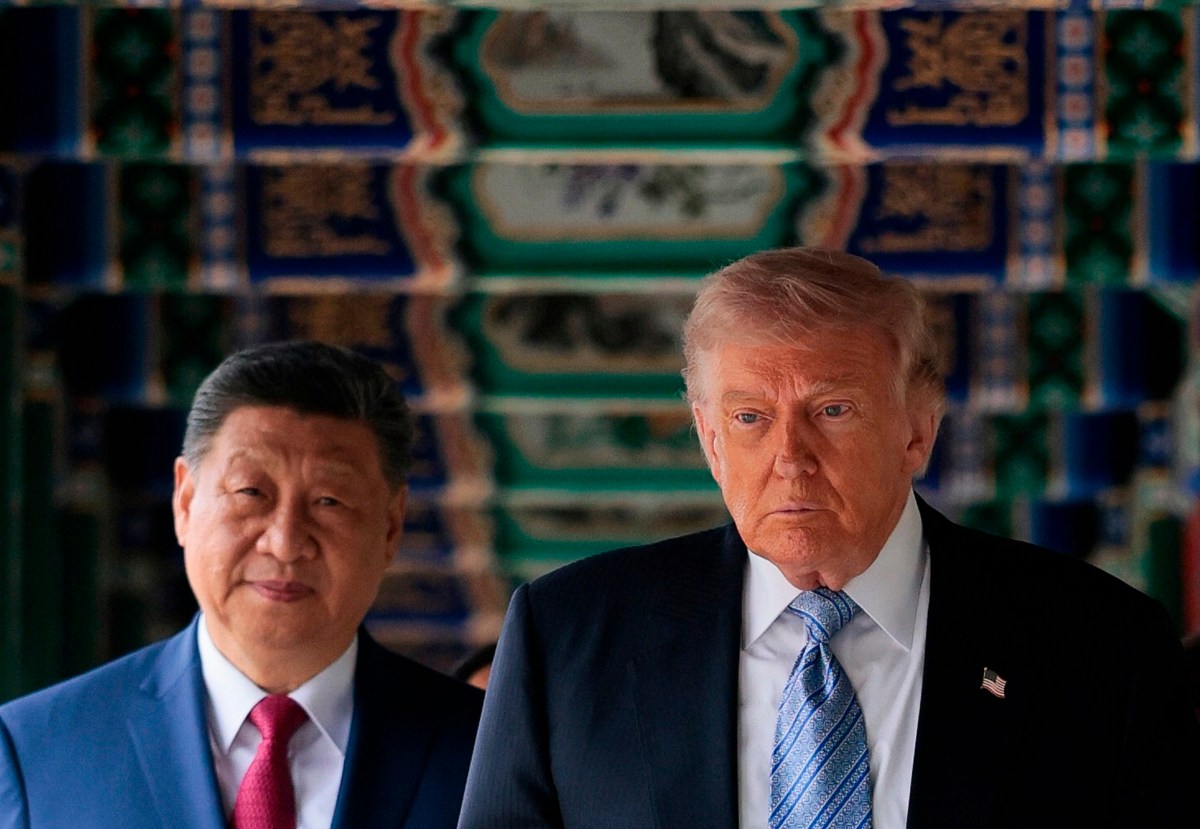
China and the United States hope to soon agree on lowering import taxes on $30 billion worth of goods from each country. This potential deal is expected to be discussed when President Donald Trump and Chinese leader Xi Jinping meet in Washington on September 24, aiming to stabilize trade relations.
Key Facts
China and the U.S. are working on reducing tariffs on $30 billion of goods on each side.
The leaders of both countries will meet on September 24 in Washington, their third meeting in a year.
The tariff reductions are part of setting up a new U.S.-China Board of Trade and Board of Investment.
Tariffs were raised sharply during a trade war initiated by the U.S., with China responding similarly.
The agreement targets cuts on “nonsensitive” goods with similar value traded both ways.
The current trade truce on tariffs will end on November 10, increasing the importance of talks.
U.S. exports to China could benefit more from the reductions than Chinese exports to the U.S.
Overall trade volume between the two countries has dropped since tariffs were implemented.
Read the Original
Want the full story? Tap a source to open the original
article.
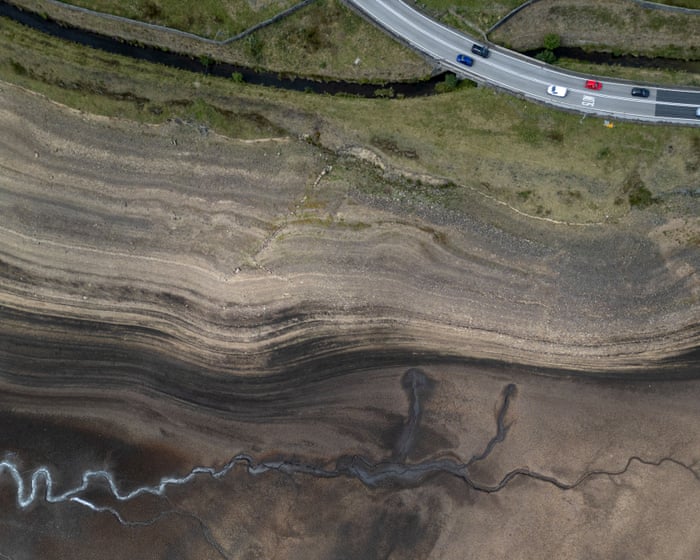
UK ministers are considering raising the price of water for some users because of serious water shortages caused by droughts and climate change. Officials say the current system lets large businesses pay too little for the water they use, and they want to change this to better manage the limited supply.
Key Facts
Nearly three-quarters of England and all of Wales are in drought, affecting 27 million people with water restrictions.
By 2055, England might face a shortage of 5 billion litres of water each day if changes are not made.
Big businesses, like oil refineries and paper mills, pay less the more water they use, unlike households who face rising water bills.
The government is reviewing how water licenses are priced and how water's value is calculated.
Datacentres are using millions of litres of drinking water daily, and their usage is expected to triple by 2030.
Water industry representatives say cheap water pricing leads to waste and poor management.
Environment Agency officials want to ensure water is priced fairly and used where it is most needed.
There is a call from environmental groups to overhaul water licensing to address drought and protect nature.
Read the Original
Want the full story? Tap a source to open the original
article.
The Pitt Rivers Museum in Oxford will return 39 human remains of the Naga people from north-eastern India after nearly 100 years. This return follows six years of discussions and is seen by the Naga community as a way to honor their ancestors and address colonial injustices.
Key Facts
The Pitt Rivers Museum held 39 pieces of Naga human remains, including skull parts and skin, for about 80 years.
These remains came from the Naga tribes who live in Nagaland, India, and parts of Myanmar.
The museum started checking its collection in 2020 to correct past wrongs and put the human remains into storage.
In November, a Naga group will visit Oxford for a ceremony to officially receive the remains.
The remains will be returned to Nagaland and buried in a traditional ceremony in Kohima, the state capital.
The repatriation talks began in 2020 after a Naga anthropologist contacted the museum.
The process involved many Naga tribes and community volunteers working together.
The museum acknowledged the colonial history involved in acquiring the remains and aims to give them a respectful home.
Read the Original
Want the full story? Tap a source to open the original
article.
Russian President Vladimir Putin is fully committed to his goals in Ukraine. He is expected to increase military actions to reach his aims because not doing so might threaten his position.
Key Facts
Putin is deeply involved in the conflict in Ukraine.
He may escalate, or intensify, military actions to achieve his goals.
The reason for escalation is to avoid losing power or facing serious consequences.
The situation in Ukraine is critical for Putin's leadership.
The article suggests that time and options for Putin are limited in this conflict.
Read the Original
Want the full story? Tap a source to open the original
article.
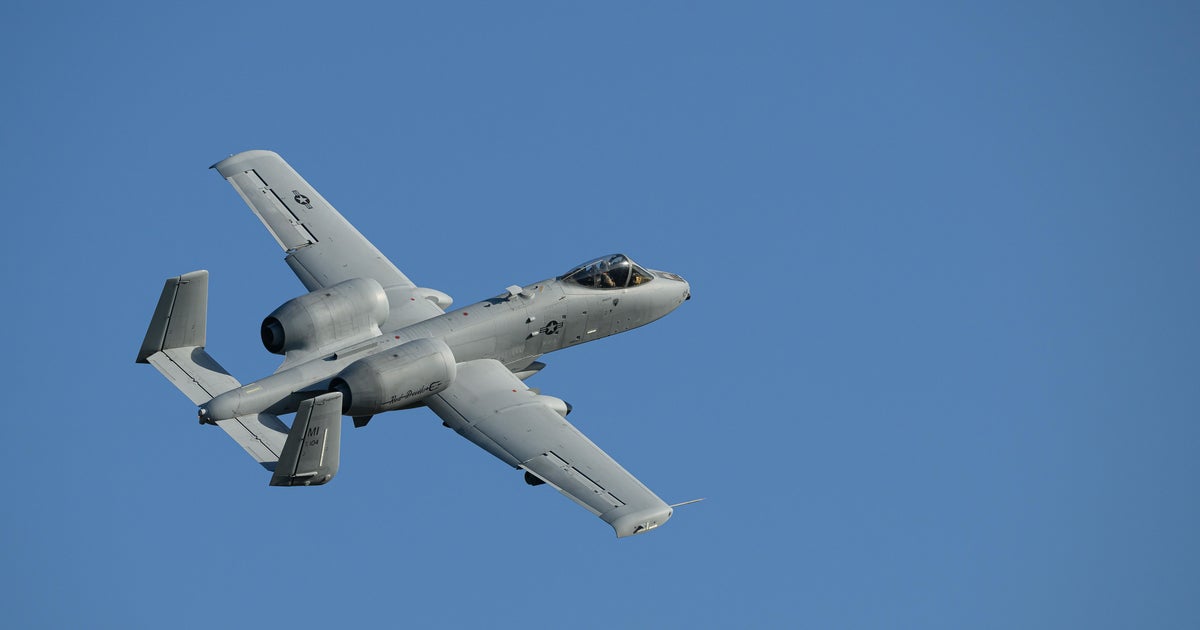
Iran launched attacks on a U.S. military base in Jordan, damaging multiple American aircraft, including one A-10 attack plane that lost a wing. These strikes followed U.S. attacks on Iranian-linked tankers, and no U.S. personnel were reported dead. President Trump said the conflict may end after the U.S. midterm elections but ruled out near-term negotiations with Iran.
Key Facts
Iranian forces attacked the Muwaffaq Salti Air Base in Jordan overnight, damaging several U.S. military aircraft.
One A-10 Thunderbolt attack plane was heavily damaged, losing a wing.
About eight F-15 fighter jets received light damage but were returned to service.
No U.S. casualties were reported from the strikes on the Jordanian base.
The attacks came after the U.S. struck five Iranian tankers in retaliation for Iran targeting a U.S. Navy warship.
More than 30 U.S. Patriot missile defenses were launched in response to Iranian strikes in Jordan.
President Trump stated the war might end right after the midterm elections and said he is not currently seeking talks with Iran.
Iran’s Islamic Revolutionary Guard Corps claimed it attacked eight tankers and two warships, including the base in Jordan.
Read the Original
Want the full story? Tap a source to open the original
article.
The U.S. has been conducting airstrikes and naval operations against suspected drug-trafficking boats in the Caribbean and eastern Pacific. Secretary of State Marco Rubio supports these actions, saying they target dangerous drug gangs harming Latin American countries, and that the operations will continue with regional partners allied with President Donald Trump.
Key Facts
The U.S. military recently destroyed another suspected drug boat in the Caribbean Sea.
More than 200 people have died in U.S. airstrikes on trafficking vessels since President Trump took office in 2024.
Some groups question the strikes, saying the boats targeted may not always be proven to be involved in drug trafficking.
U.S. and Ecuador have started joint patrols where crews are removed from boats before sinking them.
The drug gang Los Choneros is a key target; two of their vessels were recently sunk.
Rubio called one Ecuadorian gang, Los Tiguerones, a terrorist group and announced sanctions against them.
Ecuador has seen over 25,000 murders in three years due to drug gang violence.
U.S. commandos have worked with Ecuadorian troops to fight drug gangs along Ecuador’s coast.
Read the Original
Want the full story? Tap a source to open the original
article.
The RNLI charity is increasing security after far-right groups attacked its volunteers for rescuing asylum seekers crossing the English Channel. Volunteers are being advised to avoid wearing RNLI clothing and to close lifeboat stations if they feel unsafe, while police and private guards are protecting RNLI locations.
Key Facts
The RNLI rescues asylum seekers traveling in small boats across the Channel and brings them to UK shores.
Far-right groups have targeted RNLI volunteers with protests, abuse, and online threats.
Volunteers were told they could stop wearing RNLI clothes to reduce risk and to close stations if threatened.
Police from Dorset, Hampshire, and Sussex are protecting RNLI sites and investigating threats.
There have been false rumors that the RNLI is secretly housing asylum seekers.
A protest of about 50 people took place at the RNLI headquarters in Poole, including groups called Poole Patriots and Hampshire Resistance.
Protesters distributed rape alarms and urged the public to stop donating to the RNLI.
The RNLI has confirmed it will continue rescue operations despite these attacks.
Read the Original
Want the full story? Tap a source to open the original
article.
A new statue called Lady In Blue was unveiled in Trafalgar Square in London. Created by artist Tschabalala Self, the sculpture shows a modern woman representing the spirit of the city and will stand on the Fourth Plinth for two years.
Key Facts
Lady In Blue is a bronze and blue statue inspired by a typical modern London woman.
It replaces the previous artwork Mil Veces un Instante by Teresa Margolles on the Fourth Plinth.
The statue is coated with blue pigment made from the semi-precious stone Lapis Lazuli, used by artists for thousands of years.
Artist Tschabalala Self aims to show an ordinary woman walking forward with ambition, unlike traditional statues of famous leaders.
The Fourth Plinth has displayed a new artwork roughly every two years since 1999 after being empty for over 150 years.
Self is a New York-born artist who works in different media like painting, sculpture, and printmaking.
Another artist, Andra Ursuta, was selected to create the next Fourth Plinth artwork scheduled for 2028.
The Fourth Plinth Commissioning Group, led by Ekow Eshun, picked the current and future sculptures.
Read the Original
Want the full story? Tap a source to open the original
article.
A 54-year-old woman in Greece gave birth to a healthy baby girl from an embryo frozen for 22 years. The embryo was from the same batch that produced her late son, who died in a car accident at 21 years old.
Key Facts
The embryos were frozen on March 17, 2004.
The woman, Christina Rapti-Tzelepi, had IVF treatment using these embryos in December 2025.
She was the oldest age allowed for IVF in Greece at 54 years.
Her son, born from the same embryos, died in a car accident in October 2025.
The family has nine more frozen embryos but cannot use them due to age restrictions in Greek law.
The husband has asked for the national IVF age limit to be increased.
The woman’s gynecologist called the birth an important scientific and clinical event.
The story highlights advances in IVF and challenges with age limits for pregnancy laws.
Read the Original
Want the full story? Tap a source to open the original
article.
Gilberto Teodoro Jr., the Philippines defense chief, publicly responded to a note from a Chinese organizer during an international forum, criticizing China’s actions in the South China Sea. His calm but firm reaction emphasized upholding international law and stood out as a strong example of speaking out against China, similar to how President Trump has been known to confront adversaries.
Key Facts
The event took place during the Seoul Defense Dialogue in South Korea.
A Chinese organizer handed Teodoro a handwritten note meant to challenge his criticism of China.
Teodoro read the note aloud and countered each point calmly and clearly.
He referred to a 2016 international ruling that China has no legal claim to large parts of the South China Sea under UNCLOS (a UN maritime law treaty).
China rejects this ruling, but Teodoro called them out for ignoring international law.
His response was viewed more than 15 million times on social media platform X (formerly Twitter).
Teodoro called the note an act of “coercion, bullying and aggression.”
Experts praised Teodoro’s stance as a powerful and rare public criticism of China from an Asian official.
Read the Original
Want the full story? Tap a source to open the original
article.
President Donald Trump suggested in an interview that the US might not support the UK if Argentina tries again to take the Falkland Islands. This statement caused tension between the US and the UK, affecting their long-standing close relationship.
Key Facts
President Trump said the US might not help the UK if Argentina tries to seize the Falkland Islands again.
The Falkland Islands are a British overseas territory that held a referendum in 2013 where almost all islanders voted to remain British.
The UK and US have had a close "special relationship" with military and intelligence support in past conflicts, including the 1982 Falklands War.
President Trump expressed frustration over the UK's initial reluctance to support a US-Israel war against Iran.
NATO is a defense alliance focused on protecting Europe and North America, not involved in conflicts like those in the Middle East.
Argentina’s president, Javier Milei, reacted positively to Trump’s comments and suggested Argentina might renew its claim on the Falklands.
The UK recently announced sanctions on Israeli settlers, which caused further tension with the Trump administration.
The article notes that democratic support is important since the Falkland Islanders voted overwhelmingly to stay part of the UK in 2013.
Read the Original
Want the full story? Tap a source to open the original
article.
CBS News cameraman Mark LaGanga captured 29 minutes of footage during the 9/11 attacks, including the collapse of the North Tower. Twenty-five years later, he shared his memories of that day in an interview with 60 Minutes digital.
Key Facts
Mark LaGanga was a CBS News cameraman present at Ground Zero on September 11, 2001.
He filmed for 29 minutes during the time between the collapse of the Twin Towers.
His footage includes the moment the North Tower fell.
The interview took place 25 years after the attacks.
The reflection was featured on 60 Minutes digital.
The footage provides a close, real-time look at the events at Ground Zero.
LaGanga’s account adds personal insight to the historical events of 9/11.
Read the Original
Want the full story? Tap a source to open the original
article.
Germany’s far-right party AfD won a large share of votes in a recent election, raising concerns about Germany’s role in NATO. Meanwhile, Poland is increasing its defense spending and military strength, becoming a key player in NATO’s eastern defense against Russia.
Key Facts
The AfD, a far-right German party, won 43.8% of the vote in the Saxony-Anhalt election.
AfD supports closer ties with Russia, including ending Germany’s boycott of Russian oil and gas.
Germany hosts important NATO military centers but may become less reliable due to political changes.
Germany plans to increase its defense budget, aiming to double it within four years, reaching 2.69% of GDP by 2026.
Poland spends 4.68% of its GDP on defense, about $53.8 billion in 2026, nearly double Germany’s military spending.
Poland plans to build Europe’s largest land army with more than 220,000 personnel and 1,100 tanks by 2030.
Poland is investing in military technology, domestic defense production, and civilian defense programs.
Poland’s air-defense system, Piorun, is used by several NATO countries, including Norway, Lithuania, Latvia, Belgium, Estonia, Sweden, and the U.S.
Read the Original
Want the full story? Tap a source to open the original
article.
A fire broke out on a foreign cargo ship docked in Qingdao, a city in eastern China. The fire caused many injuries and deaths, and President Xi Jinping has ordered quick rescue efforts and an investigation.
Key Facts
The fire happened on a cargo ship that was getting maintenance in Qingdao.
The ship flies a foreign flag, meaning it is registered outside China.
The fire started at 11:15 local time (03:15 GMT).
There have been significant casualties, meaning many people were hurt or killed.
President Xi Jinping called for urgent search and rescue actions.
Authorities are investigating the cause of the fire.
The news is still developing with more updates expected soon.
Read the Original
Want the full story? Tap a source to open the original
article.
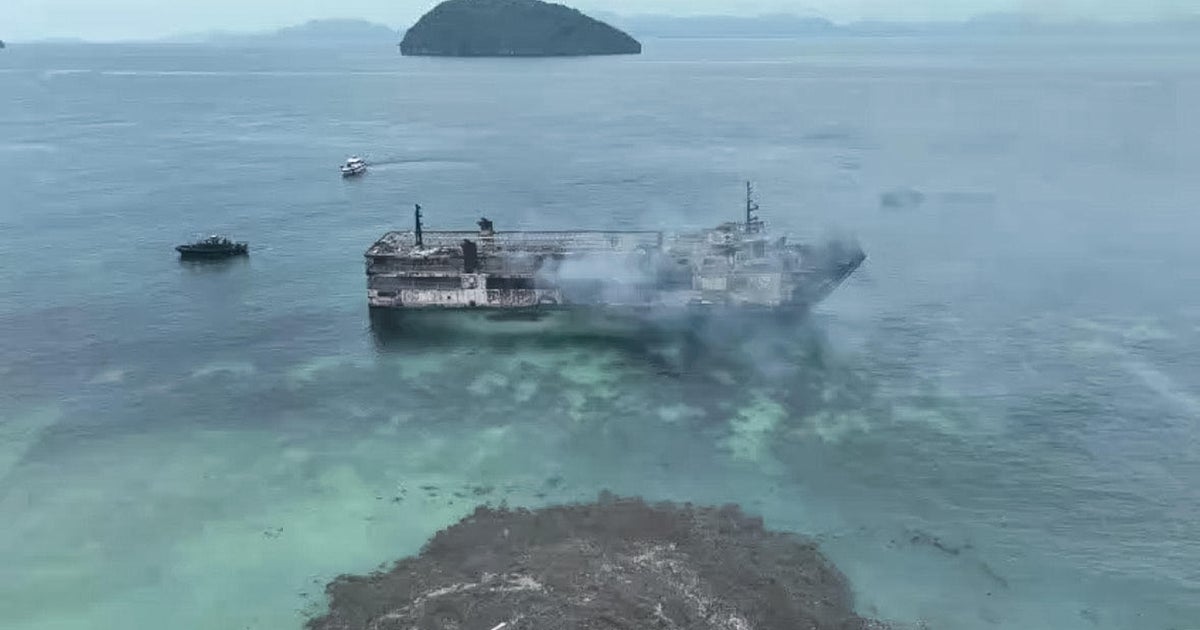
A fire broke out on the MV June Aster ferry near Palawan, Philippines, causing chaos and panic among passengers. Five people have died, 86 are missing, and rescue efforts are ongoing. Survivor Roland Lerma described escaping the burning ship by jumping into the sea and floating in the water until rescuers arrived.
Key Facts
The fire started near Palawan, 1.2 nautical miles off Coron's Marcilla village.
The ferry left Manila on Tuesday night and was scheduled to arrive in Coron on Wednesday evening.
The fire began in the cargo hold, reportedly after a loud explosion.
The ferry carried motorcycles, an electric car, a forklift, a pick-up van, and other goods.
More than 100 passengers were on board, many sleeping during the journey.
Five people have died, 86 are still missing, and around 43 survivors were rescued.
Rescue and firefighting operations are ongoing, but the fire has not yet been extinguished.
Survivor Roland Lerma was hospitalized with bruises and chest pain but is now stable.
Read the Original
Want the full story? Tap a source to open the original
article.
A fire broke out on the ferry MV June Aster near the western Philippines, killing at least five people and leaving many missing. Rescue teams continue searching for survivors amid difficult weather conditions.
Key Facts
The fire started around 6:45 p.m. on Wednesday while the ferry was near Coron in Palawan province.
At least five people died, and dozens remain missing after the fire was put out.
So far, 43 people have been rescued from the ferry.
The ferry was carrying 134 people: 117 passengers and 17 crew members.
The ferry was drifting due to strong sea currents, about 7.68 nautical miles from its destination.
Rescue operations involve the Coast Guard, military vessels, volunteers, and local fishermen.
The cause of the fire is unknown but may have started in the cargo hold.
Ferry accidents are common in the Philippines due to storms, poor maintenance, overcrowding, and weak safety enforcement.
Read the Original
Want the full story? Tap a source to open the original
article.
Iceland, a UK supermarket chain, will open a store in the Falkland Islands in December, partnering with a local retailer. This will be the first UK high street brand in the British territory's capital, Stanley, amid rising sovereignty tensions with Argentina.
Key Facts
Iceland plans to open a shop in the Falkland Islands in early December.
The store will be located in Stanley, the capital of the Falklands.
Iceland is partnering with a local business called Kelper Stores.
This will be the first UK high street brand to open a shop in the Falkland Islands.
Iceland’s executive chair, Richard Walker, highlighted the importance of supporting the British territory.
Argentina's president, Javier Milei, has increased claims over the islands and criticized the UK’s position.
Argentina plans to sanction oil companies working in the Falklands and is pursuing legal action against an Israeli company.
Local groups oppose a salmon farm project by a fishing company and a Danish firm, raising environmental concerns.
Read the Original
Want the full story? Tap a source to open the original
article.
A 39-year-old woman from England, Cassie Ravenhall, shared her daily skincare and health habits that help her look younger than her age. She emphasizes consistency, healthy eating, hydration, and exercise rather than expensive treatments or cosmetic procedures.
Key Facts
Cassie Ravenhall is nearly 40 years old and lives in England.
Her TikTok video about her skincare routine gained over 100,000 views.
She credits her youthful appearance to consistent skincare, drinking plenty of water, and regular exercise.
Ravenhall avoids cosmetic fillers and expensive dental veneers.
She used to be a makeup artist and has always been interested in beauty and skincare.
She highlights the importance of discipline over variety in her skincare routine.
Ravenhall became a mother at 37 and got engaged at 35, which she says is later than many of her peers.
She warns against cheap dental treatments known as "Turkey teeth," which might make people look older.
Read the Original
Want the full story? Tap a source to open the original
article.
President Donald Trump repeatedly threatened to destroy Iran during recent tensions around the Strait of Hormuz, promising to destroy the country’s bridges and power plants. These threats have raised concerns about possible war crimes and genocide but have become less noticed over time by the media and other leaders.
Key Facts
President Trump said Iran would be "totally wiped out" if it retaliated against US airstrikes.
He threatened to destroy Iran’s infrastructure, such as bridges and power plants, which could be considered war crimes under international law.
Trump made these threats publicly multiple times in recent months, including statements that Iran could be "taken out in one night."
On April 7, Trump posted that "a whole civilization will die tonight," which led to global criticism from the UN and other leaders.
Human rights experts warned his statements might be threats of genocide, which is the intent to destroy a group of people based on nationality or ethnicity.
Despite worldwide outrage, Trump did not withdraw or apologize for his threats.
The situation led to a ceasefire agreement between the US and Iran announced by Pakistan’s prime minister.
The article links Trump’s harsh rhetoric to a broader international context involving US support for Israel’s military actions in Gaza.
Read the Original
Want the full story? Tap a source to open the original
article.