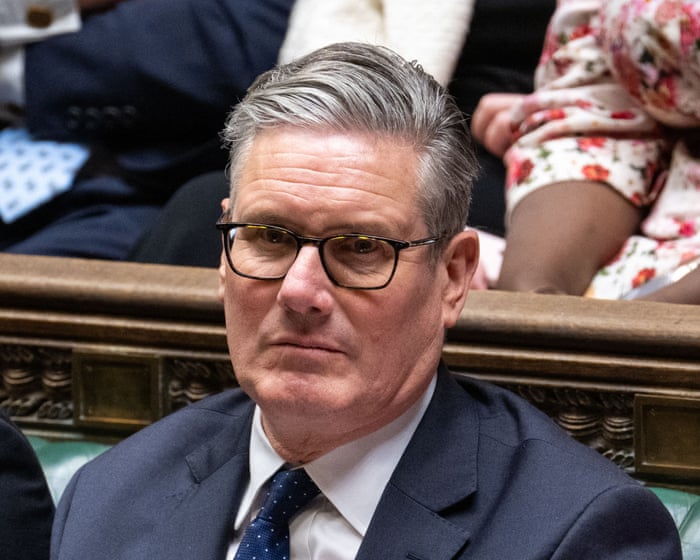
Keir Starmer led the UK Labour Party to a big election win in July 2024 but faced low public support and criticism during his time as prime minister. After about a year, Starmer resigned, citing his focus on the country and challenges he faced as leader.
Key Facts
Starmer’s Labour Party won 411 seats in the July 2024 UK general election, a large majority.
Despite the win, he only gained 34% of the total vote share.
His approval ratings dropped sharply, reaching the lowest satisfaction ever recorded by Ipsos for a UK prime minister.
Starmer resigned as prime minister and Labour leader in October 2025.
He was known as a careful and hardworking leader but criticized for lacking political vision and strong leadership skills.
Starmer became Labour leader in 2020 after Jeremy Corbyn and had been in politics for only five years before that.
The UK faced major challenges during his term, including a cost of living crisis, strained government finances, and overcrowded prisons.
Some critics say Starmer tried to shift Labour towards the political center but struggled to create a clear identity for the party.
Read the Original
Want the full story? Tap a source to open the original
article.
Strong winds in Oklahoma caused a train to derail, toppling many cars between Woodward and Westmoreland. The state faced severe weather warnings, including possible tornadoes, with thousands of power outages reported and multiple tornadoes occurring in the nearby Midwest region.
Key Facts
A train in Oklahoma had several cars knocked over by strong winds.
The incident happened between Woodward and Westmoreland near U.S. Highway 412.
Over 70,000 people lost power in Oklahoma on Monday morning.
Tornado warnings were active for Noble, Logan, and Payne Counties until early morning.
The National Weather Service warned of severe thunderstorms and possible tornadoes across much of Oklahoma.
Nearly 30 tornadoes were reported in the Midwest since Sunday night.
Two people died in a recent severe weather event in Jefferson County, Illinois.
Residents were advised to seek shelter in basements or sturdy rooms if tornadoes were spotted.
Read the Original
Want the full story? Tap a source to open the original
article.
A mom in the U.K. worried her baby would be scared of her face after she developed Bell’s palsy from brain tumor surgery. However, her baby bonded with her strongly, showing that babies love their parents regardless of appearance.
Key Facts
Tamara Bright, 32, had surgery for a brain tumor and then developed Bell's palsy, which changed her facial appearance.
She feared her baby Mason, now 7 months old, might not recognize her emotions or love because of her changing face.
After Mason was born, her worries lessened as he looked at her and bonded naturally.
She shared her story on TikTok to encourage other mothers with visible differences or health challenges.
Bright still feels self-conscious in photos but focuses on her baby's happiness instead.
She wants other women to know they are beautiful and loved by their babies regardless of appearance.
Read the Original
Want the full story? Tap a source to open the original
article.
Andy Burnham, the former mayor of Greater Manchester, has announced he will run to become the leader of the Labour Party and the UK prime minister. Wes Streeting, another Labour politician, said he will not run for leader after speaking with Burnham.
Key Facts
Andy Burnham won a recent byelection and will officially become a Member of Parliament (MP) soon.
Labour leader Starmer announced he will step down as prime minister, starting a leadership transition.
Burnham expressed his intention to run for Labour leader as part of an orderly process.
Wes Streeting resigned from Starmer’s government last month but decided not to run for leader.
Streeting said Burnham aims to build a more inclusive Labour Party.
Burnham currently holds no national government office but was previously mayor of Greater Manchester.
Read the Original
Want the full story? Tap a source to open the original
article.
Many workers in India dismantle electronic waste by hand without safety gear, exposing themselves to harmful chemicals and injuries. India produces large amounts of e-waste, and much of it is handled informally by people who face serious health risks from toxic substances and unsafe working conditions.
Key Facts
India is the third-largest producer of electronic waste, after China and the United States.
In 2025-2026, India generated over 1.4 million metric tonnes of e-waste, and about 979,000 metric tonnes were recycled.
New Delhi produces about 230,000 metric tonnes of e-waste annually, nearly 10% of India’s total.
Many e-waste workers work in informal workshops without protective gloves or masks.
Workers often burn plastic and use blow torches to extract metals, releasing toxic fumes.
They work long hours for low pay, approximately $8 per day for 12 hours of work.
Health problems include burns, cuts, infections, and exposure to chemical residues.
Women and men both work in these environments, often from poor or migrant backgrounds.
Read the Original
Want the full story? Tap a source to open the original
article.
Fifty years ago, the US Supreme Court allowed the death penalty to return after having banned it in 1972. Since then, death sentences have often been delayed, overturned, or changed, causing long waits for both prisoners and victims' families. Studies show the system has many problems, including racial bias and inconsistent outcomes.
Key Facts
In 1972, the US Supreme Court banned the death penalty for being unfair and discriminatory.
In 1976, the Court approved new rules that brought back the death penalty with attempts to fix previous issues.
Since then, over 9,000 people have received death sentences, but less than 20% have been executed.
Many death penalty cases take decades to resolve, causing long waits for everyone involved.
Black people are disproportionately represented on death row.
Geographic location often affects who receives the death penalty more than the crime itself.
Skilled defense lawyers have found problems in many trials, leading courts to overturn more than one-third of death sentences.
Some states’ governors, like Ohio’s, have called for ending the death penalty due to concerns about fairness and its impact on victims’ families.
Read the Original
Want the full story? Tap a source to open the original
article.
Darializa Avila Chevalier, a progressive Democrat, is running against Adriano Espaillat in New York’s 13th congressional district. She argues that the area has not improved during Espaillat’s time in office and wants to focus more on helping working people in the community.
Key Facts
Darializa Avila Chevalier is challenging Adriano Espaillat, a five-term congressman, in the Democratic primary.
The 13th district includes upper Manhattan and parts of the Bronx with a large Afro-Latino population.
Espaillat has served since 2017 and is the first Dominican American and formerly undocumented immigrant in Congress.
Avila Chevalier is endorsed by New York City Mayor Zohran Mamdani, who also supports other progressive candidates.
She previously worked as an organizer during Mamdani’s mayoral campaign and is currently a public defense investigator.
Avila Chevalier is completing a PhD and is a member of the United Auto Workers union.
She criticizes Espaillat for not improving the district and points to the loss of over 200,000 Black residents in the city over two decades.
Avila Chevalier wants politics to focus more on the needs of working people and involve the community more.
Read the Original
Want the full story? Tap a source to open the original
article.
Consulting firms once promised strong career growth by training young analysts in deep problem-solving and client work. However, the rise of artificial intelligence (AI) has changed entry-level jobs, shifting tasks from learning and ownership to mainly fact-checking and using AI tools, which raises questions about skill development and workforce changes.
Key Facts
Consulting firms like McKinsey marketed themselves as top training grounds for future leaders.
Entry-level analysts used to gain skills by handling challenging client work and creating their own analysis.
Now, AI tools handle much of the detailed work, reducing analysts' opportunities to build deep skills.
New consulting AI platforms include BCG’s Deckster, Bain’s Sage, and McKinsey’s Lilli.
Firms are promoting employees who are good at using AI and managing high workloads.
Consulting companies are cutting staff and freezing wages amid this AI-driven shift.
Clients want AI integrated deeply into their businesses, pushing firms toward partnerships with AI companies.
The consulting role is changing from creative problem solving to processing AI outputs quickly and repeatedly.
Read the Original
Want the full story? Tap a source to open the original
article.
A large state fair celebrating American culture will start soon on the National Mall before the country’s 250th anniversary. However, at least seven states with Democratic governors have announced they will not send official representatives to the event.
Key Facts
The event is called the "Great American State Fair."
It is planned to happen on the National Mall in Washington, D.C.
The fair is part of the lead-up to the United States’ 250th anniversary.
Several states have decided not to participate officially.
All states that declined to send representatives are led by Democratic governors.
The fair aims to showcase different cultures and traditions from across the country.
The exact reasons for some states’ withdrawal were not detailed in the article.
Read the Original
Want the full story? Tap a source to open the original
article.
President Donald Trump is having increasing conflicts with important Senate Republicans, including Senate Majority Leader John Thune. These disagreements involve how to handle various political issues and grow as the midterm elections approach, causing concern among GOP senators about possibly losing control of Congress.
Key Facts
President Trump and key Senate Republicans are experiencing repeated clashes.
Senate Majority Leader John Thune is one of the senators involved in the disagreements.
The conflicts focus on strategies for several political matters.
The midterm elections are coming soon.
GOP senators worry about losing control of both the House and Senate.
These tensions are causing a growing split between President Trump and Senate GOP leaders.
Read the Original
Want the full story? Tap a source to open the original
article.
Some Republicans are saying that opposition to building data centers in the U.S. might be encouraged by foreign countries like China. These countries may be running influence campaigns to affect debates about technology and data infrastructure.
Key Facts
Republicans have suggested that foreign actors are behind opposition to new data centers in the U.S.
Reports from companies like OpenAI support claims of influence campaigns by China and others.
These campaigns aim to affect discussions on tech policy and data infrastructure.
The topic is part of a major ongoing debate about technology and data security in the U.S.
Data centers are facilities that store and manage large amounts of digital information.
Concerns involve whether foreign influence is shaping local or national tech decisions.
The issue highlights tensions between national security and technology development.
Read the Original
Want the full story? Tap a source to open the original
article.
The U.S. State Department labeled Brazil's two largest criminal groups, the Primeiro Comando da Capital (PCC) and Comando Vermelho (CV), as terrorist organizations to help fight drug trafficking. This action highlights the serious problem of organized crime controlling parts of Brazil and the country's struggle to enforce law and provide public services.
Key Facts
The PCC and CV are Brazil's biggest criminal groups and were recently designated as terrorist organizations by the U.S.
This designation allows the U.S. Treasury to impose sanctions on banks and companies linked to these groups.
About 25% of Brazilians live under the control of these criminal organizations.
Suspicious money transactions related to crime in Rio de Janeiro totaled around 44 billion reals (about $8.7 billion) in three months.
Brazil collects high taxes but still fails to provide basic public services like security, healthcare, and education to most people.
The Brazilian government is seen as unable to govern effectively, with inefficiency and corruption affecting its branches.
Citizens feel powerless despite voting, as crime and poor governance dominate daily life.
Brazil's institutions, including the executive, legislature, and judiciary, face serious challenges and controversies.
Read the Original
Want the full story? Tap a source to open the original
article.
Keir Starmer has announced that he will resign as the Prime Minister of the United Kingdom. This will make him the seventh person to hold the position in under ten years.
Key Facts
Keir Starmer is stepping down as the UK Prime Minister.
The UK will have its seventh prime minister in less than 10 years.
Starmer announced his resignation publicly in a speech.
The resignation speech was given while music played nearby.
No specific reasons or dates for the resignation were provided in the text.
This change continues a period of frequent leadership changes in the UK government.
Read the Original
Want the full story? Tap a source to open the original
article.
Cuba is facing a severe power shortage that has led to limited electricity for its people. Under pressure from President Donald Trump's administration, the Cuban government has announced major economic reforms to gradually open its communist system.
Key Facts
Cuba has a deepening electricity crisis causing rationing of power.
The Cuban government announced wide-ranging economic reforms.
These reforms mark a gradual shift away from strict communist policies.
The reforms came after pressure from President Donald Trump's administration.
Daily life in Havana remains chaotic due to the power issues.
The situation reflects ongoing challenges in Cuba’s economy and governance.
The report focuses on the impact of the crisis on Havana’s residents.
Read the Original
Want the full story? Tap a source to open the original
article.
Keir Starmer led the UK as prime minister after Labour won the 2024 election, focusing on workers’ rights, international relations, and social policies. His government passed laws to improve workers’ pay and renters’ security, pursued trade deals, and aimed to strengthen ties with Europe. Despite these efforts, challenges and election losses led to his stepping down after two years.
Key Facts
Labour passed an employment rights bill improving sick pay, parental leave, and conditions for zero-hours contracts.
The national living wage increased by 4.1%, raising pay for 2.4 million low-paid workers by about £900 a year.
The Renters’ Rights Act made it harder for landlords to evict tenants without legal reasons and removed fixed-term tenancy limits.
Starmer negotiated a trade deal with the US that cut tariffs on cars, aluminium, and steel, though its future is uncertain.
He sought closer ties with the EU, including plans to adopt some EU single market rules more easily.
The government ended the two-child benefit cap, aiming to reduce child poverty.
New family hubs and free childcare were made available to support children and parents.
Starmer’s time as prime minister saw some setbacks, including poor election results and political challenges.
Read the Original
Want the full story? Tap a source to open the original
article.
The first round of talks between the US and Iran ended in Switzerland, aiming to find a permanent solution to the conflict involving Iran. These discussions followed a recent agreement but were tense after President Donald Trump threatened military strikes, causing Iran to temporarily leave the talks.
Key Facts
High-level talks took place in Switzerland between US and Iranian representatives.
The talks followed the signing of a "memorandum of understanding," an agreement to work on peace.
Iran briefly walked out after President Trump threatened possible strikes.
Discussions focus on Iran’s nuclear program and uranium stockpiles.
Technical talks will continue in Switzerland throughout the week.
The negotiations aim to end ongoing conflicts involving Iran in the Middle East.
President Donald Trump has made public threats related to Iran’s support for groups like Hezbollah.
Read the Original
Want the full story? Tap a source to open the original
article.
British Prime Minister Keir Starmer announced he will resign as leader of the Labour Party and leave office within weeks. A leadership contest will follow to choose his replacement, who will then become the next prime minister.
Key Facts
Keir Starmer, British Prime Minister and Labour Party leader, announced his resignation on June 22, 2026.
Britain will have its seventh prime minister in 10 years after Starmer steps down.
Any candidate to replace Starmer must have support from at least 20% of Labour MPs, which is 81 out of 403 members.
Candidates also need support from Labour Party groups and related organizations like trade unions.
If multiple candidates qualify, all Labour members and affiliates vote to pick the new leader.
Nominations open on July 9 and close by July 16, before Parliament’s summer break.
The leadership contest is expected to finish by September 1 when Parliament returns.
If only one candidate qualifies, that person becomes party leader and prime minister without a vote.
Read the Original
Want the full story? Tap a source to open the original
article.
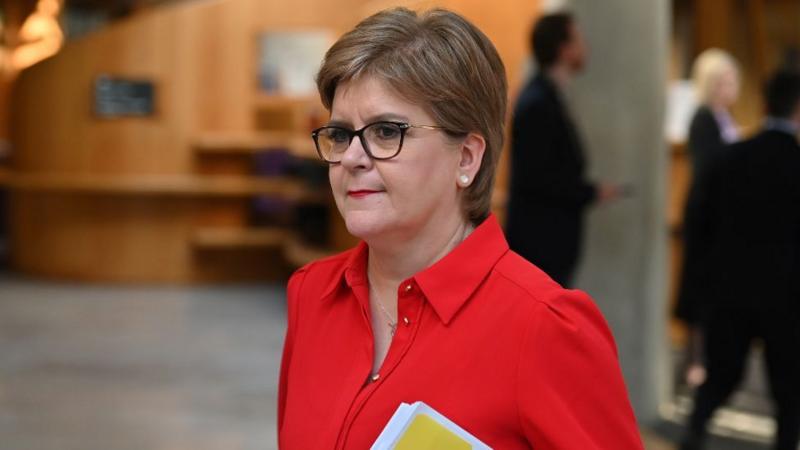
Nicola Sturgeon and Michael Gove will appear together on a new reality TV show called The Wargame, where they play roles in a fictional UK government responding to a fake Russian attack. The show features politicians from different parties taking part in emergency meetings to simulate crisis decisions.
Key Facts
Nicola Sturgeon will act as deputy prime minister, and Michael Gove as prime minister in the show.
The Wargame is a four-part series airing on Sky TV in September.
Other political figures, including Jim Murphy and Penny Mordaunt, will also play government roles.
The fictional scenario is a Russian attack on UK soil, prompting emergency government meetings.
The show includes experts on Russia and international roles like a US secretary of state and NATO secretary general.
Sturgeon recently faced criticism because her estranged husband, Peter Murrell, admitted to embezzling over £400,000 from the SNP.
Nicola Sturgeon denies knowing about her ex-husband’s crimes and says she was deceived.
Some politicians have commented on Sturgeon’s decision to join the TV show amid the controversy.
Read the Original
Want the full story? Tap a source to open the original
article.
UK Prime Minister Keir Starmer resigned on June 22, 2026. This resignation opens the possibility for Andy Burnham, who recently won a special parliamentary election, to become the new Labour leader and potentially the next prime minister.
Key Facts
Keir Starmer was the Prime Minister of the United Kingdom.
He resigned on June 22, 2026.
This will make the UK’s seventh prime minister in just over ten years.
Andy Burnham recently won a special parliamentary election.
Burnham is seen as the leading candidate to replace Starmer as Labour leader.
The resignation was linked to changes in global politics and public mood.
The news was reported by FRANCE 24 and journalist Douglas Herbert.
Read the Original
Want the full story? Tap a source to open the original
article.
South East Water has chosen John Halsall as its new chief executive after the previous leader, David Hinton, resigned. Halsall plans to focus first on fixing immediate problems for customers and then invest £2.1 billion to improve the company’s water service over time.
Key Facts
John Halsall will replace David Hinton as chief executive of South East Water.
Halsall previously worked at Thames Water, South West Water, and Network Rail.
South East Water has faced repeated water supply failures in Kent and Sussex.
Halsall intends to respond to customers’ urgent concerns and then make long-term improvements.
The company plans to invest £2.1 billion to improve reliability and service.
The appointment requires approval from regulators.
David Hinton resigned in May; he earned £400,000 plus a £115,000 bonus last year.
South East Water has £1.3 billion in debt and recently raised water prices by about 7%, to an average annual bill of £324.
Read the Original
Want the full story? Tap a source to open the original
article.