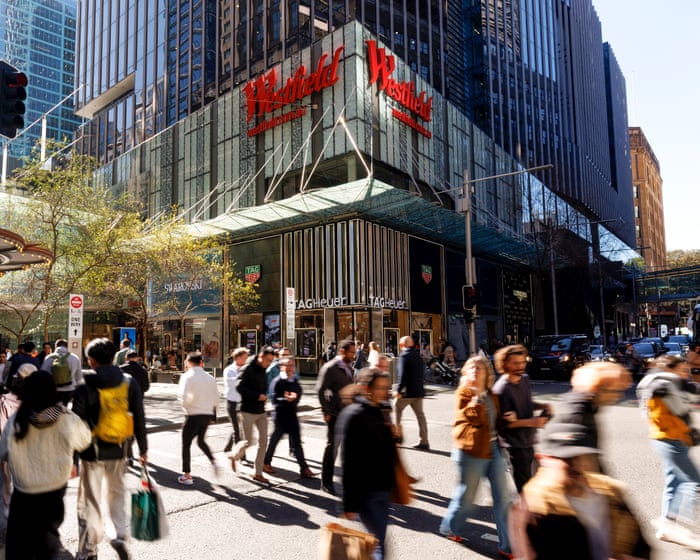
The Conservative Party has promised to bring back tax-free shopping for tourists from outside the European Union. They believe this will help shops, hotels, and restaurants by attracting more visitors and spending.
Key Facts
The tax-free shopping scheme, called the VAT Retail Export Scheme, was ended for non-EU visitors in 2021.
The scheme allowed tourists to get back the VAT (a sales tax) on items bought in Great Britain and taken home in their luggage.
Conservative leader Kemi Badenoch said the scheme's return could bring more customers and spending to UK businesses.
The party plans to reintroduce the scheme for non-EU tourists first and may extend it to EU visitors later if it proves successful.
They plan to cover the scheme’s costs by cracking down on "NHS health tourism" and using savings set out previously.
Research suggests the scheme could attract up to 2.35 million extra visitors and increase spending by £4.1 billion.
The British Retail Consortium supports the move, saying it could boost jobs and investment across the UK.
Labour criticized the Conservatives for changing their position and questioned how they will pay for the scheme.
Read the Original
Want the full story? Tap a source to open the original
article.
Australia's birth rate has been below the level needed to keep the population steady without migration for 50 years and is expected to drop further. The government report says migration is important to support the economy, help pay for healthcare and aged care, and slow the ageing population. Lower migration and fertility rates would lead to slower economic growth and higher government debt.
Key Facts
The replacement fertility rate to keep population steady is 2.1 children per woman; Australia's rate is about 1.5 now and expected to fall to 1.34 in 40 years.
By the mid-2060s, deaths in Australia will likely outnumber births for the first time.
More older people and fewer workers will increase pressures on healthcare, aged care, and government budgets.
Migration helps increase the population, slow ageing, and support the economy through skills and innovation.
The report’s main forecast assumes 235,000 net overseas migrants per year.
With this migration level, average living standards per person (GDP per capita) are expected to grow from $99,200 to $157,300 in 40 years.
A scenario with 50,000 fewer migrants per year and lower fertility shows a small drop in GDP per person and a worse “dependency ratio” (more older people per working-age person).
Lower population growth would lead to a higher budget deficit and an increase in government debt as a share of GDP.
Read the Original
Want the full story? Tap a source to open the original
article.
YouTuber and philanthropist MrBeast spent nearly $10 million to build a self-sustaining village in Ghana to reduce illegal child labor. When questioned about his charitable work in his hometown Greenville, North Carolina, he responded that his nonprofit has given millions of meals and helped many people locally as well.
Key Facts
MrBeast’s real name is Jimmy Donaldson, and he is the most-subscribed individual on YouTube.
The Ghana village project includes homes, a school for over 300 students, a medical clinic, clean water, solar power, farms, and free school meals for five years.
Greenville, North Carolina, has a poverty rate of about 25%, which is more than double the national average.
MrBeast replied that he supports his local community through his nonprofit Beast Philanthropy, distributing tens of millions of meals in America.
His net worth is estimated around $2.6 billion, mostly tied to his ownership in Beast Industries.
Other major projects include Beast Pantry, which has delivered over 48 million meals in Eastern North Carolina.
In 2019, MrBeast co-founded #TeamTrees, which raised $20 million to plant 20 million trees worldwide.
Beast Philanthropy operates as a registered nonprofit supporting multiple causes globally and locally.
Read the Original
Want the full story? Tap a source to open the original
article.
Rebel Wilson and her co-producers are in court in Sydney over a disagreement about money and fees for the movie The Deb. The producers accuse Wilson and her company of breaking the law and contracts by making harmful statements about them online. Wilson denies this and accuses the producers of bad behavior including theft and bullying.
Key Facts
Rebel Wilson is suing and being sued by producers over the movie The Deb.
Producers claim Wilson made false accusations about them to her 11 million Instagram followers.
Wilson says the producers behaved badly, including theft of $900,000 and misconduct.
The producers planned to invest over $15 million in the film but the budget rose above $20 million.
Wilson was offered a $1 million fee for acting and directing, which was disputed.
The movie's release was delayed until April 2026 due to this dispute.
The producers say Wilson blocked the film's release and hurt potential deals.
The film’s potential earnings were compared to successful past Australian musical comedies.
Read the Original
Want the full story? Tap a source to open the original
article.
Nigerian billionaire Aliko Dangote built a large oil refinery to reduce Nigeria’s need to import fuel. Since its opening, the refinery has helped meet higher demand for jet fuel caused by global energy problems. Dangote plans to expand the refinery and sell shares to regular Nigerians to create wealth.
Key Facts
Aliko Dangote is Africa’s richest man and a Nigerian businessman.
Nigeria used to import large amounts of refined fuel because its own refineries did not work well.
Dangote’s refinery launched on February 28 and reduces Nigeria’s dependence on imported petroleum products.
The refinery has seen more demand for jet fuel due to disruptions in global energy caused by the US-Israel conflict with Iran.
Dangote wants to double the refinery’s processing size.
He plans to list the refinery company on Nigeria’s stock market to allow ordinary citizens to own shares.
Dangote says his goal is to help Africa become more self-reliant and economically strong.
He denies creating a monopoly with his refinery business.
Read the Original
Want the full story? Tap a source to open the original
article.
Australia's government report predicts that by the 2060s, the number of deaths will be higher than births in the country. The population is expected to grow more slowly, with immigration supporting growth as birth rates fall, while the economy is projected to more than double by the mid-2060s thanks to productivity improvements and higher workforce participation.
Key Facts
Australia will have more deaths than births by the 2060s, similar to countries like Japan and Germany.
The population is forecast to reach about 39.3 million by 2065-66, which is 1.8 million fewer than earlier estimates.
Annual population growth is expected to slow to 0.9%, down from 1.4% over the past 40 years.
The number of Australians aged 85 and older will triple by 2065-66.
Immigration will be the only source of population growth because the birth rate is predicted to fall to 1.34 children per woman.
The economy is expected to more than double in size, helped by advances in artificial intelligence and more women and older people working.
Productivity growth has recently slowed, with average annual productivity growth dropping from 1.8% in 2003-04 to 0.8% in 2023-24.
The Business Council of Australia warned that relying on AI to boost productivity is uncertain and said Australians are already experiencing lower living standards due to weak productivity growth.
Read the Original
Want the full story? Tap a source to open the original
article.
US and Chinese officials held talks in New York to discuss cooperation on artificial intelligence (AI) and trade issues. These meetings aim to create a system for regular AI discussions and prepare for easing trade tensions before Chinese President Xi Jinping visits Washington later this week.
Key Facts
The US and China talked about setting up a regular dialogue on AI safety and security.
There are growing concerns about the risks and security of artificial intelligence technologies.
The talks happened ahead of a planned summit between President Donald Trump and President Xi Jinping.
The two sides also discussed trade matters as an existing truce is set to end in November.
Both countries described the talks as "successful" and "constructive."
The discussions took place in New York City on Sunday.
Other countries, like France and Canada, are also working on partnerships related to critical minerals and energy.
Read the Original
Want the full story? Tap a source to open the original
article.
Local councils in England are increasing financial support for rural bus services, including new on-demand bus options that passengers can book when needed. Wiltshire Connect is one such service using minibuses that adapt routes based on passenger needs, helping people in rural areas travel more flexibly and affordably.
Key Facts
Council support for local buses in England, excluding London, is 17% of bus miles traveled, higher than the 13% pre-pandemic low in 2019-20.
Bus journeys per person have decreased from 88 trips in 2010 to 63 trips in 2024-25.
Rural areas provide more council support for buses than urban areas.
Demand responsive transport (DRT) lets passengers book flexible bus routes that change according to travel requests.
The UK government gave £20 million in 2021 to 15 local councils to try DRT through the Rural Mobility Fund.
Wiltshire Connect started in 2023 with 13 minibuses over three zones and has made 250,000 journeys so far.
People book the service via app or phone, paying the same fare as regular buses.
DRT users include both older people and more younger users, aiming to encourage public transport habits long-term.
Read the Original
Want the full story? Tap a source to open the original
article.
Labour’s apprenticeship scheme has enrolled only 160 young people in its first eight months, far below its goal of 30,000 starts by the end of the current parliament. A report by the Fabian Society warns that apprenticeship programs for young people are fragmented and need reform to improve youth employment in the UK.
Key Facts
Labour’s “foundation apprenticeship” scheme had only 160 starts from August 2025 to April 2026.
The government aims to reach 30,000 apprenticeship starts by the end of the parliament.
Nearly 1 million young people aged 16-24 are not in work, education, or training, known as Neet.
About 308,000 people started apprenticeships of any kind this academic year, a 9% increase from last year.
Over half of apprentices are over 25 years old; only about 20% are under 19.
Apprenticeships for people under 25 are 40% lower than they were ten years ago.
Employers have low awareness of newer technical qualifications like T-levels and V-levels.
The report suggests a £311 million per year regional apprenticeship fund and redesigning apprenticeships to reduce costs for employers.
Read the Original
Want the full story? Tap a source to open the original
article.
Jersey, a small island in the English Channel, has become a major center for offshore finance, with banks and accounting firms serving wealthy global clients. The island faces growing competition from other places copying its low-tax model, so its government is investing £31 million to simplify rules, promote Jersey worldwide, and explore new areas like cryptocurrency to keep its financial industry strong.
Key Facts
Jersey’s economy is dominated by offshore finance, including banks, lawyers, and accountants.
The island’s GDP per person is about 60% higher than the UK average.
Jersey offers very low taxes: no inheritance tax, no capital gains tax, and low corporation tax for most companies.
Jersey has gained a reputation as a tax haven and was named in investigations like the Panama Papers.
New competitors internationally are replicating Jersey’s finance model, threatening its market share.
A government report warns Jersey’s future depends on adapting to these changes.
Jersey is launching a £31 million, four-year plan to reduce bureaucracy, promote itself globally, and diversify into cryptocurrencies.
The island’s economy has changed many times before, shifting from farming and tourism to finance.
Read the Original
Want the full story? Tap a source to open the original
article.
Various groups including unions and environmental organizations want the UK government to increase the funding and power of the national wealth fund (NWF) to invest more in UK industries and infrastructure. The NWF was created in 2024 to attract private money for big projects, but supporters say it should be expanded to better support clean energy, regional growth, and job creation.
Key Facts
The national wealth fund (NWF) was launched in July 2024 to attract private investment for UK infrastructure.
It aims to get about £3 of private money for every £1 of government money to invest in projects like ports, clean energy, and factories.
The NWF is different from sovereign wealth funds that use government earnings from natural resources; it shares investment risks to encourage private investors.
Groups like the TUC, Greenpeace, and WWF want the government to expand the NWF into a national development bank with more financial power.
The NWF currently has about £5.5 billion available for investment each year for the next five years.
By comparison, Germany’s public investment bank lends much more—€62 billion in 2025 alone.
Proposed benefits of a bigger NWF include upgrading homes to be more energy efficient, creating green industries in areas affected by factory closures, and supporting small businesses through local banks.
The government says the NWF has invested £3.9 billion so far, including in nuclear power and factories, and improved flood defenses.
Read the Original
Want the full story? Tap a source to open the original
article.
Australia’s latest government report predicts that by the 2060s, more people will be dying than being born due to lower birth rates and an ageing population. Economic growth is expected to slow down, but the rise of artificial intelligence (AI) could help improve productivity and living standards over the next 40 years.
Key Facts
Australia’s births are projected to fall below deaths by the 2060s.
The population will continue to age, with more people living into their 90s.
Population growth will slow to 0.9% annually, down from 1.4% historically.
Economic growth per person is expected to slow from 1.5% to 1.2% over the next 40 years.
Productivity growth is assumed to increase due to AI and innovation.
Government spending as a share of the economy will rise by about 1.1 percentage points by the mid-2060s.
The report highlights challenges in supporting an older population with fewer workers.
The intergenerational report is published every five years and helps show long-term economic and social trends.
Read the Original
Want the full story? Tap a source to open the original
article.
The UK state pension is expected to pass £13,000 a year soon. Many people have not checked how much pension they will receive, but there are ways to find out and actions to increase the amount.
Key Facts
The current flat-rate UK state pension is about £12,547 a year, soon to rise above £13,000.
People who reached pension age before April 2016 get a lower basic state pension.
To get a full state pension, you usually need 35 years of National Insurance contributions.
National Insurance credits are given for caring roles like childcare or looking after family.
Voluntary contributions can boost pension years, but only payments for the last six years count since April 2025.
You can check your pension forecast through the HMRC app or official government website.
It is important to verify your identity securely and avoid clicking unknown links to prevent scams.
Many people, especially aged 45-54, have not checked their forecast because retirement feels far away or they lost track of previous pensions.
Read the Original
Want the full story? Tap a source to open the original
article.
A wedding photographer named Katie Hunt bought film rolls on Amazon but found rocks inside the canisters when she opened them at a wedding venue. She contacted Amazon, returned the fake film, received a full refund, and Amazon is investigating the issue.
Key Facts
Katie Hunt is a wedding photographer from Greensboro, North Carolina.
She bought two five-packs of Portra 400 film rolls on Amazon as extra backup for a wedding shoot.
When opening the canisters at the venue, she found gravel-type rocks inside instead of film.
Amazon and Hunt believe someone purchased the film, removed the rolls, and replaced them with rocks before reselling.
Hunt returned the items to Amazon and got a full refund.
An Amazon spokesperson said they are working to resolve the issue and continue investigating.
Hunt shared a video of the moment she found the rocks, which went viral on TikTok with over 2.3 million views.
Hunt said she primarily uses digital photography, so the fake film did not affect the wedding photos.
Read the Original
Want the full story? Tap a source to open the original
article.
Converse removed a social media ad after critics said the image looked like it showed racist symbols linked to the Ku Klux Klan and lynching. The company apologized and said it is working to take down the ad from all places where it appeared.
Key Facts
Converse's ad featured K-pop singer Karina wearing a skirt with lighting that some critics said resembled a KKK hood.
The way she held the sneakers in the ad was seen by some as resembling the feet of a lynching victim.
Converse is owned by Nike and is based in Boston.
Converse apologized publicly and removed the ad from its social media channels.
Critics called for firing responsible staff and boycotting the company.
Converse declined to answer further questions about its ad approval process.
Similar controversies happened recently, including Target pulling a Halloween costume that many found racially insensitive.
Converse has a long history, making the Chuck Taylor All Star sneaker since 1917.
Read the Original
Want the full story? Tap a source to open the original
article.
US President Donald Trump imposed a 50% tariff on $20 billion of Canadian goods, including dairy products, causing Canadian dairy exports to the US to stall. This tariff has created uncertainty and financial challenges for Canadian dairy farmers, who rely on stable demand for their milk.
Key Facts
The 50% tariff by the US took effect on August 22, targeting $20 billion of Canadian goods, including dairy.
Canadian dairy farmers sell their milk through a provincial system that distributes milk based on demand, including exports to the US.
The tariff has mostly stopped Canadian dairy sales to the US, affecting processors and farmers.
If US demand drops, processors require less milk, forcing farmers to possibly dump milk or reduce their herds.
Milk production cannot quickly adjust because cows need constant care and feeding.
Canada uses a supply management system with quotas and tariffs to stabilize prices and supply for dairy farmers.
The US claims Canada’s system limits US dairy exports and imposes high tariffs, while Canada says US exporters already have good tariff-free access.
Canada’s dairy trade deficit with the US has increased since the new trade agreement started in 2020, with higher Canadian imports from the US than exports to the US.
Read the Original
Want the full story? Tap a source to open the original
article.
The U.S. national debt has reached $40 trillion. Peter J. Tanous suggests that solving this large debt requires a new tax called a Value-Added Tax (VAT), rather than only cutting government spending.
Key Facts
The U.S. national debt is now $40 trillion.
Current government spending cuts are not enough to fix the debt.
Peter J. Tanous recommends a Value-Added Tax to raise money.
A Value-Added Tax is a tax added at each step of buying and selling goods and services.
This tax would generate significant revenue to reduce the deficit.
The article focuses on ways to manage the national debt through tax policy.
Raising revenue is seen as necessary alongside any spending adjustments.
Read the Original
Want the full story? Tap a source to open the original
article.
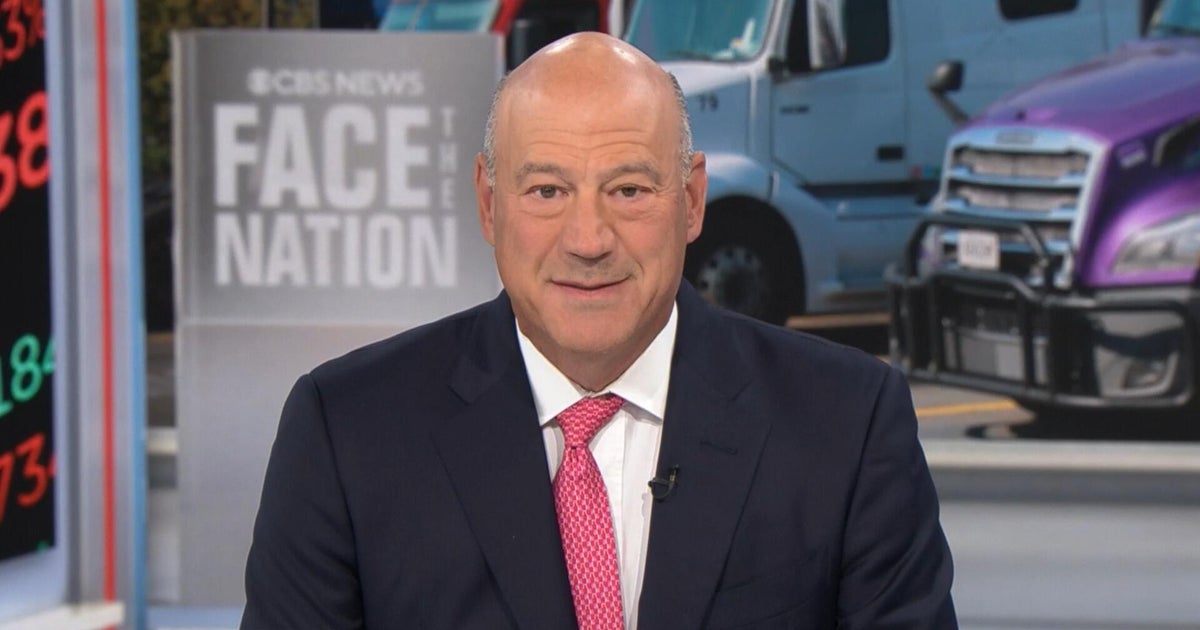
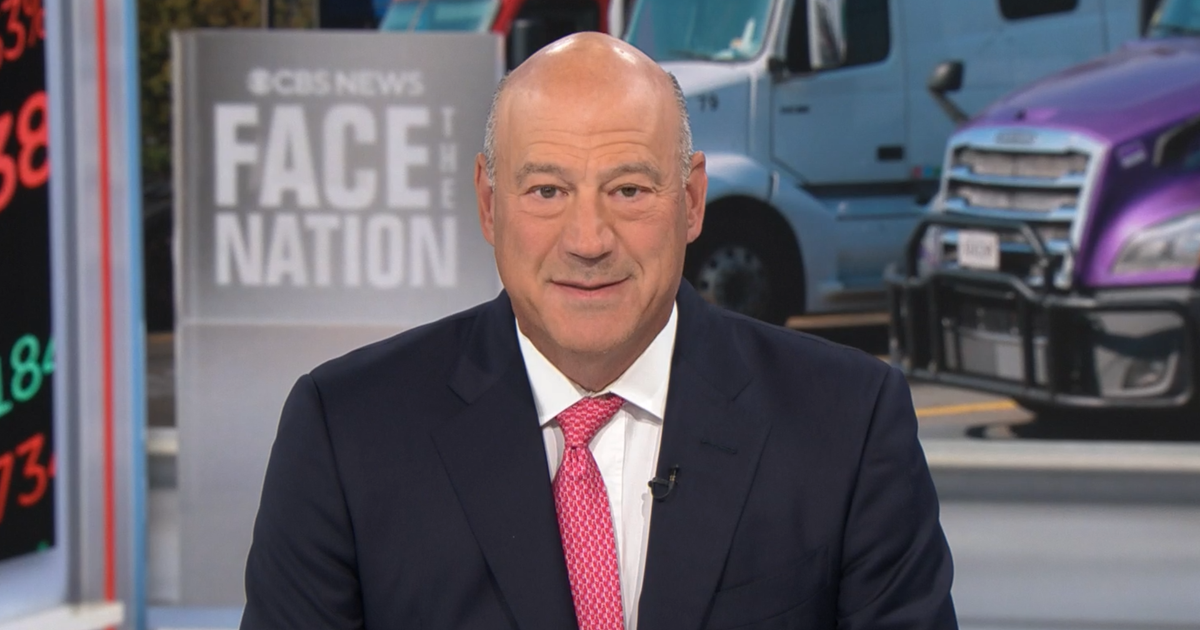
IBM vice chairman Gary Cohn said that consumer feelings in the U.S. have become quite negative. This change comes as people worry about rising gas prices, the cost of living, and new technology like artificial intelligence.
Key Facts
Gary Cohn is the vice chairman of IBM.
He previously worked as an adviser in President Donald Trump’s first administration.
Cohn spoke on the TV program "Face the Nation" with Margaret Brennan.
He stated that consumer sentiment, meaning how people feel about the economy, has turned quite negative.
Key reasons include rising gas prices, worries about artificial intelligence (AI), and high living costs.
This reflects growing concern among U.S. consumers about economic conditions.
Read the Original
Want the full story? Tap a source to open the original
article.
Gary Cohn, IBM vice chairman and former economic adviser to President Trump, said high energy prices are worrying consumers in the U.S. and around the world. While the main economic numbers look good, many people feel uncertain about the future, especially because of rising costs and concerns about artificial intelligence and jobs.
Key Facts
Diesel, gasoline, motor oil, and jet fuel prices are very high worldwide, leading to protests in several countries.
Diesel prices impact many parts of the economy, like farming and transportation, which affects food costs.
Consumer feeling about the economy is negative due to energy costs and worries about AI and jobs.
Official economic data, such as GDP, employment, and spending, still shows stability and growth.
Real wages have recently fallen because prices (inflation) are rising faster than paychecks.
Americans are using their savings to keep buying things, but this cannot continue forever.
Treasury Secretary Bessent says U.S. economic fundamentals remain strong, including low poverty and foreign demand for U.S. assets.
The Federal Reserve chair, Kevin Warsh, recently stated the economy is getting stronger with new hiring in the private sector.
Read the Original
Want the full story? Tap a source to open the original
article.
The Federal Reserve raised its main interest rate, reflecting ongoing high inflation and steady economic growth. Big tech companies are borrowing large amounts of money to invest in data centers, and the government continues to run big deficits, all of which support higher interest rates over time.
Key Facts
President Donald Trump criticized the Federal Reserve’s recent interest rate increase.
The economy is growing steadily with inflation remaining high.
Big technology companies are borrowing heavily to build AI-related data centers.
The federal government is still running large yearly budget deficits.
Mortgage rates have risen to nearly 7%, much higher than during the 2010s and the COVID-19 period.
Supply shortages and higher oil and gas prices are contributing to inflation.
Consumer spending remains healthy despite worries about the economy.
Long-term interest rates on government bonds have risen as companies and government compete for loan money.
Read the Original
Want the full story? Tap a source to open the original
article.