American tourism groups are trying to attract Canadian visitors back to the U.S. after travel numbers dropped. However, a trade conflict between the two countries is making it harder to restore travel from Canada.
Key Facts
The number of Canadians traveling to the U.S. dropped sharply after President Trump made a comment about making Canada the 51st state.
The U.S. and Canada are in a tense trade war, with the U.S. putting high taxes on Canadian products and Canada responding with similar measures.
President Trump ordered that Lake Ontario be renamed "Lake America," which added to tensions.
Canadian Prime Minister Mark Carney criticized insults made by members of President Trump's Cabinet.
Despite the conflict, states and cities like New York and Las Vegas are running promotions and discounts to attract Canadian tourists.
The Las Vegas Convention and Visitors Authority visited Canada to encourage travel industry partners to support visits to the U.S.
Brand USA, a U.S. tourism marketing group, is hosting a travel event in Canada to promote U.S. travel for the first time.
Travel from Canada to the U.S. is still below the levels seen in 2024.
Read the Original
Want the full story? Tap a source to open the original
article.
Two well-known Americans, former congressman George Santos and sports commentator Bill Simmons, faced problems for breaking rules related to online betting and prediction markets. Santos was banned from a betting platform and fined for insider trading, while Simmons admitted to illegal betting practices in a state where sports betting is banned.
Key Facts
Prediction markets are legal in the U.S. because they are seen as financial exchanges, not gambling.
George Santos bet on himself not attending the State of the Union address, then did not attend, winning over $17,000 but must give it back.
Santos faces fines totaling more than $80,000 from the platform Kalshi and a government regulator.
Bill Simmons, living in California where sports betting is illegal, had his daughter's boyfriend place bets for him from Massachusetts, where betting is legal.
Simmons admitted on his podcast to this scheme, breaking FanDuel’s rules and possibly state gaming laws.
He may face fines or lose betting privileges in Massachusetts.
Gambling can cause serious problems, like addiction and financial stress, according to the World Health Organization.
The article stresses the importance of following rules and understanding the risks of gambling.
Read the Original
Want the full story? Tap a source to open the original
article.
The UK Business Secretary, Jonathan Reynolds, will meet with Jaguar Land Rover (JLR) leadership and union representatives to discuss thousands of expected job cuts at the company. JLR is starting a voluntary redundancy program as part of efforts to simplify the business and improve efficiency, following a costly cyber attack and challenges like tariffs and falling sales.
Key Facts
Jonathan Reynolds will meet JLR bosses and the Unite union to talk about reducing job losses.
JLR confirmed a voluntary redundancy scheme for salaried and management employees.
Reports say up to 4,000 jobs could be cut, mainly among white collar workers.
The job reductions follow a cyber attack in 2025 that stopped production for over a month.
JLR employs about 30,000 people in the UK and about 10,000 overseas.
The cyber attack caused a 27% drop in production and cost the company around £1.9 billion.
Reynolds ruled out a bailout but is open to long-term investments to support JLR’s future.
The UK government is reviewing electric vehicle sales targets and industry regulations to help car makers.
Read the Original
Want the full story? Tap a source to open the original
article.
A new study shows that farmed salmon has less heart-healthy Omega-3 fatty acids than before, because the fish are now fed more plant-based oils and crops instead of smaller fish. This change may mean that current government advice on eating salmon for health benefits is not fully accurate.
Key Facts
About 70% of the world’s salmon is now farmed in pens and cages.
The US government recommends eating fish like salmon for Omega-3 fatty acids to support heart health.
New research found Omega-3 levels in farmed salmon have dropped significantly over time.
This drop happened because farmed salmon diets shifted from eating small wild fish to plant-based oils and crops like soy and canola.
Soy farming for fish feed has contributed to deforestation, especially in South America.
The study sample size was small and authors suggest larger studies are needed to update government guidelines.
Farmed salmon production has grown quickly, tripling between 2000 and 2020.
Environmental concerns include pollution from fish farms and threats to wild fish and coastal ecosystems.
Read the Original
Want the full story? Tap a source to open the original
article.
Councils in England and Wales are charging high fees and requiring paperwork from people who run small exercise or community classes outdoors, even when these classes are free or ask only for donations. This has stopped some instructors from holding their classes, raising concerns about the fairness of these licensing rules.
Key Facts
Angela Brier-Stephenson was told to pay £1,200 a year to run her small yoga class on a beach, so she stopped running it.
Some councils require hundreds of pounds in fees, paperwork, and first-aid certificates for small outdoor classes.
These licensing rules began for commercial trainers but now apply to community groups like small singing choirs and qigong classes.
Thanet council lowered fees from £1,200 to £300 for fitness activities starting in 2026.
Bristol council offers discounts up to 75% for small businesses and charities but still charges fees for outdoor classes.
Some instructors say fees make it too hard or expensive to continue their community classes.
Councils say licensing helps ensure safety, insurance, and responsible use of public spaces.
Read the Original
Want the full story? Tap a source to open the original
article.
Toy sales to adults in the U.S. grew by 25% in the first half of 2026, making them the largest group contributing to the toy market’s growth. A popular type of toy among adults is “squishy” toys, such as Squishmallows, which are soft, round stuffed animals. Many adults, especially millennials, are collecting these toys, even if they don’t have children.
Key Facts
In early 2026, toy sales to people 18 and older increased by 25%.
Adults now buy more toys than children, with 55% of toy sales going to homes without kids.
Squishy toys showed very high growth, helped by social media and limited edition releases.
Squishmallows are soft, round stuffed animals in many shapes, popular with both children and adults.
Millennials in their 30s are a big part of the adult demand for these toys.
Some adults collect dozens of Squishmallows, using them for stress relief or comfort.
The trend reflects adults continuing to enjoy items usually considered for children.
Read the Original
Want the full story? Tap a source to open the original
article.
A study shows that most UK online gambling websites do not follow data privacy rules properly, especially around cookie banners that ask users for permission to track their data. Many gambling sites collect personal information without clear consent or use design tricks to encourage users to share more data.
Key Facts
86% of licensed British gambling websites break UK data privacy rules called GDPR.
About 24% of gambling sites do not let users turn off tracking software.
Some well-known operators like Ladbrokes and William Hill collect data before users agree.
2% of websites studied do not offer any choice about data collection.
Many gambling sites use “dark patterns” to push users into accepting data sharing, such as making the reject button hard to find.
The UK privacy regulator, the Information Commissioner’s Office, has forced 95% of the top 1,000 UK websites to comply with cookie rules, but gambling sites lag behind.
Previous warnings and actions have been taken against some gambling companies, like SkyBet, for sharing data unlawfully.
The data collection aims to keep users engaged and potentially increase gambling losses.
Read the Original
Want the full story? Tap a source to open the original
article.
Schwartz’s, a famous sandwich shop in Montreal, has stopped serving a popular US-made black cherry soda after supply problems caused by rising aluminum costs. The shop now sells a similar soda made locally, which most customers like.
Key Facts
Schwartz’s has sold US-made black cherry soda for many years.
The soda’s distributor reduced production over the last eight years due to higher aluminum prices.
Recently, the soda cans have disappeared completely from Schwartz’s.
The shop switched to a black cherry soda made in Canada.
Customers have generally accepted the new local soda.
Aluminum price increases affected the soda’s packaging availability.
The change affects a product that was a long-time part of Schwartz’s menu.
Read the Original
Want the full story? Tap a source to open the original
article.
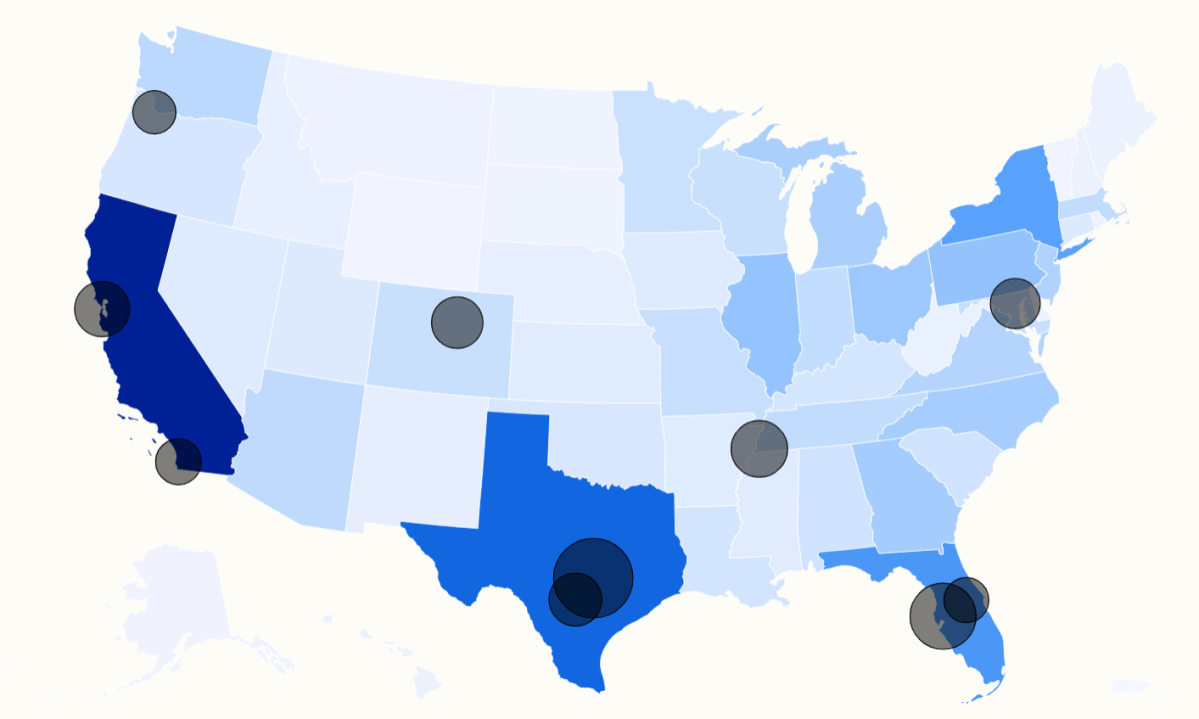
Home prices in many large US cities are falling after big increases during the COVID-19 pandemic. Data from Realtor.com shows that prices per square foot dropped in 36 out of 50 major metro areas in August, with Austin leading the declines.
Key Facts
Home prices per square foot fell in 36 of the 50 largest US metro areas in August.
This marks the 10th month in a row that prices have dropped nationwide.
Austin, Texas had the largest price drop of 8.1% compared to last year.
Other cities with big declines include Tampa (5.6%), Memphis (4.1%), and San Francisco (3.9%).
High mortgage rates, currently around 6.71% for a 30-year fixed loan, are making homes less affordable.
Some cities like Providence, Indianapolis, and Chicago saw price increases despite the overall trend.
The housing market depends on future mortgage rates, housing supply, and buyer willingness.
President Donald Trump has called for lower interest rates, but they remain high.
Read the Original
Want the full story? Tap a source to open the original
article.
President Donald Trump made a deal to give the U.S. a major role in Venezuela's oil industry, which has large oil reserves but poor infrastructure. Experts say the deal will not lower U.S. gasoline prices soon and will likely take years to have a significant effect.
Key Facts
The U.S. will form a joint partnership with North American Blue Energy Partners, led by a Venezuelan businessman.
This partnership gains 100-year rights to 17 oil fields in Venezuela, which contain 65 billion barrels of proven oil reserves.
The Pentagon will own 35% of the company and has the right to buy 20% of the produced oil at no extra cost.
The partner company plans to invest $100 billion in rebuilding Venezuela’s oil infrastructure.
Experts say restoring oil production to previous levels could take years and may not lower U.S. gas prices before the November midterm elections.
Political risks exist since future Venezuelan leaders could change the country’s cooperation with the U.S.
The deal may change global oil markets by creating a new, government-backed competitor.
Some U.S. lawmakers criticize the Pentagon’s involvement as misuse of taxpayer money.
Read the Original
Want the full story? Tap a source to open the original
article.
Aardman Animations, the company famous for the 'Wallace & Gromit' and 'Shaun the Sheep' series, has been celebrating its 50th anniversary. They continue to use traditional clay animation techniques that have been developed over five decades.
Key Facts
Aardman Animations is celebrating its 50th year in business.
The company is known for 'Wallace & Gromit' and 'Shaun the Sheep.'
They use clay models in a stop-motion animation process.
This filmmaking technique is one of the oldest methods in the movie industry.
The animator carefully moves the clay figures frame by frame to create the animation.
Aardman has perfected this technique over 50 years of work.
Their work includes memorable characters loved worldwide.
The company marked the anniversary with a special 'spooky' story featuring Shaun the Sheep.
Read the Original
Want the full story? Tap a source to open the original
article.
Uber has announced that it will stop operating immediately in Nigeria and Uganda. This decision is part of a global restructuring and because Uber has lost many customers to other companies in these countries.
Key Facts
Uber is leaving the markets in Nigeria and Uganda right away.
The move is part of a larger plan to reorganize Uber's global business.
Uber has fallen behind its competitors in both Nigeria and Uganda.
The company will no longer provide ride services in these two countries.
This change reflects Uber’s challenges in maintaining a leading position in some regions.
The announcement was made on May 9, 2026.
Uber’s competitors are gaining more customers in Nigeria and Uganda.
The decision affects Uber drivers and riders in both countries.
Read the Original
Want the full story? Tap a source to open the original
article.
CBS Mornings Deals offers viewers special discounts on products meant to improve daily life. People can visit the website cbsdeals.com to find these deals and make purchases. CBS earns money when customers buy items through their site.
Key Facts
CBS Mornings Deals shares exclusive discounts with viewers.
The products featured aim to improve everyday lifestyle.
Customers can access the discounts by visiting cbsdeals.com.
CBS receives commissions from sales made via the website.
The deals are promoted through CBS News and its app.
The article encourages viewers to take advantage of the offers soon.
CBS acts as an affiliate seller, earning from purchases without setting prices.
Read the Original
Want the full story? Tap a source to open the original
article.
The U.S. economy is expected to add millions of new jobs over the next decade. However, some industries will grow faster than others, while a few may see job declines.
Key Facts
The federal government provided data on job growth and decline.
Millions of new jobs are expected overall in the U.S. economy.
Certain industries will experience strong job growth.
Other industries may see a decrease in available jobs.
Job trends vary widely across different sectors.
These projections help workers and policymakers prepare for future changes.
Read the Original
Want the full story? Tap a source to open the original
article.
Italian authorities are investigating luxury fashion brands over claims that they use cheap labor and exploit workers. The investigation focuses on whether these brands follow fair labor rules in their supply chains.
Key Facts
Italian officials are examining luxury brands for possible labor abuse.
Allegations involve cheap labor and exploitation of workers.
The probe looks at how these brands manage their workers and suppliers.
The brands involved are at the top of the fashion industry.
The investigation aims to enforce fair labor practices.
This issue reflects growing concern about working conditions in fashion.
The authorities are part of Italy’s efforts to protect workers’ rights.
Read the Original
Want the full story? Tap a source to open the original
article.
Diesel prices in the U.S. have reached a new high of about $5.85 per gallon due to supply problems near the Persian Gulf. This rise will likely cause higher costs for many consumer goods because diesel powers most freight trucks and other parts of the economy.
Key Facts
Diesel hit a record price of $5.85 per gallon, surpassing the previous high of $5.82 from 2022.
The national average diesel price is around $5.88, up from $3.71 a year ago.
About 76% of the country’s 17 million commercial vehicles run on diesel engines.
Diesel powers freight trucks, trains, farms, construction equipment, and delivery vehicles.
Higher diesel prices increase transportation costs, which then raise prices of many goods, especially groceries.
Recent price rises are linked to supply problems from conflicts near the Persian Gulf and attacks on energy infrastructure.
Brent crude oil price is above $90 per barrel, adding to fuel costs.
Rising diesel prices put extra pressure on President Donald Trump, who faces low approval ratings for his handling of the economy.
Read the Original
Want the full story? Tap a source to open the original
article.
A new report published on Tuesday ranks the best public universities for the year 2027. The analysis aims to help students and families choose schools that offer good value despite rising education costs.
Key Facts
The report focuses on public universities in the United States.
It ranks schools based on various factors like academics, student life, and affordability.
The rankings are intended for students planning to start college in 2027.
Education costs are rising, making college choices more important.
The analysis is provided by Niche, a well-known education review organization.
This information can help families find quality education within their budgets.
Read the Original
Want the full story? Tap a source to open the original
article.
Jaguar Land Rover (JLR) has started a voluntary redundancy program to reduce costs by about £1.7 billion over the next two years. This move follows a severe cyber attack last year that stopped production for over a month and caused big losses for the company.
Key Facts
JLR plans to save approximately £1.7 billion in two years to adapt to changing global market conditions.
The company is offering voluntary redundancies to salaried and management staff.
A cyber attack in September 2025 shut down JLR production for several weeks, causing a 27% drop in manufacturing and an estimated £1.9 billion loss.
Reports suggest up to 4,000 jobs could be lost, but JLR has not confirmed exact numbers.
JLR employs around 30,000 people in the UK and 10,000 overseas.
The company’s global headquarters is in Coventry, with manufacturing sites in Solihull, Wolverhampton, and Halewood.
Unite union leaders and government officials are involved in discussions to reduce job losses and support workers.
The UK government has taken steps to support the automotive industry, including lowering electricity costs and providing financial help for zero-emission vehicle production.
Read the Original
Want the full story? Tap a source to open the original
article.
The article explains that putting temporary stops, called moratoriums, on building data centers will increase costs for Americans. These delays make it harder and more expensive to provide online services people use every day.
Key Facts
Moratoriums are temporary stops on construction projects.
Data centers are places where companies store and manage internet information.
Delaying data center projects raises costs for companies.
Higher costs for companies often lead to higher prices for users.
Online services rely on data centers to work smoothly.
Making it more expensive to build data centers can reduce access to affordable internet services.
Read the Original
Want the full story? Tap a source to open the original
article.
Pickleball has become a popular sport in the U.S., with many people playing it for fun and exercise. New venues combine pickleball courts with dining, creating places where people can eat and play at the same time, similar to other activity-based food spots like bowling alleys or golf simulators.
Key Facts
Pickleball is played in a 7-foot nonvolley zone near the net, called the kitchen.
Eatertainment venues let people enjoy activities like pickleball while eating and drinking.
The global eatertainment market is estimated at $120 billion by Rex Reservations.
Pickleball was the fastest-growing U.S. sport from 2022 to 2025.
In 2025, 24.3 million Americans played pickleball, a 22.8% increase from 2024.
The sport is popular because it is easy to learn, low-impact on the body, and uses a small court.
Pickleball appeals to different age groups and skill levels, making it good for families and casual players.
Eatertainment venues provide a relaxed setting that can attract people who might not join competitive leagues.
Read the Original
Want the full story? Tap a source to open the original
article.