Firmus Energy will raise gas prices by about 9% in the Ten Towns area and 12.5% in Greater Belfast starting in October. The price increase comes because the global cost of gas has gone up due to conflict in the Middle East.
Key Facts
Customers in the Ten Towns will pay roughly £7 more per month starting 1 October.
Customers in Greater Belfast (about 54,000 people) will pay around £12 more per month from 8 October.
The Ten Towns area covers 77,000 households and small businesses in places like Antrim, Armagh, and Londonderry.
Firmus Energy says the price rise is caused by higher global gas prices linked to the conflict in the Middle East.
Firmus Energy delayed the increase as long as it could, hoping the global gas prices would drop.
Northern Ireland’s largest gas provider, SSE Airtricity, recently raised prices by nearly 19%.
The Utility Regulator encourages customers worried about bills to contact suppliers to discuss payment options and support.
The increase adds pressure on households and small businesses already facing high living costs.
Read the Original
Want the full story? Tap a source to open the original
article.
Private equity firms in the US are facing a big problem because they have many companies they bought but cannot sell yet. These companies often have lots of debt, and high interest rates are making it harder for private equity to make profits. This situation could affect many employees and local communities.
Key Facts
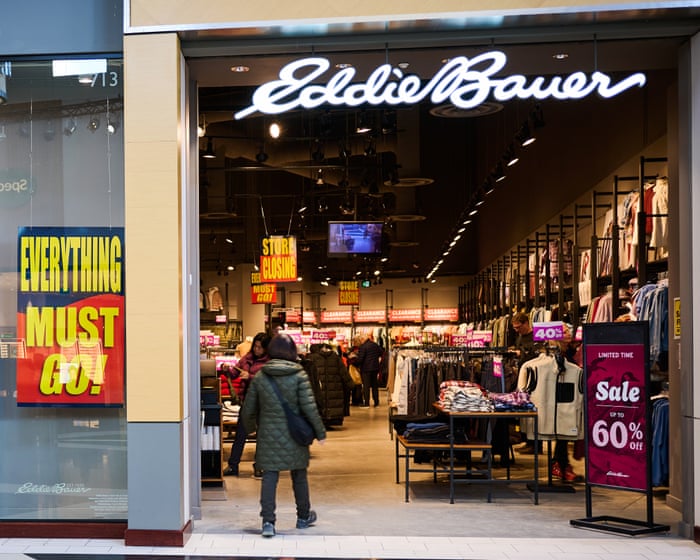
Companies like Saks, Eddie Bauer, Kmart, JoAnn Fabrics, and Steward Health Care, once owned by private equity, have gone bankrupt or closed.
Private equity firms own many US companies, employing over 13 million people, including retailers, healthcare providers, and startups.
Around 13,500 companies owned by private equity in the US have not been sold, some held much longer than usual.
High interest rates and rising prices make it difficult for private equity to sell companies at their desired value.
Many companies owned by private equity carry large amounts of debt, increasing the risk they could collapse.
These companies provide important services and jobs, so their failure could harm communities.
Private equity leaders say they have enough money to help their companies through tough times.
The business model works like buying a house with a loan, but companies, not buyers, have to repay the debt.
Read the Original
Want the full story? Tap a source to open the original
article.
The growing popularity of Pokémon and other trading cards has led to a rise in thefts targeting mail orders sent through Royal Mail in the UK. Small businesses selling these cards online have reported multiple incidents where packages were opened and cards stolen, causing financial losses and forcing some to stop online sales.
Key Facts
Pokémon cards have been hugely popular for over 30 years, with over 85 billion cards printed worldwide.
Some Pokémon cards can sell for very high prices, encouraging more people to collect and resell them.
Several small UK card shops, like Bath TCG and Mana Rock Games, reported thefts where envelopes were cut open and cards stolen after mailing.
The stolen parcels were tampered with in similar ways, indicating targeted theft rather than random loss.
Bath TCG stopped online sales after losing about £4,000-£6,000 in potential business due to theft concerns.
Mana Rock Games also lost around £120 and paused online sales, losing about £500 in revenue.
Most card sellers use Royal Mail for delivery because buyers choose the shipping method on platforms like CardMarket.
Royal Mail is investigating the theft reports and is working with law enforcement to address the issue.
Read the Original
Want the full story? Tap a source to open the original
article.
Oura, a company that makes smart rings to monitor health, plans to list its shares on the Nasdaq stock market soon. The company reported strong growth, with over $1.2 billion in revenue for the first nine months of 2024 and recently became profitable.
Key Facts
Oura was founded in Finland in 2013 and is based in San Francisco.
Its smart rings track health data like heart rate, temperature, and sleep quality.
Rings cost between $349 and $499, with subscription plans at $5.99 monthly or $69.99 yearly for full data access.
The company earned $1.21 billion in revenue in the nine months ending June 30, 2024, a 74% increase from the previous year.
Oura made $60.8 million profit in the same period, up from $1.6 million the year before.
It has about 5 million subscription users, doubling in one year, with 89% gross profit margin on subscriptions.
Most subscribers are women (72%), and 42% are aged 30 to 45.
The latest ring model, Oura Ring 5, is 40% smaller and tracks over 50 health metrics.
Read the Original
Want the full story? Tap a source to open the original
article.
Water bills in Wales are set to increase by 42% by 2029-30, with an initial rise of 27% from April 2025. Households, including those with water meters, are already trying to save water, but many families say their budgets are stretched with little room to reduce costs further.
Key Facts
Welsh Water plans to raise water bills by 27% in April 2025, increasing the average bill from £503 to £639 per year.
Over five years, bills will rise by a total of 42% due to extra funding approved for water companies.
Welsh Water will invest £4.2 billion by 2030 to improve water services and infrastructure.
Leakage is a big problem: Welsh Water lost 85 billion litres of water in 2024/2025 due to leaks.
Welsh Water aims to cut leaks by 24% by 2030, investing £476 million in network upgrades.
Many people are trying to save water by using shower timers, turning taps off during brushing, and reusing water on plants.
Some families with water meters have reduced bills by careful water use but still find costs high.
Climate change, causing drier soil and more pipeline bursts, adds pressure on water systems.
Read the Original
Want the full story? Tap a source to open the original
article.
The number of 401(k) retirement accounts with at least $1 million has reached a record 769,000 according to Fidelity Investments. This increase was driven by a strong stock market and high employee savings rates, although most Americans still worry about their retirement finances.
Key Facts
There are now 769,000 401(k) accounts with $1 million or more, up 19% from the previous quarter.
About 3% of Fidelity’s 25.8 million 401(k) accounts have balances of at least $1 million.
Many 401(k) millionaires are older workers who have saved steadily for many years.
The average employee contribution rate to 401(k) plans remained a record high of 9.6% in the second quarter.
The stock market, measured by the S&P 500, rose 15% in the second quarter and 20% over the last year.
Despite rising balances, 72% of workers say they are behind on their retirement savings.
The average 401(k) balance was $155,800 as of June 30, much lower than $1 million.
Concerns about inflation, living costs, and global issues still affect workers’ retirement confidence.
Read the Original
Want the full story? Tap a source to open the original
article.
Fuel prices for farmers in the UK and US have sharply increased due to a rise in diesel costs. The increases come after conflicts involving the US, Iran, and Russia, which affected oil supply and caused diesel prices to spike.
Key Facts
Diesel prices rose by about 10% in the UK, with red diesel now costing around £1.10 per litre.
UK motorists’ average diesel price reached 183.5p per litre in late August.
Renewed US-Iran fighting and Russia’s extended diesel export ban contributed to higher fuel costs.
Brent crude oil price rose to nearly $97 a barrel, its highest in six weeks.
US diesel prices hit about $5.78 per gallon, a 54% increase since the Iran conflict began.
Farmers are buying fuel in smaller amounts more frequently to manage costs.
Ukrainian attacks on Russian refineries reduced global diesel supply.
Higher fuel prices are also affecting paraffin used to heat farm buildings, adding pressure on rural households.
Read the Original
Want the full story? Tap a source to open the original
article.
The U.S. Open's signature cocktail, the Honey Deuce, costs $23 and has continued to sell in record numbers despite its high price. Fans buy it not just as a drink but as a souvenir or a symbol of their experience at the event.
Key Facts
The Honey Deuce cocktail includes vodka, lemonade, raspberry liqueur, and three honeydew melon balls.
Its price increased from $22 to $23 in 2024, yet sales rose instead of falling.
The U.S. Open sold 738,459 Honey Deuces in 2023, a 32% increase from the previous year.
Typically, higher prices cause fewer sales, but the Honey Deuce is an exception.
Buyers treat the drink as a status symbol or souvenir, not just a cocktail.
The drink comes in a souvenir cup and is often photographed, enhancing its value as a memory.
Compared to other U.S. Open merchandise, the $23 price is seen as relatively reasonable for this type of status purchase.
The U.S. Open has not yet reached a price point where demand for the Honey Deuce drops significantly.
Read the Original
Want the full story? Tap a source to open the original
article.
Diesel fuel prices in the U.S. reached a record high average of $5.85 per gallon due to ongoing disruptions caused by the war in Iran. Higher diesel costs are raising transportation expenses, which are increasing prices for many goods, including groceries and everyday products.
Key Facts
Diesel prices in the U.S. hit a record high of $5.85 per gallon.
The price increase is linked to disruptions in fuel supply caused by the war with Iran, which has lasted six months.
Diesel is important for freight and delivery networks, so higher prices increase transportation costs.
Businesses are passing some of these higher costs to consumers through added fees on deliveries and packages.
Groceries like produce and meat are affected because they require frequent transport and diesel-powered farming equipment.
Other products transported by diesel trucks and trains include clothing, cosmetics, and furniture.
Experts warn that if diesel prices stay high, the cost increases will continue to impact many goods.
Read the Original
Want the full story? Tap a source to open the original
article.
Diesel prices reached a new all-time high of $5.85 per gallon, driven by global conflicts that have disrupted supply and refining. This surge raises costs for farmers, truckers, and shipping companies, which could increase the prices of many goods for consumers.
Key Facts
Diesel price hit $5.85 per gallon, surpassing the previous record set in June 2022.
Conflicts, including the Iran war and Russia-Ukraine war, disrupted diesel supply and refinery operations.
Diesel costs more than gasoline due to higher taxes, stricter environmental rules, and lower production per barrel of oil.
Diesel is essential for many industries like farming, trucking, fishing, and construction.
Higher diesel prices increase shipping and production costs, which can raise prices on many consumer goods.
Small trucking companies feel the impact more, as they have less ability to raise freight rates compared to large carriers.
Diesel inventories may be unusually low heading into refinery maintenance season, increasing price risks.
Rising diesel prices add inflation pressure, which could influence Federal Reserve decisions on interest rates.
Read the Original
Want the full story? Tap a source to open the original
article.
UK ministers are expected to approve the Jackdaw gasfield in the North Sea soon, with the energy secretary recommending approval next week. A decision on the larger Rosebank oilfield is expected later this year, with plans to use some proceeds from it to fund clean energy projects.
Key Facts
The Jackdaw gasfield is located off the coast of Aberdeen in the North Sea.
Energy Secretary Miatta Fahnbulleh is preparing to recommend approving Jackdaw soon.
The Rosebank oilfield is the largest undeveloped field in UK waters, with an estimated 500 million barrels of oil or equivalent.
Both projects could provide about 10% of the UK’s oil and gas output at their peak.
Environmental approval was previously removed but companies Shell and Equinor have reapplied, including carbon emissions assessments.
The UK government wants to balance oil and gas production with the transition to clean energy.
There is discussion about using tax revenues from Rosebank to fund green energy projects through a national wealth fund.
Some government officials are concerned about the impact of the green energy transition on workers in northeast Scotland.
Read the Original
Want the full story? Tap a source to open the original
article.
The UK government has not done enough to prepare the country's food supply for potential shocks like climate change, disease, or cyber-attacks, says the National Audit Office (NAO). The NAO urges the Department for Food, the Environment and Rural Affairs (Defra) to improve cooperation with communities and businesses to make the food system stronger and better ready for emergencies.
Key Facts
The UK's food supply faces risks from climate change, disease, and cyber-attacks.
Over one-third of the UK's food is imported, mostly through four key ports (Dover, Felixstowe, Southampton, London Gateway).
Defra has taken some steps but hasn’t done enough to help citizens and businesses prepare for food supply emergencies.
The food supply chain held up during Covid-19 and after Russia’s invasion of Ukraine, but future shocks may be harder to handle without more government support.
Food businesses say Defra’s communication has decreased since the pandemic, limiting their input on emergency plans.
Food is considered critical national infrastructure, but cold storage and food transport hubs are not yet included in this list.
The last big national test of Defra’s emergency plans was in 2023, but most supply chain businesses were not involved.
Local groups that manage emergencies say they don’t have clear guidance from the government on their roles during a food supply disruption.
Read the Original
Want the full story? Tap a source to open the original
article.
The article discusses whether people would lie about their birthday to get free gifts or deals from companies. It also highlights some common birthday freebies people can receive from businesses.
Key Facts
Some companies offer free items or discounts when it is a customer’s birthday.
People sometimes consider lying about their birthday to get these freebies.
Birthday freebies can include things like food, drinks, or small gifts.
The article explores the idea of honesty versus the temptation to get free things.
It encourages readers to think about whether it’s right to lie for a small reward.
The topic relates to personal finance and how people manage money or savings.
Read the Original
Want the full story? Tap a source to open the original
article.
India's avocado market has grown significantly from being nearly nonexistent 15 years ago to now importing 15,000 tonnes annually, while domestic production is around 8,000–9,000 tonnes. Farmers and businesses in India are now adopting new growing techniques and international varieties to meet rising demand and reduce imports.
Key Facts
Fifteen years ago, avocados were mostly ignored in India and called "dog fruit" because fallen ripe fruit was eaten by dogs.
Indian plantations initially grew avocados as shade trees for coffee, not as a main crop.
Demand for avocados increased notably after Bollywood star Shilpa Shetty recommended them for skin care around 2011.
Cottanad Plantations in Kerala now grows avocados on 40 acres and plans to increase harvest to 40-50 tonnes in the next 3 to 4 years.
India imports about 15,000 tonnes of avocados each year, but domestic production is only 8,000–9,000 tonnes, creating a supply gap.
Changing climate has hurt traditional crops like coffee and pepper, encouraging farmers to diversify with crops like avocados.
Indian growers have learned new methods from South African experts to protect avocado roots and improve yields.
Entrepreneurs like Harshit Godha in Madhya Pradesh are introducing international avocado varieties and advanced growing technology from Israel.
Read the Original
Want the full story? Tap a source to open the original
article.
Many families in the UK are moving out of new houses that have serious problems like damp, mould, and structural faults. Complaints about these issues to the New Homes Ombudsman Service have tripled in one year, highlighting widespread concerns about the quality of new-build homes.
Key Facts
A couple, Elissa and Johnnie, had to leave their new four-bedroom home due to about 150 faults including crooked walls and poorly fitted kitchens.
Many new home buyers, renters, and social housing residents in the UK reported problems like mould, damp, and collapsing ceilings.
Complaints to the New Homes Ombudsman Service increased from fewer than 600 to over 1,800 in 2025-26.
The ombudsman service covers new homes bought outright but not shared-ownership properties.
About one-third of new homes are outside the ombudsman's voluntary scheme, including Elissa and Johnnie’s home.
The UK government plans to make the ombudsman service mandatory to ensure homes are safe and well-built.
The increase in complaints partly comes from more homeowners being eligible to use the ombudsman and greater awareness of the service.
The Building Safety Act 2022 includes plans to improve home safety and regulatory standards after past building disasters.
Read the Original
Want the full story? Tap a source to open the original
article.
Asian stock markets mostly went up on Friday after technology stocks rose on Wall Street. Japan’s Nikkei, South Korea’s Kospi, Hong Kong’s Hang Seng, and China’s Shanghai Composite all saw gains, while Australia’s market stayed nearly the same.
Key Facts
Japan’s Nikkei index rose 0.6% to 64,622.33 in early trading.
South Korea’s Kospi increased 0.9% to 6,635.67.
Hong Kong’s Hang Seng jumped 2.1% to 25,751.26, and China’s Shanghai Composite gained 0.8% to 3,973.27.
Australia’s S&P/ASX 200 slightly dropped less than 0.1% to 9,011.80.
On Wall Street, the S&P 500 rose 1.1%, Dow Jones went up 1.2%, and Nasdaq increased 1.4%.
Big tech companies like Microsoft, Apple, and Meta helped lead the Wall Street rally.
Nvidia shares rose 1.8% after announcing it will buy AI platform Hugging Face for $13 billion.
Bond yields, which affect loan interest rates, eased a bit, influencing positive market moves.
Investors are watching for upcoming interest rate decisions by the U.S. Federal Reserve and Japan’s central bank.
Read the Original
Want the full story? Tap a source to open the original
article.
In August, electric vehicles (EVs) sold in Australia exceeded petrol cars for the first time, with over 27,000 EVs sold compared to nearly 26,000 petrol cars. This rise is driven by higher fuel prices, government rules requiring lower car emissions, and more available EV models.
Key Facts
EV sales in August reached a record 27,000, making up about 25% of all new car sales in Australia.
Petrol cars sold nearly 26,000 units, and diesel cars about 23,600 in the same month.
If plug-in hybrid cars are included, vehicles using plugs accounted for 36% of new car sales.
Rising oil prices, partly due to the war in Iran, have made petrol cars more expensive to run.
A federal vehicle emissions standard introduced last year requires car makers to reduce emissions every year.
Toyota was the top-selling brand, followed by BYD (Chinese) and Tesla (U.S.).
The Tesla Model Y was the most popular new model with over 6,400 sales.
Nearly 200 EV models are now available in Australia, expanding choices for buyers.
Experts say improving public charging stations, especially outside cities, is important for future EV growth.
Read the Original
Want the full story? Tap a source to open the original
article.
Aardman Animations, founded in 1976 in Bristol, celebrates 50 years of creating popular stop-motion films like Wallace and Gromit and Chicken Run. The studio grew from simple clay modeling into an Oscar-winning company, helped by key decisions like making Gromit a dog instead of a cat and working with major figures like Steven Spielberg.
Key Facts
Aardman was started by Sir Peter Lord and Sir David Sproxton as school friends experimenting with plasticine.
Animator Nick Park joined in 1985 and created Wallace and Gromit’s characters.
Gromit was originally planned as a cat but was changed to a dog because it was easier to model.
Aardman’s film Chicken Run was the first full-length stop-motion movie, earning over $220 million worldwide.
Chicken Run helped inspire the creation of the Best Animated Feature Oscar category.
Wallace and Gromit won the Best Animated Feature Oscar for The Curse of the Were-Rabbit a few years later.
Shaun the Sheep, another character from Aardman, first appeared in 1995 and became very popular globally.
Aardman kept its production based in Bristol despite working with major Hollywood studios like DreamWorks.
Read the Original
Want the full story? Tap a source to open the original
article.
Volkswagen announced it will cut 50,000 more jobs worldwide as part of its largest restructuring in history. The company aims to handle challenges like US tariffs, too many cars being made, and strong competition from Chinese carmakers.
Key Facts
Volkswagen plans to reduce its global workforce by 50,000 additional jobs.
The cuts are part of Volkswagen’s biggest restructuring in 89 years.
Four German plants in Emden, Zwickau, Neckarsulm, and Hannover will be reviewed for their future as some models will be phased out by 2031.
The plan was approved by Volkswagen’s supervisory board, which includes unions and the state of Lower Saxony.
Volkswagen aims to simplify its corporate structure and reduce the power of the supervisory board.
CEO Oliver Blume said the company is taking responsibility for workers, partners, and jobs worldwide.
The announcement followed tensions between management, unions, and major shareholders.
Volkswagen faces pressure from US import tariffs and falling sales in China, the world’s largest car market.
Read the Original
Want the full story? Tap a source to open the original
article.
Volkswagen’s board has approved cutting 50,000 more jobs, adding to a previous plan to cut 50,000 roles by 2030. This means the company plans to reduce its workforce by 100,000 employees to deal with falling sales and changing market conditions.
Key Facts
Volkswagen plans to cut a total of 100,000 jobs by 2030.
An additional 50,000 job cuts were recently approved by the board.
The cuts include management positions across the company.
Volkswagen owns brands like Audi, Porsche, and Skoda.
The company has seen lower profits due to decreased sales and strong competition, especially from Chinese car brands.
The job reductions aim to keep Volkswagen competitive amid changing technology and market demand.
As of 2025, Volkswagen employed more than 660,000 people worldwide.
CEO Oliver Blume described the plan as taking responsibility for the workforce’s future.
Read the Original
Want the full story? Tap a source to open the original
article.