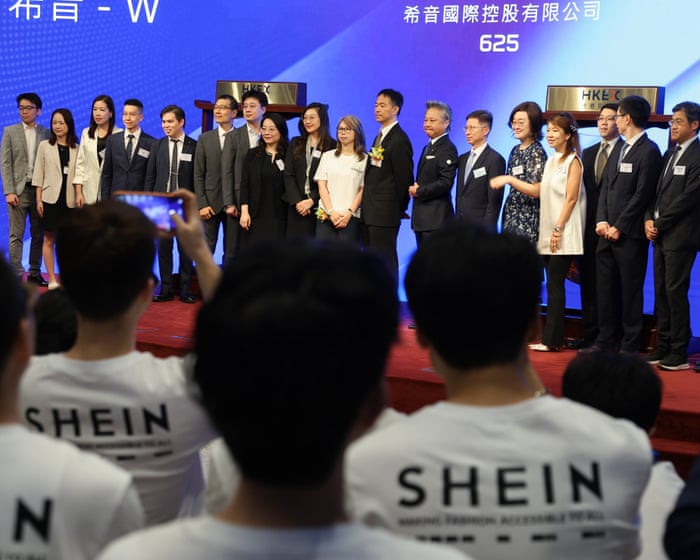
Shein, a fast-fashion company started in China and now based in Singapore, began trading on the Hong Kong stock exchange with a lower value than expected. The company’s stock price fell soon after its debut, reflecting challenges from new import taxes and government rules in various countries.
Key Facts
Shein priced its shares at HK$48.56, valuing the company at about $26 billion.
After the stock market debut, Shein’s shares dropped as much as 10% before settling 4% below the offer price.
Shein’s previous valuation was nearly $100 billion in 2022 but has declined due to regulatory changes.
New rules in the US, EU, and UK target low-value imports, affecting Shein’s business model of shipping small packages with tax advantages.
Shein reported a loss of $99 million in early 2024, compared to a profit of $395 million the year before.
France started fines on fast-fashion items to reduce overproduction and waste, impacting companies like Shein.
Shein moved its headquarters to Singapore in 2022, partly to reduce scrutiny on Chinese firms.
The company says it has improved its supplier rules to stop forced and child labor after such concerns were raised.
Read the Original
Want the full story? Tap a source to open the original
article.
Oil prices rose again as fighting restarted in the Middle East after a pause, raising worries about the conflict’s impact. Asian stock markets showed mixed results, and some U.S. stocks fell following these events and concerns about energy costs and inflation.
Key Facts
Brent crude oil price increased by 0.8% to $91.23 per barrel.
The U.S. attacked Iranian rocket launchers on an island, claiming they planned to put mines in the Strait of Hormuz.
Iran fired missiles at U.S. sites in Jordan, but all were intercepted.
The Strait of Hormuz handles about 20% of global oil shipments, and the conflict has reduced traffic there.
Asian stock markets were mixed: Hong Kong’s Hang Seng fell nearly 1%, but Tokyo’s Nikkei and South Korea’s Kospi rose slightly.
U.S. stock indexes like the S&P 500 and Dow Jones had small declines recently.
Exxon Mobil and Chevron share prices rose over 2% due to higher oil prices.
High energy prices have kept inflation above the Federal Reserve’s 2% goal, affecting consumer spending and complicating interest rate decisions.
Read the Original
Want the full story? Tap a source to open the original
article.
Oil prices have risen due to increased tensions and military attacks between the United States and Iran. The conflict is affecting shipping through the Strait of Hormuz, a key route for global oil supply, causing concerns about supply interruptions and pushing oil prices above $91 per barrel.
Key Facts
Brent crude oil price climbed over 1% on Tuesday, reaching above $91 a barrel.
Recent fighting included US strikes on Iran’s Larak Island and Iranian attacks on US bases in Jordan.
President Donald Trump said the US will respond strongly to Iranian attacks.
A tanker crossing the Strait of Hormuz was hit by three unknown projectiles, but no one was hurt.
The Strait of Hormuz handles about 20% of the world’s oil and has seen reduced shipping activity due to safety fears.
Since the end of a ceasefire in mid-August, oil prices have fluctuated between $86 and $91 a barrel.
Shipping vessels are often turning off tracking systems to avoid attacks, which makes the situation more uncertain.
Analysts say oil prices may stay high short-term but could drop if tensions ease and shipping returns to normal.
Read the Original
Want the full story? Tap a source to open the original
article.
Hospitality and tourist businesses in Cornwall want the government to extend and expand a temporary VAT (tax) cut that reduced the cost of family attractions, children’s meals, and cinema tickets over the summer. The VAT reduction from 20% to 5% lasted about 10 weeks and had mixed effects, with some businesses seeing small increases in visitors while others said customers did not know about the scheme.
Key Facts
The UK government offered a summer scheme cutting VAT from 20% to 5% on children’s meals, family attraction tickets, and cinema tickets.
The scheme lasted for nearly 10 weeks, ending on 1 September.
Some businesses, like the Big Sheep Farm and Theme Park, saw a slight rise in visitor numbers and lowered ticket prices.
Other businesses said customers were unaware of the VAT cut despite some advertising.
Some attractions did not lower prices but kept the saved VAT money to avoid raising prices later.
Hospitality leaders want the VAT cut to become permanent or extended into the winter months to help struggling businesses.
A 0% or 5% permanent VAT on family attractions could help businesses invest and keep prices affordable.
Businesses think the scheme was rushed and not well promoted by the government.
Read the Original
Want the full story? Tap a source to open the original
article.
A bed and breakfast owner in Scarborough, North Yorkshire, warned that a new tourist tax could make it harder for his business to compete with nearby areas that don’t have the tax. Officials are reviewing feedback on the proposed tax, which is intended to raise money for local services, but some local leaders and business people have mixed views on it.
Key Facts
North Yorkshire may introduce a visitor levy, a small tax on tourists staying overnight.
The consultation on the levy closed in February, with decisions expected later this year.
James Rusden, a Scarborough B&B owner, said the tax could push visitors to nearby places without the tax.
Rusden said the tax would add extra cost and be harder on tourists with tight budgets.
The tax money is meant to support local priorities and services, according to a government spokesperson.
David Skaith, York and North Yorkshire mayor, sees the levy as a possible benefit for the area.
Some local leaders, like the mayor of Hull and East Yorkshire, oppose the tax.
Research suggests some funds from the tax should directly support the tourism industry.
Read the Original
Want the full story? Tap a source to open the original
article.
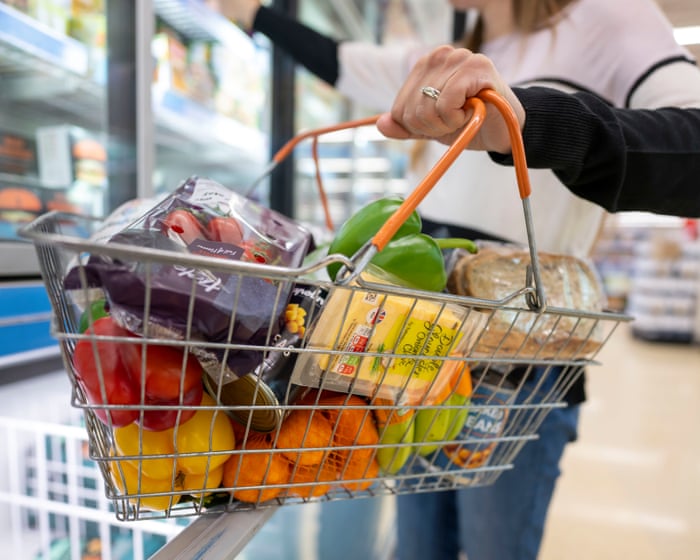
Prices in UK shops rose faster in August, reaching the highest level in two years. Higher energy costs made food more expensive, and growing demand for AI chips raised prices for technology products.
Key Facts
Shop prices in the UK rose by 1.5% in August compared to last year, up from 0.9% in July.
Prices for tinned and packaged food increased by 2.5% in August.
Fresh produce prices stayed high at 3%, slightly lower than July’s 3.1%, due to a hot, dry summer and high energy costs.
Electrical goods prices rose because AI technology increased demand for memory chips and storage.
Clothing prices remained low as retailers tried to help families prepare for the school year.
Rising business costs make it hard for companies to avoid raising prices.
The UK experienced higher overall inflation in July at 2.9%, up from 2.6% in June, partly due to energy prices affected by the Iran war.
Households in Great Britain are facing the biggest summer rise in energy bills in four years despite government help.
Read the Original
Want the full story? Tap a source to open the original
article.
This article explains how gardeners can choose different types of chrysanthemums (mums) for fall gardens beyond the common cushion mums. It describes the variety of mum types, their growing conditions, and tips for selecting perennial mums that can last for several years.
Key Facts
Chrysanthemums are popular fall garden flowers that come in many types beyond the usual cushion mums.
There are about 40 species of wild chrysanthemums and many cultivated varieties.
The National Chrysanthemum Society classifies mums into 13 categories based on flower shape.
Some mum types need special care and are not easy to grow outdoors.
Many mums are perennials, meaning they can survive year after year if planted early enough.
Florist mums, often sold in supermarkets, are usually for single-season decoration and do not return.
Cushion mums bloom from late summer to fall for about 4 to 6 weeks and come in many colors.
Other unique mums include daisy mums and spider mums, which have different flower shapes and can be found at specialty nurseries.
Read the Original
Want the full story? Tap a source to open the original
article.
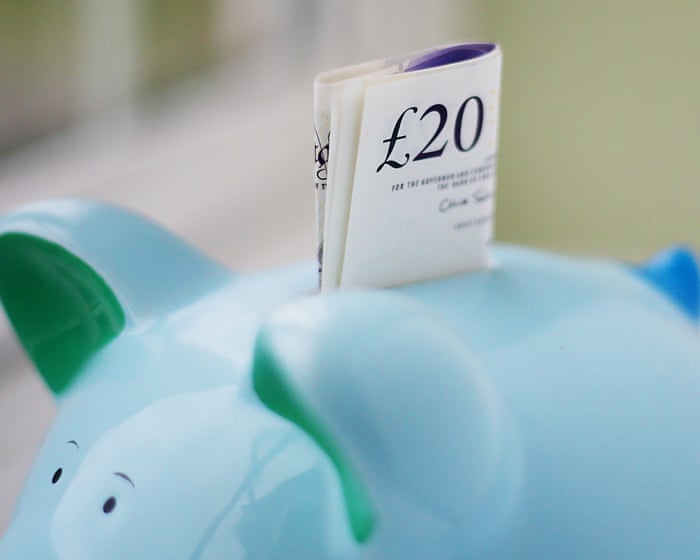
The Financial Conduct Authority (FCA) is reviewing child trust fund providers to see if they are helping savers find and access their accounts. About £1.5 billion in unclaimed funds remain, and the FCA wants firms to make sure fees are fair and vulnerable people get support.
Key Facts
Around 760,000 child trust fund accounts, worth about £1.5 billion, are unclaimed.
The child trust fund scheme started for children born between 2002 and 2011 to encourage saving.
Families received at least £250 from the government for each child’s account.
The FCA wants banks, insurers, and fund managers to do more to find customers who lost contact with their accounts.
The FCA warned against paying expensive fees to companies that offer to find lost funds, since this service is free through HMRC.
The review will check if fees and charges are fair under a 2023 consumer duty rule requiring good customer outcomes.
Some providers will face more detailed questions if they hold large shares of the market or if there are signs of problems.
The FCA will report its findings next year and may take action against providers if needed.
Read the Original
Want the full story? Tap a source to open the original
article.
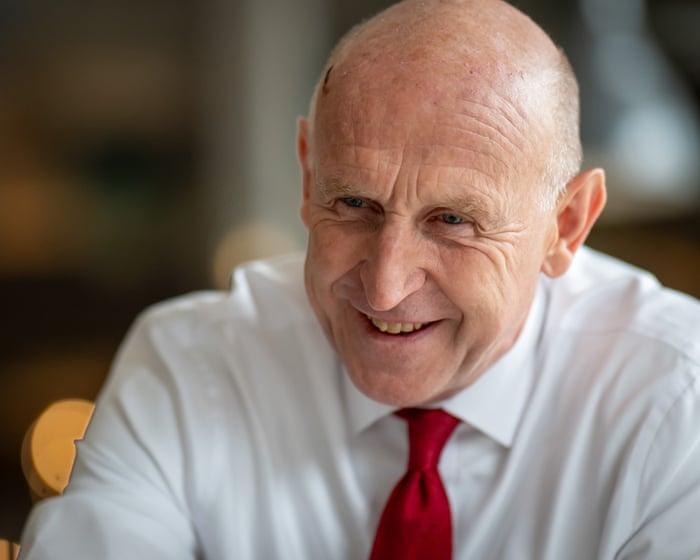
John Healey, the UK chancellor, has invited staff at all levels of the Treasury, including junior and non-economist employees, to submit ideas for the upcoming October budget. He aims to hear diverse suggestions focused on spreading economic growth, supporting local industries, and helping families and businesses manage costs amid financial challenges.
Key Facts
John Healey is the UK chancellor responsible for the October budget.
He asked all Treasury staff, from apprentices to senior economists, to contribute budget ideas.
Healey wants ideas that promote economic growth across different regions and support local businesses.
The move challenges traditional government hierarchies by involving non-policy workers like IT and junior staff.
Selected contributors will get a chance to present their ideas directly to Healey.
Healey emphasizes maintaining fiscal discipline and avoiding excessive government debt.
The budget may include about £5 billion to fill a gap in defence spending, partly funded by cuts in other government departments.
Labour’s manifesto promises no tax increases on income, national insurance, or VAT despite spending needs.
Read the Original
Want the full story? Tap a source to open the original
article.
Shares of Shein, a fast-fashion online retailer, dropped about 10% after its first day of trading on the Hong Kong stock market. The company raised around $1.7 billion in its initial public offering, but increasing tariffs and higher costs have hurt its profits.
Key Facts
Shein’s shares fell roughly 10% on their first day in Hong Kong.
The company raised $1.7 billion by selling shares at HK$48.56 ($6.19) each.
Shein’s business depends on delivering cheap, fast fashion from China to Western customers.
New tariffs in the U.S. and EU on low-value goods from China increased costs for Shein.
Higher shipping costs, partly due to the Iran conflict, also hurt Shein’s profits.
Shein reported a $99 million loss in early 2026, compared to a $395 million profit in early 2025.
Shein moved its headquarters from China to Singapore around 2021 but returned to list shares in Hong Kong.
The company benefits from a unique supply chain system in Guangdong province, China, where it started.
Read the Original
Want the full story? Tap a source to open the original
article.
The Trump administration has made a deal involving a private company, North American Blue Energy Partners (NABEP), to develop Venezuelan oil reserves. The U.S. Defense Department will own 35% of this company, and the State Department can buy a significant portion of its oil, aiming to increase production while costing no money to American taxpayers.
Key Facts
Venezuela has granted NABEP a 100-year agreement to drill in 17 oil fields holding about 65 billion barrels of oil.
The U.S. Defense Department will own 35% of NABEP.
The U.S. State Department can buy 20% of NABEP’s oil at production cost and has the first option to buy more.
NABEP currently produces over 200,000 barrels per day and aims to increase to over 1 million barrels daily soon.
The deal includes plans to invest up to $100 billion to improve Venezuela’s oil infrastructure.
President Trump says this deal will help lower energy prices and strengthen U.S. energy security without costing taxpayers.
Some experts warn it may take years for Venezuelan oil to impact U.S. prices due to infrastructure challenges and the quality of the oil.
The deal has faced criticism from U.S. politicians and Venezuelan opponents who question its legality and purpose.
Read the Original
Want the full story? Tap a source to open the original
article.
The article gives advice on how to make going back to work after summer holidays easier. It suggests starting with small tasks, being gentle with yourself on the first day, and keeping some holiday habits at home. It also encourages thinking about the deeper reasons for feeling unhappy at work and planning future holidays.
Key Facts
Easing back into work with small tasks can help avoid feeling overwhelmed by a full inbox.
Being kind to yourself on the first day back, such as avoiding back-to-back meetings, can reduce stress.
Using a clear out-of-office message can manage others’ expectations and reduce pressure.
Bringing parts of holiday routines, such as evening walks or screen-free meals, into daily life can improve wellbeing.
Exploring your local area with curiosity helps keep the holiday feeling alive.
Long-lasting or intense feelings of unhappiness at work may suggest deeper issues beyond simple adjustment.
Thinking carefully before making major job changes is important to avoid impulsive decisions.
Looking forward to and planning new holidays can boost mood and motivation.
Read the Original
Want the full story? Tap a source to open the original
article.
Houses near top state secondary schools in the UK cost about £40,000 more on average than those in the surrounding areas. This extra cost is similar to the price of several years of private school fees. The price difference varies by location, with some areas showing much larger premiums.
Key Facts
The average house near a top 50 state secondary school costs about £415,791, which is £40,574 (11%) more than homes in the wider local area.
Private school fees average £23,000 per year, so over seven years, the total cost is similar to the extra house price near top state schools.
In Sutton Coldfield, near Bishop Vesey’s grammar school, home prices are £275,814 higher than the wider Birmingham area.
Near Henrietta Barnett School in London, homes cost 37% more than the rest of the Barnet borough, adding an extra £354,288 in value.
Some areas show the opposite trend; near Reading School and Kendrick School, houses are cheaper than the local average by £84,373.
Families often consider the quality of local schools when choosing where to live, leading to these price premiums.
Near top private schools in London, prices can be up to 77% higher, with Queen’s College area homes costing around £1.92 million on average.
Premiums near private schools like Westminster School and Francis Holland School are about 54.5% higher than the wider Westminster area.
Read the Original
Want the full story? Tap a source to open the original
article.
The United States and Venezuela have made a new agreement related to oil reserves. President Donald Trump says the deal is positive, but experts think it may take a long time before the agreement produces results.
Key Facts
The U.S. and Venezuela signed a new oil reserve agreement.
President Donald Trump supports the deal and downplays concerns.
Experts warn the deal could take years to become fully operational.
The agreement involves managing or using oil resources between the two countries.
Details on how the deal will work or its exact benefits were not provided.
CBS News reported on this development and included expert opinions.
Read the Original
Want the full story? Tap a source to open the original
article.
The Federal Trade Commission (FTC) and 22 states have sued Amazon, accusing it of charging customers too much for online advertising by misleading them about prices. The lawsuit says Amazon said their ad auctions had competitive prices, but actually raised prices for about 1.2 million customers.
Key Facts
The lawsuit was filed in the U.S. District Court in the Western District of Washington.
Amazon is accused of defrauding advertising customers by inflating prices in online ad auctions.
Around 1.2 million customers were affected by these allegedly higher charges.
The FTC claims Amazon misled customers by saying the prices were competitive.
FTC Chairman Andrew Ferguson said the company’s actions had a big impact because Amazon has so many advertising customers.
Amazon responded by denying the allegations, calling them false and based on oversimplified statements.
The case centers on honesty and fairness in how Amazon sells advertising space online.
Read the Original
Want the full story? Tap a source to open the original
article.
Shein, a fast-fashion company known for low prices and trendy items, is going public on the Hong Kong stock market after failing to list in the US and UK. The company raised about $1.7 billion, valuing it at $26.3 billion, down from an earlier estimate of nearly $100 billion, amid challenges like competition, trade tensions, and concerns about labor and environmental practices.
Key Facts
Shein is listing its shares on the Hong Kong stock market, raising 13.6 billion Hong Kong dollars (about $1.7 billion).
The company’s stock market value is approximately $26.3 billion after the listing.
Shein was once valued close to $100 billion but now has a much lower valuation due to market and regulatory challenges.
The company sells fashion products in over 150 countries and has 281 million active customers.
Shein has faced criticism over labor practices, including allegations of forced labor, which it denies and says it has zero tolerance for.
Shein’s attempts to list in the US and UK were blocked by concerns about labor and environmental issues.
The rise of fast fashion on e-commerce was boosted during the COVID-19 pandemic when more people shopped online.
The company is headquartered in Singapore with production primarily in China and faces competition and regulatory scrutiny globally.
Read the Original
Want the full story? Tap a source to open the original
article.
Japan is increasing its investments and business activities in India as it faces slowing growth and tensions in China. Japanese companies, including big retailers and banks, are expanding their presence in India, signing deals worth billions of dollars in sectors like finance, retail, and technology.
Key Facts
India’s commerce minister led the biggest Japanese business group visit to strengthen trade ties.
Japanese brands like Uniqlo, Muji, and Onitsuka Tiger are rapidly expanding in Indian cities.
Japanese banks are buying major stakes in Indian financial companies, with a $4.4bn deal for Shriram Finance and a large shareholding in Yes Bank.
Over 100 Japanese firms run global capability centers in India, focusing on important jobs like research and AI development.
Japan’s local market is shrinking due to population decline, making India a key growth market.
Investment in China by Japanese firms has dropped because of political and economic problems.
Indian Prime Minister Modi and Japan have a "special strategic and global partnership" aimed at boosting business ties.
In July, Japanese companies announced $12.5bn in new investments in India across various sectors during the Japanese Prime Minister's visit.
Read the Original
Want the full story? Tap a source to open the original
article.
The US Federal Trade Commission (FTC) and 22 states have sued Amazon, accusing the company of secretly raising ad prices by changing online auction results. The lawsuit claims this practice has earned Amazon about $20 billion since 2019 and has harmed advertisers and customers.
Key Facts
The FTC and states filed the lawsuit in Washington state on Monday.
Amazon is accused of replacing auction prices with higher prices to increase profits.
Amazon denies the claims and says the lawsuit is based on misunderstanding.
The alleged practice involves charging advertisers near their own bid prices instead of the expected lower second-price auction rate.
The lawsuit says these higher ad costs are passed on to customers, causing harm.
Amazon's stock price dropped by 2.5% after the lawsuit was announced.
Amazon previously settled a separate FTC case in 2024 for $2.5 billion over Prime subscription issues.
Amazon says average winning ad bids have actually gone down in recent years, and that most ads are not given to the highest bidder.
Read the Original
Want the full story? Tap a source to open the original
article.
A judge allowed J.M. Smucker to continue a lawsuit against Trader Joe’s for allegedly copying the look of Smucker’s Uncrustables frozen sandwiches. Smucker claims Trader Joe’s sandwiches and packaging are too similar, while Trader Joe’s denies copying and says the design is functional.
Key Facts
Smucker sued Trader Joe’s in federal court in Ohio over frozen peanut butter and jelly sandwiches.
Smucker says Trader Joe’s sandwiches copied the round shape and crimped edges of Uncrustables.
Smucker also claims Trader Joe’s packaging looks very similar to Uncrustables’ box design.
Trader Joe’s says its sandwiches are shaped as “squircles” (square with rounded edges) not round.
Trader Joe’s argues the crimped edge is needed to keep sandwich contents inside.
A judge ruled that Smucker’s Uncrustables brand has established customer recognition over 20 years.
The court denied Trader Joe’s request to move the case to California.
Smucker wants Trader Joe’s to pay restitution and destroy all disputed products and packaging.
Read the Original
Want the full story? Tap a source to open the original
article.
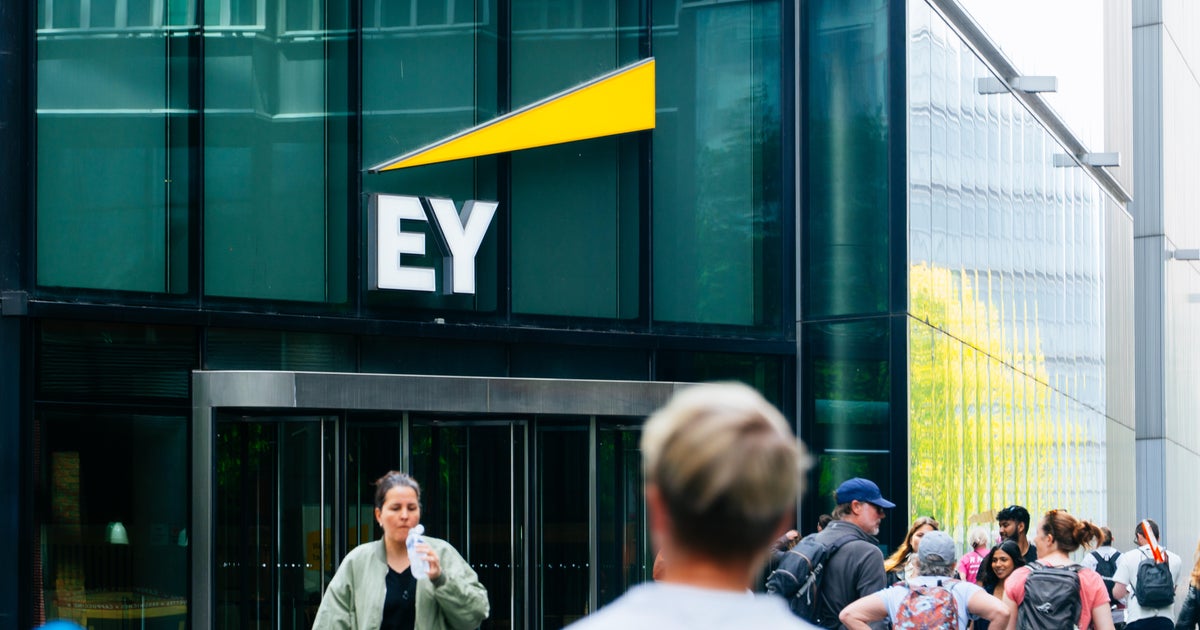
Ernst & Young (EY), a large consulting firm, will give $100 million in bonuses to workers who show strong human skills like leadership and teamwork. EY believes these skills are important for the future, especially as technology and artificial intelligence (AI) change how work is done.
Key Facts
EY is one of the "Big Four" management consulting firms.
The company plans to award $100 million in bonuses for human skills such as leadership, good judgment, business sense, teamwork, and adaptability.
EY will also reward employees who adopt new technology.
The CEO of EY Americas, Dante D'Egidio, said this shows the firm’s commitment to building a future workforce.
EY sees a future where technology leads work but human skills remain essential.
Economists say AI may eliminate some jobs but create new ones.
Workers who do not learn to use AI with their skills risk being left behind.
Read the Original
Want the full story? Tap a source to open the original
article.