Apple has fixed a serious security flaw in its Beats Studio Buds earbuds that allowed nearby hackers to listen to users’ conversations without permission. The update is installed automatically when the earbuds connect to an iPhone, iPad, or Mac.
Key Facts
The vulnerability, named CVE-2025-20701, affected the earbuds' Bluetooth firmware and let attackers pretend to be trusted devices.
This flaw could let hackers hear sounds picked up by the earbuds’ microphone if they were close enough.
Apple released the fix in Beats Firmware Update 1B211, delivered automatically to users’ devices.
The security issue was discovered by researchers Dennis Heinze and Frieder Steinmetz from the company Insinuator.
The flaw comes from chips made by Airoha Systems, which issued a software update to fix the problem.
Other headphone brands like Jabra, Bose, and JBL have also issued similar patches.
The attack requires the hacker to stay near the user and within Bluetooth range.
Experts recommend turning off Bluetooth when not in use to reduce risk.
Read the Original
Want the full story? Tap a source to open the original
article.
AI data centers use a lot of electricity and water, which raises environmental concerns. However, their overall environmental impact is smaller compared to other big industries like beef production, coal power plants, cement manufacturing, and commercial aviation.
Key Facts
U.S. data centers used about 176 terawatt-hours of electricity in 2023, around 4.4% of the country's total electricity use.
Globally, data centers account for 1 to 2 percent of electricity usage, and this is expected to increase as AI grows.
AI data centers use energy, water for cooling, and create emissions during construction.
The environmental impact of data centers varies depending on whether they use renewable energy or fossil fuels.
Beef production creates large greenhouse gas emissions due to methane from cattle and resource use, exceeding emissions from air travel.
Coal-fired power plants are some of the largest sources of carbon dioxide, emitting more than many data center campuses.
Cement production contributes about 7 to 8 percent of global carbon dioxide emissions, more than AI computing emissions.
Commercial aviation produces hundreds of millions of tons of carbon dioxide annually, with long flights creating several tons per passenger.
Read the Original
Want the full story? Tap a source to open the original
article.
A discussion highlighted that technology is closely linked to political values. Differences between Europe and the United States in regulating technology reflect their distinct political beliefs, illustrated by the recent US export ban on advanced AI tools from the company Anthropic.
Key Facts
Technology has deep connections to politics, affecting how it is regulated.
Europe and the US have different approaches to tech regulation based on their values.
The US recently banned exports of the latest AI tools developed by Anthropic.
The discussion took place during a France24 debate segment.
Regulation of AI reflects broader political and ethical concerns in each region.
The US export ban shows how the country controls tech spread for political or security reasons.
The conversation was framed as part of understanding global tech governance and values.
Read the Original
Want the full story? Tap a source to open the original
article.
Noah Graves is not a real musician but an AI-created Christian rock artist developed by The Christian Wave project. The AI-generated music and videos have attracted many listeners online, raising questions about how people can tell the difference between real and artificial artists.
Key Facts
Noah Graves is an AI-generated artist made by The Christian Wave project.
The music combines Christian themes with rock and metalcore styles.
The song “Lost and Seeking” was released on May 29 and has over 88,000 views.
Many listeners first thought Noah Graves was a real person due to the high-quality music and videos.
The AI-generated music has been widely shared on platforms like TikTok, Instagram, YouTube, and Spotify.
Some fans appreciate the music’s emotional themes regardless of its AI origin.
Others feel confused or think it is misleading that the AI persona was not clearly labeled as artificial.
The story reflects a growing trend where AI blurs the line between real and synthetic music artists.
Read the Original
Want the full story? Tap a source to open the original
article.
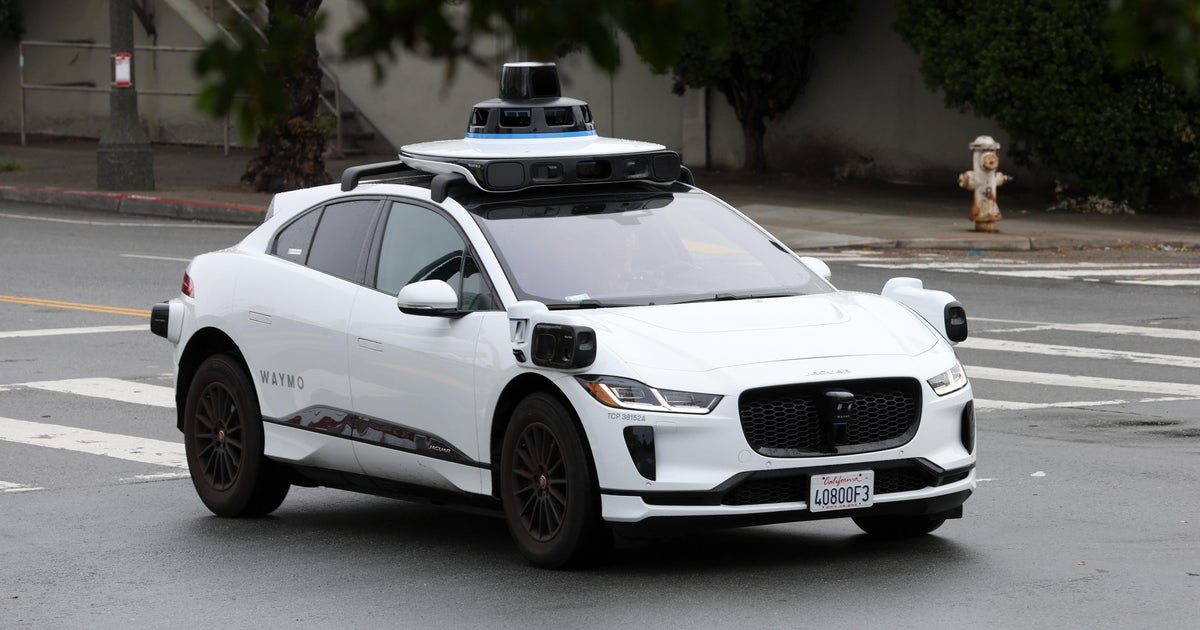
Waymo is recalling nearly 3,900 self-driving robotaxis because their software failed to recognize construction zones and ramp closures on freeways in Arizona and California. This problem caused some vehicles to drive at speed into these dangerous zones, leading to safety concerns and a temporary driving restriction while the issue is investigated.
Key Facts
The recall affects Waymo's 5th Generation Automated Driving System used in Jaguar robotaxis.
The issue involves the software not properly detecting freeway construction zones and ramp closures.
Incidents happened in Phoenix, Arizona, and the San Francisco Bay Area in April and May.
Waymo paused freeway driving for its robotaxis to investigate the problem.
In one case, a passenger reported fear for their safety when the car sped through a construction zone and police followed.
Waymo offered three free rides worth up to $40 each to the passenger involved.
The National Highway Traffic Safety Administration (NHTSA) posted the recall notice and warned about collision risks.
Waymo is a subsidiary of Alphabet, and it expanded freeway robotaxi service in San Francisco, Phoenix, and Los Angeles last year.
Read the Original
Want the full story? Tap a source to open the original
article.
At the 10th VivaTech festival in 2026, IBM showcased its latest quantum computing system and discussed how this technology can solve problems that regular computers cannot handle. Experts from IBM talked about the practical uses of quantum computing, challenges from global politics, and future goals for the technology.
Key Facts
VivaTech 2026 is the 10th annual festival focused on technology innovation.
IBM presented its Quantum System Two chandelier, a new quantum computing technology.
Quantum computers can handle complex problems beyond the reach of classical computers.
Industries like healthcare and finance could benefit from quantum computing advances.
Jerry Chow, IBM’s Chief Technology Officer for Quantum-Centric Supercomputing, discussed real-life benefits and geopolitical challenges.
Geopolitical pressure affects the development and sharing of quantum technology.
The festival highlighted the next important steps needed to bring quantum computing into widespread commercial use.
Quantum computing is moving from an experimental stage to practical commercial applications.
Read the Original
Want the full story? Tap a source to open the original
article.
Wargaming has released "World of Tanks: HEAT," a new game focused on fast, close-up tank battles with unique characters called Agents. Unlike the original "World of Tanks," this standalone game offers more action and cross-platform play, while still keeping a mix of realistic and fictional elements.
Key Facts
"World of Tanks" is a popular online tank battle game launched in 2010.
"World of Tanks: HEAT" is a new, separate game, not just a new mode.
HEAT uses a new game engine that supports playing across PCs and all major consoles.
The gameplay is more action-packed and focused on quick, direct confrontations.
Players can choose special characters called Agents and customize tanks.
The game aims to balance about 70% realism with 30% fictional design.
HEAT emphasizes teamwork, strategy, and using each Agent’s and tank’s strengths.
The original "World of Tanks" will continue to get updates and support.
Read the Original
Want the full story? Tap a source to open the original
article.
A Pew survey found that 40% of Americans believe artificial intelligence (AI) will have a negative effect in the future. The survey reflects mixed feelings about how AI might change society.
Key Facts
40% of Americans expect AI to have a bad impact.
The survey was conducted by Pew Research Center.
The results show people are concerned about AI’s future role.
Some experts, like MIT Sloan professor Eric So, discuss the survey findings.
The survey was reported on by CBS News.
Opinions about AI’s effects vary among the public.
The survey highlights uncertainty about AI technology.
The focus is on Americans' views about AI’s impact going forward.
Read the Original
Want the full story? Tap a source to open the original
article.
Rockstar Games announced the pre-order date and showed the official cover art for Grand Theft Auto 6 (GTA 6). The game will be available from November 19 on PlayStation 5 and Xbox Series X/S, after being delayed twice.
Key Facts
GTA 6 pre-orders start on June 25 in digital stores and select retailers.
The game will launch on November 19 for PlayStation 5 and Xbox Series X/S.
GTA 6 was delayed twice, originally planned for autumn 2025 and then May.
The cover art shows the main characters, Jason and Lucia, with other figures, set in a fictional state inspired by Florida.
The design includes elements like flamingos, alligators, fast cars, helicopters, and motorbikes in a colorful pop-art style.
GTA 5, the previous game, came out in 2013 and is the second best-selling game ever.
Earlier trailers for GTA 6 have gained 446 million views combined.
Fans are still waiting for a new gameplay trailer after previous story-focused reveals.
Read the Original
Want the full story? Tap a source to open the original
article.
The article discusses concerns about the reliability of data from the FDA on the drug mifepristone. It emphasizes the need for the FDA to use strong and trustworthy data from real-world sources when reviewing the drug.
Key Facts
The article focuses on the FDA’s data about mifepristone, a medication.
There are doubts about how trustworthy the current data is.
The FDA will publish a review of this data soon.
The review will be closely examined and questioned.
To be credible, the FDA should use solid data from real-life situations, not just limited or controlled studies.
Real-world data means information gathered from everyday use outside of clinical trials.
Strong data is important to ensure safety and accuracy in medical decisions.
Read the Original
Want the full story? Tap a source to open the original
article.
Congress is looking into using artificial intelligence (AI) to improve how it works and make its processes more efficient. This effort is supported by the Bipartisan Select Committee on the Modernization of Congress and the POPVOX Foundation.
Key Facts
Congress wants to use AI to modernize its operations.
The goal is to increase efficiency in congressional work.
The Bipartisan Select Committee on the Modernization of Congress is involved.
The POPVOX Foundation is also helping with this project.
AI could assist in managing tasks and information for lawmakers.
This is part of a broader effort to update how Congress functions.
Read the Original
Want the full story? Tap a source to open the original
article.
A new clinical trial is testing a gene therapy that may make human cells younger by partially reprogramming them. This trial focuses on treating eye diseases like glaucoma and will first check if the therapy is safe for humans.
Key Facts
The trial is the first in humans to test if cells can be made younger through "cellular reprogramming."
The therapy targets three genes to restore nerve function between the eye and the brain.
Life Biosciences, co-founded by Harvard professor David Sinclair, is sponsoring the trial.
The current trial only tests safety, not if the therapy can slow aging or cure glaucoma.
Success could prove the concept of cellular reprogramming as a way to treat aging.
Longevity biotech companies have attracted hundreds of millions of dollars in investments.
Some major investors include tech billionaires like Coinbase CEO Brian Armstrong and OpenAI CEO Sam Altman.
Longevity research aims to treat aging as a biological process that might be changed by medicine.
Read the Original
Want the full story? Tap a source to open the original
article.
Apple CEO Tim Cook said that Apple will have to raise the prices of its products because the demand for memory chips is very high due to growth in artificial intelligence (AI). He explained that costs for these chips have risen a lot, making it impossible for Apple to keep prices steady.
Key Facts
Apple needs to increase product prices due to high demand for memory chips from AI growth.
Tim Cook called the price rises “unavoidable” but said Apple has tried to protect customers from them.
Memory chip prices, especially for DRAM used in AI servers, have increased sharply—around 50% every quarter since late 2025.
Apple might raise the price of the upcoming iPhone Pro model by about $270 to keep profits stable.
AI data centers expanding rapidly have caused strong competition for key electronic parts, pushing prices up.
Tim Cook described the price increase as a “hundred-year flood,” a huge and rare event.
The US has restrictions on working with Chinese memory companies, which affects supply chains.
Cook suggested all options should be considered to improve the supply of important components.
Read the Original
Want the full story? Tap a source to open the original
article.
The Adventures of Elliot: The Millennium Tales is a new video game by Team Asano with a classic Zelda-style adventure. It features 2D-HD pixel art, time-travel puzzles, and a mix of treasure hunting and combat with customizable weapons.
Key Facts
The game blends old-style Zelda gameplay with modern 2D-HD pixel art and visual effects.
The story follows Elliot, an upbeat adventurer fighting a villain trying to summon an ancient evil.
Players explore four different time periods, each changing the environment and abilities available.
Combat includes equipping gems to modify weapons with effects like flames or critical hits.
Weapons include traditional swords and bows plus unique tools like a scythe and hammer.
The game has fast travel, helpful hints, and a fairy companion that assists with puzzles.
It offers challenging late-game bosses and a balance between nostalgia and new gameplay features.
The writing and dialogue are very cheerful and sometimes cheesy, aiming for a friendly, accessible experience.
Read the Original
Want the full story? Tap a source to open the original
article.
Arizona is becoming a key example of how the growth of AI-related data centers is putting pressure on local energy and water supplies. The state and federal regulators are discussing how to handle the rising costs and environmental impacts as tech companies build these power-hungry facilities.
Key Facts
Data centers, especially for AI, need a lot of electricity and water, which is a challenge in Arizona’s desert climate.
The Arizona Corporation Commission wants to double utility capacity in 4-5 years to meet demand without raising costs for existing customers.
The Federal Energy Regulatory Commission (FERC) may propose rules to speed up data center connections to the electric grid and shift more connection costs to developers.
Arizona has paused some tax incentives for data centers for three years to study environmental impacts and guide future development.
Texas and Ohio governors have also paused or reconsidered tax breaks for data centers over similar concerns.
Google’s Arizona data center uses air cooling instead of water-intensive evaporative cooling to save water.
Air cooling uses more electricity but less water, which fits Arizona’s priority to reduce water use.
The Arizona data centers operate in extreme heat, nearly 107°F, requiring careful work scheduling to protect maintenance workers.
Read the Original
Want the full story? Tap a source to open the original
article.
Artificial intelligence (AI) systems are being used to find and remove hate speech on social media, but they often disagree on what counts as hateful. A 2025 study found that different AI models give very different scores to the same content, which can cause problems in keeping online spaces fair. Human judgment is still better at catching subtle or hidden forms of hate speech.
Key Facts
Hate speech includes any communication that discriminates or encourages violence based on identity like race, religion, gender, or disability.
Over two-thirds of internet users have encountered hate speech, according to a 2023 survey by Ipsos and UNESCO.
Meta removed fewer hateful posts in late 2025, shifting from AI detection to relying more on user reports.
TikTok claimed to remove 96.3% of hate speech content before users reported it in the last quarter of 2025.
AI hate speech detectors use large language models trained on labeled datasets to identify abusive language.
A 2025 University of Pennsylvania study compared seven AI systems and found big differences in how they detect hate speech.
Some AI models labeled many posts as highly hateful regardless of the target, while others were more conservative in their judgments.
AI struggles to detect implicit hate speech, which is hate expressed in a less obvious or indirect way.
Read the Original
Want the full story? Tap a source to open the original
article.
El Niño, a natural climate cycle causing warmer ocean waters in the Pacific, is expected to strengthen this winter and affect U.S. weather. This may lead to lower heating costs in some regions and changes in energy use due to wetter or drier conditions.
Key Facts
El Niño is a climate pattern that occurs every 2 to 7 years and changes ocean temperatures and weather.
The Climate Prediction Center expects El Niño to strengthen in the Northern Hemisphere this winter.
Typical U.S. winter effects include warmer weather in northern states, wetter conditions in the south, and drier weather in the Midwest.
Warmer winters can reduce heating costs for many Americans.
Increased rainfall can lower the chance of long heat waves in some regions, reducing summer energy demand.
The Northwest and upper Midwest might have drier, hotter summers, increasing cooling costs.
There is a 63% chance of a very strong El Niño between November and January, which could have major impacts.
Strong El Niños in the past have caused droughts and higher summer temperatures, leading to higher energy use in following years.
Read the Original
Want the full story? Tap a source to open the original
article.
In 2024, Klarna replaced many customer service staff with an AI chatbot but later rehired gig workers to handle more complex customer requests. This shows how AI is changing jobs by automating some tasks and causing companies to hire more part-time or contract workers instead of full-time employees.
Key Facts
Klarna cut hundreds of customer service jobs in 2024 and used AI chatbots to save money.
After customers complained, Klarna rehired human workers through a flexible, gig-style system.
Gig work means flexible, short-term jobs without typical employee benefits like paid leave or health insurance.
AI can handle basic tasks, but humans are still needed for complex work, often hired as contractors.
Labor experts agree AI will replace parts of many jobs, not all jobs completely.
Companies use AI to reduce costs by hiring fewer full-time employees and more gig workers.
This trend affects many industries and types of jobs, including office and white-collar work.
Gig work offers some independence but generally provides fewer worker protections and benefits.
Read the Original
Want the full story? Tap a source to open the original
article.
The official trailer for the upcoming movie "Spider-Man: Brand New Day" was released, showing Tom Holland as Spider-Man and other familiar characters. Fans are guessing that actress Sadie Sink might be playing a mysterious character who could be Jean Grey, a well-known superhero from the X-Men comics.
Key Facts
The "Spider-Man: Brand New Day" trailer was officially released online recently.
Tom Holland stars as Peter Parker/Spider-Man in the movie.
Other returning actors include Zendaya as MJ, Jacob Batalon as Ned, and Mark Ruffalo as Bruce Banner/The Hulk.
Sadie Sink, known from "Stranger Things," appears as a dark, hooded figure in the trailer, but her exact role is unclear.
Some fans think Sadie Sink’s character might be Jean Grey, a superhero with psychic powers from the X-Men.
If true, this could introduce the X-Men characters into the Marvel Cinematic Universe.
"Spider-Man: Brand New Day" is scheduled to be released in theaters on July 31.
Read the Original
Want the full story? Tap a source to open the original
article.
Apple CEO Tim Cook said the company will raise product prices because memory chip costs have risen a lot. He said the situation is unsustainable due to higher demand for memory chips and supply problems and did not specify when or which products will be affected.
Key Facts
Apple plans to increase prices because memory chips have become more expensive.
Tim Cook called the price rises "unavoidable" and said the situation is "unsustainable."
Memory chips are key parts of devices like smartphones and have grown costly due to AI demand.
The price of RAM, a common computer memory, has more than doubled since October 2025.
Supply issues, including the war in Iran affecting helium (used to make chips), have increased chip costs.
Apple has not said which products will see price hikes or when they will happen.
The iPhone 17 has sold well, and Apple’s device sales grew 17% in early 2026 compared to last year.
Tim Cook will step down as CEO in September, with John Ternus set to replace him.
Read the Original
Want the full story? Tap a source to open the original
article.