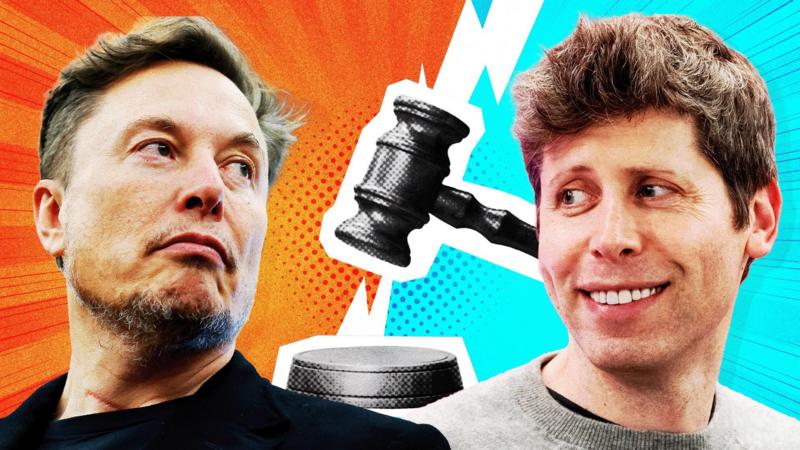
Elon Musk and Sam Altman, co-founders of OpenAI, are involved in a legal dispute where Musk is seeking over $130 billion in damages. This lawsuit could have a big impact on the future of artificial intelligence.
Key Facts
Elon Musk and Sam Altman co-founded OpenAI, the company behind ChatGPT.
Musk is suing for more than $130 billion in damages.
The lawsuit is significant for the artificial intelligence industry.
OpenAI is a major player in developing AI technologies.
The dispute involves two influential tech leaders.
The case is ongoing and is being followed closely.
The outcome could change how AI companies operate.
Read the Original
Want the full story? Tap a source to open the original
article.
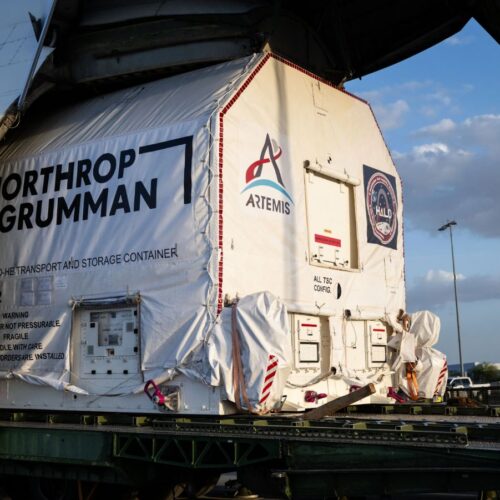
NASA revealed that two living modules for the Lunar Gateway space station have corrosion problems. The main builder, Northrop Grumman, and the European Space Agency admitted there are issues with the metal parts, and the manufacturer, Thales Alenia Space, is working to fix them by late 2026.
Key Facts
NASA Administrator Jared Isaacman said the Lunar Gateway modules had corrosion during a House hearing.
Northrop Grumman confirmed a manufacturing problem in the habitat module it built.
The European Space Agency also acknowledged corrosion in its habitation module (I-HAB).
Both modules’ pressure vessels were made by Thales Alenia Space, a French-Italian company.
Axiom Space reported similar corrosion problems in its private station module built by Thales.
Thales described the issue as a "well-known metallurgical behavior," likely a polite way to say corrosion.
Thales plans to repair the modules with work finishing by the third quarter of 2026.
NASA stopped the Lunar Gateway project recently, focusing on the Moon’s surface instead.
The corrosion problems could delay the Gateway launch well beyond the original 2024 target.
Read the Original
Want the full story? Tap a source to open the original
article.
Workers at Wizards of the Coast, the company that makes Magic: The Gathering and Dungeons & Dragons games, want to form a union. They hope to join the Communications Workers of America to get better job protections and have more say in work conditions.
Key Facts
Employees include game designers, programmers, producers, and artists.
The workers want protections against layoffs, better rules for working remotely, limits on AI use, manageable workloads, and clearer career paths.
Over 100 workers support the union effort and have asked the company to recognize the union voluntarily.
They have also filed for a union election with the National Labor Relations Board as a backup.
Wizards of the Coast has had several layoffs recently, including 30 employees in March 2025 and 1,100 across Hasbro in December 2023.
A new rule requires remote workers to move to Washington state or lose their jobs, which caused concern among employees.
Workers say management has not addressed their concerns, so they believe unionizing is the best way to improve conditions.
The union also wants rules about how artificial intelligence (AI) is used because they believe it can harm the quality of their games.
Read the Original
Want the full story? Tap a source to open the original
article.
Europe is building the Extremely Large Telescope in Chile’s Atacama Desert to create the world’s most powerful optical telescope. This telescope will help scientists see the universe in much greater detail than before.
Key Facts
The telescope project is led by the European Southern Observatory.
It will be located in the Atacama Desert, known for very clear skies.
The Extremely Large Telescope will have a much larger mirror than current telescopes.
This size will allow it to gather more light and see farther into space.
The telescope aims to improve our understanding of stars, planets, and galaxies.
Construction is part of Europe’s effort to lead in astronomy research.
The Atacama Desert is already home to many important observatories.
Read the Original
Want the full story? Tap a source to open the original
article.
London’s Mayor Sadiq Khan may block the Metropolitan Police from signing a large contract with Palantir, a US tech company that uses artificial intelligence (AI) for processing criminal intelligence. Khan’s concerns focus on the use of public money for firms whose actions may conflict with London’s values, especially given Palantir’s controversial past work with US and Israeli military and immigration agencies.
Key Facts
Palantir uses AI software to process criminal intelligence and other sensitive data.
The company has worked with US Immigration and Customs Enforcement (ICE) and the Israeli military.
Palantir held talks with London’s Metropolitan Police about a contract worth tens of millions of pounds.
Mayor Sadiq Khan’s office must approve any police contracts above £500,000, giving him some power over this deal.
Over 330,000 people have signed petitions in the UK opposing Palantir’s government contracts.
The UK government has large contracts with Palantir, including £330 million for NHS medical data and £240 million for the Ministry of Defence.
Palantir’s founder Peter Thiel is a billionaire who supports President Trump and has controversial political views.
Some Palantir employees have expressed concerns about the company’s work and the political impact of its public statements.
Read the Original
Want the full story? Tap a source to open the original
article.
China has blocked Meta’s $2 billion deal to buy the AI start-up Manus. Chinese regulators said foreign investment in the deal is not allowed and ordered the companies to stop the acquisition. Meta says it is following the law and hopes to resolve the issue.
Key Facts
Meta announced in December it planned to buy AI company Manus for about $2 billion.
China’s National Development and Reform Commission rejected the deal and required its cancellation.
Manus creates AI agents that can act independently to perform tasks without repeated user commands.
Manus was originally based in China but now operates out of Singapore.
Manus’ two co-founders were reportedly blocked from leaving China during the review of the deal.
Meta’s AI development efforts are led by CEO Mark Zuckerberg and include integrating Manus technology.
The decision is part of broader tensions and strict Chinese regulations on technology sales to foreign firms.
The US government has expressed concern about Chinese attempts to copy American AI advancements.
Read the Original
Want the full story? Tap a source to open the original
article.
The technology company Palantir released a 22-point plan describing a future with self-operating weapons and close cooperation between big tech companies and governments. This plan has caused strong reactions worldwide and led to discussions about the growing influence of Silicon Valley and its connection to military operations.
Key Facts
Palantir published a manifesto with 22 points about future technology and government use.
The manifesto includes ideas about autonomous weapons, which are weapons that operate without human control.
The document suggests closer relationships between large tech companies and governments.
Palantir’s plan has caused global criticism and worry.
The company has links to military groups that some accuse of war crimes.
Economist Yanis Varoufakis discussed the manifesto and called the ideas behind it very concerning.
Varoufakis compared the ideology promoted by big tech in the manifesto to historical systems of racial inequality.
The conversation about this manifesto was featured on the show UpFront with Redi Tlhabi.
Read the Original
Want the full story? Tap a source to open the original
article.
Players invested about $54 million in cryptocurrency to buy NFTs and join Peter Molyneux’s game Legacy, which promised a strong economic simulation and earning opportunities. However, the game did not meet expectations, had a broken economy, and many players stopped playing shortly after its 2023 launch. Despite Legacy’s failure, it helped fund Molyneux’s new game, Masters of Albion.
Key Facts
Legacy was a blockchain game developed by Peter Molyneux’s studio 22cans and published by Gala Games.
Players spent roughly $54 million in cryptocurrency buying NFTs for Legacy before its release.
The game promised advanced economic simulation and “play to earn” benefits but failed to deliver.
Many players abandoned Legacy soon after launch due to a broken economic system.
Gala Games used the money from Legacy’s NFT sales to pay Molyneux’s team upfront.
Gala Games is a crypto-focused gaming company founded in 2019 with its own token called GALA.
Gala Games gained popularity through its earlier game Town Star, which had play-to-earn features that boosted the GALA token’s value.
Legacy’s failure left players disappointed while Gala Games moved focus to new projects like Masters of Albion.
Read the Original
Want the full story? Tap a source to open the original
article.
China has stopped Meta from buying the AI startup Manus for $2 billion. Chinese regulators said foreign investment in Manus is not allowed and told the companies to cancel the deal.
Key Facts
Meta announced it wanted to buy Manus, an AI startup, in December.
China’s National Development and Reform Commission banned the purchase and ordered the deal to be withdrawn.
The ban is part of China’s effort to limit US investments in its technology companies.
Manus began in Beijing but is now based in Singapore.
AI agents can perform tasks without human help, like planning trips or answering customer questions.
Meta expects this deal to help bring AI agents to many people and businesses.
China and the US lead the world in creating advanced AI models.
President Donald Trump said the US is ahead of China in the race to lead AI technology.
Read the Original
Want the full story? Tap a source to open the original
article.
Elon Musk and Sam Altman, leaders in the artificial intelligence (AI) field, are going to court over disagreements related to the creation and direction of OpenAI. The case focuses on OpenAI’s start as a nonprofit funded by Musk in 2015 and its growth into a large, profit-driven company worth $852 billion.
Key Facts
Elon Musk and Sam Altman are involved in a legal trial about OpenAI.
OpenAI was started in 2015 as a nonprofit organization.
Elon Musk was a main funder of OpenAI at the beginning.
OpenAI later became a for-profit company valued at $852 billion.
The trial concerns issues of betrayal, dishonesty, and conflicting goals between the two billionaires.
ChatGPT, a popular AI tool, was created by OpenAI.
The dispute reflects a shift from shared ideals to competing ambitions in AI development.
Read the Original
Want the full story? Tap a source to open the original
article.
The writer replaced the habit of endlessly scrolling through negative online news and social media before bed with reading comic books. This change helped improve their sleep, reduced anxiety, and boosted creativity and focus.
Key Facts
The author used to spend evenings looking at their phone, reading negative news and social media comments.
This habit caused restless sleep and increased anxiety.
In late 2024, partly due to worries about President Donald Trump’s upcoming second term, they decided to stop doomscrolling.
They returned to reading comic books, which they enjoyed as a child.
Reading comics helped calm their mind and improved their sleep quality.
The habit restored their attention span by encouraging longer reading sessions.
Comics provided a safer way to explore fears about the world and technology.
The change also reduced the temptation to check work messages after hours.
Read the Original
Want the full story? Tap a source to open the original
article.
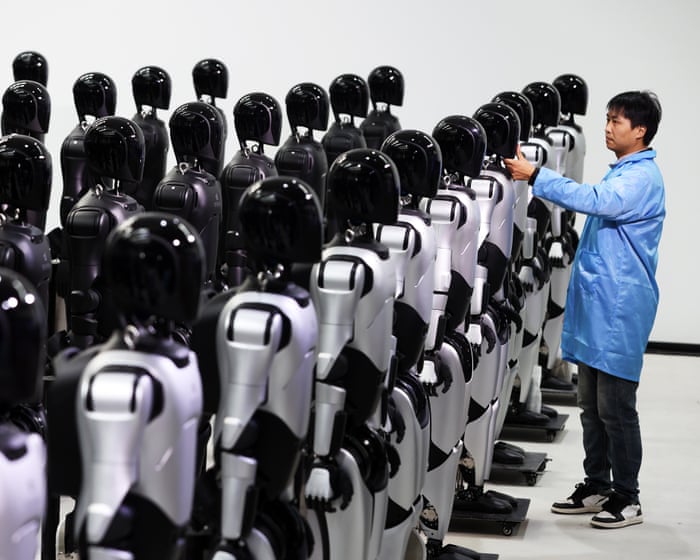
The article explores how China is rapidly advancing in the field of robotics. It discusses the growth of robot manufacturing and the increasing use of robots in factories across China.
Key Facts
China is becoming a leading country in robot production and use.
Robots are widely used in Chinese factories to improve work efficiency.
The article is supported by a grant from the Tarbell Center.
China News Service and Getty Images provided photographs accompanying the article.
The podcast and article explore how China's robotics development affects industry and the economy.
Read the Original
Want the full story? Tap a source to open the original
article.
Elon Musk has filed a lawsuit against OpenAI, claiming the company broke its promise to stay a nonprofit organization. The case goes to trial in California, with Musk saying OpenAI shifted to a for-profit model and misled him. OpenAI denies this and says Musk wants control and money, not to protect the nonprofit mission.
Key Facts
Elon Musk sued OpenAI for abandoning its original nonprofit mission.
The trial began in California with jury selection.
Musk was an early backer of OpenAI but now runs xAI, a competing AI company.
OpenAI created a commercial branch because it needed large funding for AI technology.
Microsoft has invested billions in OpenAI; its CEO is expected to testify.
Musk’s lawsuit asks for OpenAI to return to a pure nonprofit and to remove top leaders.
Musk no longer seeks personal money from the lawsuit and said any award would go to the nonprofit.
OpenAI says Musk left due to wanting total control, not because of changes to their nonprofit status.
Read the Original
Want the full story? Tap a source to open the original
article.
Elon Musk is suing OpenAI, a company he once helped start, claiming it broke its promise to stay a nonprofit. The lawsuit has reached trial in California as Musk and OpenAI’s CEO, Sam Altman, prepare to testify.
Key Facts
Elon Musk invested millions in OpenAI when it was created as a nonprofit lab in 2015.
Musk alleges OpenAI abandoned its nonprofit mission by creating a commercial subsidiary.
OpenAI says Musk left because he wanted full control, not because of its nonprofit status.
Microsoft has invested billions in OpenAI and its CEO is expected to testify in the trial.
Musk’s AI company, xAI, competes directly with OpenAI’s ChatGPT.
Musk originally sought up to $134 billion in damages but now says he won't keep any award.
The trial judge will decide if OpenAI must return to nonprofit status or take other actions.
OpenAI now operates under a hybrid model with a nonprofit controlling a for-profit business.
Read the Original
Want the full story? Tap a source to open the original
article.
Paramount+ revealed a new teaser for the fourth season of Star Trek: Strange New Worlds, showing a more serious storyline. The new season premieres on July 23, 2026, and the series will end with a shorter fifth season.
Key Facts
A new teaser for Star Trek: Strange New Worlds season 4 was shown at CCXP in Mexico City.
Season 3 had mixed reactions, especially after the loss of Pike’s love interest, Marie Batel.
Season 4 includes a serious storyline and a space storm scene where the crew must find iridium to fix their ship.
The show will have a puppet episode, a Wild West-like setting, and even dinosaurs.
The series premieres July 23, 2026, on Paramount+.
The final fifth season will have six episodes and introduces new characters Bones and Sulu.
The Starfleet Academy series will end after its second season next year, marking an end to current Star Trek streaming shows.
Plans for a new series, Star Trek: Year One, seem unlikely since the Enterprise sets have been dismantled.
Read the Original
Want the full story? Tap a source to open the original
article.
Prime Video released the full trailer for Spider-Noir, a new live-action series set in 1930s New York featuring a noir-style Spider-Man character named Ben Reilly. The series premieres on MGM+ on May 25, 2026, with all episodes available on Prime Video on May 27, 2026, and offers both black-and-white and color viewing options.
Key Facts
Spider-Noir is set in 1930s New York and features a private investigator named Ben Reilly as the Spider-Man character.
Nicolas Cage voices Ben Reilly/The Spider.
The show has two viewing formats: black and white (classic style) and “True Hue” color.
The character Spider-Noir is based on Marvel’s noir universe, which reimagines Marvel heroes in a 1930s setting.
The show’s tone mixes classic detective stories with superhero action.
The main cast includes Lamorne Morris, Li Jun Li, Karen Rodriguez, and Brendan Gleeson, among others.
The series will premiere May 25, 2026, on MGM+, with all episodes available on Prime Video on May 27.
Viewers can choose to watch in black and white or color, or both to compare the styles.
Read the Original
Want the full story? Tap a source to open the original
article.
AI technology is becoming a regular tool in workplaces, rather than the revolutionary force many predicted. While AI has the potential to change many jobs, its current use is limited and often requires human judgment to complete tasks effectively.
Key Facts
AI is used in offices like architecture firms to support work, such as generating images or design ideas.
Research suggests AI could do over 80% of tasks in architecture and engineering but is only used for a small part now.
Studies show AI tools do not consistently improve work efficiency and sometimes create new challenges.
AI’s ability to understand complex tasks, like identifying doors in floor plans, can be imperfect (only 32% accuracy in one test).
Experts say AI tools can produce helpful or harmful results depending on the day and how they are used.
AI adoption is lower than theoretical potential, even in fields heavily involved with technology.
Past technology advances (like trains and electricity) also caused big hopes and fears before becoming ordinary.
It could take many years to fully understand how AI will impact workplaces and society.
Read the Original
Want the full story? Tap a source to open the original
article.
Dutch artist Theo Jansen creates Strandbeests, which are moving sculptures that walk on the beach using wind power. These art pieces are unique because they function like machines but are powered only by the wind.
Key Facts
Strandbeests are walking sculptures made by Theo Jansen from the Netherlands.
They move across the beach using wind energy as their power source.
The sculptures are designed to walk on their own without motors or engines.
Theo Jansen calls these creations "ambulatory contraptions."
The story about Strandbeests aired on CBS News on December 2, 2012.
The article is a feature from CBS News archives.
The sculptures combine art and engineering to create wind-powered movement.
Read the Original
Want the full story? Tap a source to open the original
article.
Companies are spending more money on artificial intelligence (AI) than on paying human workers. This higher cost comes from using AI technology, such as cloud services and software, which could change how businesses decide to invest in workers or AI.
Key Facts
Some companies spend more on AI computing costs than on employee salaries.
Uber's AI budget for 2026 was used up early because of expensive token costs (tokens are units used for AI processing).
AI-related IT spending worldwide is expected to reach $6.31 trillion by 2026, growing 13.5% from 2025.
The rise in IT spending is driven by AI infrastructure, software, and cloud services.
Companies must show that AI spending leads to better productivity or financial returns.
Experts are considering the value of human workers versus AI systems.
AI companies like Anthropic are adjusting their prices due to increased demand.
The overall impact of rising AI costs on businesses and AI labs is still uncertain.
Read the Original
Want the full story? Tap a source to open the original
article.
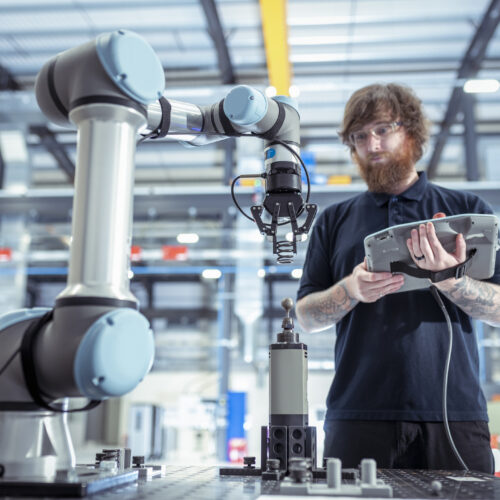
Researchers at the Swiss École Polytechnique Fédérale de Lausanne (EPFL) created a system called Kinematic Intelligence that helps robots learn tasks from humans and safely transfer those skills to different robot models. This system prevents robots from getting stuck or making unsafe moves by understanding their physical limits without using artificial intelligence.
Key Facts
Switching robot arms usually requires setting up and teaching the new robot from scratch.
Kinematic Intelligence allows one demonstration to work on various robots with different shapes and joint arrangements.
Robots can fail when hitting "singularities," positions where joints align and movement becomes unstable.
EPFL’s system helps a robot recognize and avoid these dangerous positions automatically.
Traditional methods use complex math models and safety fixes, whereas this new method works without AI.
The system was described in a recent scientific paper published in Science Robotics.
This technology can improve how robots learn and work safely across different designs.
Read the Original
Want the full story? Tap a source to open the original
article.