The UK government had a bigger deficit than expected in July, borrowing £1.8 billion despite strong tax income. Chancellor John Healey faces challenges as he prepares his first budget amid slower economic growth and rising costs.
Key Facts
The UK government’s borrowing in July was £1.8 billion, higher than the expected zero deficit.
July usually sees higher tax payments, which made the deficit surprising.
From April to July, the UK’s total deficit was £56.7 billion, lower than last year but more than forecast.
Public debt reached £2.98 trillion, about 94% of the country’s economic output (GDP).
The government plans to borrow more to invest in infrastructure projects.
Chancellor John Healey will announce the new budget on 28 October.
Inflation, slower economic growth, and rising bond costs threaten the UK’s financial outlook.
The government aims to reduce the deficit while supporting people with cost-of-living pressures and youth employment.
Read the Original
Want the full story? Tap a source to open the original
article.
Newsweek and Statista are conducting a survey to find the best continuing care retirement communities (CCRCs) in America for 2027. These communities offer different levels of care, from independent living to memory care, all on one campus, and their popularity is growing as more older adults choose this convenient option.
Key Facts
CCRCs provide multiple levels of care, including independent living, assisted living, and memory care, on the same campus.
In 2024, independent living in CCRCs reached 91.1% occupancy, the highest among senior living types.
CCRCs are becoming more popular because they offer amenities and convenience for seniors still able to live independently.
Newsweek and Statista have partnered for four years to rank the best CCRCs in the U.S.
Last year, Newsweek’s list included 330 of the best CCRCs based on expert recommendations and facility data.
The 2027 survey is open until September 11, 2026, allowing input from professionals and others in the field.
The survey aims to reflect the growth and quality of this senior living industry.
Read the Original
Want the full story? Tap a source to open the original
article.
The article talks about common money problems that couples face. It shares examples of couples who have different ways of handling money and how they manage their disagreements.
Key Facts
Couples often have different views on money management.
Some couples prefer to split all expenses equally.
Money disagreements can affect relationships.
Couples try to find solutions that work for both partners.
Understanding each other’s money habits helps reduce conflicts.
Communication about money is important in a relationship.
Read the Original
Want the full story? Tap a source to open the original
article.
Greenock, a town in Scotland, has experienced a long decline in population and jobs. The local council plans to attract more migrants, especially Africans and refugees, to help increase the population and support the local economy.
Key Facts
Greenock’s population has dropped by 22,000 since 1981 and is expected to fall another 16% in 20 years.
The town has seen many African migrants and refugees arrive, some opening shops like Anik African Store.
Many migrants live in Greenock because housing is cheap, but they work or study mostly in nearby cities like Glasgow or Paisley.
The council wants to encourage migrants and refugees to stay and settle in Greenock to help grow the community.
The main problem is lack of local jobs, causing people like Tiffany to consider moving away.
Greenock had a historic industry in sugar refining and shipbuilding but now suffers from job losses as companies like IBM closed operations.
Recently, 1,500 jobs disappeared due to companies leaving, with the shipyard cutting about a quarter of its workforce.
Local efforts are underway to save the football club Greenock Morton from financial trouble.
Read the Original
Want the full story? Tap a source to open the original
article.
Asian stock markets showed mixed results after losses on Wall Street. The U.S. Treasury tried to calm the markets by increasing government debt buybacks, but bond yields rose again, limiting the effect.
Key Facts
Asian shares moved unevenly: Japan’s Nikkei fell 0.2%, South Korea’s Kospi rose 0.9%, and Hong Kong’s Hang Seng climbed 0.7%.
The U.S. Treasury doubled plans to buy longer-term government debt to help calm markets.
Bond yields, which affect borrowing costs and stock prices, briefly fell but then rose again.
The 10-year U.S. Treasury yield rose to about 4.71% from 4.64%, and the 30-year yield increased to 5.26%.
Japan’s 10-year government bond yield rose to 2.88%, near a 30-year high.
Wall Street indexes dropped: the S&P 500 by 0.9%, Dow Jones by 1.3%, and Nasdaq by 1%.
Oil prices slightly decreased despite rising tensions between the U.S. and Iran.
The U.S. dollar weakened slightly against the Japanese yen; the euro rose a little against the dollar.
Read the Original
Want the full story? Tap a source to open the original
article.
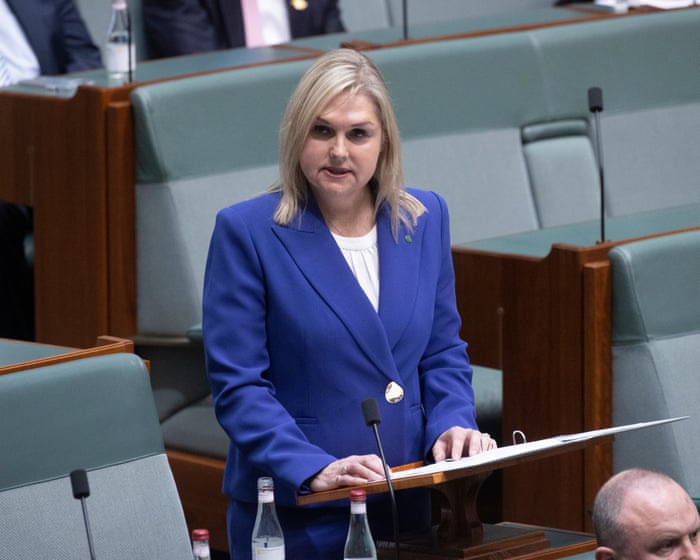
Former Liberal MP Jenny Ware criticized the Coalition for supporting Labor’s gambling reform laws, saying they do not do enough to protect vulnerable Australians. The new laws limit gambling ads on TV and online but stop short of a full ban recommended by a parliamentary inquiry.
Key Facts
Jenny Ware, a former Liberal MP, says the gambling reforms let down vulnerable Australians.
The reforms limit TV ads to three per hour between 5 am and 8:30 pm.
Online gambling ads will only be shown to adults over 18, with an option to opt out.
Advertising on sports jerseys and stadiums will eventually be banned.
The reforms introduce restrictions on inducements, celebrity endorsements, and employee commissions linked to gambling losses.
There is an upcoming online “opt-out register” for gambling ads, but details are unclear, causing concern in the gambling and tech industries.
The government rejected a full ban on gambling ads recommended by a 2023 inquiry led by the late MP Peta Murphy.
Some MPs, including from the Coalition, voted against the reforms seeking stronger protections.
Read the Original
Want the full story? Tap a source to open the original
article.
The amount of cash in use in the European Union is growing even though many people use smartphones to pay. This increase is linked to worries about wars, wildfires, cyber-attacks, and the need to prepare for emergencies by having cash on hand.
Key Facts
The total number of banknotes in the EU has risen from about €1 billion in 2016 to €1.6 billion in June 2026.
Over 31 million banknotes are now in circulation, up from 24 million before the pandemic in 2019.
The €50 note is the most common, followed by the €100 note.
Countries like Austria, Finland, Germany, Sweden, and the Netherlands advise households to keep €70 to €100 in cash for 72-hour emergencies.
Emergencies cited include wildfires, floods, storms, cyber-attacks, and other hostile events.
Experts say cash is important for crisis preparedness because it works when digital payment systems fail.
Cash use is important for privacy, financial inclusion (helping vulnerable groups), and teaching children money management.
The European Central Bank supports keeping cash machines widely available across EU towns and cities.
Read the Original
Want the full story? Tap a source to open the original
article.
A growing number of barbecue restaurants in Texas are offering halal meat options that meet Islamic dietary rules. These halal barbecue joints are becoming popular and are recognized alongside traditional Texas barbecue spots.
Key Facts
Goldee’s BBQ in Fort Worth, opened in 2020, serves both classic Texas barbecue and halal meats like brisket, turkey, and lamb.
Goldee’s BBQ was named the top barbecue spot in Texas by Texas Monthly and received a Michelin Bib Gourmand award.
At least 12 barbecue places in Texas now offer halal meat, including Yearby’s Barbecue & Waterice and Levant Mediterranean BBQ.
Halal food means meat is prepared according to Islamic rules on how animals are raised and butchered.
Halal barbecue is attracting customers willing to wait in long lines, even in hot weather.
The halal food market in the U.S. has grown into a multibillion-dollar industry and is becoming part of mainstream American cuisine.
Muslims in Texas are adding their own style to traditional barbecue, showing how diverse communities influence local food traditions.
The popularity of halal barbecue is rising despite political tensions targeting Muslim communities in Texas.
Read the Original
Want the full story? Tap a source to open the original
article.
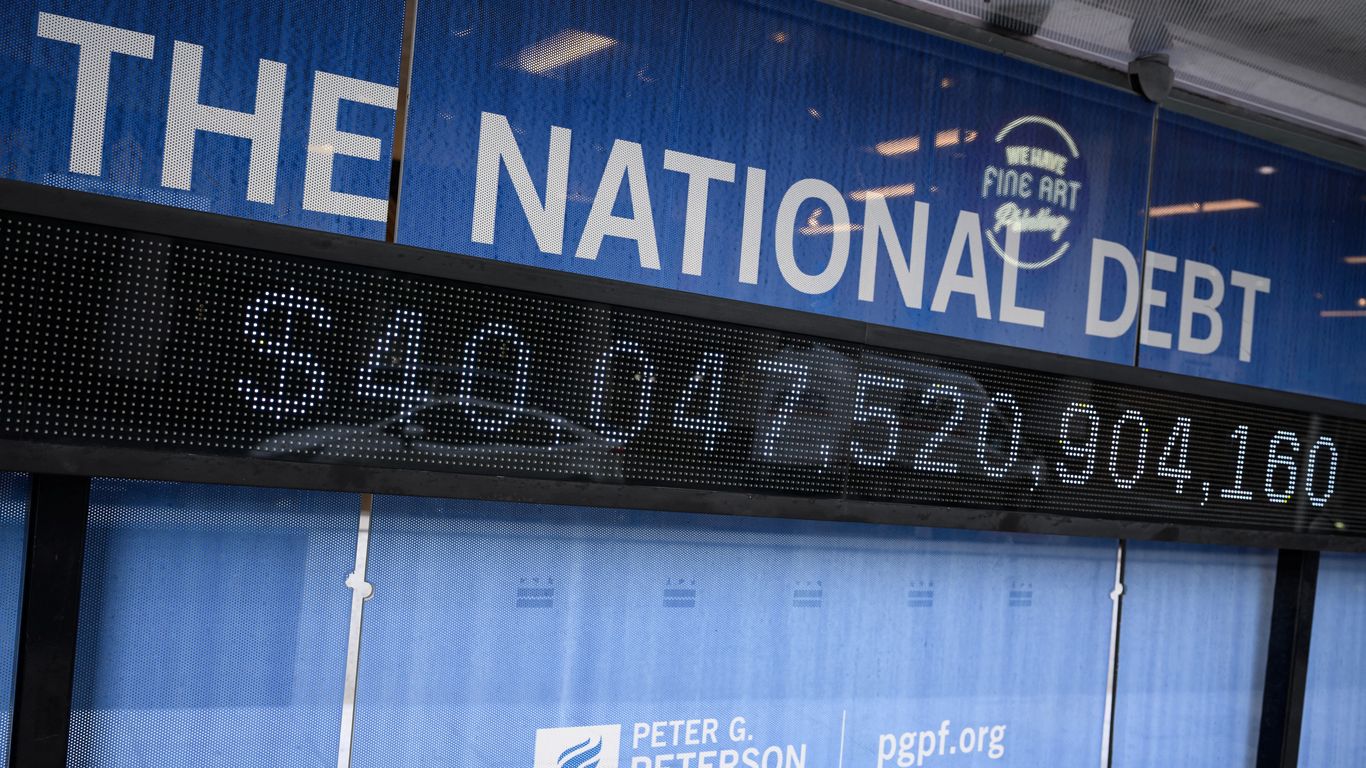
The US national debt has passed $40 trillion, raising concerns about long-term economic stability. The debt has doubled since 2016 due to government spending, tax cuts, and crisis responses, while rising interest rates make borrowing more expensive.
Key Facts
US national debt reached $40 trillion for the first time recently.
It took almost 200 years to hit $1 trillion in debt; now interest payments alone exceed that amount.
Debt doubled from just under $20 trillion in 2016 to over $40 trillion today.
Government spending and tax cuts under Presidents Trump and Biden contributed to the debt increase.
Higher interest rates mean the government pays more to borrow money, increasing costs.
Interest payments now make up nearly 20% of tax revenue, exceeding defense spending.
The US is close to its debt ceiling of $41.1 trillion, with debt projected to reach $64 trillion by 2036.
Higher borrowing costs for the US can also raise borrowing costs worldwide and affect everyday loans like mortgages and credit cards.
Read the Original
Want the full story? Tap a source to open the original
article.
Many young people in the UK find it hard to buy a home because house prices have risen faster than incomes for decades. The shortage of new homes, rising building costs, and strict planning rules have made it harder to build enough houses, though recent changes may slowly improve the situation.
Key Facts
About 25% of people born in the mid-1990s in the UK own a home, compared to much higher rates for older generations.
House prices have increased much more than incomes over the last 70 years.
England needs around 300,000 new homes each year to meet demand, but only about 208,000 were built last year.
Building costs have risen due to inflation, material shortages from the Covid-19 pandemic, and price hikes in energy after the Ukraine war.
Skilled construction workers are in short supply, worsened by Brexit.
Saving for a house deposit is harder because many young people also pay high rents that take up about a third of their income.
Recently, house prices have grown more slowly than wages, and some lenders now accept smaller deposits and offer longer loans.
The government plans to simplify planning rules and allow more building on protected land to increase house supply, but any effects will take years to appear.
Read the Original
Want the full story? Tap a source to open the original
article.
Neutrogena issued a statement responding to criticism after actress Hayden Panettiere’s death, addressing past concerns about her claims that the company fired her in 2015 for discussing postpartum depression. The company expressed regret for making her feel unsupported, announced new funding to support women’s mental health, and offered condolences to Panettiere’s family.
Key Facts
Hayden Panettiere died at age 36 in Greenville, South Carolina; emergency responders found her in cardiac arrest.
Neutrogena had a partnership with Panettiere for over 10 years before she was let go in 2015.
Panettiere said Neutrogena fired her after she spoke openly about postpartum depression during a 2015 TV interview.
The company said it regrets how Panettiere was treated and does not support that kind of behavior.
Neutrogena plans to invest in programs that help women access postpartum depression care.
Panettiere openly discussed struggles with addiction and postpartum depression during her life.
After her firing, Panettiere said she received no farewell or acknowledgement from Neutrogena.
The Drug Enforcement Administration is assisting in the investigation into Panettiere’s death.
Read the Original
Want the full story? Tap a source to open the original
article.
A 16-year-old from County Down named Ben O'Connor created an app called FarmFlow to help farmers manage their daily tasks and paperwork more easily. The app is being tested on farms in the UK and Ireland to save time and improve efficiency, especially for dairy farmers who work long hours.
Key Facts
Ben O'Connor developed FarmFlow after his family switched from beef to dairy farming.
Dairy farming requires strict routines and more paperwork, which can be time-consuming.
Farmers in Northern Ireland work about 65 hours a week on average.
The app helps farmers track tasks and keep medical records on the move using a smartphone or tablet.
FarmFlow is being trialled on several farms across the UK and Ireland.
Another young farmer, Jude McClements, is testing the app and gave feedback to improve it.
Ben previously ran a successful mail order gift business before focusing on farm management.
Ben plans to continue his education but wants to work in agriculture and introduce more technology to the industry.
Read the Original
Want the full story? Tap a source to open the original
article.
Passengers on TUI River Cruises have reported problems such as broken air conditioning and plumbing while on expensive European river cruises. Many customers said the company’s customer service and refunds did not meet their expectations, and TUI apologized for the issues on some trips.
Key Facts
Several passengers on TUI’s Skyla and Isla river cruise ships experienced broken air conditioning during their holidays.
The Skyla had hot air blowers instead of cooling air conditioning, causing discomfort during a heatwave.
Plumbing problems, such as broken toilets and inconsistent shower temperatures, were reported on the Isla.
Some passengers paid nearly £4,000 for their trips but were offered small refunds (e.g., £300) with short acceptance deadlines.
Customers accused TUI of selling the cruises as luxury trips despite known problems on the ships.
TUI apologized for trips that did not meet their usual standards and acknowledged customer frustration.
Issues with air conditioning and facilities date back several months, and customers reported problems on trips in 2024 and 2025.
Passengers were sometimes moved to basic hotels when ship conditions became unbearable.
Read the Original
Want the full story? Tap a source to open the original
article.
The U.S. national debt has reached $40 trillion, which may lead to higher taxes, reduced government spending, and increased borrowing costs for Americans. Rising debt can push up interest rates, making loans like mortgages and student loans more expensive, and increase government spending on interest payments.
Key Facts
The U.S. federal debt hit $40 trillion for the first time this week.
About $32 trillion of this debt is held by the public, which affects the economy more directly.
President Trump’s tax and spending policies are expected to add trillions more to the debt over the next ten years.
Higher national debt can cause interest rates to rise, increasing costs for mortgages, student loans, and small business loans.
Mortgage rates often rise when the government’s borrowing costs rise, as both are linked to Treasury yields.
More government spending on interest payments leaves less money for programs like defense, infrastructure, and education.
The government is projected to spend over $1 trillion on interest payments in 2026, a major expense after Social Security and Medicare.
Without changes in government spending or revenue, the debt will continue to grow, potentially leading to inflation risks.
Read the Original
Want the full story? Tap a source to open the original
article.
Long-term U.S. Treasury yields have risen to their highest in nearly 20 years because many investors are selling bonds. This rise means the government and people will face higher borrowing costs, affecting loans like mortgages and car loans.
Key Facts
Treasury yields measure the interest the government pays to borrow money.
A bond sell-off caused long-term Treasury yields to increase sharply.
These yields are now at levels not seen in almost two decades.
Higher Treasury yields lead to higher borrowing costs for individuals and businesses.
Increased borrowing costs affect loans such as mortgages and car loans.
The situation is causing concern on Wall Street and in the government.
The Washington Post’s David Lynch discussed this with journalist Amna Nawaz.
Read the Original
Want the full story? Tap a source to open the original
article.
Walmart plans to use $2.9 billion in money refunded from tariffs to reduce prices for customers. The company reported its slowest sales growth in six years.
Key Facts
Walmart is receiving $2.9 billion in tariff refunds.
The company intends to use this money to lower prices for shoppers.
Walmart reported the slowest growth in sales in six years.
Tariffs are taxes on imported goods, which can increase prices.
Using refunds from these tariffs helps Walmart reduce costs.
Slower sales growth may affect Walmart's business strategy.
This news reflects current challenges in the retail market.
Read the Original
Want the full story? Tap a source to open the original
article.
Christine Hunsicker, founder and former CEO of fashion tech company CaaStle Inc, was sentenced to five years in federal prison for a $300 million fraud scheme. She lied to investors about the company's finances and used fake documents to raise money, leading to the company's bankruptcy.
Key Facts
Christine Hunsicker was sentenced to five years in prison and three years of supervised release.
She pleaded guilty to securities fraud for misleading hundreds of investors.
CaaStle was valued at over $1.4 billion but was actually in financial trouble.
Hunsicker used fake financial statements and documents to exaggerate profits and cash reserves.
She invented shareholders and misused investor funds as new capital.
Fraudulent activity continued even after authorities seized her devices in March 2025.
CaaStle went bankrupt in spring 2025 after revealing the financial problems.
The company started as a clothing rental platform for plus-sized women and later sold its technology to other fashion firms.
Read the Original
Want the full story? Tap a source to open the original
article.
Yields on 30-year U.S. Treasury bonds recently rose to their highest level in nearly 20 years. This increase caused concern in financial markets and led Treasury Secretary Scott Bessent to intervene by buying back bonds.
Key Facts
The yield on 30-year U.S. Treasury bonds reached its highest point in almost two decades.
Rising bond yields can affect borrowing costs and financial markets.
The spike in yields attracted media attention and public concern.
Treasury Secretary Scott Bessent arranged a buyback of Treasury bonds to help stabilize the market.
The buyback aims to reduce the high yields and calm investor worries.
U.S. Treasury bonds are government debt securities used to finance government spending.
Changes in Treasury bond yields can influence global financial markets.
The current situation highlights the importance of U.S. government bonds in the economy.
Read the Original
Want the full story? Tap a source to open the original
article.
Providence Health Plan will stop offering its Medicare Advantage plans after talks to transfer coverage to another insurer failed. This affects over 64,000 seniors who will need to find new health coverage before 2027.
Key Facts
Providence Health Plan planned to end most of its insurance business starting in 2027.
It tried to arrange for a national insurer to take over its Medicare Advantage plans but was unsuccessful.
Over 64,000 seniors enrolled in Providence’s Medicare Advantage plans may lose their coverage.
Rising medical costs and lower reimbursement rates have pressured insurers like Providence.
Providence serves about 440,000 members across several Western states.
Other insurers, such as Aetna and Cigna, are also leaving government health insurance programs.
Providence is now discussing the situation with regulators and will update members when possible.
Industry experts say fewer insurance providers can lead to higher prices or reduced benefits for patients.
Read the Original
Want the full story? Tap a source to open the original
article.
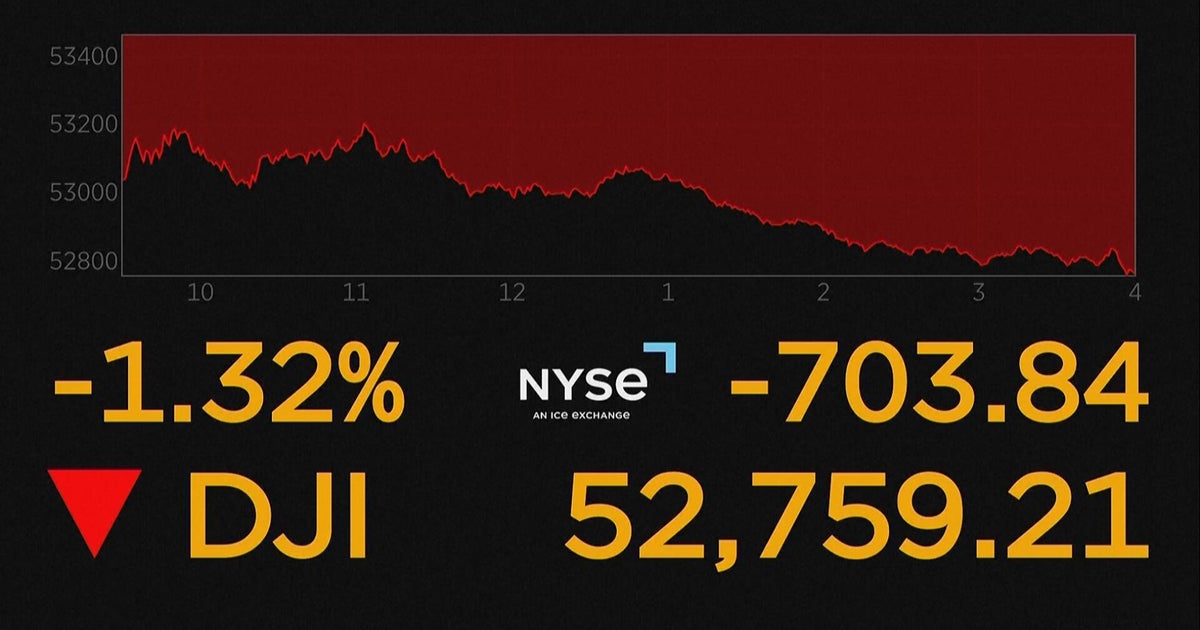
The Dow Jones Industrial Average dropped more than 700 points on Thursday. This fall happened because investors are worried about the rising national debt and unstable bond markets.
Key Facts
The Dow lost over 700 points in one day.
Investors are concerned about the increasing U.S. national debt.
Volatility means bond prices are changing quickly and unpredictably.
The bond market’s instability affects stock prices.
Jessica Inskip, a stock market expert, discussed these issues on CBS News.
Such large drops can reflect fear or uncertainty in the financial markets.
The national debt is the total money the U.S. government owes.
Read the Original
Want the full story? Tap a source to open the original
article.