Origin Energy, a large Australian energy company, revealed that hackers accessed the personal data of about 900,000 current and former customers. The company was warned about the hack three weeks before telling the public and is notifying those affected while investigating the incident.
Key Facts
Around 900,000 personal customer records were accessed in a data breach at Origin Energy.
The data may include names, addresses, birth dates, phone numbers, account details, and partial credit or bank card numbers.
A large number of affected customers were former users of Origin Energy services.
Origin Energy has 4.8 million customer accounts across electricity, gas, LPG, and internet services.
The company first received an unverified warning email on July 2 but confirmed a data breach on July 22.
Origin says the stolen data has not appeared on the dark web, a place where stolen data is often sold.
Origin’s CEO said the matter is under criminal investigation and declined to answer some detailed questions.
Reports that Origin struck a deal with hackers to stop data leaks have been denied by the company.
Read the Original
Want the full story? Tap a source to open the original
article.
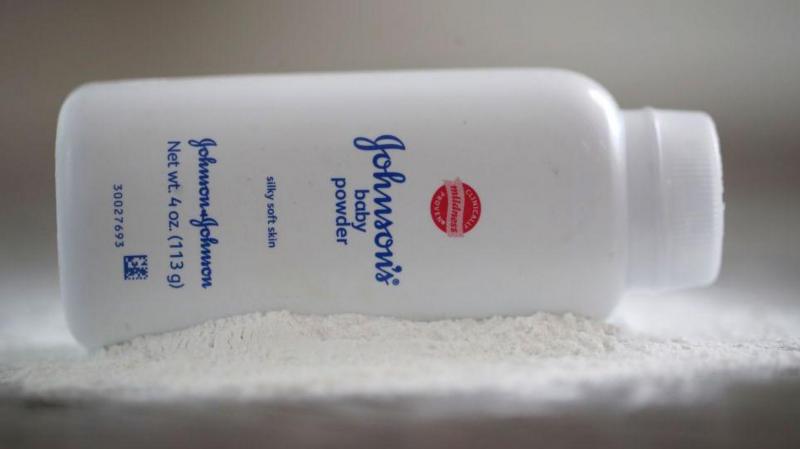
Johnson & Johnson will pay about $5.5 billion to settle nearly all lawsuits claiming its talc products caused ovarian cancer. The deal covers around 76,000 claims and aims to end a legal fight lasting over ten years, but it still needs approval from most claimants before it is final.
Key Facts
Johnson & Johnson agreed to pay $5.5 billion to resolve talc-related ovarian cancer lawsuits.
The settlement includes about 76,000 claims in federal and state courts.
The company denies that its talc products caused cancer and says the claims lack merit.
Johnson & Johnson will pay $3 billion in 2027 and more payments in 2028, with total costs possibly exceeding $7 billion.
The deal applies only to existing claims and does not cover future lawsuits.
The company stopped selling talc-based baby powder in the US in 2020 and now sells a cornstarch-based product.
Past court battles included some wins and losses for Johnson & Johnson.
The settlement requires approval from 95% of current claimants to become final.
Read the Original
Want the full story? Tap a source to open the original
article.
Royal Mail is raising its prices for bulk postal services by an average of 25%, starting on 5 October. This increase will affect large organizations like the NHS, which spends a lot on sending letters, leading to higher postal costs for them.
Key Facts
Royal Mail will increase wholesale postal prices by up to one-third.
The NHS spent at least £100 million on sending letters in 2024, so the price rise could add millions more costs.
The price hike affects bulk mail customers like UK Mail, Whistl, and Citipost, serving big businesses and public bodies.
Royal Mail handles most UK letter deliveries but faces falling letter volumes as more communication moves online.
Rising costs for fuel and labor contribute to the price increases, according to Royal Mail management.
The company is owned by Czech billionaire Daniel Křetínský since April 2025.
Royal Mail has struggled to meet delivery targets and has been fined £37 million since 2023 for late deliveries.
Bulk mail letter prices will increase differently based on weight and service speed, with some rates rising by over 30%.
Read the Original
Want the full story? Tap a source to open the original
article.
During recent heatwaves, many people in Britain are choosing to eat traditional warm comfort foods instead of cold salads and chilled drinks. Waitrose supermarket reported big increases in sales of dishes like cottage pie, chicken korma, and trifle, suggesting a trend of buying nostalgic, home-cooked meals even in hot weather.
Key Facts
Cottage pie sales at Waitrose rose by 110% in the last month compared to last year.
South African red wine sales increased by 68% over the same period.
Other popular warm dishes included chicken korma (up 67%), chicken and ham gratin (68%), and chicken, bacon and leek pie (41%).
Searches on Waitrose’s recipe website rose for traditional meals like toad-in-the-hole (67%), spaghetti bolognese (91%), and rarebit mac and cheese (57%).
A food historian said the rise in these dishes relates to people wanting home-cooked, comforting food during uncertain times and unusual weather.
The cost of living crisis, global conflicts, and political changes are also factors affecting people’s food choices.
Some chefs think people want to recreate the pub meal experience at home due to cutbacks on eating out.
Ready meals and warm dishes may also suit people who have less time or cooking skills and find salads impractical for weekly shopping.
Read the Original
Want the full story? Tap a source to open the original
article.
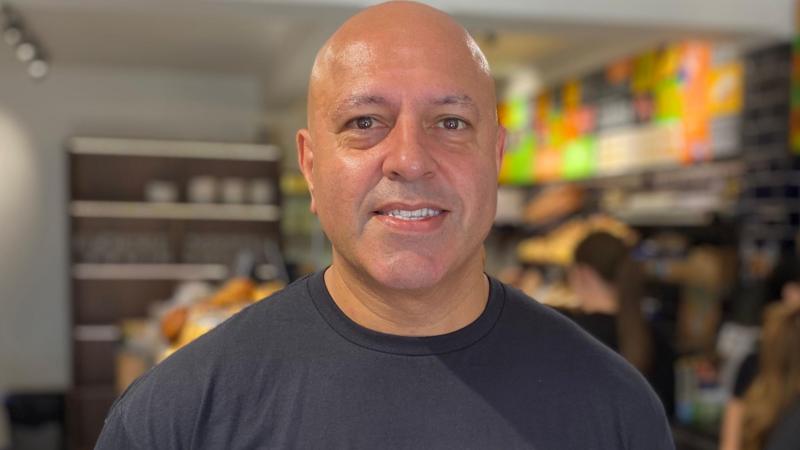
The article describes a show where content creator Shabaz Ali meets a billionaire to discuss whether billionaires are bad. The program explores how the super-rich make money and what they do with their wealth.
Key Facts
Shabaz Ali, a content creator and broadcaster, interviews a billionaire.
The show questions common ideas about billionaires being harmful.
It examines how billionaires earn their fortunes.
The program also looks into how billionaires spend or use their money.
The show is part of a series with related episodes about economic ideas, wealth, and social issues.
It first aired on July 28, 2026, and is available for over a year.
The content is produced by the BBC.
Additional episodes cover topics like vaping risks, online gossip, and social media effects.
Read the Original
Want the full story? Tap a source to open the original
article.
Michelin-starred chef Sat Bains has asked the UK government to lower the 20% VAT (tax) on restaurants to help the struggling hospitality sector. While the VAT cut would be useful, Bains says the larger problem is people spending less due to high living costs.
Key Facts
Sat Bains, a Michelin two-star chef in Nottingham, hosted a breakfast pop-up event to support local businesses.
The UK restaurant VAT is 20%, one of the highest rates in Europe behind Denmark.
The government recently reduced business rates by 20% for pubs, social clubs, and music venues, but not for restaurants or hotels.
Bains states that the high VAT is a major problem for restaurants and urges the government to reduce it.
High costs of living are making customers more cautious, reducing advance bookings at restaurants.
John Hyman, owner of No.8 Deli in West Bridgford, supports lowering business costs to help local independent shops and restaurants thrive.
Earlier in 2024, several top UK chefs called for cutting VAT on pubs and restaurants to 10%.
VAT is a tax included in the price of goods and services; reducing it would lower the cost to customers directly.
Read the Original
Want the full story? Tap a source to open the original
article.
Train drivers in Great Britain are thinking about striking because there are not enough toilets available during work. A union report found many drivers have no access to toilets and must use bottles or toilet in cabs, causing health and safety issues. Despite promises from train companies to improve facilities, progress has been slow, and the union demands action.
Key Facts
Train drivers face problems with lack of toilets and long driving times without breaks.
Many drivers urinate in bottles or defecate in cabs due to no toilet access.
Drivers limit drinking to avoid needing toilet breaks, which hurts their health.
A welfare charter requires clean, safe toilets and max four-hour driving shifts without breaks.
The rail regulator has said the current situation is unacceptable and harms workers’ dignity and safety.
Female drivers are especially affected, which makes recruiting women harder.
Health risks include deeper vein thrombosis and cancers linked to lack of toilet breaks.
Strike ballots are happening for several train companies due to these and other issues.
Read the Original
Want the full story? Tap a source to open the original
article.
Shares in major chip companies dropped sharply in the US and Asia due to worries about artificial intelligence (AI) stocks. South Korea’s main stock market index, Kospi, fell so much that trading was paused temporarily, and companies like Samsung and SK Hynix lost over 10% in value.
Key Facts
South Korea’s Kospi index dropped around 10% before trading was paused for 20 minutes.
Samsung Electronics and SK Hynix shares each fell more than 10% during the sell-off.
Nvidia’s stock fell by 5% in New York, causing it to lose its spot as the world’s most valuable company to Apple.
The Kospi index has been halted eight times this year to stop panic selling.
Kospi had doubled in value from the start of 2024 to mid-June but then lost about one-third of its value.
SK Hynix shares listed in the US fell 7.5% and are now below their initial offer price from early July.
Japan’s tech-heavy Nikkei 225 index also dropped nearly 4.5% amid the sell-off.
Nvidia is reportedly in talks to provide $250 billion for OpenAI for a large AI data center project, but both companies declined to comment.
Read the Original
Want the full story? Tap a source to open the original
article.
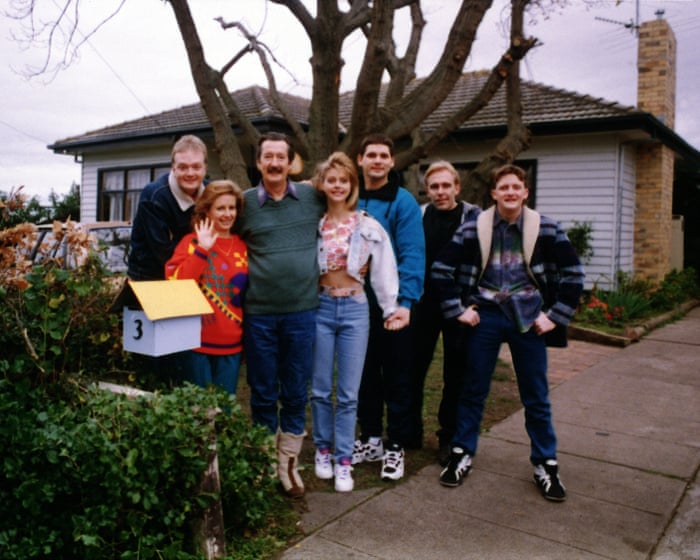
The Australian comedy film The Castle will be turned into a stage play by the original filmmakers. The play will open in Melbourne in March 2027 to celebrate the film’s 30th anniversary and will include new updates while keeping the original story’s humor and warmth.
Key Facts
The Castle is a popular Australian comedy movie released in 1997.
The story follows the Kerrigan family fighting to save their home from being demolished for an airport.
The original film was made by Rob Sitch, Tom Gleisner, Santo Cilauro, and Jane Kennedy, who will also write and produce the play.
Famous lines from the movie include “This is going straight to the pool room” and “Tell him he’s dreamin’.”
The play will premiere at Her Majesty’s Theatre in Melbourne in March 2027.
The creators wanted to make the play for about 25 years and will add funny updates reflecting the last 25 years.
Producer Michael Cassel praised the story for its mix of humor, family love, and dignity.
Casting details for the play have not been announced yet.
Read the Original
Want the full story? Tap a source to open the original
article.
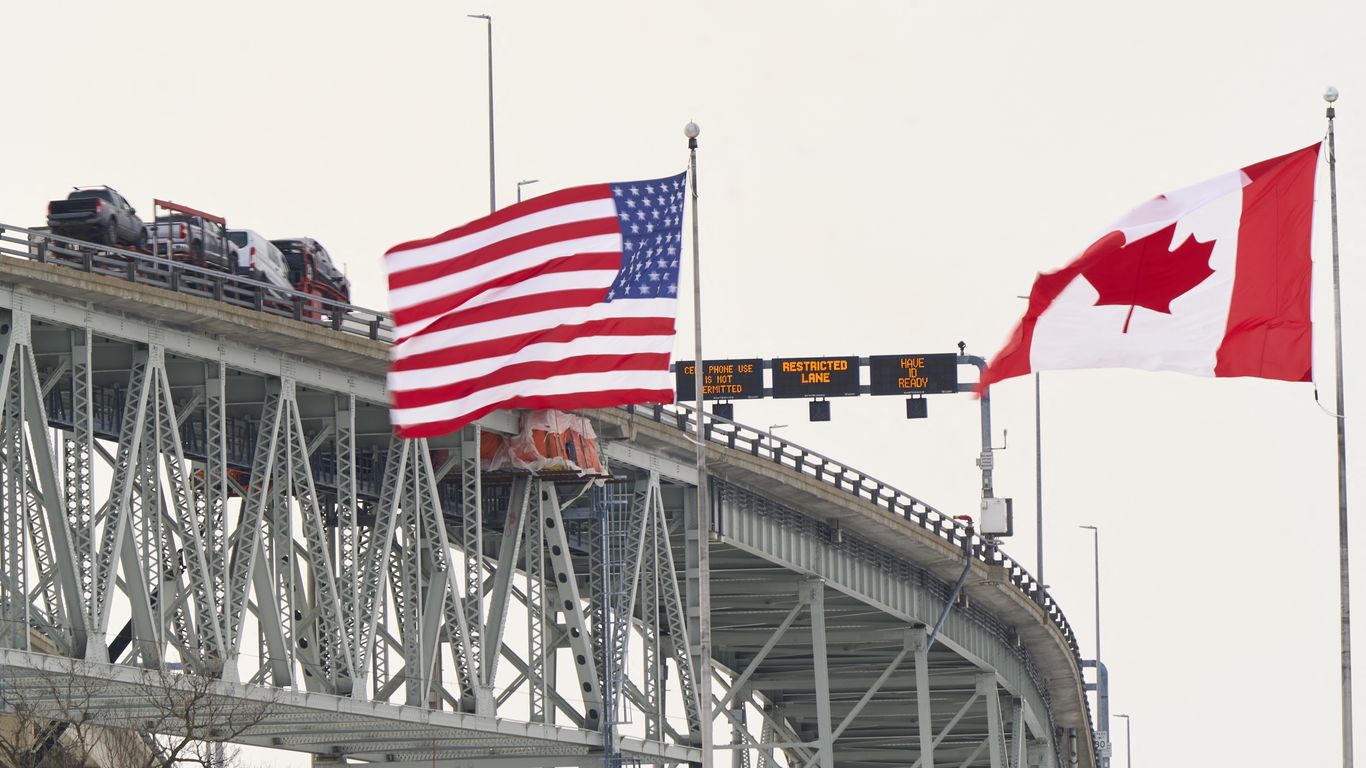
Canadian visits to the U.S. dropped by 25% in 2025 and continued to decline early in 2026, according to a Canadian government report. This caused Canadian tourists to spend about C$3.3 billion (US$2.3 billion) less in the U.S., mostly from fewer leisure trips, while Canadians traveled more within Canada and to other countries.
Key Facts
Canadian travel to the U.S. fell 25% in 2025 and kept declining in early 2026.
This is the longest drop in Canadian trips to the U.S. outside the pandemic since 1972.
Canadians spent C$18.8 billion visiting the U.S. in 2025, down from C$22.1 billion in 2024.
Canadian spending on trips outside North America increased by C$3.6 billion in 2025.
Canadians took 7.1 million fewer trips to the U.S. but took 5 million more domestic trips and 1.3 million more overseas trips.
The decline in Canadian travel to the U.S. happened after trade tensions, tariffs, and comments by President Donald Trump affected Canadian views on visiting the U.S.
Canada has been the largest source of international visitors to the U.S. traditionally.
It is unclear if tourists from other countries or events like the World Cup made up for the loss in Canadian visitors.
Read the Original
Want the full story? Tap a source to open the original
article.
Countries in Asia face rising energy problems as a blockade in the Red Sea disrupts oil shipping routes from the Middle East. This adds to earlier supply problems and higher costs, pushing oil prices above $100 and leading to inflation and fuel shortages in the region.
Key Facts
Asian countries like Japan, the Philippines, Thailand, and South Korea depend on Middle East oil for up to 90% of their imports.
The Bab al-Mandab strait in the Red Sea is blocked by Yemen's Houthis, stopping Saudi oil shipments and tightening supplies.
Earlier in March, Iran blocked the strait of Hormuz, another key oil route, causing supply shortages.
Saudi Arabia shifted much of its oil exports to the Red Sea port of Yanbu after the Hormuz closure.
Tankers are now rerouting oil shipments via the Suez Canal and around Africa, which greatly increases costs and shipping times.
Large oil tankers cannot fully pass through the Suez Canal, requiring complicated unloading and pipeline transfers.
Insurance costs for ships passing the conflict areas have doubled recently, increasing overall oil transport costs.
Rising oil costs have led to inflation and pressure on government budgets, with countries offering fuel subsidies or tax cuts to ease the impact.
Read the Original
Want the full story? Tap a source to open the original
article.
Johnson & Johnson has offered to pay up to $5.5 billion to settle thousands of lawsuits claiming its talc-based baby powder caused ovarian cancer. The company denies the claims and says it wants to resolve the issue to focus on its healthcare products.
Key Facts
Johnson & Johnson faces tens of thousands of lawsuits over its talc-based baby powder and other products.
The lawsuits allege that talcum powder caused ovarian cancer due to asbestos contamination.
Talc is a natural mineral often used in baby powder and can be found near asbestos in the earth.
J&J denies the claims and says studies show talc is safe and asbestos-free.
The company has changed the baby powder formula to be cornstarch-based and stopped selling talc powder worldwide.
A federal court recently challenged plaintiffs to prove talc caused their cancer.
J&J says settling lets the company move past this legal issue and focus on developing medicines and devices.
Lawsuits started as early as 2009, and J&J has won most cases so far in court.
Read the Original
Want the full story? Tap a source to open the original
article.
Johnson & Johnson has agreed to pay $5.5 billion to settle about 69,000 lawsuits in the US claiming its talc-based baby powder caused ovarian cancer. The settlement covers nearly all current US talc-related cases but does not include ongoing lawsuits in the UK.
Key Facts
J&J will pay $5.5 billion to settle around 69,000 US lawsuits about talc-based baby powder and cancer.
The deal covers 99.75% of the talc cases pending in US federal and state courts.
Talc is a mineral once common in cosmetics and baby products but is now linked to cancer risks.
The World Health Organization classified talc as "probably carcinogenic to humans" in 2024.
J&J stopped selling talc-based baby powder in the US in 2020 and worldwide in 2023.
The company denies that talc causes cancer but faced several jury awards against it in past years.
The settlement does not apply to a large ongoing lawsuit in the UK involving claims that J&J knew about the cancer risk.
The UK case involves more than 7,000 potential claimants and is being heard by the UK High Court.
Read the Original
Want the full story? Tap a source to open the original
article.
A federal judge stopped Minnesota from enforcing a ban on prediction markets just before it was supposed to start. The judge said that the companies and the Trump administration are likely right that federal law overrules the state's ban.
Key Facts
Minnesota planned to ban prediction markets, which are platforms where people bet on future events.
The ban was set to begin soon but was paused by a federal judge.
Judge Katherine Menendez ruled in favor of the Trump administration and two companies, Kalshi and Polymarket.
The court case argues that federal law allows prediction markets despite the state ban.
The judge believes the plaintiffs will likely win because federal law takes priority over state law.
Kalshi and Polymarket run prediction markets where users can trade contracts based on event outcomes.
The decision means the ban cannot be enforced while the legal case proceeds.
Read the Original
Want the full story? Tap a source to open the original
article.
Actors Benedict Cumberbatch, Alan Cumming, and Benedict Wong expressed concern about a potential merger between Paramount Skydance and Warner Bros. Discovery. They warned that this merger could reduce competition, threaten jobs, and concentrate too much power in the entertainment industry.
Key Facts
Benedict Cumberbatch, Alan Cumming, and Benedict Wong wrote an opinion piece about the merger.
The merger involves Paramount Skydance and Warner Bros. Discovery.
The actors are worried the merger will reduce competition in the film industry.
They say it could lead to fewer independent movies being made or acquired.
The merger might put many jobs at risk.
Concentrating power in a few companies can limit the variety of creative work.
The op-ed calls on the UK to take action to stop or regulate the merger.
Read the Original
Want the full story? Tap a source to open the original
article.
Oil prices went down on Monday after President Trump decided to pause military strikes against Iran, which increased hopes for peaceful talks. At the same time, major technology companies like Amazon and Meta are getting ready to share their latest financial results.
Key Facts
Oil prices dropped on Monday.
President Trump paused planned strikes on Iran.
The pause created optimism for diplomatic discussions between the U.S. and Iran.
Top tech companies such as Amazon and Meta are about to release their earnings reports.
The news was covered by CBS News and Yahoo Finance.
The situation involves both global oil markets and major American tech companies.
The focus is on potential changes in U.S.-Iran relations and upcoming corporate financial updates.
Read the Original
Want the full story? Tap a source to open the original
article.
Small businesses are suing to stop the latest tariffs imposed by President Donald Trump's administration. These tariffs target imports from over 60 countries accused of using forced labor, but courts have already challenged earlier versions of these tariffs.
Key Facts
Small businesses including Burlap & Barrel, Collective Horology, and Learning Resources are suing to block new tariffs.
The new tariffs took effect recently under Section 301 of the Trade Act, after earlier temporary tariffs expired.
The tariffs charge 10% to 12.5% on imports from countries accused of not stopping forced labor.
Previous tariff programs faced legal defeats in courts, including a Supreme Court win for Learning Resources.
Lawsuits claim the administration is stretching its trade authority and not proving how each country harms U.S. business.
Collective Horology reported losing over $160,000 due to tariffs and has not yet received refunds.
The Trump administration says the tariffs aim to stop unfair trade, not just replace earlier tariffs.
Courts are now focusing on how the administration uses its tariff powers rather than if it has the power at all.
Read the Original
Want the full story? Tap a source to open the original
article.
Cracker Barrel has named David Deno as its new CEO, starting August 10, replacing Julie Felss Masino who will remain as an adviser until October. This change comes after a challenging year for the company, including public criticism and falling sales linked to changes in the brand’s logo and image.
Key Facts
David Deno previously led Bloomin’ Brands, which owns Outback Steakhouse and Carrabba’s Italian Grill.
Julie Felss Masino became CEO in July 2023 but will step down on August 10 and advise until October.
Cracker Barrel changed its logo for the first time in 48 years, removing the "Uncle Herschel" image.
The logo change and other company diversity efforts faced backlash from some conservative groups and influencers.
President Donald Trump publicly called for Cracker Barrel to return to its old logo and manage the company better.
Deno has 40 years of experience in the restaurant and retail industries, including senior roles at Yum! Brands and Burger King.
The leadership change aims to stabilize Cracker Barrel’s operations after a year of controversy and financial difficulties.
Read the Original
Want the full story? Tap a source to open the original
article.
The New Bedford Whaling Museum is selling shirts and other items featuring a viral one-star review calling it the “worst aquarium ever.” This merchandise has become very popular, leading to a big increase in sales after news coverage and social media attention.
Key Facts
The phrase “worst aquarium ever” came from a 2020 one-star Google review of the museum.
The museum does not have live aquatic animals but displays large whale skeletons.
The museum started selling T-shirts, hoodies, and tote bags with the review printed on them, along with a whale skeleton drawing.
After local and national TV coverage, online orders surged to 738 in less than a day.
Weekly sales increased by 250% following the recent media attention.
The merchandise first gained popularity after a TikTok video got over 96,000 views.
The museum has restocked with hundreds of new shirts, crewnecks, hoodies, and bags due to high demand.
Prices are $32.50 for adult T-shirts, $50 for crewnecks, and $60 for hoodies.
Read the Original
Want the full story? Tap a source to open the original
article.
A $25,000 deposit into a 1-year certificate of deposit (CD) can earn over $1,000 in interest with current rates around 4.1% to 4.17%. Although the money is locked in for a year, the fixed interest rate offers a safe way to grow savings more than a typical savings account.
Key Facts
CDs require locking your money for a fixed time, like one year, to earn interest.
Current 1-year CD rates range from 4.10% to 4.17%.
At these rates, $25,000 in a CD can earn between $1,025 and $1,042.50 after one year.
Early withdrawal from a CD usually results in penalties and loss of some interest.
Interest rates vary by bank, making it important to compare before choosing a CD.
CDs protect the original money (principal) and provide guaranteed returns.
If you need access to the money during the year, alternatives like high-yield savings accounts or money market accounts offer competitive interest with more flexibility.
Rates might change soon after the next Federal Reserve meeting, so timing can affect earnings.
Read the Original
Want the full story? Tap a source to open the original
article.