The Calgary Stampede is the biggest outdoor rodeo in the world and takes place in Alberta, Canada. Since Alberta has the fourth-largest proven oil reserves globally, the rising oil prices are influencing the event and the local economy.
Key Facts
The Calgary Stampede is the largest outdoor rodeo worldwide.
It is held in Alberta, Canada.
Alberta has the fourth-largest proven oil reserves in the world.
Oil prices have been rising recently.
Higher oil prices affect Alberta's economy.
This economic impact is reflected in the atmosphere of the Calgary Stampede.
Read the Original
Want the full story? Tap a source to open the original
article.
Oil prices dropped after the United States and Iran paused their military attacks in the Persian Gulf for two days. Brent crude oil fell to about $92 per barrel, down from a high of $102 reached last week, as fears of war disruptions eased.
Key Facts
Brent crude oil prices fell 4.9% to $92.02 per barrel following a pause in attacks by the U.S. and Iran.
Oil prices had surged to $102 per barrel last week due to increased fighting and worries about shipping disruptions.
The Strait of Hormuz is a critical shipping route for a fifth of the world’s oil supply and has been affected by the conflict.
Alternative shipping routes are also under attack, such as Saudi oil tankers in the Red Sea.
Higher oil prices have contributed to increased gasoline prices in the U.S., currently averaging $4.11 per gallon.
Rising oil costs can raise prices for shipped goods worldwide and slow consumer confidence in the U.S. economy.
The recent oil price rise has increased concerns about inflation and led traders to expect a possible Federal Reserve interest rate hike.
Higher interest rates could cool inflation but may also slow down economic growth by making borrowing more expensive.
Read the Original
Want the full story? Tap a source to open the original
article.
A survey showed that most people in the UK would choose a sure £50,000 over a 50/50 chance to win £1 million. Women were more likely than men to pick the guaranteed amount, and younger people were more willing to take the risk than older people.
Key Facts
73% of 4,600 UK adults chose the guaranteed £50,000 in the survey by YouGov.
21% preferred the 50/50 chance to win £1 million, while 6% were undecided.
82% of women chose the sure £50,000 compared to 63% of men.
Younger people (age 18-24) were more likely (28%) to take the risk than those over 65 (11%).
£50,000 is more than the average annual full-time salary in the UK.
People tend to avoid risk because losing a guaranteed amount feels worse than missing out on a larger prize.
Historically, investing £50,000 around 38 years ago in a global fund could have grown to £1 million today, though past performance does not guarantee future results.
Risk preference changes depending on the amount of money involved; smaller amounts often encourage more risk-taking.
Read the Original
Want the full story? Tap a source to open the original
article.
Economists warn that rising oil prices caused by conflict in the Middle East could force the Bank of England to increase interest rates later this year. If oil prices stay above $90 to $100 a barrel, inflation may rise, pushing the central bank to raise rates to control the economy.
Key Facts
Oil prices spiked above $100 a barrel due to renewed fighting in the Middle East but dropped slightly to around $96.
The Bank of England currently holds interest rates at 3.75%, with a decision expected to maintain this level at its upcoming meeting.
Economists say if oil prices remain high, inflation in the UK could increase significantly, leading to higher interest rates.
At $90 a barrel, markets anticipate about one and a half rate increases; at $100, potentially two increases of 0.25%.
Rising gas and oil prices may increase costs for food and transport, pushing inflation higher.
The conflict in the Middle East has disrupted oil shipping channels, contributing to price increases.
The Bank of England's monetary policy committee is cautious but prepared to raise rates if energy prices keep rising.
Higher interest rates would aim to slow inflation but could also act like a tax on economic growth.
Read the Original
Want the full story? Tap a source to open the original
article.
The price of home heating oil in Northern Ireland has increased sharply in the past three weeks, rising by nearly £100 for 500 litres. This rise is linked to increased conflict between the US and Iran, which has affected global oil prices and may keep them high until talks resume.
Key Facts
The cost of 500 litres of home heating oil rose from £346.59 to £445.37 in three weeks, an increase of 29%.
About two-thirds of households in Northern Ireland use home heating oil, the highest in the UK.
Prices previously peaked at £612.37 per 500 litres in April and dropped to £346.59 earlier this month.
The recent price rise followed US military actions against Iran and attacks on oil tankers near a critical shipping route.
Some families are worried about the impact of rising heating oil costs, especially with winter approaching.
Alternative heating options like gas have become similarly expensive for some users.
Experts expect high oil prices to continue until diplomatic talks between the US and Iran restart.
The rising cost is creating financial strain for households and those on fixed incomes.
Read the Original
Want the full story? Tap a source to open the original
article.
Kemi Badenoch, Conservative Party leader, asked Prime Minister Andy Burnham to avoid raising taxes or borrowing more money to pay for social care reform. She said any funding must come from cutting current spending and protecting people who have saved money for their care.
Key Facts
Kemi Badenoch wrote a letter to Prime Minister Andy Burnham about social care reform.
She wants the reforms funded by reducing current government spending, not by raising taxes or borrowing.
Badenoch insists reforms must be fair to people who have saved money for their own care.
Andy Burnham plans to speak about adult social care and has worked on this issue since 2009.
Past efforts by other leaders, including Boris Johnson and Sir Keir Starmer, have also focused on social care reform.
Sir Ed Davey from the Liberal Democrats supports cross-party cooperation on social care.
Badenoch emphasized concerns about business closures, youth unemployment, and the cost of living worsening with tax increases.
Burnham responded positively to cooperation, expressing willingness to find common ground.
Read the Original
Want the full story? Tap a source to open the original
article.
The movie "The Odyssey," directed by Christopher Nolan, earned $87 million in its second weekend in North American theaters. This is Nolan’s best second weekend ever and helped the film reach nearly $640 million worldwide in ticket sales.
Key Facts
"The Odyssey" made $87 million in its second weekend, a small 30% drop from its first weekend.
This is Christopher Nolan’s highest second weekend earnings, surpassing "The Dark Knight" from 2008.
The film has earned about $639.6 million globally, including $128.3 million from international theaters.
IMAX screenings contributed $48 million to the global total, with special 70 mm IMAX screens earning $5.2 million.
Most IMAX showtimes for "The Odyssey" are sold out through September.
No major new film competition affected the movie’s box office during its second weekend.
Other top films that weekend included Disney’s "Moana" with $10.5 million and "Toy Story 5," which passed $1 billion in total earnings.
The Broadway show recording "Hadestown: The Musical" earned $9.7 million in its opening weekend.
Read the Original
Want the full story? Tap a source to open the original
article.
Global commercial flights set a new daily record on July 23, 2026, with over 153,000 flights tracked worldwide. This happened despite recent declines in passenger demand and challenges like higher travel costs and geopolitical tensions.
Key Facts
July 23, 2026, had 153,359 commercial flights, the highest number tracked in Flightradar24's records.
The record comes even though passenger demand fell 2.2% year over year in May 2026, according to the International Air Transport Association (IATA).
Domestic air travel dropped by 3.1%, with the U.S. down 1.9% and China down 6.2% in passenger demand.
Airlines scheduled many flights for the Northern Hemisphere summer to meet peak vacation travel and major events.
The Middle East conflict caused a 28.4% drop in air traffic for carriers in that region, contributing heavily to the overall demand decline.
Outside the Middle East, global passenger demand actually increased slightly by 0.7% year over year.
Airlines continue to operate large flight schedules and adjust prices to encourage travel despite economic pressures.
The July 23 record reflects strong operational activity during a key travel season, though future demand is uncertain.
Read the Original
Want the full story? Tap a source to open the original
article.
This news segment highlights the latest top-selling books on The New York Times bestseller lists for fiction and non-fiction. It provides viewers with current information on popular books.
Key Facts
The article focuses on books listed on The New York Times bestseller lists.
It includes both fiction and non-fiction categories.
The information is presented as part of CBS News coverage.
Viewers can access the details through the CBS News app or website.
The lists reflect the most purchased or popular books at the time.
The date mentioned is July 26 (7/26), indicating the timing of this update.
Read the Original
Want the full story? Tap a source to open the original
article.
A study using data from Denmark found that people taking GLP-1 drugs had 17% fewer long-term sick leaves compared to those not taking these drugs. The research suggests these medications may help reduce extended absences from work.
Key Facts
The study used data collected from Denmark.
GLP-1 drugs are a type of medication often used for diabetes or weight management.
People on GLP-1 medications had 17% fewer long-term sick leaves.
Long-term sick leave means being absent from work for a long time due to illness.
The study shows a link between GLP-1 use and reduced extended absences.
This may indicate benefits of GLP-1 drugs beyond health, possibly improving work attendance.
The research does not specify the exact reasons for fewer sick leaves.
Read the Original
Want the full story? Tap a source to open the original
article.
ITV Studios has asked Leeds City Council for permission to keep filming the TV drama Emmerdale at their village set in Harewood beyond the current limit of next year. The set has been used since 1997 and includes buildings like the Woolpack pub and a farm, showing rural life in Yorkshire.
Key Facts
Emmerdale’s village set is located on a farm site in Harewood, Leeds.
ITV Studios has used this location since 1997 for filming the show.
Current permission to film there expires in June 2027.
The set features a pub, farm buildings, a village hall, café, church, and homes.
More than 260 episodes are filmed there every year, including outdoor and some indoor scenes.
ITV wants permanent permission to keep using the site.
The location is a tourist attraction due to its connection with the show.
If approved, the site must be restored to its original state within six months after use ends.
Read the Original
Want the full story? Tap a source to open the original
article.
Many small businesses are using AI tools to help their employees work faster and make fewer mistakes, rather than to replace jobs. Contrary to some reports, job numbers, especially in small businesses, have been increasing, and owners plan to hire more people despite the use of AI. AI helps workers with tasks like creating sales quotes and answering customer questions, supporting existing staff.
Key Facts
A small business owner spent $10,000 on AI software that listens to sales conversations and creates quotes automatically.
Another company uses AI connected to product manuals so customer service can quickly find answers.
Most small businesses used AI last year for tasks like contract review and writing emails; now they are applying it to real-time work.
The Department of Labor reports a 9% increase in employment since mid-2021.
Payroll companies confirm job growth, especially among small businesses.
Small businesses currently have about 7.6 million job openings, more than before the Covid pandemic.
The U.S. workforce is expected to shrink in the future due to aging and fewer births.
AI is seen as a tool to help workers, not replace them, especially since many jobs require human skill and technology like robots is not ready yet.
Read the Original
Want the full story? Tap a source to open the original
article.
Costco faces a $14 million settlement in a class-action lawsuit from Washington state customers who received marketing emails with misleading time-limited offers. The settlement could pay those customers who got these emails between June 2021 and July 2026.
Key Facts
The lawsuit claims Costco sent emails promoting deals as if they were temporary, even though the deals were later extended.
The case was filed in King County Superior Court in Washington.
Under Washington law, recipients of misleading marketing emails can seek $500 per message, but the total payout comes from a $14 million fund.
The named plaintiff is Michael Aaland, who replaced the original plaintiff Joseph Zydel.
Costco denies any wrongdoing but agreed to settle to avoid ongoing legal costs and risks.
Eligible claimants must have received emails in Washington from June 2, 2021, to July 7, 2026, and submit their claim by August 24, 2026.
The court has given preliminary approval to the settlement, with a final hearing scheduled for October 2, 2026.
The amount each person receives depends on the number of valid claims minus legal and administrative fees.
Read the Original
Want the full story? Tap a source to open the original
article.
President Donald Trump has imposed new tariffs on imports from over 60 countries, using a law that lets him act without Congress when dealing with unfair trade practices. These tariffs replace previous temporary tariffs and target countries the U.S. says do not enforce bans on goods made with forced labor. Some countries have disagreed with the U.S. claims and the way tariffs were set.
Key Facts
The Trump administration applied tariffs of 10% to 12.5% on imports from more than 60 countries.
The tariffs are justified under Section 301 of the Trade Act of 1974, which allows the president to impose trade measures without Congress.
These tariffs replace temporary 10% tariffs that recently expired.
The tariffs target countries the U.S. says fail to ban or enforce prohibitions on goods made with forced labor.
The U.S. investigated the countries for four months but shared limited details about the evidence and tariff calculations.
Many affected countries, including those in Europe, protested the tariffs and called the U.S. claims unfair.
The U.S. Trade Representative’s office consulted countries and held public hearings but did not disclose confidential negotiation details.
Experts question the strength of evidence that these countries do not enforce forced labor import bans effectively.
Read the Original
Want the full story? Tap a source to open the original
article.
Pubs in the UK saw a big rise in sales during the recent World Cup, helped by late opening hours and England’s progress to the semi-finals. They sold 30 million more pints and made an extra £150 million compared to normal times. This boost was larger than in recent tournaments like Euro 2024.
Key Facts
Pubs sold 30 million extra pints during the World Cup, earning an additional £150 million.
Sales nearly doubled during England’s early morning game against Mexico due to extended pub opening hours.
Other games also caused large sales increases, with some pub transactions going up by two-thirds.
Overall tournament sales were 16% higher than usual, and 9% more than during Euro 2024.
The pub industry also received a £100 million aid package including a 20% business rates cut from Andy Burnham.
Some pubs invested in outdoor seating and large screens to attract more customers.
Busy match days were often followed by quieter days, depending on the team’s progress.
Some pubs saw 300-400% sales increases during weekday games but experienced a drop after England lost in the semi-finals.
Read the Original
Want the full story? Tap a source to open the original
article.
The family of Adrian Howe, a former Vodafone store manager who drowned days before opening his new Vodafone franchise, is urging the government to create a law to better protect franchisees. Vodafone recently settled a legal claim made by 62 former franchisees who said the company unfairly profited from them, but Howe’s case has highlighted ongoing concerns about franchisee treatment and mental health risks.
Key Facts
Adrian Howe drowned in August 2018, just before opening his second Vodafone franchise.
Howe’s family says he was under extreme financial pressure due to the franchising deal, including personal guarantees that put their home at risk.
Vodafone settled a legal claim worth up to £85 million with 62 former franchisees who accused the company of unfair business practices.
The claim involved about 40% of Vodafone’s 167 franchisees and lasted 19 months until a confidential settlement.
Howe’s daughter, Kirsty-Anne Holmes, wants a new law called “Adrian’s law” to protect franchisees and stop abusive contract terms.
The UK currently has no government body specifically overseeing franchising contracts.
Mental health problems and pressures from Vodafone’s franchising practices have been reported by many former franchisees.
The case was mentioned in UK Parliament, and then-PM Keir Starmer promised to review franchising regulations.
Read the Original
Want the full story? Tap a source to open the original
article.
Zimbabwe is working to develop local industries that process and manufacture minerals instead of just exporting raw materials. The government has restricted exports of unprocessed minerals like lithium to encourage investment in local processing plants, but smaller miners are concerned about their ability to join in because of high costs and limited resources.
Key Facts
Zimbabwe has banned exports of unprocessed lithium ore since 2022 to promote local processing.
The government wants to build industries that make lithium batteries and solar panels in the country.
The first lithium sulphate plant in Africa is being built in Zimbabwe.
Prospect Lithium Zimbabwe’s lithium carbonate plant is nearly finished, bringing over $1.1 billion in foreign investment.
Supporters say local processing creates jobs, skills, and keeps more money in Zimbabwe.
Smaller miners face challenges like expensive processing plants, unreliable electricity, and lack of funding.
Smaller producers worry they may be left out if the government does not provide support.
One solution suggested is a toll-smelting system where public or industry groups help with processing costs.
Read the Original
Want the full story? Tap a source to open the original
article.
Virginia released a study showing that groundwater in its eastern region is shrinking due to population growth and industrial use, including data centers. The study recommends stricter rules for water use and more government control to protect the water supply.
Key Facts
Virginia is the world’s largest hub for data centers.
The study focuses on groundwater in Virginia’s eastern coastal plain. Groundwater is water stored underground.
The region’s groundwater supply is limited and expected to decline soon.
Data centers use significant amounts of water to cool their servers.
The report suggests regulators should have stronger authority to deny water use permits and require alternatives.
There is limited public information about how much water data centers use.
Virginia passed its first groundwater law in 1973 and updated it in 1992, but the report says laws need tougher rules.
Local officials report pressure to switch from groundwater to surface water due to shortages.
Read the Original
Want the full story? Tap a source to open the original
article.
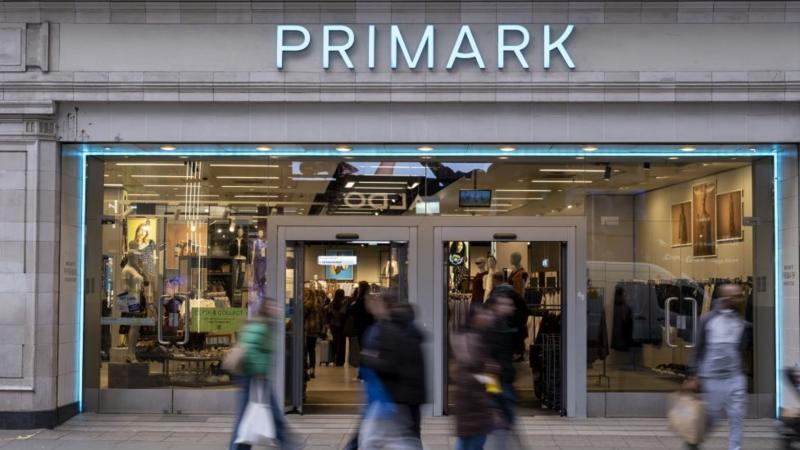
Primark announced it will cut prices by up to 29% on hundreds of clothing items to compete with low-cost online retailers like Shein and Temu. The price cuts aim to attract more shoppers as Primark faces falling sales and increased competition, especially from online stores offering very cheap clothes.
Key Facts
Primark will reduce prices on many items such as jeans, jumpers, and socks by up to 29%.
The retailer is trying to compete with online brands like Shein and Temu, which sell very cheap clothes online.
Shein and Temu can sell cheaper because they don’t have physical stores and pay less in import taxes (until 2028).
Primark has over 190 stores in the UK but does not offer home delivery, only click and collect.
Some shoppers now find Primark more expensive compared to these online retailers.
Primark’s parent company plans to list Primark on the London stock market next year.
Other shops like Sainsbury’s Tu and secondhand sellers like Vinted are also popular for cheaper or better-quality basics.
Primark says it is also working on improving the quality, fit, and style of its clothes while lowering prices.
Read the Original
Want the full story? Tap a source to open the original
article.
The Flatiron Building in New York City is being transformed from office space into luxury apartments, with some units priced as high as $58.5 million. After a long renovation, the building will have 36 upscale homes and new amenities, marking a major change for this historic landmark.
Key Facts
The Flatiron Building is a famous triangular skyscraper in New York City, completed in 1902.
It has been covered in scaffolding for about seven years during renovations.
The building is being converted from offices into 36 luxury apartments.
Prices for these apartments range from $11 million to $58.5 million.
The most expensive residence includes five bedrooms and a balcony.
Renovations began in 2023 after the last office tenant left in 2019.
New facilities like a 60-foot swimming pool and a billiards room will be added.
The building owners include the Brodsky Organization, GFP Real Estate, and the Sorgente Group.
Read the Original
Want the full story? Tap a source to open the original
article.