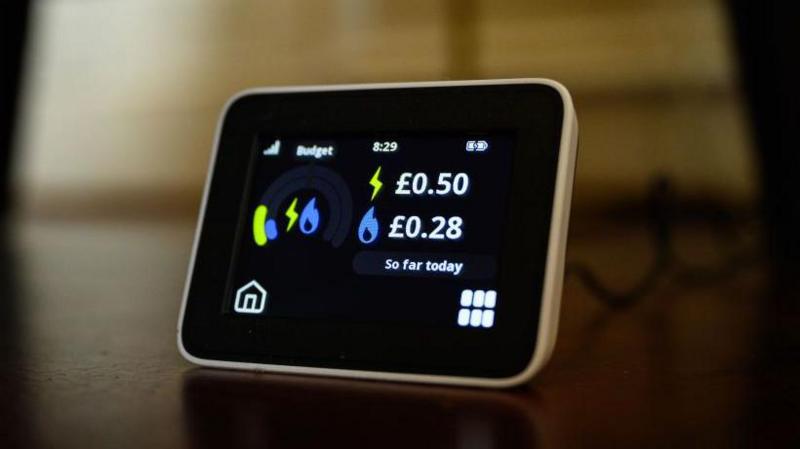
Budget Energy will raise electricity prices by 9.5% for customers on variable tariffs starting August 4. Customers with fixed-price plans will not see a change.
Key Facts
The price increase affects residential electricity rates and standing charges for variable tariff customers.
The change takes effect on August 4.
Fixed-price tariff customers are not impacted by the increase.
Budget Energy said the hike is due to changes and uncertainty in wholesale energy markets and global political tensions.
The company plans to inform affected customers directly with details about the new prices.
Other energy providers in Northern Ireland, like SSE Airtricity and Power NI, have also recently increased prices by around 6.2%.
SSE Airtricity’s increase starts August 1, adding about £71.57 per year to household bills.
Budget Energy’s managing director encourages customers to review their plans to find the best option.
Read the Original
Want the full story? Tap a source to open the original
article.
A couple left a restaurant in Penarth, Wales, without paying a £115 bill, including a £52 fish dish. The restaurant owner said the diners later paid and explained it was a misunderstanding, so the police will not pursue the case.
Key Facts
The unpaid bill was for £115, which included a £52 Dover sole dish, eight Cokes, calamari, and a two-course set menu.
The incident happened at The Old Custom House restaurant on 29 June.
The restaurant appealed on social media asking the diners to pay the bill.
The couple paid the bill a week later and said it was a misunderstanding.
South Wales Police investigated but will not take action now that the bill is paid.
The restaurant staff were upset by the incident, which is part of a growing problem of people leaving without paying.
The restaurant has seen dine-and-dash cases about once a month in the past year.
Posting appeals on social media has helped restaurants get missing payments.
Read the Original
Want the full story? Tap a source to open the original
article.
Rising costs like housing and gas are causing people in the U.S. to change their spending habits and living situations. Some workers, including drivers, are feeling financial pressure as layoffs increase and the economy faces challenges.
Key Facts
Many Americans are cutting back on spending because everyday costs are going up.
Some people are moving in with family or friends to save money.
Rising prices for housing and gas are making it hard for some workers to cover their expenses.
Job cuts and layoffs have started but are expected to grow in number.
Workers in service jobs, such as drivers, are directly affected by these economic pressures.
The changes reflect broader challenges in the economy that affect both workers and consumers.
Read the Original
Want the full story? Tap a source to open the original
article.
The Gambling Commission will require online gamblers who spend large amounts in a short time to undergo financial risk assessments. These checks aim to identify people who may have financial problems due to gambling but are not the same as affordability checks.
Key Facts
Gamblers spending over £1,000 in 24 hours or over £3,000 in 90 days will face financial risk checks.
Under-25s will have lower spending limits for these checks.
The assessments use data from credit reference agencies but do not affect credit scores.
The checks will start with those over 25 who spend more than £5,000 in 24 hours and will lower to £1,000 over time.
High spenders are more likely to have a debt management plan or past credit defaults.
The Commission will introduce this carefully and in stages, after talking with gambling companies and other groups.
These checks aim to spot signs of financial difficulty linked to gambling without requiring detailed affordability reviews, which some gamblers dislike.
The Commission is concerned that stricter rules might push problem gamblers to illegal gambling sites.
Read the Original
Want the full story? Tap a source to open the original
article.
Vermont has changed its bottle deposit law starting July 1 to increase the fees paid to centers that handle returned bottles and cans. This update aims to help those centers manage higher costs and to improve recycling rates by setting goals and creating better access for returns.
Key Facts
Vermont’s bottle deposit law began in 1973 and requires a deposit on certain beverage containers.
Most containers have a 5-cent deposit; liquor containers have a 15-cent deposit.
The new law raises handling fees from 3.5 to 4.5 cents for most containers, and from 4 to 5 cents for sorted (non-commingled) containers.
The increase is meant to support redemption centers facing higher labor and operating costs.
The law sets goals for returning 75% of containers by 2029 and 80% by 2032.
It includes rules to improve convenience and reduce areas where people have few places to return containers (“redemption deserts”).
Other states with bottle deposit laws include Michigan, Oregon, Connecticut, California, and others.
Recently, several states have updated their programs to boost recycling and participation.
Read the Original
Want the full story? Tap a source to open the original
article.
The Bank of England now expects one million more UK homeowners to face higher mortgage payments by the end of 2028 due to the impact of the Iran war. Around five million homeowners could see their mortgage bills rise, with many facing increases when their current fixed-rate deals end.
Key Facts
The Bank of England projects more than five million UK homeowners will have higher monthly mortgage payments by 2028.
This is an increase from the four million homeowners previously expected in December.
Homeowners ending fixed-rate mortgage deals in the next two years may see their bills rise by about £45 per month.
Those with very low interest rates (under 3%) now ending deals could face average payment increases of £170 monthly.
Over 80% of mortgage customers currently have fixed-rate deals that keep payments steady until the deal ends.
Borrowers remortgaging in the next few years are unlikely to see mortgage payments fall as previously predicted.
The Bank reported that lower-income households will feel more pressure from higher energy costs alongside mortgage increases.
Despite challenges, household debt remains low compared to past years and widespread cuts in consumer buying are not expected.
Read the Original
Want the full story? Tap a source to open the original
article.
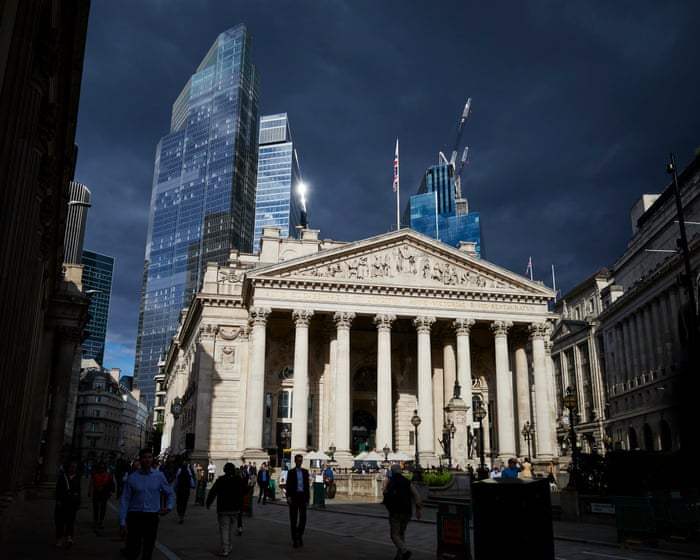
The Bank of England plans to ease some capital rules for big UK banks to help them lend more and support the economy. At the same time, officials are worried that fast changes in AI and increased borrowing to buy stocks could create risks for the financial system.
Key Facts
The Bank of England wants to reduce capital buffers that banks must hold to cover losses, especially for large domestic lenders like NatWest, Lloyds, Nationwide, and Santander UK.
The proposed changes could lower the banks' leverage ratio by about 0.20%, making these banks more competitive internationally.
Some committee members are concerned that loosening rules might increase risky borrowing, especially by investors who use debt to buy shares.
Many of these stock purchases involve companies related to AI, whose market values have recently risen a lot.
The Financial Policy Committee (FPC) will review by September whether these rule changes could create new financial risks.
The FPC also warned that rapid advances in AI increase risks of cyberattacks and operational problems for banks and important financial firms.
AI tools like Anthropic’s Mythos have been released only to select companies, raising some concerns about their impact and safety.
The Bank plans to consult the public on these capital rule changes in early 2027.
Read the Original
Want the full story? Tap a source to open the original
article.
A Chinese court ordered the tea chain Molly Tea to pay $1.5 million to French luxury brand Louis Vuitton for copying its trademark logo. The decision sparked debate in China about whether Louis Vuitton’s flower design is based on traditional Chinese patterns and if the company is wrongly owning a part of Chinese cultural heritage.
Key Facts
The court in Suzhou ruled that Molly Tea’s logo violated Louis Vuitton’s trademark.
Molly Tea must pay 10.3 million yuan (about $1.5 million) in damages to Louis Vuitton.
Louis Vuitton’s monogram was designed 130 years ago and is said to be inspired by European and Japanese art styles.
Some Chinese media and online users claim Louis Vuitton’s logo is based on ancient Chinese flower patterns, like those from the Tang Dynasty.
There is public frustration in China about foreign brands controlling designs seen as part of Chinese culture.
Molly Tea started in 2021 and plans to appeal the court’s decision.
Disputes over trademarks between Chinese and Western companies happen frequently.
Louis Vuitton celebrates its monogram as a global creative symbol.
Read the Original
Want the full story? Tap a source to open the original
article.
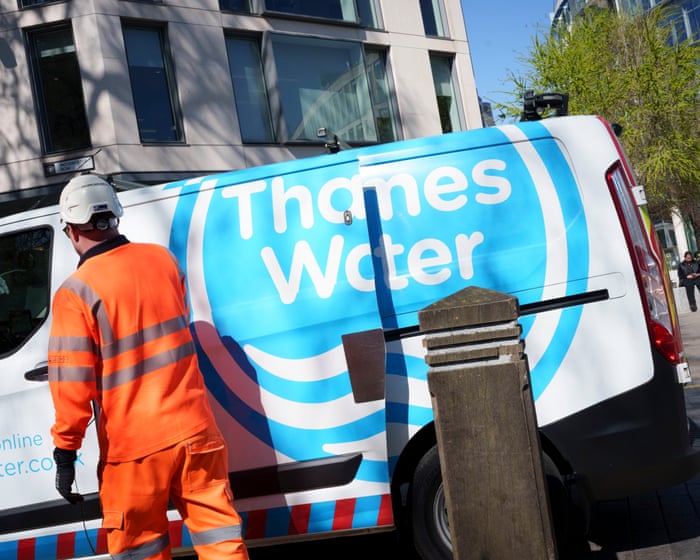
Creditors of Thames Water want to buy the company even if it is temporarily taken over by the government. Thames Water has a large debt and faces financial trouble, and the creditors have proposed a rescue plan involving new investment to keep the company running.
Key Facts
Thames Water owes £17.6 billion and serves 16 million customers in London and the Thames Valley.
A group of 100 institutional investors owns about £14 billion of Thames Water’s senior debt.
The creditors propose injecting £3.35 billion in new equity and £3.25 billion in new debt to rescue the company.
The UK government may temporarily nationalise Thames Water in a process called special administration regime (SAR).
Temporary nationalisation means the government would run Thames Water to keep services going while seeking a new buyer.
The creditors view SAR as a temporary step, not a permanent solution, and want to buy Thames Water out of it.
The current leadership of Thames Water failed to sell the company to a private investor last year.
Thames Water may run out of money by October if no solution is found.
Read the Original
Want the full story? Tap a source to open the original
article.
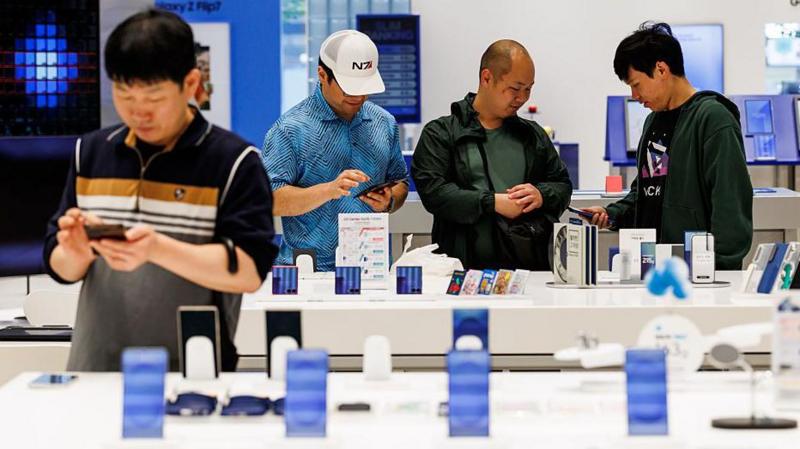
Samsung Electronics reported a huge increase in profits, rising by 1,800% compared to the previous year. This growth is mainly due to higher global spending on artificial intelligence (AI) technology and a shortage of memory chips.
Key Facts
Samsung Electronics is a major South Korean company that makes computer chips.
The company’s profits grew by 1,800% over the past year.
Increased demand for AI technology infrastructure helped drive profits up.
There is a global shortage of memory chips, which benefited Samsung.
Samsung recently reached a market value of $1 trillion.
The company’s workers avoided a strike by securing a bonus deal after the profit surge.
Other related global events include rising oil prices, Canada’s large defense contract, and Cuba’s fuel shortage.
Read the Original
Want the full story? Tap a source to open the original
article.
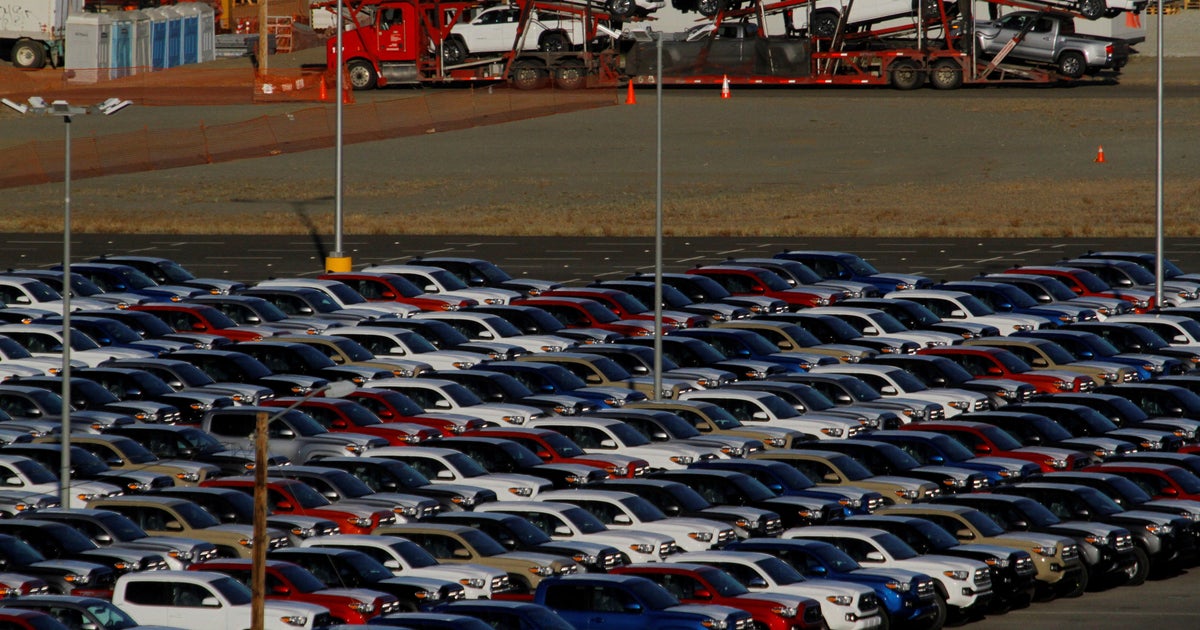
Toyota announced it will move most of its Tacoma truck production from Mexico to its factory in San Antonio, Texas. This change is part of a $3.6 billion investment to expand the Texas plant, create jobs, and increase the number of trucks made each year.
Key Facts
Toyota will shift most Tacoma pickup truck production from Tijuana, Mexico to San Antonio, Texas.
The move will take about four years to complete.
The company will invest $3.6 billion to build a second assembly line at the San Antonio plant.
This expansion will create over 2,000 new jobs and increase production by 150,000 vehicles annually.
Some Tacoma trucks will still be made in Guanajuato, Mexico.
Toyota already produces Tundra and Sequoia trucks in San Antonio and plans to open a new rear axle plant there.
The shift partly responds to higher U.S. tariffs on vehicles, steel, and aluminum under President Donald Trump.
Toyota supports a quick resolution to the US-Mexico-Canada trade agreement to keep North American manufacturing competitive.
Read the Original
Want the full story? Tap a source to open the original
article.
The war between the United States and Israel against Iran has caused major disruptions to global merchant shipping since February. Despite attacks and delays, the shipping industry is expected to largely return to normal because sea trade is essential and container shipping can avoid heavily affected areas like the Strait of Hormuz.
Key Facts
The conflict has caused attacks on ships, delays, and higher costs in merchant shipping.
Container shipping faces less impact because it can use longer alternative routes to avoid conflict zones like the Strait of Hormuz.
Tanker shipping for oil is more affected since there is no alternative sea route around the Gulf oil-producing nations.
The global shipping industry has shown quick recoveries from past crises, including the COVID-19 pandemic.
Container shipping volumes dropped only slightly in 2020 during the pandemic and quickly surpassed previous levels by early 2021.
After a decline in container capacity in the conflict region, shipping has rebounded to pre-war levels following a peace agreement signed in June 2026.
Major shipping firms Maersk and Hapag-Lloyd have resumed sailing through the Suez Canal after assessing the security improvements.
Large container ships can carry as much as thousands of trucks or cargo planes, making sea transport crucial for global trade.
Read the Original
Want the full story? Tap a source to open the original
article.
The article reviews Sarah O’Connor’s book *We Are Not Machines*, which explores how artificial intelligence (AI) and automation are changing work and the challenges they pose to workers’ dignity and safety. It discusses the ongoing struggle to balance technology use with fair working conditions and highlights examples of workers trying to influence how AI impacts their jobs.
Key Facts
Job vacancies in the UK fell to a five-year low in June amid concerns about AI’s impact on employment.
The book highlights a long-standing conflict between human labor and machines, not a completely new problem.
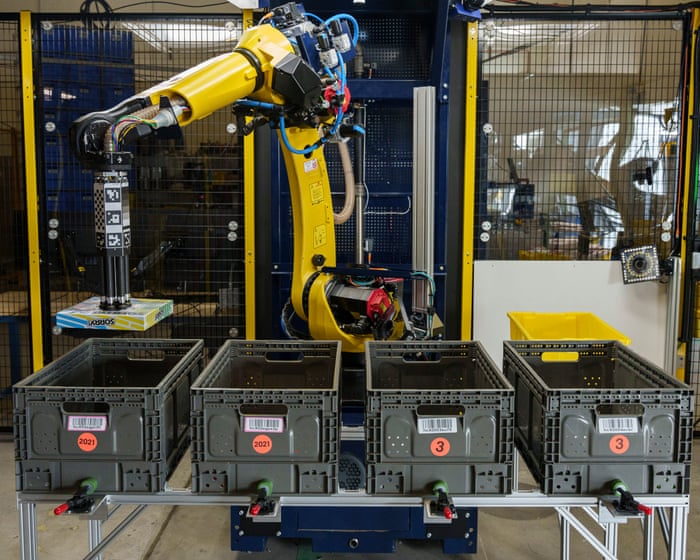
Sarah O’Connor reports on workplaces like an Amazon warehouse where humans and robots work together, and remote workers monitor AI systems.
The management idea of “Taylorism,” which breaks work into measurable parts to boost productivity, is still widely used today.
Technology often carries assumptions that human work can be optimized or replaced by machines, emphasizing productivity over worker dignity.
Some employers may prefer cheaper, faster machine work even if it is lower quality than human work.
Workers and consumers are pushing back, like the Writers Guild striking to control AI use and Dutch care workers setting their own practices.
The book warns about the risk that humans might change to fit machines’ ways rather than machines adapting to human needs.
Read the Original
Want the full story? Tap a source to open the original
article.
UK house prices rose by 0.2% in June, the first increase since before the Iran war began in February. Prices are still slightly below levels seen earlier in the year, with variations across different regions.
Key Facts
The average UK house price in June was £299,330, up 0.2% from May.
Annual house price growth increased slightly to 0.6% in June from 0.5% in May.
The rise in prices follows falls linked to economic uncertainty caused by the war between the US/Israel and Iran.
First-time buyers saw price growth rise to 0.8% annually, with an average home costing £240,433.
Northern Ireland recorded the highest annual price growth at 7.4%, while Scotland grew by 3.9%.
House prices rose mostly in northern England but continued to fall in southern regions, including London and the south-east.
Oil prices and inflation impacts connected to the war affected mortgage rates and buyer affordability.
Experts expect the housing market to grow slowly, depending on lower inflation and improved consumer confidence.
Read the Original
Want the full story? Tap a source to open the original
article.
People hurt by electric scooters and bikes in the UK have received more than £110 million in compensation claims since 2019. These payouts have caused insurance costs for drivers to rise, and there is concern over the safety and legal use of these vehicles on public roads.
Key Facts
Since 2019, over £110 million has been paid to people injured by e-scooters and e-bikes in the UK.
The largest single payment was £20 million for a child with severe injuries.
Injuries from private e-scooters, which are illegal to use on public roads, have led to insurance price increases.
E-scooters can only be legally used on public roads if part of government-approved rental schemes.
Police routinely seize and destroy illegal private e-scooters and modified e-bikes that exceed speed limits.
The Motor Insurers Bureau, a nonprofit group, pays compensation for accidents involving uninsured vehicles.
In 2025, there were 168 injury claims—the highest number so far—related to these vehicles.
Criminal cases include jail sentences for dangerous driving causing death using e-bikes.
Read the Original
Want the full story? Tap a source to open the original
article.
Richard White has resigned as executive chair of WiseTech but will stay on as a board director and chief innovation officer. His resignation followed a police investigation into allegations against him, which he denies. WiseTech’s share price rose after the announcement, as the company plans leadership changes amid investor concerns.
Key Facts
Richard White co-founded WiseTech and has stepped down as executive chair.
White denies allegations that he exploited a worker’s financial and visa status for sex.
He will remain a board director and chief innovation officer.
Raelene Murphy will replace White as chair of WiseTech’s board.
WiseTech’s share price increased by 8.1%, adding about $1 billion in market value.
The company’s value fell from over $40 billion in July 2025 to less than $13 billion recently.
WiseTech has faced challenges from AI competition and laid off 30% of its staff.
White resigned as CEO in 2024 after negative media but returned as executive chair in 2025.
The board and new leadership are focusing on executive succession and governance improvements.
Read the Original
Want the full story? Tap a source to open the original
article.
Asian stock markets fell, led by South Korea's Kospi, which dropped nearly 8% despite strong earnings from Samsung Electronics. On Wall Street, AI-related stocks helped the S&P 500 index get close to its record high, although most individual stocks declined.
Key Facts
South Korea's Kospi index fell 7.6%, with Samsung and SK Hynix shares dropping about 8.7%.
Samsung announced its operating income increased 19 times to 89.4 trillion won ($58.7 billion) in the last quarter.
AI stocks showed mixed behavior due to concerns over whether high investments will lead to enough profit.
SK Hynix plans to raise $28 billion by selling shares on the Nasdaq, making it one of the largest US stock offerings.
Tokyo’s Nikkei 225 index declined 1.8%, with major chipmakers losing value.
Hong Kong’s Hang Seng, Shanghai Composite, and Taiwan’s Taiex indexes also declined.
The US S&P 500 rose 0.7%, nearing its all-time high, helped by gains in AI technology companies.
The Dow Jones Industrial Average reached a record high, up 0.3%.
Read the Original
Want the full story? Tap a source to open the original
article.
U.S. airlines have been focusing on attracting passengers who pay more for first-class, business-class, and premium-economy seats. This strategy creates very different travel experiences for passengers on the same flight, with premium travelers enjoying more comfort and services, while economy travelers face more basic conditions.
Key Facts
Airlines like Delta, American, and United are expanding premium seating and improving high-end amenities.
Premium cabins include first-class, business-class, and premium-economy seats that offer more space and perks.
Premium passengers get benefits like priority security, lounge access with food and drinks, early boarding, and larger seats.
Economy passengers often wait in lines, pay more for food, board late, and have less comfortable seating.
Since the COVID-19 pandemic, airlines have emphasized premium cabins to increase profits.
Delta CEO Ed Bastian said airlines aim to win by offering the best, not the cheapest, experience.
United CEO Scott Kirby said investments also improve experiences for economy travelers, including better entertainment and apps.
Airlines used to give free first-class upgrades to loyal customers but now sell more premium seats directly to travelers willing to pay.
Read the Original
Want the full story? Tap a source to open the original
article.
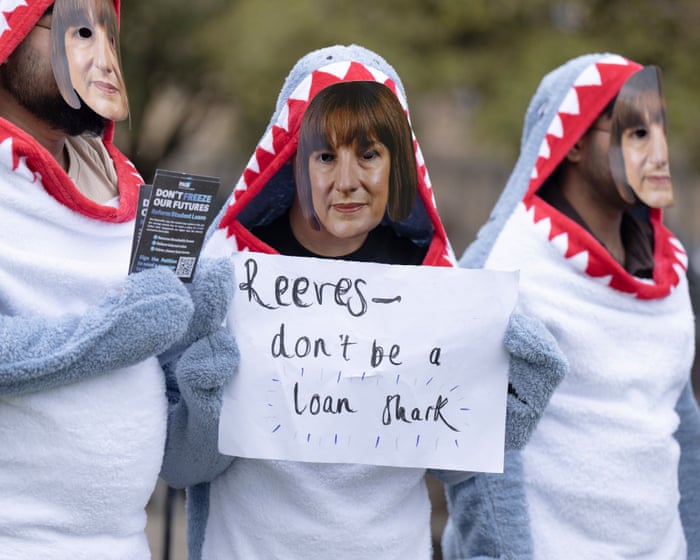
MPs say the government misled students in England and Wales about the terms of student loans. They criticized materials that compared loan repayments to phone contracts and did not clearly explain that terms could change later. The Treasury committee called for the government to reverse a planned freeze on the repayment threshold.
Key Facts
The repayment threshold for plan 2 student loans will be frozen at £29,385 from April 2027 for three years.
Graduates pay back 9% of their earnings above this threshold.
The freeze means rising salaries do not reduce the loan repayment burden against living costs.
MPs said promotional materials did not reveal that the government could change loan terms retrospectively.
A committee survey with over 52,000 respondents found many did not understand loan terms before borrowing.
The government capped interest rates on student loans at 6% but has not reversed the repayment threshold freeze.
MPs urged the government to honor the original terms promised when the loans were introduced.
A government spokesperson said they are working to improve the student finance system and communications with students.
Read the Original
Want the full story? Tap a source to open the original
article.
Samsung Electronics expects its profits to rise about 19 times in the April to June period due to strong global demand for artificial intelligence (AI) memory chips. This marks the company's third record quarterly profit in a row as chip demand remains higher than supply, raising prices.
Key Facts
Samsung expects to earn 89 trillion won (about $58 billion) from April to June.
This profit forecast is 19 times higher than the previous period.
It will be Samsung's third consecutive quarter with record operating profits.
The growth is driven by strong demand for AI memory chips worldwide.
Samsung makes semiconductor chips used by major tech companies like Nvidia and Google.
Global chip demand currently exceeds supply, causing prices to increase.
Samsung’s stock price has more than doubled since the beginning of the year.
South Korean chipmaker SK Hynix’s shares have also increased by over 200% this year.
Read the Original
Want the full story? Tap a source to open the original
article.