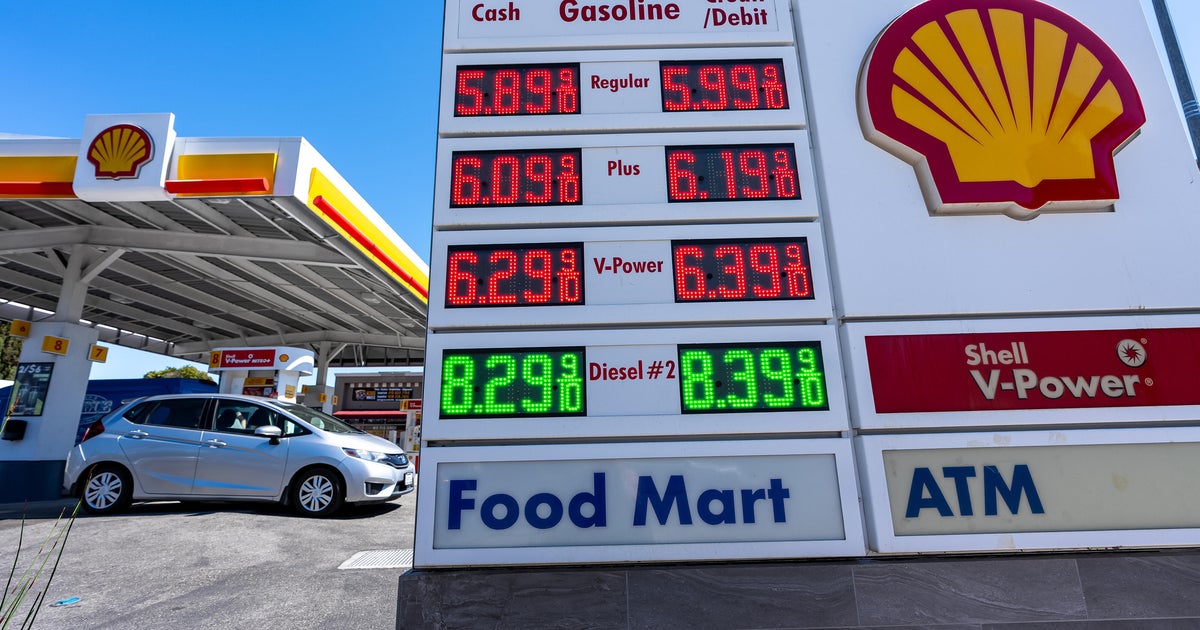
Gas prices in the United States have risen to an average of $4.31 per gallon. Diesel fuel prices have reached a record high, going over $6 per gallon. The main cause of these increases is the war with Iran, although President Donald Trump has blamed the conflict in Ukraine.
Key Facts
Gas prices nationwide are about $4.31 per gallon.
Diesel fuel prices for trucks have hit a new all-time high, over $6 per gallon.
Diesel prices rose around 15 cents per gallon in just one week.
The war with Iran is identified as the biggest reason for higher fuel costs.
President Donald Trump has said the war in Ukraine is to blame instead.
Rising fuel prices affect transportation costs, which can impact many goods and services.
The article comes from CBS News, reported by Ed O'Keefe.
Read the Original
Want the full story? Tap a source to open the original
article.
Brianna Beyrouti moved from Portland, Oregon, to Muncie, Indiana, getting $5,000 to help with moving costs. She kept her job remotely but now saves money because housing and living costs are lower in Muncie. This is part of a larger trend where people leave big cities for smaller towns to afford a better quality of life.
Key Facts
Brianna moved 2,000 miles from Portland (2.5 million people) to Muncie (65,000 people).
She received $5,000 from a local program to help cover moving expenses.
Her annual remote job salary stayed the same at $107,000.
Her housing costs in Muncie are $190 less per month compared to her rent in Portland.
Lower state income tax, car insurance, and energy bills make her $600 a month better off.
Many people are leaving large US cities like New York and Los Angeles due to high living costs.
Small towns like Muncie are using cash and perks like free cinema tickets to attract new residents.
The MakeMyMove program helped about 1,000 people relocate last year and expects 1,500 moves in 2026.
Read the Original
Want the full story? Tap a source to open the original
article.
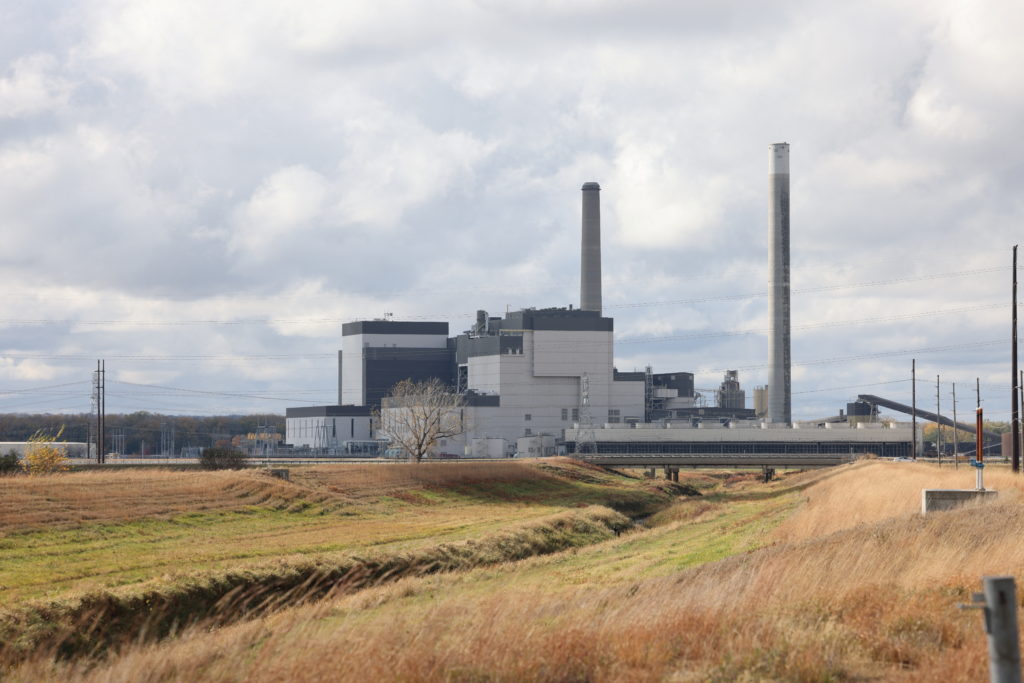
The Environmental Protection Agency (EPA) has canceled rules that limited greenhouse gas emissions from coal and natural gas power plants. This change removes the requirements for some power plants to reduce their pollution using methods like carbon capture and storage.
Key Facts
The EPA is repealing emission limits on coal and gas-fired power plants.
These rules aimed to reduce greenhouse gases that cause climate change.
The repeal means some power plants no longer have to cut emissions sharply.
Technologies like carbon capture and storage would have helped reduce pollution.
Environmental groups are discussing the impact of this rollback.
The change affects the rules that control pollution from major power plants.
The EPA made this decision recently, changing previous environmental policies.
Read the Original
Want the full story? Tap a source to open the original
article.
The Welsh government will reduce business rates by 30% for pubs, hotels, gyms, and other hospitality and leisure businesses with smaller properties starting in April 2027. This cut will be funded by raising rates on the highest-value properties, so local authority funding will not decrease.
Key Facts
The 30% business rates cut applies to small and medium-sized hospitality, accommodation, and leisure businesses in Wales with a property rateable value under £51,000.
The cut replaces a current temporary 15% reduction for hospitality businesses.
Businesses with the highest-value properties, including some large hotels and supermarkets, will pay higher rates to fund the cut.
The Welsh government collects these business rates and redistributes the money to local authorities.
First Minister Rhun ap Iorwerth said the aim is to help businesses and communities thrive.
Finance Minister Elin Jones said bigger businesses should share more of the tax burden, about 1 pence of every £1.
UK Hospitality Cymru welcomed the cut but noted that hospitality businesses still face many taxes.
In England, a 20% business rates cut for pubs and live music venues was also announced, starting in April 2027.
Read the Original
Want the full story? Tap a source to open the original
article.
Costco has nearly doubled the price of motor oil and set limits on how much customers can buy. This change might remind some shoppers of past shortages but is not expected to cause major problems.
Key Facts
Costco raised motor oil prices by almost 100%.
The store now limits how many motor oil containers each customer can buy.
This price increase could affect people who regularly buy motor oil in large amounts.
The price and limit changes come amid broader concerns about supply and demand.
Despite the changes, experts do not expect widespread supply issues or shortages.
Costco is adjusting prices and rules to manage supply better and prevent shortages.
This action follows similar moves in other product categories where demand fluctuated.
Customers may notice higher costs at checkout but should still find motor oil available.
Read the Original
Want the full story? Tap a source to open the original
article.
Nigerian billionaire Aliko Dangote has launched the largest share sale ever in Africa by listing 4.1 billion shares of his Lagos refinery on the stock exchange. The public offering aims to allow everyday Nigerians to invest in the refinery, with trading expected to start in November.
Key Facts
Aliko Dangote is a Nigerian billionaire who owns a large oil refinery in Lagos, Nigeria.
He is offering 4.1 billion shares of the refinery to the public through an initial public offering (IPO).
This is the biggest IPO ever launched on the African continent.
The sale is described as a "people's IPO" to enable ordinary Nigerians to invest.
Trading of the refinery’s shares will begin in November 2026.
The refinery is part of Nigeria’s growing oil and gas industry.
At the same time, global oil prices have risen due to attacks in Yemen and pipeline shutdowns in Saudi Arabia.
Read the Original
Want the full story? Tap a source to open the original
article.
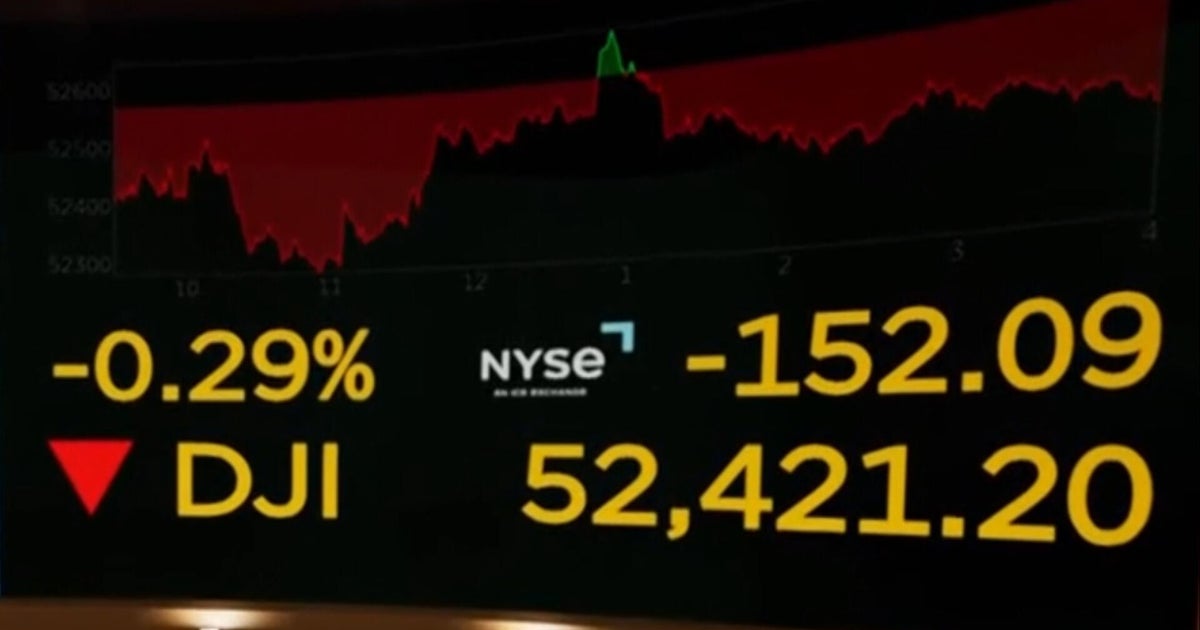
Stocks fell at the start of the week as investors reacted to problems with a major Saudi oil pipeline and concerns about artificial intelligence (AI). High gas prices and warnings from technology leaders about the risks of AI contributed to the drop in the market.
Key Facts
Stock markets opened lower this week.
A key oil pipeline in Saudi Arabia stopped working.
Gas prices remain high, which worries investors.
Technology leaders have recently issued warnings about AI dangers.
These factors caused some investors to sell stocks.
The market reaction shows how energy supply and technology issues affect the economy.
Read the Original
Want the full story? Tap a source to open the original
article.
Dangote, a Nigerian oil refinery, plans to raise 1.6 billion dollars by selling shares to people across Africa. This move will allow the public to own part of the company.
Key Facts
Dangote refinery is based in Nigeria.
The company aims to raise 1.6 billion dollars.
Funds will come from retail investors, meaning everyday people, not just big companies.
The public can buy shares and become part owners.
This is a step toward more public ownership of the refinery.
The plan is announced as part of a broader effort to grow African business investments.
Retail investors across the African continent are the target audience.
Read the Original
Want the full story? Tap a source to open the original
article.
Judge Judith Sheindlin, known as Judge Judy, built a successful daytime TV court show starting in 1996. Her son, Adam Levy, is now starting his own court show called Adam’s Law, created by his mother, continuing the family’s presence in courtroom television.
Key Facts
Judge Judy became popular in the 1990s for her TV courtroom show with a tough, no-nonsense style.
The original Judge Judy show ended in 2021, but Sheindlin continued with new projects like Judy Justice and Judyverse.
Adam Levy, Judge Judy's son, is a lawyer with 25 years’ experience and has been a district attorney in New York.
Adam Levy’s show, Adam’s Law, launched nationally on Monday and airs in some markets during the same 4 p.m. time slot Judge Judy once held.
The family connection is openly acknowledged; Adam’s career benefits from the empire his mother built.
The article discusses how America dislikes inherited privilege but still often sees family advantage in careers.
Judge Judy’s family approach is seen as straightforward, with no pretense about how opportunities arise.
Read the Original
Want the full story? Tap a source to open the original
article.
The yield on the 10-year U.S. Treasury bond went above 5 percent during Monday's trading, a rare event in recent years. It reached 5.014 percent before dropping slightly to 4.961 percent later in the day.
Key Facts
The 10-year Treasury bond yield rose above 5 percent for only the second time in 19 years.
The highest point reached was 5.014 percent during Monday’s trading.
By mid-afternoon, the yield fell to 4.961 percent.
The yield started the day just under 4.95 percent.
Treasury yields reflect the return investors get for lending money to the U.S. government.
Changes in the 10-year yield can influence interest rates for loans and mortgages.
A higher yield often means investors expect higher inflation or interest rates in the future.
Read the Original
Want the full story? Tap a source to open the original
article.
A 2-year certificate of deposit (CD) account currently offers interest rates around 4.3% to 4.4%, making it a secure way for savers to earn a fixed return. For example, a $150,000 CD held for two years could earn between about $13,178 and $13,490 in interest if kept until maturity.
Key Facts
A CD is a type of savings account that locks your money for a set time, here two years.
Current top interest rates for 2-year CDs range from 4.30% to 4.40%.
A $150,000 investment in a 2-year CD at these rates can earn roughly $13,178 to $13,490 after two years.
These rates are higher than those available in the previous year, when a similar CD earned about $12,427.
Interest rates vary by bank, so comparing offers online can help find the best deal.
Early withdrawal from a CD usually means paying a penalty, which can be costly for large amounts.
CDs protect your money from market ups and downs by providing a fixed interest rate.
Online banks often offer better CD rates than traditional banks with physical branches.
Read the Original
Want the full story? Tap a source to open the original
article.
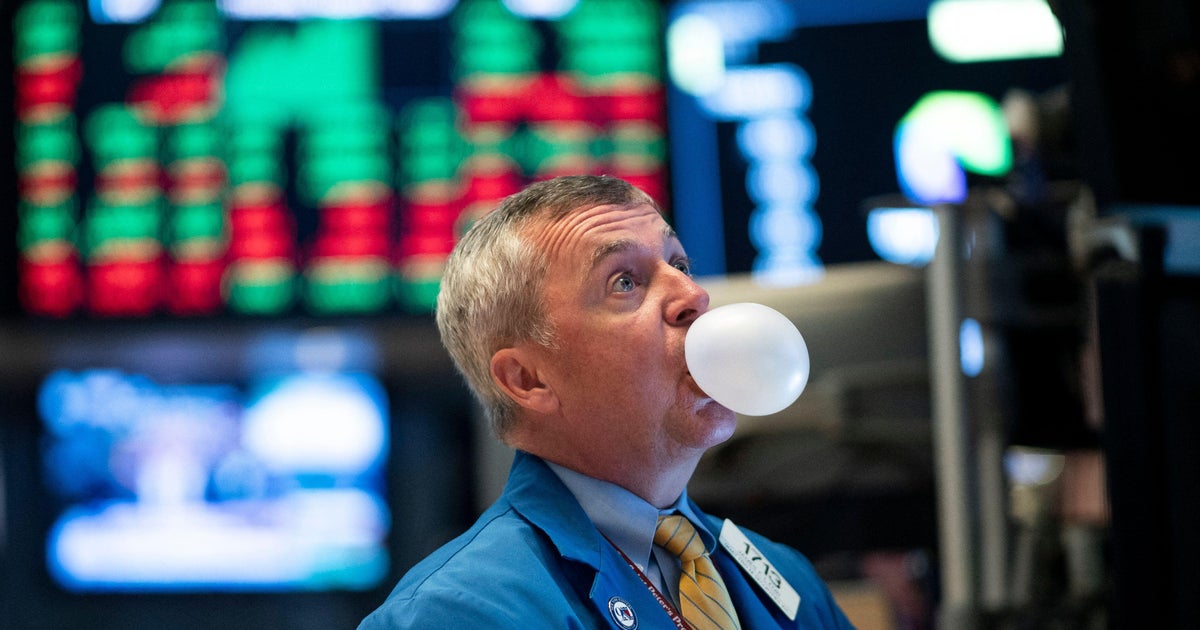
Some financial experts say the rapid rise in AI-related stocks may be showing signs of a market bubble, meaning prices might be higher than the companies' actual value. They warn there could be a drop in stock prices soon, while others say AI’s impact might be even bigger than expected.
Key Facts
Capital Economics expects the AI bubble to start bursting around 2027.
They predict the S&P 500 stock index could fall by 20% or more next year.
Earnings growth expectations for AI firms seem much higher than the overall U.S. economy growth.
Global spending on AI projects is predicted to reach $1 trillion in 2026, with $581 billion in the U.S.
Some economists warn that early stages of new technology often see excess investment and high expectations.
Others believe AI’s effect on profits and the economy could be underestimated.
There is growing public concern about AI risks and calls to slow down its development.
Worries about managing AI safely are different from fears about a financial bubble.
Read the Original
Want the full story? Tap a source to open the original
article.
Abbott Laboratories will pay nearly $385 million to settle a lawsuit over bacterial contamination at its baby formula plant in Michigan. The Justice Department closed a criminal investigation and resolved the case as a civil matter under the False Claims Act.
Key Facts
Abbott’s plant in Michigan had Cronobacter bacteria contamination affecting powdered baby formula.
The company agreed to pay $385 million to settle the civil lawsuit.
The Justice Department ended a related criminal investigation earlier this year.
The civil case claimed Abbott sold formula made in unsafe conditions that risked contamination.
Government tests on unopened formula from affected infants’ homes found no bacterial contamination.
Abbott said the settlement does not admit any fault or wrongdoing.
The Justice Department said Abbott failed to fix roof leaks and sometimes avoided testing that could show contamination.
Some lawmakers questioned the Justice Department's decision to close the criminal case and rely on a civil settlement.
Read the Original
Want the full story? Tap a source to open the original
article.
Abbott Laboratories will pay $385 million to settle claims related to the 2022 recall of baby formula from its largest U.S. plant in Michigan. The recall led to shortages and was investigated by the Justice Department, but Abbott says the settlement does not mean it admitted any wrongdoing.
Key Facts
Abbott agreed to pay $385 million to settle lawsuits linked to a 2022 baby formula recall.
The recall happened after problems at Abbott’s Sturgis, Michigan plant, the largest baby formula factory in the U.S.
The Justice Department and several states filed lawsuits over the recall and contamination concerns.
The company said unopened formula tested negative for a harmful bacterium called Cronobacter sakazakii.
Abbott closed the Michigan plant in February 2022 but reopened it by June the same year.
The Justice Department under President Trump ended its criminal investigation of the case.
The 2022 formula shortage led the Biden administration to ease import rules and take emergency steps to increase supply.
The recall affected well-known brands, including Similac, and worsened supply shortages caused by COVID-19 disruptions.
Read the Original
Want the full story? Tap a source to open the original
article.
Homeowners thinking about borrowing money through home equity loans should carefully calculate their monthly payments and costs before applying. A $250,000 home equity loan opened in September would have monthly payments between about $2,409 and $3,052 depending on the repayment term, at the current average interest rate of 8.14%.
Key Facts
Homeowners have around $11 trillion in borrowable home equity in the U.S.
Home equity loans have fixed interest rates, offering stable monthly payments.
The average interest rate for home equity loans in September is 8.14%.
Monthly payments for a $250,000 loan at 8.14% are about $3,052 for 10 years or $2,409 for 15 years.
Rates and payments are lower now than in 2024 and 2025 when rates were higher.
Home equity loans cost less than personal loans (12%+) and credit cards (20%+).
Borrowers risk foreclosure if they cannot make payments since the home is collateral.
It is smart to compare lenders and potentially lock in rates before expected Federal Reserve rate hikes.
Read the Original
Want the full story? Tap a source to open the original
article.
The U.S. economy has stayed strong despite challenges like slower job growth and inflation, but new risks are appearing that could slow down growth. Higher oil prices, rising interest rates, and record government debt are key problems that might affect consumers, businesses, and the stock market soon.
Key Facts
The U.S. economy has grown over the past two years despite problems like trade tensions and high inflation.
Oil prices have risen due to conflicts in the Middle East, with Brent crude hitting over $108 a barrel.
Higher oil prices increase inflation, which was 3.4% annually in August, above the Federal Reserve’s 2% goal.
Rising fuel costs especially impact low- and middle-income households and lower consumer confidence.
The Federal Reserve is expected to raise interest rates, which could increase borrowing costs and slow economic growth.
Higher interest rates could also make it more expensive for the government to pay its $40 trillion debt.
Increased debt costs might widen the budget deficit and require the government to borrow more.
These economic pressures could lower stock market values and reduce earnings for companies.
Read the Original
Want the full story? Tap a source to open the original
article.
Canada’s Prime Minister Mark Carney is urging global investors to put money into Canada itself, rather than relying just on access to the U.S. market. This effort aims to attract $1 trillion in investment over five years amid a trade war with the United States led by President Donald Trump, which has increased tariffs on Canadian goods.
Key Facts
Canada historically relied on its close trade relationship with the U.S., its largest trading partner.
A trade war started during President Donald Trump’s second term has led to high tariffs on Canadian goods and retaliatory tariffs from Canada.
Prime Minister Carney is promoting Canada as a stable and reliable place to invest, beyond just access to the U.S. market.
The Canada Investment Summit in Toronto is gathering about 300 major global investors and officials to encourage investments in mining, AI, manufacturing, and more.
The goal is to attract $1 trillion in investments over five years, including $280 billion in public spending and incentives to encourage private investments.
Canada has trade agreements with 51 countries, granting access to 1.5 billion consumers worldwide.
The summit is an attempt to strengthen Canada’s economy by diversifying its trade relationships and building more business domestically.
Success depends on turning investor interest into actual projects and financing that go forward.
Read the Original
Want the full story? Tap a source to open the original
article.
Gold and silver prices have moved a lot in 2026, affected by many factors including the Federal Reserve’s interest rate decisions. If the Fed raises rates at its September meeting, precious metal prices could face short-term pressure, but other factors like inflation, economic worries, and demand also play important roles.
Key Facts
Gold price reached over $5,500 per ounce early in 2026 but dropped to about $4,275 per ounce by mid-September.
Silver prices have fluctuated significantly due to changing views on inflation, interest rates, and the economy.
The Federal Reserve is meeting on September 15-16, with a possible rise in interest rates.
Higher interest rates often make bonds and savings accounts more attractive, which can lower demand for gold and silver since they don’t pay interest.
A stronger U.S. dollar from a rate hike can make gold and silver more expensive for buyers using other currencies, lowering demand.
Some effects of a rate hike may already be reflected in current prices as investors adjust before the Fed’s decision.
High inflation, economic worries, geopolitical risks, and strong buying by central banks can support or raise gold prices even if interest rates rise.
Silver prices are also influenced by industrial demand because silver is used in manufacturing and technology like solar panels; slower economic growth could reduce this demand.
Read the Original
Want the full story? Tap a source to open the original
article.
The UK government is planning to take full control of Speciality Steel UK (SSUK), a major steel company that employs about 1,300 people, after rejecting a private buyer. Production at the company’s plants was stopped earlier this year, and the government aims to protect the steelworks and explore future uses before making final decisions.
Key Facts
Speciality Steel UK is the UK’s third-largest steel company with sites in South Yorkshire and the West Midlands.
The government took control of SSUK last year after it went into liquidation.
A private buyer offered a deal earlier this year, but the government rejected it due to concerns about financing and taxpayer protection.
Production stopped months ago, and workers are on reduced pay furlough.
The government will formally acquire SSUK to keep control and allow time to research future opportunities.
Any future spending on the business will come from existing government funds after careful checks.
The business secretary said this will help protect jobs and support local communities.
Read the Original
Want the full story? Tap a source to open the original
article.
American Hospital Dubai is a private hospital established in 1996, offering medical care in over 40 specialties. It follows American medical standards, partners with the Mayo Clinic Care Network, and invests in advanced technology like robotic surgery to improve patient care and outcomes.
Key Facts
American Hospital Dubai has 254 beds and was founded in 1996.
It is owned by the Mohamed & Obaid Al Mulla Group, focusing on long-term commitment rather than just profits.
The hospital uses American clinical standards and is the first in the region to do so.
It has been a member of the Mayo Clinic Care Network since 2016, using their expertise for second opinions and difficult cases.
The hospital prioritizes training nurses to adopt the flexible and innovative mindset of the American healthcare system.
It introduced robotic surgery first in Dubai and expanded its programs with several versions of the da Vinci surgical system.
A day-case robotic surgery center will open soon in a shopping mall to increase patient access.
Complex medical services stay at the main hospital, while the group expands with satellite clinics to be closer to patients.
Read the Original
Want the full story? Tap a source to open the original
article.