Most major mortgage lenders in the UK have recently raised the cost of home loans. Borrowers who need to find a new mortgage deal face higher payments, and experts advise acting quickly instead of waiting for rates to drop.
Key Facts
Nearly all big mortgage lenders in the UK have raised mortgage rates in recent days.
Borrowers renewing a five-year mortgage deal could pay over £5,000 more per year if they borrow the same amount.
Some lenders let people lock in a new mortgage deal up to six months before their current deal ends.
Interest rates on fixed mortgages stay the same until the deal expires, usually after two or five years.
Rising UK government borrowing costs and global economic uncertainty are pushing mortgage rates higher.
A typical two-year fixed mortgage on £250,000 now costs about £120 more per month than it did in early March.
Experts are unsure if more rate increases will happen but suggest borrowers seek advice quickly.
The Bank of England’s governor will be questioned on the recent bond market changes affecting borrowing costs.
Read the Original
Want the full story? Tap a source to open the original
article.
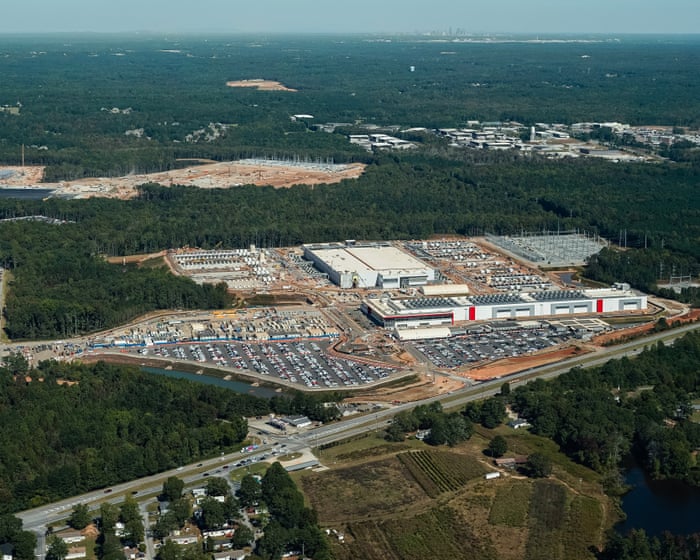
Officials in Wyoming found a rare and possibly harmful bacterium in wastewater from a Meta datacenter under construction. This has raised concerns about water pollution from datacenters, which use large amounts of water and sometimes release harmful substances back into the environment.
Key Facts
A Wyoming test found Cupriavidus gilardii bacteria in 801,000 gallons of wastewater from a Meta datacenter contractor.
The wastewater was discharged into sewers, not the public drinking water, but officials worried about exposure through evaporation.
Cheyenne city officials stopped accepting wastewater from Meta’s contractor in July, a decision now being appealed.
Meta said independent tests found no bacteria and questioned the city’s test results.
Similar environmental concerns around datacenters have appeared in Virginia, West Virginia, and New York.
The Waterkeeper Alliance reports many groups are focusing on datacenter wastewater pollution, including chemicals like PFAS and heavy metals.
Datacenters use large amounts of water mainly for cooling powerful computers, then release water back to the system under permit controls.
Lawsuits are possible, such as one planned by Flint Riverkeeper against a Georgia datacenter for polluting a river.
Read the Original
Want the full story? Tap a source to open the original
article.
President Donald Trump threatened to stop Bombardier, a Canadian airplane maker, from selling jets in the U.S. unless it makes the planes in the United States. Bombardier said it already uses many American parts and suppliers, supporting thousands of U.S. jobs across many states.
Key Facts
President Trump said Bombardier must build planes in the U.S. to sell in the American market.
Bombardier makes many parts of its jets, like wings and flight controls, in the U.S. and works with about 2,800 American companies.
Bombardier supports tens of thousands of jobs in the U.S., with a significant workforce in Kansas.
Senator Jerry Moran of Kansas highlighted Bombardier’s importance to local jobs and asked the Trump administration to recognize this.
Canada’s government is buying early warning planes from Saab and Bombardier, which include 20% U.S. content.
Alternative Canadian plane purchases could have come from U.S. companies Boeing and L3Harris.
Bombardier was founded in Quebec and started by making snowmobiles before focusing on private business jets.
The Canadian government is reviewing plans to buy U.S.-made F-35 fighter jets, while Saab plans to build fighter jets in Canada.
Read the Original
Want the full story? Tap a source to open the original
article.
Jill Schlesinger says she is hoping for a stock market crash. A financial expert, Kayla Sabbagh, explains that a market crash can sometimes help people’s finances. The show also helps a caller named Jessica plan her money for moving across the country.
Key Facts
Jill Schlesinger is a financial commentator discussing the stock market.
She says she is "rooting for" or hoping for a market crash.
Kayla Sabbagh, a Certified Financial Planner, joins the discussion.
They explain that market crashes can sometimes create financial opportunities.
The show includes a caller, Jessica, who gets advice on her financial plan for relocating.
The episode is part of the program "Money Moves with Jill Schlesinger" on CBS News.
Read the Original
Want the full story? Tap a source to open the original
article.
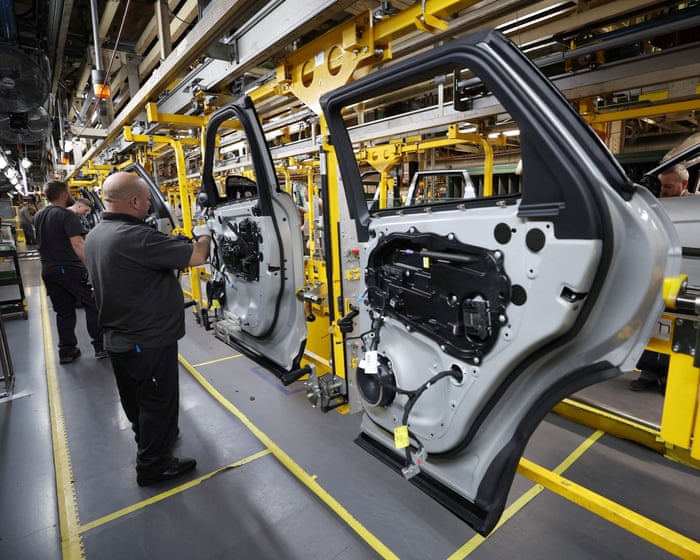
Jaguar Land Rover (JLR) plans to cut 4,000 jobs over two years, worrying many businesses that supply parts to the carmaker, especially in the West Midlands. These job losses come amid growing challenges like competition from Chinese carmakers, tariffs from President Donald Trump, and recovery from a cyber-attack that disrupted JLR's production.
Key Facts
Jaguar Land Rover announced 4,000 job cuts mainly affecting its head office staff.
JLR faces strong competition, trade tensions from U.S. tariffs, and a recent cyber-attack.
The carmaker aims to save £1.7 billion through these job reductions.
Many companies that supply parts to JLR employ tens of thousands of people in the UK, especially in the West Midlands.
JLR contributed £8.7 billion to the West Midlands economy in 2024, about 4.7% of the region’s total.
A cyber-attack last year paused JLR production for four weeks and caused a £200 million loss.
JLR’s profit before tax dropped to £14 million from £2.5 billion the previous year.
Suppliers like Evtec, which makes car parts, fear the automotive market will shrink without stronger government support.
Read the Original
Want the full story? Tap a source to open the original
article.
Hollywood's summer box office has just had its best performance in ten years. This marks a significant change in movie-going habits since the pandemic.
Key Facts
The summer box office reached its highest earnings in a decade.
This represents the biggest change in the movie industry’s audience since COVID-19.
The article highlights a return to strong movie attendance after pandemic-related challenges.
The record was set during the summer season, a key time for movie releases.
The success suggests renewed public interest in going to theaters.
No specific movie titles or figures were mentioned in the article excerpt.
The news reflects broader economic activity in the entertainment sector.
Read the Original
Want the full story? Tap a source to open the original
article.
Albania is becoming a popular place for people to get cheaper dental work, similar to Turkey’s medical tourism. In Tirana, the capital, many dental clinics offer affordable treatments, attracting patients from other countries, especially the UK and Italy.
Key Facts
Tirana has nearly 400 dental clinics, mostly in the city center, for a population of about 600,000.
Dental implants in Albania cost around €600 ($700), similar to prices in Turkey but much cheaper than in the UK, France, or Germany.
Anthony Hook, a UK patient, chose Albania for dental implants because of concerns about safety in Turkey.
The UK Foreign Office warns British citizens about risks and deaths related to medical procedures in Turkey in 2025.
Flights to Tirana have increased, making it easier for international patients to visit.
Elite Dental, one of Tirana’s largest clinics, is licensed and employs 15 dentists focused on life-improving treatments.
Albania’s non-EU status helps keep dental prices low.
The Albanian Medical Tourism Association was recently created to support quality in the growing medical tourism industry.
Read the Original
Want the full story? Tap a source to open the original
article.
Chris Rokos, one of the UK’s richest taxpayers, plans to move to Greece and open an office in Athens. Greece offers a special tax rule that lets wealthy foreigners pay a fixed annual tax on all money earned abroad.
Key Facts
Chris Rokos paid £330 million in UK taxes last year, ranking third on The Sunday Times list of top taxpayers.
He plans to move from the UK to Greece, where a flat yearly tax of €100,000 (£86,000) applies to foreign income for qualifying wealthy residents.
Rokos intends to open an office in Athens.
In March, he pledged £190 million to Cambridge University to create a new school of government.
Rokos studied mathematics at Oxford and previously attended a state primary school and Eton College on scholarship.
The UK government says it remains competitive for investment and talent despite Rokos’s move.
This decision comes before Chancellor John Healey’s first Budget, which may include tax changes.
Rokos’s representatives have not commented publicly on his reasons for moving.
Read the Original
Want the full story? Tap a source to open the original
article.
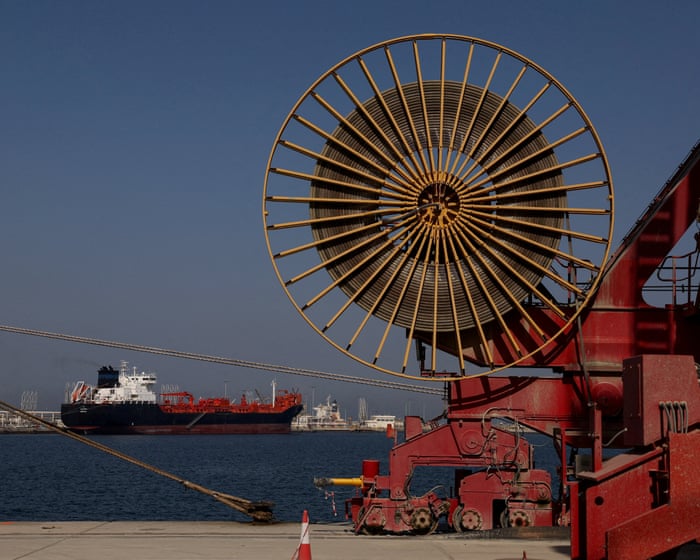
Oil prices are rising towards $100 a barrel after attacks on Saudi energy facilities by Yemen’s Iran-aligned Houthis. The attacks have disrupted oil production in the region, increasing concerns about inflation and economic stability worldwide.
Key Facts
Brent crude oil price rose above $98 a barrel, the highest since July 24.
Yemen’s Houthis attacked Saudi energy sites, causing over 70 injuries.
Saudi Aramco’s refinery in Jizan was targeted in the attacks.
Iran warned of creating a restricted maritime zone in the Gulf if U.S. economic pressure continues.
Shipping through the Strait of Hormuz has slowed drastically from 130 to about 7 ships daily.
Higher oil prices are causing inflation concerns for global economies.
UK mortgage rates have increased recently due to bond market changes.
The Bank of England will be questioned on interest rates and inflation impact from the conflict.
Read the Original
Want the full story? Tap a source to open the original
article.
Billionaire hedge fund manager Chris Rokos plans to leave the UK and move to Greece, where he will open a new office. He is among several wealthy individuals leaving the UK due to recent tax changes affecting foreign income, capital gains, and inheritance.
Key Facts
Chris Rokos founded Rokos Capital Management in 2015 and is worth about $4 billion.
He paid around £330 million in UK taxes in 2025, ranking third in the Sunday Times list of top taxpayers.
Rokos plans to move to Greece, which offers a tax deal for wealthy investors involving a flat tax of €100,000 per year if they invest €500,000 within three years.
Rokos has donated £190 million to the University of Cambridge to create the Rokos School of Government.
Recent UK tax changes include taxing foreign income and gains after four years and taxing global assets for inheritance after 10 years for non-domiciled residents.
Other billionaires like Shravin Bharti Mittal, Nassef Sawiris, and Richard Gnodde have also left the UK for countries like Italy, the UAE, and Abu Dhabi.
Official data show a small decline (0.5%) in non-domiciled residents in the UK in the latest tax year.
Countries like Italy also offer low flat taxes to attract wealthy foreigners.
Read the Original
Want the full story? Tap a source to open the original
article.
UK retailers plan to create up to 100,000 short-term work placements over the next three years for young people aged 18-24 who are not working, studying, or in training. The scheme, called Opening Shift, is supported by the government and aims to help young people gain skills, confidence, and job experience.
Key Facts
More than 40 retailers, including Marks & Spencer, Asda, John Lewis, Tesco, and Greggs, are involved in the scheme.
The placements last two to four weeks and offer 16 to 35 hours of work per week.
Participants will continue to receive universal credit benefits during their placement to avoid losing financial support.
Each young person will be offered a "buddy" at work to help them learn and adjust to the role.
At the end of the placement, participants are guaranteed a job interview, with potential for full employment.
The UK has about 1 million young people considered Neet (not in employment, education, or training), with concerns that this number could rise.
The scheme is supported by the Department for Work and Pensions and coordinated through the British Retail Consortium.
Marc Bolland, former M&S chief executive, leads the taskforce and helped develop the initiative through his experience with the charity Movement to Work.
Read the Original
Want the full story? Tap a source to open the original
article.
Jaguar Land Rover (JLR) plans to cut 4,000 jobs over the next two years, mainly at its head office in Coventry. Experts warn this could hurt the company’s ability to develop new electric cars and affect many jobs in the West Midlands region.
Key Facts
JLR will reduce its workforce by 4,000 jobs, mostly at the Coventry head office.
Up to 200,000 jobs in the wider supply chain are connected to JLR.
Experts worry that cutting research and development staff may slow future car innovations.
JLR faces challenges including falling sales, a major cyber-attack, competition from China, and rising energy costs.
The company is investing billions to shift towards electric vehicles.
A new electric Jaguar car will be unveiled on October 6, seen as an important moment for JLR’s future.
Regional leaders want to keep skilled workers in the West Midlands and have created a support fund for workers leaving JLR voluntarily.
Experts believe cutting jobs is a strategy to reduce costs and survive current challenges but could risk long-term competitiveness.
Read the Original
Want the full story? Tap a source to open the original
article.
China's exports increased by 25% in August compared to a year earlier, driven by strong demand for cars and advanced technology products. Imports also rose, resulting in a large trade surplus, even as economic challenges remain at home.
Key Facts
China’s exports grew 25% in August compared to the same month last year.
The growth was mainly due to higher demand for automobiles and high-tech goods like electric vehicles and semiconductors.
Imports increased by 28.2% in August from a year earlier.
China’s trade surplus in August was $119.1 billion, up from $112.5 billion in July.
China is becoming a major player in technology areas such as AI infrastructure and industrial automation.
China has boosted trade with Southeast Asia, Latin America, and Africa, offsetting some effects of U.S. tariffs.
U.S. President Donald Trump and Chinese leader Xi Jinping are expected to discuss trade during a planned meeting in late September.
China is injecting $54 billion into state banks and insurance companies to support its economy amid sluggish domestic demand and investment.
Read the Original
Want the full story? Tap a source to open the original
article.
Canada has started charging new tariffs on $20 billion worth of U.S. goods in response to U.S. tariffs on Canadian products. These tariffs affect things like milk, steel, and household items and mark a new step in an ongoing trade conflict between the two countries.
Key Facts
Canada imposed tariffs ranging from 15% to 50% on various U.S. goods starting after midnight ET on Tuesday.
The U.S. had previously added 50% tariffs on $20 billion of Canadian goods.
Items facing 50% tariffs from Canada include American milk, perfume, steel, aluminum, and video game consoles.
Cheese, carpets, and some household appliances are subject to 25% tariffs, while forklifts and industrial molds face 15% tariffs.
Initially, some U.S. seafood was to face tariffs, but Canada removed them after complaints from the lobster industry.
Economists say tariffs will especially affect manufacturers and dairy producers in Midwestern U.S. states like Michigan, Wisconsin, and Vermont.
The trade dispute is part of a larger tension involving President Trump’s trade policies and the previous U.S.-Mexico-Canada trade agreement.
President Trump has threatened further tariffs on Canadian automotive and steel imports and criticized Canada’s trade practices publicly.
Read the Original
Want the full story? Tap a source to open the original
article.
Gas prices in the United States have reached a record high for Labor Day weekend, averaging $4.14 per gallon. This increase coincides with diesel prices also hitting their highest level ever.
Key Facts
The average gas price for Labor Day weekend is $4.14 per gallon.
This price is the highest ever recorded for Labor Day, surpassing the previous record of $3.82 in 2012.
Diesel fuel prices reached their highest level ever on the Friday before Labor Day.
The rise in fuel costs is linked to ongoing conflict in Iran.
The high gas prices affect both regular gasoline and diesel markets.
AAA provided the national average price data.
The increase in fuel prices may impact travel and transportation costs during the holiday.
The conflict in Iran is causing uncertainty in oil supply, contributing to higher prices.
Read the Original
Want the full story? Tap a source to open the original
article.
The article explains the job of a professional banana ripener who works to make bananas ripen just right. It shows how experts control the ripening process to deliver bananas that are perfect for eating.
Key Facts
There is a job called professional banana ripener.
This person controls how bananas change from green and hard to yellow and soft.
The process involves managing temperature and gases around the bananas.
The goal is to get bananas ready to eat at the right time.
This work helps stores sell bananas that customers like.
Proper ripening prevents bananas from spoiling too early.
The article was presented by CBS News and reporter Michael George.
Read the Original
Want the full story? Tap a source to open the original
article.
Barnaby Joyce, One Nation’s Treasury spokesperson, said his party has not done an economic analysis of their plan to let millions of Australians access part of their retirement savings early. Critics, including the Prime Minister and Treasurer, say the plan is poorly thought out and could reduce retirement incomes.
Key Facts
One Nation proposes allowing renters and mortgage holders to receive part of their superannuation (retirement savings) early for up to three years.
Employers would still make the full 12% super contribution, but 3% could go directly to workers’ pay instead of their super fund.
Barnaby Joyce said the party did not model the economic impacts, like effects on retirement income or inflation.
Joyce argued people would think carefully before withdrawing their super and only do it if it made financial sense.
The Super Members Council estimated the average worker could lose $25,000 by retirement under this plan.
Prime Minister Anthony Albanese criticized the plan as weakening the compulsory super system’s rules.
Treasurer Jim Chalmers called the policy a “shambles” and said it lacks clear economic impact analysis.
Read the Original
Want the full story? Tap a source to open the original
article.
Sandra Bullock and Nicole Kidman reunited to star in "Practical Magic 2," the sequel to their 1998 film "Practical Magic." The original film had mixed reviews and modest success but grew into a cult favorite over time, leading to renewed appreciation and interest in the story.
Key Facts
"Practical Magic" was released in 1998 and had mixed reviews and moderate box office earnings.
The film became a cult favorite years after its release, helped by social media.
Bullock and Kidman return as the witch sisters Sally and Gillian Owens in the new movie, set to release on September 10, 2026.
Both films are based on novels by Alice Hoffman; the sequel is inspired by her 2021 book "The Book of Magic."
Bullock described the original film’s early promotion as difficult, with negative press about its themes and female cast.
Over time, the film gained recognition and Bullock feels it was ahead of its time by about 28 years.
The meaning of the word “witch” is changing, with more people embracing the term positively.
The sequel allows the actors and fans to revisit and appreciate the story and its characters anew.
Read the Original
Want the full story? Tap a source to open the original
article.
Sir Paul Smith, a well-known British fashion designer, has built a successful global brand with stores in over 50 countries. He began his career after a cycling accident and opened his first shop in 1970; his famous colorful stripes and British tailoring have made his company a leading fashion name.
Key Facts
Sir Paul Smith started working in Japan in 1982, using humor and gestures to communicate.
Rubber chickens helped him connect with Japanese clients and contributed to his success there.
He opened his first small shop in Nottingham in 1970.
His wife helped buy most of the stock on the opening day of the first shop.
Smith's brand is famous for colorful stripes and modern twists on traditional British fashion.
He has more than 20 stores in Japan and a presence in 50 countries worldwide.
Smith recently wrote an autobiography called *Threads: My Life in Style* to share his career advice.
He values good manners and sends thank-you postcards to fans who send him gifts.
Read the Original
Want the full story? Tap a source to open the original
article.
Hunter Biden, son of President Joe Biden, is launching a new cryptocurrency called a meme coin, named $LAPTOP. The name refers to past political controversies involving his personal laptop.
Key Facts
Hunter Biden announced the launch of a new crypto coin called $LAPTOP.
The coin is a meme coin, which is a type of cryptocurrency often created as a joke or trend.
The name $LAPTOP refers to a political controversy involving Hunter Biden’s personal laptop from 2020.
The launch was first reported by the Wall Street Journal.
Biden shared a video with news clips to promote the new coin before its official release.
Meme coins can gain attention quickly but are often highly speculative.
Hunter Biden is using the coin's name to address or reference past news stories about him.
Read the Original
Want the full story? Tap a source to open the original
article.