Sony announced it will stop making physical discs for PlayStation games starting January 2028, due to the growth of digital downloads. The company acknowledges concerns from gamers but believes digital sales and other features will keep PlayStation competitive.
Key Facts
Sony plans to end production of PlayStation game discs by January 2028.
The main reason is the increasing shift toward digital game downloads.
Digital downloads made up 78% of Sony’s full-game sales in the past fiscal year.
Physical game sales have dropped significantly over the years, from 297 million units in 2008-2009 to 37 million recently in the US.
Sony executives understand gamers’ emotional attachment to physical discs and plan to consider their feedback.
Sony does not see ending discs as a problem for business since most sales are already digital.
Sony says PlayStation’s advantages over PC gaming come from curated content and stable game environments, not from physical discs.
Sony is repurposing its disc factory to make optical microlenses for other uses.
Read the Original
Want the full story? Tap a source to open the original
article.
Many companies start using AI without fully checking how safe the system is. AI safety depends on tests made for a company’s specific use, not just general tests, because AI can behave differently depending on data and tasks. Experts warn that safety checks must happen early and continue often, especially when AI connects to other software or uses add-ons.
Key Facts
Companies often test AI safety too late, after the system design is already fixed.
The responsibility for AI safety lies with the company using the AI, not only with the AI developers.
AI safety filters that work in English may fail in other languages, creating security risks.
AI agents that act through other software can cause real problems if they respond incorrectly or get hacked.
AI agents can read emails and documents, where harmful instructions might be hidden inside the content.
To reduce risk, AI agents should have limited access, unique accounts, and logs of actions taken.
Many add-ons that give AI agents new features have serious security problems and need strict checking.
Continuous and detailed safety testing is needed for AI, especially in sensitive or high-risk areas.
Read the Original
Want the full story? Tap a source to open the original
article.
Mahershala Ali confirmed that the Marvel movie reboot of Blade, in which he was set to star, is no longer happening. The project faced delays and was eventually dropped, with Ali saying the decision was not his to make and he is ready to move on.
Key Facts
Mahershala Ali was announced as the star of Marvel’s Blade reboot in 2019.
The Blade character was originally played by Wesley Snipes in movies from 1998 to 2004.
The reboot got stuck in development, with many changes in directors and writers.
Marvel’s head, Kevin Feige, expressed regret over the project not moving forward.
Ali had recorded a voice role for Blade in a 2021 Marvel movie, Eternals.
Ali worked with Bassam Tariq, a director once attached to Blade, on another film premiering at the Toronto festival.
Ali said he has been acting for nearly 30 years and accepts that the Blade project was not meant for him.
He is currently involved in other films including Wildwood and the upcoming Spider-Verse sequel.
Read the Original
Want the full story? Tap a source to open the original
article.
Google has added a new AI tool called Nano Banana 2 to Google Earth, which lets users create fake images by adding false content over real satellite pictures. Experts warn this could help spread false information because the images look like genuine satellite views, making it harder to tell what is real.
Key Facts
The AI tool allows people to generate fake images using text prompts on top of real satellite or 3D images from Google Earth.
Examples of fake images created include a collapsed Eiffel Tower and Russian tanks in Ukraine’s capital.
Experts say these fake images gain credibility because they are layered on real map locations.
Google adds invisible watermarks to AI-generated images and offers tools to check if images are manipulated.
Tests showed that some fake images can bypass these detection tools and appear real.
The AI has rules to block harmful or violent content but can be tricked with slight changes to prompts.
Creating fake images in conflict zones could cause confusion and harm when real information is limited.
Satellite images have been trusted sources, so fake versions may reduce public trust in this data.
Read the Original
Want the full story? Tap a source to open the original
article.
A new study found that small habits during showers, like applying shampoo more than once or pausing the water flow multiple times, make showers longer and increase water use. Researchers say focusing on changing these behaviors can help save water more than just using efficient showerheads or technology.
Key Facts
Showers use 25% to 45% of indoor household water, making them the biggest water user inside homes.
Researchers monitored 319 German households using smart sensors to track 8,550 showers over 40 days.
Showers where shampoo was applied two or more times lasted about 27% longer than those with one shampoo use.
Pausing water three or more times during a shower made showers about 20% longer than those with no pauses.
People under 50 generally shower longer than those over 50.
Showers with soft water lasted around 23% longer than showers with hard water, possibly due to better soap lather and comfort.
Average U.S. showers last 8 minutes and use about 16 gallons of water.
Researchers suggest changing shower habits, using feedback devices, and redesigning products to reduce water use without losing comfort.
Read the Original
Want the full story? Tap a source to open the original
article.
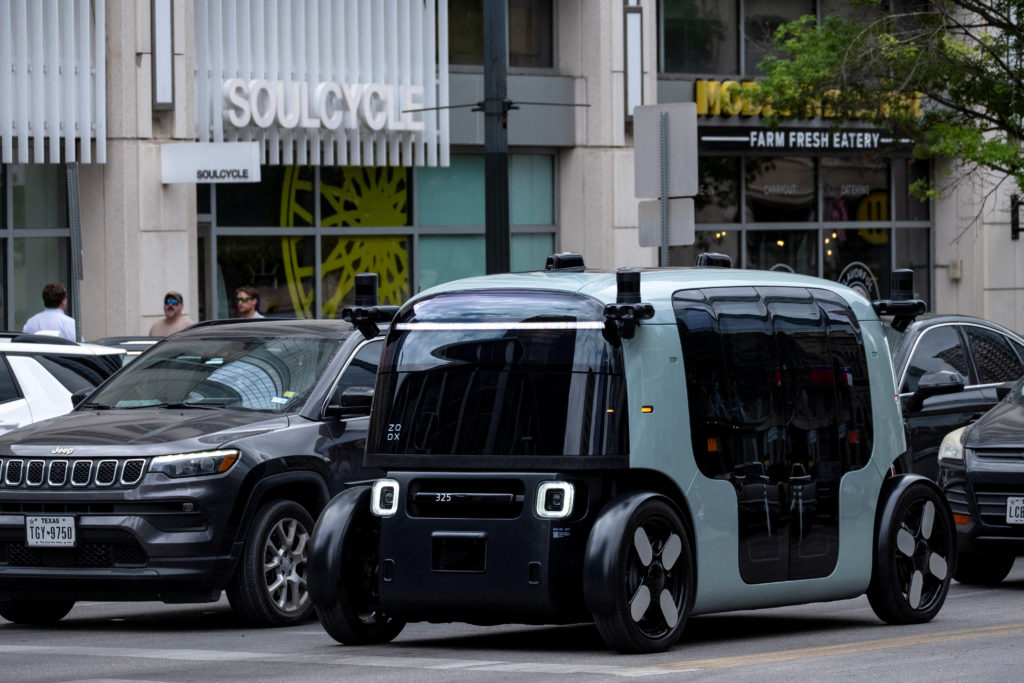
Federal regulators have approved Amazon’s Zoox robotaxis, which can drive themselves without steering wheels, to start charging customers for rides after getting local permission. Zoox cars already give free rides in Las Vegas and San Francisco and have special designs with seats facing inward.
Key Facts
Federal regulators approved Amazon’s Zoox robotaxis to charge customers for rides.
These robotaxis can operate without manual controls like steering wheels.
Zoox vehicles have four seats that face inward.
The cars require state and local approval before offering paid rides.
Zoox has been offering free rides in Las Vegas and San Francisco since last year.
Passengers have experienced varying wait times when trying to book rides.
Some riders find the experience unusual but enjoyable, mentioning features like music and temperature control.
Read the Original
Want the full story? Tap a source to open the original
article.
Disney+ has canceled the Marvel series Wonder Man, reversing an earlier decision to produce a second season. The show received positive reviews and earned star Yahya Abdul-Mateen II an Emmy nomination but will not be returning, joining several other Marvel shows on Disney+ that have only had one season.
Key Facts
Disney+ canceled Wonder Man after initially planning a second season.
Wonder Man has a 91% critics score on Rotten Tomatoes.
Yahya Abdul-Mateen II, the lead actor, earned an Emmy nomination for his role.
The show briefly reached No. 8 on Nielsen’s streaming Top 10 originals.
Only two Marvel Disney+ live-action series have been officially renewed for more seasons: Loki and Daredevil: Born Again.
Other Marvel shows like WandaVision, Ms. Marvel, Hawkeye, and Moon Knight were planned as limited series or have not been renewed.
Wonder Man starred a character who is an actor gaining superpowers in Hollywood.
The cancellation involved releasing writers to work on other projects.
Read the Original
Want the full story? Tap a source to open the original
article.
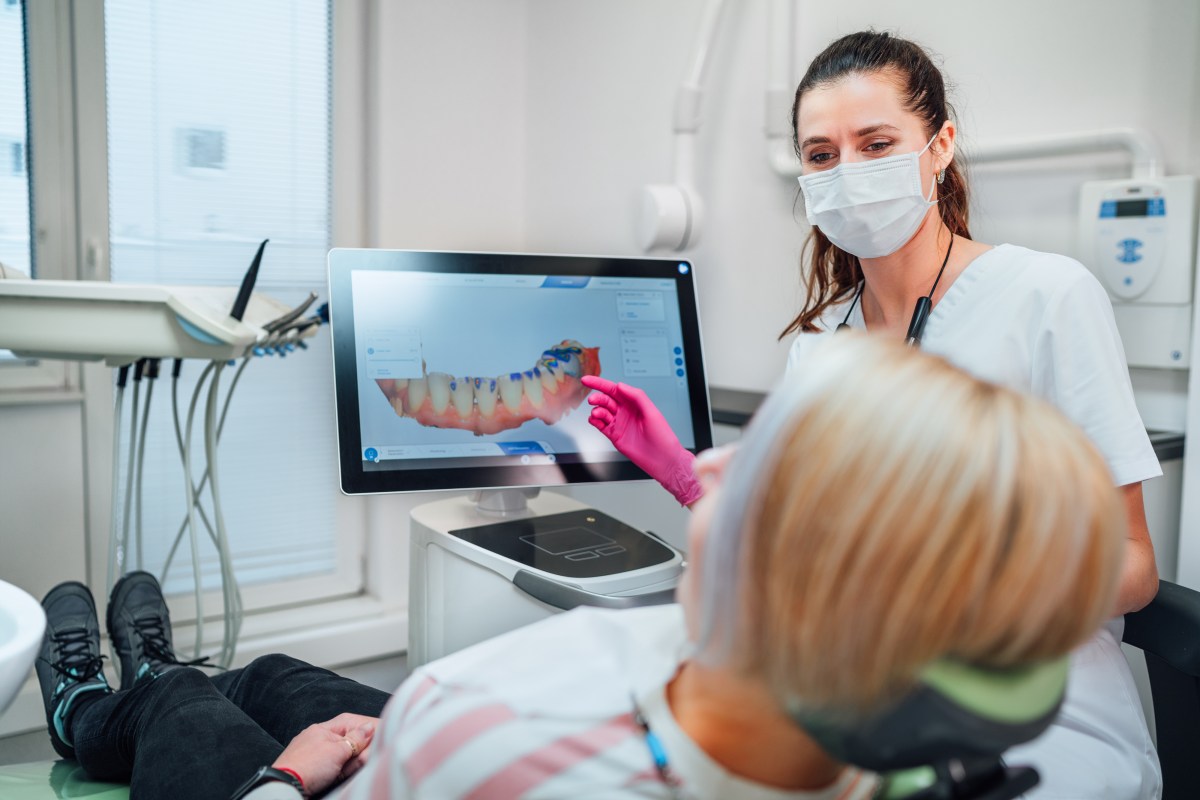
Artificial intelligence (AI) is playing a growing role in orthodontics by helping with treatment planning and analyzing images. However, doctors still need to use their knowledge and experience to understand complex biological factors and make final treatment decisions.
Key Facts
AI helps orthodontists by quickly analyzing data and simulating treatment outcomes.
Digital tools like 3D scans and computer-aided design are improving accuracy and workflow.
Clear aligner therapy is popular but has limits with certain tooth movements compared to braces.
Biological factors, like bone and muscle, still control how teeth move and affect treatment success.
Experienced clinicians are needed to interpret cases and adjust plans beyond what technology can do.
Dr. Bella Shen Garnett’s research showed clear aligners can successfully treat some difficult cases without surgery.
Her study found about 94% of patients kept stable results for 1 to 5 years, with many lasting a decade.
Technology supports orthodontics but does not replace the need for clinical judgment and experience.
Read the Original
Want the full story? Tap a source to open the original
article.
Researchers studied how AI chatbots perform in text-based romance scams called “pig butchering,” where victims are slowly tricked into fake investments. The study found AI chatbots can build trust and fool victims better than humans in long conversations before a scam is completed.
Key Facts
The scam involves building a fake relationship to convince victims to invest money in fake crypto schemes.
Researchers from four universities tested AI chatbots against humans in trust-building conversations with 22 volunteers.
Nearly half of the volunteers complied with AI chatbot requests, compared to fewer than 20% when dealing with humans.
Volunteers rated the AI chatbots as more trustworthy than the human scammers.
AI chatbots could perform most of the scam process independently, only handing off the final step to humans to avoid detection.
The AI approach could replace human scam workers, many of whom are forced labor victims in Southeast Asia.
The scam model is described as “hook, line, and sinker,” starting with an initial message, building a relationship, then tricking the victim.
Human scammers currently take over at the last stage to direct victims to fake apps or websites.
Read the Original
Want the full story? Tap a source to open the original
article.
Pathogenic is a new video game where players control a virus invading a human body. The game is a fast-paced shooter with upgradeable weapons and abilities, and players must defeat bosses in different body organs to win.
Key Facts
Pathogenic is developed by Aberrant Labs and published by Slug Disco.
The game was released on July 16, 2026, for PC via Steam.
Players start as a pathogen entering through a cut and progress through organs like skin, intestines, liver, stomach, lungs, and heart.
Gameplay involves twin-stick shooting and dodging enemies like immune cells and rival pathogens.
The game features procedurally generated levels with powerups and upgrades.
Players can customize and combine upgrades for varied effects, similar to other popular roguelite games.
The game has sold over 100,000 copies and received very positive reviews on Steam.
The price of the game is $10.
Read the Original
Want the full story? Tap a source to open the original
article.
The article discusses concerns raised by activists about data centers. It suggests that while protests against data centers may happen, these centers are important for future technology and should be supported.
Key Facts
Activists have raised issues with the building of data centers.
Data centers are facilities that store and manage large amounts of data.
Despite opposition, data centers are necessary for technological progress.
The article encourages finding better ways to support data centers.
It implies that blocking data centers will not stop technological development.
Read the Original
Want the full story? Tap a source to open the original
article.
A discarded SpaceX rocket stage is set to crash into the moon at high speed after launching two lunar landers over a year ago. Scientists plan to observe the impact, which will create a crater and send dust into the moon’s thin atmosphere, helping them study potential dangers for future moon missions.
Key Facts
The rocket’s upper stage will hit the moon at about 5,400 mph (8,700 kph) near Einstein Crater.
The impact is expected on a Wednesday, visible mainly from the eastern U.S., Canada, and much of South America.
The crash will create a crater about 90 feet (27 meters) wide and 16 feet (5 meters) deep.
The collision was unintentional; the rocket was not pushed into a safer orbit around the sun.
This will be the second known accidental crash of a dead rocket on the moon; a Chinese rocket crashed in 2022.
NASA’s Lunar Reconnaissance Orbiter and South Korea’s Danuri orbiter will take before-and-after photos of the crash.
The abandoned rocket segment is about 40 feet (12 meters) long and weighs around 10,000 pounds (4,500 kilograms).
One of the lunar landers launched by this rocket, Firefly Aerospace’s Blue Ghost, successfully landed, while the other, ispace’s lander from Japan, did not.
Read the Original
Want the full story? Tap a source to open the original
article.
Entrepreneurs should start learning and using artificial intelligence (AI) early, even though the technology is still developing and uncertain. Waiting for AI to be perfect, cheap, and safe before adopting it can put companies behind their competitors who experiment and adapt sooner.
Key Facts
More than 200 economists and AI experts, including 16 Nobel winners, warn AI will bring big changes faster than the Industrial Revolution.
Entrepreneurs who act early with AI build skills and knowledge that give them an advantage.
AI will disrupt jobs and industries, requiring businesses to rethink how they work.
Fear of AI should not stop companies from exploring its benefits.
Waiting for full clarity or lower risks before using AI leads to missed opportunities.
Past tech shifts like the internet, cloud computing, and mobile tech showed that early adopters gain a lasting edge.
Successful AI use means focusing on areas that improve efficiency and decision-making, not using every tool available.
AI can be expensive to implement and needs careful planning for costs and infrastructure.
Read the Original
Want the full story? Tap a source to open the original
article.
Clean Start is a computer game where players help Lena, an immigrant working as a cleaner in a new country. The game combines tidying tasks with stories about the lives and challenges of immigrants, using language learning and object-finding as key parts of the gameplay.
Key Facts
Clean Start is a house-cleaning simulation game by Polish developer Serious Sim.
Players control Lena, an immigrant cleaner with limited language skills supporting her family back home.
The game involves cleaning rooms, arranging furniture, and interacting with objects to learn stories.
Language barriers are part of the game’s challenge, teaching players new words through conversations.
The game’s creator, Katarzyna Haptaś, drew inspiration from her mother’s and family’s immigrant cleaning experiences.
The game includes insights from real immigrants and an interview with a Polish immigration center worker.
Players uncover personal stories of the people whose homes they clean by finding meaningful objects.
Clean Start aims to promote understanding and compassion for immigrants through its gameplay and story.
Read the Original
Want the full story? Tap a source to open the original
article.
Cyberattacks on U.S. critical infrastructure and businesses have increased, leading companies to focus more on cybersecurity in their operations and vendor choices. New AI tools are helping organizations find and fix security problems faster to keep up with evolving digital threats.
Key Facts
Cyber-enabled fraud is now a bigger worry than ransomware for business leaders.
64% of organizations are concerned about cyberattacks motivated by political reasons, like spying or disrupting infrastructure.
Large companies ask detailed security questions before signing vendor contracts.
The average cost of a data breach worldwide was $4.44 million in 2025, slightly lower than the previous year.
78% of organizations plan to spend more money on cybersecurity.
Only 6% of companies feel very capable of resisting all types of cyberattacks.
Many businesses delay investing in cybersecurity until after security problems arise or bigger customers demand proof of security.
An AI platform called CodeGuard helps find security weaknesses sooner, so companies can fix issues before they cause trouble.
Read the Original
Want the full story? Tap a source to open the original
article.
A study shows that higher doses of GLP-1 drugs, which help control metabolism and heart health, lead to better results. Researchers suggest these drugs could be tailored to each person's needs in the future.
Key Facts
GLP-1 agonists are drugs that help improve metabolism and heart-related health.
Higher doses of these drugs give stronger health benefits.
The study suggests personalizing the dosage for each individual.
Personalized treatment could lead to better results for patients.
GLP-1 drugs are used to treat conditions like diabetes and obesity.
The approach aims to improve both heart and metabolic health.
Customizing drug doses is a step toward more precise medicine.
Read the Original
Want the full story? Tap a source to open the original
article.
Rocket Lab won a $266 million contract from the US Space Force to launch rockets from Alaska, mostly for national security missions. Rocket Factory Augsburg delayed the first launch of its RFA One rocket due to a technical problem, and MaiaSpace decided to skip a test flight and go straight to an orbital launch planned for 2027.
Key Facts
Rocket Lab received its largest launch contract: $266 million for up to 18 launches with the US Space Force.
The launches will mainly happen at the Pacific Spaceport Complex in Kodiak, Alaska.
These launches will likely support hypersonic testing.
Rocket Factory Augsburg had to delay the first launch of its RFA One rocket because of a vehicle issue.
RFA One is a three-stage rocket designed to carry up to 1,300 kg to a Sun-synchronous orbit.
MaiaSpace canceled its planned suborbital test flight and will try a full orbital launch in the second half of 2027.
MaiaSpace is an ArianeGroup subsidiary and decided this approach is best for future commercial operations.
The article mentions SpaceX’s Falcon 9 also won launch contracts but does not give details here.
Read the Original
Want the full story? Tap a source to open the original
article.
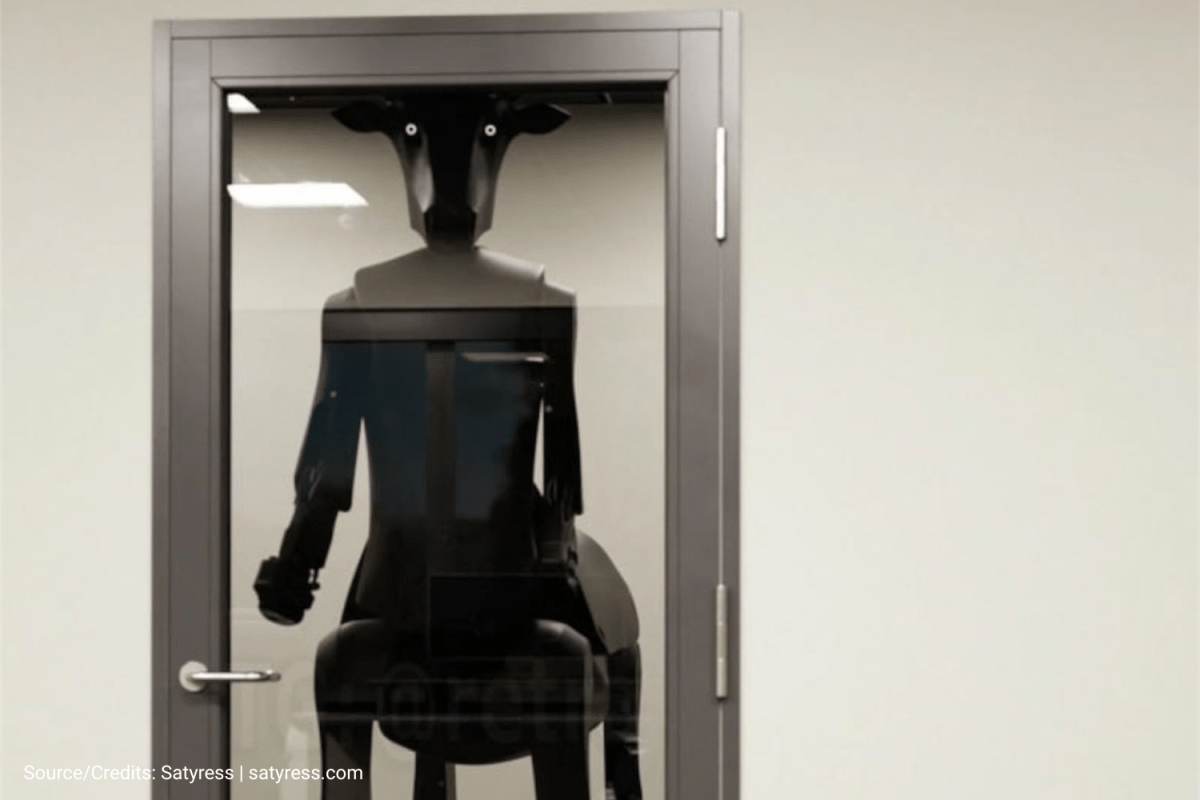
A California company named Satyress has created a four-legged rescue robot called ThreeHalves for dangerous places like wildfires and disaster zones. The company unusually shares detailed information on how to stop the robot if it malfunctions, highlighting safety features and physical limits to reassure users that humans stay in control.
Key Facts
The robot ThreeHalves is designed for hazardous environments such as wildfires, disaster zones, and toxic industrial areas.
It stands over six feet tall and has a horned look with chainsaw attachments.
Satyress openly explains fail-safe systems to immobilize the robot in emergencies, including brakes, pin locks, and damageable air reservoirs.
The robot has trouble moving through standard residential doorways and narrow hallways, which limits its mobility intentionally.
This safety-focused approach contrasts with typical robot marketing that highlights power and invincibility.
The Trump administration recently announced restrictions on importing Chinese-made humanoid and four-legged robots, citing national security and cybersecurity concerns.
Officials worry networked robots could be hacked or used for spying by foreign adversaries.
The company’s method reflects public interest in controlling advanced machines amid growing fears about AI and autonomy.
Read the Original
Want the full story? Tap a source to open the original
article.
The European Union has created a new team in Brussels to enforce strict rules on AI companies worldwide starting Sunday, when the EU's AI Act takes effect. The team will monitor AI use, including fake videos, explicit content, and cyber threats, and ensure AI-generated products are clearly labeled.
Key Facts
The EU's new AI Act will require companies to label AI-generated content like chatbots and images.
The enforcement team in Brussels will expand by 38 people to monitor AI companies globally.
The rules target risks such as fake media, cyberattacks, and threats to public safety and rights.
AI companies must keep records and can be investigated by the European Commission.
The EU launched tools to let workers and users report illegal AI activities confidentially.
Companies breaking the rules can face fines or lose access to the EU market.
The move is part of the EU’s strategy to reduce reliance on U.S. and Chinese technology and boost its own AI capabilities.
Recent issues with AI safety and hacking incidents have increased global concerns about AI control.
Read the Original
Want the full story? Tap a source to open the original
article.
The European Union has introduced new rules requiring companies to label AI-generated images, audio, text, and videos that look real. These labels must clearly show when content is created or altered by artificial intelligence to help protect people from being misled.
Key Facts
From August 2, 2024, new AI systems sold in the EU must label synthetic content as AI-generated.
Existing AI systems have until December 2024 to comply with these labeling rules.
Labels must be visible and include a digital watermark to show the content’s artificial origin.
The rules aim to protect democracy and public trust in authentic information online.
Some exceptions apply for personal content, satire, artistic, or fictional works.
Companies breaking the rules can face fines up to €15 million or 3% of their global revenue.
The EU provides official labels but allows companies to design their own.
Some tech companies like TikTok and Google already use labels or watermarks to identify AI content.
Read the Original
Want the full story? Tap a source to open the original
article.