Senior staff from Anthropic, an artificial intelligence company, will meet with White House officials. This meeting comes after a recent disagreement about the safety measures Anthropic uses in its AI work.
Key Facts
Anthropic is an AI company working on technology safety.
The company’s senior staff plans to meet with officials from the White House.
The meeting is related to a dispute over Anthropic’s AI safety practices.
The report about this meeting was shared by Axios, a news outlet.
Maria Curi, a tech reporter for Axios, provided information on this event.
Read the Original
Want the full story? Tap a source to open the original
article.
The UK government plans to ban children under 16 from using social media platforms starting in early 2027. The ban will affect apps like TikTok, Snapchat, Instagram, YouTube, Facebook, and X, while some messaging and gaming apps will be exempt. The goal is to improve online safety for children.
Key Facts
The ban will come into effect in spring 2027 after regulations pass, possibly before Christmas 2024.
Platforms affected include TikTok, Snapchat, Instagram, Facebook, YouTube, and X.
Messaging apps like WhatsApp and Signal, and online games like Roblox, will not be banned.
Users over 16 may need to verify their age to continue using social media.
Features such as livestreaming and contact from strangers will be limited for under-16s.
Social media companies have expressed concerns about the ban pushing children to less safe, unregulated sites.
The government will consider limits on features like infinite scroll and curfews for 16- and 17-year-olds.
Intimate and sexual chats with AI will be prohibited for users under 18.
The ban comes amid calls from campaigners and bereaved families for stronger child safety measures online.
Read the Original
Want the full story? Tap a source to open the original
article.
The FBI warned Microsoft 365 users about a new scam called Kali365. This scam steals special access codes to get into Microsoft Teams, Outlook, and OneDrive accounts without needing a password or multi-factor authentication.
Key Facts
The FBI issued an urgent alert to Microsoft 365 users.
The scam is named Kali365.
Kali365 targets Microsoft Teams, Outlook, and OneDrive.
It steals OAuth device codes, which are access codes that can bypass regular login steps.
Multi-factor authentication (extra security steps) can be bypassed by this scam.
The scam does not require passwords to break into accounts.
Users should be cautious and monitor for unusual activity on their Microsoft accounts.
Read the Original
Want the full story? Tap a source to open the original
article.
Apple began working on making Mac OS X run on Intel processors around 2000 because its existing PowerPC chips had performance and heat problems. After years of developing Intel-based Macs, Apple is now ending support for these models as it fully moves to its own Apple Silicon chips.
Key Facts
In 2000, Apple engineer JK Scheinberg started a project to make Mac OS X run on Intel processors.
At the time, Macs used PowerPC processors developed by Apple, IBM, and Motorola.
Apple faced issues with PowerPC chips, particularly with heat and performance, especially for laptops.
The Intel Mac project, initially called “Marklar,” started as a hobby but became an official contingency plan.
Apple CEO Steve Jobs was unhappy with PowerPC performance and pushed for alternatives.
Intel-based Macs officially launched after 2006, improving Mac performance and compatibility.
Apple is now ending updates for Intel Mac models as it shifts entirely to Apple Silicon chips.
Rosetta software, which lets Apple Silicon Macs run Intel apps, will still be supported for some time even after Intel Macs lose macOS updates.
Read the Original
Want the full story? Tap a source to open the original
article.
Scientists studied how long life can survive on Earth as the Sun becomes hotter over billions of years. They used a new 3D computer model to explore how changes in temperature and carbon dioxide affect the planet’s plants and climate far in the future.
Key Facts
The Sun will brighten over about 5 billion years and eventually become a red giant.
Earth’s temperature and carbon dioxide (CO2) levels affect how long life, especially plants, can survive.
Weathering of rocks helps control CO2 by removing it from the atmosphere and storing it underground.
Two scenarios were studied: one where temperature stays the same but CO2 drops, and one where CO2 stays the same but temperature rises.
If weathering is weak, temperatures rise significantly in 1.5 to 2 billion years, killing most land plants.
If weathering is strong, CO2 drops very low after 1 billion years, starving plants of CO2 needed for photosynthesis.
Some plants and marine life that use bicarbonate might survive longer, up to about 1.8 billion years.
The study helps understand Earth’s long-term climate and the future of life during the Sun’s brightening phase.
Read the Original
Want the full story? Tap a source to open the original
article.
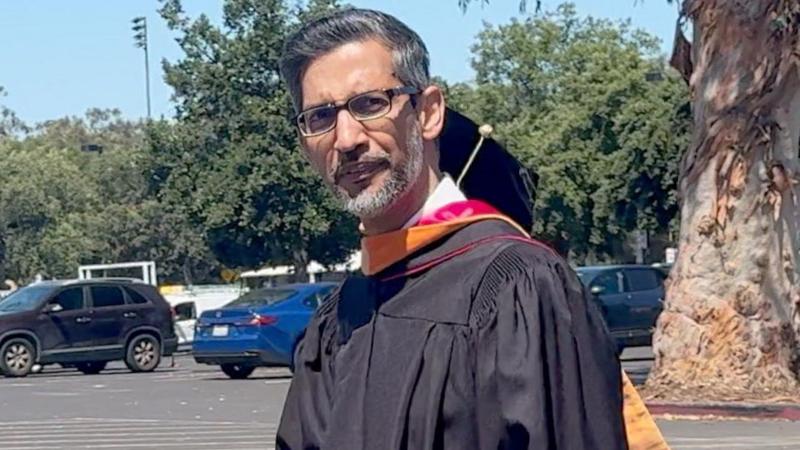
Dozens of Stanford students walked out during Google CEO Sundar Pichai's graduation speech to protest the company's work with the US government. The protests reflect broader concerns among students about artificial intelligence (AI) and its impact on jobs.
Key Facts
Around 200 Stanford graduates walked out during Pichai’s speech, though the exact number is unclear.
Protesters held signs criticizing Google’s work with US Immigration and Customs Enforcement (ICE) using AI.
Some students waved Palestinian flags, indicating varied protest reasons.
Pichai, a Stanford alumnus, made only brief comments about AI and did not directly address the protests.
Similar protests at other US universities have targeted tech leaders discussing AI, showing growing student unease about AI’s effects on employment.
Former Google CEO Eric Schmidt was booed at the University of Arizona when mentioning AI’s rise.
Other speakers discussing AI at universities like Central Florida and Middle Tennessee State also faced hostile reactions.
Speakers often described AI as a technological revolution or tool, while students expressed fear and frustration.
Read the Original
Want the full story? Tap a source to open the original
article.
Anthropic, an AI company, sent senior technical staff to Washington, D.C. to meet with White House officials. This happened after Anthropic stopped sharing its newest AI models due to an order from President Trump's administration limiting AI technology exports.
Key Facts
Anthropic is an artificial intelligence company.
The company paused sharing its latest AI models on Friday.
The pause was in response to an export restriction order from President Trump's administration.
Senior technical staff from Anthropic traveled to Washington, D.C.
They have been meeting virtually with White House officials every day.
The meetings aim to discuss the export restrictions and related concerns.
A source close to Anthropic confirmed the staff's presence and meetings.
The discussions involve government regulation of AI technology exporting.
Read the Original
Want the full story? Tap a source to open the original
article.
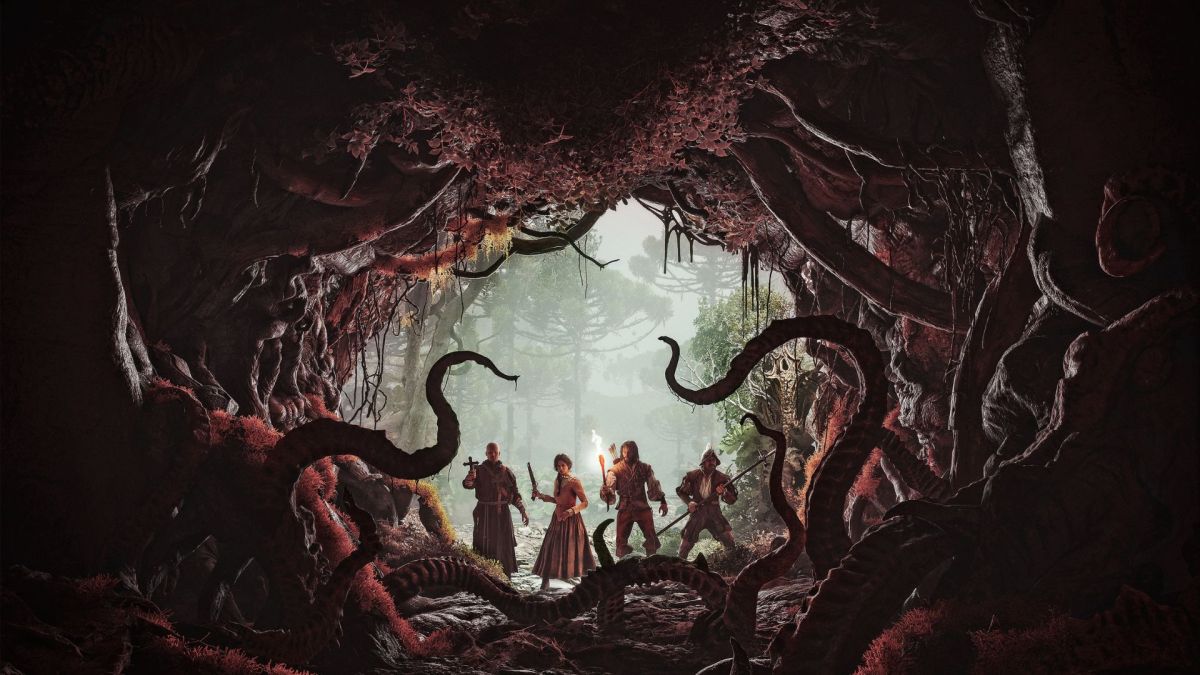
"The Mound: Omen of Cthulhu" is a new cooperative horror video game that mixes team missions with a unique madness mechanic, making players unsure of what is real. Players explore a dangerous jungle, collect items, and must work together to survive while facing strange enemies and hallucinations.
Key Facts
The game is developed by ACE Team and inspired by H.P. Lovecraft’s stories.
Up to four players team up to complete missions in a jungle setting.
Players follow an ox cart to gather relics and artifacts before returning to safety.
The game features a madness mechanic causing players to hallucinate and question reality.
Players can sometimes mistake teammates for enemies due to these hallucinations.
The game uses a progression system that all players in a session share, not just the host.
Combat strategies can be unclear, with players unsure when to fight or flee.
The preview was held via an intimate Discord server for journalists to experience multiplayer gameplay.
Read the Original
Want the full story? Tap a source to open the original
article.
Dozens of Stanford graduates walked out during Google and Alphabet CEO Sundar Pichai’s speech at Stanford University’s graduation ceremony. Some protesters carried signs showing concern about Google’s work with the US government.
Key Facts
Sundar Pichai is the CEO of Google and its parent company Alphabet.
The event took place at Stanford University’s graduation ceremony.
Many graduates left the venue as Pichai began his speech.
Protesters held signs related to Google’s controversial projects involving the US government.
Pichai himself studied at Stanford University.
He did not give any comment to the BBC about the walkout or protests.
Read the Original
Want the full story? Tap a source to open the original
article.
The UK government plans to ban children under 16 from using popular social media platforms like TikTok and Instagram by spring 2027. Some UK schoolchildren think the ban could help mental health, while others want parents to take more responsibility instead.
Key Facts
UK Prime Minister Sir Keir Starmer announced the social media ban for under-16s.
The ban will apply to platforms including Snapchat, TikTok, YouTube, Instagram, Facebook, and X.
The ban is expected to start by spring 2027.
Some students believe the ban will positively impact young people’s mental health.
Other students feel the ban is not needed and prefer parents to manage their children’s social media use.
The announcement has sparked mixed reactions among schoolchildren in Preston and Manchester.
The ban is part of wider social media regulation discussions in the UK.
Read the Original
Want the full story? Tap a source to open the original
article.
A trader on Polymarket created a computer program using artificial intelligence (AI) to improve his chances of winning in prediction markets. These markets allow people to earn money by predicting outcomes of various events, but most profits go to the top 1% of traders.
Key Facts
Polymarket is a prediction market platform where users can bet on events like sports or celebrity news.
A small group—the top 1% of traders—makes more than 75% of all profits on this platform.
A trader built an AI-powered program to help predict outcomes better and increase his winnings.
AI (artificial intelligence) means computers perform tasks that usually need human thinking.
The program helps the trader analyze data and decide when to place bets.
Prediction markets combine information from many people to forecast what might happen next.
The trader shared his experience in an interview on CBS News.
Read the Original
Want the full story? Tap a source to open the original
article.
The UK government announced a plan to ban social media use for children under 16, following a similar approach to Australia’s model. The ban will include additional restrictions for 16 and 17-year-olds, such as a possible night-time curfew, but gaming platforms will largely be exempt except for livestreaming features.
Key Facts
The UK will ban social media for users under 16 years old, based on Australia’s experience.
Additional limits will apply to 16 and 17-year-olds, possibly including a night-time curfew.
Gaming platforms will mostly be exempt from the ban, except that livestreaming will be disabled.
Enforcement may rely on social media platforms themselves rather than device stores like Apple’s App Store or Google Play.
Australia’s social media ban has faced problems because many children already had accounts before the ban started.
The UK government acknowledges the ban is not a complete solution to online safety but aims to reduce harm.
Some experts say the problem is with society, not just technology, and that banning apps might not fully fix it.
Social media has been part of young people’s lives for over 20 years, with some using it for support and community.
Read the Original
Want the full story? Tap a source to open the original
article.
Tech companies in the U.S. are increasingly turning to nuclear power to meet the high and growing demand for electricity by data centers, especially as artificial intelligence (AI) usage rises. The government supports the development of smaller, faster-to-build nuclear reactors, and several major tech firms have made deals to use nuclear energy, although some large projects face delays and local opposition.
Key Facts
U.S. data centers used 183 terawatt-hours of electricity last year, more than the entire state of Ohio.
Electricity demand for data centers grows 15 to 20 percent annually due to increased AI activity.
Tech giants like Microsoft, OpenAI, Meta, Google, and Amazon are making deals to use nuclear energy to power data centers.
The U.S. Department of Energy is funding small modular reactors (SMRs), which are smaller and cheaper nuclear plants.
Microsoft is investing over $1.5 billion to restart the Three Mile Island nuclear plant in Pennsylvania.
Meta signed a 20-year agreement to buy power from a nuclear energy provider.
Amazon is investing $500 million and partnering with energy companies to build SMRs near its data centers.
Some large projects, like Wonder Valley data centers in Alberta and Utah, face permit issues and local resistance.
New nuclear plants usually take many years to start and cost much more than initially planned.
Read the Original
Want the full story? Tap a source to open the original
article.
The Simpsons has become part of the mobile game Monopoly Go! through a detailed collaboration involving the show's writers, animators, and voice actors. This new game feature includes original storylines, animated shorts, and many familiar characters, making the game feel like a true Simpsons experience.
Key Facts
Monopoly Go! now features Springfield, the fictional town from The Simpsons.
The collaboration involved Simpsons writers, animators, and main voice actors like Dan Castellaneta and Nancy Cartwright.
The project included new animated shorts and themed mini-games focused on The Simpsons.
The developers worked closely with the show's creative team for months, not just licensing characters but creating new content.
Classic and less-known Simpsons characters like Rich Texan and Homer’s pig Plopper appear in the game.
Veteran animator Eric Keyes helped ensure the animation quality matched the show.
The Simpsons universe is considered ideal for games because of its many characters, places, and jokes.
This partnership reflects how TV shows now work with games to build large, ongoing digital worlds for fans.
Read the Original
Want the full story? Tap a source to open the original
article.
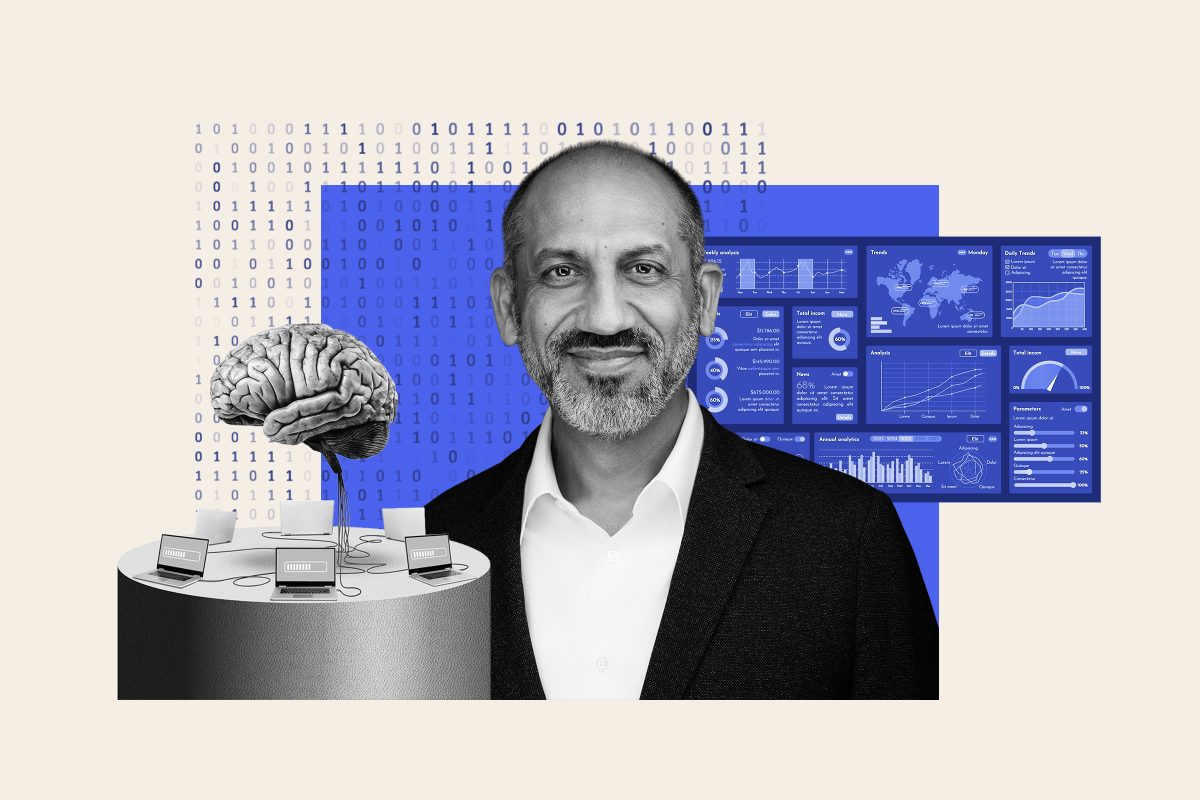
Genpact is focusing on using AI to improve back-office business tasks like finance and supply chain operations. The company combines AI models with deep knowledge of how businesses actually work to create smarter AI tools that handle routine work while humans manage exceptions and ensure responsible use.
Key Facts
Genpact specializes in business-process services, primarily in hidden operations such as finance and supply chain.
CEO Balkrishan Kalra aims to transform Genpact into an AI services company using its operational expertise.
The company uses “agentic AI,” where AI agents perform tasks and humans handle exceptions and training.
Their AI strategy emphasizes understanding real business workflows to improve how AI works in practice.
Genpact started inside General Electric in 1997 and became independent in 2005.
They focus on combining AI models with human validation instead of fully automating processes.
Using smaller or simpler AI models for some steps can reduce costs and increase speed.
Genpact applies this AI approach to areas like accounts payable, record-to-report, and insurance operations.
Read the Original
Want the full story? Tap a source to open the original
article.
Over 100 Stanford University graduates left their seats during Google CEO Sundar Pichai’s graduation speech to protest. They chanted "Free Palestine" because they oppose a Google contract called Project Nimbus that supports the Israeli government with cloud technology.
Key Facts
The protest occurred at Stanford University's commencement ceremony.
More than 100 graduates participated in the walkout.
The graduates chanted "Free Palestine" during the event.
The protest was against Project Nimbus.
Project Nimbus is a Google cloud contract with the Israeli government.
Graduates acted during the speech by Google CEO Sundar Pichai.
The walkout was a form of expressing political concerns about Google’s business.
Read the Original
Want the full story? Tap a source to open the original
article.
Anthropic, an AI company, clashed with the Trump administration over communication and security issues. As a result, the government imposed export controls that forced Anthropic to take some of its AI models offline.
Key Facts
Anthropic did not fully follow a recent cybersecurity order from the government, according to officials.
The company’s powerful AI models, Mythos and Fable, were removed from the internet after export controls were applied.
Amazon raised concerns that Mythos and Fable could be “jailbroken,” meaning hacked to bypass controls.
Anthropic said it had approval to release the Fable model, but the government disagreed and acted.
The disagreement was partly due to poor communication and different perspectives between Anthropic and the administration.
The government was worried Mythos was shared with a group linked to the Chinese Communist Party.
Anthropic revoked access to Mythos for a global telecom company after the government raised export control threats.
Future meetings are planned between Anthropic staff and U.S. government agencies to resolve the issues.
Read the Original
Want the full story? Tap a source to open the original
article.
The UK government plans to ban children under 16 from using major social media platforms starting in early 2027. Prime Minister Sir Keir Starmer said this is to protect children and improve their online safety.
Key Facts
The ban will apply to platforms like Snapchat, TikTok, YouTube, Instagram, Facebook, and X.
Livestreaming by children under 16 will be blocked on social media and gaming platforms.
Messaging apps like WhatsApp and Signal are not included in the ban.
The government is considering curfews to limit social media use for 16 and 17-year-olds, with more details coming in July.
Restrictions on livestreaming and contact from strangers will be automatically on for all users under 17.
Most platforms already require users to be at least 13 years old.
The government aims to pass the necessary rules before Christmas 2024 for implementation in 2027.
The UK has introduced laws that allow it to regulate social media to improve online safety for children.
Read the Original
Want the full story? Tap a source to open the original
article.
AI technology is being used to create fake videos and images that target Muslim women in India with harmful sexual content. These AI-generated materials are realistic and spread widely on social media, causing emotional harm and social stigma.
Key Facts
Samreen Ayoub, a model from Kashmir, found a fake AI-generated video falsely showing her in a harmful way.
The video used real photos from her university life but added false, abusive narration.
Researchers studied over 1,300 AI-generated images and videos targeting Muslim women on social media, with over 6.7 million interactions.
AI tools allow people to create realistic, harmful content quickly and without special skills.
An Indian online safety helpline reported 482 cases since 2022, with about 10% involving AI-manipulated images.
The victims often do not speak out due to shame and fear of trauma.
This problem is part of wider concerns about AI’s impact, discussed at India’s recent AI governance summit.
The misuse of AI-generated content is increasing, affecting ordinary women beyond celebrities or public figures.
Read the Original
Want the full story? Tap a source to open the original
article.
A BBC investigation found that some agents managing OnlyFans creators in the UK control and threaten them, often taking half their earnings. These agents sometimes use abusive behavior and violence, while OnlyFans says it does not support or manage these third-party agents.
Key Facts
OnlyFans creators hire agents who promise to help increase their earnings.
Some agents become controlling, threaten creators and their families, and use violence.
One creator reported masked men attacking her at home after conflicts with her agents.
The BBC found these agents share tactics in large online groups, including intimidation to control creators.
OnlyFans has known about these agency issues for years but says it cannot influence contracts outside its platform.
Human rights experts say this situation shows signs of exploitation and abuse.
OnlyFans takes a 20% fee from creators’ earnings; agents often take a large share of what remains.
OnlyFans’ parent company reported $684 million pre-tax profit in its latest financial report.
Read the Original
Want the full story? Tap a source to open the original
article.