A horse in New Mexico was found to have a new case of New World screwworm, a harmful parasite, just before the state planned to start bringing in livestock from Mexico again. The infected horse was located near the border in Grant County, and this is the second case confirmed in the state recently.
Key Facts
New World screwworm is a parasite that infects animals.
A horse in Grant County, New Mexico, was confirmed to have this parasite.
This is the second case of screwworm found in New Mexico.
The case was reported just before New Mexico planned to resume importing livestock from Mexico.
The Department of Agriculture is monitoring the situation.
Livestock imports from Mexico had been paused due to screwworm concerns.
The screwworm can affect the economy connected to farming and livestock trade.
Read the Original
Want the full story? Tap a source to open the original
article.
Japan’s central bank raised its main interest rate to 1.25%, the highest level in 31 years, to address rising prices and economic challenges. This is part of a series of rate increases as Japan moves away from very low borrowing costs that had lasted for decades.
Key Facts
The Bank of Japan raised its policy rate from 1% to 1.25%, a level not seen since 1995.
Japan has raised its interest rate six times since 2024, starting from -0.1%.
Higher rates usually make a country’s currency stronger by attracting investors.
Japan faces problems like a weak yen, rising prices, and a shrinking workforce.
Inflation in Japan is close to the 2% target but remains relatively low compared to other countries.
Global energy prices rose due to the Iran war, affecting Japan’s economy because it relies heavily on Middle East energy.
Japan and the US recently intervened together to stop the yen from falling to a 40-year low.
US Treasury Secretary Scott Bessent is urging the Bank of Japan to raise rates to support the yen.
Read the Original
Want the full story? Tap a source to open the original
article.
Nigerians eagerly bought shares in Aliko Dangote’s large oil refinery, with over four billion shares sold during Africa’s biggest share sale. Many first-time investors celebrated becoming part-owners, although experts warned there are risks involved in investing.
Key Facts
Aliko Dangote, Africa’s richest man, offered over four billion shares (about 3% of his oil refinery) for sale in an Initial Public Offering (IPO).
The minimum purchase was 10 shares, costing roughly $4 (about £3), making investment accessible to many Nigerians.
Social media users shared memes and videos celebrating their new status as part-owners, calling the event “Yangote” meaning “we all have a share now.”
Investment apps crashed on the first day due to high demand, with Bamboo issuing an apology for service issues.
Many young Nigerians, using mobile trading apps and digital finance tools, took part in the buying frenzy.
Experts cautioned that shares can lose value and investors should be aware of risks like supply disruptions and changing demand.
The IPO was promoted as a chance for ordinary Nigerians—drivers, cooks, cleaners—to invest in a major Nigerian business.
Some new investors plan to sell their shares quickly if prices rise, showing a trading mindset rather than long-term investing.
Read the Original
Want the full story? Tap a source to open the original
article.
The United States has approved up to $414 million to support a Canadian company's uranium mining project in Niger. This comes two years after the U.S. withdrew its troops from Niger following political unrest and reflects strategic interest in securing uranium supply.
Key Facts
The U.S. Development Finance Corporation approved financing for Global Atomic’s Dasa uranium project in Niger.
Dasa is considered the highest-grade uranium deposit in Africa.
Niger is the world’s seventh-largest uranium producer.
The U.S. pulled out about 1,000 troops from Niger in 2024 after a military coup and Niger's request.
Niger's military government accused France of involvement in a failed mutiny, which France denied.
Global Atomic is exploring alternative export routes through Algeria due to security concerns.
Uranium was added to the U.S. critical minerals list in 2023, increasing its strategic importance.
The deal aims to secure uranium supply potentially threatened by geopolitical rivalries.
Read the Original
Want the full story? Tap a source to open the original
article.
Unreleased early music by David Bowie, recorded when he was known as Davie Jones in the 1960s, will be available for streaming and purchase starting Friday. The collection, found by music historian Alec Palao, includes raw and previously unheard songs and will be released by Warner Music Group with royalties going to Bowie's estate.
Key Facts
Alec Palao discovered five unreleased David Bowie songs under his birth name, Davie Jones, ten years ago.
Another five unreleased songs were added to the collection later, making a total of ten new tracks.
The new album is called The Shel Talmy Recordings, released by Parlophone, a Warner Music Group label.
Six tracks will be available on vinyl for Record Store Day and at HMV stores.
David Bowie began his career in the 1960s performing in London clubs and was experimenting with his style at the time of these recordings.
Bowie's estate sold the publishing rights to Warner Music Group in 2022, and Warner handles the royalties for this new release.
The recordings were kept by Bowie's first producer, Shel Talmy, who also worked with The Kinks and The Who.
Early Bowie collaborator Dana Gillespie said these songs show Bowie trying to find his musical voice and experimenting with rock 'n' roll.
Read the Original
Want the full story? Tap a source to open the original
article.
The UK government nationalized British Steel in July to protect steel production and jobs, but the company is costing taxpayers £1.3 million a day. A government committee criticized the lack of a clear plan for making the business financially stable and called for a detailed plan showing future costs, production goals, and funding.
Key Facts
British Steel was nationalized by the UK government in July to protect the steelworks in Scunthorpe and 4,000 jobs.
It costs about £1.3 million per day to keep British Steel operating.
The total cost to taxpayers could reach £1.5 billion by 2028.
By mid-June, the government had spent £555 million on salaries and raw materials.
A parliamentary committee said ministers cannot explain a plan to make British Steel financially sustainable.
The government has not estimated how long it will support British Steel or the total expected cost.
The company’s former owner, Jingye, claims it is owed nearly £1 billion and is seeking compensation under an international treaty.
China expressed strong dissatisfaction with the UK’s decision to nationalize British Steel, affecting UK-China relations.
Read the Original
Want the full story? Tap a source to open the original
article.
Two couples in the UK have bought their first homes using mortgages that cover nearly 100% of the property price, meaning they paid little or no deposit upfront. These mortgages have higher interest rates and risks, but the buyers chose them as an option due to rising property prices and difficulties saving for a deposit.
Key Facts
Conroy and Amber bought a £242,000 four-bedroom house with a 100% mortgage, paying no deposit.
Their mortgage interest rate is 5.33% fixed for five years, with monthly payments similar to their previous rent.
Low-deposit mortgages (less than 10% deposit) are now more common in the UK than at any time since 2008.
Other lenders like Lloyds, Santander, Skipton, and Yorkshire Building Society offer mortgages covering 95-100% of property value.
These loans charge higher interest rates and are not available to everyone or for all property types.
Conroy and Amber plan to overpay their mortgage to build equity faster and reduce risk.
Another couple, Bronya and George, bought a house in Wales with a 2% deposit and a 5.89% interest rate fixed for five years.
Borrowers accept risks like negative equity, where the house value falls below what they owe on their mortgage.
Read the Original
Want the full story? Tap a source to open the original
article.
Maryland Governor Wes Moore said he would definitely approve a statewide pause on building new data centers if a bill for that came to him. This position puts him in line with other governors who want to stop new data centers from being built for now.
Key Facts
Governor Wes Moore of Maryland supports a pause on new data centers in the state.
He said he would sign a statewide data center moratorium bill if it reached his desk in 2027.
A moratorium means a temporary stop or pause on approving new projects.
Other governors and officials have also called for pauses on new data centers.
Data centers are facilities that store and manage large amounts of digital information.
Concerns about data centers include energy use and environmental impact.
Read the Original
Want the full story? Tap a source to open the original
article.
Intercon Chemical Co. is recalling six types of hand soap due to possible bacterial contamination. About 2,700 cases are affected across 15 states, and the recall is classified as a Class II recall, meaning the products could cause temporary or reversible health problems.
Key Facts
Intercon Chemical Co. voluntarily recalled six hand soap products.
The recall started on June 29, 2026, and was classified as Class II on September 11, 2026.
Nearly 2,700 cases of hand soap are included in the recall.
Bacteria involved include Pseudomonas aeruginosa, Pseudomonas putida, Pseudomonas monteilii, Serratia marcescens, and Serratia nematodiphila.
The hand soaps were distributed in 15 states including North Carolina, Mississippi, Texas, California, and New York.
The recalled products include different sizes and scents such as Foaming Pear Hand Soap and Honey Apple Crisp Liquid Hand Soap.
A Class II recall means the products may cause temporary health issues or reversible effects but are unlikely to cause serious harm.
The CDC notes that Pseudomonas bacteria can cause infections and can be hard to treat because some are resistant to antibiotics.
Read the Original
Want the full story? Tap a source to open the original
article.
Chancellor John Healey will ask EU finance ministers to allow the UK to join the EU’s new "Made in Europe" industry protection program. He also wants closer partnerships between the UK and EU in technology, defense, and manufacturing to help British businesses grow and reduce negative effects from Brexit.
Key Facts
John Healey is meeting EU finance ministers in Dublin to discuss UK-EU cooperation.
He wants the UK included in the EU’s "Made in Europe" scheme, officially called the Industrial Accelerator Act (IAA).
The IAA aims to protect EU industries from unfair competition, especially from China, by restricting goods from outside countries.
There are concerns this program could exclude British companies from European supply chains.
Healey wants to improve access for UK businesses to EU supply chains and customers without harming the UK’s interests.
The UK previously failed to join an EU defense loans scheme due to disagreements over payment.
Healey is also considering joining a new global Defence, Security and Resilience Bank led by Canada to help pay for UK defense spending.
The UK government is preparing for the Budget in October and a spending review next year, focusing on defense costs.
Read the Original
Want the full story? Tap a source to open the original
article.
The Welsh government is giving £4.8 million to local councils to help people struggling with rising living costs, especially food and energy. The money will support food banks and other community groups, with extra funds for rural areas due to their unique challenges.
Key Facts
Welsh councils will share £4.8 million to provide emergency food aid and support for those affected by rising living costs.
The funding is split between 22 local councils, with more money going to rural areas.
Rising fuel and energy prices are adding to the financial pressure on many families.
Community groups such as food banks and lunch clubs will use the funds to help people in need.
Projects like Down To Zero grow organic vegetables and offer affordable food to low-income families.
Food poverty is increasing, with some families who earn money still unable to afford enough food.
Fuel prices have gone up by 23% compared to last year, adding to household expenses.
Deputy First Minister Sioned Williams urges the UK government to create cheaper energy rates for low-income households, called social tariffs.
Read the Original
Want the full story? Tap a source to open the original
article.
Senators Rick Scott and Tammy Baldwin asked the Federal Trade Commission (FTC) to investigate Walmart and Amazon for possible unfair practices linked to "Made in USA" products. They are concerned that these companies may be blocking or harming competition related to products labeled as made in the United States.
Key Facts
Senators Rick Scott (Florida) and Tammy Baldwin (Wisconsin) sent a letter to the FTC.
The letter was addressed to FTC Chairman Andrew Ferguson and Commissioner Mark Meador.
The senators asked the FTC to look into Walmart and Amazon’s actions involving “Made in USA” products.
They raised concerns about possible anticompetitive behavior, which means actions that could unfairly limit business competition.
The alleged practices may involve the suppression or blocking of products labeled as made in the USA.
The FTC is the government agency in charge of protecting consumers and maintaining fair business practices.
The investigation would examine if Walmart and Amazon’s behavior harms sellers or consumers who support American-made goods.
Read the Original
Want the full story? Tap a source to open the original
article.
A UK tax tribunal ruled that John Griffin, founder of Addison Lee, must pay £20.5 million in back taxes. The tribunal decided he is domiciled in the UK, so his worldwide income is subject to UK tax rules, rejecting his claim of being domiciled in Ireland.
Key Facts
John Griffin founded the London-based taxi company Addison Lee in 1975.
HM Revenue and Customs (HMRC) challenged Griffin’s claim that he was domiciled in Ireland, which would reduce his UK tax liability.
The tribunal ruled that Griffin settled in England by 2013, where he lived, worked, and raised his family.
Griffin was born in Ireland in 1942 but moved to London at age nine.
Griffin argued his domicile should be considered the same as his father’s, who was originally from Ireland.
The tribunal rejected this, agreeing with HMRC that Griffin’s domicile changed to England before he turned 21.
The ruling applies to tax years 2013 to 2020 and results in a £20.5 million tax bill.
Griffin was knighted in 2024 but did not appear in court due to health reasons.
Read the Original
Want the full story? Tap a source to open the original
article.
A bill to regulate cryptocurrency, called the Clarity Act, did not get enough votes to move forward in the Senate. After this failure, the crypto industry is now looking to regulators from President Donald Trump’s administration to create new rules for cryptocurrencies.
Key Facts
The Clarity Act is a proposed law focused on cryptocurrency regulation.
The bill failed to get enough support during a Senate vote.
The Senate vote took place on a procedural hurdle, meaning a preliminary step to bring the bill to debate.
The crypto industry had hoped the bill would offer clear regulations.
Since the bill’s failure, the industry is now focusing on regulators linked to President Trump.
These regulators are expected to play a key role in shaping crypto rules.
Clear and consistent rules are seen as important for the growth and safety of cryptocurrency markets.
Read the Original
Want the full story? Tap a source to open the original
article.
French fishermen have agreed to stop blocking fuel depots and ports after talks with the government about financial help. They say that rising fuel costs, caused by the war with Iran, made their work very hard.
Key Facts
French fishermen had blocked fuel depots and ports, including in Nice.
The blockades were a protest against high fuel prices.
Fuel prices increased sharply because of the war with Iran.
The fishermen claimed these costs were threatening their jobs and businesses.
The French government held talks with the fishermen to discuss financial support.
After these talks, the fishermen agreed to end the blockades.
This issue connects to wider economic problems caused by the conflict in the Middle East.
Read the Original
Want the full story? Tap a source to open the original
article.
China’s oil prices reached a new high of about 130 US dollars per barrel this week. This increase is largely due to problems in global oil supply. Experts are concerned about whether China, the biggest buyer of oil, might face shortages.
Key Facts
China’s oil prices hit a record high, reaching around 130 US dollars per barrel.
Global disruptions in oil supply have caused prices to rise worldwide.
China is the largest importer of oil in the world.
The supply problems are pushing oil prices up in many countries.
There are worries that China might run low on oil because of these issues.
The price rise could affect China’s economy and energy use.
Analysts are watching how this situation develops and its impact on global oil markets.
Read the Original
Want the full story? Tap a source to open the original
article.
Gasoline and diesel prices in the U.S. have risen sharply and are expected to keep going up due to ongoing conflicts in Iran and Ukraine that reduce oil supply. Diesel prices have reached record highs, affecting costs for goods, transportation, and heating fuel. Experts say refining problems and pipeline attacks overseas are making the situation worse.
Key Facts
The national average price for gasoline is about $4.44 per gallon, up nearly 50% since February.
Diesel prices hit a record $6.40 per gallon nationally, with some states like California seeing prices over $8.
Ongoing conflicts in Iran and Ukraine are reducing global oil supply, driving fuel prices higher.
Diesel is important for trucks, trains, construction, and heating oil, impacting many parts of daily life.
Pipeline attacks in Saudi Arabia and drone strikes in Ukraine have disrupted oil refining and shipping routes.
Refinery shutdowns in the U.S. Midwest have also contributed to higher fuel prices.
Experts predict gasoline could reach $4.50 per gallon and diesel could hit $6.60 soon.
Higher diesel prices may increase costs for consumer goods and home heating this winter, especially in the Northeast.
Read the Original
Want the full story? Tap a source to open the original
article.
The Federal Reserve has raised interest rates to between 3.75% and 4.00%, the first increase in over three years. This change means people who save money can now earn higher interest, but they should take specific steps to maximize their earnings.
Key Facts
The Federal Reserve raised the federal funds rate to 3.75% - 4.00%.
Higher interest rates can lead to savers earning more on their accounts.
Traditional savings accounts pay very low interest (around 0.38%) and are not ideal now.
Moving money into high-yield savings accounts can increase earnings and offer flexibility.
Certificates of Deposit (CDs) have fixed interest rates that are slightly higher but lock in money for a set time.
Savers should use CDs carefully, avoiding locking in too much money or choosing terms they can’t complete.
Money market accounts offer check-writing ability and interest rates close to high-yield savings accounts.
Other options, like high-yield checking accounts, may also help take advantage of higher interest rates.
Read the Original
Want the full story? Tap a source to open the original
article.
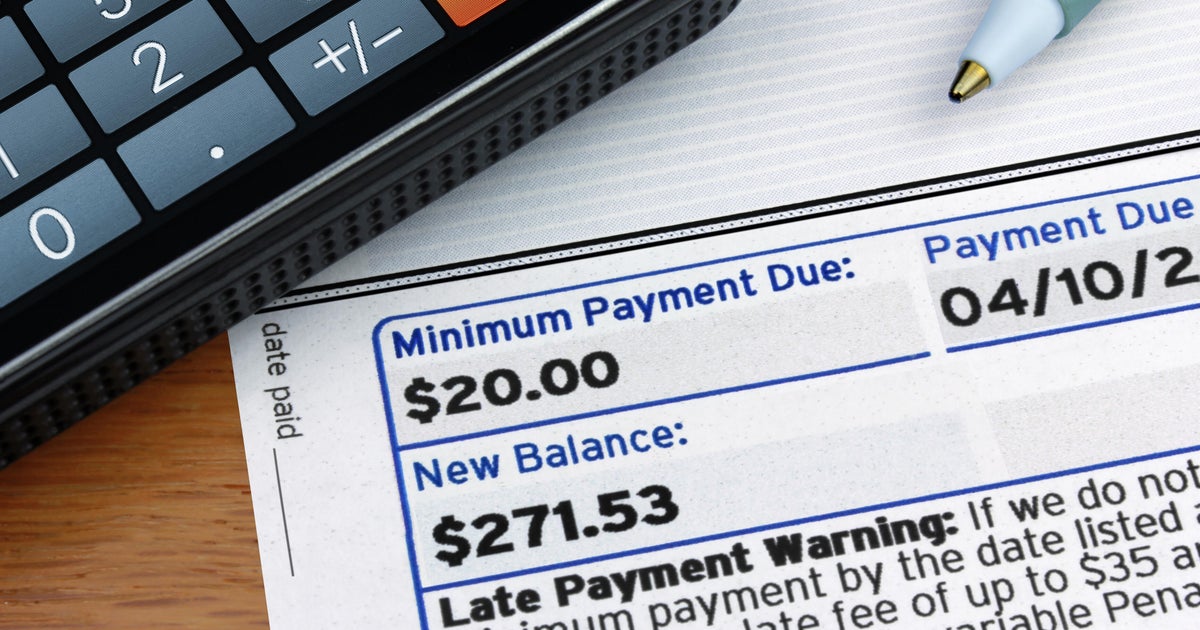
Paying less than the minimum amount on your credit card is considered a late payment. This can result in late fees, continued interest charges, loss of promotional rates, and damage to your credit score if the payment is more than 30 days late.
Key Facts
The minimum payment is the smallest amount you must pay each month to keep your account in good standing.
Paying less than the minimum works as a late payment and may trigger late fees.
Interest will continue to grow on the unpaid balance even if you pay part of the minimum.
Paying less than the minimum can cause you to lose special low-interest rates (promotional APRs) or trigger higher penalty rates.
Credit bureaus usually report late payments only if they are 30 days or more past due, damaging your credit score.
Partial payments do not stop the clock on a late payment; the account must be brought current.
Repeated late or partial payments can lead to account closure or collections.
If you can’t afford the minimum payments, you can contact your credit card company to ask about hardship programs or other help.
Read the Original
Want the full story? Tap a source to open the original
article.
The Federal Reserve raised interest rates by 0.25 percentage points, affecting the economy. This increase could create challenges for U.S. farmers and middle-class Americans by making borrowing more expensive.
Key Facts
The Federal Reserve increased interest rates by 0.25 percentage points.
Higher interest rates can lead to more costly loans for individuals and businesses.
U.S. farmers often rely on loans for equipment and supplies.
The rate hike may raise costs for farmers, impacting their financial health.
Middle America, which includes many working- and middle-class families, may face higher borrowing costs.
The Federal Reserve uses interest rate changes to try to control inflation and stabilize the economy.
This is part of ongoing efforts to address economic concerns in the U.S.
Read the Original
Want the full story? Tap a source to open the original
article.