Treasury Secretary Scott Bessent urged for fewer financial rules to help small banks grow. He said these banks need more freedom to lend to families and small businesses. Bessent also highlighted that recent big bank failures show current rules may not be effective.
Key Facts
Bessent spoke at a G20 meeting with finance ministers and business leaders.
He argued that small banks face tougher rules than big banks, limiting their success.
Recent changes allow some small banks to hold less capital, freeing up money for loans.
Half of the nation’s small banks disappeared since the financial crisis, partly due to strict regulations.
The 2008 Dodd-Frank rules aimed to stop big bank failures but made it harder for small banks to grow.
The U.S. G20 leadership is involving private companies earlier in financial policymaking.
The Trump administration is working to reduce banking rules to encourage economic growth.
More new banks are applying to open under Trump’s policies, especially fintech and digital asset firms.
Read the Original
Want the full story? Tap a source to open the original
article.
The Metropolitan Museum of Art in New York cancelled a planned exhibition celebrating fashion designer John Galliano because of criticism about his past antisemitic remarks and conduct. Galliano expressed regret for his past actions and decided not to proceed with the exhibition to avoid causing pain to some communities.
Key Facts
The Met planned an exhibition called John Galliano: Horizons for May 2027.
Galliano was found guilty of making antisemitic and racist insults in 2011.
He was fired as Dior’s creative director after these incidents.
Galliano apologized and spoke about his recovery from addiction.
The exhibition would have been part of the Met Gala theme for 2027.
Some leaders and groups opposed honoring Galliano due to his past remarks.
Anna Wintour, co-chair of the Met Gala, supported Galliano’s decision to cancel.
The cancellation reflects concerns about rising antisemitism and sensitivity to affected communities.
Read the Original
Want the full story? Tap a source to open the original
article.
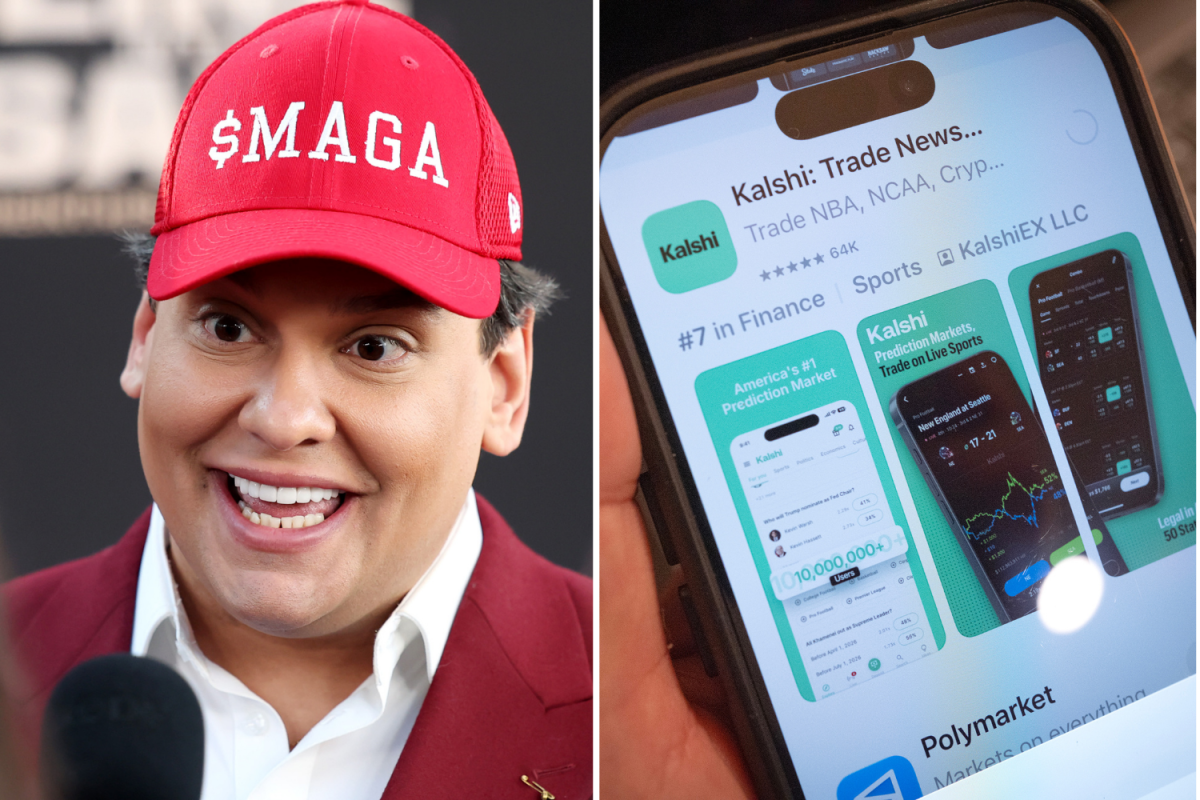
Kalshi has permanently banned George Santos from its trading platform after he did not cooperate with an investigation into suspicious trades. Santos was fined over $71,000 and previously agreed to pay $35,000 to settle a federal probe into his trades, which were related to his attendance at the 2026 State of the Union address.
Key Facts
George Santos was banned for life from Kalshi’s prediction market.
Kalshi’s compliance team was investigating trades that earned Santos about $18,000 in profits.
Santos did not cooperate with Kalshi’s investigation.
Kalshi fined Santos $71,356, as shown in a company filing.
Santos is a former representative of New York’s 3rd District and was expelled from Congress in 2023.
He faced charges for fraud and campaign finance violations.
In July, Santos paid $35,000 to settle a federal investigation into his trades on Kalshi.
The Commodity Futures Trading Commission also banned him from trading for three years.
Read the Original
Want the full story? Tap a source to open the original
article.
George Santos, a former congressman, received a lifetime ban from the prediction market platform Kalshi. The ban came after he was fined over $71,000 related to a case where he made trades about his own attendance at President Donald Trump's State of the Union address.
Key Facts
Kalshi permanently banned George Santos from its platform.
Santos was fined $71,356 after a Commodity Futures Trading Commission (CFTC) case.
The case involved Santos trading contracts predicting he would miss the State of the Union event.
Regulators said Santos posted messages suggesting he would attend while trading on missing it.
Santos had previously paid over $35,000 in a settlement to avoid a lengthy legal fight.
Kalshi said the ban was also due to Santos not cooperating in their internal review.
Santos responded by mocking Kalshi on social media and plans to appeal to the CFTC.
Santos was expelled from Congress in 2023 and pleaded guilty to federal fraud charges.
Read the Original
Want the full story? Tap a source to open the original
article.
The Metropolitan Museum of Art canceled its planned exhibition honoring fashion designer John Galliano after controversy about his past racist and antisemitic behavior. Although Galliano has returned to the fashion world and worked with notable brands, the museum chose not to grant him a major cultural honor at this time.
Key Facts
The Met was scheduled to hold a John Galliano retrospective exhibit in May 2027.
Galliano was convicted in 2011 for making antisemitic and racist remarks.
After his conviction, Galliano went to rehab, apologized, and resumed work in fashion.
He has spent a decade at Maison Margiela and recently partnered with Zara.
The Met planned the exhibition to show both Galliano’s achievements and his past misconduct.
New York City officials and others criticized the museum’s decision to honor him.
The Met eventually canceled the exhibit, signaling limits to public forgiveness.
The cancellation reflects a distinction between commercial success and full cultural acceptance.
Read the Original
Want the full story? Tap a source to open the original
article.
Nara Organics recalled its baby formula in the U.S. after a botulism outbreak linked to American dairy suppliers. The company will resume selling the formula using European dairy sources and stricter safety testing following FDA and CDC investigations.
Key Facts
Nara Organics recalled its Whole Milk Organic Powdered Infant Formula in June due to possible botulism contamination.
Four children in Pennsylvania, California, and Washington became sick and were hospitalized during the outbreak.
The FDA and CDC investigated the outbreak and declared it over after linking the illness to milk supplied by U.S. dairy sources.
Nara Organics stopped using American dairy suppliers in April 2025 and will use dairy from the European Union going forward.
The company will apply more thorough testing for botulism bacteria in future products.
The recalled formula had best-by dates ending in 2027 and was sold in major stores like Target and online.
FDA advises consumers to throw away any recalled formula and clean all feeding equipment carefully.
Nara Organics said it plans to bring its formula back to the U.S. market with improved safety measures.
Read the Original
Want the full story? Tap a source to open the original
article.
Putting $150,000 into a 1-year certificate of deposit (CD) can earn about 4.2% to 4.3% interest over the next year. This means savers could make between $6,300 and $6,450 in interest while keeping their original money safe.
Key Facts
A 1-year CD offers fixed interest rates currently between 4.20% and 4.30%.
Depositing $150,000 at 4.20% would earn $6,300 after one year.
At 4.25%, the same deposit would earn $6,375, and at 4.30%, $6,450.
These rates have increased from about 4.10% earlier in May.
There is a chance that the Federal Reserve will raise interest rates again in September, which might increase CD rates.
Early withdrawal from a CD may cause penalties, making it important to plan to keep the money in until maturity.
CDs provide a fixed rate of return, which can be safer compared to variable interest savings accounts or investments.
Many online platforms allow easy comparison of CD rates and terms.
Read the Original
Want the full story? Tap a source to open the original
article.
A debt judgment can limit a creditor’s ability to collect money after it expires, but the process varies by state and type of judgment. Creditors may renew judgments before they expire to extend their power to collect, and expired judgments do not always erase the debt itself.
Key Facts
Total household debt in the U.S. reached $18.8 trillion in the second quarter of this year.
A debt judgment stays enforceable for years and can affect borrowers long after the original debt was due.
When a debt judgment expires, creditors usually lose the right to collect through court actions like wage garnishment or bank levies.
The length of time a judgment is enforceable depends on state law and the type of judgment; some last 10 years or more.
Creditors can often renew judgments before they expire to keep collecting, following state rules and deadlines.
Renewed judgments may include added interest and collection costs, increasing the amount owed.
Expiration of a judgment doesn’t always remove the debt obligation or clear liens on property.
Borrowers should check court records and state laws to understand if a judgment is still active or has been renewed.
Read the Original
Want the full story? Tap a source to open the original
article.
BT expects to earn over £2 billion in the next ten years by selling old copper cables as it upgrades the UK’s phone network to full-fibre broadband. The rise in copper prices is driven by increased demand for electronics, AI data centers, and renewable energy.
Key Facts
BT is selling old copper cables through a recycling deal with EMR, the UK’s largest cable granulation company.
BT has received upfront payments of £99 million and £105 million for copper to be delivered over the next four years.
BT aims to connect 30 million UK homes with full-fibre broadband by 2030, removing old copper cables in the process.
The company has recovered over 22,000 tonnes of copper since 2023, nearly tripling its previous yearly recovery.
Copper prices hit record highs this year, reaching over $14,000 per metric tonne.
The global demand for copper is expected to double by 2035, according to S&P Global.
BT plans to recover up to 200,000 tonnes of copper by continuing its network upgrades through the 2030s.
Copper theft has increased due to its high value, causing damage to underground cables in several UK regions.
Read the Original
Want the full story? Tap a source to open the original
article.
Raising Cane’s, a popular chicken finger restaurant chain, is opening new locations in September. One of the new restaurants will be in a well-known tourist area.
Key Facts
Raising Cane’s is expanding to new restaurant locations.
The openings will happen in September.
One of the new spots is in a popular tourist destination.
The chain is known for its chicken finger meals.
This expansion will increase its presence in key areas.
Read the Original
Want the full story? Tap a source to open the original
article.
About 40,000 pounds of beer worth $70,000 was stolen from a warehouse in Montclair, California, using fake paperwork to trick the staff into handing over the goods. Police are investigating if two separate shipments taken that day were connected. This case highlights a growing problem where criminals steal cargo by pretending to be trusted companies using fake documents and stolen identities.
Key Facts
The theft happened on August 17 at an Anheuser-Busch distribution center in Montclair, near Los Angeles.
Two shipments were taken: one valued at $45,000 meant for Tucson, and another worth $25,000 that included Pabst Blue Ribbon products.
The thieves used fraudulent paperwork pretending to represent a subcontracting company.
This type of theft is called "strategic cargo theft," involving tricking companies into releasing goods to fake operators.
The FBI reported cargo theft losses in the US and Canada could reach $725 million in 2025, a 60% increase from 2024.
Criminals often hack or steal trucking accounts and change shipping details to steal goods without physically breaking into warehouses.
Trust and verification systems in modern shipping are vulnerable because they rely heavily on credentials that can be copied or faked.
Locked warehouses help but cannot stop theft when criminals have already gained trusted access.
Read the Original
Want the full story? Tap a source to open the original
article.
The Metropolitan Museum of Art has canceled its planned exhibit on fashion designer John Galliano. Galliano apologized for past antisemitic and racist comments that caused pain and controversy.
Key Facts
The Met Gala exhibit focused on John Galliano was canceled by the Metropolitan Museum of Art.
John Galliano had been a leading fashion designer before making antisemitic and racist remarks in 2010 and 2011.
Galliano was convicted in an antisemitism trial in France related to these comments.
In a statement, Galliano expressed sadness over the cancellation and apologized for hurting Jewish and Asian communities.
The museum said a new exhibit for the 2027 Met Gala will be announced later.
Read the Original
Want the full story? Tap a source to open the original
article.
CEO Women Europe is a new group started in June 2026 to help women become leaders in business. It aims to connect people and companies across Europe, the Middle East, and Asia-Pacific to support female executives.
Key Facts
CEO Women Europe launched in June 2026.
The initiative focuses on increasing partnerships across three regions: Europe, the Middle East, and Asia-Pacific.
Sandrine El Khodry is the president of this platform.
Sandrine El Khodry is also Executive Vice President for Global Sales and Marketing at Alcatel Lucent Enterprise.
The group's goal is to promote female leadership and inclusion in executive roles.
The article is part of the "People & Profit" business program.
Related topics include women in wine making and women farmers, showing wider interest in women's roles in business.
Read the Original
Want the full story? Tap a source to open the original
article.
President Donald Trump announced a new oil deal with Venezuela and said it would help lower gas prices. However, experts say the deal is unlikely to reduce fuel costs for consumers soon.
Key Facts
President Trump promoted a recent oil agreement made with Venezuela.
He suggested the deal would help reduce gas prices.
Experts are doubtful that the agreement will lower fuel costs in the near future.
The report was covered by CBS News correspondent Nancy Cordes.
The article focuses on the potential impact of the oil deal on the economy and energy prices.
Read the Original
Want the full story? Tap a source to open the original
article.
Sony Music Publishing and Warner Chappell have sued AI startup Anthropic for using tens of thousands of copyrighted songs without permission to train its Claude chatbot. The lawsuit accuses Anthropic of downloading and copying lyrics from various sources, seeking billions of dollars in damages for copyright infringement.
Key Facts
Sony Music Publishing and Warner Chappell represent songwriters and composers and manage their copyrights.
The lawsuit claims Anthropic used around 20,000 copyrighted songs, including famous titles like Mariah Carey’s “All I Want for Christmas is You” and Survivor’s “Eye of the Tiger.”
Anthropic allegedly downloaded lyrics and sheet music from pirate websites and legal lyric sites without paying licensing fees.
The complaint says Anthropic stripped identifying information from the songs, preventing credit to copyright owners.
The plaintiffs are seeking up to $150,000 per copyrighted work and $25,000 for each instance of removed attribution.
Anthropic previously settled a $1.5 billion copyright case related to authors’ works.
Other music companies like Universal Music Group have also made claims against Anthropic.
Anthropic denies the allegations and plans to defend itself in court while preparing for a possible $2 trillion stock market listing.
Read the Original
Want the full story? Tap a source to open the original
article.
A London office building leased by a company used a legal loophole involving "box shifting" to avoid paying business rates on empty commercial properties. A recent court of appeal decision ended this tax avoidance scheme, which had cost local authorities over £1 billion.
Key Facts
The building at 2 America Square in London was mostly filled with black boxes, not people.
The company leasing the building, 48th Street Holdings Ltd, used a scheme to avoid business rates by temporarily placing boxes to claim “occupation.”
This tax loophole started in 2008 when rules on business rates for empty buildings changed.
Companies claimed a three-month rate holiday by cycling boxes in and out of the property to reset the vacancy clock.
The scheme has cost local councils, like the City of London, millions annually—£35 million a year after the pandemic.
The City of London Corporation challenged the practice in court against 48th Street Holdings and Principled Offsite Logistics Ltd (POLL), a company providing rate avoidance services.
The court of appeal ruled that this kind of occupation for the sole purpose of saving rates does not count as true occupation.
This ruling puts an end to the “box shifting” scheme and aims to stop similar tax avoidance in the future.
Read the Original
Want the full story? Tap a source to open the original
article.
The global bond market is very large and important, but recent changes have raised concerns about higher borrowing costs and potential financial problems. Experts warn that an increase in borrowing, especially by tech companies, could create risks similar to past financial crashes linked to bonds.
Key Facts
The global bond market is worth about $160 trillion, making it one of the biggest financial markets.
Long-term government bond yields in the U.S. and other rich countries are rising close to levels last seen before the 2007 financial crisis.
Higher bond yields mean it could become more expensive for governments to borrow money.
The growth of borrowing by big tech companies in the bond market has raised worries about a possible debt bubble.
Past financial crises, such as the 2008 crash and the 1873 Panic, were linked to problems in bond markets.
The U.S. Treasury bond market is the largest and most important bond market worldwide.
Experts consider even a small chance of a U.S. government default on its debt as a serious risk.
Bonds usually move slowly and seem boring compared to stocks, but they are critical to the economy’s health.
Read the Original
Want the full story? Tap a source to open the original
article.
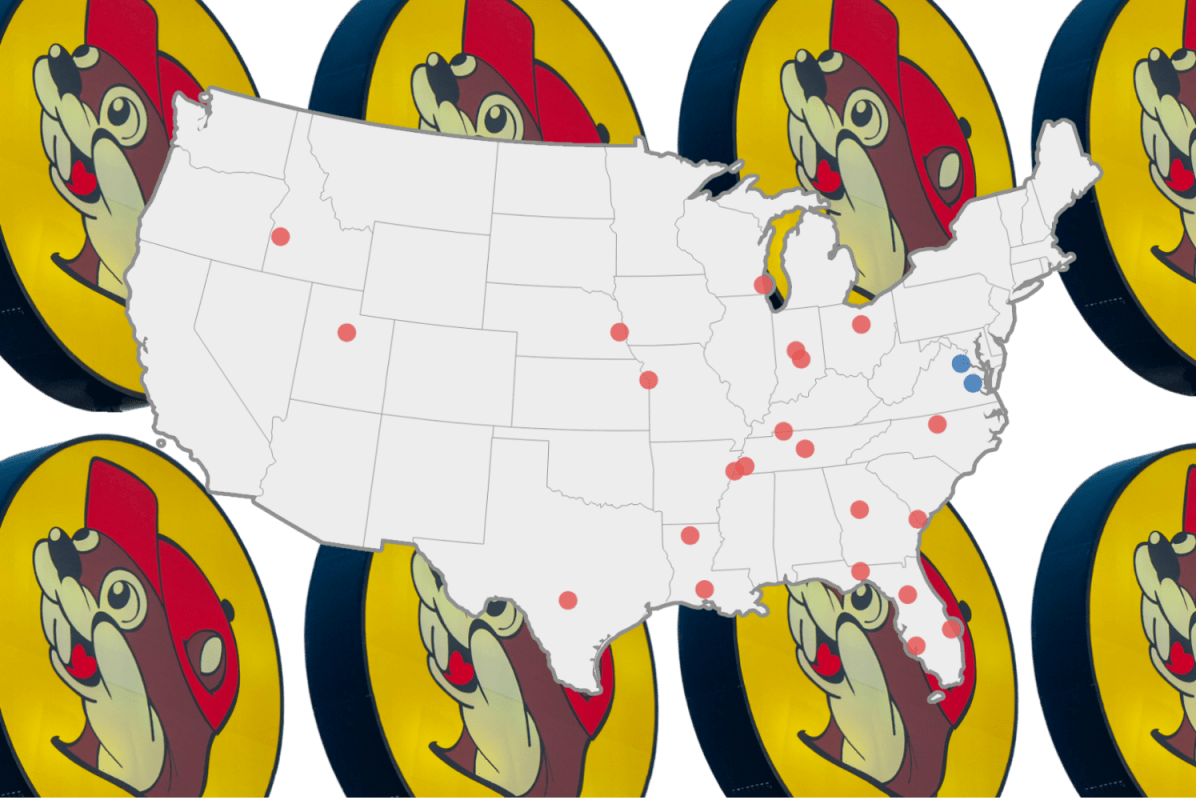
Buc-ee’s plans to open 24 new stores mostly in states that voted for President Trump in the 2024 election, focusing on what its CEO calls "conservative, business-friendly states." The company has faced legal disputes over trademarks but continues expanding rapidly beyond its Texas origins.
Key Facts
Buc-ee’s CEO Arch "Beaver" Aplin III wants to expand mainly in conservative states.
Out of 24 planned new locations, 22 are in states that voted Republican in 2024; 2 are in Democratic-voting Virginia.
Planned sites include cities in Idaho, Nebraska, Utah, Kansas, Indiana, Louisiana, Tennessee, and Florida.
Aplin praised Arkansas, a conservative-led state, as a business-friendly place during a recent store opening.
Buc-ee’s has been involved in lawsuits over trademark issues with smaller businesses.
Ohio Governor Mike DeWine criticized Buc-ee’s lawsuit against a small Ohio business.
Founded in Texas in 1982, Buc-ee’s now has 58 stores in 14 states.
The company’s growth focuses on states with supportive business environments and available workforce.
Read the Original
Want the full story? Tap a source to open the original
article.
Japanese car makers Nissan and Honda have agreed to work together to create and share software and key electronic parts for cars expected to launch in fiscal 2029. This partnership aims to reduce costs, speed up development, and improve efficiency by sharing technology for vehicles that rely more on software than traditional mechanics.
Key Facts
Nissan and Honda will jointly develop electronic control units (ECUs) and software for future vehicles.
The collaboration focuses on "software-defined vehicles" where software controls many functions.
The deal covers vehicles launching around fiscal year 2029.
Both companies began talks in 2024 about working together on electric vehicles and smart car technology.
Sharing technology helps lower costs and speeds up making new vehicles.
Nissan and Honda are working together to compete better against Toyota, Japan’s biggest car maker.
Toyota was not part of this announced agreement but is working with other partners on related software efforts.
The partnership also aims to advance zero-emission vehicles and improve traffic safety through new technologies.
Read the Original
Want the full story? Tap a source to open the original
article.
A report by Amazon Web Services (AWS) says Europe faces problems adopting advanced artificial intelligence (AI) because of a lack of skilled workers and unclear rules. About 38% of European AI startups are thinking about moving to other countries.
Key Facts
Europe is not adopting advanced AI as fast as it could.
A skills shortage means there are not enough trained people to work with AI in Europe.
Unclear or changing regulations make it hard for AI companies to operate smoothly.
38% of AI startups in Europe want to relocate abroad for better conditions.
The report was commissioned by Amazon Web Services, a major US technology company.
Sasha Rubel from AWS spoke about these issues related to AI adoption in Europe, the Middle East, and Africa.
The report highlights challenges that could cause Europe to fall behind in AI development.
These challenges affect innovation and economic growth in the technology sector.
Read the Original
Want the full story? Tap a source to open the original
article.